This site is supported by our readers. We may earn a commission, at no cost to you, if you purchase through links.
Cooper’s hawk can go from perched to striking in under a second. If you’ve watched one scatter your feeder birds and carried off a chickadee, that image sticks with you. It’s not random either—hawks learn exactly where reliable prey clusters form, and a busy feeder is a hunting ground they’ll return to daily.
The good news is that your yard setup plays a bigger role than you’d think. Small changes to feeder placement, cover, and design can make the difference between a yard hawk’s target and one they pass over. Knowing how to prevent hawks attacking bird feeders starts with understanding what draws them in the first place.
Table Of Contents
Key Takeaways
- Hawks keep coming back because feeders create a predictable cluster of small birds in open space — move feeders within 10 feet of dense shrubs, and you break that pattern fast.
- Physical barriers like caged feeders with 1.5–2 inch mesh let small birds eat safely while blocking hawks completely; no guesswork needed.
- Spilled seed on the ground pulls in ground‑feeding birds, which are easy hawk targets — use a catch tray, sweep daily, and switch to low‑mess seeds like sunflower hearts.
- Hawks are federally protected, so skip traps or deterrents that could harm them — rotating reflective objects weekly and pulling feeders for 7–14 days are your safest, most effective options.
Why Hawks Attack Bird Feeders
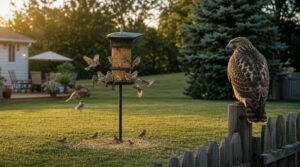
Hawks don’t show up at your feeder by accident. Your yard basically looks like a drive-through to them — small birds bunched together, wide open space, and easy sight lines.
If your yard feels like it’s suddenly on a hawk’s regular route, understanding why hawks keep coming back to your property can help you figure out what’s actually drawing them in.
Your yard isn’t a sanctuary to a hawk — it’s a drive-through full of easy targets
what’s pulling them in.
Feeders Create Predictable Prey Hotspots
Think of your feeder as a diner that never closes. Hawks notice — and they remember. Predator Learning Behavior means that raptors map your yard once prey congregates reliably there. Bird Congregation Dynamics intensify this effect:
- Dense feeder clusters enhance Feeder Density Effects
- Peak morning visits create Temporal Feeding Patterns that hawks exploit
- Seed Type Influence determines which species — and how many — gather
- Overfeeding risks spilling seed, drawing even more birds
- Predictable schedules signal easy hunting opportunities
Vary your feeding routine when possible.
Higher feeder density can lead to increased predator presence, drawing hawks to the area.
Open Yards Make Hunting Easier
Open yards hand hawks a real advantage. With clear Line-of-sight Exposure and Thermal Updraft Advantages, raptors spot prey quickly and strike cleanly.
Perimeter Perch Visibility lets them scan your whole yard from one spot.
Predator Flight Pathways stay wide open, and Bird Escape Angles shrink quickly in exposed spaces.
Dense shrub planting, providing shelter, smart escape route design, habitat modification, and strategic placement within 10 feet of cover all help.
Small Bird Movement Attracts Raptors
Movement is basically a dinner bell for hawks. Micro movement patterns — tail flick alerts, wing flap bursts, and flicker flight cues — all register instantly in a raptor’s sharp vision.
Here’s what draws them in:
- Rapid swarm dynamics signal a busy, vulnerable flock.
- Constant wing flutters create visual noise, hawks track closely.
- Pause-and-scan bursts help hawks time their strike.
- Clustered flitting gives raptors multiple attack angles.
Movement-based deterrents, protective covers, feeder placement strategies, and creating escape routes all help counter this.
Ground-feeding Birds Increase Hawk Interest
Ground-feeding birds add another layer of risk. Sparrows, robins, and dunnocks create Ground Forage Clusters — tight, low groups that fall right inside Predator Detection Zones.
Hawks learn your yard’s Temporal Feeding Peaks quickly. Ground spillage turns into Seed Distribution Hotspots that keep birds exposed longer.
Reducing ground feeding risks through Microhabitat Complexity and creating escape routes is feeding practices that reduce hawk attraction considerably — and help you avoid ground feeding dangers altogether.
Common Backyard Hawks Near Feeders
Two hawks cause most backyard feeder problems: the Cooper’s hawk and the sharp-shinned hawk. Knowing which one you’re dealing with helps you respond smarter.
- Species Identification Tips — Cooper’s are crow-sized; sharp-shinned are smaller, like a robin
- Perch Height Preferences — both favor branches 20–40 feet up
- Seasonal Hunting Peaks — activity spikes during Hawk Migration Timing in late summer and fall
- Hawk Flight Patterns — short, fast bursts through tree gaps
Safer Bird Feeder Placement
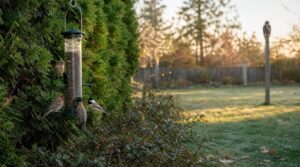
Where you put your feeder matters more than most people realize. A few smart placement choices can make your yard a much harder target for hawks. Here’s what actually works.
Place Feeders Near Dense Shrubs
Dense shrubs are your feeder’s best defense.
Pairing natural cover with the right equipment — like weight-activated feeders designed to block squirrels — gives birds a safe, stress-free spot to eat.
Shrub proximity benefits small birds by giving them instant cover — a hawk can’t easily track a sparrow that vanishes into thick branches.
Plant evergreen shelter plants 4–8 feet away. This predator visibility disruption breaks a hawk’s line of sight mid-strike.
Seasonal shrub planting also creates microclimate temperature regulation, keeping birds warmer and visiting longer through winter.
Avoid Exposed Open-sky Locations
Open sky is a hawk’s best friend. Think of your feeder as a stage — if it’s visible from above with nothing blocking the view, you’ve built a hunting ground.
Use shade structures, dense canopy placement, or a roof overhang to cut vertical obstructions. Avoid bare, exposed spots where seasonal sun angles silhouette birds clearly.
simple feeder placement strategies make a real difference.
Keep Feeders Away From Hawk Perches
Hawks need a launch pad. That’s why Hawk Perch Mapping matters — spot the tall trees, poles, and fences they favor, then keep feeders at least 30 feet away.
Your Feeder Elevation Strategy should factor in Perch Height Buffer: stay 5–6 feet high, but never directly below a known roost.
Landscape Perch Obstruction, like dense shrubs, blocks sightlines.
Apply Seasonal Perch Adjustment as foliage changes.
Provide Multiple Escape Routes
Think of your feeder zone as an intersection — multiple escape routes are essential so birds aren’t funneled into a corner. Aim for at least three paths running different directions, each ending in natural cover within 15–20 meters. Path Diversity and Cover Integration work together here.
Weave in shrubs, low branches, and elevation escape points. Creating multiple escape routes for songbirds — providing dense vegetation as shelter — makes all the difference.
Use Trees, Awnings, or Roofs for Overhead Cover
Overhead cover is your feeder’s best defense. A roof, awning, or dense canopy breaks a hawk’s line of sight before an attack even starts.
Canopy density benefits work best with layered branches 6–8 feet above the feeder.
Here’s what works well:
- Trees: Evergreens give year-round shelter, and seasonal cover adjustments aren’t needed
- Awnings: Awnings material choice matters — rigid fabric with a 2–3‑foot drop blocks vertical dives
- Roofs: Roof overhang length of 3–4‑foot shields birds during approach
- Branch Angle Optimization: Angled branches create micro‑hiding spots using natural cover and vegetation for bird protection
- Netting or cages: Protective feeders provide safe feeding zones beneath any overhead structure
These protective covers, woven around your feeder setup, make bird feeder cover practical and effective.
Balance Visibility With Bird Safety
Overhead cover defends against attacks from above, but visibility still matters. Position feeders at staggered feeder levels so raptors can’t lock onto one focal point.
Keep limited sky exposure by angling feeders away from open sightlines — strategic sightline angles reduce a hawk’s targeting window. Pair timed feeding windows with rotating visual cues like reflective objects.
Feeder placement and habitat design for safety, including height and distance considerations with natural cover vegetation, tie everything together.
Physical Barriers That Protect Birds
Sometimes the best defense is a simple physical barrier between the hawk and your feeder birds. You don’t need anything fancy — just the right setup to block access and cut off easy landing spots.
Here are the most effective options to review.
Use Caged Feeders for Small Songbirds
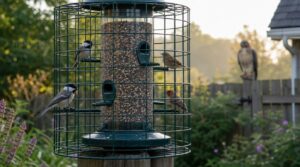
Bird feeder cages are one of the simplest protective structures you can add to your yard. The right cage design for feeders uses a 1.5–2‑inch mesh size selection that lets chickadees and finches slip through while blocking hawks entirely.
Here’s what makes caged feeders work so well:
- Port Height Adjustment places entry holes where small birds feel comfortable
- Small Bird Perch Design guides finches and wrens to the right feeding spots
- Seed Blend Choice pairs nyjer or safflower with the cage for targeted feeding
- Cleaning Schedule keeps mesh clear and ports functional year‑round
- Protective cages, netting, and wires physically block raptors from reaching prey inside
With netting and wire surrounding the feeder, hawks simply can’t grab what’s inside.
Add Wire Domes or Protective Netting
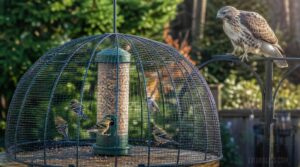
Wire domes take bird feeder protection one step further. A dome mesh size of 1.5–2 inches lets small birds pass through while blocking hawks completely.
For netting installation, drape netting barriers snugly around feeders and secure edges so no gaps open.
Choose stainless or powder-coated wire for corrosion prevention.
Combined with protective cages, netting and wires create a reliable shield year-round.
Install Baffles and Catch Trays
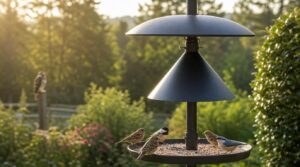
Baffles add another layer of defense. Mount a dome or funnel baffle 5–7 feet high—that’s your sweet spot for baffle height guidelines. Use weather-resistant baffles made from powder-coated metal or UV-stable plastic, and secure everything with stainless steel screws.
Below the feeder, a catch tray with 1-inch raised edges keeps spilled seed contained. Check both monthly.
Reduce Seed Spillage Under Feeders
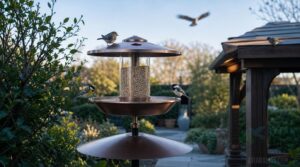
Spilled seed is basically a hawk invitation. It pulls ground-feeding birds into the open, and that’s exactly what hawks are waiting for.
Smart catch tray design keeps drips contained, while elevated feeder mounts cut ground scatter substantially.
Here’s what actually works:
- low-mess seed types like sunflower hearts
- port size optimization to limit overfeeding
- ground surface management — sweep hard surfaces daily
- Empty catch trays regularly to stop ground feeding buildup
Block Hawk Landing Spots With Perch Deterrents
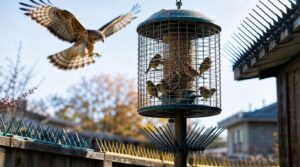
Hawks need a landing spot before they strike. Deny them that, and you’ve broken their hunting pattern.
Install hawk spikes on poles and nearby ledges — spike angle optimization matters here, so angle them outward at 45 degrees. Choose weather‑resistant materials rated for UV exposure.
Combine protective cages, netting options, and mesh size selection suited for small birds.
Rotate deterrent colors weekly and follow a seasonal maintenance schedule to stay ahead of habituation.
Choose Feeders Birds Must Enter or Reach Into
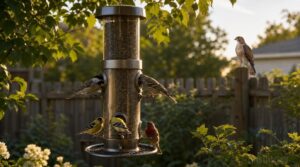
Feeder design is your quietest defense. Tube feeders with narrow entry ports and deeper seed chambers force small birds to reach in — hawks simply can’t follow.
Look for squirrelproof models with weight-activated seed dispensing, since they also limit perching access. The bird access angle matters too: downward-facing ports reduce a hawk’s ability to scout from above.
Top 3 Safer Feeder Products
Good feeder design goes a long way toward keeping small birds safer. Some products are built with features that naturally limit hawk access without much extra effort on your part.
Here are three worth considering.
1. Woodlink Absolute II Squirrel Resistant Bird Feeder
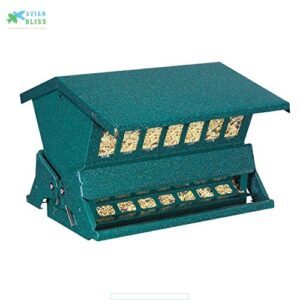
The Woodlink Absolute II is a smart choice if squirrels are constantly raiding your feeders — and hawks aren’t far behind where songbirds cluster. Its weight-sensitive, spring-activated perches let small birds feed freely while shutting out larger pests.
It holds up to 12 pounds of seed, so you’re not refilling every other day. The all-steel, powder-coated body endures weather well.
Position it near shrubs for bird safety, and you’ve got a solid, low-maintenance setup working in your favor.
| Best For | Backyard bird lovers who want a low-maintenance, squirrel-resistant feeder that keeps smaller songbirds fed without constant refills. |
|---|---|
| Material | Powder-coated steel & polycarbonate |
| Weight | ~1 lb |
| Bird Compatibility | Songbirds & small birds |
| Easy Cleaning | Unlatch roof for access |
| Weather Resistance | Powder-coated steel body |
| Price | $84.14 |
| Additional Features |
|
- Weight-sensitive perches close automatically when squirrels or larger birds step on them, so your seed actually goes to the birds you want.
- Holds up to 12 pounds of seed — fewer trips outside, less hassle overall.
- All-metal, powder-coated build holds up through rain, wind, and whatever the seasons throw at it.
- Raccoons, bears, or a really stubborn squirrel can still get to the seed — it’s resistant, not foolproof.
- Some users have found squirrels chew through the polycarbonate windows or the roof latch over time.
- The hanging handle can bend under a full hopper, and the pole kit may need extra hardware to fit securely.
2. Aspects Quick Clean Seed Tube Feeder Brushed Nickel
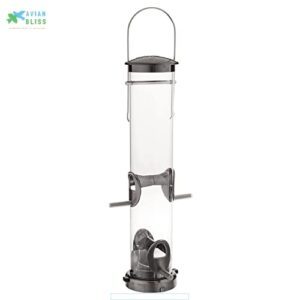
The Aspects Quick Clean tube feeder keeps things simple — and that matters more than you’d think.
Its clear polycarbonate tube holds 1.25 quarts of seed across four ports, giving several small birds room to feed at once.
The brushed nickel die-cast metal holds up through rough weather without rusting.
What really stands out is the removable base.
It clicks off fast for cleaning, which helps prevent mold that can sicken birds.
At $52.90, it’s a solid, low-fuss option.
| Best For | Bird watchers and backyard enthusiasts who want a low-maintenance feeder that’s easy to clean and built to last through rough weather. |
|---|---|
| Material | Die-cast metal & polycarbonate |
| Weight | 1.6 lb |
| Bird Compatibility | Chickadees, cardinals, woodpeckers |
| Easy Cleaning | Removable quick-clean bottom |
| Weather Resistance | UV-stabilized polycarbonate tube |
| Price | $52.90 |
| Additional Features |
|
- The removable base clicks off in seconds, making cleaning quick and helping keep seed mold-free
- Die-cast metal construction handles bad weather, squirrels, and the occasional determined raccoon
- Four feeding ports let several small birds eat at once — great for busy backyards
- Grackles and larger aggressive birds won’t be deterred — they’ll help themselves just fine
- The 1.25-qt capacity fills up fast if you get a lot of feathered visitors, so expect frequent refills
- Plastic perches and base screws can wear down or break over time, especially with heavy use
3. Aspects Round Seed Tray
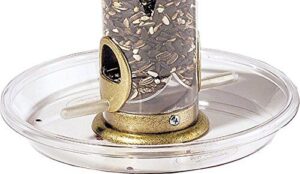
One small tray can make a big difference. The Aspects Round Seed Tray attaches to any 2.75-inch Aspects tube feeder, catching spilled seed before it hits the ground.
That’s important — ground litter draws ground-feeding birds, which increase hawk interest fast.
The 8.5-inch polycarbonate tray is lightweight and pops off easily for cleaning. It also gives Cardinals and Blue Jays a stable perch.
Less mess below means fewer vulnerable birds exposed on open ground.
| Best For | Bird lovers who want to keep their yard tidy and give larger birds like Cardinals and Blue Jays a comfortable place to perch while feeding. |
|---|---|
| Material | UV-stabilized polycarbonate |
| Weight | 0.05 lb |
| Bird Compatibility | Cardinals, Blue Jays, larger birds |
| Easy Cleaning | Fully removable tray |
| Weather Resistance | UV-stabilized polycarbonate plastic |
| Price | Not listed |
| Additional Features |
|
- Catches spilled seed before it hits the ground, keeping your lawn cleaner
- Snaps off easily so cleaning takes no time at all
- Gives bigger birds a stable perch without any extra setup
- Drain holes can clog up after rain, leaving standing water in the tray
- Only fits Aspects tube feeders, so it won’t work with most other brands
- Larger birds tend to take over, which can push smaller ground-feeders away
Humane Hawk Deterrent Strategies
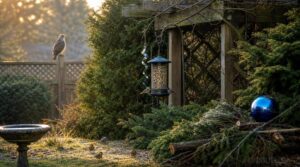
Keeping hawks away doesn’t mean harming them — and honestly, the humane options work better anyway. A few smart, low-effort strategies can shift the whole balance in your yard.
Here’s what actually really matters.
Remove Feeders Temporarily for 7–14 Days
Sometimes the most effective move is the simplest one: take your feeders down for 7–14 days. This temporary feeder removal disrupts hawk hunting patterns by cutting off their reliable food source.
Pay attention to feeder removal timing — cold snaps may warrant the full 14 days. Clean up spilled seed during post‑removal cleanup, and share your neighborhood communication plan so nearby bird lovers aren’t caught off guard.
Rotate Reflective Scare Devices Weekly
Reflective objects work — but only if you keep hawks guessing. Swap your shiny foil deterrent, wind spinners, rotating decoys, and scare balloons every week. Hawks adapt fast, so Color Cycle Timing and Height Adjustment matter: vary hanging heights between 5–12 feet and shift colors weekly.
- Use Wind-Driven Motion by alternating spinning and stationary visual deterrents
- Log swaps in a Rotation Logbook to track Seasonal Pattern Shifts
- Reposition devices to new spots weekly, not just the same hook
Use Motion-activated Sprinklers Cautiously
Motion-activated sprinklers make solid movement-based deterrents — but use them carefully. They cover 6–12 meters and trigger when hawks approach. Reset sensor calibration weekly so hawks don’t adapt.
| Setting | Recommendation | Reason |
|---|---|---|
| Coverage | 6–12 meters | Disrupts diving hawks |
| Active Hours | Morning/afternoon | Peak hawk activity |
| Water Use | 10–20 min bursts | Promotes water conservation |
Weatherproof housing protects the unit outdoors. Mind non-target safety — don’t aim at pets or walkways. Always check local water regulations before running frequent cycles.
Move Decoys Often to Prevent Habituation
Sprinklers help, but decoys need constant reshuffling too. Hawks are smart — they’ll ignore a fake owl that never moves.
Follow this simple Decoy Rotation Timing plan:
- Move decoys every 2–3 days using Model Variety Rotation — owls, hawks, eagles
- Habitat Integration by shifting placements after storms
- Do monthly Decoy Wear Inspection; faded models lose their effect fast
Rotating decoys and scare balloons for effectiveness keeps predator avoidance working longer.
Avoid Shooting, Trapping, or Poisoning Hawks
Hawks are protected by law — harming them isn’t just wrong, it’s illegal.
Shooting, trapping, or poisoning raptors violate federal protections, and penalties are serious.
| Action | Consequence |
|---|---|
| Shooting a hawk | Criminal charges, heavy fines |
| Trapping without Wildlife Permits | Fines and possible imprisonment |
| Poisoning | Animal cruelty charges |
| Ignoring Legal Compliance | Loss of property rights |
Nonlethal Alternatives and Ethical Conservation practices always work better — and keep you on the right side of the law.
Check Local Wildlife Regulations
Before you set up any deterrent, it’s worth checking local wildlife regulations. In Germany, raptors fall under strict Species Protection Status, meaning even non‑lethal interference can have legal consequences.
Permit Requirements may apply depending on your state. Reporting Injured Raptors to your lower nature conservation authority is mandatory.
Municipal Feeding Rules also vary, so confirm what’s allowed where you live before acting.
Contact Wildlife Professionals for Persistent Problems
If deterrents aren’t working after two weeks, it’s time to call in professional help. A licensed wildlife biologist can visit your yard, evaluate your setup, and recommend professional wildlife control options for persistent hawks — all within local wildlife regulations.
Here’s what to prepare before the visit:
- Documentation Requirements — Log dates, times, and hawk behaviors
- Professional Site Assessment — Note perch locations and feeder placements
- Permits and Regulations — Gather any prior wildlife correspondence
Follow-up Monitoring and Legal Consultation are standard with expert visits.
Frequently Asked Questions (FAQs)
Do hawks return after feeders are removed temporarily?
Yes and no.
Most hawks shift focus after 7–14 days of temporary removal of feeders as a hawk deterrent.
Post‑removal monitoring shows bird behavior rebounds quickly, while hawk migration patterns often redirect hunting pressure elsewhere.
Which feeder colors attract fewer hawks overall?
Earth-tone camouflage colors — greens, browns, and grays — attract fewer hawks. Matte finish surfaces and low-contrast hues help feeders blend in.
Avoid bright reds or whites. They stand out and pull hawk attention quickly.
Do ultrasonic devices work without repelling songbirds?
Sounds like a smart fix — but does ultrasonic efficacy hold up in real yards? Honestly, no.
Songbirds habituate fast, often within days. Frequency selection and bird hearing limits mean ultrasonic sound rarely works without also unsettling your songbirds.
How long before hawks abandon an established hunting pattern?
It depends. Most hawks leave within 2–6 weeks when prey drops or disturbances increase. Juvenile hawks shift faster — sometimes within days. Consistent human activity is your best natural cooling off period.
Conclusion
Hawks are creatures of habit—and so is a smart yard setup. Once you know what draws them in, you hold most of the cards.
Small shifts in feeder placement, cover, and barriers go a long way.
To prevent hawks attacking bird feeders, you don’t need to choose between hawks and songbirds. Give small birds escape routes, reduce open exposure, and stay consistent.
Your feeder flock will settle back into their routine faster than you’d expect.
- https://jcswildlife.com/absolute-ii-squirrel-proof-bird-feeders-green-heritage-farms-7536-pole-and-hanger-included/?ref=hVhUWmk6vKk1IL
- https://wildbeimwild.com/en/birds-of-prey-poaching-cases-are-increasing-in-germany/
- https://gardeningpilot.com/how-to-get-rid-of-hawks-in-your-yard/
- https://pmc.ncbi.nlm.nih.gov/articles/PMC5804210/
- https://birdproofinghq.com/how-to-get-rid-of-hawks/