This site is supported by our readers. We may earn a commission, at no cost to you, if you purchase through links.
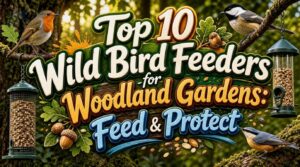
A woodland garden holds a kind of quiet magnetism that a manicured lawn never will—dappled light, layered canopy, and the constant rustle of species most people never stop to name. That same complexity that makes your garden feel alive also makes feeding birds there surprisingly tricky.
Shade affects nectar concentration, squirrels exploit every structural weakness, and the wrong feeder placement turns a sanctuary into a stress zone.
Getting wild bird feeders for woodland gardens right means matching equipment to habitat, food to species, and placement to the rhythms of your specific patch of trees. The picks and guidance ahead make that process straightforward.
Table Of Contents
- Key Takeaways
- Top 10 Woodland Garden Feeding Picks
- 1. Audubon Swirl Glass Hummingbird Feeder
- 2. Audubon Medium Beige Mesh Combo Bird Feeder
- 3. Flammi Heavy Duty Stainless S Hooks
- 4. Bond 20 Ft Soft Plant Tie
- 5. Sunnydaze 4 Arm Hanging Plant Stand Black
- 6. Rust Oleum Painters Touch Spray Paint Ivory Silk
- 7. Pet Show Metal Round Hanging Bird Cage
- 8. Shindigz Ivory Decorative Bird Cage Lantern
- 9. CountryMax Backyard Shelled Peanuts For Wildlife
- 10. Gerbs Premium Raw Sunflower Kernels
- Best Feeder Types for Woodlands
- Choosing Woodland Bird Foods
- Squirrel-Proofing and Safe Placement
- Cleaning, Seasons, and Conservation
- Frequently Asked Questions (FAQs)
- Conclusion
Key Takeaways
- Matching your feeder type to the woodland layer it serves — canopy edge, understory, or forest floor — makes a bigger difference in variety of birds than any single food choice.
- Squirrel-proofing works best as a system: combine metal cage feeders, dome baffles, and a five-foot hanging height rather than relying on any one method alone.
- What you fill your feeders with should shift by season — high-fat suet and peanuts carry birds through winter, while mealworms and protein-rich blends support nesting in spring.
- Weekly cleaning and quick removal during disease outbreaks aren’t optional extras; they’re what keeps your feeding station a safe, trusted stop where birds return to all year.
Top 10 Woodland Garden Feeding Picks
Building a woodland feeding station doesn’t have to be complicated, but the right mix of products makes all the difference. These ten picks cover everything from feeders and food to the hardware that holds it all together.
Whether you’re just starting out or upgrading an existing setup, this guide to wild bird feeders for attracting songbirds walks you through exactly what to look for.
Here’s what earned a spot on the list.
1. Audubon Swirl Glass Hummingbird Feeder
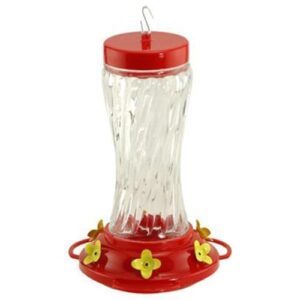
The Audubon Swirl Glass Hummingbird Feeder brings something genuinely useful to a woodland garden edge: a clear glass reservoir that shows you exactly how much nectar remains, so you’re never guessing.
Six flower-shaped ports and four perches let several hummingbirds feed at once, which makes a real difference during migration.
The wide-mouth base twists off easily for cleaning, and the glass is dishwasher safe. Red accents do the work of drawing hummingbirds in, even through dappled canopy light.
| Best For | Backyard birders who want a low-fuss feeder that’s easy to monitor, clean, and enjoy without a lot of guesswork. |
|---|---|
| Primary Use | Hummingbird feeding |
| Material | Glass and plastic |
| Outdoor Suitable | Yes |
| Capacity/Size | 16 oz nectar |
| Assembly Required | No |
| Durability Concern | Plastic fades in 1–3 years |
| Additional Features |
|
- The clear glass body lets you see the nectar level at a glance—no more lifting or guessing when it’s time to refill.
- Six flower-shaped ports and three perches mean multiple hummingbirds can feed at once, which makes for a lively garden show.
- The wide-mouth twist-off base makes cleaning simple, and the glass is dishwasher safe, so keeping it mold-free isn’t a chore.
- The red plastic top and base tend to fade and get brittle after a year or two outside, and replacement parts aren’t sold separately.
- The perches are on the fragile side and can break with regular use—something to watch if you get a lot of bird traffic.
- A few buyers have received units with missing hardware like the S-hook, which means a wait for a replacement before you can hang it up.
2. Audubon Medium Beige Mesh Combo Bird Feeder
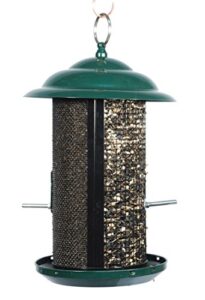
The Audubon Medium Beige Mesh Combo Bird Feeder operates deeper in the canopy, unlike edge-focused nectar feeders. It accommodates up to 3 lb of seed across two chambers, enabling the simultaneous offering of Nyjer and mixed seed from a single hanging station.
The mesh design ensures continuous airflow, reducing moisture and mold around the seed. Its neutral beige finish blends seamlessly into the understory environment.
Weekly maintenance is simplified by the easy-open top, making cleanings quick and painless.
| Best For | Bird enthusiasts who want to attract multiple species without cluttering their yard with several feeders. |
|---|---|
| Primary Use | Seed bird feeding |
| Material | Powder-coated metal |
| Outdoor Suitable | Yes |
| Capacity/Size | 3 lb seed |
| Assembly Required | No |
| Durability Concern | Thin metal components |
| Additional Features |
|
- Two separate chambers let you offer Nyjer and mixed seed at the same time from one spot.
- The mesh tube helps keep squirrels out and lets air circulate so seed stays fresher longer.
- Comes fully assembled with hanging hardware, so you can set it up and fill it right away.
- The metal feels thinner than older Audubon models, so long-term durability is a question mark.
- The narrow, steep bottom tray can discourage birds from using it unless you make some adjustments.
- Small drainage holes clog easily, and leftover seed can get moldy fast in wet weather.
3. Flammi Heavy Duty Stainless S Hooks
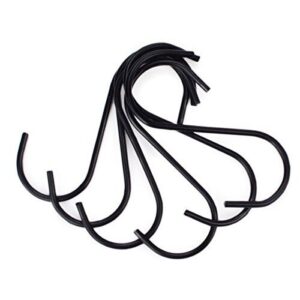
Once your feeder is in place, keeping it there is half the battle. Flammi’s heavy-duty stainless S hooks make that surprisingly easy.
Each hook holds up to 40 lb, so even a fully loaded cast-iron suet cage won’t test them. The matte black coating resists rust through wet woodland winters, and the 1.18-inch opening slips onto thick branches, poles, or cage loops without tools.
A pack of 20 means you’ll have extras ready whenever you add a new feeding station.
| Best For | Bird watchers and outdoor enthusiasts who want a reliable, no-fuss way to hang feeders, baskets, or other gear from branches, poles, or cage loops. |
|---|---|
| Primary Use | Hanging support |
| Material | Coated steel |
| Outdoor Suitable | Yes |
| Capacity/Size | 40 lb per hook |
| Assembly Required | No |
| Durability Concern | Coating wears with moisture |
| Additional Features |
|
- Holds up to 40 lb per hook, so even heavy cast-iron feeders or suet cages stay put without worry.
- Matte black coating fights off rust, making these a solid pick for outdoor use through rain and cold.
- Pack of 20 gives you plenty to set up multiple feeding stations and still have spares on hand.
- The wide 1.18-inch opening can slip on thinner rods or branches if there’s no snug fit to hold it steady.
- The coating may wear down over time with constant moisture or chemical exposure, which could lead to rust eventually.
- Priced a bit higher than your average S-hook set, which might sting if you only need a hook or two.
4. Bond 20 Ft Soft Plant Tie
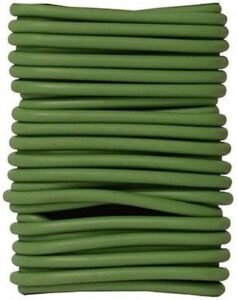
Getting your feeders hung is one thing — keeping the plants around them tidy is another. The Bond 20 Ft Soft Plant Tie manages that quietly but effectively. Its foam-coated wire core flexes gently around stems and climbing vines without bruising them, which matters when you’re training ivy or honeysuckle near a feeding station.
Twenty feet gives you plenty of length to cut exactly what you need, and the ties hold through rain and humidity without loosening or rusting on you.
| Best For | Gardeners who want a gentle, flexible way to tie up climbing plants, vines, or stems without damaging them. |
|---|---|
| Primary Use | Plant tying |
| Material | Soft wire |
| Outdoor Suitable | Yes |
| Capacity/Size | 20 ft length |
| Assembly Required | No |
| Durability Concern | May rust if untreated |
| Additional Features |
|
- A full 20 feet means you can handle a whole garden session with one roll — cut exactly what you need each time.
- The soft wire bends easily around delicate stems and vines without bruising or pinching the plant.
- Works well near feeders and trellises where you need tidy, low-profile ties that don’t get in the way.
- The material isn’t specified, so it’s hard to know how it holds up over time in consistently wet conditions.
- One 20-foot roll won’t go far if you’re managing a large garden — you may need to stock up.
- Not built for anything heavy-duty, so skip it if you’re staking larger trees or shrubs that need real structural support.
5. Sunnydaze 4 Arm Hanging Plant Stand Black
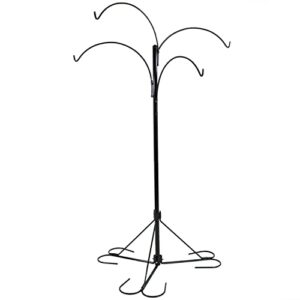
Four arms, one sturdy pole bring your woodland feeding station to life. The Sunnydaze 4-Arm Stand supports up to 52 pounds total, allowing you to hang feeders, lanterns, and baskets without risk of tipping. Its 84-inch height elevates items beyond browsing deer, while the rotatable pole enables effortless feeder swaps without stretching.
For the best results, position your hummingbird feeders at the ideal 5–6 foot height using tips from this guide to hummingbird-only feeder placement and setup.
Setup is simple: No drilling required. Just place the stand, adjust the arms to fit your space, and you’re ready to go.
| Best For | Anyone who wants to display multiple hanging plants, bird feeders, or lanterns in one spot without drilling into walls or a deck. |
|---|---|
| Primary Use | Multi-item hanging |
| Material | Powder-coated alloy steel |
| Outdoor Suitable | Yes |
| Capacity/Size | 52 lb total |
| Assembly Required | Yes |
| Durability Concern | Brackets may crack |
| Additional Features |
|
- Holds up to 52 lbs across four adjustable arms, so you can mix and match feeders, baskets, and lanterns all at once
- No drilling needed — just set it down and you’re ready to go
- The rotatable pole makes swapping or refilling feeders easy without awkward reaching
- The large footprint (around 18 sq ft) can feel cramped on a small patio or balcony
- Assembly can be a pain — arms may be stiff to install and the process can chip the powder coating
- Needs extra anchoring like sandbags in windy spots, otherwise it can tip
6. Rust Oleum Painters Touch Spray Paint Ivory Silk
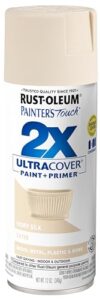
A fresh coat of paint can transform a weathered feeder station into something you’re genuinely proud of. Rust-Oleum Painter’s Touch in Ivory Silk bonds to wood, metal, wicker, and plastic, making it adaptable for nearly every piece in your woodland setup.
It dries to the touch in about 20 minutes, resists chipping and rust, and the satin finish softens any surface flaws.
The comfort spray tip reduces hand fatigue, so even larger projects feel manageable from start to finish.
| Best For | DIYers and hobbyists who want a durable, good-looking finish on feeders, furniture, or outdoor décor without a lot of prep or extra coats. |
|---|---|
| Primary Use | Surface coating |
| Material | Oil-based aerosol |
| Outdoor Suitable | Yes |
| Capacity/Size | 12 oz can |
| Assembly Required | No |
| Durability Concern | Drips on heavy application |
| Additional Features |
|
- Covers well in fewer coats, so you’re not spending your whole afternoon on one project
- Dries to the touch in 20 minutes and holds up against rust, chipping, and fading
- Works on almost anything — wood, metal, wicker, plastic, you name it
- Oil-based formula means you need good ventilation and gloves — not the most casual setup
- Coverage tops out around 12 sq ft per can, so bigger projects will cost you more
- Heavy application can lead to drips, especially on vertical surfaces, so a steady hand matters
7. Pet Show Metal Round Hanging Bird Cage
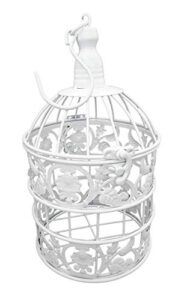
Don’t let the name fool you — the Pet Show Metal Round Hanging Bird Cage pulls double duty beautifully in a woodland garden setting.
Its 360-degree wire frame lets you tuck moss, trailing ivy, or a small suet block inside, creating a natural focal point birds actually investigate.
The front-facing latch door gives easy access for refilling or rearranging, and the top hook makes hanging from a branch easy.
Available in two sizes, the small (7.5 × 13.8 in) works best suspended rather than tabletop.
| Best For | Anyone who wants a charming decorative piece for weddings, parties, or woodland-themed displays — and doesn’t mind a little DIY creativity to make it work. |
|---|---|
| Primary Use | Decorative display |
| Material | Metal |
| Outdoor Suitable | Yes |
| Capacity/Size | 5.5–7.5 in diameter |
| Assembly Required | No |
| Durability Concern | Latch fragile |
| Additional Features |
|
- The black and white finish looks great as a centerpiece or event prop — very versatile aesthetically
- Front latch door makes it easy to swap out candles, florals, or suet without a hassle
- Hangs from branches or ceilings, or sits on a table — lots of placement options
- The front latch is on the fragile side and can bend over time, which is a bummer for long-term use
- The XS size is really better on a tabletop than hanging — it’s too small to stay stable suspended
- Hand-measured dimensions mean you might get slight size variations, so double-check before planning tight spaces
8. Shindigz Ivory Decorative Bird Cage Lantern
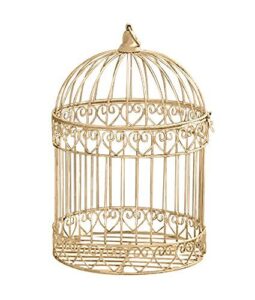
The Shindigz Ivory Decorative Bird Cage Lantern pulls double duty as a garden light and woodland accent. Tuck an LED candle inside, hang it near your shrubs, and enjoy a warm ambient glow that frames your feeding station beautifully at dusk.
Its weather-resistant metal build and classic wirework styling ensure durability through light outdoor use. The design holds up well while maintaining its aesthetic appeal.
The ivory finish blends naturally into cottage or rustic woodland settings, complementing your plantings without competition.
| Best For | Anyone looking for a charming decorative accent for weddings, showers, or cozy indoor displays — not for housing live birds. |
|---|---|
| Primary Use | Decorative display |
| Material | Metal |
| Outdoor Suitable | Limited |
| Capacity/Size | 12 × 8 × 8 in |
| Assembly Required | No |
| Durability Concern | Not weatherproof |
| Additional Features |
|
- Sweet ivory finish with heart details that works well for wedding centerpieces, nurseries, or rustic décor
- Versatile enough to hold fairy lights, flowers, small plants, or even themed props
- Lightweight and easy to move around at about 1 lb
- The latch and hinge are flimsy and can misalign — you might need a paper clip fix
- Paint can look unfinished or stained out of the box, so a touch-up may be needed
- Not built for real outdoor life or live birds — rain and weather will take a toll fast
9. CountryMax Backyard Shelled Peanuts For Wildlife
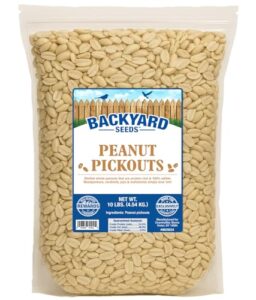
Peanuts are one of the best high-energy foods for woodland wildlife, delivered by CountryMax in a practical 10-lb resealable bulk bag. These shelled, blanched whole peanuts are nearly skinless, eliminating shell waste and cleanup.
Scatter them on a platform feeder or tray to attract blue jays, woodpeckers, chickadees, and nuthatches. Their protein-rich fat content provides critical energy, especially during cold months when natural food sources are scarce.
| Best For | Backyard wildlife enthusiasts who want to attract a wide variety of birds and small mammals with minimal mess and cleanup. |
|---|---|
| Primary Use | Wildlife feeding |
| Material | Bulk bag |
| Outdoor Suitable | Yes |
| Capacity/Size | 10 lb peanuts |
| Assembly Required | No |
| Durability Concern | Zipper-only resealing |
| Additional Features |
|
- Shelled and blanched whole peanuts mean zero shell waste — just toss them out and watch the wildlife show up.
- The 10-lb resealable bag keeps things fresh and makes it easy to refill feeders without fumbling around.
- Works for a huge range of visitors — woodpeckers, blue jays, chickadees, squirrels, chipmunks — over 50 bird species alone.
- Squirrels absolutely love these, so if you’re feeding birds, expect some competition at the feeder.
- The zipper is the only thing keeping the bag sealed — there’s no backup closure if it wears out.
- Ten pounds is a lot if you’re a casual feeder; without proper storage, you could end up with stale or spoiled peanuts.
10. Gerbs Premium Raw Sunflower Kernels
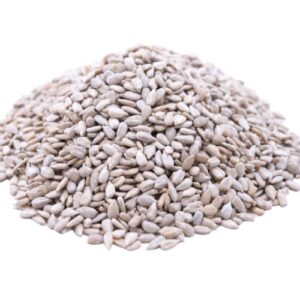
Sunflower kernels are the backbone of any woodland feeding station, and Gerbs delivers them in pure, no-fuss form. These raw, hulled kernels are 100% non-GMO, allergen-free, and packed with vitamin E and healthy fats — exactly what your backyard birds need year-round.
Toss them into a tube or platform feeder to attract chickadees, finches, and nuthatches without shell waste.
The resealable 2-lb bag keeps them fresh longer, making restocking simple and practical.
| Best For | Bird owners and allergy-conscious snackers who want a clean, versatile seed with no fillers or artificial anything. |
|---|---|
| Primary Use | Wildlife feeding |
| Material | Resealable bag |
| Outdoor Suitable | Yes |
| Capacity/Size | 2 lb kernels |
| Assembly Required | No |
| Durability Concern | Rancidity if poorly stored |
| Additional Features |
|
- Certified free of the top 14 allergens — great for sensitive households
- Resealable bag keeps seeds fresh, so buying in bulk actually makes sense
- Raw and non-GMO, with no preservatives or additives
- Raw flavor is pretty mild, so you’ll likely want to roast them before snacking
- High oil content means they can go rancid if stored somewhere warm or left too long
- A 2-lb bag is a lot if you’re only using a small handful here and there
Best Feeder Types for Woodlands
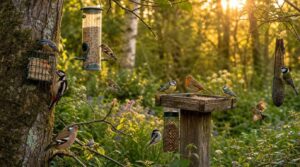
Not every feeder works the same way in a woodland setting, and choosing the right type makes a real difference in which birds show up. The canopy, undergrowth, and tree trunks each attract different species, so matching your feeder to that environment is half the work.
Five feeder types consistently perform best in woodland gardens.
Suet Cages for Woodpeckers
Suet cages are your best tool for attracting woodpeckers deep into a woodland garden. Look for galvanized wire mesh that holds up to both persistent beaks and rainy seasons, and UV-resistant materials that won’t crack over time. A tail prop surface lets woodpeckers brace naturally while feeding. Add a weighted hood, and practice seasonal suet rotation to protect bird health year-round.
Consider weight‑activated spring protection to deter squirrels while allowing woodpeckers access.
Hopper Feeders for Mixed Seed
Where suet cages draw insect-eaters, hopper feeders open the door to a wider crowd. Their transparent reservoir lets you monitor levels at a glance, and a weather-resistant roof keeps mixed blends dry. Smart seed flow control prevents waste, while multi-port perches welcome several species at once.
- Choose squirrel-proof feeders with locking tops
- Prioritize easy refilling with hinged lids
- Match seed blend selection to local species
- Mount 5–6 feet high for predator protection
Tube Feeders for Nyjer
Hopper feeders bring the crowd, but tube feeders narrow the guest list in the best possible way. Nyjer feeders use port size optimization — micro ports under 2mm — to attract goldfinches, siskins, and greenfinches exclusively.
Clear seed viewers let you monitor levels instantly, while weatherproof tubes and anti-spill baffles protect every seed.
Squirrel proof feeders with modular tube lengths make wild bird feeding genuinely easy.
Platform Feeders for Ground Birds
While tube feeders work from above, platform feeders bring wild bird feeding down to earth — literally. Blackbirds, sparrows, and mourning doves prefer foraging at ground level, and a flat tray with Tray Size Options from 8 to 18 inches welcomes several birds at once.
Non‑Skid Feet keep things stable on woodland soil, a Weather‑Resistant Roof shields your bird seed blends, and a Quick Refill System with an Integrated Seed Catcher makes feeder placement genuinely simple.
Hummingbird Feeders for Woodland Edges
Woodland edges have their own microclimate, and hummingbird feeders built for that environment make a real difference. A shade-friendly design keeps nectar cooler longer, so aim for a nectar concentration of about four to six percent.
Add an ant moat and predator shields to protect the feeder, and mount your hummingbird nectar feeder five to eight feet high for the best results.
Choosing Woodland Bird Foods
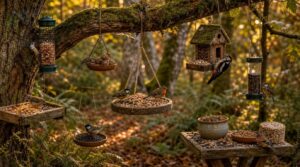
What you put in your feeders matters just as much as where you hang them. Different birds have strong preferences, and matching the right food to the right species makes all the difference.
Here are the five foods that woodland birds respond to most.
Black Oil Sunflower Seeds
Black oil sunflower seeds are the backbone of any woodland feeding setup. Their oil content runs 40–50%, delivering dense winter energy, and the thin hull thickness means birds crack them easily with little waste.
That impressive nutrient profile draws chickadees, nuthatches, and finches reliably.
Follow feeder placement guidelines and maintain a seasonal supply to ensure consistent bird activity.
Store bags in a cool, dry spot to preserve freshness and maximize longevity.
Peanuts for Winter Energy
Few foods punch above their weight like peanuts do in winter. Each ounce delivers roughly 166 calories, making them one of the most effective high-energy foods for cold-weather seasonal feeding and wild bird attraction.
- Calorie Density fuels blue jays, woodpeckers, and chickadees through freezing nights
- Cold Metabolism Support comes from 14g of healthy fat per ounce
- Vitamin E Boost strengthens immune function during harsh months
- Antioxidant Protection guards birds’ cells from oxidative winter stress
- Shelf-Life Storage stays fresh six months in an airtight, cool container
Pair peanuts and seeds together as a squirrel deterrent strategy — use monitored feeders to keep access fair.
Nyjer for Finches
Attracting finches starts with the right setup: a narrow-port tube feeder naturally prevents spillage, keeping tiny nyjer seeds contained. This design is essential for minimizing waste while catering to finches’ feeding preferences.
Finch activity peaks during fall and winter, so monitor seed levels closely during these seasons. Nyjer seed retains quality in a cool, airtight container, and its squirrel-resistant nature simplifies feeder maintenance.
Weekly upkeep is critical: managing husk buildup beneath the feeder ensures a clean, inviting space for birds. This routine prevents mold and maintains a healthy feeding environment.
Suet for Insect-eaters
Suet is one of the best-kept secrets for keeping insect-eaters like woodpeckers and chickadees thriving through winter. Insect-rich suet and protein-dense blends — often packed with mealworms — provide birds with essential high-protein foods when natural insects disappear.
Hang suet cakes in a shaded suet feeder to aid melt prevention, and consider rotating seasonal suet blends for maximum nutritional benefits. These practices ensure birds receive optimal energy and sustenance during colder months.
Always prioritize smart suet storage to prevent rancidity, as proper preservation maintains quality and safety for avian visitors.
Mealworms During Breeding Season
Mealworms are the perfect high-protein foods for robins, blackbirds, and starlings during breeding season, when demand for a protein-rich diet peaks. Offer live or dried mealworms in a Kingsyard Extra Sturdy Tube Bluebird Mealworm Feeder for easy access.
Supporting avian nutrition this way mirrors smart mealworm farming—balancing temperature control, humidity management, substrate composition, moisture sources, and lifecycle scheduling keeps your supply fresh and birds thriving.
Squirrel-Proofing and Safe Placement
Squirrels are clever, persistent, and will empty a feeder before most birds even get a chance.
The good news is that a few smart choices in feeder design and placement can tip things back in the birds’ favor. Here’s what works.
Use Metal Cage Feeders
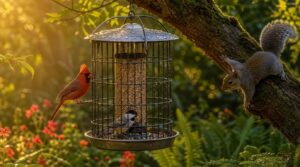
Metal cage feeders are your first line of defense against squirrels raiding your woodland setup. Built with stainless hardware and rust-resistant coating, they hold up through every season without fading or corroding.
Here’s what makes them worth it:
- UV protection keeps finishes intact under direct sunlight
- Weight distribution holds steady in woodland breezes
- Welded joints handle heavy seed loads reliably
- Easy refilling saves time between busy feeding days
- Powder-coated steel ensures real feeder durability
Add Dome Baffles
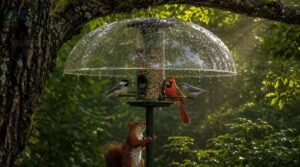
A dome baffle prevents squirrels from accessing the feeder entirely, while a cage feeder merely blocks seed access. By mounting a Clear Polycarbonate Dome with UV‑Resistant Coating above your weatherproof bird feeder, you achieve squirrel exclusion and feeder rain protection in one move.
| Dome Feature | What It Does |
|---|---|
| Rain Deflection Design | Channels water away from seed ports |
| Wide Coverage Radius | Shields multiple perches at once |
| UV‑Resistant Coating | Prevents yellowing and cracking over seasons |
| Adjustable Mount Height | Fine-tunes squirrel proof clearance |
| Ant Moat Integration | Blocks crawling insects from above |
A 15–20 inch dome ensures your setup remains genuinely squirrel proof without obstructing birds’ sightlines.
Hang Five Feet High
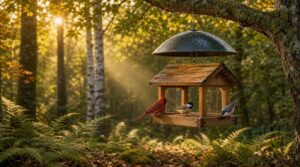
Once your dome baffle is in place, height becomes your next line of defense. Hanging your weatherproof bird feeder at five feet off the ground hits the sweet spot for ideal perch elevation.
It’s high enough for solid predator deterrence height, keeps seeds clear of ground dampness, and offers genuine maintenance accessibility without needing a ladder. Your feeder hanging options work best right here.
Keep Shrubs Nearby
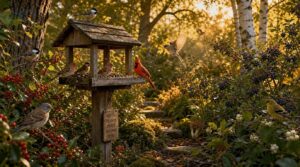
Height gets you halfway there — shrubs close the gap. Planting dense native vegetation within 10–15 feet of your feeder creates foraging corridors birds actually use, functioning as predator shelter, shrub windbreaks, and seasonal food sources all at once.
These microclimate benefits reduce wind by up to 60 percent, supporting your feeder placement strategy and boosting backyard wildlife attraction through genuine habitat enhancement.
Avoid Windy Woodland Corners

Windy woodland corners quietly sabotage even the best feeder placement strategy. Narrow gaps between tall trees double wind speed, scattering seed and stressing birds.
- Choose a sheltered feeder location using Microclimate Site Selection
- Apply Windbreak Planting with dense evergreens nearby
- Add Feeder Wind Shields and use Orientation Angling on ports
- Secure Pole Stabilization with weather-resistant feeders — skip exposed platform feeders entirely
Cleaning, Seasons, and Conservation
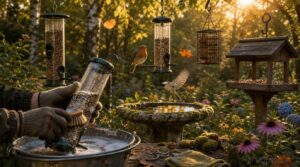
Putting up a feeder is only half the job — keeping it clean and stocked with the right food at the right time is what actually brings birds back.
A few simple habits can protect your visitors from disease and make your woodland garden a place they trust year-round. Here’s what you need to know to get it right.
Clean Feeders Weekly
Think of your feeder as a tiny woodland diner — it needs regular cleaning to stay safe for your guests. Stick to a weekly cleaning schedule to maintain its safety.
Fully disassemble the feeder using the manufacturer’s disassembly tips, then scrub every part with a mild soapy water solution. Check gaskets during gasket inspection to ensure everything is in good condition.
Apply proper drying techniques before refilling to maintain feeder hygiene and support real disease prevention.
Prevent Mold and Bacteria
Mold and bacteria thrive wherever moisture lingers, so feeder hygiene goes beyond a quick rinse. Use hot water above 140°F for deep cleaning bird feeders safely, and follow up with EPA-approved disinfectants to break down hidden biofilms.
Humidity control and ventilation design around your feeder station also matter. Storing feeders dry between refills stops spores before they start, ensuring your maintenance schedule stays airtight and your birds remain healthy.
Adjust Foods Seasonally
Your birds’ needs shift with every season, so your feeder menu should adapt accordingly. Winter demands high-fat suet and peanuts to sustain energy during cold snaps, while spring requires seed blends and protein-rich diets to support nesting and moulting needs.
Seasonal feeders thrive when winter demands suet and peanuts, while spring calls for seeds and protein
Summer nectar feeds draw hummingbirds to woodland edges, providing essential fuel for their active lifestyles. Autumn, meanwhile, calls for nut mast to build fat reserves before frost sets in, ensuring birds survive harsh winters.
This seasonal food rotation ensures every visit counts, catering to birds’ evolving dietary requirements year-round.
Remove During Disease Outbreaks
When avian influenza hits your area, suspend feeding immediately — don’t wait for visible symptoms. Remove feed supplies promptly to eliminate potential contamination sources.
Disinfect feeder cleaning tools thoroughly, and quarantine birds if you keep any to prevent further spread. Ensure isolation protocols are strictly followed.
Gear decontamination is crucial too; sanitize boots and clothing after visiting affected zones to avoid carrying the virus.
Closely monitor agency alerts, as disease prevention for birds depends on rapid response to official guidance.
Frequently Asked Questions (FAQs)
Which woodland birds prefer feeding at ground level?
Some birds are quiet poets of the forest floor. Robins, flickers, dark-eyed juncos, white-throated and song sparrows are devoted ground foragers, scratching leaf litter for seeds, ants, and invertebrates daily.
How do I attract woodpeckers to my garden?
Hang suet cakes near bark inspection sites and drilled log feeders in moist shaded zones. Snag preservation creates insect-rich habitat woodpeckers can’t resist, drawing them in naturally alongside high-protein foods.
Can I make homemade suet cakes for birds?
Yes, you can. Melt your chosen fat, mix in unsalted peanut butter as your binder, stir in oats and birdseed, then press into molds and refrigerate until solid.
What feeder materials work best in wet climates?
Stainless steel, UV-resistant polycarbonate, powder-coated steel, treated cedar, and aluminum feeders all hold up well in wet climates, offering rust-proof durability and long-lasting weather resistance through seasons of rain.
Do feeders disturb nesting birds during spring?
They can — but placement is the real culprit. Feeders positioned too close to nests increase parental stress, attract predators, and disrupt feeding frequency.
Seasonal removal of feeders during peak nesting weeks makes a meaningful difference.
Conclusion
Some woodland gardens feel too shaded or squirrel-ridden to bother—but that’s exactly where the right wild bird feeders for woodland gardens make the difference. Dappled light and layered canopy aren’t obstacles; they’re the habitat your visitors evolved for.
Match your feeder type to the species, anchor placement to the structure of your trees, and clean consistently. These steps ensure your setup aligns with natural behaviors and maintains hygiene.
Do those three things, and your woodland won’t just attract birds—it’ll hold them.
- https://www.allaboutbirds.org/news/how-to-choose-the-right-kind-of-bird-feeder/
- https://scvbirdalliance.org/bird-feeders
- https://www.woodlandtrust.org.uk/blog/2019/03/10-garden-birds/
- https://www.birdsandblooms.com/birding/attracting-birds/feeding-birds/top-10-tips-attract-birds-feeders/
- https://www.harvestwildlife.com/choose-the-right-bird-feeder/?srsltid=AfmBOooiHO9lmA7uiTJ-Q-awkI__eczWQ0X0yeK3dV96LTZvtQ2vx_nM