This site is supported by our readers. We may earn a commission, at no cost to you, if you purchase through links.

Fill your bird bath at 8 AM, and by 2 PM it looks like a puddle that gave up. Sound familiar? On a 95-degree day, a shallow basin can lose half its water before dinner, leaving your feathered visitors with nothing but a dusty bowl.
Here’s the thing: evaporation isn’t random. Sun angle, wind, basin depth, even the material your bath is made from all play a part. Once you know the culprits, keeping bird bath water from evaporating stops feeling like a losing battle and starts feeling like basic backyard know-how you can actually control.
Table Of Contents
- Key Takeaways
- Keep Bird Bath Water From Evaporating
- Choose Cooler Bird Bath Placement
- Use Water-Retaining Basin Designs
- Prevent Leaks and Water Waste
- Frequently Asked Questions (FAQs)
- How to keep bird bath water cool?
- How do I keep my bird bath from freezing?
- How to keep a bird bath ice-free?
- Is it better to drip water into a bird bath?
- What can I put in my bird bath to keep the water moving?
- Why put tennis balls in bird bath?
- Why put copper pennies in bird bath?
- How often should you change the water in a bird bath?
- How often should you completely replace bird bath water?
- How do you keep bird bath water from freezing?
- Conclusion
Key Takeaways
- Refill your bird bath early in the morning and again before peak afternoon heat, keeping depth around two inches to slow evaporation while staying safe for small birds.
- Place the bath where it gets morning sun and afternoon shade, sheltered from wind by shrubs or screens, since wind and direct sun speed up water loss the most.
- Check for hidden cracks and leaks weekly, sealing small ones with silicone caulk and reinforcing concrete basins to stop water loss that isn’t actually evaporation.
- Change the water every 2-3 days (daily in extreme heat), skim algae and debris regularly, and drain the basin before freezing weather to prevent cracking.
Keep Bird Bath Water From Evaporating

Summer heat turns your bird bath into a shrinking puddle faster than you’d think. But a few smart habits can keep the water flowing steady, no magic required. Here’s exactly what to do, starting with when you fill that basin.
Fill the basin early in the morning before temperatures spike, since fresh, cool water draws far more visitors, as this guide on attracting birds to a bird bath explains in detail.
Refill Before Peak Heat
Two hours before the afternoon scorcher hits, top off that bath. Timing beats guessing every time. Add 1-2cm using a measured container, don’t just eyeball it. Keep a spare jug nearby for rapid top-ups when warm air temperatures spike fast.
Refill duty gets busier on sunny, dry days, that’s just physics doing its thing.
Check Levels Every Morning
Morning baseline monitoring takes five minutes, tops. Grab your measuring cup, check the depth, jot it down. Simple as that.
Compare today’s number to yesterday’s. Rapid water loss? That’s your clue something’s off, maybe a leak, maybe just a scorcher coming. A garden notebook (or an app if you’re fancy) helps you spot evaporation patterns before they become real problems.
Prioritize Steady Water Access
One water source is a gamble. Think redundant backups, like a rain barrel feeding your bird bath when the hose runs dry.
Rainwater harvesting systems catch storm runoff for slow-evaporation weeks. Consistency beats volume every time.
- Backup rainwater barrel
- Weekly refill schedule
- Shaded catchment area
- Simple smart meter check
- Neighborhood water-sharing habits (like mini community water committees!)
Steady access means happy birds, guaranteed.
Watch for Hidden Leaks
Your rain barrel’s great, but what if water’s disappearing somewhere else entirely?
Check for cracks in the basin first—even hairline ones drain water fast. Feel around the base for damp soil or mushy mulch, classic moisture signs.
If you’re still shopping around, this affordable bird bath buying guide breaks down which materials resist cracking best without draining your wallet.
If your basin drains overnight with no sun in sight, you’ve probably got a hidden leak, not evaporation.
Inspect weekly.
Choose Cooler Bird Bath Placement

Where you put that bird bath matters just as much as what’s in it. A bad spot turns your bath into a tiny hot tub by noon, and nobody wants that, not even the birds. Here are five easy placement tricks to keep things cool and splash-ready all day.
Morning Sun, Afternoon Shade
East-facing spots are your best friend here. Birds drink at dawn, so let morning sun warm the water gradually while afternoon shade keeps things cool.
This mimics natural sunlight cycles, slows algae growth, and creates a mini microclimate birds actually prefer. Think partial shade, not a cave. Understanding light exposure classifications can help you place your bird bath in the ideal location.
Skip full sun. Your water shouldn’t feel like a hot tub by noon!
Shelter From Drying Winds
Ever notice your bath drains faster on gusty days? That’s moving air stealing water right off the surface, even in the shade.
Evergreen windbreaks or permeable lattice screens cut wind exposure nicely. Leave windbreak wall gaps every few feet, though, or you’ll create swirly turbulence.
Even a low ground level barrier helps redirect airflow upward, protecting your backyard bird habitat’s evaporation control.
Place Near Shrubs
Under a leafy border, your bird bath gets more than just good looks. Evergreen shrubs offer year-round cover, blocking hot afternoon rays and creating dappled light birds love.
Keep shrubs 1–3 meters away, close enough for shade and predator protection, far enough for easy access.
| Shrub Type | Benefit |
|---|---|
| Evergreen boxwood | Year-round shade |
| Holly | Predator cover |
| Dogwood | Dappled light |
| Viburnum | Wind block |
| Juniper | Soil retention |
Avoid Full Direct Sun
Full sun turns your bird bath into a tiny hot tub nobody wants. Direct sunlight speeds evaporation and fuels algae growth fast.
Aim for morning sun, afternoon shade instead. That balance keeps water cooler, cuts radiant heat, and creates a nice little microclimate birds actually stick around for.
Skip open lawns entirely—no shade cloth, no relief, just steady solar heat impact all day long.
Use Umbrellas or Pergolas
Not every yard has natural shade, so build your own. Pergolas beat patio umbrellas for durability—those posts won’t topple in a windstorm.
Quick shade options:
- Louvred pergola roofs (adjustable)
- Solid roof panels (full coverage)
- Shade cloth stretched overhead
- Climbing plant shade from wisteria
Aluminum resists rust better than wood. Add integrated lighting for evening viewing—your bird bath becomes backyard entertainment, not just a chore.
Use Water-Retaining Basin Designs
Not all bird baths are created equal, and the basin itself makes a huge difference. Some designs practically beg water to stick around, while others let it vanish by lunchtime. Here’s what to look for when picking one out.
Choose Two-inch Depth
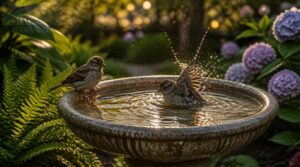
Two inches is the sweet spot. It slows evaporation compared to a deeper bird bath basin, keeps the water surface area sensible, and won’t drown your smaller visitors. Ceramic basin depth holds this level naturally too.
| Depth | Result |
|---|---|
| 2 inches | Safe, stable, cool |
| 4+ inches | Faster evaporation, riskier |
| Wind steals more bath water than heat or sun, but a gapless wall of stacked rocks can cut that loss nearly in half |
That’s how you really stop bird bath water from evaporating.
Limit Bubblers in Heat
Fancy fountains can backfire on hot days. Bubblers and other moving water features actually speed up evaporation, sometimes losing 25% more water during peak afternoon heat.
Bubbler flow adjustment helps—dial it back or shut it off midday. Pair this with regular water level monitoring, and skip the waterfalls until things cool off. Simple heat mitigation, big water savings.
Use Timed Solar Fountains
Want moving water without the evaporation hit? A timed solar fountain splits the difference. Program it to run mornings and evenings, skip peak heat.
Face the solar panel south, keep battery capacity healthy, and watch water level stability so the pump never runs dry. Adjust timers seasonally—less daylight, shorter cycles.
Prevent Leaks and Water Waste

Sometimes evaporation isn’t the real villain, it’s a sneaky little crack doing all the damage. You could refill that bath every hour and still lose the fight if water’s leaking out the bottom. Here’s how to play detective and plug the holes for good.
Inspect Cracks Regularly
A hairline crack today is a puddle tomorrow. Grab a flashlight and check your bird bath weekly.
- Rim inspection first—splashing widens cracks fastest there
- Track crack width with a gauge (0.05mm change means trouble)
- Watch for pattern recognition: stair-steps mean freeze-thaw damage
- Log documentation with photos and dates
- Run seasonal checks, especially after winter, to catch water loss before it drains your bath dry
Seal With Silicone Caulk
Found that hairline crack? Good news: silicone caulk fixes it fast.
Wipe the area bone-dry first, then apply a thin bead and smooth it with a wet finger.
| Step | Quick Tip |
|---|---|
| Prep | Clean, dry surface |
| Apply | Thin, even bead |
| Smooth | Wet finger works |
| Cure | 24 hours minimum |
| Result | Waterproof for years |
Give it a full day to cure before refilling. Cheap insurance against water loss.
Waterproof Concrete Basins
Caulk controls small cracks, but a concrete basin with real damage needs bigger armor. Add a reinforcement grid—polyester or glass fiber—to stop micro-cracks before they start.
For serious leaks, PVC membrane installation creates a tough, weldable barrier. Air entrainment helps concrete survive freeze-thaw cycles too. Always run a pressure test before refilling, and follow winter drain protocols. Keep everything nontoxic and waterproof for your feathered visitors.
Clean Algae and Debris
A patched basin still turns green fast. Skim algae off weekly, and net out leaves before they rot and cloud things up. A basic debris net collection habit beats scrubbing later.
- Skim surface algae weekly
- Net floating debris often
- Watch for cloudy water
- Scrub gently, no harsh scratching
Empty Before Freezing Weather
Winter flips the whole evaporation problem on its head—now water sticks around too well. When nights forecast freezing temps for several days straight, drain the basin completely. Ice expansion cracks basins, splits bowls, and wrecks fountain plumbing fast.
After emptying, dry it out. This stops mold and blocks mosquito habitat before it starts. Simple winter basin care now saves you a cracked bath come spring.
Frequently Asked Questions (FAQs)
How to keep bird bath water cool?
Pick partial shade and thermal-inertia materials like stone. Add a floating shade cover, run your solar fountain on a timer, and choose a cool microclimate—these natural cooling tricks cut heat absorption and keep water temperature comfortable for your feathered visitors.
How do I keep my bird bath from freezing?
Like keeping soup from turning to ice, you’ve got options: try a heated bath thermostat, add insulating base materials, drop in floating ice breakers, use warm water refills, or run a solar pump for gentle circulation.
How to keep a bird bath ice-free?
A heated bird bath mat, south-facing placement, and a small circulating pump keep water moving and ice-free. Keep depth around two inches, skip metal basins, and add a winter cover for extra insulation on brutal nights.
Is it better to drip water into a bird bath?
A drip refill system boosts drip sound benefits and moving water visibility, pulling in more species diversity while cutting evaporation and water loss. Bonus: consistent drips mean solid mosquito prevention. Just adjust your drip rate so it’s a gentle trickle, not a waterfall.
What can I put in my bird bath to keep the water moving?
Want birds to notice your bath from across the yard? A solar pump or floating fountain does the trick. Bubbler stones, misting nozzles, or a DIY aquarium pump all create movement—keeping water fresher and way more inviting.
Why put tennis balls in bird bath?
A floating tennis ball creates tiny surface currents that stop complete ice formation, keeping water accessible for thirsty birds. It’s bright, non-toxic, cheap, and dead simple—winter hydration solved without antifreeze headaches or breaking the bank.
Why put copper pennies in bird bath?
A few old pennies act as natural algae control, releasing copper ions that curb slime and mosquito larvae. It’s low-cost maintenance for water quality, though it won’t fix a shallow bird bath’s evaporation problem—still gotta manage depth and surface area.
How often should you change the water in a bird bath?
Freshening things up regularly is non-negotiable. Swap water every 2-3 days, daily when it’s scorching, to dodge algae, mosquito larvae, and warm, murky water your feathered visitors won’t touch—rain or shine, sooner beats later.
How often should you completely replace bird bath water?
Every two to three days works most of the year, but daily during heat waves. Watch for cloudy water, musty smells, or algae—those mean replace now. Mosquito larvae? Dump it immediately and scrub the basin clean.
How do you keep bird bath water from freezing?
Heated bath technology (10-60 watts, thermostat-controlled) beats freezing outright.
No power source? Try floating ice disruptors like a cork, sunny placement, wind shelter, and stone insulation—basic non-electrical warmth strategies that keep water usable through most cold snaps without frying your electric bill.
Conclusion
Think of your bird bath like a tiny watering hole on the savanna, the animals only come back if it never runs dry. That’s the whole game. Once you master how to keep bird bath water from evaporating, you’re not just saving yourself refill trips, you’re running a reliable oasis for tired, thirsty wings.
Shade, depth, placement, it all adds up. Do the small stuff right, and your yard becomes the spot every bird remembers.
- https://www.aosom.com/blog-where-to-place-a-bird-bath-for-maximum-bird-activity-and-safety.html
- https://fountainful.com/blogs/news/where-to-place-a-bird-bath
- https://www.sacramentoaudubon.org/news/birdbath-tips-help-wild-birds-by-creating-a-clean-water-source-in-your-yard
- https://littlerock.wbu.com/care-and-maintenance-of-birdbaths-and-fountains
- https://www.audubon.org/news/why-you-should-keep-your-birdbath-clean