This site is supported by our readers. We may earn a commission, at no cost to you, if you purchase through links.
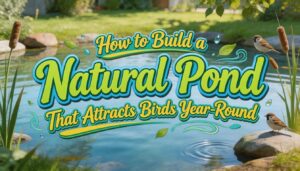
backyard pond doesn’t need to be large or elaborate to pull birds in from surprising distances—even a shallow basin the size of a wheelbarrow can draw a dozen species within a single season. Birds navigate by sound and sight, and moving water cuts through the noise of a neighborhood the way a beacon cuts through fog.
The difference between a pond that birds ignore and one they return to daily comes down to a handful of deliberate design choices.
Get the depth, shade, and edge materials right, and your pond becomes a reliable stop on every local bird’s daily circuit.
Table Of Contents
- Key Takeaways
- Choose The Best Pond Location
- Build Safe Shallow Water Zones
- Add Natural Materials and Shelter
- Keep Water Moving and Clean
- Support Birds Year-Round
- Frequently Asked Questions (FAQs)
- Why are birds attracted to a pond?
- How do you make a pond attract birds?
- Does adding water features help birds?
- How do you make a Bird pond look natural?
- How to attract birds to a pond?
- Will a pond attract wildlife?
- Which bird species benefit most from ponds?
- How does pond pH affect visiting birds?
- Can repurposed materials work for pond construction?
- Do rain chains effectively supply pond water?
- Conclusion
Key Takeaways
- Place your pond where it gets morning sun and afternoon shade, keeps a 15-foot clear perimeter, and sits at least 6–12 meters from foot traffic, so birds feel safe enough to actually use it.
- Keep the water no deeper than 2 inches near the edges, with a gentle 5–10 degree slope and smooth river pebbles, because birds won’t bathe where they can’t find solid footing or a safe exit.
- Moving water is your biggest draw — a gentle trickle under 2 gallons per minute creates the sound and ripple cues birds detect from a distance, while also stopping mosquitoes from breeding.
- Pairing your pond with native shrubs within 10 feet, marginal plants like sedges and swamp milkweed, and feeders 10–15 feet away turns a single water feature into a full habitat birds return to all year.
Choose The Best Pond Location
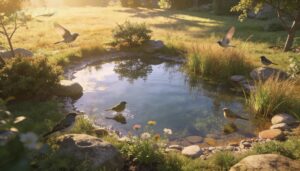
Where you put your pond matters more than most people expect. Birds are picky about their surroundings, and even a well-built pond can sit empty if the location doesn’t feel safe or accessible to them.
Getting the placement right pairs well with thoughtful pond design and maintenance tips that help keep visiting birds safe once they arrive.
Here are the key factors to get right before you break ground.
Morning Sun and Afternoon Shade
Getting the light balance right can make or break your bird-friendly pond. Here’s what morning sunlight and afternoon shade do for you:
- Temperature Regulation — Morning sun warms the water early; afternoon shade prevents dangerous overheating.
- Algae Suppression — Reduced afternoon sun slows algae growth considerably.
- Bird Thermoregulation — Cooler shaded water helps birds manage heat stress comfortably.
- Plant Light Balance — Partial shade protects tender marginal plants from leaf scorch.
- Seasonal Light Cycle — Deciduous trees naturally provide more summer shade and winter sun.
Maintaining optimal plant coverage of 40–60% helps both temperature control and nutrient uptake.
Open Sightlines for Bird Safety
Light sets the stage, but visibility keeps birds safe. Aim for a Clear Perimeter Buffer of at least 15 feet around the water’s edge, with vegetation trimmed to 3 feet or lower.
Open Horizon Design and Wide Approach Corridors let birds scan for predators before landing.
Use Low-Glare Materials and Minimal Visual Obstructions — no mirrored surfaces, no tall hedges blocking open space.
Nearby Shrubs for Quick Cover
Open sightlines bring birds in, but shrubs nearby give them the confidence to stay. Native shrub clusters within 10 feet of the water’s edge act like a safety net — birds dart in, bathe, and retreat quickly when needed. Layered shrub heights work best, mixing taller natives with low groundcover.
- Berry-producing shrubs like elderberry and serviceberry offer food and cover in one spot
- Evergreen winter cover keeps shelter available when deciduous plants go bare
- Shrub hedgerow edges create a dense, hedge-like border that feels safer to birds
- Native vegetation such as dogwood and viburnum enhances habitat diversity and bird-attracting plants year-round
Avoiding High-Traffic Areas
Shrubs give birds shelter, but the wrong pond placement can undo all that work. Birds avoid busy paths and driveways — buffer zone design of at least 6 to 12 meters from foot traffic makes a real difference.
Visual screening through ornamental grasses, noise reducing berms, and light pollution shielding preserve garden tranquility. curved path approach further softens human intrusion naturally.
Creating a Balanced Sun-Shade Setup
Think of sunlight and shade as partners, not opposites. A bird‑friendly pond thrives when morning sun warms the shallow space for 4 to 6 hours, then afternoon shade takes over, cutting evaporation by up to 40 percent. Balancing sunlight and shade in garden water installations means using natural materials like deciduous trees for seasonal leaf cover and flexible canopy design.
Morning sun warms a bird-friendly pond best, but afternoon shade is what keeps it alive
Here’s how to set it up:
- Shade Angle Optimization — Position shade structures on the east side, creating microclimate zones along the shore without blocking open water.
- Sun Tracking Panels — Use moveable pergolas or fabric shades that follow shifting light patterns through the day.
- Seasonal Leaf Cover — Plant deciduous trees so their canopy opens in spring and fall, when birds feed most actively.
Build Safe Shallow Water Zones
Most birds won’t touch water that’s too deep — they’re cautious by nature, and a steep-sided pond feels more like a trap than a refuge.
Shallow, textured basins work best — check out these small yard bird bath options with gentle slopes that give birds solid footing and a safe place to splash.
The good news is that building a safe, shallow zone doesn’t take much effort or expense. Here’s what to focus on when shaping the water’s edge.
Why Shallow Water Attracts More Birds
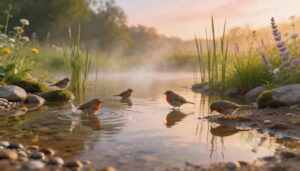
Most birds aren’t looking for a swimming pool — they want a shallow puddle they can trust. A bird-friendly pond with shallow water for bathing, no deeper than 2 inches, creates the right bird comfort zones where species feel safe enough to linger.
Shallow space promotes microhabitat diversity, enhanced foraging along the edges, reduced predator threat, and seasonal water use across visiting species throughout the year.
Keeping Depth Under 2 Inches
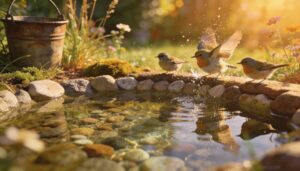
Even a simple depth monitoring habit can make or break your bird-friendly pond. Aim to keep your natural water source consistently at 1 to 2 inches deep — that’s the bird-safe depth range most small species prefer.
Use water level markers like a painted stone to maintain consistent shallow depth. If you DIY a bucket pond, simple depth controls like this keep shallow water for bathing right where birds need it.
Creating a Gentle Sloped Edge
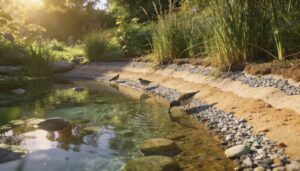
A gradual slope is what separates a bird-friendly pond from one that birds simply ignore. Aim for an 18-to-24-inch horizontal grade down to 2 inches deep, using slope grading techniques that ease wildlife in gently.
Solid substrate preparation — sandy loam over a drainage layer design of compacted gravel — keeps the edge stable. Native edge planting with sedges and rushes manages erosion control naturally, locking soil in place with dense roots.
Using Pebble Beaches for Easy Access
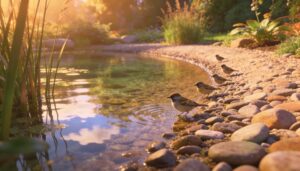
A pebble beach turns your pond’s edge into a proper welcome mat. Consistent Pebble Size Selection — smooth, river-worn stones around 1–2 inches — gives birds stable footing and provides Edge Stability Design that won’t shift after rain.
- Lay pebbles several steps into the shallows for gradual, confident entry
- Apply Erosion Control Strategies using subsurface liner to anchor stones
- Keep Accessibility Path Width clear for undisturbed bird movement
- Schedule Seasonal Pebble Maintenance — rake debris, top worn areas — after heavy rains
Avoiding Deep Basins and Steep Sides
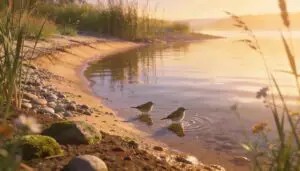
Deep basins and steep drops are basically a "keep out" sign for most birds. Aim for Shallow Depth Zones no deeper than 2 inches near the shoreline, with Gradual Edge Grading and Slope Angle Limits between 5 and 10 degrees.
Soft Bank Contours with Textured Edge Materials like rounded pebbles prevent slipping. A proper graduated slope keeps your bird-friendly pond welcoming, unlike deep ponds that birds simply avoid.
Add Natural Materials and Shelter
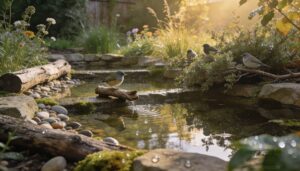
Water alone won’t keep birds coming back — they also need somewhere to land, rest, and feel safe.
The materials you add around your pond make a real difference in how many species visit and how long they stay.
Here’s what works best for turning a simple pond into a habitat birds actually trust.
Using Stones for Secure Footing
Stones do more than look natural — they give birds the grip they need to bathe safely. Rough stone texture and flagstone edges prevent slipping, while a stepping stone pond with staggered placement patterns lets birds move confidently.
Keep these details in mind:
- Use rough flat stones with 6–12 inch variety for stable footing
- Gentle slope angles of 8–12 degrees prevent ankle strain
- Staggered placement patterns create natural landing paths
- Rinse regularly for maintenance durability and algae-free grip
- rock cascade fountain or natural rock fountain adds textured perching surfaces
Placing Logs and Branches as Perches
Once the stones are in place, logs and branches take the habitat a step further. Dry perches with branch diameter variety — some thick, some slender — let different species grip comfortably.
Log angle placement matters too: angled wood offers more landing choices than a straight post. perch height gradient, low to elevated, suits birds of all sizes while integrating dry perches and shelter near water sources naturally.
Planting Native Grasses and Marginal Plants
Plants do more for your bird-friendly pond than logs ever could.
Native grasses like little bluestem and switchgrass anchor the edges through solid soil preparation — loosen the top 4–6 inches, adjust pH to around 6.5, then broadcast your seed mix selection in fall or spring for best germination.
Swamp milkweed and meadow rush make ideal marginal plants, planted in 2–4 foot contiguous bands for edge plant diversity.
Together, they’re the backbone of enhancing backyard biodiversity.
Adding Water Lilies for Shade and Habitat
Water lilies take what native grasses start and carry it further. Plant hardy varieties in aquatic baskets at 30–50 cm depth, in a heavy clay mix topped with gravel.
Their floating pads shade the water, cool it naturally, and create habitat shelter beneath the surface for frogs and insects — exactly the prey that draws birds in. That enhances backyard biodiversity with water elements in action.
Blending Cover, Perches, and Open Water
Think of your pond as three zones working together — cover, perch, and open water. When you layer them well, birds move confidently between each other.
- Layered Vegetation frames edges without blocking sightlines
- Vertical Perch Variety gives birds resting spots at different heights
- Water Edge Texture uses pebbles and stones for secure footing
- Shelter Integration places dense shrubs within quick retreat distance
- Varying Light Patterns from overhead canopy attract insects; bird-attracting plants support
Integrating dry perches and shelter near water sources — while keeping shallow water accessible — completes a bird-friendly pond that draws visitors all season.
Keep Water Moving and Clean
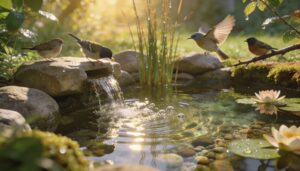
Still water is a missed opportunity — birds are drawn to the sound and movement of flowing water, and a clean pond keeps them coming back.
The good news is you don’t need a complicated setup to make it work. Here’s what to focus on to keep your pond both lively and healthy.
How Moving Water Attracts Birds
Birds pick up on audible water cues and rippling surface appeal long before they see your pond. A slow drip or bubbling surface sends both flowing water visuals and drip sound attraction signals that pull birds in from a distance.
| Water Motion Patterns | Signal Type | Bird Response |
|---|---|---|
| Gentle drip | Audible + visual | Investigates source |
| Bubbling surface | Rippling surface appeal | Lands to drink |
| Slow trickle | Flowing water visuals | Returns repeatedly |
Moving water circulation mimics a fresh, natural puddle—exactly how moving water attracts diverse bird species reliably.
Choosing Gentle Trickles Over Loud Falls
A trickling waterfall does more for your bird-friendly pond than a roaring cascade ever could. Gentle trickles stay under 2 gallons per minute, creating a quiet soundscape between 20–40 decibels that lower predator alert reduction instincts in birds.
That low flow rate also forms micro eddy habitat along the edges. Pair it with an energy-efficient pump, and designing natural water features for backyard birds becomes surprisingly simple.
Preventing Mosquitoes With Circulation
Mosquitoes can’t lay eggs on a surface that won’t stay still. Your pump placement strategy and edge flow design are the real defenses here — a pump near shallow margins pushes circulation where mosquito larvae actually gather.
Apply surface ripple techniques across the full pond, not just the center. Make seasonal circulation adjustments in warm months, and let solar pump efficiency keep your bird-friendly pond moving continuously.
Reducing Algae With Shade and Maintenance
Algae thrives where sunlight and nutrients go unchecked — shade cuts that equation in half. Adjustable shade panels and floating plant coverage can reduce surface light by up to 70%, slowing blooms before they start.
Nutrient-absorbing margins pull runoff away from open water, and a UV water clarifier treats what shade misses. Seasonal debris removal keeps nutrients from spiking.
- Block peak sunlight with adjustable shade panels
- Use floating plant coverage to limit surface exposure
- Plant nutrient-absorbing margins around pond edges
- Run a UV water clarifier alongside your pump
- Schedule seasonal debris removal before bloom-prone periods
Simple Solar and Pondless Water Options
Solar-powered fountain setups are surprisingly simple — a low power pump, adjustable spray nozzles, and smart solar panel placement are all you really need. A battery backup system keeps water flowing past sunset.
Prefer something even cleaner? Pondless reservoir design hides the basin underground, giving you a bird-friendly waterfall without open standing water.
Both are DIY affordable water features for wildlife that use natural materials to create safe bird bathing areas.
Support Birds Year-Round
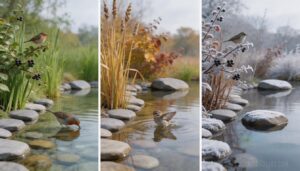
A pond that works in July doesn’t automatically work in January, and that gap is where most backyard habitats fall short.
Keeping birds coming back through every season takes a few consistent habits and some thoughtful additions around the water.
Here’s what makes the difference throughout the year.
Seasonal Pond Care for Bird Activity
Each season brings a different set of needs for your pond. Spring habitat refresh means clearing winter debris before migrating birds arrive — bird migration timing matters more than most people realize.
Summer temperature control keeps algae growth in check, while fall nutrient balance prevents leaf buildup.
Winter ice management, like keeping a small open zone, ensures resident birds always have safe water access.
Refilling Water During Heat and Drought
Heat pulls water out of your pond faster than you’d expect. Morning Refill Timing matters here — top off early, when evaporation rates are lowest and birds are already active.
Rainwater Harvesting from a shaded barrel helps water conservation without wasting tap water.
Use Evaporation Shading with plants or a screen, practice Water Level Monitoring daily, and keep a shallow backup dish ready during drought.
Clearing Leaves and Debris Regularly
Debris Removal Schedule matters just as much as refilling. Leaf Size Impacts how fast things decay — broad leaves break down quickly, clouding water and spiking ammonia.
Rake the surface every few days, using basic Tools and Techniques like a skimmer net.
Seasonal Cleanup Routines protect Water Quality Effects, supporting algae control and preventing mosquitoes and algae in garden water features naturally.
Pairing The Pond With Feeders and Nesting Cover
A clean pond is a great start, but pairing it with bird feeding stations and bird nesting sites turns your yard into a full habitat.
Feeder Proximity matters — place feeders 10 to 15 feet away. Cover Placement Strategy means native shrubs within 6 to 12 feet.
Seasonal Seed Types, Predator Guard Perches, and Integrated Habitat Design complete this bird‑friendly design, enhancing backyard biodiversity with water elements naturally.
Watching Bird Behavior to Improve The Pond
Your pond tells a story — you just have to read it.
Watch for Edge Use Patterns to spot where birds feel safest, and note Perch Preference near cover. Disturbance Sensitivity shows up quickly when birds flush repeatedly.
Track Seasonal Visitation Shifts and Feeding Time Peaks at dawn and dusk. Small adjustments to shallow water, bird-attracting plants, and predator safety make birdwatching at your bird-friendly pond genuinely rewarding.
Frequently Asked Questions (FAQs)
Why are birds attracted to a pond?
Birds treat a pond like a neighborhood hub — it offers drinking water for birds, bathing spots, acoustic cues from gentle movement, insect abundance, temperature regulation, predator avoidance sightlines, social interaction, and enriches avian habitat while enhancing backyard biodiversity with water elements.
How do you make a pond attract birds?
Shallow water, gentle movement, and smart placement do most of the work — combine acoustic water features, colorful pebbles, bird-friendly design, and native plants, and you’ll have drinking water for birds flowing year-round.
Does adding water features help birds?
Yes — water features are a real breakthrough.
They deliver Bird Nutrition Boost, Seasonal Migration Aid, Insect Food Source, and Predator Detection advantages, while Microhabitat Diversity grows naturally, making benefits of Water Features for Avian Wildlife genuinely significant for your backyard.
How do you make a Bird pond look natural?
Mix irregular edge contours, mossy perches, floating plant islands, and a camouflaged pump into your bird-friendly design.
Natural landscaping with rainwater harvesting integration and natural materials creates safe bird bathing areas, enhancing backyard biodiversity with eco-friendly landscaping effortlessly.
How to attract birds to a pond?
Keep water shallow, moving, and clean. Add pebbles, native plants, and gentle circulation.
Position near shrubs for cover.
That simple combination — soundscape design, insect habitat, and smart placement — turns any pond into a bird magnet.
Will a pond attract wildlife?
bird‑friendly pond quickly becomes an amphibian habitat, insect breeding ground, and seasonal migration stopover.
It fosters aquatic plant diversity, deters predator presence, and transforms your wildlife garden into a hub of backyard biodiversity with water sources.
Which bird species benefit most from ponds?
A pond is a magnet for life — ducks and teals, wading birds, moorhens and coots, herons and egrets, and small songbirds all benefit, making bird-friendly design your most rewarding water feature investment.
How does pond pH affect visiting birds?
A stable pH between 5 and 5 promotes invertebrate diversity, reduces ammonia toxicity, and keeps water taste neutral — all critical for consistent prey availability and safe drinking at your bird-friendly pond.
Can repurposed materials work for pond construction?
Yes — best ponds often cost the least.
Salvaged Stone Edges, Recycled Liner Solutions, and Upcycled Wood Shelves all work beautifully, turning discarded materials into functional, bird-friendly habitat without sacrificing durability or ecological value.
Do rain chains effectively supply pond water?
Rain chains work well as a seasonal water supply, but they’re weather-dependent.
Pair a rain chain with catch basin and splash basin design to filter roof runoff and gently top off your bird-friendly pond between dry spells.
Conclusion
Just as a master gardener coaxes life from the earth, your thoughtful design can transform a simple pond into a vibrant oasis. A natural pond attracts birds by mimicking the rhythms of nature, with gentle water flows and native surroundings.
By blending beauty and functionality, you’ll create a haven that welcomes birds year‑round. As you watch your pond come alive, you’ll know that every deliberate choice has paid off, bringing joy and wonder to your outdoor space daily.
- https://conservancy.umn.edu/handle/11299/197962
- https://gardenforwildlife.com/blogs/learning-center/plant-native-shrubs-for-wildlife
- https://choosenatives.org/articles/native-plants-nesting-birds-top-12-picks/
- https://mitchellsnursery.com/native-plants-for-nesting-birds/
- https://naturehills.com/blogs/garden-blog/how-to-create-a-bird-friendly-garden-with-native-plants