This site is supported by our readers. We may earn a commission, at no cost to you, if you purchase through links.

You’ve probably scrolled past dozens of blue and green budgies without a second glance, but a purple parakeet? That’s a bird that stops you mid-step at the pet store. These violet-hued beauties aren’t something you’ll find perched in the wild—they’re the result of careful selective breeding, combining specific genetic traits to create those mesmerizing lavender and deep purple feathers.
If you’re drawn to their striking appearance and considering bringing one home, you’re about to discover they offer far more than just good looks. Purple parakeets pack all the personality, intelligence, and charm of their more common cousins into a package that turns heads and sparks conversations. Understanding what makes these birds tick—from their social needs to their surprisingly specific care requirements—will help you decide if you’re ready to welcome one of these stunning companions into your life.
Table Of Contents
- Key Takeaways
- What Makes Purple Parakeets Unique
- Choosing a Healthy Purple Parakeet
- Purple Parakeet Temperament and Behavior
- Ideal Diet and Nutrition for Purple Parakeets
- Housing and Cage Setup Essentials
- Exercise, Enrichment, and Socialization
- Health, Lifespan, and Veterinary Care
- Training Tips for First-Time Owners
- Top 3 Foods for Purple Parakeets
- Frequently Asked Questions (FAQs)
- Do parakeets make good pets for beginners?
- What is the lifespan of a purple parakeet?
- How many parakeets should be kept together?
- Are purple parakeets good pets?
- Where can I buy a purple parakeet?
- How does a purple parakeet get its color?
- How long do purple parakeets live?
- Can a purple parakeet be born in the wild?
- What should a purple parakeet be fed?
- Are parakeets good for first time owners?
- Conclusion
Key Takeaways
- Purple parakeets are not wild birds—they are the result of selective breeding that combines specific genes to produce violet feathers, making them conversation-starting pets that require the same care commitment as their common-colored cousins.
- A proper diet means ditching seed-only feeding (which can shorten lifespan due to 50% fat content) and switching to a balanced mix of pellets, dark leafy greens, and limited seeds to support vibrant feathers and longevity of 8-12+ years.
- These social birds need 30-60 minutes of daily interaction, 15-20 minutes of free flight time, and mental stimulation through puzzle toys and foraging activities—loneliness shows up as feather plucking, excessive screaming, or withdrawn behavior.
- Your cage should be at least 18″ wide by 24″ high with proper bar spacing (1/2 to 5/8 inch), filled with natural wood perches of varying diameters, rotated toys for enrichment, and positioned at eye level in a bird-proofed room maintained at 65-80°F.
What Makes Purple Parakeets Unique
Purple parakeets aren’t a species you’ll find in the wild—they’re the result of careful, intentional breeding that’s been refined over generations.
Breeders select for vibrant plumage traits that don’t typically occur together in nature, similar to how regional environments shape distinct bird song patterns over time.
Their stunning violet hues set them apart from the green budgies that once filled Australia’s grasslands, making them a favorite for bird lovers who want something eye-catching. Let’s look at what makes these colorful companions so special.
Their plumage patterns can vary by region, much like how Mountain Chickadees show distinct color morphs depending on whether they live near coastal or mountainous areas.
Origin and History of Purple Parakeets
Purple parakeets—sometimes called budgies—aren’t wild wonders you’ll stumble upon in Australia’s grasslands. Instead, their striking hue emerged from selective breeding within pet trade circles across Southeast Asia and Europe during the late 19th and early 20th centuries.
Breeders paired purple-tinged mutations with traditional green parakeets, carefully tracking color genetics to craft these showstoppers for aviaries and homes worldwide.
These selective breeding programs share similarities with field studies of wild species, where researchers use plumage differences in warblers to identify gender and monitor population health.
For a thorough look at their unique traits and origin, see this overview of parakeet species information.
How Purple Coloring is Achieved
If you’re chasing the magic behind these violet hues, it’s a blend of pigment genetics, feather structure, and selective parakeet breeding. Think of it as nature’s chemistry set—each factor plays a part.
Melanin and carotenoid pigments work together in parakeet feathers to create these stunning violet shades, much like the vibrant plumage seen in species such as the Baltimore oriole’s brilliant orange and black coloring.
- Pigment genes mix yellow and blue
- Feather structure scatters light
- Color enhancement from sunlight
- Light refraction intensifies shade
- Care boosts color mutation vibrancy
Differences From Other Parakeet Colors
Beyond those violet hues, purple parakeets differ from green or blue cousins in subtle but striking ways. Color genetics shift melanin distribution, reducing yellow pigmentation while keeping black wing bars intact.
Feather patterns show softer contrast, creating a lavender glow. Blue varieties look similar, but purple adds warmth—pinkish undertones near the beak shapes and head.
Plumage variations from parakeet breeding bring lilac pied combos you won’t find in standard parakeet colors! To better understand how pigment genes produce these unique shades, see this overview of parakeet color genetics.
Choosing a Healthy Purple Parakeet

Picking your first purple parakeet is a bit like choosing a new roommate—you want someone healthy, happy, and compatible with your lifestyle.
Before you fall in love with those violet feathers, you’ll need to know how to spot a bird that’s truly thriving. Here’s what to look for when you’re ready to bring your feathered friend home.
Identifying Age and Sex
You’ll want to check the cere color—that smooth patch above the beak—since males show deep blue while females sport tan or brown tones.
Eye rings darken as birds mature, and head bars fade after the first molt around three to four months. Leg bands stamped with hatch years give you the most accurate age, and maturity signs like confident behavior help confirm you’re choosing the right companion.
Addressing feather plucking early through nutritional support and calming strategies helps young birds develop healthy grooming habits as they settle into their new environment.
Recognizing Signs of Good Health
Look for bright eyes that stay clear and alert, paired with smooth cere skin around the beak—healthy feathers should lie flat and vibrant.
Regular checkups help you catch bird health issues early, while a balanced diet keeps your parakeet’s beak strong and trim.
Watch for active movement and steady breathing, since parakeet health depends on spotting trouble before it escalates.
Selecting The Right Personality
Watch how each purple parakeet reacts when you stand near the cage—bold birds perch at the front and explore your hand, while shy ones freeze or retreat to back corners.
Spend ten to fifteen minutes observing bird behavior and testing temperament with millet treats through the bars. Owner matching works best when you pick a personality that fits your daily routine, noise tolerance, and interest in parakeet socialization and training.
Purple Parakeet Temperament and Behavior
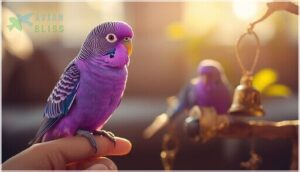
Purple parakeets are clever birds that thrive on interaction and love to be part of your daily routine. They bond deeply with their owners, can learn simple phrases and tricks, and genuinely enjoy hanging out with you or other feathered friends.
Let’s look at what makes their personality so special and how they connect with the world around them.
Friendly and Social Nature
Purple parakeets thrive on social connection—these social birds treat you like family. Their flock behavior means they’ll chirp softly to check in throughout the day, showing exceptional emotional intelligence as they bond deeply with their human companions.
You’ll notice their playful interactions through:
- Gentle preening of your hair or fingers as affection
- Excited head-bobbing when you approach their cage
- Soft beak grinding when they feel safe around you
- Following you room-to-room, seeking constant companionship
- Mirroring your emotions through varied communication styles
Single pet parakeets especially form intense attachments, making daily interaction essential for their happiness.
Intelligence and Trainability
Think of your purple parakeet as a feathered toddler—their cognitive abilities let them link rewards to actions in just 1 to 2 weeks. With daily 5-minute sessions, you’ll see impressive learning speed as they master step-up commands and even their own name.
Their vocal mimicry shines when males build vocabularies of 50 to 300+ words, while problem solving skills emerge through puzzle toys that challenge their memory retention.
Bonding With Owners and Other Birds
Your purple parakeet will bond strongest when you invest 30 to 60 minutes daily in calm, predictable interaction—this social bonding mirrors natural flock dynamics.
For healthy avian companionship and trust building, follow these essentials:
- Speak softly near the cage so your bird learns your voice and presence means safety
- Offer treats by hand to make first contact voluntary, not forced
- Introduce companion parakeets in neutral spaces to prevent territorial behavior
Balanced care fosters both bird interaction and independence!
Ideal Diet and Nutrition for Purple Parakeets

Your purple parakeet won’t thrive on seeds alone—that’s a fast track to serious health problems.
A balanced diet is your bird’s foundation for vibrant feathers, strong bones, and a long life by your side. Let’s break down what your parakeet really needs to eat, how much to offer, and when to serve it.
Seed-Based Vs. Balanced Diet
You might think all seeds are created equal, but here’s the truth: a seed-only diet can shorten your parakeet’s life. Seeds pack up to 50 percent fat compared with pellets at only 4 to 6 percent, creating serious nutrient imbalance.
A healthy parakeet diet mixes pellets, dark greens, and limited seeds—diet shift takes weeks, but pellet benefits and proper parrot diet balance make it worth every step!
Recommended Foods and Supplements
Now that you’re shifting away from seeds, here’s what your purple parakeet actually needs for nutrient balance and food variety.
Parakeet diet and nutrition thrives on these parrot diet staples:
- High quality pellets with prebiotics (60–80 percent of daily intake)
- Dark leafy greens like kale for vitamin sources and calcium
- Bite sized apple pieces, seeds removed, for safe treats
- Beta carotene rich carrots supporting vision
- Avian vet approved probiotics when dietary needs require extra support
Pet bird nutrition means supplement safety first—skip human multivitamins entirely!
Feeding Schedules and Portion Sizes
Once you know what foods work, figuring out daily ration plans and food measurement keeps your budgie diet on track.
Adult parakeets eat small amounts all day—offer food at sunrise and top up in late afternoon to match natural feeding peaks.
Measure about 1.5 to 2 teaspoons of seed allocation or pellet mixing per bird, then add a teaspoon of fresh vegetables for a few hours each morning, removing leftovers to prevent spoilage.
Housing and Cage Setup Essentials
Your purple parakeet deserves a home that gives them room to spread their wings and live their best life.
The right cage setup isn’t just about buying the biggest box you can find—it’s about smart choices that keep your bird healthy, happy, and mentally stimulated. Let’s break down exactly what you need to create a space where your parakeet can truly thrive.
Minimum Cage Size and Bar Spacing
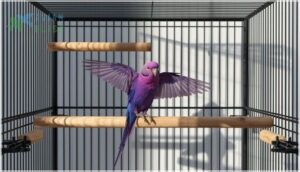
Your feathered friend needs room to spread their wings, literally! For ideal parakeet care and escape prevention, follow these bird cage setup essentials:
- Width: At least 18 inches for a single parakeet as pets to stretch comfortably
- Height: 24 inches minimum for natural perch placement
- Cage depth requirements: 18 inches to encourage parakeet behavior and temperament exploration
- Bar spacing: 1/2 to 5/8 inch prevents head injuries
Choose bar thickness and safe perch materials wisely, ensuring proper ventilation systems support pet bird behavior and training success!
Perches, Toys, and Accessories
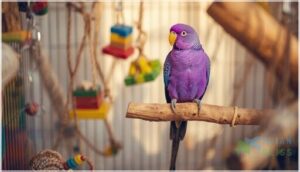
Once you’ve got the right cage, it’s time to fill it with perch materials and toys that’ll keep your purple parakeet thriving! Natural wood perches with varying diameters exercise tiny feet, while swings and rope toys satisfy their playful side.
Here’s what you need:
| Perch Materials | Toy Safety | Accessory Durability |
|---|---|---|
| Natural wood (varying diameters) | No small detachable parts | Stainless steel clips |
| Textured bark for grip | Non-toxic finishes only | Food-safe puzzle feeders |
| Rubber anti-slip bases | Untreated wood blocks | Replaceable components |
Rotate cage enrichment weekly to prevent boredom and encourage pet bird behavior and training success!
Creating a Safe and Enriching Environment
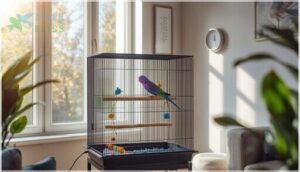
Your cage design sets the stage, but bird proofing the surrounding room transforms safety into adventure. Hide electrical cords, remove toxic plants, and secure windows to prevent escapes while maintaining 65-80°F for ideal parakeet health and wellness.
- Position the cage at eye level for avian companionship and bonding during daily interaction
- Add noise reduction features like soft music to ease stress without disturbing their sleep schedule
- Rotate environmental enrichment items weekly to boost parakeet exercise and stimulation naturally
- Check parakeet care and nutrition stations daily, ensuring feeders stay contamination-free for thriving birds
Exercise, Enrichment, and Socialization
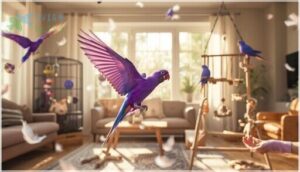
Your purple parakeet won’t thrive on good food and a nice cage alone. These clever, social birds need daily flight time, mental challenges, and genuine connection to stay happy and healthy.
Let’s break down the three essentials that keep your feathered friend entertained, exercised, and emotionally fulfilled.
Importance of Free Flying and Play
Your parakeet’s wings weren’t built for cage bars alone. Free flight benefits include improved cardiovascular health and reduced feather breakage, while daily exercise routines strengthen coordination through varied aerial routes.
Social interaction during supervised playtime essentials decreases boredom-related behaviors, and flight training sessions give your bird the freedom to stretch those wings fully. Just 15-20 minutes of free flying daily transforms both physical health and emotional well-being.
Best Toys for Mental Stimulation
Mental sharpness thrives when your purple parakeet faces fresh challenges each week. Puzzle feeders with hidden treats tap into natural foraging instincts, while interactive games that reward problem-solving keep boredom at bay. Sensory stimulation through chewable wood blocks and shreddable toys satisfies their curious nature, and toy rotation every few weeks ensures parakeet exercise and stimulation never go stale.
- Puzzle feeders that hide treats behind latches or knobs boost problem-solving skills
- Foraging toys with removable flaps mimic natural behavior and encourage exploration
- Sensory stimulation from textured perches and bird-safe bells sparks curiosity
Preventing Loneliness in Parakeets
Flock animals don’t thrive in silence. Daily social interaction—whether through gentle handling sessions, out-of-cage playtime, or a same-species bird companion—keeps loneliness at bay. Watch for feather plucking or repetitive screaming; these behavioral stimulation red flags signal unmet needs.
Environmental enrichment paired with consistent routines fosters trust, strengthens avian companionship and bonding, and transforms parakeets as pets into genuinely happy housemates.
| Loneliness Signs | Prevention Strategy |
|---|---|
| Feather plucking or pacing | Introduce same-species bird companions for natural social exchange |
| Excessive screaming | Schedule daily out-of-cage time in a bird-proofed room |
| Loss of appetite or withdrawal | Rotate toys and add foraging puzzles for behavioral stimulation |
| Reduced interest in toys | Maintain consistent routines so your parakeet anticipates social interaction |
| Sleep disturbances | Provide soft background music or nature sounds for a fuller soundscape |
Health, Lifespan, and Veterinary Care

Your purple parakeet can be your feathered companion for a decade or more, but keeping them healthy takes more than just good luck. Like any pet, parakeets face specific health challenges that you need to watch for, and regular vet visits aren’t optional if you want your bird to thrive.
Let’s break down what you need to know about common illnesses, realistic lifespan expectations, and why that yearly checkup matters more than you think.
Common Health Issues in Parakeets
Your purple buddy can’t tell you when something’s wrong, so you’ll need to watch for subtle signs. Respiratory issues like wheezing or tail bobbing often signal infections requiring urgent care.
Digestive problems, feather conditions, and neurological signs demand quick attention too. Regular health monitoring catches trouble early—track droppings, appetite, and energy daily. Parakeet health and wellness depends on your vigilance!
Lifespan Expectations With Proper Care
With consistent care, your feathered friend can share 8 to 12 vibrant years with you—some even push past a decade! Longevity tips center on diet quality, exercise needs, and health monitoring.
With proper diet, exercise, and health monitoring, your purple parakeet can thrive for 8 to 12 vibrant years—some even past a decade
Environmental factors like stable temps and toxin-free zones matter too. Parakeet health and wellness thrives when you blend pet bird health and wellness basics with daily observation, keeping bird health and veterinary care top of mind for parakeet care and nutrition success.
Importance of Regular Vet Check-ups
Staying on top of parakeet health means more than just good food and lively play—regular vet visit schedules are your secret weapon. Early checks catch sneaky issues and sharpen your emergency preparedness.
Here’s what you gain:
- Health monitoring
- Disease prevention
- Nutrition advice
- Stress and pain checks
- Bird health and veterinary care guidance
That’s how you keep your parakeet thriving!
Training Tips for First-Time Owners
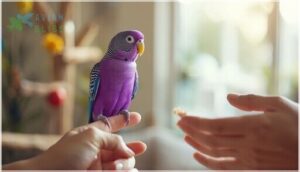
Training your purple parakeet doesn’t have to feel overwhelming, it’s all about patience and showing up consistently. These little birds are naturally curious and enthusiastic to connect, so you’re already starting with an advantage.
Let’s walk through the key techniques that’ll help you build a real bond and teach your new companion some fun skills.
Building Trust and Positive Reinforcement
Rewarding your purple parakeet immediately after desired behavior is key—delayed praise won’t click. Keep training sessions between 5 and 10 minutes so your bird stays engaged without burning out.
Use gentle handling, soft movements, and let your parakeet set the pace. Pair verbal encouragement with small treats to strengthen social bonding and reinforce trust over two to four weeks of consistent, patient care.
Teaching Basic Commands and Tricks
Once trust is solid, you can introduce simple commands that sharpen your bird’s mind and strengthen your bond. Start with these foundational tricks:
- Come when called – Practice with a cue name and reward, repeating in 6 to 8 short sessions daily.
- Target touch – Use a small stick or finger and reward when the beak touches consistently.
- Wave – Present an open palm and reward when your parakeet tilts its head toward your hand.
- Spin – Encourage a full-body rotation and reward completion.
Clicker training paired with positive reinforcement helps with behavior shaping, making trick commands feel like play rather than work. Keep reward systems simple—small seeds or pellets work best. Understanding parakeet temperament and parakeet behavior means respecting natural pace. Bird behavior and socialization improve when you celebrate every small win, building confidence in both pet bird behavior and parrot behavior patterns.
Handling and Taming Techniques
Now apply those commands through hands-on contact. Hand Training begins with letting your parakeet explore your finger like a perch—place it gently near the belly and cue “step up.”
Finger Taming relies on Trust Building, so watch for tail flares or puffed feathers. Gentle Handling respects Parakeet Temperament; if your bird leans away, pause.
Taming Methods rooted in Parrot Behavior and Pet Bird Behavior and Socialization turn every touch into progress.
Top 3 Foods for Purple Parakeets
Your parakeet’s diet decision is one of the most important decisions you’ll make as a new owner, and the right food can add years to their life.
A quality commercial blend provides the foundation your bird needs, combining seeds, grains, and essential nutrients in the right balance. Here are three trusted options that deliver complete nutrition without the guesswork.
1. Wild Harvest Bird Seed Blend
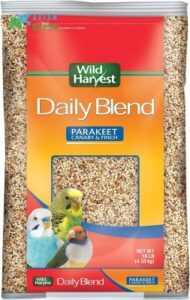
Wild Harvest Daily Blend delivers a carefully curated seed variety your purple parakeet will actually enjoy eating. You’ll find white and red millet paired with canary grass seed and oat groats—all sized perfectly for tiny beaks.
This sunflower-free formula prevents selective feeding, so your bird gets balanced bird nutrition instead of just picking favorites. The blend includes added vitamins A, D3, and E, plus essential minerals that support strong bones and vibrant feathers.
Feed 1 to 2 tablespoons daily, and store the resealable bag in a cool, dry spot to maintain seed quality and freshness.
| Best For | Small bird owners with parakeets, canaries, or finches who want a vitamin-enriched daily seed blend that discourages picky eating. |
|---|---|
| Brand | Wild Harvest |
| Weight | 10 Pounds |
| Form | Granule |
| Flavor | Orange |
| Target Birds | Parakeets, Canaries, Finches |
| Nutritional Enhancement | Vitamins and Minerals |
| Additional Features |
|
- Sunflower-free formula prevents selective feeding and ensures birds eat a balanced mix of seeds
- Fortified with vitamins A, D3, and E plus minerals to support bone health and feather quality
- Resealable 10-pound bag keeps seeds fresh and offers good value for daily feeding
- Not a complete diet on its own—requires supplementing with fresh fruits, vegetables, and other foods
- Seeds create mess from discarded shells and hulls that need regular cleanup
- May not work for all bird species or younger birds with different nutritional needs
2. Kaytee Parakeet Food Formula
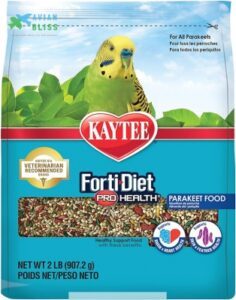
Kaytee Forti Diet Pro Health brings science-backed parakeet nutrition to your bird’s bowl, blending canary grass seed, white millet, and oat groats with flaxseed for omega-3 support. You’ll get 14 percent crude protein plus prebiotics and probiotics that keep digestion smooth and feathers vibrant.
The formula variations—Premium, Pro Health, and Nourish Plus Protect with superfoods like blueberries and spinach—let you customize pet bird nutrition as your parakeet matures. Store opened bags in a cool spot and use within 30 to 45 days for peak freshness.
| Best For | Parakeet owners looking for scientifically formulated nutrition with digestive support and superfood ingredients to keep their birds healthy and vibrant. |
|---|---|
| Brand | Kaytee |
| Weight | 2 Pounds |
| Form | Chunk |
| Flavor | Seed Mix |
| Target Birds | Parakeets |
| Nutritional Enhancement | Prebiotics and Probiotics |
| Additional Features |
|
- Science-backed formula with prebiotics, probiotics, and omega-3s supports digestion, brain function, and feather health
- Multiple formula options (Premium, Pro Health, Nourish Plus Protect) let you adjust nutrition as your bird’s needs change
- Enhanced with nutrient-dense superfoods like flaxseed, blueberries, and spinach for comprehensive daily nutrition
- Higher price point compared to basic seed mixes, especially given the 2-pound bag size
- Packaging quality issues reported, including torn bags and product spillage during shipping
- High vitamin content may trigger unwanted egg production in female parakeets
3. Wild Harvest Bird Food Blend
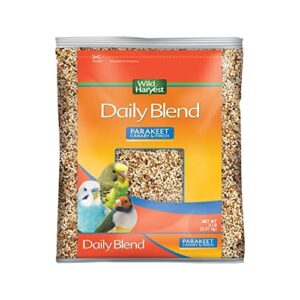
A 5-pound resealable bag of Wild Harvest Daily Blend delivers white millet, red millet, canary grass seed, and oat groats fortified with vitamin A, D3, and trace minerals—everything your purple parakeet needs for vibrant plumage and steady energy.
The sunflower-free seed composition prevents selective eating, while orange oil adds a citrus aroma that even picky birds enjoy. Store the blend in a cool, dry spot and use it within 30 to 45 days so your parakeet gets fresh, nutrient-packed bird nutrition every single day.
| Best For | Parakeet, canary, and finch owners who want a complete daily seed blend with added vitamins and a citrus twist to keep smaller birds healthy and colorful. |
|---|---|
| Brand | Wild Harvest |
| Weight | 5 Pounds |
| Form | Seed |
| Flavor | Orange |
| Target Birds | Parakeets, Canaries, Finches |
| Nutritional Enhancement | Vitamins and Minerals |
| Additional Features |
|
- Fortified with vitamins A and D3 plus trace minerals for vibrant feathers and strong immunity
- Orange oil adds natural flavor that encourages even finicky eaters to dig in
- Resealable 5-pound bag keeps seeds fresh and makes storage simple
- Needs fresh fruits and veggies on the side since seeds alone don’t cover everything
- Seed hulls pile up quickly, so you’ll be topping off the feeder more often than with pellets
- Only works for small birds—larger parrots or unusual species need different blends
Frequently Asked Questions (FAQs)
Do parakeets make good pets for beginners?
Parakeets are beginner-friendly pet birds that won’t break the bank like keeping a horseless carriage.
Their low maintenance care, social needs, and training tips make them ideal for first-time bird owners seeking pet bird health and wellness.
What is the lifespan of a purple parakeet?
Your purple budgie will usually live 7 to 15 years with good care.
Genetic factors, breeding practices, nutrition effects, and health monitoring all influence longevity, while environmental impact and regular parakeet care help optimize their lifespan potential.
How many parakeets should be kept together?
Think big—your feathered friends crave company! Most experts recommend keeping two to four parakeets together for ideal social bonding and flock dynamics, though some birds thrive solo with dedicated human interaction daily.
Are purple parakeets good pets?
These sociable birds make wonderful companions, bonding deeply with owners through playful interaction and gentle handling.
With proper parakeet care, daily attention, and enrichment, purple parakeets thrive as engaging, affectionate pet birds for beginners.
Where can I buy a purple parakeet?
You can find these stunning pet birds through local breeders, reputable pet shops, online marketplaces, bird rescues, and specialty retailers—each source offering different advantages when choosing your perfect feathered companion.
How does a purple parakeet get its color?
Your parakeet’s stunning purple hue comes from a color mutation called the violet factor, which deepens structural blue feathers when yellow pigment production stops through selective parakeet breeding and colors genetics.
How long do purple parakeets live?
Your pet parakeet can brighten your home for 7 to 15 years when you feed balanced pellets, provide daily flight time, and schedule yearly vet visits—good genetics and clean housing push some past 20!
Can a purple parakeet be born in the wild?
Yes, a purple budgie can technically be born in the wild through natural violet mutation. However, these birds are extremely rare because their poor camouflage makes them easy prey for predators in Australia’s grasslands.
What should a purple parakeet be fed?
Think of your purple parakeet’s diet like a rainbow on a plate—balanced nutrition means pellet diets, fresh fruits, seed mixtures, and vitamin supplements.
Parrot nutrition thrives on variety, not monotony!
Are parakeets good for first time owners?
Their small size, calmer handling needs, and beginner-friendly nature make parakeet care ideal for new pet owners.
Daily routines build confidence quickly, and their social personality rewards your commitment with delightful companionship.
Conclusion
Taking the plunge into purple parakeets as pets doesn’t require a perfect setup from day one—it requires commitment to learning as you go. These violet beauties thrive when you prioritize their social needs, nutritional balance, and mental stimulation over aesthetics alone.
Your first-time buyer’s journey won’t be faultless, but armed with proper knowledge about health signs, cage requirements, and bonding techniques, you’re already miles ahead. These exceptional birds deserve owners who show up consistently, not just admirers captivated by their stunning feathers.