This site is supported by our readers. We may earn a commission, at no cost to you, if you purchase through links.
 Monk parakeets as pets offer big personalities in compact packages, but they’ll cost you $600-700 upfront.
These 11-inch charmers are brilliant talkers who’ll learn dozens of words and phrases, though they’re not exactly quiet roommates.
They’re playful and social, and sometimes a bit feisty with their toys, which makes them perfect for folks wanting parrot intelligence without the massive commitment.
Before you fall head over heels for one, check your local laws – they’re banned in some areas due to their escape-artist tendencies and invasive nature.
The real magic happens when you understand their unique care needs and personality quirks.
Table Of Contents
- Key Takeaways
- Cost to Buy Monk Parakeets
- Monk Parakeet Temperament
- Common Health Problems
- Diet and Nutrition for Monk Parakeets
- Exercise for Monk Parakeets
- Where to Adopt or Buy Monk Parakeets
- Blue Quaker Parrot Aliases
- Blue Quaker Parakeet Bio Data
- Proper Care for Blue Quaker Parrots
- Lifespan and Cost of Blue Quaker Parrots
- Frequently Asked Questions (FAQs)
- What should I know before buying a monk parakeet?
- Should you adopt a monk parakeet?
- How much does a monk parakeet cost?
- Are monk parakeets fun?
- Are monk parakeets illegal?
- What is a monk parakeet called?
- How much do Monk Parakeets cost?
- Are Quakers high maintenance?
- What is the temperament of a monk parakeet?
- What are the cons of owning a Quaker parrot?
- Conclusion
Key Takeaways
- You’ll spend $600-700 upfront plus ongoing costs – Initial purchase ranges from $300-1,000, but factor in cage ($200-500), monthly food ($40), toys ($50+), and vet visits ($50-100 each) for true ownership expenses.
- They’re brilliant talkers but noisy roommates – These 11-inch birds learn dozens of words and phrases with impressive vocal abilities, though they’ll chatter loudly during dawn and dusk hours, potentially disturbing neighbors.
- You’re committing to 20-30 years of daily interaction – These intelligent, social birds form deep bonds and require 2+ hours of daily attention, making them unsuitable for casual pet owners or those seeking low-maintenance companions.
- Check local laws before buying – Monk parakeets are banned in ten U.S. states (including California, Hawaii, and Pennsylvania) due to their escape-artist nature and potential to become invasive species.
Cost to Buy Monk Parakeets
When you’re ready to welcome a monk parakeet into your life, expect purchase fees ranging from $300-1,000 depending on the breeder’s reputation and bird’s age.
Adoption prices from rescue organizations typically run lower, around $200-400. However, buying parakeets represents just the tip of the iceberg for your ownership budget.
Pet expenses quickly add up with cage costs ($200-500), monthly food bills ($40), toys for mental stimulation ($50+), and veterinary checkups ($50-100 per visit).
Smart parakeet cost planning prevents financial surprises down the road. Understanding the total pet care costs is essential for responsible parakeet ownership.
Monk Parakeet Temperament
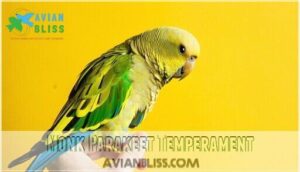
You’ll find monk parakeets are social butterflies who thrive on interaction and form strong bonds with their human families.
These charming birds become devoted companions who genuinely crave your daily attention and affection.
These intelligent birds can be territorial around their cage and may show protective behaviors, but they’re generally affectionate companions who enjoy cuddling and greeting their owners with enthusiastic chatter, making them enthusiastic friends.
Species Overview
Monk parakeets make enchanting companions with their vibrant green backs, gray breasts, and distinctive blue flight feathers.
These medium-sized parrots measure 11-12 inches with sturdy beaks perfect for cracking seeds. Their Physical Traits include pointed tails and large heads, while Color Patterns showcase beautiful green-to-gray gradients.
Size Variations are minimal between males and females. Proper Feather Care keeps their plumage healthy and bright, making monk parakeet pets truly stunning additions to any home.
Origin and History
These colorful birds trace their roots back to their Native Habitat in South America, where wild Monk parakeets (Myiopsitta monachus) first flourished.
Introduction History shows they arrived in North America during the 1960s-70s through escaped pets, creating thriving Feral Populations that adapted surprisingly well to urban environments despite colder climates.
- Geographic spread: From their South American origins, these adaptable birds now call cities across North America and Europe home
- Urban pioneers: Unlike most parrots, they’ve mastered cold-weather survival, building massive communal nests on power lines and buildings
- Accidental immigrants: Their Migration Patterns weren’t planned – escaped pet birds simply found new territories and made themselves at home
Speech & Vocalizations
Throughout their lives, monk parakeets develop remarkable vocal learning abilities that’ll surprise you with their complexity.
These chatty birds possess extensive speech patterns, mastering human words alongside their natural bird songs.
Their voice imitation skills shine through chirping behavior that includes at least eleven distinct calls.
You’ll notice their talking ability emerges around six months, with parrot vocalizations ranging from quiet chatter to occasional loud calls—never ear-piercing screams.
The complexity of their vocalizations is linked to their social behavior patterns, which play a significant role in their ability to communicate effectively with their social behavior and vocalizations.
Colors and Markings
Standard monk parakeets showcase brilliant emerald-green plumage with distinctive gray breast feathers and pale blue wing markings.
Their beak color varies from charcoal-black to pale pink, while tail feathers display darker green hues.
Parakeet pictures reveal fascinating color variations—some bird color variations include lutino yellows and striking blues, though parrot color genetics determine these rare mutations in parakeet species.
Caring for Monk Parakeets
Proper monk parakeet care requires daily attention to their physical and emotional needs.
Your feathered friend thrives with consistent routines and interactive engagement.
Essential Care Requirements:
- Cage Maintenance – Clean perches, food bowls, and cage bottom weekly
- Social Interaction – Spend 2+ hours daily talking and playing together
- Feather Care – Provide shallow water dishes for regular bathing
- Beak Trimming – Monitor overgrowth; consult avian vets when needed
- Noise Reduction – Cover cage partially during sleep hours
- Mental Stimulation – Rotate toys weekly to prevent boredom
Common Health Problems
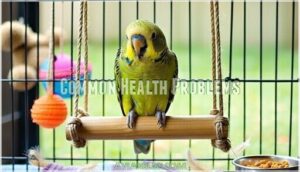
While monk parakeets make wonderful companions, they’re susceptible to several health issues that require your attention.
Understanding these problems helps you provide better care and catch issues early.
Common Health Problems include:
- Respiratory Issues – Poor ventilation or dusty environments can trigger respiratory infections, causing sneezing, nasal discharge, and labored breathing
- Feather Mites – These tiny parasites cause intense itching and feather loss, requiring prompt veterinary treatment with antiparasitic medications
- Vitamin Deficiency – Particularly vitamin A deficiency from poor diet, leading to respiratory and skin problems that weaken your bird’s immune system
- Fatty Liver and Obesity Problems – All-seed diets often cause these serious conditions, making balanced nutrition absolutely essential for your parakeet’s health
Diet and Nutrition for Monk Parakeets
Creating the perfect meal plan for your monk parakeet isn’t rocket science, but it does require balancing their Nutrient Balance carefully.
Pellet Choices should comprise 60-70% of their bird diet and nutrition, while Seed Options like millet provide essential fats.
Fresh Fruits and vegetables deliver vital Vitamin Needs for ideal avian nutrition. Remember, nutritious foods keep your feathered friend thriving!
A well-planned diet should consider seed quality control to guarantee the best nutrition for your pet.
| Food Category | Examples |
|---|---|
| Pellets (60-70%) | High-quality commercial pellets |
| Seeds (20-25%) | Millet, sunflower seeds |
| Fresh Fruits (5-10%) | Apples, berries, melons |
| Vegetables (5-10%) | Leafy greens, carrots, peas |
Exercise for Monk Parakeets

Your monk parakeet needs at least two hours of daily out-of-cage exercise to stay healthy and happy.
Flight training strengthens their wings and builds confidence, while social interaction with you provides mental stimulation.
Rotate toys weekly to prevent boredom—climbing ladders, swings, and puzzle feeders work great.
A spacious cage (minimum 24" x 30" x 24") allows for natural movement between perches.
Playtime activities like hide-and-seek or teaching tricks satisfy their intelligent nature.
Without proper exercise, these active birds develop behavioral problems and health issues.
Providing a stimulating environment is essential for their overall well-being and development.
Where to Adopt or Buy Monk Parakeets

Several avenues exist for acquiring your feathered companion. Reputable breeders offer the best selection, typically charging $300-1,000 for healthy birds with known histories.
Local rescue organizations and adoption centers provide cost-effective alternatives, often including birds needing second chances. Pet stores carry monk parakeets, though quality varies considerably.
Online marketplaces expand your options but require careful vetting. Check local rescue groups first—you might find your perfect match while saving a life.
Research thoroughly before committing, as these intelligent birds need dedicated owners who understand their 20-30 year lifespans and specific care requirements. Understanding proper parakeet care is essential for their well-being, and you can find more information at parakeet care, which is crucial for a healthy bird with a known history.
Blue Quaker Parrot Aliases
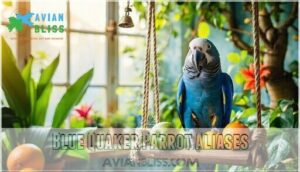
You’ll discover that Blue Quaker Parrots go by several fascinating Pet Monikers that reflect their unique characteristics and heritage.
These Color Variations of the traditional green monk parakeet have earned distinct Bird Nicknames throughout their journey from South America to homes worldwide.
The most common Parrot Names for this species include:
- Blue Monk Parakeet – highlighting their distinctive blue plumage and monastic appearance
- Blue Quaker Parrot – referencing their "quaking" behavior and vibrant coloration
- Myiopsitta monachus – their official Species Classification in scientific circles.
Understanding these various monikers helps when you’re researching monk parakeet info or discussing your pet with veterinarians.
The blue mutation represents one of the most striking Color Variations among Quaker parrots, though they share identical parakeet temperament traits with their green cousins.
Whether you call them Blue Quaker Parakeets or Blue Monk Parakeets, these intelligent birds maintain the same social nature and talking ability that makes them beloved companions.
Their striking appearance has made them increasingly popular among bird enthusiasts seeking unique parakeet pets.
Blue Quaker Parakeet Bio Data
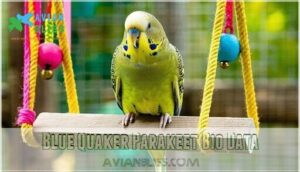
Before you make any final decisions about bringing home a monk parakeet, you’ll want to understand exactly what you’re getting into with these charming yet complex birds.
Here’s the essential bio data that covers everything from their impressive talking skills to their surprisingly strong personalities.
Scientific Information
Understanding the monk parakeet’s Species Classification reveals fascinating insights from Genetic Research and Taxonomy Studies.
Your blue quaker belongs to Myiopsitta monachus, the only parrot species building communal stick nests.
Evolution History shows remarkable adaptability—these South American natives now thrive globally.
Bird Anatomy studies confirm their 20-30 year lifespan and unique social intelligence, making parakeet temperament exceptionally engaging for dedicated owners, due to their remarkable adaptability and unique social intelligence.
Size and Appearance
Your Blue Quaker Parakeet stretches 11-12 inches from beak to tail, weighing 4-5 ounces.
These compact birds pack personality into their petite frames, making them perfect apartment companions.
Key Physical Features:
- Feather Colors – Vibrant green back with distinctive gray breast and blue flight feathers
- Beak Shape – Pale pink, sturdy bill perfect for cracking seeds and exploring
- Tail Length – Long, pointed tail that’s proportional to their Body Size
- Wing Span – Blue underwings visible during flight, creating stunning displays
Their large heads house impressive intelligence, while their sturdy build handles daily adventures with ease.
Talking Ability
Monk parakeets excel at vocal training and develop impressive talking ability through consistent practice.
These natural mimics learn speech patterns quickly, often mastering dozens of words and phrases.
Their voice mimicry skills shine when you provide regular talking tips and positive reinforcement.
Bird communication flourishes with daily interaction, making vocalizations a cornerstone of parakeet behavior and temperament.
Noise Level
Expect considerable noise from your Blue Quaker—these birds reach impressive decibel levels with their piercing calls and bird screams.
Their vocalization types include contact calls, alarm shouts, and chattering that can trigger neighbor complaints.
For apartment living, noise moderation becomes essential since their bird noise level peaks during dawn and dusk.
Consider noise reduction strategies like covering the cage during quiet hours to manage noise issues effectively.
Personality and Behavior
Your feathered friend’s personality will captivate you from day one. These birds possess remarkable Social Needs, craving daily interaction and forming deep Bonding Habits with their primary caregiver.
These feathered companions form bonds that last decades, making every day an adventure in friendship.
You’ll notice their famous Quaking Behavior – a charming trembling motion that’s perfectly normal and gives them their name. Their Playful Nature shines through puzzle-solving and toy exploration, showcasing impressive intelligence.
However, Territoriality emerges around their cage space, requiring patience during introductions. Understanding these pet bird personality traits helps you provide appropriate care.
- Social butterflies: Thrive on human interaction and can become depressed without daily attention
- One-person birds: Often bond intensely with a single family member while remaining friendly to others
- Vocal communicators: Express emotions through varied calls, from happy chirps to protective squawks
- Intelligent companions: Learn routines quickly and respond to consistent parakeet temperament tips
These bird personality traits make them engaging pets when their behavioral needs are met.
Proper Care for Blue Quaker Parrots
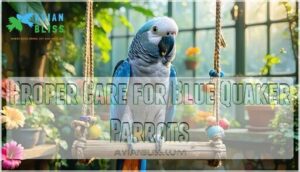
Proper care for your blue Quaker parrot requires attention to four essential areas that directly impact their health and happiness.
You’ll need to focus on housing, diet, hygiene, and breeding considerations to guarantee your feathered friend thrives in captivity.
Housing
Creating the perfect sanctuary for your Blue Quaker starts with understanding their space needs.
These intelligent birds require room to spread their wings and explore. Providing the right environment is essential, especially considering their temperature regulation needs.
| Cage Requirements | Minimum Specs | Optimal Choice |
|---|---|---|
| Cage Size | 24"×30"×24" | 30"×36"×30" |
| Bar Spacing | 1/2" to 5/8" | 5/8" spacing |
| Material | Powder-coated steel | Wrought iron |
Your bird cage setup should include horizontal bars for climbing, proper ventilation systems, and room temperature control. Skip nesting boxes unless breeding—they can trigger territorial behavior in these feisty companions.
Diet
Your Blue Quaker’s diet forms the foundation of their vibrant health.
Offer high-quality pellets as their base, complemented by fresh fruits like mangoes and carrots for vitamin needs.
Seed options should include millet and sunflower seeds for essential fats.
Add leafy greens and vegetables to achieve proper nutrient balance, preventing nutritional deficiencies that plague many pet birds.
A well-planned diet should include parrot food pellets to guarantee a balanced nutrient intake.
This approach ensures your pet bird receives all necessary nutrients for optimal well-being, making proper nutrient balance and high-quality pellets crucial elements of their care.
Hygiene
Proper pet bird hygiene keeps your monk parakeet healthy and happy. Regular Cage Cleaning prevents bacterial buildup that can cause respiratory infections. Clean perches, food dishes, and water bowls weekly using bird-safe disinfectants. To maintain a healthy environment, explore options for effective cage cleaning.
Clean perches, food dishes, and water bowls weekly using bird-safe disinfectants.
Bathing Tips for ideal Feather Maintenance:
- Offer lukewarm water baths 2-3 times weekly
- Use shallow dishes or gentle misting bottles
- Monitor water temperature – never hot or cold
- Allow 10-15 minutes of supervised bathing time
Beak Care happens naturally through chewing appropriate toys and cuttlebones. Nail Trimming requires veterinary assistance unless you’re experienced. Watch for overgrown nails that catch on cage bars.
This parakeet care guide guarantees your bird’s bird care and maintenance needs are met properly.
Breeding
Breeding considerations for Quaker parrots require careful planning and expertise.
During breeding season, pairs need spacious nest boxes measuring 12x12x24 inches for proper nest building.
The female incubates 4-8 eggs for approximately 28 days.
Chick rearing demands constant attention, making hand-feeding challenging for inexperienced owners.
Reputable breeders understand genetic mutations and maintain detailed breeding records.
Most pet owners should leave breeding to professionals rather than attempting complex bird breeding practices at home, as it requires proper nest building and other specialized care.
Lifespan and Cost of Blue Quaker Parrots

Understanding the financial commitment and longevity of Blue Quaker ownership helps you make informed decisions.
These remarkable color mutations typically live 20-30 years, with proper veterinary care extending lifespans to 35 years.
Your initial investment ranges from $400-800 for blue varieties, substantially higher than standard green parakeets.
However, this parakeet buying guide wouldn’t be complete without addressing long-term expenses:
- Annual maintenance cost averages $500 for food, toys, and routine care
- Emergency veterinary care can exceed $1,000 per incident
- Total lifetime parakeet pets cost often surpasses $10,000
Ethical considerations matter too—these intelligent birds require decades of commitment, making them unsuitable impulse purchases.
Frequently Asked Questions (FAQs)
What should I know before buying a monk parakeet?
Consider your lifestyle first—you’ll need 2+ hours daily for interaction since these intelligent birds demand attention. They’re illegal in ten states, cost $600-700 plus ongoing expenses, and live 20-30 years.
Should you adopt a monk parakeet?
Looking for a feathered friend that’ll chatter your ear off?
You should adopt a monk parakeet if you’re ready for 20-30 years of daily social interaction, can provide spacious housing, and live where they’re legal.
How much does a monk parakeet cost?
Monk parakeets typically cost $300-$1,000 from breeders, with an average price around $600-$ You’ll also need to budget for cage, food, toys, and veterinary care expenses.
Are monk parakeets fun?
Seventy percent of monk parakeet owners report their birds as "highly entertaining" companions.
You’ll find these intelligent birds absolutely delightful with their playful antics, exceptional talking abilities, and affectionate cuddling nature that brings joy daily, making them "delightful" companions.
Are monk parakeets illegal?
Yes, you’ll face restrictions in ten U.S. states including California, Connecticut, Georgia, Hawaii, Kentucky, Pennsylvania, Rhode Island, Tennessee, Wyoming, and Maine.
They’re banned due to agricultural concerns and invasive species risks.
What is a monk parakeet called?
You’ll find that monk parakeets go by several names, including Quaker parrot, Quaker parakeet, monk parrot, green parakeet, gray-breasted parakeet, and Montevideo parakeet – they’re all the same delightful species.
How much do Monk Parakeets cost?
Ironically, freedom comes with a price tag.
You’ll spend $300-$1,000 for a monk parakeet from breeders, though adoption might cost less.
Add cage, food, toys, and vet bills for true ownership expenses.
Are Quakers high maintenance?
Quaker parakeets require significant daily attention, mental stimulation, and social interaction to prevent behavioral issues like feather plucking and aggression. They’re moderately high-maintenance pets needing dedicated care.
What is the temperament of a monk parakeet?
Like a spirited social butterfly, monk parakeets are highly intelligent, confident companions who form deep bonds with their owners.
They’re assertive, territorial around their cage, and incredibly vocal with exceptional talking abilities, requiring consistent social interaction, making them incredibly demanding pets.
What are the cons of owning a Quaker parrot?
You’ll face high maintenance needs requiring daily interaction, potential territorial aggression around their cage, loud vocalizations that can disturb neighbors, and legal restrictions in ten states.
Conclusion
Apparently, owning monk parakeets as pets requires the financial commitment of a small car payment and the patience of a saint.
These feathered comedians will chatter your ear off while systematically destroying everything you hold dear.
Yet their intelligence and affectionate nature make them surprisingly rewarding companions.
Before diving into monk parakeets as pets, pictures, cost to buy, and temperament info, remember they’re 20-year commitments requiring specialized care, proper housing, and consistent socialization.
They’re not starter birds, but experienced bird parents often find them delightfully engaging pets.
- https://www.allaboutbirds.org/guide/Monk_Parakeet/photo-gallery
- https://www.animalfunfacts.net/pets/birds/714-monk-parakeet.html
- https://articles.hepper.com/quaker-parrot-cost/
- https://parrotessentials.co.uk/blog/quaker-parrot-monk-parakeet-profile-care-guide
- https://lafeber.com/pet-birds/species/quaker-parakeet/