This site is supported by our readers. We may earn a commission, at no cost to you, if you purchase through links.
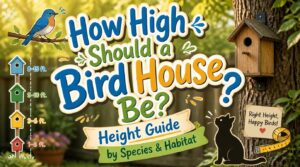
Mount a bluebird box at eye level and you’ll likely get a house sparrow instead. Hang it too high, and cleaning becomes a ladder-balancing act every fall. So how high should a bird house be? The honest answer depends on who you’re hoping to attract and what’s prowling your yard at night.
Cats, raccoons, and snakes all read height as opportunity. Get the range wrong and you’re building a predator buffet, not a nursery.
The good news: species-specific placement takes the guesswork out. Get the height right, and the right birds show up.
Table Of Contents
Key Takeaways
- Most bird houses do best between 5 and 15 feet off the ground, but the exact height depends on the species you’re hoping to attract.
- Six feet is your real safety floor, since anything lower lets cats and raccoons reach nests with a simple jump.
- Different birds have different sweet spots, like bluebirds at 4-6 feet, wrens at 5-10 feet, and purple martins at 10-15 feet.
- Height only does half the job, so pair the right placement with predator guards, proper hole sizes, and sturdy mounting for real nesting success.
Bird Houses Should Be 5–15 Feet High

Getting the height right matters more than most people realize for nesting success. Most backyard bird houses do best somewhere between 5 and 15 feet off the ground, but that range still leaves room for some important decisions. Here’s what you need to know before you grab that ladder.
If you’re unsure where to start, this guide to ideal birdhouse mounting height breaks down what’s best for different species.
Best All-Purpose Height
A handful of inches makes a real difference for nesting success. Most yards do well with 6 to 8 feet, balancing predator deterrence with easy monitoring. This falls within the broader 5 to 15 feet range for species-specific placement.
- Blocks common ground predators
- Keeps entrance visible from the yard
- Works without a ladder
- Suits mixed backyard habitats
- Allows quick seasonal adjustment
Backyard Height of 5–6 Feet
Five to six feet hits a sweet spot many backyard birders swear by. It’s eye-level mounting, so checks and cleaning stay simple, no ladder required.
| Height | Benefit | Best For |
|---|---|---|
| 5 ft | Ground clearance | Chickadees |
| 6 ft | Predator deterrence | Wrens |
| 5-6 ft | Habitat alignment | Mixed yards |
This range suits chickadees at 4 to 6 feet, though wrens often prefer 10 to 20 feet.
Minimum Height for Safety
Six feet is your real floor, not a suggestion. Below that, cats and raccoons reach nests with a simple jump.
- Cat deterrent placement: keep entrances out of paw range
- Ground predator avoidance near fences or low branches
- Storm stability: check mounts before spring winds hit
Pair that height with predator guards for safe human access during cleaning.
Can Bird Houses Be Too High?
Yes, past 15 feet often backfires. Wind exposure rattles boxes and stresses nestlings, while ladders make maintenance difficulty a real headache.
Purple martins tolerate 10–15 feet, but most species don’t need that much. Extreme mounting height also risks flight path obstruction near branches, and skips the temperature regulation benefits mid-range placement offers. Stick with species-specific recommendations, add predator guards, and adjust seasonally instead. For detailed species-specific mounting heights, refer to the bird house mounting guide.
Bird House Heights by Species
Not every bird nests the same way, and your mounting height should reflect that. Different species have different comfort zones, shaped by their size, habits, and natural nesting instincts. Here’s how five common backyard visitors stack up.
Getting the height wrong isn’t just a missed opportunity—it can expose chicks to predators or the elements, so it’s worth understanding common reasons baby birds don’t survive in the nest before you mount your box.
Bluebirds: 4–6 Feet
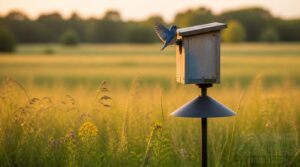
Bluebirds are picky about height, and that pickiness pays off in survival. Nesting box height for bluebirds should stay between 4 to 6 feet, matching open-country habitat preferences. Bluebirds forage over short vegetation, so:
- Mount in meadows or fields
- Orient the entrance hole away from wind
- Add predator guards below
- Keep access easy for monitoring
This range balances safety, sightlines, and hands-on maintenance access.
Chickadees and Titmice: 5–15 Feet
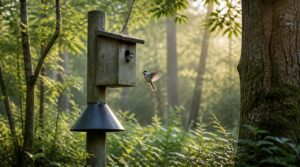
Give these cavity nesters some flexibility. Chickadees and titmice do well between 5 to 15 feet, though 6 to 12 feet suits most yards.
Woodland edges favor mid-range placement, while dense canopy favors higher mounting.
Keep entrances clear of low shrubs, add predator guards below the pole, and skip the perch.
Stable mounting height matters more than exact inches here.
Wrens: 5–10 Feet
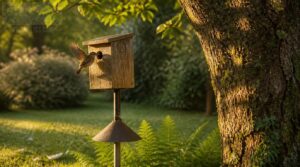
Most yards do well with wren boxes set at 5 to 10 feet, high enough to dodge climbing predators.
- Add a predator guard below the mount
- Face the entrance hole away from prevailing winds
- Shift height seasonally—lower in heat, higher near predators
Check nests weekly; success rates rise when height and guards work together.
Tree Swallows: 5–6 Feet
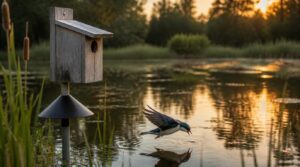
Skimming low over open water, tree swallows need nest box placement at just 5 to 6 feet—low enough for easy foraging flight paths, high enough to deter predators.
| Feature | Recommendation | Why It Matters |
|---|---|---|
| Height | 5–6 feet | Predator deterrence |
| Entrance hole | 1⅛ inch | Blocks competitors |
| Ventilation | Top-mounted | Regulates humidity |
Add predator baffle placement below and orient the entrance away from prevailing winds.
Purple Martins: 10–15 Feet
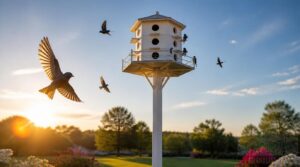
Colony nesters at heart, purple martins need their housing set at 10 to 15 feet, well above typical backyard boxes.
This mounting height helps open flight paths and easier adult access while limiting ground predators.
Use smooth pole mounting (no perches), 2 to 2.5-inch entrance holes, and porch guard rails so fledglings don’t tumble during their first attempts at flight.
Match Mounting Height to Habitat
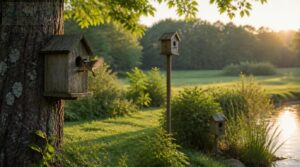
Height alone won’t do much good if the house sits in the wrong spot. Where you place it, and how it faces the world, matters just as much as how high it goes. Here’s what to think through before you grab the ladder.
Woodland Versus Open Habitats
A wood full of shade acts differently than an open field, so your mounting choices should follow suit.
Woodland houses benefit from canopy density impact, staying cooler and hidden.
Open habitats need wind-resistant placement due to wind exposure differences.
Match habitat matching to species: edge zones support diverse nesters, while ground nesting preferences favor open, sunlit sites.
Clear Entrance Flight Paths
Once habitat is settled, check the approach itself. Birds need a clear flight corridor into the entrance, free of branches or fencing.
- Keep entrance hole orientation angled away from wind
- Trim vegetation blocking approach clearance
- Avoid perches that aid predator access
- Maintain mounting height for safe, quick retreat
Good wind protection and spacing reduce collisions and support predator deterrence near the hole.
Sun and Shade Exposure
Height alone won’t cool a nest box. Morning shade paired with afternoon sun protection creates thermal stability that midday exposure can’t match.
| Exposure | Effect |
|---|---|
| Full sun | Faster overheating, moisture loss |
| Morning light, afternoon shade | Stable microclimate, better humidity |
A shade canopy from nearby trees blocks harsh UV and keeps chicks from overheating during peak hours.
Seasonal Height Considerations
Sun and shade get you through the afternoon, but the calendar shifts what "ideal" height even means. Leaves fill in fast come nesting season, shrinking flight paths, so nudge houses up 1–2 feet.
- Spring predator height: raise boxes as cats and foxes grow bolder
- Summer heat adjustment: mid-range heights curb moisture buildup
- Fall migration elevation: slightly higher clears thinning foliage
- Winter snow clearance: 2–4 feet above drift lines keeps entrances open
Multiple Bird House Placement
One box rarely fills a yard. Space several at staggered heights to mimic mixed habitat and cut competition between species.
| Box Height | Suggested Species |
|---|---|
| 4–6 ft | Bluebirds, swallows |
| 5–10 ft | Wrens, chickadees |
| 10–15 ft | Purple martins |
Keep flight paths separated so birds aren’t crossing routes, and coordinate predator guards across every pole.
Combine Proper Height With Predator Protection
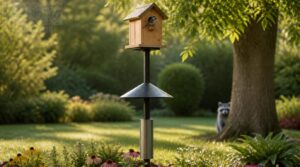
Getting the height right is only half the job of keeping your bird house safe. Predators like raccoons, snakes, and cats are clever climbers, so your setup needs a few extra layers of defense. Here are five practical steps to lock down that protection.
Install Pole Baffles
A squirrel can climb almost anything — except a smooth, wobbly cone. That’s why pole baffles matter so much. Mount the baffle’s top edge at least 5 feet up, extending 18-24 inches below the house.
A squirrel can climb almost anything, except a smooth, wobbly baffle cone
Choose galvanized steel or heavy-duty plastic conical or stovepipe styles, and clamp them securely. Inspect yearly for dents that create predator footholds.
Avoid Entrance Perches
A perch might look welcoming, but it’s really an invitation for trouble. Most cavity nesters don’t need one to get inside.
Skip perches to cut predator access, reduce moisture, and improve fledging odds:
- Removes landing stages for climbers
- Speeds up entry, cutting exposure
- Discourages non-native usurpers
- Keeps entrance dry and ventilated
Choose Correct Hole Sizes
Height alone won’t stop predators if the entrance hole is wrong. Bluebirds need 1 1/8 inch holes; wrens do fine with 1 inch; tree swallows want 1 1/4 inch; purple martins require 1 1/2 inch.
Smaller openings block raccoons and squirrels while still fitting your target species. Drill with sharp bits, sand burrs, and never enlarge an existing hole—replace the box instead.
Use Stable Mounting Surfaces
A wobbly bird house is a welcome mat for trouble. Secure mounting hardware and weather-resistant fasteners keep your setup rigid at any mounting height.
- Corrosion-resistant screws for outdoor durability
- Non-slip base plates for load distribution
- Stable pole or wall anchors year-round
Check fasteners seasonally—loose hardware undermines birdhouse stability faster than predators ever could.
Storm-Proof Every Installation
A gust-battered pole does birds no favors. Use rot-resistant, storm resistant materials, and confirm the setup meets wind load testing standards for your area.
Flood-proof foundations and proper drainage keep bases from weakening. Seismic stability measures matter too if you’re in shake-prone regions.
Skip lightning protection tips at your own risk near tall trees. After storms, do a poststorm check—loose hardware invites predators fast.
Keep Bird Houses Accessible and Safe
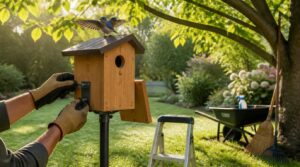
Getting the height right is only half the job of caring for a bird house. You’ll also need to keep it easy to reach, so checking, cleaning, and fixing it doesn’t become a hassle. Here’s what to keep in mind to make upkeep simple and safe.
Choose Ladder-Free Heights
No ladder needed? That’s the goal. Pick a safe mounting range of 5 to 6 feet for easy cleaning height and ladder-free access, matching most species-specific height recommendations.
This head-height sweet spot keeps your accessible bird house within arm’s reach, so checking nests and clearing debris stays simple, safe, and part of your regular routine.
Monitor Active Nests Safely
Easy access invites a habit worth doing carefully. Keep at least 15 feet between you and active nests, checking every 3–4 days with binoculars instead of leaning in close.
Skip loud talk, sudden moves, and long visits. Log dates, weather, and egg counts from a distance—this minimizes disturbance while still tracking nesting success.
Clean After Nesting Season
Once fledging wraps up, it’s time to swap the binoculars for gloves. Remove old nesting debris, then disinfect with a 1:9 bleach solution if droppings are present—plain detergent works for lighter grime.
Check ventilation gaps for blockages and let the box dry fully before closing it back up. Clean once per season, ideally in fall, to curb parasites and disease.
Inspect Mounts and Fasteners
With the box clean and dry, give the hardware a once-over. Check bolts and brackets for rust or wobble—loose fasteners invite predators and storm damage.
Wipe surface grime, verify torque, and dab anti-seize on metal joints. Reapply UV sealant around screw holes. This quick check protects your mounting height investment and keeps nest box placement stable through the season.
Adjust Height When Needed
Fasteners aren’t the only thing worth revisiting each season. Raise houses in early spring, then lower after nesting to discourage late-season predators.
Adjust in 12–18 inch increments, and recheck after storms, since heavy rain can shift poles or soften ground.
Skip changes once eggs appear—wait until the nesting stage passes.
Frequently Asked Questions (FAQs)
Where not to put a birdhouse?
Skip living trees, wooden fence posts, and dense shrubbery near predator access zones. Avoid wind exposed clearings, spots near bird feeders, and reflective surface proximity, all of which invite trouble or overheating for nesting birds.
What color birdhouse attracts birds the most?
Like a chameleon choosing its backdrop, birds pick birdhouses that vanish into their world. Bluebirds favor pale blue, chickadees prefer green or brown, and wrens lean olive—matching foliage while avoiding predator attention through smart, nontoxic paint color choices.
Can a bird house be too high?
Yes. Beyond 15 feet, accessibility limits make monitoring and cleaning tough, wind exposure increases, and predator deterrence actually drops off. Stick to species-specific height recommendations instead of guessing higher is always safer for nesting success.
Should a birdhouse be in the sun or shade?
Think old-fashioned sundials: they tracked light without frying anything. Your birdhouse needs that same balance—morning sun, afternoon shade. This regulates nest temperature, protects eggs from heat stress, and still keeps predators visible during vulnerable hours.
Can a bird house be mounted on a tree trunk?
Trunk mounting works well using non-invasive straps instead of nails, which avoid bark damage. Choose a mounting height balancing your maintenance access with predator protection, add guards, and reassess as the tree grows.
Does bird house height matter more than entrance direction?
Height wins out. Predation risk and nesting success hinge on mounting height far more than orientation. Get the height and entrance hole size right first, then fine-tune direction for weather and sun exposure.
Conclusion
Picture a sparrow-sized penthouse bolted twelve feet up, empty all summer, while a bluebird nests in a mailbox post nobody measured. That’s what guessing gets you.
So how high should a bird house be? Let the species answer, not your ladder’s comfort zone. Match height to habitat, add a baffle, and you’ve built more than a box—you’ve built a nursery that works.
Get this right once, and the right birds return year after year, no repeat guesswork required.