This site is supported by our readers. We may earn a commission, at no cost to you, if you purchase through links.
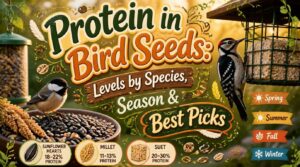
A nestling packs on tissue faster than almost any vertebrate on the planet, and it can’t do that on birdseed filler. It needs raw building material: 20–25% protein, delivered fast, or growth stalls. Yet plenty of feeders stay stocked with cheap millet and cracked corn year-round, blind to what’s actually fueling (or starving) the birds outside their window.
Protein in bird seeds isn’t one-size-fits-all. A cardinal feeding chicks and a junco riding out January have wildly different needs, and the seed mix matters as much as the calendar. Get the match right, and you’ll see it—in fuller feathers, steadier visits, healthier broods.
Table Of Contents
- Key Takeaways
- How Protein in Bird Seeds Supports Birds
- Protein Levels in Popular Bird Seeds
- Matching Protein Sources to Bird Species
- Top 3 Bird Seed Products Compared
- Seasonal Protein Feeding and Seed Safety
- Frequently Asked Questions (FAQs)
- What bird seed is high in protein?
- Why put a potato in your bird feeder?
- Can birds eat too much bird seed?
- What is the best source of protein for birds?
- How do I stop squirrels from stealing bird seed?
- Does buying bird seed in bulk save money?
- Which seed blends work best with cage feeders?
- How long do large bags of bird seed last?
- Can spicy seed blends actually deter squirrels?
- Conclusion
Key Takeaways
- Protein needs shift dramatically by life stage, peaking at 20–25% for nestlings and dropping to 10–15% for adults in maintenance mode.
- Peanuts pack the biggest protein punch at 25–28%, followed by nyjer (20%), safflower (17–20%), black-oil sunflower (16–18%), and millet trailing at just 10–12%.
- Matching seed to species matters most: finches thrive on nyjer, cardinals prefer sunflower and safflower, jays and woodpeckers favor peanuts, and juncos or doves do fine on millet.
- Seed-only diets can’t fully replace complete nutrition, since they lack fortified minerals and vitamins, so pairing high-protein seeds with calcium sources and fresh storage practices helps prevent deficiencies year-round.
How Protein in Bird Seeds Supports Birds
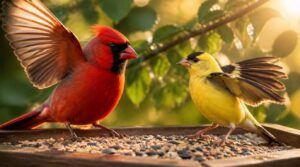
Protein isn’t just another nutrient on the label, it’s the building block behind feathers, muscle, and eggs. Your backyard birds need it in different amounts depending on age, activity, and time of year. Here’s what’s actually happening beneath the surface of that seed mix you’re pouring.
During molting season especially, your bird’s protein needs spike as it channels energy into regrowing feathers, which is why choosing the right high-protein foods for molting birds makes such a difference.
Why Birds Need Dietary Protein
Break down a sunflower seed and you’re really feeding keratin production for feathers, muscle fibers, and repair enzymes. Amino acids birds can’t self-manufacture drive nucleic acid synthesis, immune defense, and tissue repair protein. That’s why avian nutrition hinges on protein ratios, not just calories. Skimping here shows up fast: dull plumage, sluggish healing, weaker chicks.
Adult maintenance diets usually require 10–15% of total calories from protein, which can be met through quality commercial pellets.
Protein Needs by Life Stage
That baseline shifts hard once you factor in age. Nestling protein requirements peak at 20–25%, fueling explosive tissue growth, while juvenile growth protein needs settle near 14–18% for feather and bone formation.
- Breeding season protein: 12–18% helps with egg production
- Molt phase protein: 14–18% rebuilds plumage
- Senior bird protein: 12–15% fights age-related muscle loss
Seeds Versus Complete Nutrition
Those percentages only tell half the story. Seed vs complete diets differ because seeds lack fortified minerals and vitamins, creating nutrient gaps in calcium and amino balance. Fortified diets add a vitamin boost seeds can’t match. So while birdseed protein levels look solid on paper, nutritional content from blends alone rarely delivers complete birdseed nutritional value.
Risks of Seed-only Diets
That gap widens fast on a seed-only menu. Skipped greens and insects mean Vitamin A Deficiency, weaker Immune Function Decline, and dull plumage.
High fat without balance invites Fatty Liver Syndrome, while poor protein ratios cause Growth Rate Stunting in juveniles.
Mineral imbalances can trigger Iron Storage Imbalance, disrupting anemia risk—proof that birdseed protein levels alone can’t cover species-specific needs.
Protein and Calcium Supplements
Bones need more than seed alone. Calcium builds the mineral matrix, but protein-calcium ratios matter too, since collagen holds it together.
- Calcium carbonate (with meals)
- Calcium citrate (anytime)
- Whey/soy protein powders
- Combo calcium+D3 blends
Over-supplementing risks imbalance. Match birdseed supplements to actual gaps, not guesswork.
Protein Levels in Popular Bird Seeds
Not all bird seeds are created equal, and the protein numbers prove it. Some pack nearly double the punch of others, which changes how you should stock your feeder. Here’s how five popular choices stack up, from highest to lowest.
Peanuts: 25–28% Protein
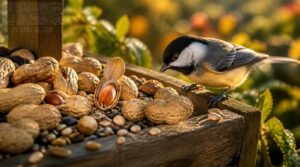
No seed on your feeder tray packs a bigger protein punch than the peanut, delivering 25–28% protein by weight, rivaling meat-based feeds. Storage matters: keep peanuts dry and rancid-free. Watch for allergen exposure, too.
If your feeder crowd leans toward variety, pairing peanuts with sunflower seed bird food for outdoor feeders can round out the protein and fat balance for picky visitors.
Peanuts deliver 25–28% protein, rivaling meat-based feeds as the richest seed on the tray
| Nutrient | Peanuts |
|---|---|
| Protein | 25–28% |
| Storage | Airtight, dry |
| Buying | Bulk-friendly |
Nyjer: About 20% Protein
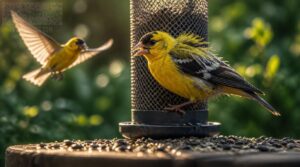
Tiny but mighty, Nyjer delivers 20% crude protein, paired with 35% fat for serious energy density. Finches and siskins thrive on it during molting, when feather regrowth spikes protein demand. High oil content boosts absorption efficiency, too.
Store Nyjer airtight and dust-free, since spoiled seed loses potency fast. Rotate stock often, feed fresh, and finches keep coming back.
Safflower: 17–20% Protein
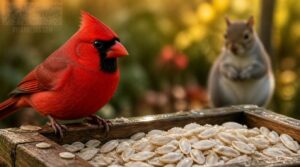
Cardinals know a good shell game when they see one. Safflower delivers 17–20% protein, and its thick hull keeps squirrels and starlings out while cardinals crack right through.
Why it earns a spot:
- Steady protein without excess fat
- Squirrel-resistant shells cut waste
- Stores well in airtight containers, dust-free
Fresh, dry safflower keeps cardinals returning all season.
Black-oil Sunflower: 16–18% Protein
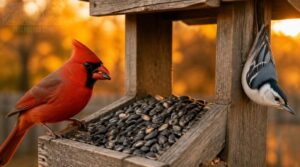
Call it the workhorse of the feeder: black oil sunflower delivers 16–18% protein, stable across lots, plus 45–50% oil for fat-protein balance. That combo fuels feather repair and muscle maintenance for cardinals and nuthatches alike.
The seed also carries calcium, phosphorus, and a solid amino acid profile, rounding out its nutritional content without piling on unnecessary fiber.
Millet: 10–12% Protein
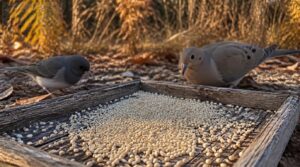
Don’t dismiss millet as filler. At 10–12% protein, white proso millet trails sunflower and safflower, but its low 4% fat and easy digestibility suit juncos and doves foraging on the ground.
Store kernels cool and dry to keep protein stable. Used alongside higher-protein seeds, millet rounds out protein-fiber balance during non-breeding months without overloading your feeder budget.
Matching Protein Sources to Bird Species
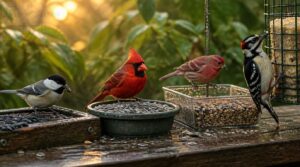
Knowing the protein percentages is only half the equation. Every species at your feeder has evolved a distinct preference, shaped by beak shape, foraging habit, and energy demands. Here’s how to match the right seed to the right bird.
Finches and Siskins Prefer Nyjer
Pinpoint beaks demand pinpoint seeds, and that’s precisely what Nyjer delivers to goldfinches and Pine Siskins. At roughly 20% protein, these tiny, oil-rich kernels fuel winter finch feeding when natural sources vanish.
Why finches flock to Nyjer:
- Easy extraction through small-port tube feeders
- Sustained energy from high-protein seeds during cold snaps
- Fewer competitors, since larger birds can’t access mesh openings
Store Nyjer cool and dry—rancid seed kills the diet balance finches crave.
Cardinals Choose Sunflower and Safflower
A bigger beak calls for a bigger seed, and that’s the logic behind cardinal feeding. They favor sunflower and safflower seeds, drawn to sunflower’s 45–50% fat content and safflower’s tough hull, which keeps aggressive competitors away.
Platform and hopper feeders with wide perches suit their size best. Store both seeds airtight—freshness keeps protein and fat intact for these year-round backyard regulars.
Jays and Woodpeckers Favor Peanuts
Peanuts step in where sunflower leaves off, packing 25–28% protein, the richest of any common seed. Blue jays cache in-shell nuts for winter; woodpeckers hammer shelled bits at suet stations.
- In-shell peanuts suit jay caching
- Shelled pieces favor quick woodpecker feeding
- Platform feeders accommodate jays
- Suet-style feeders draw woodpeckers
Juncos and Doves Eat Millet
Woodpeckers hammer suet; juncos and doves work the ground below, content with far less protein.
Millet delivers just 10–12% protein, yet its energy density fuels winter foraging when insects vanish. Ground feeder birds prefer scattered white proso millet, pecking small kernels with ease, no feeder required. Doves gather in patches after long flights; juncos return daily, building reserves through cold snaps.
Feeder Types for Each Seed
Matching seed to feeder isn’t optional — it’s what determines whether protein reaches the right beak.
- Nyjer tube feeders for finches
- Safflower hopper feeders for cardinals
- Peanut tray feeders for jays
Sunflower platform feeders and millet mesh feeders round out your setup, letting birdseed blends serve every visitor without waste or wrong-species access.
Top 3 Bird Seed Products Compared
Knowing the protein numbers is one thing, but picking the right bag off the shelf is another challenge entirely. You want a mix that matches your feeder setup without wasting money on filler seeds birds ignore. Here’s how three popular options stack up.
1. Wagner’s Farmer’s Delight Bird Seed
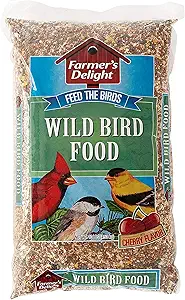
A 10-pound bag runs economical, blending sunflower seeds, millet, cracked corn, and milo for general-purpose feeding. Sunflower dominates the mix, delivering that reliable 16–18% protein baseline, while corn and milo add accessible energy rather than protein density.
Ground foragers—doves, sparrows, juncos—pick through cracked corn and milo easily. Cardinals and finches sample too, though picky songbirds sometimes bypass the filler grains. Works in hoppers or tubes; just store it sealed and dry to dodge mold in humid stretches.
| Best For | Backyard bird enthusiasts who want an economical, all-purpose seed mix to attract a wide variety of species like cardinals, finches, doves, and ground feeders. |
|---|---|
| Weight | 10 lb |
| Sunflower Seeds | Included |
| Wildlife Attraction Risk | Squirrels, raccoons |
| Target Birds | Cardinals, finches, doves |
| Price Tier | Economical |
| Feeder Compatibility | Hopper, tube |
| Additional Features |
|
- Value-priced blend that works well for general-purpose feeding across many bird species
- Made in the USA with quality grains, plus a cherry scent that boosts attraction
- Compatible with both hopper and tube feeders for flexible setup
- High filler content (corn and milo) means picky songbirds may pick around it
- Cherry scent can draw in unwanted visitors like squirrels and raccoons
- Heavy 10-pound bag can be awkward to handle and needs dry storage to avoid mold
2. Audubon Park Nut Fruit Birdseed
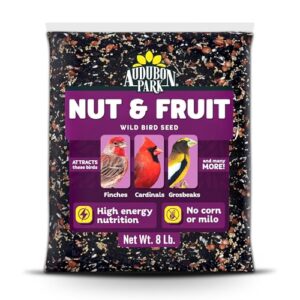
Fruit lovers, take note: this mix pairs peanuts, sunflower, and safflower with real raisins and dried papaya, sold in 5- or 15-pound bags.
That fruit-forward twist draws orioles and robins alongside your usual cardinals and grosbeaks, while peanut protein anchors the nutritional punch.
Varied particle sizes mean it works across tube, hopper, and platform feeders. Just watch for allergen labels—tree nuts and soy show up in sourcing—if sensitive wildlife or pets share your yard.
| Best For | Backyard bird enthusiasts hoping to attract fruit-loving species like orioles and robins alongside cardinals and grosbeaks. |
|---|---|
| Weight | 8 lb |
| Sunflower Seeds | Over 50% |
| Wildlife Attraction Risk | Squirrels |
| Target Birds | Cardinals, woodpeckers, orioles |
| Price Tier | Higher price |
| Feeder Compatibility | Tube, tray, hopper, platform, smart |
| Additional Features |
|
- Real raisins and dried papaya bring in fruit-loving birds that seed alone won’t attract
- Peanut, sunflower, and safflower blend delivers solid protein for year-round energy
- Varied particle sizes make it versatile across tube, hopper, and platform feeders
- Contains tree nuts and soy, which may pose a risk if pets or sensitive wildlife are around
- Only available in larger 5- or 15-pound bags, less ideal for casual feeders
- Pricier than basic seed mixes due to the fruit and nut additions
3. Kaytee Nut Fruit Bird Seed
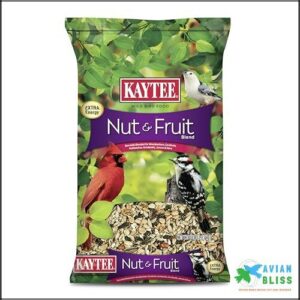
Sunflower, safflower, peanuts, and dried fruit pieces round out this 5- to 20-pound mix, built for energy density over sheer protein punch.
Cardinals, chickadees, and nuthatches gravitate toward it, drawn by visible nut chunks and that fruity aroma marketers love to tout.
Larger pieces mean fewer wasted hulls, but wider feeder ports help. Store it cool and dry, reseal tightly, and check weekly—moisture turns fruity mixes moldy fast.
| Best For | Backyard birdwatchers who want to attract a wide variety of songbirds, like cardinals, chickadees, and woodpeckers, with a high-energy, nutrient-rich seed blend. |
|---|---|
| Weight | 5 lb |
| Sunflower Seeds | Included |
| Wildlife Attraction Risk | Squirrels, rats, crows |
| Target Birds | Cardinals, chickadees, woodpeckers |
| Price Tier | Priced higher |
| Feeder Compatibility | Outdoor feeders |
| Additional Features |
|
- Packed with sunflower seeds, peanuts, raisins, and cherries for lasting energy
- Attracts a diverse mix of popular backyard birds
- Backed by a brand with over 150 years of bird food expertise
- Can also draw unwanted pests like squirrels, rats, and crows
- Contains only a small amount of fruit, so it’s not ideal if you want a fruit-heavy mix
- Costs more than basic seed blends
Seasonal Protein Feeding and Seed Safety

Bird protein needs aren’t fixed year-round; they shift with the seasons, sometimes by as much as 25%. Getting the timing right means knowing what to feed during breeding, molting, migration, and cold snaps, plus how to keep that seed safe until birds eat it.
Here’s what each season demands, and how to protect your investment along the way.
Spring Breeding Protein Boosts
Nest season runs on protein. Your feeders should lean toward high-protein seeds—peanuts (25–28%), nyjer (20%), safflower (17–20%)—to fuel feather growth, chick development, and territory feeding demands. Pair these with calcium sources for solid eggshell strength.
Nestling protein support isn’t optional; it’s biology in a hurry, powering rapid tissue synthesis during breeding bird nutrition’s busiest weeks.
Summer Molt Protein Demands
Growing new feathers is expensive work, and molting birds pay for it in protein. Feather keratin demands a protein boost up to 25% above maintenance levels, plus methionine and lysine for synthesis.
Reach for high-protein seeds:
- Peanuts (25–28%)
- Nyjer (20%)
- Safflower (17–20%)
Feed steadily throughout the day—finches favor nyjer, cardinals prefer safflower—matching species-specific protein needs without digestive stress.
Fall Migration Nutrition Balance
Molt finishes, but the work isn’t over—now fat loading takes priority. Pair high-protein seeds with sunflower for migration fuel, timing boosts between late summer and early fall.
| Seed | Protein | Role |
|---|---|---|
| Peanuts | 25–28% | Muscle repair |
| Nyjer | 20% | Steady energy |
| Millet | 10–12% | Variety |
Fresh, varied seed prevents nutrient gaps during these critical flight windows.
Winter Protein and Calorie Needs
Cold snaps demand calorie-rich mixes, not just protein. Winter birds burn fat fast for warmth, so pair peanuts (25–28% protein) with black-oil sunflower’s 45–50% fat.
Cold-weather priorities:
- Feed before dawn—overnight fat stores run low.
- Boost portions during snaps.
- Place feeders near shelter, reducing exposed foraging.
Winter seed blends succeed when calories and protein work together, not separately.
Freshness, Storage, and Sodium Safety
None of that calorie math matters if the seed’s gone stale. Seed freshness hinges on airtight container storage between 50–65°F, with humidity under 65%. Check weekly for musty odors or clumping.
Skip salted nuts entirely—sodium-free seed storage protects birds from toxicity. Rotate stock often, and your feeders stay safe, nutritious, and genuinely worth visiting.
Frequently Asked Questions (FAQs)
What bird seed is high in protein?
Ranking seeds by protein reveals a clear hierarchy. Peanuts top the list at 25–28% protein, followed by nyjer near 20%, safflower at 17–20%, black-oil sunflower around 16–18%, and millet trailing at just 10–12%.
Why put a potato in your bird feeder?
Honestly, don’t. Raw potatoes carry solanine toxicity risks, birds can’t digest starch well, and spoilage invites mold fast. Skip the myth—stick with sunflower or nyjer seeds, which actually deliver the fat and protein your backyard birds need.
Can birds eat too much bird seed?
Yes, easily. Overconsumption risks include obesity and nutritional imbalance, since too much of any single seed crowds out dietary variety. Stick to appropriate portions, rotate high-protein seeds seasonally, and watch for mold contamination in stored feed.
What is the best source of protein for birds?
Live insects like mealworms top the list, delivering complete amino acids naturally. Among seeds, though, peanuts win at 25–28% protein, followed closely by nyjer at 20%, making both smart, cost-effective picks for protein-hungry backyard visitors.
How do I stop squirrels from stealing bird seed?
Squirrels will outsmart Fort Knox itself. Combine weight-activated feeders, smooth pole barriers, and baffle placement above and below your bird feeder. Add spicy seed deterrents, clean spilled seed daily, and store extras in an airtight container for truly squirrel proof feeding.
Does buying bird seed in bulk save money?
In most cases, yes. Bulk bags—especially 20 to 40 lb sizes—cut cost per pound, particularly for high-protein seeds like peanuts and nyjer. Pair proper storage with steady use to get the most out of bulk discounts and minimize waste.
Which seed blends work best with cage feeders?
Less mess creates more feeding: hulled seed blends and no mess mixes cut litter, while nyjer-specific blends for tube feeders and peanut-sunflower mixes or safflower-rich blends deliver strong birdseed protein content for finches and cardinals alike.
How long do large bags of bird seed last?
Unopened, large bags stay fresh six months to two years in cool, dry storage; opened ones decline within weeks to six months. Oily seed blends spoil fastest, so use an airtight container and rotate stock regularly.
Can spicy seed blends actually deter squirrels?
A backyard feeder coated with cayenne-laced sunflower seed sends a raiding squirrel packing within seconds. Yes, capsaicin coating works, though effectiveness fades after rain and requires reapplication.
Birds stay unaffected, since they lack the receptors that detect spice, protein intake included.
Conclusion
Test this yourself: swap winter millet for peanuts next spring, and watch nesting activity shift within days. That’s not coincidence—it’s biology responding to fuel. Protein in bird seeds isn’t a static number on a label; it’s a lever you pull with the seasons.
Match the mix to the moment, and your feeder stops being a snack bar. It becomes a nursery, a recovery ward, a fueling station—exactly what each visitor needs, exactly when they need it.
- https://www.ocl-journal.org/articles/ocl/full_html/2018/02/ocl170054/ocl170054.html
- https://orbi.uliege.be/handle/2268/222683
- https://pmc.ncbi.nlm.nih.gov/articles/PMC4762221/
- https://www.mdpi.com/2218-1989/10/6/253/pdf
- https://www.frontiersin.org/journals/plant-science/articles/10.3389/fpls.2016.00104/pdf