This site is supported by our readers. We may earn a commission, at no cost to you, if you purchase through links.
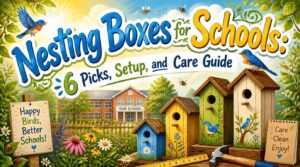
A single bluebird box, hung on a fencepost near a school garden, can pull in over 25,000 flying insects in one nesting season. That’s free pest control, courtesy of a bird smaller than your fist. Schools across the country are catching on, turning empty corners of their grounds into working wildlife habitat.
Nesting boxes for schools do more than shelter birds. They hand students a front-row seat to biology, patience, and real conservation work, all without leaving campus.
Picking the right box, mounting it safely, and keeping it running through the seasons takes some know-how. Here’s where to start.
Table Of Contents
- Key Takeaways
- Top 6 Nesting-Themed School Products
- Choosing School Bird Nesting Boxes
- Species-Specific Nest Box Requirements
- Safe Placement Around School Grounds
- Monitoring Boxes Through School Programs
- Frequently Asked Questions (FAQs)
- What can I use instead of a nesting box?
- What are the disadvantages of nest boxes?
- How to make a homemade nesting box?
- What is the difference between a nesting box and a birdhouse?
- How do students register for Project Nest Box?
- When did Project Nest Box begin, and why?
- How many nest boxes have been donated so far?
- What grade levels can participate in the program?
- When is the sign-up deadline for Spring 2026?
- Conclusion
Key Takeaways
- A single bluebird box can eat up over 25,000 flying insects in one nesting season, giving your school free pest control while offering students a hands-on biology lesson right on campus.
- Match your box to your target species: bluebirds need a 1.5-inch entrance hole mounted 4-6 feet high, kestrels need a 3-inch hole on tall poles, and purple martins need multi-chamber housing since they nest in colonies.
- Build with untreated cedar or redwood, add a sloped roof and ventilation, and mount on a smooth predator-proof pole to keep your birds safe and your box lasting for years.
- Weekly monitoring, standardized data logging, and prompt seasonal cleaning turn a simple birdhouse project into real citizen science that connects your students to conservation efforts nationwide.
Top 6 Nesting-Themed School Products
Not every nesting project has to start with hammer and nails. Some of the best classroom tools double as storage, sorting games, or hands-on lessons about growth and cycles. Here are six picks worth adding to your school’s nature corner.
Pair your nesting boxes with a kid-friendly wild bird seed guide so students can attract feathered visitors while learning to identify them by sight and sound.
1. Bamboo Storage Boxes Set With Lids
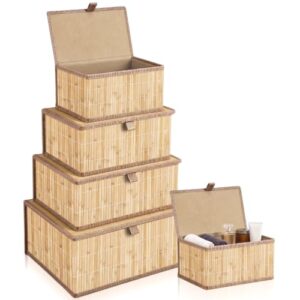
Before you build a single birdhouse, your classroom needs somewhere to keep the supplies. This bamboo storage set comes with 5 stackable baskets in graduated sizes, from 6.69 x 4.33 x 3.54 inches up to 14.17 x 11.81 x 6.69 inches, so small parts don’t wander off.
Lids keep out dust and pet hair, and the breathable liner protects fabric or paper goods. Nest them empty, stack them full, and your nest-box project stays tidy year-round.
| Best For | Teachers, parents, and crafters who need a tidy way to organize lightweight classroom or project supplies like small parts, papers, and fabric scraps. |
|---|---|
| Material | Bamboo/Fabric |
| Nesting Design | Yes |
| Educational Use | Classroom Storage |
| Piece Count | 5 Baskets |
| Target Setting | Home/Classroom |
| Space Saving | Stackable |
| Additional Features |
|
- Five graduated sizes stack neatly, so small pieces stay put and shelves stay organized
- Lids block out dust and pet hair, keeping supplies clean between projects
- Breathable liner protects fabric and paper goods while still allowing airflow
- Not built for heavy items, so it’s limited to lightweight storage only
- Liner isn’t waterproof, meaning damp or wet materials are off-limits
- Slight size and color variations can occur between individual units
2. Montessori stacking garage and car set
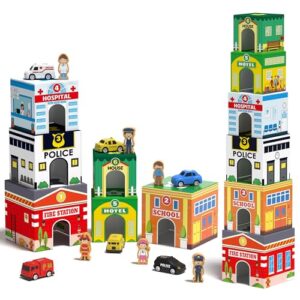
Once your supplies are sorted, give students a hands-on way to practice sorting and sequencing before they tackle real nest boxes. This Montessori stacking garage set uses multi-level ramps so kids can roll wooden cars between floors, building fine motor skills and hand-eye coordination.
Color-coded levels teach early sorting and counting, and rounded edges keep things safe for small hands. It’s a low-stakes warm-up for the careful, patient work nest-box monitoring demands later on.
| Best For | parents, homeschoolers, and teachers looking for a hands-on toy that helps kids ages 2 and up practice counting, sorting, and fine motor skills through pretend play. |
|---|---|
| Material | Wood/Plastic |
| Nesting Design | Yes |
| Educational Use | Early Math |
| Piece Count | Multiple Pieces |
| Target Setting | Classroom/Homeschool |
| Space Saving | Stacking Garages |
| Additional Features |
|
- Encourages early math and literacy skills like counting, numbers, and color recognition
- Builds fine motor skills and hand-eye coordination through pull-back vehicles and stacking pieces
- Versatile for both home and classroom use, with imaginative community-helper play built in
- Only suitable for children ages 2 and up, so it’s not usable for younger siblings
- Friction-powered vehicles need a manual pull-back motion, which may be tricky for very young kids
- Small pieces like the number blocks and figures require supervision to avoid choking hazards
3. Wooden Life Cycle Nesting Blocks
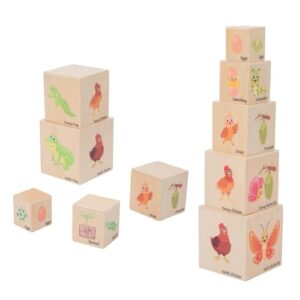
After all that rolling and stacking, it’s time to bring nature into the mix. These nesting blocks feature the monarch butterfly life cycle, with four pieces for egg, larva, pupa, and adult stages, each color-coded and nontoxic.
Kids stack them in order, learning sequencing while building fine motor skills. The friction-fit design needs no glue, and pieces meet ASTM F963 safety standards. It’s a solid tool for teaching metamorphosis before students move on to real-world bird monitoring.
| Best For | Parents and educators looking for a screen-free, Montessori-style toy that teaches toddlers ages 3 and up about nature’s life cycles while building fine motor and cognitive skills. |
|---|---|
| Material | Solid Wood |
| Nesting Design | Yes |
| Educational Use | Life Cycle Learning |
| Piece Count | 5 Boxes |
| Target Setting | Toddler Play |
| Space Saving | Stackable |
| Additional Features |
|
- Made from solid wood with non-toxic paint and smooth, rounded edges, meeting U.S. CPSC and ASTM safety standards
- Features five nesting boxes covering the butterfly, sunflower, frog, and chicken life cycles, making learning fun and varied
- Doubles as a stacking, nesting, and matching game that supports sequencing skills, size comparison, and hand-eye coordination
- Must be cleaned only with a damp cloth, since direct water can damage the wood
- Needs to be kept out of direct sunlight to prevent fading or chipping of the illustrations
- Requires gentle handling during play to avoid long-term wear and tear
4. Sterilite Nesting ShowOffs Storage Bins
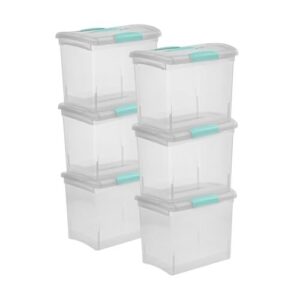
Once monarchs are stacked and sorted, you’ll need somewhere to actually store all these classroom materials, and that’s where Sterilite’s ShowOffs bins earn their keep.
These clear, stackable bins keep butterfly nets and field guides just as tidy as a bluebird keeps its cavity-nesting habits neatly hidden away in a tree hollow.
Each clear bin measures 15 1/4 by 9 3/4 by 11 1/2 inches, with a snap latch lid and built-in handle for one-handed carrying. The see-through base lets you spot supplies fast, no digging required.
They nest together when empty, so your supply closet stays tidy between nesting box seasons.
| Best For | teachers and classroom organizers who need clear, stackable bins for storing and transporting monarch-rearing supplies and other materials between home, school, and meetings. |
|---|---|
| Material | Plastic |
| Nesting Design | Yes |
| Educational Use | Office Organization |
| Piece Count | 6 Bins |
| Target Setting | Office/Classroom |
| Space Saving | Stackable |
| Additional Features |
|
- Clear plastic design makes it easy to spot contents at a glance without opening the bin
- Snap latch lid and built-in handle make one-handed carrying secure and convenient
- Nests neatly when empty, saving valuable shelf or closet space
- Lids may not fully seal out moisture or pests
- Some units arrive with damaged lids or detached handles
- Bulging bottoms on certain bins can make stable stacking difficult
5. Wooden Montessori Stacking Nesting Boxes
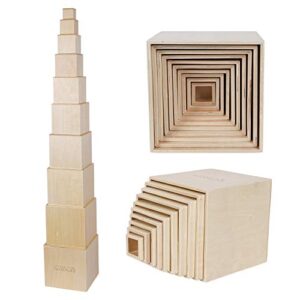
Solid beech wood, sanded smooth, no splinters. That’s the promise behind these stacking boxes, sized from 3.5 to 12 centimeters so each one nests snugly inside the next.
Kids practice sequencing skills by stacking small to large, then reverse it. No batteries, no screens, just quiet focus. A natural oil or beeswax finish keeps things non-toxic, and soap-and-water cleanup means these hold up fine between science units and storage duty.
| Best For | These stacking boxes are best for toddlers aged 2 and up who are building fine motor skills, early math concepts, and hands-on focus through simple, screen-free play. |
|---|---|
| Material | Sustainable Wood |
| Nesting Design | Yes |
| Educational Use | Montessori Learning |
| Piece Count | 10 Cubes |
| Target Setting | Early Childhood |
| Space Saving | Tower Stacking |
| Additional Features |
|
- Made from sustainable, non-toxic wood with a smooth, splinter-free finish safe for little hands
- Nesting and stacking design supports sequencing, size recognition, and counting skills
- Compact storage when nested, plus meets major safety certifications (EN71, ASTM F963, and more)
- Requires adult supervision during play, so it’s not a fully independent activity
- Small cube sizes may pose a choking risk if used by children younger than the recommended age
- Wooden construction means less durability against heavy drops compared to plastic alternatives
6. Farm Animal Nesting and Stacking Toys
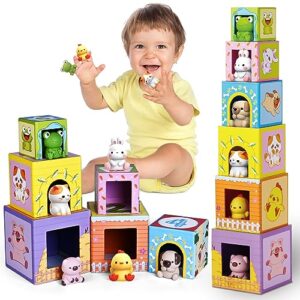
Six little boxes, six farm friends, one big learning adventure. This ShyLizard set pairs numbered nesting boxes with matching finger puppets, so kids stack by size while practicing counting and animal names.
Made from lightweight cardboard, it suits ages 1 to 3 and builds fine motor skills, color recognition, and problem-solving. It’s a nice change of pace from wood, giving toddlers a softer, easy-grip option. Perfect for preschool centers wanting hands-on bonding activities without splinter worries.
| Best For | parents, preschools, and kindergartens looking for an engaging way to teach toddlers ages 1 to 3 about counting, animals, and shapes through hands-on play. |
|---|---|
| Material | Cardboard |
| Nesting Design | Yes |
| Educational Use | Number Recognition |
| Piece Count | 12 Pieces |
| Target Setting | Preschool/Kindergarten |
| Space Saving | Stackable |
| Additional Features |
|
- Combines nesting, stacking, and finger puppets in one toy for varied, engaging play
- Supports early learning in numbers, colors, shapes, and animal recognition
- Builds fine motor skills and hand-eye coordination through repeated play
- Made of cardboard, so it’s less durable than wood or plastic alternatives
- Limited to a narrow age range (1–3 years), so kids may outgrow it quickly
- Cardboard construction may not hold up well to rough handling or moisture
Choosing School Bird Nesting Boxes
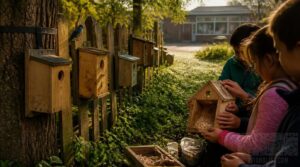
Picking the right nesting box takes more than grabbing one off a shelf. You’ll want to think about the birds you’re hoping to attract, your students, and your budget, all at once. Here’s what to keep in mind before you buy or build.
Target Bird Species
Before buying any box, ask what bird you’re hoping to attract. Eastern Bluebirds show blue-gray backs and rusty chests, while American Kestrels flash reddish-brown feathers and spotted markings. Purple Martins differ by sex, and Barn Owls have that unmistakable heart-shaped face.
Match your box to cavity nesting birds like Tree Swallows or House Wrens already living nearby.
Student Age Groups
Who’s building this box, kindergarteners or high schoolers? Age changes everything.
- Younger kids need simple, guided steps with hands-on assembly
- Middle schoolers handle measuring and basic tools independently
- High schoolers can research species and manage full citizen science tracking
Mixed-age teams work great too, pairing patience with problem-solving skills for stronger spring outdoor activities and real learning.
Safe Untreated Materials
Birds can’t tell you if a finish is toxic, so that job falls to you. Stick with chemical-free lumber like untreated cedar or FSC-certified wood.
Skip varnish and paint entirely; a light coat of mineral oil or beeswax protects wood without harmful fumes.
Keep joints snug too, since gaps invite moisture and mold into your nest box.
Weather-resistant Construction
Rain, wind, and sun will test your box year-round, so build tough from the start.
- Rot-resistant cedar or redwood siding
- Metal roofing to shed heavy rain
- Sealant on exposed joints
- Sloped roof for water runoff
- Small ventilation gaps near the top
Skip flat roofs. Angled ones drain fast and keep nests dry through spring storms.
School Budget Considerations
Strong birdhouses cost more up front, but using rot-resistant cedar or recycled plastics saves on repairs.
Grant writing can help cover expenses—look for STEM funding or conservation grants.
Track your costs: allocate for materials, mounting hardware, and yearly maintenance.
Even small schools can build a solid program by sharing placement, cleaning, and monitoring tasks across grade levels.
Species-Specific Nest Box Requirements
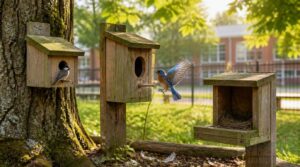
Different birds need nesting boxes built just for their unique habits and sizes. Getting the right box makes all the difference for attracting the species you want around your school. Here’s what you should know about the main types and their requirements.
Bluebird Nesting Boxes
Nest box success starts with the right entrance hole size—1.5 inches for bluebirds. Choose untreated cedar or redwood for longevity and safety. Mount boxes 4–6 feet high in open fields with scattered trees. Include ventilation and drainage to keep nests dry. Clean boxes after fledglings leave. Monitor weekly during nesting season.
- Attract native bluebirds
- Exclude larger competitors
- Easy student monitoring
Bluebirds usually fledge in sixteen to nineteen days, requiring post-fledging care from parents for several weeks. Learn about bluebird fledging period
American Kestrel Boxes
American Kestrels need bigger digs than bluebirds. Go with a 3-inch entrance hole and an 8×8 inch floor, box height 12-18 inches.
Mount 8-20 feet high on poles with predator guards, facing southeast, in open fields near perches. Space boxes half a mile apart.
Check weekly, keep the interior clean and debris-free.
Purple Martin Houses
Kestrels want solo digs, but Purple Martins live for company. These birds nest in colonies, so their houses use multi chamber boxes with 6-12 compartments, each with its own 2.25-inch entrance hole.
Paint the exterior white to reflect heat. Add predator guards, skip perches, and mount on tall, open poles for easy flight access and quick cleaning checks.
Owl Nesting Boxes
Since owls need tall, quiet quarters, their boxes look nothing like a martin house. Interior space runs 12 to 15 inches deep, giving owlets room to grow without crowding.
Owl box design must include:
- A recessed 5-6 inch entrance for predator protection
- Top ventilation holes for airflow
- A sloped roof for weatherproofing
Mount boxes 8-20 feet high, facing away from wind and sun.
Entrance Hole Dimensions
A quarter inch makes all the difference. Bluebird holes measure 1 9/16 inches, keeping starlings out while letting adults through. Purple martins need 2 1/4 inches; owls take 1 1/2 to 2 inches.
Recessed entrances add predator safe openings, cutting reach by an inch or two. Smooth wood edges protect fledging wings. Check hole wear each preseason, since swelling wood can shrink true dimensions.
Safe Placement Around School Grounds
Picking the right box is only half the job. Where you put it matters just as much for keeping birds safe and comfortable. Here’s what to think about before you start mounting boxes around your school grounds.
Matching Nearby Bird Habitats
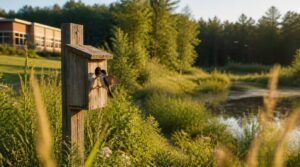
A birdhouse is only as good as the land around it. Look for forests, wetlands, or grassy fields within 1-2 kilometers of your school. Water nearby means more insects, which means better survival odds for chicks.
Native plant patches beat mowed lawns for species richness, and natural corridors help birds move safely between habitats.
Recommended Mounting Heights
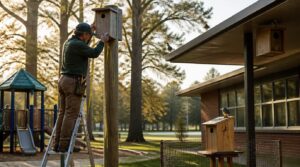
How high should your box go? It depends on the spot. Playgrounds call for 9-10 feet to dodge foot traffic, while eaves need 10-12 feet with a clear flight path.
- Ideal height range: 8-12 feet overall
- Ground clearance safety: keeps curious hands away
- Student access height: stay under 8 feet on portable stands
Predator-proof Mounting Poles
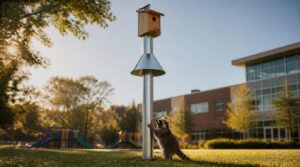
Raccoons are clever climbers, but a smooth pole stops them cold. Choose poles at least 2 inches in diameter with no seams or screws for gripping.
Raccoons may be clever climbers, but a smooth, seamless pole at least 2 inches thick stops them cold
Add a cone or stovepipe baffle below the box, set deep anchors for stability, and pick galvanized or powder-coated steel. These predator-proof mounting poles resist rust and support long-term campus sustainability projects.
Safe Entrance Orientation
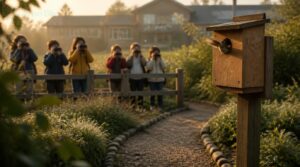
South-facing entrance holes catch morning sun and dodge afternoon heat. But orientation means more than compass direction, it’s about safe approach routes too.
- Mark clear entry paths away from vegetation
- Keep safe viewing distance
- Stagger student visits
- Avoid dawn hours
- Reduce disturbance near active nests
Pair this with predator exclusion and solid birdhouse materials, and your birdhouse placement protects nesting birds all season.
Student Viewing Access
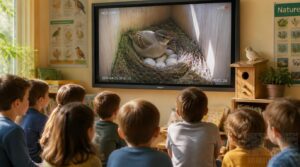
Watching nests shouldn’t mean crowding them. That’s where a classroom portal comes in, giving students daily photos and updates without setting foot near the box.
| Feature | Purpose | Benefit |
|---|---|---|
| Real-time nest alerts | Notify new eggs/chicks | Excitement, safely |
| Access log tracking | Record student views | Safety, reflection |
| Portal access controls | Manage permissions | Organized viewing |
Simple, kid-friendly design keeps focus on birds, not buttons.
Monitoring Boxes Through School Programs
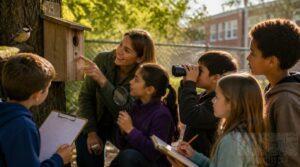
Putting up the box is just the start. Real learning happens once students start checking on it, week after week. Here’s what that hands-on monitoring routine looks like.
Weekly Student Nest Checks
Every week, students head out during class to check each active box on campus, no exceptions.
Two students per box keep things calm, gloves on, hands off eggs or nestlings. They scan for damage, note occupancy, and do a quick equipment care check before logging results for mentor review.
Recording Nesting Activity
Checking the box is only half the job. That count of eggs or chicks needs a home on paper, too.
Use one standardized data sheet for every box. Log date, species, nest content, and weather, keeping observation timing consistent, hour to hour. Photos back up shaky counts. This steady nest box monitoring protocol turns scattered notes into real citizen science data.
Managing Invasive Birds
Not every visitor is welcome. House Sparrows and European Starlings will bully out native species fast, so invasive species control matters as much as data logging.
- Remove sparrow nests weekly before egg-laying
- Use humane trapping for repeat offenders
- Modify habitat by trimming nearby roost trees
- Place separate sparrow boxes 75 feet away
- Educate students on why removal protects natives
Seasonal Cleaning Procedures
Once the last fledgling leaves, start seasonal cleaning within 24 hours. Remove all debris with a gloved hand and spatula, then wash with mild soapy water and air dry. Check perches and nails—replace if loose.
For sanitation, use a 10% bleach solution, then rinse thoroughly. Update records with the cleaning date, box condition, and any repairs made.
Supporting Citizen Science
Why stop at cleaning? Your nest box data feeds real research through citizen science. Each nesting box turns into a data collection session, boosting student science literacy and giving classrooms real purpose.
Parent community involvement and university student collaboration add extra hands and expertise. This teamwork sparks volunteer recruitment boost efforts, connecting your school’s wildlife education work to bluebird trails nationwide.
Frequently Asked Questions (FAQs)
What can I use instead of a nesting box?
Skip the birdhouse and try natural nesting alternatives: leave dead tree snags, add nesting shelves for swallows, encourage mud nests with a wet soil patch, or plant dense native shrubs for ground nesters and cover-loving species.
What are the disadvantages of nest boxes?
Boxes can invite predator attraction, trap heat and humidity, and build up mites or disease if you skip cleaning. Ecological mismatch, ongoing maintenance costs, and replacements add up too, so good placement strategy and predator guards really matter.
How to make a homemade nesting box?
Grab untreated cedar, cut panels to size, and sand rough edges smooth. Assemble with corrosion-resistant screws, add a sloped roof and drainage hole, then finish exteriors only, keeping interiors bare for tiny gripping feet.
What is the difference between a nesting box and a birdhouse?
Here’s the real distinction: it comes down to function vs decoration. A nesting box targets specific cavity nesting species with precise entrance hole and cavity specifications, while a birdhouse focuses on looks, offering shelter without matching any bird’s real nesting needs.
How do students register for Project Nest Box?
Your school’s administrator controls registration with the Project Nest Box coordinator, providing grade levels and contact info. Once confirmed, kit allocation begins, and students take on hands-on roles in assembly, monitoring, and data submission throughout the season.
When did Project Nest Box begin, and why?
Ever wonder who started it all? Project Nest Box launched in the early 2010s, teaming a recycling company with educators. Their goal: get kids outdoors using 97% recycled plastic boxes, sparking hands-on citizen science across North American classrooms.
How many nest boxes have been donated so far?
No single tally exists across programs, but Project Nest Box stands out: since 2012, it has donated over 3,200 recycled plastic bird nest boxes to schools, with regional and annual totals still tracked separately.
What grade levels can participate in the program?
Picture tiny hands sanding cedar boards, wide-eyed at a hatchling’s chirp.
K-8 participation is standard, with elementary and middle schoolers building boxes together. Grade band flexibility lets some high schools join too, expanding hands-on science learning through student citizen science.
When is the sign-up deadline for Spring 2026?
Mark your calendar: the registration deadline closes February 15, Enroll by February 1 for priority enrollment, or register late (up to February 28) with a $20 fee. Confirmation emails arrive within 3 business days.
Conclusion
One tiny box can spark a thousand questions about the world outside your classroom window. That’s the real magic behind nesting boxes for schools: small structures building big curiosity.
You don’t need a forest or a huge budget, just one box, one fencepost, and students willing to watch. Check it weekly, log what you see, and let patience do the teaching.
Come spring, empty wood becomes a nursery, and your students become naturalists. That transformation sticks.
- https://docs.google.com/forms/d/1GAQr3Kn1cURCVHUA82hAga1Wv8DCH0IuqDLRUrOpN7M/viewform?ts=63f4f653&entry.1515682415=https://www.merriam-webster.com/dictionary%2Fnest
- https://unabridged.merriam-webster.com/check-redirect-premium?utm_source=mw&utm_medium=inline-def&utm_campaign=evergreen&headword=nest
- http://nestwatch.org/
- https://www.birdscanada.org/bird-science/project-nestwatch
- https://www.audubon.org/