This site is supported by our readers. We may earn a commission, at no cost to you, if you purchase through links.
 Getting a baby parakeet costs $15-50 upfront, but you’ll spend $200-400 annually on essentials like food, toys, and vet care.
The real investment isn’t just money—it’s choosing wisely. Hand-raised birds from reputable breeders typically cost more but offer better socialization and health guarantees.
Pet stores are convenient but quality varies, while rescues provide affordable options for experienced owners. Look for bright eyes, smooth feathers, and active behavior when selecting your bird.
Factor in a quality cage ($50-100), premium seed mix, and initial vet checkup. Smart buyers know the upfront cost pales compared to a decade of proper care, making informed selection vital for long-term success, and understand that a quality cage is essential.
Table Of Contents
- Key Takeaways
- Getting a Baby Parakeet
- Baby Parakeet Care Essentials
- Health and Veterinary Care
- Choosing The Right Parakeet
- Tips for Baby Parakeet Owners
- Frequently Asked Questions (FAQs)
- What do I need to know before buying a parakeet?
- What should I do when I first get a parakeet?
- What to buy when getting a parakeet?
- What to know about parakeets before getting one?
- Are baby parakeets easy to care for?
- What are some common mistakes to avoid when caring for a baby parakeet?
- What should I feed my baby parakeet?
- Can baby parakeets be trained to do tricks?
- What legal documents are needed for parakeet ownership?
- How do temperature changes affect baby parakeets?
- Conclusion
Key Takeaways
- Budget $100-300 upfront – You’ll pay $15-50 for the bird itself, plus $50-100 for a proper cage and initial supplies, then expect $200-400 annually for ongoing care.
- Choose hand-raised birds from reputable breeders – You’ll pay more ($80-150 vs $15-50) but get better socialization and health guarantees compared to pet store birds.
- Look for health indicators when selecting – You want bright eyes, smooth feathers, and active behavior; avoid birds that appear lethargic or have discharge.
- Factor in long-term commitment costs – You’re committing to 10-18 years of care, including quality food, toys, vet visits, and daily social interaction for your bird’s wellbeing.
Getting a Baby Parakeet
You’ll find that baby parakeets cost between $20 to $70 for common varieties, though rare breeds can reach $300 to $1,300.
Your first-year expenses will typically total around $465, including the initial setup and ongoing care costs, which are crucial for the first-year expenses.
Initial Purchase Costs
When you’re budgeting for a baby parakeet, you’ll face several upfront expenses that can add up quickly.
The purchase price varies substantially based on where you shop and what type of bird you choose.
Here’s what you can expect to spend initially:
- Purchase Price: $15-$70 for common budgies at pet stores, or $80-$150 for hand-fed babies from breeders
- Cage Costs: $50-$200 for a proper flight cage with adequate space for wing movement
- Food Expenses: $10-$25 for initial seed, pellet, and treat supplies to get started
- Veterinary Fees: $25-$150 for the first health check and any necessary testing
Your accessory budget should include perches, toys, and cage accessories ($25-$100), plus essential items like food bowls and cage liners ($20-$40).
Pet bird prices fluctuate based on breed selection and breeder reputation, with rare species reaching $300-$1,300.
Smart parakeet buying tips include comparing prices across multiple sources and factoring in all pet parakeet expenses before making your decision.
Understanding parakeet ownership costs is vital for making an informed decision about bringing a parakeet home.
Ongoing Annual Costs
After the initial purchase, you’ll face ongoing annual costs that can surprise new owners.
These pet parakeet expenses include food, veterinary care, and cage maintenance.
| Cost Category | Annual Range | Key Components |
|---|---|---|
| Food Expenses | $110-$260 | Seeds, pellets, fresh produce, treats |
| Veterinary Fees | $75-$450 | Wellness exams, emergency visits, preventive care |
| Toy Replacement | $30-$70 | Enrichment items, perches, accessories |
| Cage Maintenance | $55-$120 | Bedding, cleaning supplies, repairs |
Understanding the parakeet cost factors is essential for budgeting.
Supply costs vary based on your bird’s needs and your choices.
Parakeet cost calculations should include these recurring expenses when budgeting for your feathered friend’s lifetime care, considering the overall lifetime care.
Factors Affecting Purchase Price
Several factors determine parakeet cost beyond standard pricing.
Species rarity substantially impacts purchase fees, with exotic mutations costing 2-3 times standard green varieties.
Breeder reputation affects pricing through quality guarantees and health records.
Location costs vary between urban and rural breeders.
Market demand fluctuates seasonally, especially during spring breeding periods.
Hand-raised birds command premium prices due to enhanced socialization and training services provided, which can be influenced by breeder reputation and species rarity.
Baby Parakeet Care Essentials
Once you bring your baby parakeet home, establishing proper care routines becomes essential for their health and happiness.
The first few weeks require careful attention to feeding schedules, cage setup, and gentle socialization to help your new feathered friend adjust to their environment.
Feeding and Nutrition

Quality nutrition forms the foundation of baby parakeet care, requiring careful attention to dietary balance.
A balanced diet is the cornerstone of your parakeet’s vibrant health and happiness.
You’ll need to provide varied nutrition sources that support healthy growth and development throughout their early months.
Essential feeding components include:
- Seed Options – High-quality seed mixes provide basic nutrition, though they shouldn’t comprise the entire diet
- Pellet Diets – Nutritionally complete pellets offer superior nutrient balance compared to seed-only diets
- Fresh Fruits – Small portions of safe fruits like apples and berries add vitamins and variety
- Vitamin Supplements – Consult your avian vet about appropriate supplements to prevent deficiencies
Proper avian nutrition requires shifting young birds from hand-feeding formula to solid foods gradually.
Your bird nutrition guide should emphasize variety over single-food dependence.
Monthly parakeet food costs typically range from $10-30, making quality nutrition affordable for most budgets.
Understanding a parrot food nutritional guide is vital for making informed decisions about your parakeet’s diet, as it’s key to their health.
Cage and Environment

Your parakeet’s cage becomes their entire world, so size matters more than you’d think. A cramped bird cage leads to stressed, unhappy pets who can’t spread their wings properly.
Your parakeet’s cage becomes their entire world, so size matters more than you’d think.
| Cage Feature | Specification |
|---|---|
| Cage Size | Minimum 18x18x18 inches |
| Bar Spacing | 0.5 inches maximum |
| Perch Height | Multiple levels, varied diameters |
| Toy Placement | Rotate weekly, avoid overcrowding |
| Ventilation System | Good airflow, draft-free location |
Choose bird cage selection carefully – horizontal space trumps height since parakeets fly side-to-side. Proper parakeet habitat setup includes natural wood perches at different heights to exercise feet muscles.
Pet bird supplies should include stainless steel food bowls and bird accessories like mirrors or bells for entertainment. When setting up a parakeet’s home, considering the right parakeet cages is vital for their well-being and happiness.
Socialization and Training
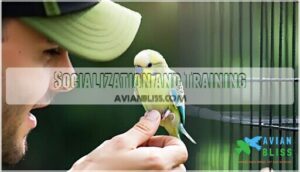
Your baby parakeet’s socialization journey begins with gentle, consistent daily interactions that build trust and confidence. Hand-fed birds adapt faster, but patience works wonders with all personalities.
Smart training starts with simple commands and positive reinforcement techniques.
Essential Training Tips:
- Social Bonding – Spend 15-20 minutes daily talking softly near the cage before attempting direct contact
- Bird Behavior basics – Learn parakeet body language; head bobbing means excitement, wing flapping shows stress
- Feather Care training – Gently introduce handling for grooming; never force interactions during molting periods
- Beak Trimming preparation – Familiarize your bird with gentle head touches for future veterinary care
- Pet Bird Training costs – Budget $50-100 for training books, target sticks, and healthy treat rewards
Parakeet socialization requires consistency over intensity. Bird behavior training succeeds through trust-building rather than force, making each interaction a positive experience that strengthens your bond.
Effective parakeet training is vital for a strong relationship between you and your pet.
Health and Veterinary Care
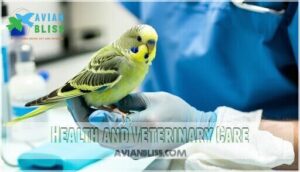
Your parakeet’s health depends on recognizing early warning signs and establishing proper veterinary care from the start.
Regular check-ups and knowing what to watch for can prevent minor issues from becoming serious problems that cost more money and stress, which is crucial for maintaining your parakeet’s overall well-being and ensuring proper veterinary care.
Signs of Good Health
When checking your baby parakeet’s health, look for bright eyes that sparkle with alertness and clean beaks free from discharge.
Healthy feathers should display shiny plumage without bald patches or ruffled appearance.
Active behavior indicates good parakeet health—your bird should move confidently and interact socially.
These parakeet health checks help guarantee proper avian health care during parakeet breed selection.
Maintaining good hygiene is vital, and understanding bird hygiene practices can substantially impact your parakeet’s overall well-being.
Common Health Issues
Even healthy baby parakeets face several common health challenges that require your attention.
Watch for these issues that can affect your feathered friend’s wellbeing and development.
- Respiratory Problems: Sneezing, nasal discharge, or wheezing often signal bacterial or viral infections requiring immediate parakeet veterinary care
- Feather Plucking: Stress, boredom, or Mite Infestations cause this behavior, indicating your baby parakeet needs environmental enrichment or medical treatment
- Beak Issues: Overgrown or misaligned beaks affect eating and require professional avian health care to prevent nutritional problems
Regular parakeet health checks help identify problems early.
Egg Binding affects females, while various infections can compromise your bird’s immune system, making professional bird health monitoring essential.
Routine Veterinary Visits
Regular veterinary checkups cost $40-80 each and keep your feathered friend healthy.
Schedule annual visits with an avian veterinarian for thorough health exams and preventive care. These medical checks catch issues early, potentially saving thousands in emergency care costs.
Bird vaccines aren’t typically required, but your vet will assess individual needs. Quality parakeet veterinary care guarantees your pet’s long-term wellbeing, and regular checkups are essential for thorough health exams and preventive care.
Choosing The Right Parakeet
When you’re ready to choose your feathered friend, you’ll want to examine several key factors that affect both cost and compatibility.
The right parakeet depends on your budget, experience level, and whether you prefer a bird that’s already socialized or one you can train from scratch.
Species Rarity and Reputation

Species rarity substantially impacts your parakeet breeding investment and avian companion experience.
Common budgerigars cost $20-70, while exotic species like Indian Ringnecks reach $300-1,300 due to rarity factors and breeder reputation.
Color mutations in parakeet genetics also affect pricing, and species classification determines care complexity—budgerigars suit beginners, while rare varieties require specialized knowledge.
This complexity affects long-term pet bird cost and parakeet training costs.
Hand-Raised or Tamed Birds
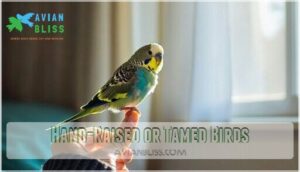
Hand-raised parakeets offer significant advantages over parent-raised birds through extensive Bird Socialization and specialized Taming Techniques.
These Hand Raising methods produce calmer, more trusting companions that respond better to Training Methods.
You’ll pay premium prices—often $50-100 more than untamed birds—but the investment in parakeet training costs pays dividends.
Hand-raised birds adapt faster to handling, making Parakeet Behavior modification easier and reducing stress for both you and your feathered friend.
Adoption From Shelters

Shelter selection offers budget-friendly pet adoption with adoption fees ranging $10-50.
Rescue groups and bird rescue organizations provide pre-screened parakeets with health guarantees.
Shelter volunteers help match you with suitable birds based on temperament and history, and foster care programs sometimes offer birds needing homes.
Pet bird adoption supports animal welfare while providing quality companions at lower costs than breeders.
Tips for Baby Parakeet Owners

Once you’ve brought your baby parakeet home, proper care techniques will determine their health and happiness for years to come.
Understanding how to handle, house, and stimulate your new feathered friend prevents common mistakes that can stress or harm developing birds, which is crucial for their health.
Avoiding Roughhousing
Baby parakeets need gentle handling to prevent injury and stress. Rough play can damage delicate bones and create lasting behavioral problems. Your touch should be soft and movements slow.
Safe Interactions Guidelines:
- Gentle Handling – Use cupped hands and avoid grabbing or squeezing your pet bird
- Soft Play – Keep interactions calm with quiet voices and smooth movements
- Calm Environment – Create quiet spaces away from loud noises and sudden motions
Understanding bird behavior tips helps you recognize when your parakeet needs space. Baby parakeet feeding time and parakeet safety precautions require extra care during handling. Providing a stimulating environment is essential for the overall well-being and development of your parakeet.
Creating a Safe Environment
Beyond the basics of bird cage setup, you’ll need thorough bird proofing throughout your home.
Remove hazardous items like toxic plants, open water containers, and small objects your parakeet might swallow. Create a toxic free zone by securing electrical cords and removing ceiling fans from flight areas.
Install safe perches made from natural wood, avoiding sandpaper-covered options that damage feet. Hazard removal includes checking for lead paint, non-stick cookware fumes, and scented candles.
Emergency planning involves knowing your avian vet’s contact information and keeping a first-aid kit nearby. To minimize noise and guarantee a peaceful environment, consider using bird cage covers to reduce external disturbances.
Providing Mental Stimulation
Your parakeet’s sharp mind needs regular workouts to prevent boredom and behavioral problems.
Rotate toys weekly to maintain novelty and curiosity. Social interaction through talking, training sessions, and supervised play builds strong bonds while exercising their intelligence.
Create environmental enrichment with foraging opportunities, mirrors, and puzzle feeders. Bird games like hide-and-seek keep them engaged and mentally stimulated, providing a form of environmental enrichment.
Frequently Asked Questions (FAQs)
What do I need to know before buying a parakeet?
Like choosing a faithful companion for life’s journey, selecting your feathered friend requires careful consideration.
You’ll need a proper cage, quality food, and $100-300 upfront.
Budget $200-300 annually for ongoing care, vet visits, and enrichment toys to keep them happy.
What should I do when I first get a parakeet?
Place your new parakeet in a quiet, safe room away from drafts and direct sunlight.
Allow 24-48 hours for adjustment before handling.
Offer fresh water, quality seed mix, and speak softly nearby.
What to buy when getting a parakeet?
You’ll need a cage (minimum 18x18x18 inches), food dishes, perches, toys, high-quality seed mix or pellets, and a water bottle. Budget around $100-300 for initial setup costs.
What to know about parakeets before getting one?
Before committing to a feathered friend, you’ll want to take into account their 10-18 year lifespan, daily social needs, and ongoing costs averaging $200-300 annually for proper care.
Are baby parakeets easy to care for?
While the "easy care" theory seems compelling, baby parakeets actually require intensive daily attention, specialized diets, and frequent veterinary monitoring.
You’ll need consistent hand-feeding schedules, temperature regulation, and socialization.
They’re more demanding than adult birds initially.
What are some common mistakes to avoid when caring for a baby parakeet?
Don’t place the cage in drafty areas or near kitchens.
Avoid all-seed diets—they’re nutritionally incomplete.
You’ll want to prevent overcrowding and make certain daily social interaction to avoid behavioral issues.
What should I feed my baby parakeet?
Baby parakeets thrive on 70% high-quality pellets plus fresh vegetables, fruits, and limited seeds. Young birds need frequent feeding every 2-3 hours initially, shifting to adult schedules by 12 weeks of age.
Can baby parakeets be trained to do tricks?
Yes, baby parakeets can absolutely be trained to do tricks.
They’re intelligent birds that respond well to positive reinforcement.
Start with simple commands like "step up" and gradually introduce more complex tricks.
Patience and consistency are key to success.
What legal documents are needed for parakeet ownership?
Most US bird owners don’t need special legal documents for parakeet ownership.
You’ll simply need purchase receipts or adoption papers for proof of ownership, plus any health certificates if traveling across state lines.
How do temperature changes affect baby parakeets?
Temperature changes substantially impact baby parakeets’ health and development.
You’ll need to maintain consistent temperatures between 70-78°F.
Rapid temperature fluctuations can stress their immune systems, causing respiratory infections or digestive issues.
Draft-free environments are essential for their survival and maintaining consistent temperatures helps prevent respiratory infections.
Conclusion
Understanding getting a baby parakeet costs requires balancing upfront expenses with long-term commitment.
You’ll invest $15-50 initially, then $200-400 annually for proper care.
Choose hand-raised birds from reputable breeders for better socialization, despite higher costs.
Examine potential birds carefully—bright eyes, smooth feathers, and active behavior indicate health.
Remember that cage quality, nutrition, and veterinary care determine your parakeet’s wellbeing.
Smart preparation today guarantees years of companionship tomorrow.
- https://www.petmd.com/bird/parakeet-care-sheet
- https://forums.avianavenue.com/index.php?threads%2Fcost-of-owning-a-bird-budget.110778%2F
- https://www.thesprucepets.com/pet-bird-price-list-390212
- https://www.omlet.us/guide/parakeets/introduction_to_parakeets/
- https://threebirdsandacloud.wordpress.com/2013/03/07/guide-to-buying-your-first-bird/