
This site is supported by our readers. We may earn a commission, at no cost to you, if you purchase through links.

Most people assume they need a large, loud parrot to get a genuinely affectionate bird. The green cheek conure quietly dismantles that assumption.
Weighing barely 110 grams—less than a deck of cards—this small South American parrot bonds deeply with its owner, learns new tricks within two weeks of training, and rarely pushes past 85 decibels. That combination of compact size, sharp intelligence, and calm temperament makes it one of the most practical pet parrots available today.
What follows covers everything you need to know before bringing one home: its biology, natural behavior, diet, housing needs, and real ownership costs.
Table Of Contents
- Key Takeaways
- Green Cheek Conure Overview
- Natural Range and Habitat
- Temperament and Daily Behavior
- Diet, Housing, and Enrichment
- Health Care and Ownership Costs
- Frequently Asked Questions (FAQs)
- Where do green cheeked conures live?
- How do Green Cheek Conures hold their food?
- What are green cheeked conures?
- When do green cheeked conures come out?
- Are green cheek conures good pets?
- How much should a green cheek conure cost?
- Do green cheek conures talk a lot?
- Do green cheek conures like to be held?
- How often do green cheeks need to socialize with other birds?
- What age is best to adopt a green cheek?
- Conclusion
Key Takeaways
- Green cheek conures weigh just 110 grams and stay under 85 decibels, making them one of the most practical pet parrots for apartment living or noise-sensitive households.
- They bond deeply with their owners and can learn new tricks within 10–14 training sessions, but they need 2–4 hours of daily out-of-cage interaction to stay mentally healthy.
- Getting started costs $600–$1,000 when you factor in the bird, cage, vet visit, and supplies—then budget another $450–$900 per year for ongoing food, enrichment, and veterinary care.
- With a lifespan of 15–30 years and sensitivity to common hazards like avocado, nonstick fumes, and respiratory infections, they’re a long-term commitment that rewards attentive, informed care.
Green Cheek Conure Overview

The green cheek conure packs a lot of personality into a small frame, and understanding the basics makes everything else fall into place. Before getting into care routines and diet, it helps to know exactly what kind of bird you’re working with.
Their playful, social nature is a big part of why so many people fall for this little bird.
Here’s a quick look at the key traits that define this species.
Scientific Name and Classification
The green cheek conure‘s formal identity is Pyrrhura molinae — a binomial nomenclature that places it within the genus Pyrrhura, family Psittacidae, and order Psittaciformes.
Its phylogenetic placement within the subfamily Arinae reflects shared ancestry with South American parrots.
Six subspecies exist, and subspecies differentiation follows strict nomenclature authority guidelines, keeping its taxonomic hierarchy stable even as new genetic research continues refining the picture.
The classification follows the Linnaean hierarchical organization used in modern taxonomy.
Adult Size and Weight
Once you know Pyrrhura molinae by name, the next thing that surprises most new owners is just how compact this bird actually is. Adults generally reach 30–33 cm beak‑to‑tail, weighing 100–120 grams — roughly the weight of a large egg.
Key size facts worth knowing:
- Wing length spans roughly 40–45 cm when fully extended
- Tail proportion accounts for 12–15 cm of total body length
- Beak dimensions measure about 6–7 mm at the base
- Chest circumference averages 16–20 cm around the keel
- Weight tracking matters — most healthy adults stay within 10 grams of 110 g
That small stature influences everything, including cage size guidelines. Despite their bird size and weight, Green-cheeked Conure cage size and enrichment requirements recommend at minimum an 18 x 18 x 24 inches cage to support healthy movement.
Body Shape and Plumage
That compact frame carries a surprisingly polished look. Bright green feathers coat most of the body, with a glossy feather finish that catches light beautifully.
The tail shape tapers to a clean point, while smooth wing contour keeps everything sleek.
Cheek color contrast adds definition to the face, and once yearly molt patterns gradually refresh worn plumage, restoring that crisp, tight appearance.
Color Mutations and Varieties
Beyond standard green plumage, color mutations open up a whole world of variety.
The Blue Mutation softens greens into cooler bluish tones, while the Cinnamon Variant warms things to a brownish-green. Opaline Pattern birds show a smooth, uniform green, and Grey Dilution mutes brightness to olive tones.
Pineapple, yellow‑sided, and turquoise mutation forms also exist.
Genetic Inheritance determines which traits pass to offspring.
Lifespan and Aging Traits
With proper care, your green cheek conure lifespan and health can span 15 to 30 years—sometimes longer. Genetic longevity plays a real role, but veterinary monitoring, diet, and senior enrichment matter just as much.
With proper care, a green cheek conure can live 15 to 30 years—but genetics alone won’t get them there
Age-related decline will show up gradually after 15 years: slower movement, reduced stamina, subtler responses.
Stay attentive, and you’ll catch changes early.
Natural Range and Habitat

Green cheek conures don’t just come from one corner of South America — their range stretches across several countries, each with its own mix of forests, woodlands, and open landscapes.
Where a bird comes from shapes everything about how it behaves, what it needs, and why it thrives the way it does in the right environment.
key facts about their natural range and habitat.
Native Range in South America
The wild habitat of Green Cheek Conure stretches across a surprisingly wide slice of South America. From the ancient Guiana Shield to the edges of the Amazon basin, these birds claim a range that’s both rich and varied.
Here’s where they actually call home:
- Northeastern South America — Guyana, Suriname, and northern Brazil form their core territory
- Riverine Corridors — River valleys provide movement highways between feeding grounds
- Montane Forest Pockets — They push up to around 900 meters in elevation
- Savanna Gallery Forests — Thin forest strips bordering open grasslands offer seasonal shelter
- Seasonal Fruit Availability — Rainfall cycles dictate where flocks travel throughout the year
The South American forest ecosystem fundamentally shapes everything about how these birds live and move.
Forest and Woodland Habitats
Nested within the South American forest ecosystem, the wild habitat of Green Cheek Conure spans multiple layers — from dense Amazon basin canopy layer dynamics, filtering sunlight downward, to the cooler understory microclimate where these birds roost and forage.
Deadwood habitat value sustains their food sources, while litter nutrient cycling enriches fruiting trees they depend on.
Riparian water resources and Green Cheeked Conure natural habitat and distribution overlap substantially, making deforestation’s impact on birds here especially damaging.
Flock Behavior in The Wild
These birds are deeply wired for community. In the wild, green-cheeked conures live in flocks ranging from a few dozen to several hundred birds — and that social structure isn’t just company, it’s survival.
- Flock Cohesion keeps individuals coordinated during movement and foraging synchrony across habitats
- Information Transfer spreads through vocal cues, guiding the group toward food faster
- Predator Detection improves dramatically — more eyes mean earlier warnings for everyone
- Seasonal Flock Dynamics shift with food availability, weather, and breeding cycles
Conservation Status
The green cheek conure currently holds IUCN Least Concern status on the IUCN Red List — meaning the species isn’t facing immediate extinction risk. Its wide South American range and stable population support that standing.
CITES regulations further protect them by restricting wild-caught trade internationally.
Population monitoring, habitat protection, and community outreach all help keep that status from changing.
For now, the outlook is cautiously reassuring.
Main Environmental Threats
Even a "Least Concern" species faces real pressure.
Here’s what’s quietly working against green cheek conures in the wild:
- Deforestation Impact strips up to 15% of native forest cover per decade
- Habitat Fragmentation isolates populations, raising inbreeding and predation risks
- Climate Change Effects disrupt fruiting cycles and dry out feeding grounds
- Fire Regime Threat destroys nesting cavities across savanna margins
- Illegal Trade Pressure pulls breeding birds from wild flocks despite CITES protection policies
Temperament and Daily Behavior
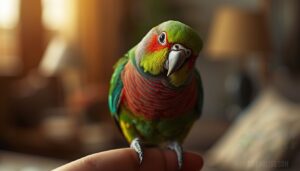
Green cheek conures have a way of making you feel like you’re their whole world — and honestly, that’s not far from the truth. Their personality is one of the biggest reasons people fall in love with this species.
Here’s what you can expect from their temperament and daily behavior.
Personality and Social Bonding
What makes the green cheek conure so endearing is how deeply it invests in its relationships. Through pair bond proximity, mutual preening, and body language mirroring, these birds build genuine emotional contagion with their owners.
Their affectionate nature means they need daily social time and real socialization needs met. Bonding with owner happens through cooperative problem solving and consistent interaction — their playful personality does the rest.
Vocalizations and Noise Level
All that closeness comes with a voice — thankfully, a quiet one. green cheek conure earns its reputation as one of the quietest of all parrots, with a low noise level that won’t rattle your neighbors.
Their vocal communication involves natural pitch variation and soft contact calls averaging 70–85 dB.
Stress vocalization spikes during alarm frequency bursts, so consistent acoustic enrichment and calm routines keep things peaceful.
Intelligence and Trainability
Don’t let their small size fool you — these birds are sharp. Green cheek conures usually learn new tricks within 10–14 sessions, and their memory retention means a well-reinforced cue can stick for months.
Positive reinforcement works best: reward within 2–3 seconds of success. Short 5–10 minute sessions keep motivation high and build real, lasting trust.
Play Habits and Activity Patterns
Their quick minds need just as much movement as mental challenge. Morning Play Peaks hit right after dawn — that’s when your bird is most energetic and ready for Cooperative Play Sessions with you.
Aerial Flight Bursts last 3–6 minutes, so daily free-flight matters.
Rotate chewing toys regularly for mental stimulation for birds, and watch for Personal Space Signals like head bobbing during socialization for parrots.
Stress Signals and Biting
Even the most affectionate green cheek conure will show avian stress signs before biting. Watch for Feather Tension, a stiff body, or a Warning Posture — beak open, leaning forward.
Resource Guarding around food or perches escalates Targeted Biting fast.
When you spot these Body Language cues early, redirect with positive reinforcement instead of forcing interaction.
Consistent bird behavior training and patient socialization for parrots prevent feather plucking long-term.
Diet, Housing, and Enrichment
Getting your green cheek conure’s daily care right comes down to a few key areas: what they eat, where they live, and how they stay mentally sharp. Each one plays a real role in keeping your bird healthy and happy long-term.
Here’s what you need to know across all five areas.
Pellets, Vegetables, and Fruit

Think of your green cheek conure’s plate as a pyramid: high-quality pelleted bird food forms the base, fresh fruits and vegetables fill the middle, and treats stay at the top. Offer pellets in measured daily portions — not free-fed — to maintain nutrient balance.
Chop firmer veggies small for texture variety, keep fruit portions modest given their sugar load, and always wash dishes after fresh foods for proper dish hygiene.
Foods to Avoid

Some foods that seem harmless to us are genuinely dangerous for your bird.
Avocado toxicity is a real concern — persin affects birds even in small amounts. Chocolate methylxanthines and caffeine can trigger serious reactions. Alcohol risks are often underestimated, even in cooked foods. Allium compounds from onions and garlic damage red blood cells. High sodium snacks cause dehydration fast.
Keep all of these away completely.
Cage Size and Bar Spacing
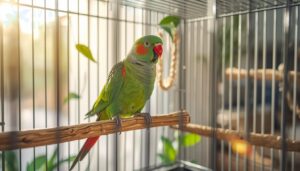
Your green cheek conure needs a good-sized cage — at minimum 24 × 18 × 24 inches. Housing and cage specifications for green cheek conures matter more than most owners expect.
Stick to a horizontal bar layout with ½-inch spacing and safety edge finishes.
Provide 8–10 inches of vertical clearance between perches, perch diameter variety throughout, and a removable tray design for easy weekly cleaning.
Perches, Toys, and Foraging

Natural wood perches with rotating perch diameters keep your bird’s feet healthy and engaged — flat feet on a single perch type lead to soreness fast. rope, branch, and textured options throughout the cage.
Chewable enrichment toys and puzzle feeder design give your conure real mental work to do. foraging substrate variety and foraging toys to round out your cage enrichment routine.
Exercise and Bathing Needs

Your conure needs 2–4 hours of daily out-of-cage time with real flight space — not just perch-hopping.
Build a consistent exercise schedule around morning or evening activity peaks.
For bathing, offer shallow, room-temperature fresh water two to three times weekly.
Supervised bathing keeps things safe and prevents soaked bedding.
Pair this with your existing cage enrichment and toys for parrots, and you’ve covered the essentials.
Health Care and Ownership Costs

Keeping a green cheek conure healthy takes more than good food and a clean cage — it means knowing what to watch for and being ready to act early. Vet visits, common illnesses, and upfront costs are all part of the picture.
Here’s what every owner should know before bringing one home.
Common Health Problems
Even the healthiest green cheek conure can run into medical trouble. Here are the most common health issues to watch for:
- Feather Plucking — Often stress-driven, this can signal boredom or poor conditions.
- Respiratory Infections — Drafts, smoke, and fumes are frequent culprits.
- Digestive Disorders — Diet changes or spoiled food can upset the gut fast.
- Toxic Exposure — Nonstick fumes, avocado, and zinc pose serious risks.
- Obesity Risks — Seed-heavy diets quietly build harmful fat deposits.
Conure Bleeding Syndrome, Pacheco’s disease, Psittacine Beak and Feather Disease, and Proventricular Dilatation Disease round out the common health issues in green cheek conures worth knowing.
Preventive Veterinary Care
Prevention beats treatment every time.
Annual avian veterinary checkups are your first line of defense — your vet will run a wellness exam, check weight monitoring trends, and recommend Fecal Parasite Testing based on your bird’s exposure.
Blood Work Screening helps catch organ issues early.
Biosecurity Hygiene, quarantine practices, and a thoughtful Vaccination Schedule round out solid bird disease prevention for your conure.
Signs of Illness
Catching problems early makes all the difference.
Watch for Respiratory Distress — open-mouth breathing, tail bobbing, or noisy breathing are red flags.
Lethargic Behavior, Feather Dulling, and Dropping Changes signal something’s off inside.
Eye Discharge or crusty nostrils point to infections.
Serious conditions like Psittacine Beak and Feather Disease, Pacheco’s Disease, feather plucking, and respiratory infections move fast — don’t wait to call your vet.
Purchase Price and Setup Costs
Owning a green cheek conure starts with real numbers. Purchase price generally runs $350–$700, and Mutation Price Premium can push rare colors $150–$400 higher. Budget your Initial Vet Fees ($60–$120) and Cage Cost Breakdown ($120–$260 for proper bird cage size guidelines).
- Starter Food Budget: ~$40 upfront
- Accessory Replacement Costs: $30–$60 monthly
- Full Green Cheek Conure price and ownership costs: $600–$1,000 to start
Ongoing Annual Care Expenses
Year after year, the real Cost and financial considerations of owning a conure quietly adds up.
Annual Vet Fees, Medication Refills, Supplement Purchases, Toy Rotation, and Cage Liners are steady line items — not surprises.
| Expense Category | Estimated Annual Cost |
|---|---|
| Annual veterinary care | $150–$300 |
| Food & diet and nutrition guidelines for Green Cheek Conures | $200–$400 |
| Supplies & enrichment | $100–$200 |
Factor these into your Green Cheek Conure price and ownership costs from day one.
Frequently Asked Questions (FAQs)
Where do green cheeked conures live?
Green-cheeked conures call South America home — Brazil, Paraguay, Bolivia, and Argentina.
They thrive in forest edges, riparian edge zones, and savanna woodlands, following seasonal movement patterns across a surprisingly broad elevational range.
How do Green Cheek Conures hold their food?
They hold food with one foot, gripping it firmly while the beak nibbles away. That foot-to-beak coordination — pure Foot Food Manipulation instinct — makes every meal a little performance worth watching.
What are green cheeked conures?
If you’re drawn to small parrots, Pyrrhura molinae — the Green Cheek Conure — is worth knowing. This South American bird packs real personality into a compact, 10-inch frame.
When do green cheeked conures come out?
They follow their Circadian Rhythm closely, emerging at daybreak with the Morning Light Cue.
Your Wake-Up Routine and Light Schedule shape their Daybreak Emergence — consistent light keeps them calm, predictable, and happy.
Are green cheek conures good pets?
Think of a companion who fits in your palm but fills a room with personality.
Yes, they make wonderful pets — if owner commitment, social needs, and care requirements align with your lifestyle.
How much should a green cheek conure cost?
Most birds run $350–$700 from a breeder, or $150–$500 at a store. Mutations cost more. Adoption saves money at $75–$
Do green cheek conures talk a lot?
They talk, but don’t expect a podcast.
With consistent human interaction and training frequency, your bird may mimic human speech or household sound mimicry — though vocabulary breadth stays modest, and their quiet voice charms more than it commands.
Do green cheek conures like to be held?
Most do, yes — but on their own terms. They lean into head scratches, prefer shoulder perches, and bond deeply through calm, consistent handling.
Trust builds gradually, so short daily sessions matter most.
How often do green cheeks need to socialize with other birds?
Like fish in a river, green cheeks thrive with daily social contact.
A consistent socialization schedule—two to four hours of inter-bird play or human interaction—meets their flock interaction frequency and peer enrichment needs fully.
What age is best to adopt a green cheek?
Aim for the 4–6 month bonding window. By then, weaning milestones are complete, hand feeding is behind you, and training readiness begins — making pet bird adoption smoother from day one.
Conclusion
green cheek conure packs more personality into 110 grams than most pets ten times its size. You now have everything you need—diet, housing, health benchmarks, and real costs—to make a confident decision.
bond this bird builds with you won’t develop overnight, but once it does, it’s genuinely hard to imagine your home without it. Bring the right setup, commit to consistent care, and this small parrot will deliver companionship well beyond its size.