This site is supported by our readers. We may earn a commission, at no cost to you, if you purchase through links.
 Yes, birds absolutely can and do eat butterflies! You’ll spot everything from wrens to flycatchers snatching these colorful insects mid-flight or plucking them from flowers.
It’s nature’s aerial dogfight happening right in your backyard. However, butterflies aren’t sitting ducks – they’ve mastered the art of survival through warning colors, mimicry, and erratic flight patterns that’d make any pilot jealous.
Some species like monarchs pack toxic compounds from milkweed that make birds think twice about their next meal. The relationship creates a fascinating evolutionary dance where predator meets prey in an endless game of adaptation and counter-adaptation that reveals surprising strategies both species use.
Table Of Contents
- Key Takeaways
- Can Birds Eat Butterflies?
- Birds as Predators of Butterflies
- Butterfly Defense Mechanisms
- Caterpillars as Bird Food
- Monarch Butterflies and Other Unpalatable Species
- Butterfly Gardens and Bird Feeders
- Torn Butterfly Wings as Evidence of Bird Attacks
- Variation in Butterfly Palatability
- Daytime Predation on Moths
- Other Butterfly Predators
- The Importance of Butterflies in The Ecosystem
- Frequently Asked Questions (FAQs)
- Can a bird eat a butterfly?
- Are any butterflies poisonous to birds?
- Why do birds not eat monarch butterflies?
- Can birds eat monarch butterflies?
- Do birds eat butterflies and bees?
- What is the natural predator of a butterfly?
- What birds eat butterflies?
- Is it advisable to stop eating butter?
- Do birds eat butterfly larvae?
- Why do birds not eat butterflies?
- Conclusion
Key Takeaways
- You’ll find birds actively hunt butterflies – Many species, like flycatchers, orioles, and warblers, use aerial pursuit, perch hunting, and ground gleaning to catch these protein-rich insects for food.
- Butterflies aren’t defenseless victims – They’ve evolved warning colors, toxic compounds (like monarchs from milkweed), mimicry tactics, and erratic flight patterns to avoid becoming bird meals.
- Your butterfly garden won’t be destroyed by birds – Natural predation actually maintains a healthy population balance, and birds prefer easier targets, like caterpillars, over adult butterflies.
- This predator-prey relationship benefits ecosystems – Birds get essential nutrients while controlling butterfly populations, creating a natural balance that’s been evolving for millions of years.
Can Birds Eat Butterflies?
Observing birds eating butterflies reveals nature’s complex predator-prey relationships.
Many bird species actively hunt butterflies for their protein-rich nutrition, despite butterflies’ defensive adaptations.
While toxic species like monarchs deter some predators, intelligent birds have learned feeding habits that allow them to consume even unpalatable butterflies.
This bird diet includes various insects, making butterfly predation a natural component of avian nutrition and ecosystem balance.
Birds as Predators of Butterflies
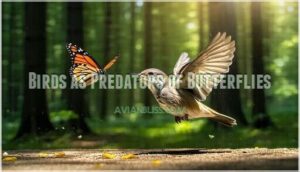
How do birds turn butterflies into their next meal? These feathered hunters use sophisticated bird behavior strategies to capture their colorful prey through various hunting techniques.
Insectivorous birds excel at predator prey interactions with butterflies. Warblers and flycatchers demonstrate impressive aerial skills, snatching butterflies mid-flight with precision timing. Meanwhile, ground-foraging species like robins patrol butterfly habitat areas, searching for resting or injured specimens.
Birds that eat butterflies employ diverse flight patterns and hunting strategies:
- Aerial pursuit – Swallows and flycatchers intercept butterflies during flight
- Perch hunting – Chickadees wait on branches before striking nearby butterflies
- Ground gleaning – Robins and sparrows collect butterflies from vegetation
- Hover grabbing – Small birds briefly hover to snatch stationary targets
- Swoop attacks – Hawks use elevated vantage points for surprise strikes
This bird butterfly interaction creates fascinating ecological dynamics. Birds that consume insects help regulate butterfly populations naturally, preventing potential pest outbreaks. The avian diet benefits substantially from butterflies’ protein content, especially during breeding seasons when energy demands peak.
Birds eating insect wings often occurs after capture, as intelligent species like orioles remove potentially toxic body parts before consumption, showcasing remarkable behavioral adaptation.
Butterfly Defense Mechanisms
You’ve witnessed butterflies dancing through the air in seemingly impossible patterns that confuse even the sharpest bird eyes.
These delicate insects haven’t survived millions of years by accident—they’ve developed a remarkable toolkit of survival strategies that make them surprisingly difficult targets for hungry birds.
Bright Colors Serve as Warning Signals

When danger lurks, butterflies don’t hide—they advertise. Bright colors function as nature’s neon warning signs, broadcasting "I’m toxic!" to hungry birds.
This color warning system, called aposematism, represents millions of years of signal evolution between predators and prey. These visual cues create powerful predator deterrent effects, teaching birds to associate specific patterns with unpleasant dining experiences.
Warning displays work because birds learn quickly:
- Monarch butterflies flash orange and black as toxic advertisements
- Pipevine swallowtails use metallic blue-green to signal danger
- Queen butterflies display bold orange patterns screaming toxicity
- Heliconius species sport bright red and yellow warning signals
- Many species combine vivid hues with contrasting patterns for maximum impact
This butterfly defense strategy trades stealth for survival, making these insects conspicuous but protected. Birds also develop avoidance behavior through bird learning processes, which helps them avoid toxic or agile prey.
Mimicry of Unpalatable Species

Nature’s ultimate con artists don’t need costumes—they wear them.
Mimicry Tactics let butterflies like Viceroys impersonate toxic Monarchs through Batesian mimicry.
This Evolutionary Adaptation exploits aposematism, where birds learn to avoid Warning Colors and Toxic Signals.
When harmless species copy Protective Patterns of unpalatable species, they freeload on predators’ learned fear, turning deadly recognition into survival gold.
Evasive Flight Patterns

Beyond mimicry, butterflies rely on unpredictable Flight Maneuvers to escape bird attacks.
Their Evasive Flight Patterns create a moving puzzle that even skilled aerial hunters struggle to solve.
Butterflies use three primary Airborne Evasion techniques:
- Erratic Flying with sudden zigzag patterns that break predictable trajectories
- Quick Turns involving rapid directional shifts that confuse pursuing birds
- Wing Movements creating chaotic Aerial Acrobatics through altitude changes.
These Erratic Movements transform butterflies into living pinballs, making Butterfly Avoidance an art form that’s kept them airborne for millions of years.
Losing Wing Scales or Wedges to Escape Attacks

When you watch a butterfly in a bird’s grasp, you’ll notice something remarkable happens.
Wing Scale Loss becomes their lifeline—detachable scales literally slip away from the bird’s beak, creating a slippery escape route.
This Scale Detachment mechanism works like a lizard dropping its tail.
The butterfly sacrifices small wing portions to avoid becoming lunch, demonstrating nature’s clever Escape Tactics in action.
Caterpillars as Bird Food
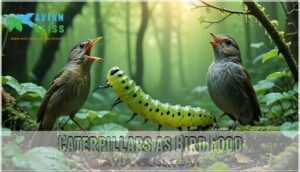
You’ll discover that caterpillars make easy targets for hungry birds since they can’t fly away from danger.
Many bird species actively hunt these protein-rich larvae, with some consuming dozens of caterpillars daily during peak feeding seasons, making them a significant part of the birds’ diet due to their easy availability.
Young Butterflies Before They Develop Wings Are Vulnerable
Before developing wings, immature butterflies face their greatest vulnerability from bird predators. These larval stages lack the escape mechanisms of adults, making them prime targets for insect eating birds.
Wing development marks a pivotal shift, but until then, caterpillars rely on limited larval defense strategies:
- Cryptic coloration matching their host plants
- Spiny projections deterring smaller predators
- Chemical secretions creating unpleasant tastes
- Rapid feeding to minimize exposure time.
Understanding vulnerable stages helps explain why butterfly nutrition becomes so critical for birds that eat butterflies during breeding seasons. The presence of toxic species, such as those with butterfly defense mechanisms, can also impact predation patterns and the overall ecosystem.
Birds May Consume Large Quantities of Caterpillars
Birds routinely consume massive quantities of caterpillars, making insect predation a cornerstone of avian nutrition.
You’ll discover that caterpillar diet forms up to 96% of terrestrial songbirds’ nestling food. Bird foraging becomes intense during breeding season when feeding habits demand protein-rich butterfly nutrition.
Carolina Chickadees alone feed their young 6,000-9,000 caterpillars per season. This remarkable insect consumption by birds that eat butterflies demonstrates why can birds eat insects remains essential for ecosystem balance and successful reproduction.
Nature’s tiny protein factories fuel entire bird families through breeding season.
Understanding the role of native plant species is essential for maintaining biodiversity and supporting local wildlife.
Monarch Butterflies and Other Unpalatable Species

You might think all butterflies are fair game for birds, but nature’s got some clever tricks up her sleeve.
Monarch butterflies pack a toxic punch from the milkweed they consumed as caterpillars, teaching hungry birds a lesson they won’t soon forget about the monarch.
Monarch Butterflies Consume Milkweed With Toxic Compounds
While birds can easily capture caterpillars, adult monarch butterflies have evolved a brilliant defense strategy. These remarkable insects consume milkweed plants containing cardenolides – toxic compounds that make them unpalatable to most predators.
You’ll find that monarch defense relies on toxic consumption during their larval stage, when caterpillars store these chemicals in their bodies. Some birds rely on insects, as insectivorous bird diets provide essential nutrients.
Here’s how butterfly toxicity through milkweed effects works:
- Monarch caterpillars exclusively feed on milkweed, absorbing cardenolides
- These toxic compounds remain stored throughout their adult butterfly stage
- Birds that eat monarchs often vomit due to the emic properties
- Over 27 North American milkweed species contribute to varying toxin levels
- Some monarchs contain higher concentrations than others, affecting predation success
Viceroy Butterflies Mimic Monarchs for Protection
Viceroy butterflies pull off nature’s greatest con by mimicking the monarch butterfly’s distinctive orange and black patterns.
This deceptive coloration tricks birds who’ve learned to avoid toxic monarchs after bitter experiences.
While viceroys lack true toxicity, their mimicry effectiveness depends on bird learning and memory.
This Mimicry Evolution strategy boosts Viceroy Palatability perception, helping them survive despite being perfectly edible.
Butterfly Gardens and Bird Feeders
You can create butterfly gardens alongside bird feeders without worry—birds naturally regulate butterfly populations, preventing overgrowth while gaining essential protein.
This predator-prey relationship maintains ecological balance, where butterflies provide nutrients like B vitamins and minerals that support bird health during breeding seasons, which is a key factor in maintaining ecological balance.
Having a Butterfly Garden Near Bird Feeders is Acceptable
You don’t need to worry about positioning butterfly gardens near bird feeders.
This Garden Coexistence creates Habitat Enrichment that benefits both species.
While birds occasionally snack on butterflies, they won’t devastate your garden populations.
The setup actually promotes Bird-Butterfly Harmony in Balanced Ecosystems.
Your bird feeders and butterfly gardens can thrive side by side, supporting Integrated Conservation efforts while accommodating natural bird feeding habits.
Creating a butterfly garden requires careful planning to guarantee a thriving ecosystem.
Bird Predation Helps Maintain a Balance in Butterfly Populations
While butterfly gardens create beautiful spaces, this predator prey relationship serves an essential ecological purpose.
Bird predation naturally regulates butterfly populations, preventing any single species from overwhelming local ecosystems:
- Population control keeps butterfly numbers sustainable
- Natural selection strengthens butterfly species diversity
- Ecosystem balance maintains healthy predatorprey dynamics
- Conservation efforts benefit from understanding bird butterfly diet interactions
This biological partnership demonstrates nature’s self-regulating mechanisms at work.
Creating a butterfly garden requires careful consideration of these ecological factors to thrive.
Butterflies Provide Nutrients for Birds
While bird predation maintains ecological balance, you’ll find that butterfly protein and nutrients substantially support avian diet requirements.
Feather growth depends heavily on insect consumption, making butterflies an excellent butterfly food source.
Your backyard birds insect consumption increases during breeding season when proteinrich butterfly nutrition becomes essential.
This bird predation creates natural bird nutrition cycles.
Birds and butterfly diet relationships demonstrate nature’s interconnected design, where even occasional butterfly meals provide essential vitamins, minerals, and proteins for peak bird health.
Torn Butterfly Wings as Evidence of Bird Attacks
When you find torn butterfly wings scattered in your garden, you’re likely looking at evidence of a successful bird attack.
However, damaged wings don’t always mean bird predation—thorny vegetation, wind, and rough surfaces can also tear those delicate wing membranes during normal butterfly activities.
Torn Wings Can Indicate Bird Predation

Observing damaged butterfly wings reveals fascinating Bird Attack Signs in nature’s ongoing survival drama. Wing Damage patterns tell compelling stories of narrow escapes from hungry predators.
Look for these telltale Beak Marks indicating recent encounters:
- Asymmetrical tears on hindwing tails (78% of damage cases)
- Wedge-shaped notches matching bird beak patterns
- Missing colorful wing sections that act as decoys
- Torn scales creating slippery escape mechanisms
- Fragmented tail areas designed to break away easily
These Predation Patterns demonstrate butterflies’ remarkable survival adaptations against avian hunters.
Vegetation Can Also Cause Wing Damage

Leaf damage from thorns, rough bark, and sharp-edged petals creates wing tears that mimic bird predation.
Plant collisions during flight cause branch injuries similar to avian attacks. Petal hazards from flowers with stiff structures tear delicate butterfly wings as they feed.
Environmental wear creates identical damage patterns, making it tricky to distinguish natural wing tears from actual butterfly bird relationship encounters.
Understanding these plant collisions helps identify true predation versus routine habitat navigation damage.
Variation in Butterfly Palatability

When you spot damaged butterfly wings, you might wonder what caused the tears. While bird attacks can leave telltale marks, toxic species reveal a fascinating spectrum of butterfly taste that influences bird preferences dramatically.
Butterfly palatability operates on a sliding scale rather than simple categories. Toxic compounds accumulated during the caterpillar stage create chemical defenses that make some butterflies completely unpalatable species while others remain delicious bird snacks. This variation affects prey selection patterns across different habitats.
Palatability factors include:
- Host plant chemistry that determines toxin levels
- Individual genetic variations within species
- Environmental conditions affecting chemical concentration
- Life stage differences in defense compound accumulation
- Geographic location influencing available food sources
Queen butterflies demonstrate this complexity perfectly. Depending on their host plants, some individuals pack enough toxic butterflies punch to make birds sick, while others from different areas taste perfectly fine. Even monarch populations show surprising variation in their cardenolide content.
This chemical defenses spectrum explains why you’ll sometimes see birds successfully hunting supposedly protected species.
Daytime Predation on Moths

Moths face significant predation pressure even when sunlight streams through their daytime hiding spots. Moth hunting becomes surprisingly active during daylight hours as various insect-eating birds capitalize on vulnerable prey.
You’ll find mockingbirds executing precise aerial chases, snatching moths mid-flight with remarkable agility. Blackbirds prefer ground-level pursuit, chasing their fluttering targets across open terrain.
Bird sighting enthusiasts often observe Paradise Flycatchers displaying particular fondness for white moths, expertly plucking them from the air during daytime feeding sessions. Even small falcons like Hobbies join this predator prey dynamic, targeting moorland dayflying moths with impressive speed and accuracy.
This vulnerability intensifies when moths are disturbed from resting positions, making them easy targets for opportunistic predators. Unlike nocturnal hunting patterns, daytime moth predation relies heavily on visual detection, giving birds distinct advantages over their prey.
The contrast between bright daylight and moths’ typically darker coloration creates perfect conditions for avian hunters seeking protein-rich meals. Understanding bird facts about predators is essential in grasping the complex dynamics of these interactions.
Other Butterfly Predators
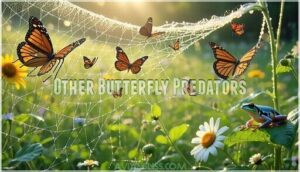
Beyond birds, numerous other butterfly predators create a complex web of threats that keeps butterfly populations in check.
These creatures have evolved specialized hunting techniques that make them formidable opponents for even the most evasive butterflies.
Other butterfly predators employ diverse strategies to capture their prey:
- Spider Predation – Orb weavers and jumping spiders construct intricate webs or actively hunt butterflies on flowers
- Lizard Attacks – Geckos and anoles use lightning-fast tongue strikes to snatch butterflies from vegetation
- Frog Consumption – Tree frogs position themselves near nectar sources, using sticky tongues to capture unwary butterflies
- Dragonfly Hunters – These aerial acrobats intercept butterflies mid-flight with precision and speed
Insectivorous mammals like bats hunt night-flying species, while praying mantises remain motionless on flowers, striking with razor-sharp forelegs. Snake Predators occasionally consume butterflies, though they’re not primary targets.
These diverse predation pressures have shaped butterfly evolution, creating the remarkable defense mechanisms we observe today. Understanding this predator network helps explain why butterflies have developed such elaborate survival strategies.
The Importance of Butterflies in The Ecosystem
You’ve likely never considered butterflies as ecosystem engineers, but they’re quietly maintaining the balance that keeps our natural world thriving.
These delicate insects serve dual roles as essential pollinators and important food sources, creating ripple effects that extend far beyond their brief lifespans.
Butterflies Facilitate Flower Growth Through Pollination
While foraging for nectar, butterflies unknowingly become nature’s matchmakers through the Pollination Process. As they move between blooms, pollen sticks to their bodies and transfers to other flowers, directly supporting Flower Growth and reproduction.
The Butterfly Role in maintaining Ecosystem Balance includes:
- Transferring pollen between flowers during nectar feeding
- Supporting cross-pollination that increases seed production
- Maintaining Plant Diversity through broad flower visitation patterns
- Contributing to habitat restoration and Ecosystem Health.
This pollination activity strengthens biodiversity across landscapes. Understanding pollination kits is essential for preserving these delicate processes.
They Serve as Food for Various Animals Beyond Birds
Countless creatures rely on butterflies as essential prey beyond just birds.
Spiders construct intricate webs to snare these colorful insects, while frogs use lightning-quick tongues to capture them mid-flight.
Lizards, bats, and various insectivores hunt butterflies throughout different life stages, creating complex food chains.
This butterfly nutrition supports wildlife interactions across ecosystems, demonstrating how these delicate insects fuel predator-prey relationships that maintain essential ecosystem balance.
The presence of hummingbirds also plays a role in maintaining this balance, as they contribute to ecosystem health through their unique characteristics and behaviors.
Frequently Asked Questions (FAQs)
Can a bird eat a butterfly?
Yes, you’ll find that birds regularly eat butterflies using various hunting techniques.
They catch them mid-air, pluck them from plants, or grab them from the ground, then bash or swallow them whole.
Are any butterflies poisonous to birds?
Monarch butterflies are toxic to birds due to glycosides absorbed from milkweed plants during their caterpillar stage. You’ll find intelligent birds like orioles remove toxic organs before eating them.
Why do birds not eat monarch butterflies?
After tasting toxic monarchs, 93% of birds learn to avoid them completely.
You’ll find that monarchs store poisonous glycosides from milkweed plants they consumed as caterpillars, causing birds to vomit and feel sick after eating them.
Can birds eat monarch butterflies?
Birds can eat monarch butterflies, but they’ll usually regret it.
You’ll see smart species like orioles remove toxic organs first, while inexperienced birds learn quickly to avoid these orange warning signs after one unpleasant meal.
Do birds eat butterflies and bees?
Picture a bird’s sharp eye scanning your garden – you’ll witness nature’s aerial hunt unfold.
Birds actively consume both butterflies and bees, using specialized techniques to catch these flying insects for essential protein and nutrients, which is a key part of their aerial hunt.
What is the natural predator of a butterfly?
Multiple predators hunt butterflies throughout their lifecycle. You’ll find birds like orioles, grosbeaks, and flycatchers targeting adults, while spiders, frogs, and wasps prey on various stages from eggs to adults.
What birds eat butterflies?
Many songbirds hunt butterflies, including orioles, blue jays, grosbeaks, warblers, and flycatchers. You’ll spot hummingbirds snatching smaller species while hawks target larger ones from above. They prefer caterpillars over adults.
Is it advisable to stop eating butter?
Like approaching a nutritional crossroads, your butter consumption depends on your health goals and dietary needs.
Butter isn’t inherently harmful but contains saturated fat.
You’ll want to moderate intake if you’ve got cardiovascular concerns.
Consider your overall diet—butter can fit into balanced eating patterns when used thoughtfully.
Do birds eat butterfly larvae?
Yes, you’ll find birds actively hunting butterfly larvae, which they prefer over adults. Caterpillars can’t escape like flying butterflies, making them easier targets that provide concentrated protein for growing chicks.
Why do birds not eat butterflies?
Birds actually do eat butterflies regularly.
You’ll see toxic species like monarchs get avoided after birds learn they’re poisonous, but most butterflies aren’t protected this way.
Birds simply prefer easier prey like caterpillars over adult butterflies.
Conclusion
When push comes to shove, the answer to "can birds eat butterflies" reveals nature’s intricate balance between predator and prey.
You’ve witnessed an evolutionary arms race where birds develop hunting techniques while butterflies counter with toxic compounds, warning colors, and evasive maneuvers.
This predator-prey relationship maintains healthy ecosystem dynamics, ensuring neither species dominates completely.
Understanding these interactions helps you appreciate the complex web of relationships occurring in your own backyard, where every flutter and swoop represents millions of years of adaptation.
- https://a-z-animals.com/blog/butterfly-predators-what-eats-butterfly/
- https://bioone.org/journals/the-journal-of-the-lepidopterists-society/volume-71/issue-2/lepi.71i2.a5/Butterfly-Predators-in-the-Neotropics-Which-Birds-are-Involved/10.18473/lepi.71i2.a5.full
- https://journeynorth.org/tm/monarch/sl/4/text.html
- https://butterflybeegarden.com/the-top-butterfly-predators/
- https://www.environment.sa.gov.au/goodliving/posts/2018/12/benefits-of-butterflies