This site is supported by our readers. We may earn a commission, at no cost to you, if you purchase through links.
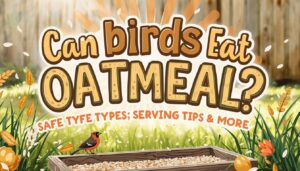
Most backyard feeders stock up on seeds and suet without giving oats a second thought—but plain rolled oats might be the most underrated item in your bird-feeding pantry.
Birds like finches, cardinals, and mourning doves take to them readily, and oats deliver a steady burn of energy that seeds alone can’t always match.
The catch is that not all oatmeal belongs outside. Processed packets loaded with salt, sugar, and artificial flavors can do real harm to birds whose kidneys aren’t built to handle those additives.
Knowing what to offer—and what to skip—makes all the difference.
Table Of Contents
- Key Takeaways
- What Counts as Bird-Safe Oatmeal?
- Yes, Birds Can Eat Oatmeal
- Which Birds Eat Oatmeal?
- Why Oatmeal Benefits Birds
- Best Oat Types to Offer
- Cooked or Uncooked Oatmeal?
- How to Serve Oatmeal Safely
- Common Oatmeal Feeding Mistakes
- Can Baby Birds Eat Oatmeal?
- How to Make Oat Suet
- Frequently Asked Questions (FAQs)
- Conclusion
Key Takeaways
- Plain rolled oats are the safest choice for backyard birds — always dry, always unseasoned, and always free of additives.
- Flavored instant oatmeal packets are a real risk; the salt, sugar, and artificial ingredients can genuinely harm birds whose bodies aren’t built to process them.
- Oats work best as a supplement, not a staple — they shine most during cold snaps and migration when birds need quick, steady energy to get through the day.
- Baby birds should never be fed oatmeal, since their developing digestive systems can’t handle dry grains the way adult birds can.
What Counts as Bird-Safe Oatmeal?
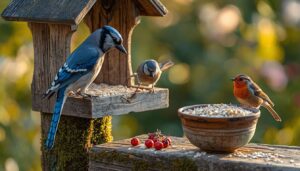
Not all oatmeal is created equal — at least not from a bird’s perspective. Before you head to the pantry, it helps to know exactly what makes one type safe and another a problem.
Knowing which oats are safe for birds to eat can mean the difference between a healthy snack and an upset stomach for your backyard visitors.
Here’s what to look for.
Plain Rolled Oats
Plain rolled oats are your best starting point. They’re whole oats pressed flat — no added flavors, no salt, just pure grain. Whether you buy them through bulk purchasing or standard packaging options, the key is keeping it simple. They’re 100 percent whole grain, which means they retain bran, germ, and endosperm. makes them bird-safe:
- Flat, lightweight, and easy to swallow
- Rich in complex carbs for quick energy
- Naturally free of additives
- Available in organic vs conventional options
- Low environmental footprint compared to processed feeds
Unsweetened and Unsalted Varieties
Once you’ve got plain rolled oats in hand, the next thing to check is the label. You want unsweetened and unsalted varieties — no added sugar, no sodium.
Natural oats already contain less than 5mg of sodium per serving, so there’s no need for more. Look for a single ingredient: oats. That’s your best signal for additive-free feeding and safe bird nutrition.
Oats Without Flavorings or Additives
Beyond sugar and salt, there’s one more thing to watch for: flavorings and additives. Label transparency matters here.
Even "natural" flavors can harm birds.
Look for pure ingredient sourcing — the ingredient list should say oats, full stop.
That additive-free verification protects the nutritional benefits of oatmeal for birds, since minimal processing benefits are only preserved when nothing extra sneaks in.
Why Processed Oatmeal is Risky
Processed oatmeal brings a different set of concerns. Instant oatmeal packets, for example, often carry pesticide contamination and glyphosate residues from conventional farming — risks that compound when birds eat them regularly.
Heavy metal accumulation is another quiet worry. Add the calorie overload from extra fats and sugars, and you’re looking at real nutrient imbalance.
Cooking vs raw bird food isn’t just a preference — it’s a safety call.
Yes, Birds Can Eat Oatmeal
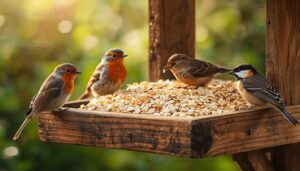
Good news — oats are genuinely safe for birds when served the right way.
They work best as a supplement, not a staple, and knowing when and how to offer them makes all the difference.
Here’s what you need to know before you scatter that first handful.
Safe as a Supplemental Food
Think of oatmeal as a helpful side dish, not a main course, for your backyard birds. Uncooked porridge oatmeal — never cooked oats — offers real benefits of oatmeal for wild birds, from steady energy to digestive support.
Stick to a consistent feeding schedule, watch for observation signs like normal pecking behavior, and keep batch freshness high by storing oats at a cool, dry storage temperature.
Best for Wild Backyard Birds
Wild backyard birds thrive on oats when you follow simple bird feeding guidelines. Uncooked oatmeal suits them far better than cooked oats, which clump and spoil fast.
- Finches and sparrows at platform feeders
- Doves on ground trays
- Cardinals drawn by complementary seed mixes
- Woodpeckers near habitat-friendly feeder designs
- Juncos during Seasonal Oat Scheduling windows
Monitoring bird health ensures everyone’s eating well.
Why Moderation Matters
Even something as wholesome as oats can cause problems if you overdo it. Too much oatmeal crowds out seeds, insects, and fats — the nutritional benefits of oatmeal for birds only hold when it complements their diet, not replace it.
| Risk | Cause | Fix |
|---|---|---|
| Choking hazard | Large oat pieces | Crush or use rolled oats |
| Mold growth | Damp leftovers | Refresh daily |
| Nutritional gap | Overfeeding oats | Limit to small portions |
| Pest attraction | Scattered spillage | Use tray feeders |
| Digestive upset | Flavored oats | Stick to plain varieties |
Small, consistent portions keep your backyard birds healthy.
When Oatmeal is Most Useful
Oatmeal earns its place most during cold snaps, migration season, and post-storm recovery — moments when birds burn through energy fast. Dry rolled oats deliver quick carbohydrates right when winter feeding for birds matters most.
They also support pre-mating nutrition and nestling growth phases when protein demand rises. Think of oats as your seasonal backup — reliable when natural food sources fall short.
Which Birds Eat Oatmeal?
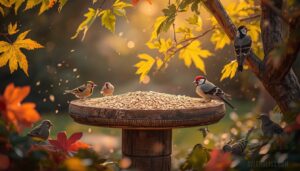
Oats appeal to a surprisingly wide range of backyard birds, from tiny finches to larger woodpeckers. Some prefer to feed on the ground, while others visit raised platform feeders.
Here’s a look at the birds most likely to show up once you put oats out.
Finches and Sparrows
Finches and sparrows are some of your most reliable backyard visitors — and both take well to uncooked oats. varied plumage patterns make them easy to spot.
Finches, with their compact beaks built for cracking seeds, handle rolled oats easily. Sparrows, often arriving in larger flocks, forage right from the ground.
Oats offer real nutritional benefits, supporting energy and feathers through every season.
Cardinals and Juncos
Northern cardinals and dark-eyed juncos are two of the most rewarding granivorous birds to host. Cardinals, with their striking Plumage Differences between red males and warm-brown females, defend feeders through Territorial Displays. Juncos shift with Migration Timing and Winter Flock Dynamics.
Both benefit from oats because:
- Complex carbs fuel cold-weather survival
- Protein-rich food promotes feather health
- Safe serving practices keep uncooked oatmeal fresh
- Nutritional benefits of oatmeal for birds complement Nesting Site Choices
Doves and Pigeons
While cardinals and juncos tend to be pickier, mourning doves and pigeons are refreshingly easy to please. Scatter raw oats on a flat tray, and they’ll show up reliably. Their muscular gizzards handle dry grains well — cooked oatmeal is too sticky and risky for them.
| Feature | Mourning Doves | Pigeons |
|---|---|---|
| Nesting Site Selection | Low shrubs, ledges | Urban Roosting Behavior on buildings |
| Mating Coos Patterns | Soft, repetitive calls | Deeper rhythmic cooing |
| Predator Vigilance Strategies | Quick ground escape | Group flock alertness |
Both follow Seasonal Migration Routes tied to food availability, making consistent feeding genuinely helpful. The nutritional benefits of oats for birds like these — steady energy, digestive support — make oats a smart, simple addition to your yard.
Woodpeckers and Starlings
Two birds worth knowing — woodpeckers and starlings — approach oats very differently. Woodpeckers, built for tree life with their Zygodactyl Footwork and Tail Feather Bracing, prefer oatmeal-based suet cakes.
Starlings, thriving on Urban Habitat Overlap, compete aggressively at feeders. Cavity Competition between them is real.
- Woodpeckers use Drumming Communication to mark territory near feeders
- Starlings can outpace woodpeckers at open platforms
- Suet cakes balance Nutritional value of oats for avian health safely
Ground-feeding Versus Platform-feeding Species
Where a bird likes to eat matters just as much as what it eats.
Ground feeders like doves and juncos prefer scattered oats low and wide — their feeding height preference keeps them comfortable but raises predator exposure risk.
Platform feeders suit cardinals and finches, encouraging social foraging dynamics in safer, elevated spots.
Match the feeder to the bird, and seed size suitability takes care of itself.
Why Oatmeal Benefits Birds
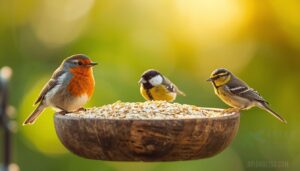
Oats aren’t just a convenient filler — they actually bring some real nutritional value to the birds visiting your yard. Think of them as a modest but well-rounded food that helps birds in more ways than one.
Here’s a closer look at what oats do for them.
Complex Carbohydrates for Energy
Oats work like a slow-burning furnace for birds. Their complex carbohydrates break down gradually, giving a slow glucose release that keeps energy steady rather than spiking and crashing.
Resistant starch benefits gut health while supporting glycogen storage in muscles — critical for flight and thermoregulation. As a carbohydrate source for birds, oats deliver real metabolic stability, making them one of the most reliable energy-rich bird foods you can offer.
Moderate Protein for Feathers and Muscles
Feathers don’t build themselves. Every shaft, barb, and quill depends on keratin synthesis — and keratin runs on amino acids like methionine.
Oats deliver moderate protein that helps feather growth rate and muscle repair without overwhelming your birds’ systems. Think of it as protein timing done right: steady, balanced nutrition that keeps their avian diet on track without replacing protein-rich food sources they still need.
Fiber for Digestive Support
What happens inside a bird’s gut matters more than most people think.
Plain rolled oats bring real fiber for birds — supporting gut microbiome balance through fermentation byproducts that nourish the colon lining. That fiber also regulates stool bulk regulation and water binding effects, keeping digestion smooth.
For the bird digestive system, these nutritional benefits of oats for avian health quietly do serious work.
Vitamins and Minerals in Oats
Think of oats as a quiet multivitamin for your backyard visitors. They deliver thiamine energy support, riboflavin antioxidant protection, iron transport, zinc immunity, and magnesium muscle function — all in one small handful. These vitamins and minerals make oats genuinely nutrient-dense bird snacks.
Oats quietly deliver thiamine, riboflavin, iron, zinc, and magnesium — a full multivitamin packed into every small handful
For well-rounded bird nutrition, safe serving practices and handling of uncooked oatmeal reveal the full nutritional benefits of oats for birds.
Winter and Migration Support
Winter strips away easy food sources fast — and that’s exactly when oats earn their place. As an energy dense supplement, oats support migration fat accumulation and fuel cold weather feeding periods when insects vanish.
Scatter small portions near habitat cover placement spots and keep monitoring bird numbers to adjust portions during cold snaps. These winter bird feeding tips make oats reliable energy sources for wintering birds.
Best Oat Types to Offer
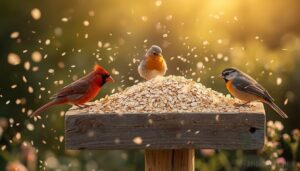
Not all oats are created equal regarding feeding birds. type you choose can make a real difference in how safe and useful it is for your backyard visitors.
Here’s what to know about each option.
Rolled Oats as The Top Choice
Plain rolled oats are the best option for backyard bird feeding — and for good reason. Their nutrient density, shelf stability, and feeder compatibility make them a no-brainer choice. Here’s why they work so well:
- They deliver solid nutritional benefits of oatmeal for birds without additives.
- Their cost effectiveness makes consistent feeding easy.
- Safe serving practices with uncooked oatmeal are simple to follow.
Steel-cut Oats for Larger Birds
Steel-cut oats aren’t for every bird — but for larger species like pigeons, doves, and blue jays, they’re a solid option. Beak strength matching matters here: bigger beaks handle chunkier pieces with ease.
Soak them for 15–30 minutes (soaking duration) to soften the texture before offering.
| Consideration | Guidance |
|---|---|
| Chunk size adjustment | Break pieces smaller for mid-sized birds |
| Feeder placement height | Use low platforms; ground trays work best |
When to Crush Tougher Oat Pieces
Smaller birds like finches and sparrows can’t manage chunky pieces — that’s where crushing comes in. Crush dry, store-bought rolled oats just before serving using a mortar and pestle, aiming for 1–2mm fragments.
This Pre-Feeding Prep step matters most in humid conditions; Moisture Avoidance is key since damp oats mold fast.
Always do a quick Feeder Temperature Check before adding crushed oats.
Why Instant Oatmeal is Less Ideal
Once you’ve got the crushing step down, instant oatmeal might seem like a convenient next step — but it’s worth a second thought.
Most instant oats carry Added Sugars, Increased Sodium, and artificial flavors that are genuinely harmful to birds.
Heavy processing causes Nutrient Degradation and Reduced Fiber Content, while the Higher Glycemic Index offers quick energy that crashes fast.
Stick with plain rolled oats instead.
Raw Groats and Special Preparation
Raw oat groats sit at the opposite end of processing from instant — they’re the whole kernel with just the husk removed. That makes them nutrient-dense, but tougher to handle.
Prep matters here:
- Soaking groats overnight softens them for smaller birds.
- Toasting groats lightly enhances aroma and acceptance.
- Crushing groats slightly improves moisture absorption and aids beak exercise.
Always pair them with fresh water as a hydration aid.
Cooked or Uncooked Oatmeal?
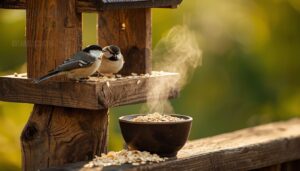
This is one of the most common questions bird feeders ask, and the answer is simpler than you might think. How you prepare oats matters just as much as which type you choose.
what to know before you head outside with that bowl.
Why Dry Oats Are Safer
Dry oats are the safer call, and the reasons aren’t complicated.
Uncooked oatmeal holds its shape, keeping particle size consistency that lets smaller birds pick up individual pieces without struggling.
Moisture management matters too — dry oats resist mold inhibition breakdown far longer in feeders.
They also preserve nutrients better, and smaller portions mean less spillage sitting around inviting rodents.
Problems With Sticky Cooked Oatmeal
Cooked oatmeal might seem gentler, but it creates more problems than it solves. Starch gelatinization turns those soft oats into a paste — a low water ratio makes it worse, and vigorous stirring only adds to the gluey mess.
Overheating hazards compound this: high heat accelerates clumping on feeders fast. sticky food danger for birds also invites moldy food growth quickly, turning a kind gesture into a real health risk.
Choking and Beak-clumping Concerns
Small birds face the biggest risk here — a finch or sparrow has a throat barely wider than a pencil tip.
When oat chunk size is too large or hydration effects turn flakes sticky, food can clump right at the beak or throat.
Watch for open-mouth breathing or repeated beak-wiping — those are key observation signs.
Species size sensitivity is real, and feeder design risks like deep trays make quick, oversized gulping more likely.
Why Porridge Should Be Avoided
Porridge might seem gentle and easy to digest, but it’s one of the potential hazards of feeding cooked oatmeal to birds. Once oats are boiled, they turn sticky — clumping around beaks, coating feeder surfaces, and spoiling fast.
The differences between raw and cooked oats for avian consumption matter here:
- Protein deficiency worsens when porridge replaces varied foods
- Phytate mineral block limits iron and calcium absorption
- Additive toxicity from flavored packets disrupts gut health
Stick to dry oats instead.
Moisture and Spoilage Risks
Moisture is the real troublemaker here. When humidity climbs above 60 percent or storage temperature rises, oats absorb moisture fast — triggering mold growth within days.
Mold detection matters: musty smells, dark spots, or sticky textures mean toss it immediately.
Focus on packaging integrity and moisture barriers like airtight containers.
Preventing mold and choking hazards in bird feed starts with keeping oats consistently dry before serving.
How to Serve Oatmeal Safely
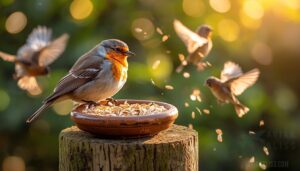
Getting oats in front of birds is easier than you might think.
A few simple habits go a long way toward keeping feeding time safe and stress-free.
Here’s what works best.
Scattering Oats on Trays
Scattering plain rolled oats on a tray is one of the simplest, most effective feeding methods you can try.
Spread uncooked oatmeal in a thin, even layer across a shallow dish — don’t pile it up.
For safe bird feeding practices, choose smooth tray material choices, like ceramic or plastic, that are easy to wipe clean daily, keeping feeding stress-free for every visitor.
Using Platform and Ground Feeders
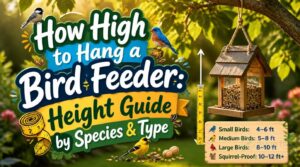
Platform feeders work best at 4 to 6 feet high — that’s your sweet spot for feeder height guidelines that keep plain rolled oats away from ground predators. Position your bird feeding platform near shrubs using a smart cover placement strategy, giving birds a quick escape route.
ground feeding versus platform feeding for birds, doves prefer low trays while finches favor elevated surfaces.
Offering Small Daily Portions
Once your feeders are in place, portion timing matters more than you’d think. A tablespoon of plain rolled oats per bird is plenty — small quantities prevent waste and spoilage.
Seasonal adjustments help too: bump portions slightly during cold snaps; scale back in summer heat. Refresh daily, and watch your observation metrics — if oats sit untouched, that’s your cue to offer less.
Placing Feeders Near Cover
Where you place your bird feeding station matters as much as what’s in it. Aim for 10 to 15 feet from dense shrubs—close enough for quick escape route spacing, far enough to maintain clear predator sightlines.
- Keep 5 to 10 feet of open ground between feeders and dense brush.
- Use low shrubs within 5 feet as reassurance cover without enabling cat ambushes.
- Avoid heavy branch canopies directly overhead — falling debris contaminates oats.
- Apply seasonal cover adjustments: move feeders slightly closer to shelter in winter.
- Install baffles above platform feeders to block aerial predators near trees.
Providing Fresh Water Nearby
Dry oats need a little help going down — and that’s where a nearby water source earns its keep. Set shallow bird bath or ceramic water bowl within 5 to 6 feet of cover, giving birds a quick retreat if needed.
Rotate spots seasonally for predator-safe water access, and refresh it daily.
Providing water sources alongside dry feed makes your setup genuinely bird-friendly.
Common Oatmeal Feeding Mistakes
Even with the best intentions, a few easy-to-miss habits can do more harm than good for your backyard birds. Most mistakes come down to what you offer, how much, and how often you refresh it.
Here are the most common oatmeal feeding mistakes worth watching out for.
Feeding Too Much Oatmeal
Too much of a good thing is still too much.
Overloading your feeder with oatmeal risks fiber overload, digestive issues, and nutritional imbalance — pushing out the energy-rich bird foods and insects birds actually need.
It can cause weight gain, irregular droppings, and increased water requirements. Keep portions small, refresh daily, and stay on top of feeder hygiene to avoid these potential hazards.
Using Flavored Instant Packets
Flavored instant oatmeal might seem harmless, but those convenient packets are loaded with Additive Risks, your birds can’t handle. High Sodium Content, MSG Sensitivity triggers, and artificial sweeteners can quietly harm small songbirds.
Packaging Waste adds up too. Flavor Preference shifts away from natural foods over time.
Stick to plain rolled oats only.
- Skip packets with MSG, salt, or sugar
- Never offer flavored varieties — even "lightly seasoned" ones
- Plain, dry oats are always the safer swap
Leaving Out Damp or Moldy Oats
Oats left out too long become a silent threat. Moisture detection matters here — look for clumping, dark patches, or a sour smell before refilling feeders.
Damp oats grow mold fast, and that mold can produce mycotoxins harmful to small birds. Storage humidity above 60% speeds spoilage.
When in doubt, throw it out, then clean contaminated feeders thoroughly before adding fresh oats.
Ignoring Feeder Cleanup
Skipping feeder cleanup is one of the easiest mistakes to make — and one of the costliest. Neglected feeders become hotspots for disease transmission, fungal contamination, and pest infestation quickly.
Keep this short checklist in mind:
- Scrub trays weekly to cut bacterial growth risk by up to 90%
- Remove spilled oats promptly to prevent rodent attraction
- Dry feeders completely before refilling to stop mold growth
- Discard any food showing spoilage to avoid moldy bird food risks
Replacing Seeds and Insects Entirely
Oatmeal alone can’t carry the whole weight of a bird’s diet. Replacing seeds and insects entirely — even with thoughtful Lupine Seed Formulation or Insect Meal Integration — risks nutritional gaps that careful Amino Acid Balancing can’t always fix.
Birds need variety. Oats support a grain-based diet for birds beautifully, but think of them as one piece of a much bigger puzzle.
Can Baby Birds Eat Oatmeal?
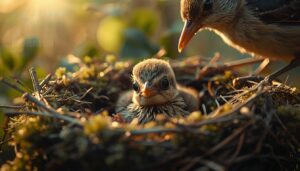
Baby birds are a completely different story from the adults visiting your feeder. digestive systems are still developing, and what works for a cardinal doesn’t work for a nestling.
Here’s what you need to know before you consider offering oatmeal to young birds.
Risks for Nestlings and Fledglings
Baby birds are a different story altogether.
Nestlings and fledglings face serious risks from oatmeal — choking hazards, airway obstruction, and gut impaction tops the list.
Their tiny digestive systems aren’t built for human grains, making nutrient imbalance and nutritional deficiencies real concerns.
Add mold contamination, predator exposure near feeding sites, and the potential hazards of feeding uncooked oatmeal, and the risks clearly outweigh any benefit.
Why Adult Birds Need Different Diets
Adult birds carry a full plate of nutritional needs — and those needs shift constantly.
Seasonal Energy Needs ramp up during migration, while Molting Nutrient Shifts call for extra zinc and protein to rebuild feathers.
Reproductive Protein Demands peak during breeding.
Health Condition Adjustments and Habitat Feeding Strategies matter too.
Understanding bird health and diet means recognizing that a one-size-fits-all approach simply doesn’t work for birds.
Parent Birds and Regurgitated Food
Parent birds are built for this. Through regurgitation mechanics, they soften food in their crop first — breaking it down into something safe and digestible for nestlings.
It’s not just clever parenting; it’s precision nutrition.
Both parents usually share these duties, delivering protein-rich meals that support feather growth and muscle development.
That built-in process also manages nestling hydration naturally, something dry oats simply can’t replicate.
Safer Options for Young Birds
Since regurgitation provides both nutrition and hydration naturally, replicating that at home is genuinely hard. For baby birds, safer short-term options include chopped protein insects like mealworms, softened seed mix, or hydrated fruit puree.
Vitamin supplement drops can help in a pinch. Keep them warm in a heat-controlled brooder.
Raw oats aren’t appropriate here — young birds need moisture-rich, easily digestible food.
When Not to Intervene
Sometimes, the kindest thing you can do is step back. If a fledgling looks healthy and alert, its parents are likely nearby — intervening can do more harm than good, and in many places, handling wild birds without permits crosses into legal liability. Know your professional boundaries.
Feeding baby birds carries real risks: overreliance on human food, choking hazards, and dependence on feeders that undermine natural development.
How to Make Oat Suet
Making your own oat suet is easier than you’d think, and birds absolutely love it.
You only need a few simple ingredients to pull it together. Here’s what goes into a good batch.
Using Oats in Homemade Suet
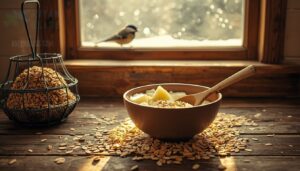
Oats are a natural fit for homemade suet cake preparation — they absorb fat beautifully and hold everything together without getting crumbly. For suet texture tuning, rolled oats work best; they bind the mixture while keeping it firm enough to hang.
This fat ratio optimization matters because energy-rich bird foods need to stay solid, not melt into a mess. Think of oats as the backbone of the whole cake.
Mixing With Unsalted Fats and Seeds
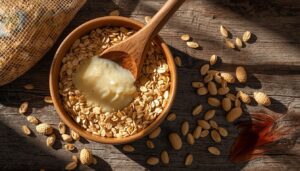
Once your oats are ready, the real magic comes from what you mix in. For the best suet, focus on three things:
- Fat Freshness Check — use only clean, unsalted lard or suet
- Seed Size Selection — crushed sunflower seeds or unsalted peanuts blend smoothly
- Texture Balance — rolled oats absorb fat evenly
This nutrient synergy promotes genuine bird nutrition through seasonal seed mixes.
Adding Dried Fruit Carefully
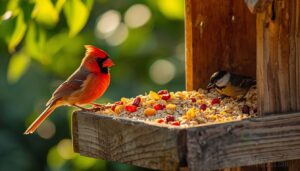
Adding dried fruit to your suet mix gives birds a welcome energy boost, but a little care goes a long way. Think of it as seasoning — a small amount adds flavor and nutrition without overwhelming the base.
| What to Do | Why It Matters |
|---|---|
| Fruit Size Control — dice small | Prevents choking hazards |
| Moisture Management — pat fruit dry | Stops mold growth |
| Sulfite Awareness — read labels | Avoids harmful preservatives |
| Seasonal Fruit Rotation — vary types | Promotes diverse foraging |
| Portion Size Limits — use sparingly | Keeps nutrition balanced |
Unsweetened raisins or cranberries work best for dried fruit for birds. Always remove pits, check for additives, and never heat fruit with oats.
Cooling and Hanging Suet Properly
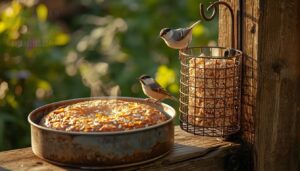
Once your homemade suet cake is poured, Room‑Temp Cooling is your first step — let it rest in a Metal Lid Container for 15–30 minutes before refrigerating.
When it’s firm, hang it using a Squirrel‑Proof Hook at the Ideal Hanging Height of 5–6 feet.
Choose a Wind‑Stable Mount so your suet feeder stays secure and birds can feed comfortably.
Storing Leftovers to Prevent Spoilage
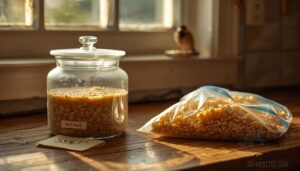
Leftover suet won’t last forever — treat it like food, because it’s proper storage keeps mold out and birds safe.
- Use air-tight containers for cool storage between feedings
- Practice date labeling so nothing sits too long
- Try portion freezing for batches you won’t use within four days
- Focus on moisture management — even a little dampness invites spoilage fast
Frequently Asked Questions (FAQs)
Can birds eat cooked oatmeal?
Technically, yes — but dry is better. Cooking oats triggers nutrient degradation and creates sticky clumps that harden around beaks. Stick to raw rolled oats for safe, mess-free backyard feeding.
How to feed birds oats?
Scatter dry, uncooked oatmeal on a flat platform feeder or ground tray. Keep portions small, refresh daily, and place near cover for predator deterrence.
A nearby water source helps birds swallow safely.
Can birds eat instant oats?
Birds can eat plain instant oats in small amounts, but they’re less ideal than raw oats.
Additives, sugar, and salt in most packets pose real additive risks and can harm your backyard visitors.
Do birds eat rolled oats?
Yes, many backyard birds readily eat rolled oats.
Sparrows, finches, cardinals, and doves are particularly fond of them — making plain, dry rolled oats one of the most accessible and nutritional options you can offer.
What should you not put out for birds?
Skip the bread, avocado, chocolate, salty snacks, and raw beans. These cause mold growth, persin toxicity, nerve damage, dehydration, and gut irritation — all serious risks for backyard birds.
Are oats good for birds?
Oats are genuinely good for birds.
They’re packed with energy density, support feather condition, and offer real nutritional benefits — especially during cold months when seasonal availability of insects and seeds drops off.
Can birds eat rolled oats?
Rolled oats are one of the safest bird foods you can offer. Plain, dry, and uncooked — they deliver real nutritional benefits without any additives that could harm your backyard visitors.
Can blackbirds eat oats?
Blackbirds boldly benefit from plain, dry oats. As omnivores, they handle oat seed mix well, supporting Blackbird Energy Requirements during Winter Habitat Feeding when worms and berries grow scarce.
Can birds eat oats in cold weather?
Yes, birds can eat oats in cold weather.
Plain rolled oats deliver a solid Thermal Energy Boost during cold winter months, helping small songbirds stay warm and active through the day.
Will birds eat uncooked oatmeal?
Most birds will eat uncooked oatmeal without hesitation.
Raw oats are easy to scatter, simple to handle, and safe when kept dry — making them one of the most fuss‑free options you can offer.
Conclusion
Plain rolled oats aren’t exactly glamorous pantry staples, but for backyard birds, they’re quiet workhorses. When you ask can birds eat oatmeal, the honest answer is yes—with intention.
Skip the flavored packets, keep portions small, and let dry oats do their job alongside seeds and natural foods. What you leave out of the feeder matters just as much as what you put in. Simple choices, made consistently, are what genuinely good bird care looks like.