This site is supported by our readers. We may earn a commission, at no cost to you, if you purchase through links.
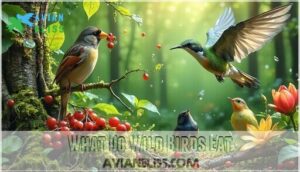 Wild birds eat a remarkably diverse diet that shifts with the seasons and their environment.
You’ll find most species switching between seeds, insects, fruits, and nectar depending on what’s available. During breeding season, they prioritize protein-rich insects to fuel growth and egg production.
Come fall, they’ll feast on berries and seeds to build fat reserves for winter survival.
Different birds have specialized feeding habits—woodpeckers extract insects from bark, finches crack seeds with powerful beaks, and thrushes hunt ground-dwelling invertebrates. This natural flexibility keeps wild populations healthy while making them essential ecosystem partners.
Understanding these patterns reveals fascinating feeding strategies that maximize survival, highlighting the importance of wild populations.
Table Of Contents
- Key Takeaways
- Wild Bird Diets
- What Do Wild Birds Eat
- Bird Food Types
- Nutritional Bird Needs
- Feeding Bird Habits
- Seasonal Feeding Consider
- Safe Bird Foods
- Creating Bird Habitat
- Human Food Impact
- Healthy Bird Feeding
- Frequently Asked Questions (FAQs)
- What is the best thing to feed wild birds?
- Is it safe to feed backyard wild birds?
- What food can you feed wild birds?
- What do wild birds like to eat the most?
- Should I feed wild birds in my yard?
- What should I feed a bird I found?
- What do birds eat in the wild?
- Do birds eat seeds?
- What do backyard birds eat?
- What do omnivore birds eat?
- Conclusion
Key Takeaways
- You’ll need to provide different foods across seasons – protein-rich insects during spring breeding, high-energy seeds and berries for fall migration, and fat-rich options like suet during winter months.
- You can attract diverse bird species by offering variety – black oil sunflower seeds for most songbirds, nyjer for finches, suet for woodpeckers, and native berries for fruit-loving species.
- You should create natural habitat with native plants that produce seeds and berries year-round, plus clean water sources, rather than relying solely on artificial feeders.
- You must avoid harmful foods like chocolate, avocado, moldy seeds, and bread while maintaining clean feeders to prevent disease transmission and dependency issues, and provide clean water sources.
Wild Bird Diets
Wild birds have evolved diverse feeding strategies that vary dramatically based on species, habitat, and available resources.
Understanding their natural dietary preferences helps you provide appropriate supplemental feeding and create bird-friendly environments in your own backyard.
Natural Food Sources
Wild birds thrive on diverse natural food sources that fuel their survival.
Seeds from native grasses provide essential fats and proteins, while wild fruits and berry bushes offer vital sugars for energy.
Pollinators like bees inadvertently supply protein-rich insects that birds enthusiastically consume.
Through foraging strategies, birds master seed dispersal while accessing varied wild bird food sources that meet their complex nutritional needs.
Birds also play a vital role in insect population control which helps maintain a balance in the ecosystem and supports their own survival through insect population control.
Seasonal Variations
Birds adjust their wild bird diet dramatically throughout the year based on food availability and biological needs.
During breeding seasons, protein-rich insects become essential for egg production and chick development.
Migration patterns influence what birds eat as they build fat reserves for long journeys.
Winter months shift bird eating habits toward high-energy seeds and nuts.
Flocking behavior changes too, with birds gathering around reliable food sources during scarce periods, which can be crucial for their survival and help them prepare for migration.
Regional Differences
Geographic locations dramatically shape what birds eat through climate variations and local ecosystems.
Desert species in Arizona feast on cacti fruits, while Pacific Northwest birds enjoy abundant berries.
Urban birds adapt their wild bird diet to available resources, often supplementing natural foods with human-provided bird seed types, which is influenced by migration patterns.
These migration patterns connect diverse regional menus across continents.
What Do Wild Birds Eat
You’ll discover that nature provides an incredible buffet for our feathered friends year-round. Bird Nutrition varies dramatically based on species, habitat, and seasonal availability.
Different birds have evolved specialized feeding strategies – some crack tough seeds with powerful beaks, while others probe bark for hidden insects. Understanding Wild Forage patterns helps you appreciate how birds maintain their Feather Care and Beak Health naturally.
Their Nesting Diet often shifts to protein-rich foods during breeding season.
- Seed specialists like finches and sparrows consume various grass seeds, tree nuts, and flower heads
- Insect hunters including warblers and flycatchers target beetles, caterpillars, and flying insects for protein
- Fruit lovers such as thrushes and waxwings seek berries, drupes, and seasonal tree fruits
- Nectar feeders like hummingbirds rely on flower nectar and tree sap for quick energy
- Ground foragers including towhees scratch through leaf litter for seeds, bugs, and organic matter
Bird Food Types
Wild birds consume three primary food types that form the foundation of their diverse diets across different species and seasons.
Understanding these complete concepts helps you identify what specific birds in your area might be seeking when they visit your yard or local habitats.
Seeds and Grains
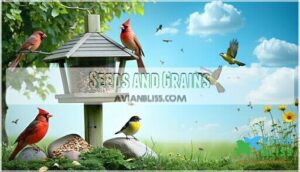
Seeds and grains form the backbone of many birds’ diets, providing essential carbohydrates and proteins.
Different seed types attract specific bird preferences – sunflower seeds draw cardinals and chickadees, while nyjer appeals to goldfinches.
Grain benefits include sustained energy for migration and breeding. Your crop selection matters: black oil sunflower seeds offer superior nutrition facts compared to striped varieties.
Effective feeding methods involve using appropriate bird seed mix combinations. Quality bird food sources guarantee healthy wild bird nutrition, supporting thriving populations year-round, with superior seed selection being crucial.
Fruits and Berries
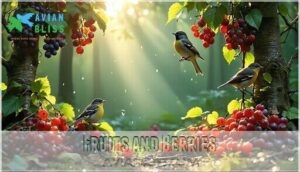
Summer’s bounty transforms wild birds into fruit connoisseurs. Over 300 North American species relish native Berry Nutrition from serviceberries, elderberries, and wild grapes.
These Fruit Varieties provide essential sugars and hydration during migration. Cedar waxwings and robins showcase clear Bird Favorites, consuming up to 70% fruit diets.
Wild Fruits like dogwood offer high-fat Seed Fruits for energy reserves, making natural bird food sources vital for survival. Understanding the fruit nutritional benefits is essential for maintaining a healthy bird diet.
Insects and Invertebrates
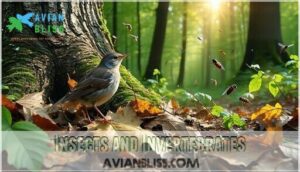
During arthropod diversity peaks, you’ll find birds hunting beetles in their natural habitats, including bark crevices and leaf litter.
Worm composting areas attract robins and thrushes seeking protein-rich meals.
Many species navigate spider webs carefully to snatch trapped insects, while others time feeding with insect migration patterns.
These protein sources support wild birds nutrition better than wild bird seeds alone.
Nutritional Bird Needs
Just like humans need balanced nutrition to thrive, wild birds require specific combinations of protein, fats, and essential nutrients to maintain their health and energy levels.
Understanding these nutritional requirements helps you appreciate why different bird species seek out particular foods throughout the year, based on their need for balanced nutrition.
Protein Requirements
Understanding wild bird nutrition goes beyond seeds and grains.
Protein intake represents the foundation of avian health, supporting everything from feather development to reproduction.
Birds require specific amino acids for ideal nutrient balance:
- Growing chicks need 20-30% protein for proper development
- Adult maintenance requires 10-15% protein by dry weight
- Breeding season demands increase up to 30% for egg production
- Molting birds need 20-25% protein for feather replacement
- Protein deficiency causes stunted growth and weakened immunity
These dietary needs vary dramatically by species and season.
Insectivorous songbirds derive 60-90% of their energy sources from arthropods during breeding, while seed-eating finches rely more on plant-based proteins.
Understanding these bird nutrition facts helps you create effective bird diet plans that support wild birds nutrition throughout their lifecycle.
Fat and Energy
Birds require high-energy foods to fuel their fast metabolisms and active lifestyles.
Fats provide twice the calorie intake per gram compared to proteins or carbohydrates, making them vital energy sources. Seeds, nuts, and insects offer essential fat metabolism support.
You’ll notice birds seek oil-rich sunflower seeds and suet during colder months when energy demands peak.
Proper nutrition balance guarantees wild diet sustainability, supporting flight, thermoregulation, and reproduction through concentrated bird food options, ensuring wild diet sustainability.
Vitamins and Minerals
Why do wild birds need specific vitamins and minerals? These micronutrients act like tiny keys that facilitate proper growth and reproduction.
Calcium needs support strong eggshells, while vitamin D helps absorption. Iron supplements boost oxygen transport, and mineral balance guarantees healthy feathers.
Amino acids build proteins essential for flight muscles. Your bird nutrition guide should include varied bird seed varieties and bird food options for complete wild bird care, ensuring a balance of all necessary nutrients like mineral balance.
Feeding Bird Habits
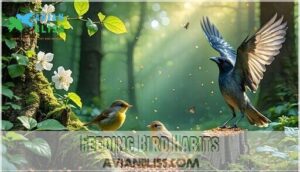
Birds exhibit distinct feeding patterns based on their specialized diets and physical adaptations.
You’ll find that seed-eaters, insect-hunters, and omnivorous species each use different techniques to locate and consume their preferred foods throughout the day, which is a result of their specialized diets.
Seed-Eating Birds
Granivorous species have evolved specialized bird beaks perfectly designed for cracking tough seed shells.
Cardinals use their powerful, cone-shaped bills to crush sunflower seeds, while goldfinches employ thinner beaks for smaller nyjer seeds.
These feeding habits determine which bird seed varieties you’ll need in your backyard bird feeding setup.
Different seed types attract specific species – black oil sunflower seeds work for most granivores, while thistle attracts finches.
Their foraging strategies involve ground-scratching and perch-feeding behaviors.
Understanding various bird seed types is essential for creating an effective bird feeding setup.
Insectivorous Birds
Insect-hunting birds showcase specialized bird beaks perfectly adapted for catching prey.
Swallows snatch flying insects mid-air, while woodpeckers use chisel-like beaks to extract beetles from bark.
These birds require high-protein diets for energy-intensive activities like flocking behavior and maintaining pristine feather care.
Their nesting habits often coincide with peak insect seasons, ensuring abundant food for chicks.
By creating a natural pest control environment, homeowners can attract these beneficial birds to their gardens, promoting a form of natural balance.
Omnivorous Birds
Unlike purely insect-focused species, many birds embrace flexibility in their dining choices.
You’ll find these adaptable feeders switching between seeds, fruits, insects, and even small animals based on seasonal availability and nutritional needs.
Top 5 Omnivorous Bird Families:
- Crows and jays – Master scavengers with powerful beaks for cracking nuts and catching prey
- Robins – Ground foragers mixing earthworms with berries throughout seasons
- Cardinals – Crack sunflower seeds while feeding insects to nestlings during breeding
- Chickadees – Cache seeds in winter, hunt aphids in summer for balanced nutrition
- Woodpeckers – Extract beetle larvae from bark, then raid suet feeders you’ve provided
These smart foragers adjust their bird feeding patterns as food sources change, making them reliable backyard visitors year-round.
Seasonal Feeding Consider
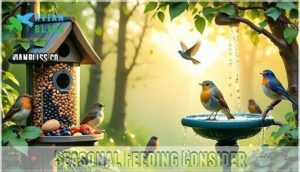
Birds’ nutritional needs shift dramatically with the seasons, requiring different foods to support migration, breeding, and winter survival.
You’ll notice seed-eaters switching to protein-rich insects during spring nesting season, while berry-loving species stock up on high-fat fruits before their long autumn journeys to ensure winter survival.
Spring and Summer
During breeding patterns, birds’ nutritional needs shift dramatically.
Spring brings abundant insects – caterpillars, beetles, and flies become primary protein sources for nesting habits and fledgling care.
You’ll notice increased summer foraging as parents hunt soft-bodied prey for rapidly growing chicks.
Breeding females seek calcium-rich snails for eggshell formation.
Bird migration timing aligns perfectly with insect hatches, ensuring ideal feeding opportunities.
Wild bird feeding tips suggest offering protein-rich foods during this period.
Your bird feeder types should include mealworm dispensers alongside traditional seed options to support these seasonal dietary changes.
Understanding effective winter bird feeding strategies can also inform seasonal adjustments to bird diets, including breeding patterns and seasonal dietary changes to provide the best bird feeding experience.
Fall and Winter
During winter’s harsh grip, birds face their greatest survival challenge as natural food sources become scarce.
When winter arrives, hungry birds turn your feeder into their lifeline for survival.
Cold weather forces them to burn more calories while snowy landscapes bury seeds and freeze insects. Smart birds like chickadees create seed caches during autumn, stashing food for frosty mornings ahead.
Winter berries from sumac, elderberry, and holly provide essential nutrition when other options disappear.
Following proper bird feeding tips helps support local wildlife through these lean months. Quality bird feeder types and strategic placement offer lifelines when nature’s pantry runs empty, providing a crucial means of survival during the harsh winter conditions, with local wildlife and strategic placement being key to their survival.
Safe Bird Foods
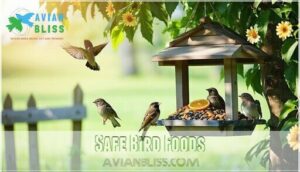
When you’re feeding wild birds, knowing which foods are safe versus harmful can mean the difference between helping and hurting your feathered visitors.
Some common household items that seem bird-friendly can actually cause serious health problems or even death.
Recommended Foods
Quality food choices transform backyard feeding into a thriving ecosystem. You’ll want to offer variety that mirrors nature’s bounty while ensuring vital nutrition for visiting species.
- Suet Feeders provide essential fats for woodpeckers and nuthatches, especially during cold months
- Fresh Fruits like apples and berries attract thrushes while delivering natural vitamins and minerals
- Nutrient Seeds including sunflower and nyjer offer protein-rich energy that fuels daily activities
Bird Suets and Healthy Treats create balanced nutrition similar to professional health tips found in womens health and wellness publications. This bird feeding guide mirrors health information principles—quality ingredients matter.
Following health newsletter advice, choose premium options over cheap alternatives for better outcomes. Understanding proper suet feeder maintenance is vital for the health of visiting birds.
Foods to Avoid
While certain foods can supplement wild bird diets, many items pose serious health risks.
Moldy seeds and rotten fruits contain toxins that damage internal organs.
Stale bread provides no nutritional value and can cause malnutrition.
Toxic plants like avocado are fatal to most species.
Following proper bird feeding guide principles protects avian health and wellness.
| Food Category | Specific Examples | Health Risks |
|---|---|---|
| Moldy/Spoiled | Moldy seeds, rotten fruits, spoiled nuts | Liver damage, immune suppression, bacterial infections |
| Processed Foods | Stale bread, salty snacks, sugary treats | Malnutrition, dehydration, obesity |
| Toxic Items | Chocolate, avocado, onions | Cardiac problems, respiratory distress, death |
| Additives | Salted nuts, flavored crackers | Kidney stress, digestive issues |
| Choking Hazards | Whole peanuts, hard candy | Airway blockage, crop impaction |
These health tips guarantee your backyard visitors receive proper health information for superior wellness.
Creating Bird Habitat
You can transform your yard into a bird paradise by choosing native plants that produce the seeds, berries, and nectar wild birds naturally crave.
Adding water sources like shallow birdbaths or small fountains creates drinking and bathing spots that attract species year-round, utilizing water sources to enhance the bird-friendly environment.
Native Plants
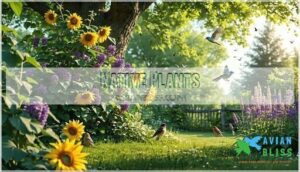
Native ecosystems flourish when you choose indigenous plants that birds have evolved alongside for centuries.
These Bird Friendly species offer superior Seed Production compared to exotic alternatives, creating sustainable food webs through Local Botany expertise.
Consider these native powerhouses for Plant Diversity:
- Sunflowers – produce nutrient-dense seeds beloved by finches
- Elderberry bushes – offer berries and attract insects year-round
- Oak trees – support over 500 caterpillar species for protein-rich meals
- Native Flowers like coneflowers – provide seeds through fall
- Wild grasses – create seed heads lasting into winter months
Research confirms native plants support 35 times more wildlife than non-natives, making them essential for thorough health management of local bird populations.
Using native plant seeds is vital for maintaining biodiversity in these ecosystems.
Water Sources
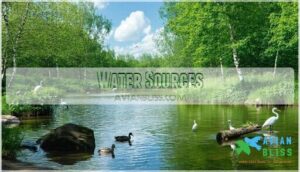
Water availability directly impacts bird survival and habitat selection.
You’ll find the greatest bird diversity near Ponds, Lakes, Rivers, Wetlands, and Streams.
Research data from wildlife website studies shows these water sources support different species throughout seasons.
Moving water attracts more birds than stagnant pools.
Shallow areas allow drinking and bathing, while deeper sections provide fishing opportunities.
Installing multiple water features at varying heights accommodates different bird sizes and preferences.
Promoting overall health and encouraging consistent visits to your backyard habitat is crucial, as it supports the well-being of various bird species.
Water features can be designed to meet the needs of different bird species, making them more attractive to a wide range of birds, and thus increasing the bird diversity.
Human Food Impact
When you offer food to wild birds, you’re potentially helping them survive harsh conditions.
While risking their natural foraging abilities, however, improper feeding practices can create dependency issues.
Improper feeding practices can expose birds to harmful foods that disrupt their digestive systems, and create dependency issues.
Benefits of Feeding
Feeding wild birds transforms your backyard into a lifeline. Research shows supplemental feeders increase winter survival rates by over 25%, while supporting better breeding success with earlier egg-laying and larger clutch sizes.
Your Bird Nutrition efforts provide essential energy reserves and improved health conditions.
Key Feeding Tips for Wild Bird Care benefits:
- Enhanced winter survival through reliable food sources
- Improved breeding success with healthier offspring
- Better immune responses and reduced parasite loads
- Support for migratory birds during critical stopover periods
- Increased conservation awareness through backyard feeding observation
Studies demonstrate birds accessing feeders show improved feather condition and fat reserves. This Backyard Feeding approach creates wellness benefits extending beyond basic nutrition, supporting overall Bird Health throughout challenging seasons.
Potential Risks
Despite good intentions, feeding wild birds can create serious health risks.
Feeding wild birds can lead to toxic foods like chocolate and avocado harming birds, while feeders become breeding grounds for disease transmission.
Poor feeder placement increases collision risks with windows, and artificial feeding contributes to habitat destruction by reducing natural foraging skills.
| Risk Category | Primary Concern |
|---|---|
| Toxic Foods | Chocolate, avocado poisoning |
| Disease Transmission | Salmonella, fungal infections |
| Habitat Destruction | Dependency on artificial sources |
| Collision Risks | Window strikes near feeders |
These health concerns underscore why understanding proper feeding practices matters for bird welfare.
Healthy Bird Feeding
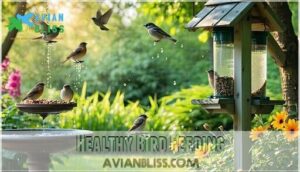
When you provide supplemental feeding for wild birds, you’re supporting their natural diet while creating opportunities for wildlife observation.
However, responsible feeding practices are essential to avoid creating dependencies or health problems that could harm the very birds you’re trying to help.
Best Feeding Practices
Strategic feeder placement transforms your backyard into a bird paradise.
Position feeders at varying heights and distances from cover to accommodate different species’ comfort zones.
Maintain consistent feeding schedules since birds develop reliable routines around your offerings.
Offer diverse food variety including seeds, suet, and fruits to support thorough bird nutrition.
Clean feeders weekly with diluted bleach solution to guarantee the best water quality and prevent disease transmission.
This health management approach provides essential health information for successful backyard birding experiences, creating a reliable and successful environment.
Avoiding Hazards
While proper feeding practices help protect wild birds, you’ll also need to watch for dangerous hazards around your feeding stations.
Many backyard threats can harm birds despite your best intentions.
Common feeding hazards include:
- Toxic Foods – chocolate, avocado, and salt can poison birds, while moldy seeds contain deadly aflatoxins
- Window Collisions – poorly placed feeders increase strikes, killing 600 million birds annually in the U.S.
- Nest Predators – cats and other predators use feeders as hunting grounds, preying on 1.3 billion birds yearly
Position feeders away from Poisonous Plants and electrical sources to prevent Electric Shocks.
Regular cleaning provides health safety, while strategic placement offers protection and defense against dangers.
Your security measures create safer feeding environments.
By following safe feeding practices, you can minimize risks and create a healthy environment for wild birds.
Frequently Asked Questions (FAQs)
What is the best thing to feed wild birds?
Black oil sunflower seeds work best for most backyard birds. They’re like nature’s perfect snack – packed with protein and fat that songbirds, cardinals, and chickadees crave year-round.
Is it safe to feed backyard wild birds?
Feeding backyard birds is generally safe when you follow proper guidelines.
Use appropriate seed types, clean feeders regularly, and maintain fresh water.
You’ll create a healthy habitat that benefits both birds and your backyard ecosystem, following these steps will help you achieve a balanced environment with fresh water.
What food can you feed wild birds?
Don’t put all your eggs in one basket—offer variety for healthier birds.
Provide black oil sunflower seeds, nyjer for finches, suet for woodpeckers, and millet for smaller species.
You’ll attract diverse birds while supporting their nutritional needs effectively.
What do wild birds like to eat the most?
Seeds and nuts top the list for most wild birds. You’ll find sunflower seeds, nyjer, and peanuts are absolute favorites. These high-energy foods fuel their active lifestyles perfectly.
Should I feed wild birds in my yard?
You’ll create a backyard habitat that attracts wildlife versus simply tossing scraps.
Yes, feeding wild birds benefits both you and them when done properly.
Use appropriate feeders, quality seeds, and maintain cleanliness to prevent disease spread while supporting local bird populations.
This task is about creating a backyard habitat.
What should I feed a bird I found?
Don’t feed a found bird without knowing its species first. Contact a wildlife rehabilitator instead – they’ll provide proper care and determine if it’s truly orphaned or injured.
What do birds eat in the wild?
Wild birds naturally forage for insects, seeds, berries, and nuts depending on their species and habitat.
You’ll find songbirds hunting bugs, while finches crack seeds and woodpeckers extract larvae from bark.
Do birds eat seeds?
Absolutely, you’ll find that birds constantly consume countless seeds throughout their daily foraging adventures.
Seeds serve as essential energy sources, providing fats, proteins, and carbohydrates that fuel their active lifestyles and seasonal migrations.
What do backyard birds eat?
Backyard birds eat seeds, nuts, berries, insects, and nectar. You’ll find them munching on sunflower seeds, suet, mealworms, and fruit. Different species prefer different foods, so variety attracts more birds.
What do omnivore birds eat?
Omnivorous birds consume insects, seeds, fruits, and small vertebrates.
They’ll hunt caterpillars, beetles, and worms while foraging berries, nuts, and grains.
You’ll see them eating fish, frogs, or even nestlings when opportunities arise.
Conclusion
Remarkably, wild birds consume over 400,000 tons of insects annually, providing billions in pest control services.
Understanding what do wild birds eat helps you support local ecosystems through thoughtful habitat management. You’ve learned how seasonal shifts drive dietary changes, from protein-rich insects during breeding to energy-dense seeds in winter.
By creating bird-friendly spaces with native plants and clean water sources, you’re directly supporting these essential ecosystem partners while enjoying nature’s remarkable feeding strategies.
- https://dnr.maryland.gov/wildlife/pages/habitat/wafeeding.aspx
- https://www.kaytee.com/learn-care/wild-bird/what-to-feed-wild-birds-and-when
- https://www.sunflowernsa.com/all-about/bird-feeding/types-of-food/
- https://www.woodlandtrust.org.uk/blog/2019/04/what-do-birds-eat-in-the-wild/
- https://www.birdsandblooms.com/birding/attracting-birds/feeding-birds/feeding-birds-kitchen-items/