This site is supported by our readers. We may earn a commission, at no cost to you, if you purchase through links.
 A baby peacock, called a peachick, hatches covered in fluffy brown downy feathers that provide perfect camouflage.
You’ll notice they’re surprisingly small—weighing just 3-4 ounces at birth but growing rapidly on a high-protein diet.
These little ones can’t fly initially, relying entirely on mom’s protection and guidance.
Peachicks are surprisingly independent feeders, pecking at insects, seeds, and small creatures from day one.
Their adorable chirping sounds nothing like their parents’ famous calls, and you won’t see those spectacular tail feathers until they’re nearly adults.
Understanding their unique growth patterns and dietary needs becomes essential for anyone raising these remarkable birds.
Table Of Contents
- Key Takeaways
- Baby Peacock Appearance
- Baby Peacock Diet
- Baby Peacock Care
- Baby Peacock Growth
- Baby Peacock Development
- Frequently Asked Questions (FAQs)
- What do baby peacocks look like?
- What is the offspring of a peacock called?
- What to do if a peacock shows up in your yard?
- How to tell if a peacock is a boy?
- Are peacock babies beautiful?
- What are baby peacocks called?
- How old is a baby peacock?
- Is a peachick a baby peacock?
- Is a baby peacock a pheasant?
- Are baby peacocks chicks?
- Conclusion
Key Takeaways
- You’ll need to provide high-protein nutrition (28-30% protein) since peachicks grow incredibly fast, gaining 5x their birth weight in just the first month
- Your baby peacock won’t show those famous colorful tail feathers until they’re nearly adults – males don’t develop their signature plumage until around 5 months old
- You can’t tell if your peachick is male or female until about 5 months when males start showing colored chest feathers while females stay brown
- You’ll want to create secure brooding conditions with proper temperature control since only 2 out of 6 baby peacocks typically survive to adulthood in the wild
Baby Peacock Appearance
When baby peacocks hatch, you’ll notice they’re covered in light brown, fluffy down feathers with distinctive striped wings that help them blend into their surroundings.
These adorable chicks weigh about 3.6 ounces and measure roughly 4.7 inches long, looking more like tiny pheasants than the magnificent birds they’ll become, with distinctive striped wings being a notable feature.
Downy Feathers and Coloration

When your baby peafowl hatches, you’ll notice stunning camouflage patterns in tans, golds, and yellows covering their fluffy down texture.
These peacock colors help protect vulnerable pea chicks from predators. Most peacock fledglings display typical brown striping, though leucistic peachicks emerge completely white due to color genetics.
This initial peacock plumage differs dramatically from adults, with feather development creating perfect natural disguise during their most vulnerable weeks.
Many hatchlings are helpless, requiring intensive parental care to ensure their survival, which is a critical aspect of their vulnerable state and requires careful parental attention.
Size and Weight at Birth

When you first meet a peacock hatchling, you’ll notice they’re surprisingly hefty little creatures.
Here’s what to expect size-wise:
- Hatch Length: Your pea chick measures about 12cm (4.7 inches) from beak to tail
- Birth Weight: These peacock fledglings tip the scales at roughly 103g (3.6 ounces)
- Average Size: Baby peafowl are twice as heavy as ducklings at hatching
- Genetic Influence: Incubation effects and parental size impact peacock chick development
These peacock hatchlings pack serious weight compared to other game birds.
They weigh this much despite leaving the nest just hours after hatching, and will reach sexual maturity in 1-3 years.
Distinguishing Features From Adult Peacocks

Unlike their dazzling parents, peacock chicks sport humble brown and tan plumage differences that provide essential camouflage.
You won’t see the signature crest development or spur formation until months later.
Tail length remains short compared to peacock adult males’ magnificent displays.
These peacock sexing methods help with peacock gender determination, though behavioral changes and distinguishing features between peacock adult females and males emerge gradually as chicks mature, and are important for peacock gender determination and understanding behavioral changes.
Baby Peacock Diet

Your baby peacock’s diet needs to pack a serious nutritional punch since these little guys grow incredibly fast in their first few months.
Fast-growing peacock babies need protein-packed nutrition to fuel their amazing transformation in just months.
You’ll want to focus on high-protein foods like gamebird starter and supplement with treats like mealworms to fuel their rapid development.
Omnivorous Nature of Baby Peacocks
Your peafowl chicks are natural omnivores who’ll enthusiastically explore both plant consumption and bug hunting from their first days.
They’ll need grit intake to help digest their varied diet, plus treat variety keeps them interested in eating.
Maintaining nutritional balance through proper peafowl chick feeding guarantees healthy development.
These curious little ones instinctively peck at everything – from mealworms and insects to tender greens and seeds.
High-Protein Requirements for Growth
Your peachick’s growth hinges on protein-packed nutrition during its first critical months.
Commercial game bird starter containing 28-30% protein fuels rapid development, while inadequate levels spell trouble for feather quality and muscle building.
It’s vital to maintain a draft-free brooder for the first 8 weeks.
- Protein Sources: Game bird starter, medicated chick starter, and occasional mealworms
- Growth Rate: High protein supports 5x weight gain in first month
- Feather Development: Proper protein guarantees vibrant plumage and strong flight feathers
Foraging Skills and Maternal Guidance
Your peachick’s mom teaches food selection through pecking demonstrations, showing which insects and plants are safe.
She’ll guide the group to prime foraging spots while keeping watch for predators.
This hands-on peafowl parenting creates confident, independent chicks ready for life’s challenges.
| Learning Stage | Maternal Guidance |
|---|---|
| Food Selection | Pecks at safe items, calls chicks over |
| Predator Avoidance | Alert calls signal danger immediately |
| Social Learning | Demonstrates peck order behaviors |
| Survival Skills | Leads to shelter, water sources |
The combination of these lessons, including predator avoidance and social learning, is crucial for the chicks’ development.
This approach ensures the chicks are well-prepared for their future, thanks to their mother’s maternal guidance.
Baby Peacock Care
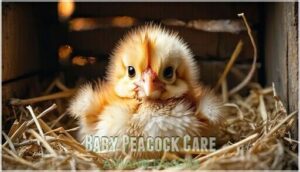
Caring for baby peacocks requires attention to their unique needs during their most vulnerable stage.
You’ll need to provide proper brooding conditions, temperature control, and protection from predators to guarantee these delicate chicks thrive.
Nest Construction and Location
Peahens aren’t picky about real estate—they’ll scrape shallow depressions anywhere that feels safe.
You’ll find peafowl nesting under dense shrubs, tall grass, or even in your barn if you’re keeping them.
These ground-level hideouts, lined with whatever nest materials are handy—sticks, leaves, grass—offer clutch size protection through camouflage rather than fancy architecture.
Smart nest placement beats predator protection every time.
To further guarantee the safety of their young, owners often consider poultry netting options.
This is a crucial aspect of predator protection.
Incubation Period and Maternal Care
After building the perfect nest, your peahens will settle in for the demanding incubation period.
Peafowl incubation takes 27-30 days, with mothers maintaining constant vigilance over their precious peafowl eggs. She’ll rarely leave except for quick feeding breaks.
Here’s what makes peafowl brooding behavior remarkable:
- Temperature control – Broody hens keep eggs at exactly 99-100°F through careful body positioning
- Egg turning – Regular rotation prevents chicks from sticking to shell membranes
- Moisture management – Natural oils help maintain proper hatching humidity levels
This dedication pays off when those fluffy peachicks finally emerge! Peahens fiercely guard their nests, showcasing tail-raising displays to protect their young.
Protection Strategies for Vulnerable Chicks
Only two out of six baby peacocks survive to adulthood, making protection essential for your chicks’ survival.
Create predator avoidance through secure brooders with hardware cloth, not chicken wire. A hardware cloth brooder can offer the necessary protection.
Maternal protection includes keeping mothers nearby for alarm calls and defensive behavior. Early camouflage helps, but you’ll need elevated roosting spots and draft-free housing.
Monitor chick mortality patterns to improve your peafowl chick environment and safety measures.
Baby Peacock Growth
Your baby peacock’s growth happens incredibly fast during its first year, transforming from a tiny 4-ounce chick into a substantial bird.
You’ll watch feathers develop in stages while bones reach full maturity within just 12 months, and witness the overall transformation as the bird grows.
Rapid Growth Rate in First Year

Your little peafowl will shock you with their explosive peacock growth during those first twelve months.
These fluffy bundles transform from palm-sized chicks into impressive juveniles, experiencing dramatic growth spurts that’ll leave you amazed.
Here’s what to expect during this remarkable peafowl chick development journey:
- Weight gain doubles within weeks – your tiny chick becomes a sturdy youngster
- Skeletal development reaches full maturity by year one
- Mortality rates drop substantially as they grow stronger
- Peafowl chick milestones happen fast – flying at just 1-2 weeks old
Feather Development Timeline

Watching your peacocklet transform is like witnessing nature’s ultimate makeover show.
Hatchling feathering starts with cryptic down, replaced by juvenile plumage after several weeks.
Color acquisition begins around five months in males, while flight development occurs within days.
The molting process continues annually, with full peacock development taking 2-3 years for that iconic train to appear.
Feather growth relies on keratin for strength, which is crucial for the peacock’s overall health and appearance.
Skeletal Maturity Milestones

Your peacock chick’s skeletal framework develops rapidly during its first year, reaching full bone maturity much faster than you might expect.
This vital growth phase determines your chick’s long-term health and mobility.
Key skeletal milestones include:
- Early Mobility emerges within days as leg strength builds
- Growth Plates fuse progressively throughout the first 12 months
- Bone Development peaks around 6-8 months for core structure
- Skeletal Health stabilizes once peafowl chick growth completes
Monitor your peacock juvenile for proper posture and movement during this critical peacock development period.
Baby Peacock Development

You’ll watch your baby peacock hit amazing developmental milestones as it transforms from a helpless chick into a majestic bird.
Understanding these key changes helps you provide the right care at each stage of your peachick’s growth journey.
Developmental Milestones
Baby peachicks hit major developmental milestones quickly during their first weeks.
Flight Development begins within 1-2 weeks, letting them escape predators.
Social Learning kicks in as they follow mom’s calls and watch her demonstrate foraging techniques.
Cognitive Growth shows when peachicks recognize danger signals and display Instinctual Behavior like freezing when threatened.
Their Maturity Timeline includes developing basic survival skills by six weeks, though full independence won’t happen until six months, which marks a significant point in their Cognitive Growth.
Gender Differences in Development
Gender differences in peafowl chick development aren’t immediately obvious, but they’ll emerge gradually over months.
You won’t spot these distinctions right away since both sexes look nearly identical at hatching.
- Plumage timeline: Males develop colored chest feathers around five months, while females maintain brown coloration throughout their first year
- Maturity rates: Females reach sexual maturity faster, often within one year, compared to males requiring three years for full development
- Size disparity: Males show slightly longer legs from just weeks old, eventually growing substantially larger than females
- Behavioral distinctions: Males display more exploratory tendencies and independence as hormones develop during later months
Factors Affecting Developmental Rate
Several key factors influence how quickly your peachicks develop into stunning peafowl.
Dietary Impact plays a huge role—high-protein feeds accelerate feather development and overall growth.
Environmental Stressors like incorrect Brooder Temperature can slow chick development substantially.
Genetic Influence determines baseline growth rates, while Social Interaction with other peachicks promotes healthy behavioral development.
Essential vitamins and minerals are also needed for healthy growth.
Maintaining proper peafowl chick health through proper nutrition and stress-free environments guarantees your peafowl chick development stages progress smoothly, with a focus on proper nutrition and overall healthy growth.
Frequently Asked Questions (FAQs)
What do baby peacocks look like?
Don’t judge a book by its cover – you’d mistake baby peacocks for tiny pheasants.
They’re fluffy brown chicks with golden stripes, weighing about 6 ounces at hatching, perfectly camouflaged against predators.
What is the offspring of a peacock called?
You’ll find peacock offspring called "peachicks" – these adorable babies hatch covered in fluffy brown down and can actually start flying within their first week of life!
What to do if a peacock shows up in your yard?
Stay calm and don’t approach directly.
Contact local wildlife authorities or animal control for safe removal.
Provide fresh water from a distance while waiting for professional help to relocate the bird.
How to tell if a peacock is a boy?
Male peacocks are absolutely unmistakable once they’re grown – you’ll spot their brilliant iridescent blue and green plumage, plus that iconic massive tail with eye-spots.
Young birds can’t be sexed until around five months old, which is a critical period for determining their gender.
Are peacock babies beautiful?
You’ll absolutely fall in love with peachicks!
These little ones hatch with fluffy, golden-brown down and adorable striped wings that’ll make you go "aww."
They’re basically tiny, feathered bundles of cuteness.
What are baby peacocks called?
Young peacocks are called peachicks, just like baby chickens are chicks. These fluffy, brown-striped babies hatch ready to explore and can actually fly within their first week!
How old is a baby peacock?
When does that adorable peafowl chick stop being considered a baby?
Baby peacocks remain "babies" until they’re about 6 months old, when they’d naturally become independent from mom in the wild and start developing their adult behaviors.
Is a peachick a baby peacock?
Yes, a peachick is the correct term for a baby peacock or peahen.
You’ll find this adorable chick hatches with fluffy down feathers and can actually fly within just five days of hatching!
Is a baby peacock a pheasant?
Baby peacocks aren’t actually pheasants, but you’d think they’re long-lost cousins.
They’re both galliformes, sharing similar ground-dwelling habits.
However, peachicks belong to the peafowl family, while pheasants are their own distinct species with different characteristics.
Are baby peacocks chicks?
Technically, peachicks aren’t called "chicks" like baby chickens.
You’d call them peachicks, which is their proper term.
They hatch with fluffy down feathers and can fly within just five days of hatching, which makes peachicks interesting to observe.
Conclusion
Remarkably, baby peacock mortality rates drop 80% after their first month when proper care protocols are followed.
You’ve learned that raising a baby peacock requires understanding their unique needs—from high-protein diets to protective environments.
These remarkable chicks transform rapidly, developing from vulnerable fluffballs into stunning birds within months.
By following proper feeding schedules, creating safe spaces, and monitoring their growth milestones, you’ll successfully nurture these extraordinary creatures through their critical early development stages, utilizing protective environments.
- https://a-z-animals.com/blog/baby-peacock-pictures-and-incredible-facts/
- https://kidskonnect.com/animals/peacock/
- https://www.sciencing.com/life-cycle-peacock-5800786/
- https://www.peacocksuk.com/peacock-information/what-do-peachicks-eat/
- https://www.purinamills.com/chicken-feed/education/detail/what-do-peacocks-eat-raising-peacocks-quail-and-other-game-birds