This site is supported by our readers. We may earn a commission, at no cost to you, if you purchase through links.
 If you spot a bird with an injured wing, act calmly and quickly.
Gently place the bird in a small, ventilated box lined with a soft towel to keep it safe and prevent further harm. Avoid handling it too much—stress can worsen the injury.
Check for visible issues like bleeding or awkward wing positions, but skip home remedies like splints unless you’re trained to use them safely.
Keep the bird warm and offer a shallow dish of water.
Table Of Contents
- Key Takeaways
- Assessing Injured Bird Wing
- Providing Initial Care
- Bird Wing Injuries and Healing
- Common Causes of Bird Wing Injuries
- Rehabilitation and Recovery
- Legal Considerations and Ethics
- Preventing Bird Wing Injuries
- Treating Specific Wing Injuries
- Home Care and Splinting
- Long-term Care and Release
- Frequently Asked Questions (FAQs)
- How can bird rehabilitation help a broken wing?
- How to fix Broken Wings on birds?
- Can a bird with a broken wing heal?
- How do you treat a bird wing injury?
- What causes a bird wing injury?
- How do you know if a bird has a wing injury?
- How do you tell if a bird’s wing is broken or sprained?
- How to bandage a bird’s broken wing?
- How do you fix a broken bird wing?
- How long does it take a bird to heal a broken wing?
- Conclusion
Key Takeaways
- You should safely contain an injured bird in a ventilated box lined with a soft towel to minimize stress and prevent further injury—handle it gently and keep it warm while avoiding excessive contact.
- You’ll need to recognize wing injury signs like drooping wings, abnormal posture, flight difficulty, or visible wounds before determining whether the bird requires immediate help or is exhibiting natural behavior like fledgling development.
- You shouldn’t attempt to treat serious wing injuries yourself—contact wildlife rehabilitators immediately who have the proper training, permits, and facilities to provide professional treatment for fractures, sprains, and lacerations.
- You can prevent bird wing injuries by removing hazards from your yard, securing windows with decals to prevent collisions, keeping cats indoors, and supporting local bird rehabilitation efforts through donations or volunteering.
Assessing Injured Bird Wing
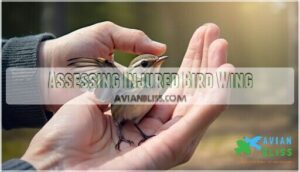
Checking a bird’s wing for injury is a careful process, but it’s easier than it sounds.
Watch for signs like drooping wings, unusual posture, or trouble flying to know if the bird needs help.
Signs of Injury or Distress
Noticing a bird wing injury can be tricky, but a few telltale signs can help.
Watch for abnormal posture, like drooping wings or a tilted stance. Birds struggling to fly, perch, or showing leg weakness may need help. Breathing difficulty and visible wounds are also red flags.
Here’s what to watch for:
- Flight inability or uneven wing movement when attempting to fly.
- Struggling to stand or perch due to leg weakness.
- Labored breathing or other signs of distress.
Distinguishing Between Injury and Natural Behavior
Bird behaviors can sometimes fool you. A young bird flapping on the ground? Likely fledgling behavior, not distress.
But, if a wing hangs unevenly or flutters awkwardly, consider it a bird wing injury. Use observation to separate natural molting from stunned vs. injured scenarios.
Watch carefully for leg weakness, droopy wings, or immobility—telltale signs of injury.
| Behavior | Normal or Concern? | Action Needed |
|---|---|---|
| Learning to fly | Normal (Fledgling) | Let it be. Monitor for predators. |
| Uneven wings | Concern (Bird Injury) | Calmly check for injuries. |
| Perching quietly | Normal (Resting) | Make certain it’s safe from danger. |
| Difficulty moving | Concern (Injury/Illness) | Assess for signs like droopy wings or leg weakness. |
Handling and Stabilizing The Injured Bird
When helping a bird with an injured wing, focus on calm, steady movements. Your goal is bird wing safety and minimizing stress. Always choose proper gloves for protection.
Handle with care—calm movements, steady hands, and gloves ensure safety while reducing stress for the injured bird.
Slowly approach, speaking softly to ease its fear. Use a lightweight towel for safe capture, gently wrapping it to prevent more harm. Support its body and injured wing as you carefully lift it.
Prepare a warm, dark box lined with a towel for comfort and stabilization.
- Help it feel secure while handling.
- Protect its delicate wings during transport.
- Keep things quiet to reduce anxiety.
- Act promptly for professional care.
Providing Initial Care
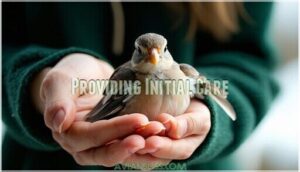
When helping a bird with an injured wing, your first steps are critical to its safety and comfort.
Handle it gently, keep it warm, and provide a quiet space to reduce stress.
Capturing The Bird Safely
Spotting an injured bird wing calls for calm and steady action. Approach slowly, speaking softly to ease its stress. Wear gloves to avoid bites and protect against diseases.
For Safe Containment, use the Towel Technique: drape a clean towel over the bird like a shield, keeping its wings secure.
Here’s a quick guide:
| Task | Why It’s Important | What Not to Do |
|---|---|---|
| Glove Selection | Avoids bites or scratches | Bare hands can harm both parties |
Always keep bird safety in mind.
Keeping The Bird Warm and Hydrated
How do you guarantee warmth and hydration for an injured bird? Set up a cozy, stress-free spot while monitoring for dehydration.
- Slide a heating pad set on low under half of the box, creating a warm zone.
- Mist water lightly nearby, mimicking morning dew.
- Watch for quick breaths or droopy eyes—signs of dehydration.
- Keep the box dim and quiet, reducing stress.
Birds may require specialized injured bird warmers to maintain ideal body temperature.
Offering Food and Water
Once the bird is calm, it’s time to focus on nutrition and hydration. A balanced diet and proper hydration methods are essential for recovery.
- Place a shallow dish of fresh water nearby; verify water quality is safe to drink.
- Provide species-appropriate food, like seeds, fruits, or protein sources like insects.
- Keep food and water within reach to minimize the bird’s movement.
- Offer small portions every 3-4 hours during the day.
- Monitor eating habits and adjust portions as needed.
Proper food presentation helps the bird eat comfortably while preventing unnecessary stress.
Bird Wing Injuries and Healing
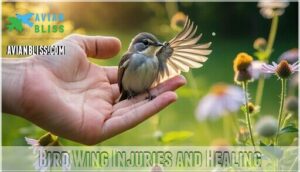
When a bird injures its wing, it can’t fly properly, which puts it at risk.
Understanding the types of injuries and how wings heal helps you give the right care and improves the bird’s chances of recovery.
Types of Wing Injuries
Bird wing injuries come in many forms, each requiring a unique approach.
Fractures, like open versus closed or simple versus compound, often show as drooping wings or visible bones—immobilize them with care.
Sprains or soft tissue damage can reduce wing movement and cause swelling; try a cold compress.
For lacerations, especially with bleeding, clean and bandage the wound gently.
Feather and nerve damage can also occur, impacting flight. Always assess injury severity before deciding on further care.
Healing Time and Rehabilitation
Healing times for bird wing injuries can range from weeks to months, depending on severity.
Minor fractures often mend in 7-14 days, but consistency in wing rehabilitation is key.
Gradual progress in flight training marks recovery.
Balance and smooth flight are vital release criteria.
During post-injury monitoring, make certain a quiet space, a Rehab Diet, and patience.
A key step is to prepare safe environment for the bird’s recovery.
Strong, agile flight signals your feathered friend’s readiness to thrive in the wild.
Risks of Untreated Wing Injuries
Ignoring an injured bird wing is like leaving a leaky roof during a storm—it leads to bigger problems fast.
Infection risk grows quickly, followed by muscle atrophy and limited mobility, making recovery tougher.
Without care, feather damage worsens, and a bird wing fracture might heal wrong, causing permanent disability or constant bird pain.
An inability to fly puts survival at risk, affecting safety and food hunting.
Support such as a proper brace helps, but always involve an avian vet.
Bird wing injuries demand attention—addressing them early prevents a spiral into long-term issues no bird should endure.
Addressing bird wing injuries early ensures recovery and prevents avoidable suffering, giving them a second chance to soar.
Common Causes of Bird Wing Injuries
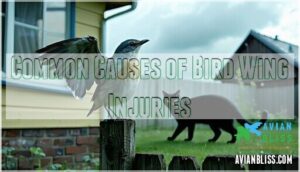
Bird wing injuries often happen from collisions, predator attacks, or harsh weather. Knowing these common causes helps you protect birds and act quickly when accidents occur.
Collisions With Vehicles and Windows
A bird’s misjudgment of reflective surfaces often leads to wing injuries.
These window collisions are common around tall buildings and glassy cars, contributing to urban bird mortality.
Prevent this with Window Reflection Mitigation strategies like decals, UV-reflective glass, or bird-friendly screens.
While driving, stay alert during dawn or dusk to reduce roadside bird deaths.
Thoughtful building design solutions and wildlife rehabilitation efforts can save countless injured bird wings, through bird-friendly approaches.
Attacks by Predators and Human Activities
Predators and human encroachment play a big role in bird wing injuries.
Cats alone cause billions of bird deaths annually, with outdoor and unowned cats being major culprits. Habitat destruction, like construction and landscaping, disrupts nesting and forces birds into unsafe areas. Entanglement hazards, such as fishing lines and netting, are another common issue.
You can recognize predator attacks by puncture wounds or torn feathers.
To help, consider these mitigation strategies:
- Keep cats indoors to reduce predator impact.
- Clear your yard of hazards like fishing lines.
- Support coexistence efforts by planting bird-friendly shrubs or trees.
Falls and Weather Events
Sudden weather changes can lead to bird wing injuries, especially during storms or heatwaves.
Nestling falls often happen when young birds struggle against wind damage.
Storm exposure, like rain and high gusts, can disorient birds, causing accidents.
Cool conditions may cause icing effects on wings, while heatstroke risks make birds lose control.
Here’s a quick guide:
| Event | Common Risks | Vulnerable Birds | Immediate Steps |
|---|---|---|---|
| Nestling Falls | Broken wings | Young birds | Provide a safe box |
| Storm Exposure | Disorientation | All birds | Bring to calm shelter |
| Icing Effects | Wing freezing | Large birds | Warm, towel-lined space |
| Heatstroke Risks | Weakness, falls | Small birds | Cool, quiet environment |
The guide provides immediate steps for different weather-related events, including Nestling Falls and Storm Exposure, to help mitigate the risks associated with these events.
Rehabilitation and Recovery
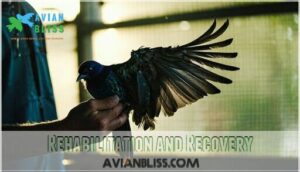
Helping an injured bird recover takes time, care, and patience. You’ll need to focus on proper treatment, a calm environment, and planning for a safe return to the wild.
Finding a Wildlife Rehabilitator
Once a bird is injured, connecting with a wildlife rehabilitator is the kindest next step.
Look for local experts through online searches or ask your vet for leads.
Rehabilitator qualifications include handling fractures, swelling, or drooping wings.
They’ve got the skills and tools to help the bird recover safely.
Many bird rehabilitation services are free, but it’s worth confirming any costs upfront.
When transporting birds, use a breathable, sturdy box lined with a soft towel to keep them calm.
Some organizations also have clear euthanasia policies for severe cases, ensuring humane care.
While waiting, explore wild bird rescue groups or local avian vets for quick help.
Providing them with natural food sources can also aid in their recovery.
Supporting bird rescue organizations can make recovery possible for injured birds.
Ongoing Care and Physical Therapy
Proper wing rehabilitation requires consistent care.
Work with your vet to gently stretch the injured wing daily—think "bird yoga."
Offer a diet rich in nutrients like seeds and fruits to support healing, and check hydration regularly.
Monitor recovery closely, adjusting exercises as the bird improves.
Behavioral enrichment, like safe movement opportunities, fosters healing.
Posttreatment care builds strength, so patience is key.
Gradual flight exercises prepare the bird for full mobility again.
Release Planning and Follow-up
Helping your feathered friend return to the wild is the final step in their journey to recovery. A well-prepared release guarantees they thrive in their natural habitat.
First, confirm they meet the release criteria—strong flight, normal weight, and food independence. Practice flying in a safe indoor or outdoor aviary to check their strength and agility.
Here’s your release checklist:
- Pick a safe release site: Choose a familiar, predator-free area with suitable habitat and food sources.
- Banding benefits: Consider banding the bird to track their long-term survival and movements post-release.
- Time matters: Release during calm weather, preferably early morning for daylight and safety.
- Post-release monitoring: Watch from a distance to guarantee they adapt well and avoid harm.
Their recovery doesn’t end with flight—your care helps bridge them back to nature.
Legal Considerations and Ethics
You’ve got to know the rules before helping an injured bird, especially with laws like the Migratory Bird Treaty Act protecting many species.
Understanding local regulations and ethical practices guarantees you’re aiding wildlife responsibly and legally.
Migratory Bird Treaty Act
Caring for an injured bird wing? Remember, the Migratory Bird Treaty Act (MBTA) has protected birds since 1918.
It’s illegal to harm or possess most native species without permits. Even with good intentions, breaking these laws can lead to stiff fines.
Here’s an overview:
| MBTA Facts | Details |
|---|---|
| Penalties | Fines up to $15,000 per violation. |
| Coverage | Over 1,000 species are protected. |
| Future Focus | Aiming to balance conservation. |
When in doubt, contact professionals or licensed rescuers.
Local Regulations and Permits
Check your local bird rescue regulations before taking action to help an injured bird. Some species are protected by laws like the Migratory Bird Treaty Act, and handling them without proper wildlife permits can cause more harm than good.
Follow these steps:
- Contact officials to learn the reporting requirements.
- Find out if rescue permits are needed in your area.
- Learn any rehabilitation laws, including care limits.
- Check if euthanasia policies apply for severe injuries.
Rescuing responsibly protects birds and avoids legal trouble.
Avoiding Interference With Natural Processes
Got your permits? Great! Before rushing in, consider if nature’s already got things handled.
Intervening too much can disrupt the ecosystem balance and the bird’s natural recovery. A fledgling on the ground? It’s likely learning Fledgling Independence—watch from afar; parents are probably nearby.
Slight wing droop? Keep an eye out—Minimal Intervention helps avoid stress. Cat attack? Step in fast; infections spread quickly.
However, Ethical Considerations remind us to avoid interfering unnecessarily. Exhausted migrators just need a safe spot to rest before flying onward, aiding the wing healing process.
Thoughtful choices support bird injury healing while respecting nature’s ability to heal. To minimize disturbance, consider safe viewing distances to avoid stressing the birds.
Preventing Bird Wing Injuries
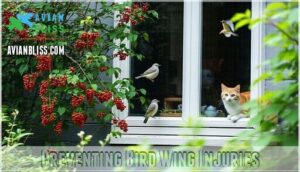
You can help prevent bird wing injuries by making small changes in your yard, like securing windows and removing hazards.
Simple actions, such as keeping cats indoors or planting native shrubs, can make a big difference in keeping birds safe.
Removing Hazards From Your Yard
Your yard can be a bird’s paradise or a danger zone—it’s all about choices.
To reduce environmental hazards and prevent bird wing injuries, follow these tips:
- Use pesticide alternatives to protect fragile ecosystems and keep birds safe.
- Prevent window collisions by adding decals or screens to reflective glass.
- Address pet dangers by supervising cats and dogs or keeping them indoors.
- Remove poisonous plants and open water sources that might harm birds.
These small changes create a yard that’s safer for your winged visitors while protecting them from predator attacks and other preventable risks.
Supporting Bird Rehabilitation Efforts
Helping injured birds heals both wings and hearts.
Volunteer opportunities at bird rehabilitation centers let you clean enclosures, assist with care, or fundraise to provide essential support.
Donation programs and advocacy groups also need efforts to fund wildlife rehabilitation.
Beyond this, educational outreach and community involvement help spread the word about bird injury treatment.
Every act—big or small—turns struggling birds into success stories, soaring high again, which is a result of every act.
Spreading Awareness and Education
You can create a ripple of change by spreading awareness about bird wing injury prevention. Share practical steps to help others become mindful of protecting birds.
- Organize community workshops on bird-safe yards or windows to reduce accidents.
- Partner with school programs to teach children simple bird care guidelines and responsible pet ownership.
- Use online resources to share bird injury care tips and bird wing care tips, so more people adopt bird wing protection measures.
Verify you can recognize behavioral changes in birds to detect injuries early.
Your efforts could help save countless birds!
Treating Specific Wing Injuries
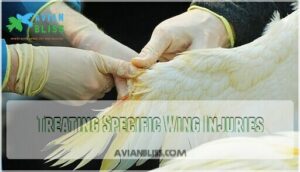
When treating specific wing injuries, you’ll need to identify the type of injury, like fractures, cuts, or strains, before deciding on the next steps.
Each condition requires careful handling to avoid further damage and guarantee proper healing.
Fractures and Dislocations
If you notice a bird with a drooping wing or one held at an odd angle, it might’ve a bird wing fracture or dislocation.
Gently place the bird in a warm, dark box to limit stress and injury.
Attempting a bird wing splint yourself could worsen the damage.
These injuries demand professional treatment, such as proper splinting, and typically require 3-4 weeks to heal.
Always prioritize safety and expert care.
Lacerations and Puncture Wounds
Treat bird wing lacerations and puncture wounds promptly to avoid infection. Clean wounds with warm saline and apply a vet-recommended antibiotic ointment to prevent scarring effects.
- Wrap gently with self-adhering gauze to stabilize and protect.
- Change dressings daily to keep the area clean.
- Watch for swelling or discharge as signs of infection.
- Avoid pulling damaged feathers; let them shed naturally.
Wound care guarantees faster healing and feather regrowth!
Sprains and Strains
A bird wing sprain or strain isn’t uncommon but needs careful attention.
Watch for drooping wings or limited flight—clear signs of trouble.
Apply a cold compress for 10 minutes to ease swelling, then wrap the wing with a self-adhering bandage for support.
Secure it gently against the body.
| Symptom | Action | Purpose |
|---|---|---|
| Drooping wing | Cold compress | Reduces swelling |
| Reluctant to fly | Bandage wing | Stabilizes movement |
| Wing discomfort | Contact a professional | Guarantees proper healing |
| Visible deformity | Seek expert care | Prevents further injury |
Home Care and Splinting
Caring for a bird with an injured wing at home takes patience and some basic tools.
You’ll need to secure the wing properly with a simple splint while keeping the bird calm and comfortable.
Precautions and Preparation
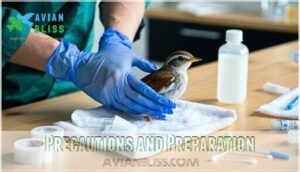
Before handling a bird injury, lay the groundwork for safety and cleanliness. Think of it like setting up a calm, secure environment that reduces stress for everyone involved.
Wear snug gloves for safe handling and disease prevention while staying gentle and steady.
- Prepare your supplies: gauze, medical tape, antiseptic, and q-tips.
- Clear distractions: keep pets, children, and loud noises away.
- Set up lighting: indirect, bright light helps focus better without startling the bird.
These careful steps guarantee smoother bird wing handling.
Splinting and Immobilization Techniques
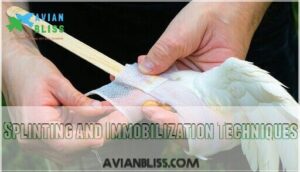
Handle a bird’s fragile wing like an artist shaping clay.
Use Splinting Materials like soft gauze for padding and lightweight supports such as popsicle sticks.
Focus on Wing Positioning, gently aligning it naturally.
Secure with Bandaging Techniques, wrapping self-adhesive strips snugly but not too tight.
For specialized care, consider purchasing a splint.
Proper splinting techniques prevent harm, keeping the bird comfortable while ensuring wing stabilization.
Avoid Cast Alternatives for small birds.
Monitoring and Adjusting The Splint
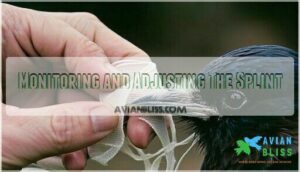
Keeping a close eye on the bird wing splint is key to proper recovery. Check the splint twice daily for swelling, slippage, or skin irritation.
If swelling occurs, loosen the splint slightly to restore comfort. Splint slippage, like a loose shoelace, may cause the wing to drag, signaling you to reapply it snugly.
Watch for any picking at the splint or unusual signs during bird wing monitoring, as this could suggest discomfort. Consider purchasing a suitable wing splint for ideal healing.
Test the wing’s range of motion during adjustments, ensuring stabilization without over-tightening. Sometimes, re-splinting needs arise due to wear or growth—use proper splinting techniques to keep the bird healing safely, which is critical for recovery.
Long-term Care and Release
You’ll need to focus on helping the bird regain its strength and natural instincts during recovery.
Once it’s ready, releasing it into the wild safely is essential for its long-term survival.
Ensuring The Bird’s Safety and Well-being
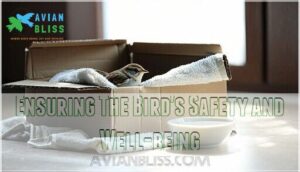
Make the bird’s recovery space a clean, quiet retreat—think of it as a five-star bird spa.
Use secure housing like a towel-lined box, keeping it warm and free from distractions.
Stress reduction is key, so place it away from noisy areas.
For bird injury stabilization, monitor progress daily without overhandling.
Remember to evaluate temporary shelter options to further support the bird’s comfort.
Provide hydration methods like fresh water in a shallow dish.
Safe capture and gentle bird handling can prevent anxiety, supporting smooth recovery from the wing injury with stress reduction and proper hydration methods.
Preparing for Release Into The Wild
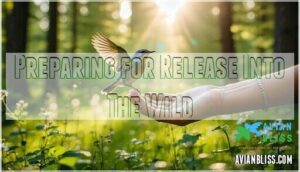
Releasing a bird after wing rehabilitation is a mix of relief and hope. Verify it’s ready with strong flight strength and independence in feeding.
Choose a safe habitat with water and shelter, minimizing predator risks. Post-release monitoring isn’t possible for everyone, but banding benefits researchers and helps track recovery success.
Release during calm weather to avoid stress. This final step in bird wing recovery helps them thrive in wildlife.
Post-release Monitoring and Support
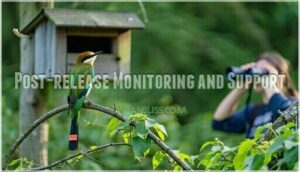
Releasing a bird is a milestone, but your work’s not done yet! Post-release monitoring guarantees its recovery sticks.
Here’s how:
- Observe the bird’s activity daily to assess habitat suitability.
- Watch for predators to confirm predator avoidance.
- Monitor the diet—healthy eating means wing rehabilitation success.
- Install nest boxes for continued support.
- Consider banding benefits to track progress long-term.
Frequently Asked Questions (FAQs)
How can bird rehabilitation help a broken wing?
Resting, stabilizing, and rehabilitating a bird with a broken wing takes care and patience.
Use a sturdy, ventilated box for safety, consult wildlife experts for treatment, and guarantee a proper release plan when recovery is complete.
How to fix Broken Wings on birds?
Gently stabilize the bird’s wing by wrapping it with gauze or vet wrap, keeping it securely against its body.
Avoid tightening too much.
Place the bird in a quiet, ventilated box, and contact a wildlife rehabilitator.
Can a bird with a broken wing heal?
Yes, a bird with a broken wing can heal, but it needs your help.
Provide a safe, quiet space and contact a wildlife rehabilitator or vet.
Avoid handling it often to reduce stress.
How do you treat a bird wing injury?
First, gently wrap the bird in a towel to immobilize it.
Place it in a quiet box with ventilation while wearing gloves for safety.
Contact a wildlife rehabilitator immediately for professional help.
What causes a bird wing injury?
Bird wing injuries commonly result from collisions with windows, cars, or buildings.
You’ll also see injuries from predator attacks, falls from nests, entanglement in fishing lines, or underlying health conditions affecting bone strength, including collisions with other objects.
How do you know if a bird has a wing injury?
You’ll notice drooping wings, uneven positioning, bloody feathers, difficulty flying, or abnormal posture.
Observe if the bird can’t fly away within 3 meters of approach or shows visible bone deformity or unusual behavior, which may indicate a need for closer inspection of bloody feathers or other signs of distress.
How do you tell if a bird’s wing is broken or sprained?
A bird’s unfortunate wing malfunction shows distinctive signs.
You’ll notice drooping, asymmetry, or visible bone deformity with broken wings.
Sprains show limited mobility but no deformity.
Birds avoid putting weight on injured wings.
How to bandage a bird’s broken wing?
Gently fold the injured wing against the bird’s body in its natural position.
Secure it with gauze and medical tape wrapped around the body, avoiding tight pressure. Don’t cover feathers completely.
Seek professional help immediately.
How do you fix a broken bird wing?
You shouldn’t fix a broken bird wing yourself.
Contact a wildlife rehabilitator immediately.
In the meantime, place the bird in a dark, quiet box with air holes and minimal handling to reduce stress.
How long does it take a bird to heal a broken wing?
Nearly 70% of wing fractures heal within 2-4 weeks.
You’ll need to keep your feathered patient confined during this time.
For complete rehabilitation, expect 6-8 weeks total before they’re ready to spread their wings again.
Conclusion
Picture a healed bird soaring freely through the sky—your quick action made this possible.
Remember, knowing how to treat injured bird wing problems can be the difference between life and death for these delicate creatures.
Always contact wildlife professionals for proper treatment, and never attempt complex procedures yourself.
By following these guidelines and acting compassionately, you’re giving wounded birds their best chance at returning to their natural habitat.
- https://www.humanesociety.org/resources/how-find-wildlife-rehabilitator
- https://www.ohiobirdsanctuary.com/about-us/the-rehabilitation-process
- https://cdn.ymaws.com/www.nwrawildlife.org/resource/resmgr/symp_2020/handouts/mcmunn_avian_i_wednesday_win.pdf
- https://teampiersma.org/how-to-help-a-bird-with-a-broken-wing/
- https://www.greencrossvets.com.au/found-an-injured-bird-here-is-what-to-do/