This site is supported by our readers. We may earn a commission, at no cost to you, if you purchase through links.
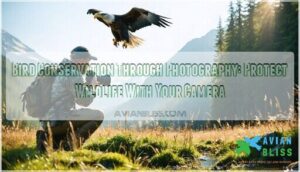 You can make a real difference for birds with your camera! Bird conservation through photography isn’t just about pretty pictures – it’s about telling stories that matter.
When you capture a hawk soaring or a tiny warbler building its nest, you’re creating powerful tools for change. Your photos can show people why these amazing creatures need our help.
Think of yourself as a wildlife superhero with a lens instead of a cape! You’ll need patience, respect for nature, and some sneaky skills to get close without disturbing your feathered friends.
The secret lies in knowing exactly when, where, and how to shoot, which requires patience and respect for nature to capture the perfect moment.
Table Of Contents
- Key Takeaways
- Bird Conservation Photography Basics
- Effective Conservation Photography Techniques
- Role of Photography in Bird Conservation
- Bird Photography Best Practices
- Conservation Photography for Bird Advocacy
- Supporting Bird Conservation Through Photography
- Frequently Asked Questions (FAQs)
- What makes a good bird photographer?
- How can photography promote urban wildlife?
- How do you photograph birds without disturbing them?
- Can I take a bird photography workshop or Safari?
- What lens should I use to photograph a nesting bird?
- Can you use drones to photograph birds?
- How can photography help conservation?
- What is ethical bird photography?
- How do you photograph birds without scaring them?
- How do you approach conservation photography?
- Conclusion
Key Takeaways
- You’ll make a real conservation impact by using telephoto lenses (300mm+) to photograph birds from a respectful distance, keeping them stress-free while capturing stunning images that tell their stories.
- Your backyard birds offer the perfect training ground – start documenting local species to master ethical photography techniques while supporting community conservation efforts right where you live.
- You can turn your bird photos into powerful advocacy tools by sharing them on social media with compelling captions that create emotional connections and inspire others to protect wildlife.
- You’ll amplify your conservation impact by partnering with local organizations, volunteering your photography skills, and using your images to support citizen science projects and habitat restoration efforts.
Bird Conservation Photography Basics
You don’t need fancy gear or a far-off jungle to help birds with your camera—start right in your own backyard!
Learn the basics, like respecting nature and telling a bird’s story through your lens, and you’ll be making a difference in no time.
Benefits of Local Conservation
Your neighborhood birds need you! Local conservation photography creates ripple effects through community involvement and habitat preservation.
Your backyard is a wildlife sanctuary waiting to be discovered—every bird photo you take becomes a conservation victory!
You’ll discover educational opportunities while building connections with fellow bird lovers.
Plus, showcasing local species attracts sustainable tourism and brings economic benefits to your area.
Start documenting backyard birds today – your camera becomes a powerful tool for meaningful change right where you live.
Working With Nearby Subjects
Sometimes the best adventures happen right outside your door! Urban birding transforms your everyday spaces into wildlife photography studios. You don’t need fancy trips when backyard habitats offer amazing subjects. That cardinal at your feeder or the woodpecker on your oak tree can become stunning conservation stories.
Close focus on local species helps you master ethical bird photography techniques without pressure. You’ll learn bird behavior patterns and perfect your shots. Plus, documenting neighborhood wildlife supports local conservation efforts that really matter.
Here’s why nearby subjects rock:
- Practice ethical considerations in familiar settings
- Build deep connections with your local ecosystem
- Create powerful wildlife photography that inspires community action
Research and Making Connections
**Smart research makes your bird conservation photography shine.
**Connect with local organizations and conservation groups – they know where birds need help most.
**Explore scientific research and archival images to understand your subjects better.
**Expert collaboration opens doors you didn’t know existed.
**Community engagement through bird clubs reveals hidden stories worth telling through your lens.
Finding Your Vision
Your Personal Connection to birds shapes powerful conservation photography.
What makes your heart sing? Maybe capturing Artistic Expression through close-up feather details creates Emotional Resonance.
Or documenting habitat loss tells stories with Storytelling Impact. Your Unique Perspective matters most.
Whether you’re drawn to fine art portraits or scientific documentation, authentic wildlife photography connects viewers to conservation.
Find what moves you—that’s your superpower.
Providing Context and Getting Seen
Once you’ve found your unique vision, it’s time to share your bird photography with the world. Your images need rich context to tell compelling stories that move people to action.
Think of yourself as a wildlife storyteller. Instead of just snapping a close-up shot, capture Sandhill Cranes feeding in that farmer’s field. This approach shows the bigger picture and creates powerful visual communication that resonates with viewers.
Consider these image storytelling elements that boost audience engagement:
- Write captions that answer who, what, where, when, why, and how
- Show birds interacting with their natural environment and challenges
- Include human impact on wildlife habitats in your compositions
- Follow ethical considerations for truthful, accurate captioning
- Choose the right platform selection for maximum conservation impact
Your conservation photography becomes more powerful when people understand the full story behind each image.
Effective Conservation Photography Techniques
You’ve got your camera ready, but now it’s time to learn the smart tricks that help birds stay safe while you snap amazing photos.
These techniques will turn you into a bird superhero who captures incredible shots without bothering our feathered friends or messing up their homes.
Using Telephoto Lenses for Bird Photography
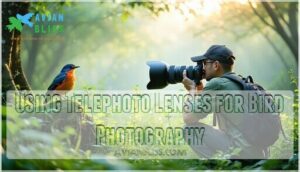
Getting closer to birds without scaring them? That’s where telephoto lenses shine! These powerful tools let you snap amazing shots while keeping your distance. Think of them as magic magnifying glasses for bird photography.
- Focal Length Choice: Pick 300mm or longer for crisp detail
- Image Stabilization: Reduces shake for sharper photos
- Tripod Selection: Steady support prevents blurry images
- Lens Sharpness: Higher quality glass captures stunning bird photo gear results
Your conservation photography becomes more effective when birds stay relaxed and natural.
Respecting Birds and Their Habitat
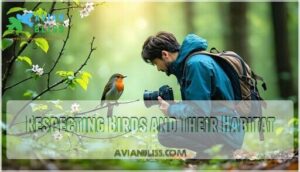
Your camera becomes a window into their world, but respect comes first.
Minimize disturbance by keeping distance—birds know when you’re too close. Watch their body language for stress signals like fluffed feathers or alarm calls.
Follow ethical guidelines for habitat protection by staying on trails and avoiding sensitive areas.
Consider purchasing guides and gear that promote responsible practices.
Responsible sharing means never revealing exact nesting locations online.
Special Considerations for Nesting Birds
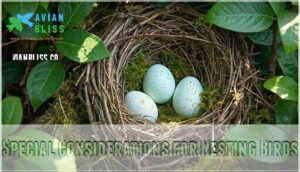
During nesting season, you’re stepping into nature’s nursery where every move matters. Nesting birds need extra care because they’re raising their babies.
Use your telephoto lens to stay far back and watch for stressed parents. Never touch or move anything around the nest – those twigs and leaves are like security blankets for baby birds.
Here’s your ethical observation checklist:
- Keep drones grounded near active nests
- Watch for signs of nest disturbance
- Avoid nest relocation attempts
- Practice habitat protection by staying on trails
- Follow ethical guidelines for bird photography and conservation photography
Your patience protects tomorrow’s bird generations.
Additional Precautions for Beach-Nesting Birds
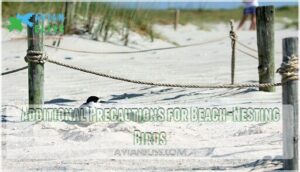
Beach-nesting birds face unique challenges that regular woodland nesters don’t encounter. These feathered beach-goers need extra TLC during Nesting Season.
Stay back 50 yards from roped-off areas – they’re not suggestions, they’re lifelines. Never walk between nests and water because that’s their main feeding zones. Your perfect shot isn’t worth blocking their dinner delivery.
Watch for camouflaged eggs and chicks on sand – they’re practically invisible. Keep dogs leashed and pick up trash that attracts predators.
Your bird photography and conservation photography efforts protect these vulnerable beach-nesting birds while capturing their resilience through bird conservation and bird protection practices.
Chick Safety
Disturbance Minimization essential
Responsible Bird Luring Techniques
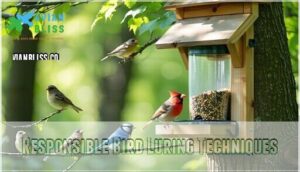
Beyond protecting nesting areas, responsible bird photography for conservation means using ethical luring techniques that put bird welfare first.
You can attract birds naturally without causing harm or stress. Research each species before attempting any luring method – understanding their natural behavior helps you work with them, not against them.
Keep feeding stations spotless and filled with appropriate food. Consider using specialized feeding equipment to maintain hygiene. Never use bait, decoys, or playback calls that disrupt their routines or attract predators.
Your camera shouldn’t change how birds live their lives.
- Study bird behavior to understand natural patterns and minimal impact approaches
- Choose luring alternatives like clean feeding stations over disruptive methods
- Prioritize bird welfare above getting the perfect shot every time
- Practice ethical photography that supports long-term bird conservation goals
Role of Photography in Bird Conservation
Your camera isn’t just for taking pretty bird pictures—it’s a powerful tool that can actually save birds and protect their homes!
When you snap photos of birds in trouble or share amazing shots that make people go "wow," you’re helping more folks care about keeping these amazing creatures safe.
Impact on Birds and Their Habitats
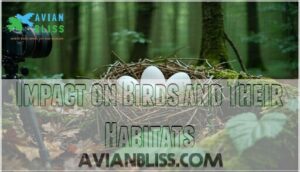
Through your lens, you’re not just capturing pretty pictures – you’re either helping or hurting our feathered friends.
Through your lens, you’re not just taking photos—you’re either protecting birds or putting them at risk.
Habitat Disturbance happens when photographers get too close, causing Nesting Disruption that forces birds to abandon their homes.
Luring Impacts stress birds unnaturally.
But here’s the good news: Ethical Photography creates positive Conservation Effects, turning your bird photography into powerful bird conservation that protects precious bird habitat forever.
Using Photography to Promote Conservation
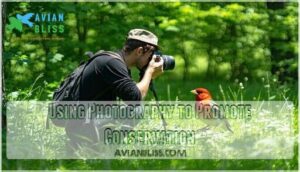
Your camera-lens becomes a powerful megaphone for bird conservation when you master visual storytelling. Each photograph you capture can trigger real conservation impact by showing people what’s at stake. Think of your bird photography as a bridge connecting hearts to nature’s urgent needs.
Ethical representation matters deeply. Share authentic moments that respect wildlife while revealing their incredible world. Your conservation photography should tell honest stories that move people to care.
Here’s how to maximize your conservation impact:
- Create emotional connections – Show birds’ personalities and daily struggles
- Document threats clearly – Capture habitat loss and environmental challenges
- Celebrate success stories – Highlight positive conservation wins
Community engagement grows when your images inspire action. Share compelling bird conservation stories that make viewers think "I can help too!" Your photography becomes a catalyst, sparking conversations and motivating others to protect the birds you’ve grown to love.
Collaborating With Conservation Organizations
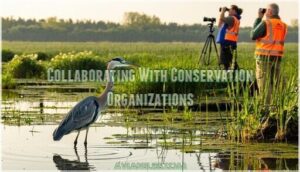
Working together with bird conservation organizations creates magic.
You bring stunning photos, they provide expertise and reach.
It’s like peanut butter meeting jelly – Partnership Benefits flow both ways through Shared Resources and Project Alignment.
| What You Bring | What They Offer |
|---|---|
| Amazing bird photos | Scientific expertise |
| Creative storytelling | Established networks |
| Social media skills | Funding opportunities |
| Fresh perspectives | Research data |
| Time and passion | Amplifying Impact |
Conservation photography becomes powerful when bird conservation organizations guide your lens toward urgent needs.
Creating Environmental Portraits
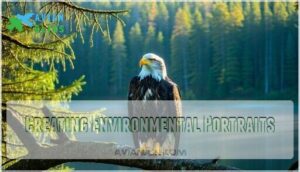
When organizations welcome your partnership, environmental portraits become your secret weapon for bird conservation.
These images capture each bird’s unique bird personality while showcasing their habitat context.
Your conservation photography tells stories that words can’t match.
Here’s how to master visual storytelling through wildlife photography:
- Frame birds naturally in their homes – wetlands, forests, or meadows
- Capture behaviors that show their character and daily struggles
- Include environmental details that highlight conservation message needs
Your artistic expression inspires action!
Documenting Scientific Research

Through scientific research documentation, your wildlife photography transforms raw data into compelling stories that boost research credibility and showcase real conservation impact.
When you partner with field biologists, you’re not just taking pictures—you’re creating visual proof that speaks louder than spreadsheets ever could.
Your camera becomes a bridge between complex scientific research and everyday people who care about bird conservation.
Data visualization through photography makes habitat monitoring results accessible, while detailed shots help with species identification for researchers studying population changes.
- Capture scientists in action during field studies to show the human side of research
- Document conservation photography moments that reveal how climate change affects migration patterns
- Create before-and-after images that demonstrate habitat restoration success stories
This bird photography approach doesn’t just document science—it makes conservation feel personal and urgent for everyone who sees your work.
Bird Photography Best Practices
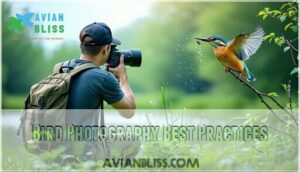
You’ll want to master the right camera tricks and bird smarts to snap amazing photos that help our feathered friends.
Think of it like becoming a bird detective with a camera – you’ll learn which lens works best, how birds act, and cool editing tricks that make your pictures pop!
Choosing The Right Equipment
Success in bird photography starts with smart bird photography gear choices.
Your telephoto lenses need 300mm+ lens focal length for crisp shots.
Camera sensor size affects image quality, while tripod selection guarantees stability.
Don’t forget weather protection and ergonomic design for comfort during long shoots.
Many photographers find success with specialized birding equipment.
| Equipment Type | Key Features | Why It Matters |
|---|---|---|
| Telephoto Lens | 300-600mm focal length | Gets you close without scaring birds |
| Camera Body | Fast autofocus, weather sealing | Captures quick movements, handles elements |
| Tripod | Lightweight carbon fiber | Reduces shake, easy to carry |
| Camera Settings | Fast shutter speeds | Freezes bird motion perfectly |
| Accessories | Rain covers, extra batteries | Keeps you shooting longer |
Understanding Bird Behavior
Birds are like open books once you learn their language.
Watch their feeding habits and social structures closely. Notice how they communicate through vocalizations and body language.
Study their mating rituals and migration patterns. This bird behavior knowledge transforms your birdwatching photography from random snapshots into meaningful bird conservation stories that truly capture avian photography magic.
Anticipating and Capturing Moments
Bird behavior gives you the roadmap, but timing makes the magic happen.
Watch for behavioral patterns like feeding schedules or territorial displays. Seasonal changes affect bird activity—spring brings courtship dances while fall means migration flurries.
Weather effects create opportunities too; after storms, birds emerge hungry and active. Light conditions shift throughout the day, so position yourself where golden hour illuminates your subject.
Study compositional elements like perching spots they favor. In bird photography, patience pays off when you’re ready with perfect camera settings for that split-second when everything aligns beautifully.
Post-Processing and Editing Techniques
Your camera captured magic, but postprocessing transforms good shots into stunning bird photography.
Start with RAW conversion for maximum flexibility. Apply sharpening techniques carefully—crisp details matter, but overdoing creates ugly halos.
Use cropping composition to spotlight your feathered friend. Color correction makes plumage pop naturally. Noise reduction smooths grainy shadows.
These photography techniques and camera settings knowledge turn ordinary images extraordinary!
Sharing Images Responsibly
After perfecting your shots, it’s time to share them with the world. Your bird photography carries real weight in conservation efforts, so handle it like the powerful tool it is.
Be upfront about captive status and stick to truthfulness in your captions. Your accurate captions build trust with viewers and support ethical photography standards. Consider how image manipulation might mislead audiences about wildlife behavior. Remember copyright awareness when sharing others’ work, and use social media platforms to amplify environmental advocacy through your authentic bird conservation stories.
- A rescued hawk perched in a rehabilitation center with honest context
- Wild songbirds captured in their natural habitat with location details
- Zoo birds photographed with educational information about their species
- Backyard visitors documented with tips for creating bird-friendly spaces
Conservation Photography for Bird Advocacy
Your camera isn’t just for taking pretty bird pictures—it’s a superpower for helping birds survive.
When you share your amazing bird photos online and team up with other bird lovers, you can wake people up to protect these feathered friends and their homes, which is a crucial step in conservation and can be considered a feathered friends protection effort.
Using Social Media for Conservation
Your smartphone becomes a powerful conservation tool when you share bird photos strategically.
Join hashtag campaigns and online communities where your images spark real change.
Smart social engagement through digital storytelling creates viral conservation moments that protect birds worldwide.
| Platform | Best Features | Conservation Impact |
|---|---|---|
| Stories, Reels, hashtags | Bird advocacy reaches millions | |
| Real-time updates, threads | Quick conservation awareness spreading | |
| Groups, events, fundraising | Strong bird conservation social media communities | |
| TikTok | Short videos, trending sounds | Young audiences discover bird conservation |
Creating Engaging Content for Awareness
Your photos tell stories that make hearts skip a beat! Visual storytelling creates powerful emotional connections that spark real change for bird conservation.
Here’s how to craft content that gets people talking:
- Share behind-the-scenes moments from your photography adventures
- Write short captions that pack an emotional punch
- Use impactful imagery paired with surprising bird facts
- Create before-and-after habitat photos showing conservation wins
- Post quick videos of birds in action with upbeat music
Conservation narratives work best when you keep things simple and heartfelt. Your audience engagement soars when followers feel like they’re right there with you, discovering amazing birds together!
Building a Community of Bird Conservationists
Through community workshops and local partnerships, you’ll discover fellow bird lovers who share your passion.
Join online forums where photographers swap tips and celebrate wins together.
Citizen science projects let you contribute real data while learning from mentors, these connections spark lasting friendships and amplify your conservation impact.
Bird conservation volunteers become your cheerleaders, offering encouragement when photographing that tricky warbler gets frustrating, together, you’ll protect what you love most, with the help of your new mentors.
Collaborating With Influencers and Organizations
Building strong relationships opens doors to bigger conservation wins. Reach Amplification happens when you team up with wildlife influencers and conservation organizations.
Through Joint Campaigns and Shared Resources, your bird photography reaches thousands more people who care about protecting wildlife.
Here’s how smart Collaborating works:
- Partner with micro-influencers who focus on bird conservation and share your values
- Create Ethical Partnerships with conservation organizations for authentic storytelling
- Design joint social media campaigns that combine your photos with their expertise
- Share resources and platforms to maximize impact without stretching budgets thin
- Maintain Influencer Authenticity by choosing partners who genuinely support conservation initiatives
Measuring The Impact of Conservation Efforts
Success leaves breadcrumbs. Data-driven analysis helps you track your conservation effectiveness through website clicks, social shares, and donation spikes.
Refining strategies based on bird population trends guarantees maximizing impact. Monitor conservation outcomes to see real long-term results from your bird conservation research.
| Metric Type | What to Track | Why It Matters |
|---|---|---|
| Digital Engagement | Website visits, social shares | Shows reach and interest |
| Financial Impact | Donations generated, funds raised | Measures direct support |
| Conservation Outcomes | Bird population changes, habitat protection | Tracks real-world conservation efforts |
| Community Growth | New followers, volunteer sign-ups | Builds lasting bird conservation impact |
Supporting Bird Conservation Through Photography
Your camera isn’t just capturing pretty bird pictures—it’s becoming a powerful tool that helps save feathered friends around the world.
When you share your bird photos with conservation groups, donate to wildlife organizations, or volunteer your photography skills, you’re turning your hobby into real help for birds that need protection.
Why Support Wildlife Conservancy
Every bird photographer’s lens can become a powerful conservation tool.
Your wildlife photography directly supports Species Protection and Habitat Preservation when you back conservation organizations. Funding Conservation through your contributions creates lasting change that protects the birds you love to photograph.
Supporting wildlife conservancy matters because:
- Community Engagement grows when photographers share conservation stories
- Ethical Tourism develops around protected bird habitats you help preserve
- Bird conservation programs receive essential resources for research and protection
- Conservation organizations can expand their reach and impact with your support
Getting Involved in Local Conservation Efforts
Supporting wildlife conservancy sets the stage perfectly for hands-on action.
Local volunteering connects you with your conservation community in meaningful ways.
Join citizen science projects counting birds, participate in habitat restoration days, or help with educational outreach at nature centers.
Your camera becomes a powerful tool for documenting these efforts.
Community engagement through bird conservation local efforts creates lasting change.
Donating to Reputable Organizations
Transform your passion for bird photography into real conservation impact by choosing the right organizations to support. Look for groups with Financial Transparency – they should openly share how your donations get used.
The best conservation organizations offer Program Diversity, tackling everything from habitat protection to window collisions that kill up to 1 billion birds yearly. Check their Conservation Impact through success stories and measurable results.
Don’t worry about Organizational Size – smaller groups often create big changes in local communities. Most accept various Donation Methods: online giving, checks, or even bird conservation funding through monthly pledges.
Your bird conservation donations directly fund research, habitat restoration, and education programs. Whether you support conservation causes locally or nationally, every dollar helps protect the birds you love photographing.
Volunteering Time and Skills
Your camera becomes a conservation superhero when you share your skills with others.
Skill-based volunteering transforms passion into action through hands-on community engagement.
Bird conservation volunteers make real change by:
- Leading photography workshops for local conservation organizations
- Mentoring photographers in ethical techniques
- Documenting conservation projects for research teams
The bird conservation community thrives when experienced photographers teach others.
Your expertise inspires newcomers and strengthens bird conservation advocacy efforts everywhere, making a significant impact through community engagement.
Spreading Awareness Through Photography
Your camera becomes a megaphone for bird conservation. Share enchanting images that showcase birds’ beauty and fragility. Each photo tells a story that can move hearts and minds.
| Platform | Best Content Type | Engagement Tips |
|---|---|---|
| High-quality bird portraits | Use conservation hashtags, share stories | |
| Environmental storytelling posts | Tag local groups, encourage shares | |
| Quick conservation facts with images | Join birding conversations, retweet allies | |
| TikTok | Behind-the-scenes photography videos | Show your process, add trending sounds |
Visual storytelling creates emotional connections. Community engagement amplifies your conservation impact, inspiring action through authentic bird photography.
Frequently Asked Questions (FAQs)
What makes a good bird photographer?
You’ll need patience, respect for birds, and solid technical skills.
Master your telephoto lens, understand bird behavior, and always keep their well-being first.
Practice ethical photography that protects habitats while capturing stunning moments.
How can photography promote urban wildlife?
You’ll capture urban wildlife by showcasing birds in city parks, rooftops, and unexpected places.
Share these images on social media to spark curiosity and show neighbors that amazing creatures live right alongside them.
How do you photograph birds without disturbing them?
Sneaking up like a ninja won’t work!
Instead, you’ll want to grab a telephoto lens with at least 300mm and stay back.
Birds can’t tell you’re photographing from afar, keeping everyone happy.
Can I take a bird photography workshop or Safari?
You’ll find amazing bird photography workshops and safaris worldwide.
They’re perfect for learning techniques, meeting fellow enthusiasts, and discovering incredible locations.
Many include expert guides who know the best spots and ethical practices, and are led by individuals who are knowledgeable about amazing bird photography techniques.
What lens should I use to photograph a nesting bird?
You’ll want a telephoto lens with at least 300mm focal length to photograph nesting birds safely.
This keeps you far enough away so you won’t stress the parents or disturb their precious babies.
Can you use drones to photograph birds?
Nearly 40% of bird species face extinction threats, making ethical photography essential.
You shouldn’t use drones near nesting birds—they’re incredibly stressful and disruptive.
Stick to telephoto lenses from a respectful distance to protect these vulnerable creatures.
How can photography help conservation?
Photography captures stunning bird images that tug at people’s heartstrings, making them care deeply about protecting these amazing creatures.
Your photos can inspire donations, volunteer work, and policy changes that save entire bird species, which is a powerful way to make a difference through photography.
What is ethical bird photography?
Respectful wildlife capture means keeping your distance, avoiding nest disturbance, and never using playback calls to lure birds.
You’ll protect their natural behaviors while creating stunning images that don’t harm these beautiful creatures, which is the key to respectful wildlife capture and stunning images.
How do you photograph birds without scaring them?
Stay calm and move slowly – birds sense your energy.
Use telephoto lenses from a respectful distance.
Wear earth-toned clothing, avoid sudden movements, and let them get comfortable with your presence first.
How do you approach conservation photography?
You’ll want to blend artistry with purpose, telling stories that tug at hearts.
Focus on capturing moments that show birds’ struggles and beauty, then share those images to inspire others toward action.
Conclusion
Sure, you might think bird conservation through photography sounds too complicated, but it’s actually super easy.
You’ve got everything you need right in your hands. Your camera becomes a powerful tool for protecting our feathered friends.
Every photo you take can help save birds and their homes. You’re not just snapping pictures – you’re becoming a real wildlife hero!
So grab your camera, head outside, and start making a difference today. Birds everywhere are counting on you!