This site is supported by our readers. We may earn a commission, at no cost to you, if you purchase through links.
 In regards to nutrition for wild birds, you’ll want to provide a balanced diet that mimics their natural feeding patterns.
Seeds, insects, and fruits form the core of most birds’ nutritional needs, offering critical proteins, fats, and carbohydrates.
Sunflower seeds, millet, and nyjer are excellent energy sources that support their high metabolism.
Don’t forget calcium-rich options like crushed eggshells, which strengthen their bones and egg production.
During breeding and migration seasons, protein becomes even more essential.
By understanding these dietary requirements, you’ll help local bird populations thrive and create a vibrant backyard ecosystem that supports their survival.
Table Of Contents
- Key Takeaways
- Bird Nutritional Requirements
- Essential Bird Nutrients
- Bird Diet and Nutrition
- Feeding Wild Birds
- Optimal Bird Nutrition Strategies
- Frequently Asked Questions (FAQs)
- What is the healthiest food for wild birds?
- What can I feed a bird I found outside?
- What is the best nutrition for birds?
- What is the most critical nutrient to birds?
- What are the nutritional requirements for birds?
- What can be fed to wild birds?
- Do wild birds need vitamins and minerals?
- What nutrients do birds eat?
- Why do birds need nutrition?
- What carbs should a bird eat?
- Conclusion
Key Takeaways
- You’ll want to provide wild birds with a balanced diet that mimics their natural feeding patterns, focusing on seeds, insects, and fruits that offer critical proteins, fats, and carbohydrates.
- Your bird nutrition strategy should adapt to seasonal changes, offering high-fat seeds in winter, protein-rich foods during breeding season, and varied energy sources to support migration and daily survival.
- You’ll need to pay special attention to essential nutrients like calcium and vitamins, which are crucial for bone strength, feather health, and overall immune system support in wild birds.
- By creating a bird-friendly yard with diverse food sources, native plantings, and strategic feeding practices, you’ll help support local bird populations and create a vibrant backyard ecosystem.
Bird Nutritional Requirements
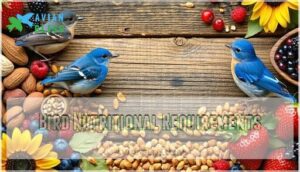
You’ll want to understand the critical nutritional needs that keep wild birds healthy and thriving throughout the year.
By learning about their specific protein, fat, carbohydrate, and vitamin requirements, you can support their survival and well-being in every season.
Protein and Fat Needs
In the context of wild bird nutrition, protein and fat aren’t just food—they’re fuel for survival.
Your feathered friends need high-quality protein sources like insects and mealworms to support tissue repair and breeding success.
Fat-rich seeds and suet provide essential energy for migration and cold-weather survival.
By understanding these key protein sources and fat benefits, you’ll help birds maintain peak health through seasonal changes.
Think of their diet as a carefully balanced ecosystem, where amino acids and energy work together to keep wild birds thriving in every environment.
Carbohydrate Sources
Your feathered friends need quick-burning carbs to keep their wings flapping! Millet benefits birds with steady energy, while grain varieties like oats offer nutritional punch.
Corn concerns aside, natural fruit sugars from berries provide sweet boosts. Seed carbs in sunflower and safflower types deliver instant fuel.
Smart wild bird diet choices keep your backyard visitors healthy and energetic, with quick-burning carbs and natural fruit sugars providing essential steady energy.
Calcium and Vitamin Importance
After powering through carbohydrates, birds need more than energy—they need strength. Calcium and vitamins are your winged friends’ secret weapons for robust health.
Want to boost their well-being? Here’s how:
- Crush eggshells for bone-building calcium
- Serve vitamin-rich fruits
- Sprinkle leafy greens
- Add specialized supplements
Your bird nutrition strategy matters. Robust eggshell strength, vibrant feather quality, and powerful immune support start with smart dietary choices.
Seasonal Variations in Diet
Your bird’s diet shifts dramatically with each season.
In winter, high-fat seeds and suet build critical fat reserves, helping birds survive freezing temperatures.
Spring demands a protein boost for nesting and chick development, with insects becoming a prime nutrition source.
Summer brings abundant fruits and nectar, supporting breeding needs.
During fall’s migration season, energy-rich foods fuel long journeys.
Understanding these seasonal nutrition patterns helps you become a more informed wild bird feeding expert, ensuring your feathered friends stay healthy year-round.
Essential Bird Nutrients
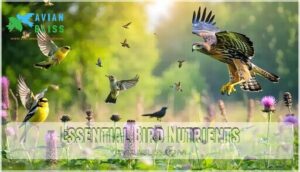
You’ll discover the essential nutrients that keep wild birds thriving, from the critical proteins that build strong muscles to the energy-packed fats that fuel their daily adventures.
Understanding these key nutrients will help you provide a balanced diet that supports birds’ health, vigor, and survival through changing seasons.
Role of Vitamins and Minerals
Your bird’s survival hinges on microscopic nutritional powerhouses: vitamins and minerals. Without these tiny warriors, your feathered friend risks serious health complications.
- Mineral deficiencies can devastate growth
- Vitamin gaps compromise immune response
- Nutritional imbalances weaken bone structure
- Supplementation prevents potential health disasters
Vitamin-enriched seeds and targeted dietary supplements become your bird’s nutritional lifeline, transforming fragile health into robust wellness.
Importance of Calcium and Vitamin A
| Nutrient | Critical Function |
|---|---|
| Calcium | Bone strength, eggshell integrity |
| Vitamin A | Vision support, immune defense |
| Beta-carotene | Feather health, cellular protection |
| Mineral Balance | Growth and development |
| Nutritional Synergy | Overall physiological wellness |
Want healthy wild birds? Calcium and Vitamin A are your secret weapons. From preventing brittle bones to supporting sharp vision, these nutrients shield your feathered friends from devastating dietary deficiencies.
Nature’s pantry offers rich sources—insects, leafy greens, and vibrant plants—packed with life-sustaining goodness. Deficiencies can manifest as dull, brittle feathers, indicating a need for dietary adjustments to support overall physiological wellness and ensure bone strength and vision support.
Energy Sources From Fats and Carbs
Fueling wild birds’ metabolic engines requires understanding fat metabolism and carb digestion for peak energy.
Your feathered friends need strategic nutrition to thrive through changing seasons.
- Sunflower and safflower seeds deliver concentrated seed oils
- Berries and apples provide quick fruit sugars
- Suet blocks pack essential winter energy reserves
- Millet grains offer steady carbohydrate support
Bird Diet and Nutrition
You’ll discover the secrets to keeping wild birds healthy by understanding their unique nutritional needs throughout the year.
Just like humans, birds require a balanced diet that changes with seasons, providing them with essential proteins, fats, and nutrients to survive and thrive in diverse environments, which is crucial for their overall health and well-being.
High-Energy Foods for Winter
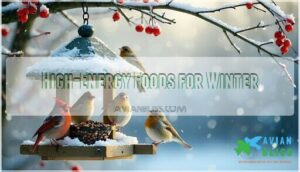
When winter’s chill bites, your feathered friends need a nutrition boost!
Nyjer seed benefits shine during cold months, providing high-energy fat sources that keep birds warm. Sunflower seeds and suet cakes become lifelines, packed with calories birds crave.
Craft smart seed mix ratios with peanut butter alternatives to help wild bird populations survive harsh temperatures. Many find high quality options are available online.
Your backyard feeder can be a critical winter survival station for our winged neighbors.
Breeding Season Nutrition
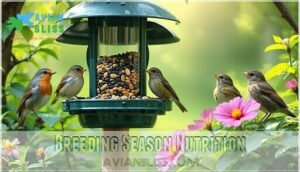
The breeding season demands a nutritional strategy that supports your feathered friends’ remarkable transformation.
Your avian guests require a carefully crafted diet to fuel successful reproduction and chick growth. Here’s a bird nutrition guide to help you nourish your winged companions:
- Insect Protein: Essential for robust chick development
- Calcium Sources: Critical for eggshell formation
- Parental Diet: Directly impacts nestling survival
- High-Energy Foods: Sustain demanding reproductive cycles
- Balanced Nutrition: Guarantees healthy avian health
Understanding nest site selection is also vital for supporting successful breeding.
Strategic feeding can make all the difference in their breeding success.
Insect and Seed Importance
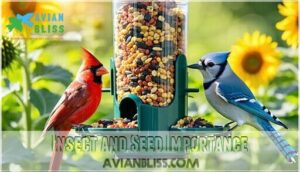
Nature’s diverse buffet of insects and seeds keeps wild birds thriving through changing seasons.
Your feeding strategy matters: pair protein-packed seasonal insects with nutrient-dense seed varieties like sunflower seeds.
These wild bird food choices provide essential nutrition, supporting everything from breeding vigor to migration endurance.
Consider buying birding supplies to enhance your feeding efforts.
Understanding bird seed mix dynamics helps you nourish feathered friends effectively, using the right seasonal insects.
Feeding Wild Birds
When you feed wild birds, you’re doing more than just filling their bellies—you’re providing essential nutrients that support their survival and health.
By choosing the right seeds, nuts, and supplemental foods, you’ll help local bird populations thrive and enjoy the delightful experience of supporting these feathered friends in your backyard.
Benefits of Feeding Wild Birds
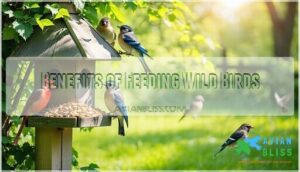
Want to make a real difference in wildlife preservation? Feeding wild birds isn’t just a pastime—it’s an opportunity to support local ecosystems and connect with nature.
I’ll create an artifact with the blockquote that captures the essence and tone of the original paragraph:
Feeding wild birds transforms your backyard into a vibrant sanctuary of wildlife preservation and connection.
Here’s how your backyard can become a sanctuary:
- Boost bird population health
- Create educational wildlife experiences
- Support conservation efforts
- Build meaningful human-nature connections
By offering nutritional bird supplements, you’re not just filling feeders; you’re becoming a steward of local bird populations, transforming your outdoor space into a vibrant, life-sustaining habitat. Consider that feeder material impacts durability, influencing longevity.
Choosing The Right Foods
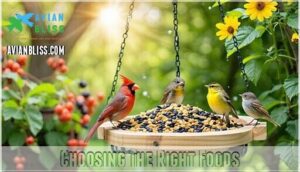
Let’s feed your feathered friends like pros! Different bird seed varieties attract unique species, so mix it up with sunflower, millet, and nyjer seeds.
Skip wild bird seeds packed with fillers—choose nutritious treats rich in protein like mealworms. Platform feeders work best, minimizing waste while supporting avian dietary needs.
By offering organic options and fresh foods, you’ll create a backyard bird buffet that keeps your winged visitors healthy and happy. Consider different seed blends for varied species.
Think quality over quantity when serving up these nutritional bird supplements, and remember to provide a mix that includes varied species to attract a diverse range of birds.
Avoiding Harmful Foods and Practices
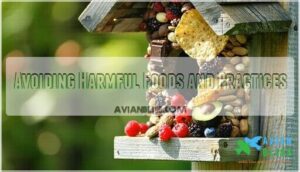
Steering clear of toxic foods, you’ll safeguard wild bird health with smart feeding practices.
Here’s how to prevent harm:
- Eliminate toxic foods like chocolate, avocado, and salty snacks that can devastate bird nutrition.
- Clean feeders regularly to prevent disease transmission and bacterial growth in contaminated feeding areas.
- Monitor food quality by discarding spoiled seeds, avoiding pesticide-exposed areas, and providing fresh, uncontaminated water sources.
Protecting our feathered friends means being vigilant about what and how you feed them.
Optimal Bird Nutrition Strategies
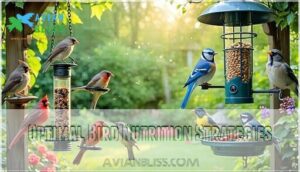
You’ll want to transform your backyard into a nutritional haven that supports wild birds’ health throughout the year.
By understanding their dietary needs and providing balanced, varied foods, you’ll help local bird populations thrive and attract a diverse range of feathered friends to your outdoor space.
Providing Balanced Nutrition
If you want to keep wild birds healthy, focus on balanced nutrition through seed variety and natural foraging.
Mix high-quality seeds, fruits, and insects to meet their avian nutritional requirements.
By presenting diverse foods and avoiding deficiencies, you’ll support birds’ vitamins, minerals, and amino acid needs throughout changing seasons, ensuring their overall health through natural foraging.
Creating a Bird-Friendly Yard
Ready to transform your backyard into a wild bird paradise? Native plantings are your secret weapon for creating an inviting ecosystem.
Here’s how to make your yard irresistible to feathered friends:
- Design multilayered habitats with native trees and shrubs
- Install shallow water sources with gentle movement
- Provide diverse shelter options near feeding areas
- Protect nesting sites from predators and harsh elements
Your yard can become a thriving sanctuary that supports local wild birds’ dietary needs and overall well-being.
Supplementing With Suet and Nuts
Your bird sanctuary transforms when you strategically add suet and nuts to winter feeding stations.
These nutritional powerhouses help feathered friends survive chilly months by delivering concentrated energy.
| Suet Type | Winter Benefit |
|---|---|
| Render Fat | High Calories |
| Peanut Blend | Protein Boost |
| Black Oil Mix | Energy Dense |
| Sunflower Suet | Nutrient Rich |
| No-Melt Formula | Long-Lasting |
Choosing unsalted, fresh nuts like almonds and peanuts guarantees your backyard birds receive top-tier dietary supplements without compromising their health.
Suet is especially beneficial, providing high-energy nutrition vital for many bird species, which is high-energy nutrition.
Remember: smart feeding means survival for your winged neighbors, and it’s about providing the right nutritional powerhouses.
Frequently Asked Questions (FAQs)
What is the healthiest food for wild birds?
A bird’s feast begins with sunflower seeds.
You’ll attract more feathered friends by offering black oil sunflower seeds, which pack high protein, essential fats, and essential nutrients for wild birds’ health and energy.
What can I feed a bird I found outside?
Contact a wildlife rehabilitator immediately. Don’t feed it without professional guidance. Different species have unique dietary needs, and improper feeding can harm the bird’s health or survival chances.
What is the best nutrition for birds?
Nutritious nourishment nurtures your feathered friends.
Provide a balanced diet of high-quality pellets, fresh fruits, and vegetables.
Supplement with minimal seeds, ensuring variety and meeting their specific dietary needs for ideal health and longevity.
What is the most critical nutrient to birds?
Protein is your bird’s lifeline, fueling muscle development and feather growth. It’s the superhero nutrient that transforms a fragile creature into a vibrant, thriving companion, supporting overall health and resilience.
What are the nutritional requirements for birds?
You’ve heard birds need more than just seeds, right?
Your feathered friends require a balanced diet of proteins, fats, carbohydrates, vitamins, and minerals to thrive.
Ensuring strong muscles, healthy feathers, and peak energy for daily activities is crucial for their well-being, which is supported by a diet that includes proteins.
What can be fed to wild birds?
You’ll want to offer a mix of black oil sunflower seeds, nyjer seeds, safflower, and white millet.
Avoid wild bird seeds.
Place feeders strategically, keep them clean, and provide fresh, varied options to attract healthy, happy wild birds.
Do wild birds need vitamins and minerals?
Yes, wild birds need specific vitamins and minerals to maintain health.
They get nutrients from diverse diets, including seeds, fruits, and insects.
Supplementing their diet with mineral-rich foods can support their immune system and overall well-being.
What nutrients do birds eat?
When 70% of bird health hinges on diet, you’ll want a nutrient mix that’s a game-changer.
You’ll need proteins for muscle, fats for energy, vitamins for growth, and minerals like calcium to build strong, vibrant feathered friends.
Why do birds need nutrition?
You’ll survive and thrive by eating right!
Proper nutrition fuels your body’s complex systems, supports immune function, helps you grow strong muscles, maintains feather health, and provides essential energy for daily activities.
What carbs should a bird eat?
Picture a bird’s diet as a high-octane fuel tank!
You’ll want millet, white proso, and a dash of corn to keep those feathered friends energized.
Sprinkle these carbs sparingly for a balanced, nutritious avian meal.
Conclusion
Ultimately, feeding wild birds isn’t just a hobby—it’s a symphony of nutrition that brings nature’s melody right to your backyard.
By understanding nutrition for wild birds, you’ll transform your outdoor space into a thriving sanctuary.
You’ll support local bird populations, enhance biodiversity, and witness the incredible resilience of these feathered friends.
Remember, every seed, every carefully chosen morsel contributes to their survival and creates a vibrant, interconnected ecosystem just outside your window.