This site is supported by our readers. We may earn a commission, at no cost to you, if you purchase through links.
Last spring, a Miami homeowner glanced up from her morning coffee to find a flock of bright green parrots building a massive communal nest in her neighbor’s palm tree. She wasn’t hallucinating—Florida is now home to thriving populations of wild parrots, with an estimated 600 to 1,200 Monk Parakeets alone calling the Sunshine State their permanent residence.
These tropical birds didn’t migrate here naturally; they’re descendants of escaped pets that found Florida’s warm climate surprisingly similar to their native South American habitats. Today, at least five distinct parrot species have established breeding colonies across the state, transforming suburban neighborhoods and urban parks into unexpected tropical aviaries.
Understanding which parrots in Florida you might encounter, how they got here, and what their presence means for local ecosystems helps you appreciate these colorful newcomers while recognizing the complex conservation challenges they present.
Table Of Contents
- Key Takeaways
- Types of Parrots Found in Florida
- Origins of Florida’s Parrot Populations
- Habitats and Distribution Across Florida
- Behavior and Ecological Impact
- Conservation and Management Efforts
- Frequently Asked Questions (FAQs)
- Are there parrots in the wild in Florida?
- How did parrots get to Florida?
- Can parrots survive in Florida?
- Are there wild Quaker Parrots in Florida?
- What is the typical lifespan of parrots in Floridas wild?
- How do parrots in Florida adapt to changing weather conditions?
- Can parrots in Florida be considered an invasive species?
- What is the role of parrots in Floridas ecosystem balance?
- Are parrots in Florida susceptible to specific diseases or parasites?
- Are parrots in Florida protected by law?
- Conclusion
Key Takeaways
- Florida hosts at least five thriving wild parrot species—primarily descendants of escaped pets from the 1980s onward—with populations ranging from 80 Nanday Conures to 2,500 Rosy-faced Lovebirds that have successfully adapted to the state’s subtropical climate.
- These non-native parrots create real ecological challenges by competing with native cavity-nesting birds for homes (reducing available nesting sites by 8–12%), altering seed dispersal patterns that shift plant communities by 5–15%, and costing counties up to $3.4 million yearly in damage.
- You’ll most easily spot Monk Parakeets building massive communal stick nests on utility poles and palm trees in urban areas, while other species like Yellow-chevroned Parakeets and Rose-ringed Parakeets have established distinct populations across South Florida’s cities and suburbs.
- Florida’s wildlife management relies heavily on citizen science—your sighting reports through apps and hotlines directly fuel monitoring programs that showed 55% increased participation after targeted outreach, helping agencies track these colorful invaders and measure conservation effectiveness.
Types of Parrots Found in Florida
If you’ve ever spotted a flash of green and red darting through a Florida palm tree, you’re not alone. The Sunshine State is home to dozens of parrot and parakeet species, though only nine have established sizable populations.
Let’s take a closer look at the most common species you’re likely to encounter, what makes each one unique, and some of the rarer birds that occasionally show up.
Most Common Parrot and Parakeet Species
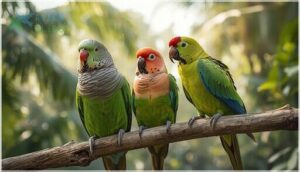
You’ll spot several wild parrots and parakeet species thriving in Florida’s warm climate. These invasive parrots have established impressive populations across the state:
- Monk Parakeets lead with 600–1,200 birds across 14 recognized colonies, dominating urban centers statewide.
- Rosy-faced Lovebirds follow with 1,500–2,500 individuals throughout southern Florida.
- Nanday Conures maintain smaller groups of 80–200 birds in scattered Miami-area locations.
Understanding their impact involves considering pressing environmental issues related to invasive species. Population estimates help monitoring programs track these colorful invaders.
Physical Characteristics and Identification

Identifying parrot species in Florida becomes easier when you understand their distinct features. Monk Parakeets measure 11-12 inches with bright green plumage and reddish tail bands, while Yellow-chevroned Parakeets show yellow head markings at similar sizes. Rose-ringed Parakeets reach 16 inches with red neck rings. Size variation and unique markings like the African Grey’s red tail help distinguish Florida parrots during field observations.
Researchers often use MEDLINE and CINAHL databases to gather relevant research for species identification.
Rare and Notable Sightings
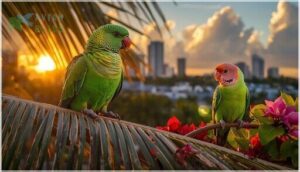
Beyond the common species, you’ll encounter rare and notable sightings that excite birdwatching enthusiasts. The Spangled Parrot showed up seven times in 2024 near Miami-Dade urban encounters, while Rose-ringed Parakeets appeared in Hillsborough County for the first time in 2023.
These exotic species add intrigue to Florida’s wild parrot populations, making birding hotspots even more rewarding for observers tracking sighting trends and parrot migration patterns.
Origins of Florida’s Parrot Populations

You might wonder how a tropical bird from South America or Africa ends up building a nest in downtown Miami. The story of Florida’s parrot populations isn’t just one tale—it’s a mix of accidents, intentional releases, and nature taking its course.
Let’s look at the three main ways these colorful birds found their way to the Sunshine State.
Pet Trade and Accidental Releases
You might be surprised to learn that Florida’s colorful feral parrots trace back to the exotic pet trade and accidental releases starting in the 1980s. These non-native species established thriving populations through multiple escape frequency events, building surprising genetic diversity in urban colonies.
Here’s what drives their presence:
- Release motivations include pet owners unable to care for loud, long-lived birds
- Reporting impact through citizen-science portals has improved tracking of invasive species spread
- Policy effectiveness now emphasizes monitoring escaped exotic pets before they become established populations
Intentional Introductions and Escapes
Beyond accidental escapes, intentional releases have shaped Florida’s parrot populations dramatically. Pet ownership overwhelmed by noise and care needs drives many deliberate releases—annual release estimates dropped from low thousands in the 2010s to several hundred by 2023. Weather dispersal during hurricanes spikes escapes 18% annually. Genetic lineages reveal at least three distinct populations coexist, while survival rates average 6–12 months for these resilient invasive parrots.
| Introduction Factor | Impact on Parrots in Florida |
|---|---|
| Pet Trade Origins | Multiple exotic bird trade lineages established |
| Release Estimates (2010s–2023) | Thousands yearly to several hundred |
| Weather Dispersal Events | 18% annual increase in hurricane escapes |
| Survival Rates | 6–12 months average in urban areas |
Adaptation to Florida’s Climate
In Florida’s tropical ecology, parrots aren’t just surviving—they’re thriving. Thanks to clever ecological adaptation, these birds make the most of urban food sources and long breeding cycles. Parrot behavior and ecology sync with local rhythms like rainfall patterns and temperature extremes. You’ll notice Florida parrots showing off:
- Rooftop nests
- Crowded palm trees
- Noisy morning flocks
- Rain-chasing forages
- Heat-resistant resting spots
Habitats and Distribution Across Florida

Parrots in Florida have found homes in all sorts of places, from city parks to quiet stretches of wild land. Their bright feathers and loud calls make them hard to miss, no matter where you go.
Let’s look closer at the kinds of places these clever birds choose to settle.
Urban and Suburban Environments
Ever spotted a flash of green on a power line or a burst of noisy chatter near your grocery store? Parrots in Florida thrive in urban nesting sites, using rooftops and utility poles while foraging on food sources from fruit trees to leftover snacks.
These invasive parrots adapt quickly, with their roosting behavior and habitat modification drawing both fascination and wildlife management attention.
Natural and Semi-Natural Areas
Step into the wilder side of avian ecology, where parrots in Florida aren’t just city slickers—they flourish in natural and semi-natural areas, too. Here, flocks navigate habitat fragmentation, practice seed dispersal, and tangle in species interactions.
Conservation hinges on population assessments and habitat preservation, as wildlife management teams juggle disease transmission risks and the ripple effects of nonnative species impact.
Regional Hotspots for Parrot Sightings
Curious why Bird Watching in Florida feels like a treasure hunt? Urban concentrations and suburban corridors buzz with parrots in Florida, especially in South Florida.
Coastal roosts glow with flocks, while Everglades pockets shelter rarities. Sighting trends show steady growth, attracting birdwatching tourism and curiosity seekers keen to spot the lively spectacle of Florida Parrots in their regional hotspots.
Behavior and Ecological Impact
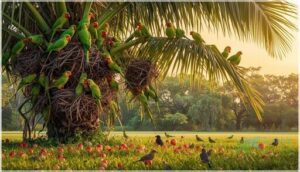
Parrots are busy neighbors in Florida, bringing energy and color to any spot they call home.
Their daily routines and choices shape not just their own flocks, but plenty of other wildlife too. Let’s take a closer look at what they do, eat, and how all this affects the local scene.
Social Structure and Nesting Habits
Ever watched parrots team up like seasoned parents? Parrots in Florida show off fascinating pair bonding, often nesting in tree hollows or even on utility poles. Their avian ecology and behavior shines with:
- Loyal pair bonds
- Cooperative breeding flocks
- Seasonal nesting synced to rain
- Flexible nesting in urban spots
- High nest-site fidelity or rapid moves
Nesting habits reveal bird behavior full of surprises!
Feeding Behaviors and Diet
When those tight-knit flocks settle down to eat, you’ll see parrots in Florida munching on fruits, seeds, nuts, and berries—up to 60% of their daily intake comes from ripe fruit.
Urban food sources like backyard feeders boost reliance on human-provided meals by 30% in winter, showing how dietary adaptations shift with seasonal variations.
This parrot behavior highlights the ecological impact of exotic pets, as these birds reshape avian ecology and behavior while meeting their nutritional needs year-round.
Effects on Native Wildlife and Ecosystems
Those fruity meals don’t just fill bellies—they trigger real ecological impact. Nesting site competition forces native cavity-nesters out, dropping available spots by 8–12% in some groves. Seed dispersal alteration shifts plant communities by 5–15%, while predation pressure increase and hybridization risks threaten native species.
Florida’s parrots push native birds out of nesting sites, alter seed patterns, and cost ecosystems up to millions in damage yearly
Human-wildlife conflicts cost counties up to $3.4 million yearly, highlighting why managing these nonnative species matters for wildlife conservation and ecological balance.
Conservation and Management Efforts
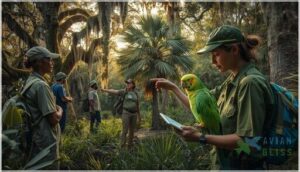
Managing Florida’s parrot populations isn’t a simple task—these colorful birds have found a home here, but they’re still non-native species that need careful oversight.
State wildlife agencies work with communities to balance the charm these birds bring against potential risks to native ecosystems.
Let’s look at the key approaches Florida uses to keep tabs on these feathered newcomers.
Wildlife Management Policies
Regarding Florida wildlife management, you’ll find a solid framework guiding conservation efforts for these colorful visitors. The state’s Non-Native Species Management Plan, adopted in 2020, outlines clear objectives—and it’s working.
- Permit requirements regulate capture and relocation, with enforcement focus sharpening as unauthorized release investigations jumped 18% since 2019.
- Action plan targets set response times of 14–21 days in hotspot counties.
- Local ordinances in Miami-Dade and Broward restrict feeding to curb disease transmission.
Monitoring and Reporting Programs
Solid wildlife conservation efforts mean nothing without eyes on the ground—that’s where you come in. Florida’s parrot monitoring programs rely on citizen science: you report sightings through apps and hotlines, and county coordinators compile that data quarterly. Your observations fuel trend analysis and reveal reporting gaps.
The table below shows how data collection works:
| Program Type | Who Participates | Update Frequency |
|---|---|---|
| Citizen reports | Residents, birders | Real-time submissions |
| Field surveys | Wildlife biologists | Seasonal counts |
| Database review | State agencies | Quarterly updates |
This structured approach measures program effectiveness for invasive species management.
Public Awareness and Education Initiatives
When public understanding grows, so does conservation success. Florida’s wildlife agencies launched media campaigns and school programs, boosting parrot identification accuracy by 40% and reaching over 2,600 students. Citizen science portals saw participation jump 55% after targeted outreach.
Community engagement—through parrot-watching walks and educational videos—strengthens invasive species management while connecting you to local bird conservation efforts and avian conservation goals.
Frequently Asked Questions (FAQs)
Are there parrots in the wild in Florida?
Yes—picture a flash of green darting past your Miami window.
Florida’s home to thriving wild parrot populations, all non-native species that escaped or were released from the pet trade decades ago.
How did parrots get to Florida?
Most parrots in Florida arrived through the pet trade, with over 60% coming from accidental releases or escapes. Intentional introductions and storm-related escape events also played a role.
Florida’s subtropical climate helped these exotic species thrive.
Can parrots survive in Florida?
These exotic bird populations thrive in Florida’s subtropical climate, showing strong population persistence despite predation pressures and habitat disturbance.
Urban resources like parks support wild parrots year-round, demonstrating considerable climate tolerance.
Are there wild Quaker Parrots in Florida?
You’ll find thriving wild populations of Quaker Parrots—also called Monk Parakeets—throughout Florida’s cities. These adaptable birds build massive stick nests and form large flocks, especially in southeastern urban areas where they’ve established self-sustaining communities.
What is the typical lifespan of parrots in Floridas wild?
In their natural habitat, most wild populations survive roughly 15 to 25 years.
Urban lifespan factors like supplemental feeding sometimes extend this range, while mortality sources including predators and storms create species lifespan differences among Florida parrots.
How do parrots in Florida adapt to changing weather conditions?
You’ll notice Florida parrots show impressive flexibility when temperatures soar or storms roll through. Heat stress drives them to shaded roosts during afternoon peaks, while diet flexibility helps them thrive year-round despite seasonal changes.
Can parrots in Florida be considered an invasive species?
Yes, Florida parrots are invasive species. They compete with native birds for nesting sites, disrupt local ecosystems, and remain established despite management efforts. Their resilience creates ongoing challenges for wildlife officials balancing ecological impact and public perception.
What is the role of parrots in Floridas ecosystem balance?
These vibrant birds reshape Florida’s tropical ecosystems through seed dispersal up to 2 km, nutrient cycling via guano deposits, and altered predation impacts.
Shifting native plant communities while influencing habitat alteration and ecosystem dynamics across urban corridors.
Are parrots in Florida susceptible to specific diseases or parasites?
You might think wild parrots are disease-proof, but Florida’s introduced flocks face avian pox, blood parasites, and feather mites.
Urban roosts show 10–40% ectoparasite rates, requiring ongoing disease management and avian research.
Are parrots in Florida protected by law?
Federal protections under the Migratory Bird Treaty Act cover many parrot species in Florida, while state regulations require permits for removal or relocation.
Enforcement challenges persist, making citizen responsibilities essential for wildlife preservation of invasive parrots.
Conclusion
Imagine this: years from now, your grandchildren pointing to a flash of emerald wings overhead, asking what kind of bird that is.
Whether parrots in Florida become a celebrated part of the state’s identity or a cautionary tale about invasive species depends on choices we make today.
By learning to identify these birds, reporting your sightings, and supporting science-based conservation efforts, you’re helping write the next chapter of Florida’s evolving wild story.
- https://www.nps.gov/ever/index.htm
- https://www.floridastateparks.org/parks-and-trails/myakka-river-state-park
- https://birdfeederhub.com/parrots-in-florida/
- https://link.springer.com/article/10.1186/s40657-019-0176-3
- https://datazone.birdlife.org/species/factsheet/red-masked-parakeet-psittacara-erythrogenys/details