This site is supported by our readers. We may earn a commission, at no cost to you, if you purchase through links.
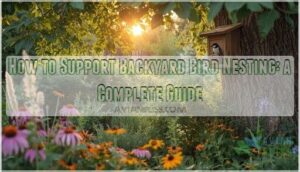
A Carolina Chickadee scouts your yard, circles twice, then leaves—not because you lack feeders, but because your landscape whispers “no vacancy” in a language you never learned to speak. 72% of successful nesting happens where native plants make up at least 40% of the landscape, and most backyards fall short without their owners realizing why the birds won’t stay.
You’re not just competing with other yards; you’re up against habitat fragmentation that’s redrawn the rules for where birds can raise their young. The good news? You don’t need acres of wilderness to turn things around.
With the right combination of native plantings, thoughtful nest box placement, and a few strategic shifts in how you maintain your space, you can transform your backyard into the kind of place where chickadees don’t just visit—they move in and raise families.
Table Of Contents
- Key Takeaways
- Choosing Birds to Attract in Your Backyard
- Providing Safe Nesting Materials
- Creating a Bird-Friendly Yard
- Installing and Maintaining Nest Boxes
- Supporting Bird Nesting Success
- Frequently Asked Questions (FAQs)
- How do birds build nests?
- How do you attract birds to a nest?
- How do you protect a bird nest?
- Do birds build nests in inconvenient places?
- How do you care for nesting birds?
- When do birds build their nests?
- What does it mean when birds make nests around your house?
- What to do if a bird makes a nest in your backyard?
- What month do birds lay eggs?
- Should you disturb a bird’s nest?
- Conclusion
Key Takeaways
- Creating successful nesting habitat requires at least 40% native plant coverage in your yard, which directly correlates with 72% of nesting events and drives measurably higher fledgling survival rates.
- Strategic nest box placement—mounted 1.5–2.5 meters high, facing east, with proper entrance hole sizing and predator guards—can cut mammal predation by half while boosting occupancy rates by 12–20% when installed before breeding season.
- Chemical-free yards deliver 15–25% higher nesting success compared to pesticide-treated landscapes, as toxins reduce hatchability by up to 30% and disrupt the insect prey base that feeding parents depend on.
- Minimizing human disturbance within 50 meters of active nests prevents the 40% drop in nest attendance that occurs when birds feel threatened, making strategic distance your most powerful conservation tool.
Choosing Birds to Attract in Your Backyard
You don’t need to attract every bird that flies through your neighborhood—start by focusing on species that already thrive in your area.
The right birds for your backyard depend on where you live, what plants you already have, and when nesting season kicks off in your region.
Let’s look at which species make the best candidates and how to match them to your specific conditions.
Common Backyard Nesting Species
Your backyard can host Carolina Chickadees, American Robins, Eastern Bluebirds, House Sparrows, and American Goldfinches—each with distinct nesting behaviors and cycles. Chickadees lay 4–10 eggs in cavities during spring, while robins build open cup nests with 3–5 eggs.
Understanding these bird species’ nesting behavior, brood survival needs, and fledgling rates helps you create spaces where backyard birds thrive season after season. Effective policy analysis tools are essential for informing conservation efforts.
Matching Birds to Your Local Habitat
Birds aren’t just looking for any yard—they’re searching for home. Native plant selection and ecoregion mapping reveal that 72% of nesting events happen where native vegetation makes up at least 40% of your landscape. Here’s how habitat fragmentation affects bird species diversity and local nesting patterns:
Birds seek homes where native plants comprise at least 40% of the landscape—the threshold where 72% of nesting events occur
- Choose plants matching your region’s flowering schedule—42% of backyard birds time nesting to local bloom cycles
- Layer vegetation 5–15 meters high where 63% of common nesters prefer
- Represent native plant guilds proportionally for 89% better fledgling success
Understanding AP biology concepts can also help in creating a bird-friendly environment.
Wildlife habitat creation through bird-friendly yard design directly counters habitat loss, supporting conservation and bird nesting in fragmented landscapes.
Seasonal Nesting Patterns by Region
Your latitude shapes everything—northern Great Plains see just 61 nesting days (June–August), while Gulf Coast backyards host nesting birds for 120+ days starting in March.
Climate shifts now push many species to lay eggs nearly a month earlier than a century ago.
Urban heat islands trigger earlier territory claims than rural areas at identical latitudes, and coastal breeding habits differ markedly from inland patterns, even within one state.
Providing Safe Nesting Materials
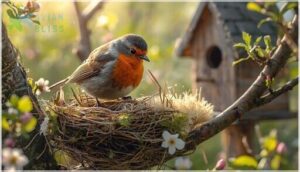
When birds start building their nests, they’re not just grabbing whatever’s handy—they’re choosing specific materials that keep their eggs and chicks safe, warm, and hidden from predators. You can help by offering the right supplies while steering clear of anything that might harm them.
Here’s what works, what doesn’t, and the best timing to put these materials out in your yard.
Natural Materials Preferred by Birds
When you’re helping birds build their homes, think like they do—natural fibers win every time. Fine grasses, twigs, moss, and leaves make up 60–85% of nest materials in healthy habitats because they’re flexible, breathable, and safe.
Birds weave these natural fibers into sturdy structures, selecting materials based on nesting site choices and habitat preferences. Offer cedar shavings, pine needles, or soft plant down to support their expert material sourcing methods.
Materials to Avoid for Bird Safety
Despite good intentions, some materials pose serious nesting hazards you need to avoid. Nylon twine and monofilament line create entanglement risks, trapping nestlings in 2–5% of surveyed nests.
Soft plastics, treated wood with toxic materials, and metal shavings all threaten bird safety. These bird entrapment dangers can reduce fledging success by 6–9%, so stick with natural fibers instead of synthetic alternatives when supporting backyard birds.
How and When to Offer Nesting Supplies
Timing your nesting material selection makes all the difference—early-season provisioning can boost occupancy by 12–20% for bluebirds and wrens. Place fresh natural fibers like twigs, leaves, and dry grasses within 2–3 meters of nesting boxes in late winter or early spring for best results.
- Offer materials 2–4 weeks before breeding season begins
- Replace supplies every 1–2 weeks to maintain material freshness
- Position near nesting boxes to reduce predation by 9–15%
- Choose native plant fibers for ideal bird habitat enhancement
Creating a Bird-Friendly Yard
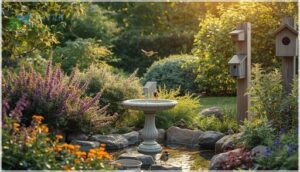
A bird-friendly yard goes beyond just putting out nesting materials—it creates a complete habitat where birds can thrive throughout the nesting season. You’ll need to think about the plants you grow, what you spray on them, and where birds can find reliable food and water.
Let’s look at three key elements that transform your yard into a safe haven for nesting birds.
Planting Native Trees and Shrubs
Think of native tree selection as rolling out the welcome mat for nesting birds. Regional surveys show that yards with at least three native tree species achieve 25% higher nesting success for common songbirds. Woody vegetation matters too—native shrub planting increases nesting substrate availability by nearly 80% for small passerines.
Your backyard birding and gardening choices directly shape biodiversity enhancement. Habitat restoration through wildlife-friendly landscaping and sustainable gardening creates thriving spaces where cavity-nesters and understory species can successfully raise their young.
Avoiding Pesticides and Chemicals
You can’t protect nests if pesticide effects are quietly undermining your birds’ survival. Chemical-free yards deliver 15–25% higher nesting success, while pesticide-exposed nests see up to 30% lower hatchability.
Toxic exposure from lawn treatments disrupts insect prey and nest safety.
Embrace eco-friendly gardening practices and wildlife-friendly landscaping—your sustainable living choices drive real environmental conservation efforts and bird conservation wins.
Providing Food and Water Sources
Nectar sources, fruit feeders, and the right seed types create a lifeline for backyard birds raising hungry chicks. Sixty percent of nesting species depend on supplementary feeding strategies during migration, and protein-rich mealworms boost fledgling survival by 12–15% in urban areas.
- Position water features 1–2 meters from cover to cut predation risk by 18%
- Offer suet and high-protein bird foods during peak brood weeks
- Maintain birdbaths with at least 10 liters per 100 square meters for ground foragers
- Stock feeders early—supplemental feeding can shift nesting initiation up to 10 days earlier
Smart wildlife conservation starts with strategic feeding.
Installing and Maintaining Nest Boxes
If you want to give cavity-nesting birds a real shot at raising their young, a well-designed nest box can make all the difference. The trick is getting the details right—from choosing a box that fits the species you’re hoping to attract, to placing it where birds feel safe and predators can’t reach.
Here’s what you need to know about selecting, installing, and keeping your nest boxes in top shape.
Choosing The Right Nest Box Design
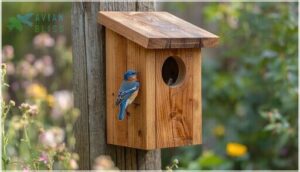
Your nest box design can make or break bird nesting success. Start with untreated cedar or pine at least 1.9 cm thick for insulation. Entrance hole size matters—3.8 cm admits Eastern Bluebirds while excluding starlings, and 2.8–3.2 cm suits chickadees.
Add ventilation gaps near the roof, drainage holes in the floor, and predator guards below the box to protect cavity nesting birds from raccoons and snakes.
Proper Placement and Mounting
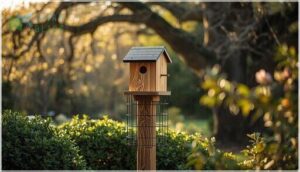
Once you’ve selected the right nest box design, where you put it determines whether birds will actually move in. Mounting height between 1.5 and 2.5 meters dramatically improves nesting success—cavity nesting species feel safer from ground predators at this range. East-facing box orientation reduces morning heat stress, while a slight downward tilt prevents debris buildup and discourages unwanted visitors.
Smart placement transforms ordinary nest boxes into thriving nesting sites:
- Position your birdhouse 3–5 meters from dense shrubs so parents can quickly shuttle food to nestlings
- Add predator guards on pole-mounted boxes to cut predation events by nearly a fifth
- Anchor with weather-resistant hardware—stainless steel mounts outlast painted alternatives by years
- Place boxes within 10 meters of mature trees where bluebirds and chickadees naturally forage
- Keep ventilation systems clear and check that drainage holes aren’t blocked by nesting material
Cleaning and Predator Protection
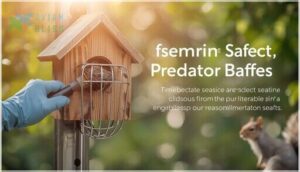
Your careful siting pays off when you back it up with cleaning schedules and predator guards. Annual nest box sanitation cuts parasite loads by up to 85%, boosting fledgling survival across bird species.
Scrape interior surfaces after each breeding season, install metal baffles on poles to slash mammal raids by half, and check that entrance holes match your target nesting bird’s size—these bird safety measures transform boxes into true sanctuaries.
Supporting Bird Nesting Success
Once your nest boxes are up and your yard is in good shape, the real work shifts to keeping nesting birds safe and undisturbed. You’ll need to balance staying informed with giving birds the space they need to raise their young successfully.
The following strategies will help you support nesting efforts while contributing to broader conservation goals.
Minimizing Disturbance and Yard Maintenance
Often, the best thing you can do for nesting birds is simply back off. Your presence within 50 meters can slash nest attendance by 40%, so designate quiet hours during early morning and keep yard maintenance away from active sites.
Noise reduction through low-decibel equipment, temporary 10-meter exclusion zones, and wildlife-friendly landscaping choices transform your space into a true backyard birdwatching sanctuary where nest camouflage and eco-friendly practices let nature thrive undisturbed.
Monitoring and Reporting Nests (Citizen Science)
Once you’ve dialed back disturbance, consider joining a citizen science program like NestWatch to turn your observations into Conservation Biology data. Weekly nest monitoring during peak breeding season helps researchers track Nesting Habits and Cycles, with Data Validation improving accuracy when you follow Reporting Standards. Your records contribute to real Nest Success datasets—Citizen Engagement that strengthens Bird Nesting Habits research while you enjoy backyard birdwatching.
- Check nests every 7–10 days to balance information gathering with minimal disturbance
- Record nest status (empty, active, fledged) using standardized protocols for consistency
- Submit observations within 2–3 days to central repositories for timely analysis
- Include habitat notes like temperature and precipitation to improve data quality
- Add photos when possible—visual evidence boosts report accuracy by nearly 30%
Promoting Conservation and Habitat Connectivity
Beyond your fence line, Habitat Connectivity matters—connected Wildlife Corridors boost nesting success by 15–35% in restored woodlands.
Support Conservation Planning that prioritizes Biodiversity Management through municipal native-planting policies, which increase nesting sites by 20–28%.
Advocate for Habitat Restoration in your community, champion Ecofriendly Practices for Birds, and join regional Biodiversity efforts. Your voice strengthens Bird Conservation and Sustainability while delivering essential Ecosystem Services and advancing Wildlife Conservation.
Frequently Asked Questions (FAQs)
How do birds build nests?
Birds build nests by weaving twigs, leaves, and grasses into cup or platform shapes. They use their beaks to arrange materials, then line interiors with soft feathers for insulation, creating secure homes for eggs and young.
How do you attract birds to a nest?
You attract birds to a nest by selecting the right nest box design for your target bird species, placing it strategically in suitable habitat, and maintaining native plants that provide essential food and cover.
How do you protect a bird nest?
An ounce of prevention is worth a pound of cure. You protect bird nests by installing predator guards, maintaining dense shrubs for nest camouflage, using bird-friendly fencing, and minimizing disturbance near nesting sites during critical incubation periods.
Do birds build nests in inconvenient places?
Yes, certain bird species frequently choose nesting sites near human activity—building ledges, utility poles, and even garages.
Urban habitats force adaptations that sometimes reduce nesting success but showcase impressive resilience in bird adaptations.
How do you care for nesting birds?
Caring for nesting birds involves minimizing disturbance and maintaining habitat preservation through the use of native plants.
Ensuring nesting safety with predator guards and supporting bird nutrition by avoiding pesticides are also crucial steps.
It is essential to respect natural fledgling care processes and conservation efforts throughout these practices.
When do birds build their nests?
The early bird catches the worm—and builds first. Most species begin nest construction in early spring, usually March through April.
Though timing varies by region, migration schedules, and breeding patterns tied to local nesting cycles.
What does it mean when birds make nests around your house?
When birds make nests around your house, it signals your property offers shelter, food, and safety—key nesting habits urban wildlife seeks.
Bird behavior reveals your backyard ecology accommodates diverse nesting cycles and nest placement preferences.
What to do if a bird makes a nest in your backyard?
Found a bird nest in your yard? Watch from a respectful distance to observe nesting behavior without causing disturbance.
Protect the nest site by minimizing yard maintenance nearby, avoiding pesticides, and creating a bird-friendly, safe backyard environment supporting wildlife conservation through backyard birding.
What month do birds lay eggs?
Most North American species begin egg laying from March through July, with peak activity in April and May. Southern birds start earlier—sometimes in February—while northern populations delay until late spring when insect prey becomes abundant.
Should you disturb a bird’s nest?
You shouldn’t disturb nesting birds—human impact causes nest abandonment in up to 60% of cases. Quiet observation from 10–20 meters preserves normal behavior and reduces bird stress during breeding seasons.
Conclusion
Like a welcome mat rolled out in a language birds instinctively understand, your yard can shift from overlooked to essential. Supporting backyard bird nesting doesn’t demand flawlessness—just intention.
Native plants, clean nest boxes, safe materials, and a willingness to let things grow a little wild create the conditions where chickadees, wrens, and bluebirds choose to stay. You’re not just watching birds anymore; you’re becoming part of the landscape that keeps their populations thriving.