This site is supported by our readers. We may earn a commission, at no cost to you, if you purchase through links.
I’ve torn apart enough failed birdhouses to know the culprit before I even pull the screws: a hole cut for looks instead of the bird it’s supposed to house. Wrong diameter, and House Sparrows muscle in on your Bluebirds. No drainage holes, and a spring storm drowns the chicks before they fledge.
A well-built bird house with nesting box solves both problems at once, giving cavity-nesters a dry, predator-resistant home while keeping unwanted squatters out. Get the wood, the dimensions, and the placement right, and you’re not just building a box, you’re building a nursery that actually works.
Table Of Contents
- Key Takeaways
- Build a Safe Nesting Birdhouse
- Size The Nest Box Correctly
- Install for Better Nesting Success
- Protect Eggs and Chicks
- Top 10 Nesting Bird Houses
- 1. Predator Guard Bird House Outdoor
- 2. Cedar Bird House Two Pack
- 3. Cedar Bluebird House Wild Wings
- 4. Waterproof Vinyl Bluebird House Nesting Box
- 5. Cedar Bluebird House Two Pack
- 6. Wooden Dove Nesting Box Outdoor
- 7. Parakeet Nesting Box Bird House
- 8. Navaris Small Pine Wood Birdhouse
- 9. Cedar Bluebird House Nature’s Way
- 10. Hummingbird House Outdoor Hanging Nesting Box
- Frequently Asked Questions (FAQs)
- What kind of birdhouses will birds actually use?
- Why is bird’s nest illegal?
- Where not to put a birdhouse?
- How high does a bird nesting box need to be?
- What is the difference between a birdhouse and a nesting box?
- Are birdhouses actually good for birds?
- What is the best birdhouse to attract birds?
- Where not to put a bird house?
- What is the difference between a nesting box and a birdhouse?
- What kind of bird house do birds like the best?
- Conclusion
Key Takeaways
- Match the entrance hole size precisely to your target species (1 1/8" for chickadees, 1 1/2" for bluebirds, 1" to exclude starlings), since even a fraction of an inch off invites the wrong birds or blocks the right ones.
- Build with rot-resistant wood like cedar or redwood at a consistent 3/4" to 1" wall thickness, add 4-5 drainage holes and upper ventilation, and score interior grooves so fledglings can climb out.
- Mount the box at species-appropriate height (3-6 feet for bluebirds, 5-7 feet for chickadees and wrens) facing away from prevailing wind, with 6 feet of clearance from overhanging branches.
- Protect nests from predators using stovepipe baffles, Noel guards, or wire mesh fronts, and check boxes weekly during nesting season to monitor hatch success and catch problems early.
Build a Safe Nesting Birdhouse
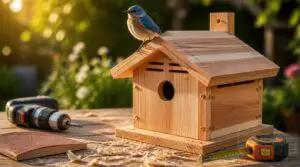
A safe birdhouse starts long before you drill the entrance hole. Every material choice and every measurement you make will decide whether baby birds thrive or struggle inside. Here’s what you need to get right from the ground up.
Before you pick up the drill, check this guide to choosing safe, non-toxic birdhouse building materials so the wood and finishes you’ve already chosen won’t harm the chicks inside.
Choose Rot-resistant Wood
Grab cedar, redwood, or cypress before you nail a single board — these species pack natural oils and tannins that fend off rot and insects for 25+ years. Cedar’s resin blocks moisture absorption, while tight grain slows fungal growth.
Skip treated lumber; it’s toxic to nestlings. Your birdhouse plans start with the right wood, plain and simple.
Using naturally rot-resistant wood ensures your project stands up to moisture and decay.
Use Proper Wall Thickness
Once you’ve settled on cedar or redwood, keep every wall at a consistent 3/4-inch to 1-inch thickness — no thin spots. That range balances insulation with weight, buffering nestlings from temperature swings without overloading your mounting pole.
Uniform thickness also resists warping and cracking as seasons shift, since abrupt changes between panels create stress points where wood splits first.
Add Drainage Holes
Solid walls won’t matter if water pools inside, so drill four to five drainage holes, each 3/8 to 1/2 inch, near the floor’s center. Space them 1-2 inches apart and angle the box slightly forward for water exit efficiency.
Round holes with clean, deburred edges resist splitting and moisture pockets. Check periodically for nest debris clogging the openings.
Include Upper Ventilation
Drainage keeps water out, but trapped hot air causes its own trouble. Drill two 5/8-inch vents near the top of each side wall so warm air escapes while cooler air draws in near the entrance—true cross ventilation.
Cover each opening with fine mesh screening to block insects and predators without choking airflow. This cuts humidity, discourages mold, and keeps your weatherproof nesting box comfortable through hot summer stretches.
Roughen Interior Walls
Picture a fledgling scrambling toward daylight with nothing but smooth wood underfoot—it won’t get far. That’s why fledgling climbing assistance matters so much in nest box plans: score horizontal grooves or leave the interior rough-cut below the entrance hole.
Score horizontal grooves into the interior wood so climbing fledglings can grip their way to daylight
This texture gives hatchlings the grip they need to climb out safely, turning basic birdhouse construction into a genuine nesting requirement rather than an afterthought.
Size The Nest Box Correctly
Getting the box right doesn’t stop at good wood and sturdy walls—the entrance hole size makes or breaks who moves in. Different birds need different openings, down to the fraction of an inch, so guesswork isn’t your friend here.
Let’s walk through the exact dimensions for five common backyard species.
Bluebird Entrance Dimensions
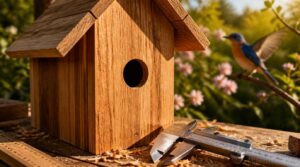
Eastern Bluebird Sizing calls for a 1 1/2 inch round hole, centered 5 to 6 inches above the floor — small enough to block starlings, big enough for safe fledgling exit.
Western Bluebird Variations and Mountain Bluebird Openings run slightly larger, around 1 9/16 inches. That extra sixteenth still keeps starlings out while suiting overlap regions where either species might move in.
Chickadee Hole Size
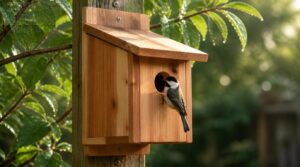
Ever wonder why a hole just a hair smaller keeps trouble out? The Ideal Diameter is 1 1/8 inches — snug enough for Entrance Security against Species Competition from starlings and sparrows.
Hole Placement: 5-6 feet up, offering Weather Protection from wind-driven rain.
Key nesting box dimensions:
- 1 1/8" diameter
- 6-7" above floor
- Smooth edges
- Round shape
- No perch
Wren Box Openings
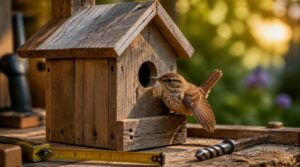
Wrens aren’t picky eaters, but they’re picky about doorways. The best hole size runs 1 1/8 to 1 1/4 inches — tight enough to block house sparrows.
Set hole placement 6-7 inches above the floor with smooth, rounded edges for entrance edge safety. Face it away from prevailing wind. One clean opening per nest box keeps competition down and welcomes nesting birds without inviting trouble.
Purple Martin Entrances
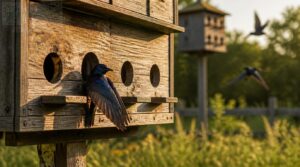
Purple martins are colony nesters, so entrance design matters as much as size. Round holes work best at 1 3/4 to 2 1/4 inches, set 1 to 1 1/2 inches above the floor for clearance.
Crescent shapes deter starlings while still welcoming martins, especially when paired with a porch for rain protection and easier landings on your nest box plans.
Starling Exclusion Sizing
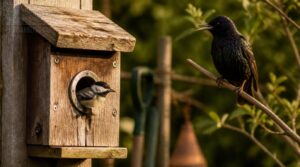
Starlings are the bullies of the birdhouse world, muscling smaller species out of prime real estate. Keep them out with a 1-inch entrance, small enough to block adults but still workable for songbirds.
- Retrofit old boxes with a 1-inch hole
- Check hardware for warping
- Balance access for smaller nesters
Regular hole checks keep your nest box exclusion-ready season after season.
Install for Better Nesting Success
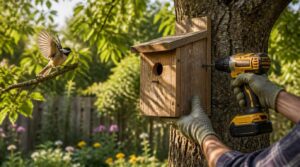
A well-built box only works if you put it in the right spot. Where you mount it, how high, and which way it faces all affect whether birds actually move in. Here’s what to keep in mind before you hang your birdhouse for good.
Face Away From Wind
Point the entrance toward leeward entrance placement, sheltering it from your area’s prevailing wind. This cuts scent camouflage for predators and blocks wind tunnels through the cavity.
Keep the windward side solid and unbroken—no gaps that channel storm debris or rain straight into your nest box. A few degrees’ tilt on your birdhouse plans keeps nesting sites dry and drafts out.
Mount at Species Height
Get your ladder out, because height matters as much as wind direction. Mount Eastern bluebird houses 3 to 6 feet up—that’s roughly 1.8 to 2.4 meters—in open fields for solid predator exposure control.
- Check flight path clearance within 20-30 meters
- Keep ground vegetation trimmed short below
- Manage microclimate with shaded siting
- Log height for future monitoring safety
Consistent nesting sites start with consistent measurements.
Space Boxes Properly
Once your box is mounted at the right height, think about its neighbors.
Territory fights break out fast when nesting boxes crowd together, so give bluebirds 15-20 meters in open habitats, 25 meters in forests to dodge predator paths, and just 5-15 meters in urban yards.
Match spacing to species nesting patterns—chickadees tolerate closer housing than bluebirds do.
Avoid Overhanging Branches
Spacing matters, but so does what’s directly overhead. Keep branches at least 6 feet from the box — closer limbs invite predator stealth and mess with fledglings during exit.
Prune the canopy back to maintain sunlight access and humidity control, since trapped moisture breeds mold fast. Any good nest box landlord treats debris management as routine habitat management, not an afterthought — it’s essential nest predation prevention.
Choose Open Flight Paths
Think of your yard like a mini airport: birds need clear approach lanes, not obstacle courses. Pick a spot with open sky in at least one direction so parents can fly straight in without dodging clutter.
- Clear takeoff/landing lanes free of clotheslines or trellises
- Open sightlines reduce predator surprise attacks
- Straight paths save energy, mirroring fuel efficiency gains in flight
Protect Eggs and Chicks
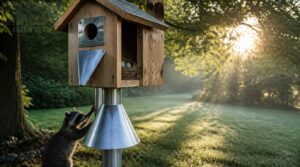
A well-built box means nothing if a raccoon or snake can raid it overnight. Predators are smart, patient, and surprisingly good climbers, so your defenses need to work together. Here are five field-tested ways to keep eggs and chicks safe from harm.
Add Stovepipe Baffles
A raccoon’s reach is longer than you’d think, which is exactly why a stovepipe baffle earns its place on a Bluebird House pole. Built from round metal ducting, mount this snake baffle 8-12 inches below the box.
| Baffle Trait | Why It Matters |
|---|---|
| Galvanized steel | Resists rust for years |
| 24-inch length | Blocks climbing predators |
| Loose mounting | Wobbles to deter grip |
| Regular checks | Prevents warping issues |
Use Noel Guards
Picture a raccoon’s paw stretching toward a nest—that’s what a Noel guard stops cold. This rectangular hardware cloth tube adds predator distance without a stovepipe baffle.
Install it before egg laying, sized precisely so fledglings still exit safely. Check prongs monthly; bent ones lose their bite.
Perfect for bluebird nest boxes needing extra Safe Nesting Shelters against determined raccoons.
Install Wire Mesh Fronts
A raccoon’s paw can reach further than you’d think, which is why heavy wire mesh across the front matters. Choose stainless or galvanized steel, 1/2 to 1-inch openings, 18-22 gauge for rigidity.
Keep 1/2-inch clearance from the cavity so nest structures aren’t crowded. Use stainless screws—rust-proofed hardware outlasts cheap fasteners. Inspect mesh yearly for bent wires; a bluebird nest box deserves that upkeep.
Block Climbing Predators
Raccoons don’t just climb—they problem-solve, testing a pole two or three times a night until they find purchase.
A stovepipe baffle, 24 inches of galvanized steel below the box, spins underfoot and stops that. Pair it with slick PVC wobble guards for squirrels and cats.
Mount everything at least 6 feet high, away from fences and branches predators use as bridges to your bluebird nest box.
Check Boxes Regularly
A five-minute peek does more good than any baffle. Open the box every week or two during nesting season to check on cavity-nesting birds.
- Monitoring hatch success and fledgling counts
- Detecting water intrusion before it chills chicks
- Spotting parasite signs early
Log what you find—tracking occupancy trends helps you know when to monitor and clean out debris.
Top 10 Nesting Bird Houses
Building your own box isn’t the only path to a safe nesting spot for your backyard birds. Sometimes a well-made, ready-built house saves you time without cutting corners on safety or comfort.
Here are ten solid options worth checking out, each suited to different species and yard setups.
1. Predator Guard Bird House Outdoor
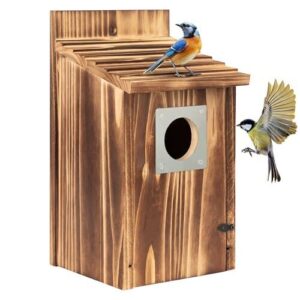
A predator-guard house earns its keep by adding real distance between hungry climbers and the nest cavity, not just looking tough. The extended entrance tube stops raccoons and snakes from reaching in, while precise hole sizing keeps larger birds from muscling in on the cavity.
Look for cedar construction with a weather-tight overhanging roof and a knockout front panel for easy checks. Textured exterior grip helps fledglings and parents land safely at the entrance—small detail, big difference come nesting season.
| Best For | Homeowners and backyard birders who want to attract bluebirds, wrens, tree swallows, or chickadees while keeping nesting birds safe from climbing predators. |
|---|---|
| Material | Cedar |
| Predator Guard | Yes |
| Entrance Hole Size | Standard small |
| Cleaning Access | Front knockout panel |
| Drainage Ventilation | Yes |
| Mounting Style | Post mount hardware included |
| Additional Features |
|
- Stainless steel guard and thoughtful design help shield the entrance hole from predators
- Front cleaning door and interior ladder grooves make upkeep and fledging easy
- Durable carbonized cedar construction with included hardware for versatile mounting
- Front door fastener may need extra securing to keep it from coming loose
- Some units may arrive with missing hardware
- New wood scent may take time to fade before birds move in
2. Cedar Bird House Two Pack
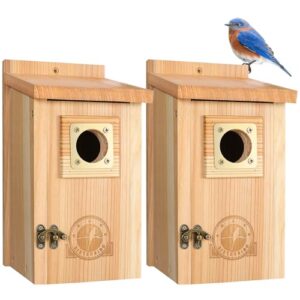
Two habitats beat one when you’re trying to fill a yard with birdsong, and that’s the whole idea behind this cedar two-pack. Natural rot resistance keeps both boxes sound through wind and rain, while built-in predator guards, ventilation, and drainage do the quiet work of keeping nests dry and safe.
Mount them on separate posts, 10 to 15 feet apart, and you’ll cut down on sibling rivalry between bluebirds, wrens, or chickadees competing for the same real estate.
| Best For | Backyard birders who want to attract multiple small cavity-nesting species like bluebirds, wrens, and chickadees while keeping predators and invasive birds at bay. |
|---|---|
| Material | Cedar |
| Predator Guard | Yes |
| Entrance Hole Size | 1.5 inch |
| Cleaning Access | Upward-opening door |
| Drainage Ventilation | Yes |
| Mounting Style | Post mount DIY |
| Additional Features |
|
- Solid cedar construction offers natural rot resistance and long-term durability outdoors
- Matte copper predator guards help deter squirrels and starlings from raiding nests
- Two houses let you space out nesting sites, reducing competition between birds
- Requires DIY assembly, and any exposed wood knots may need sealing for longevity
- Upward-opening doors make seasonal cleaning a bit less convenient than side-opening designs
- The 1.5-inch entrance hole limits use to smaller bird species only
3. Cedar Bluebird House Wild Wings
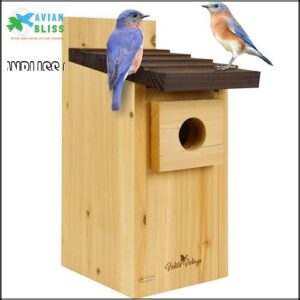
If you’d rather run one solid nesting site than juggle a pair of boxes, this single-unit cedar house from Wild Wings earns its keep. The wood’s natural rot resistance means it’ll weather seasons of rain without soaking through, and the extended predator guard around the entrance keeps raccoons and cats from reaching in for eggs.
Clean-out access makes between-brood upkeep painless, so you’re not fighting screws or hinges every time you check on your bluebird tenants.
| Best For | Backyard bird enthusiasts who want to attract bluebirds or tree swallows with a single, low-maintenance nesting box. |
|---|---|
| Material | Cedar |
| Predator Guard | Yes |
| Entrance Hole Size | Standard small |
| Cleaning Access | Clean-out door |
| Drainage Ventilation | Not specified |
| Mounting Style | Hanging no hardware |
| Additional Features |
|
- Cedar construction resists rot and weathers seasons of rain while providing natural insulation
- Extended predator guard helps keep raccoons and cats away from eggs and young birds
- Clean-out door makes between-brood maintenance quick and hassle-free
- Latch may be weak and could need extra securing for peace of mind
- Hanging hardware isn’t included, so you’ll need to source your own mounting solution
- Only suited for small cavity-nesting species, not larger birds
4. Waterproof Vinyl Bluebird House Nesting Box
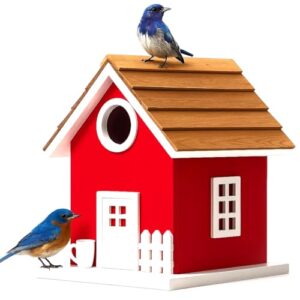
Wood isn’t the only route to a solid bluebird home — vinyl PVC construction resists cracking and warping through brutal weather, and it never needs painting or sealing. That 1.5-inch entrance keeps the wrong birds out while welcoming your bluebirds in.
Vent slots up top and floor drainage holes work together to stop overheating and moisture buildup, and the smooth interior walls dry fast and clean easy. Stainless hardware and a swing-open front make maintenance simple, season after season.
| Best For | Homeowners and garden enthusiasts who want an attractive, low-maintenance nesting box to attract bluebirds, wrens, or chickadees to their yard or patio. |
|---|---|
| Material | Vinyl PVC |
| Predator Guard | No |
| Entrance Hole Size | 1.5 inch |
| Cleaning Access | Swing-open front |
| Drainage Ventilation | Yes |
| Mounting Style | Pole post or hanging |
| Additional Features |
|
- Durable vinyl composite construction resists cracking, warping, and weather damage without ever needing to be painted or sealed
- Easy-clean design with an open/swing-open front and floor drainage holes keeps the interior hygienic for nesting birds
- Versatile mounting options (poles, posts, or hanging) make it simple to place anywhere for great bird watching
- Decorative trim and appliques may loosen or detach after prolonged outdoor exposure
- Some users have reported missing or inconsistent assembly hardware
- May require extra mounting hardware depending on your chosen installation method
5. Cedar Bluebird House Two Pack
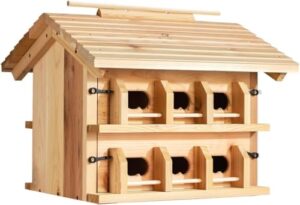
If natural pest resistance without chemicals matters to you, this two-pack delivers exactly that — insect and rot resistant cedar built for years outdoors. Integrated predator guards protect nestlings, while air vents and floor drainage holes keep the cavity dry and breathable.
The front panel swings open for quick cleaning, and smooth interior surfaces stop nesting material from snagging. Cedar’s natural oils mean no chemical treatments needed, giving you an eco-friendly option that still holds up season after season.
| Best For | Purple Martin and Bluebird enthusiasts who want a durable, low-maintenance nesting solution to add character to their garden or outdoor space. |
|---|---|
| Material | Western Red Cedar |
| Predator Guard | Yes |
| Entrance Hole Size | Starling-resistant |
| Cleaning Access | Swing-open front panel |
| Drainage Ventilation | Yes |
| Mounting Style | Post mount |
| Additional Features |
|
- Western Red Cedar construction offers natural insect and rot resistance without chemical treatments
- 12 individual nesting rooms with removable roof and lift-out dividers make annual cleaning simple
- Starling-resistant entrance openings and porch railings help protect nestlings
- Requires full assembly upon arrival
- Entrance holes may allow entry to grey squirrels
- Room dividers may be made of MDF, which can wear out faster than the cedar body
6. Wooden Dove Nesting Box Outdoor
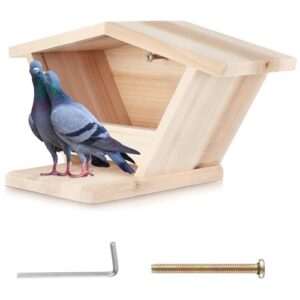
If mourning doves are your target visitor, this box earns its keep with a wide 2 to 2.5-inch entrance that suits their easygoing nesting habits. Smooth interior walls protect nestlings from injury, while a sloped roof and floor drainage holes keep moisture from pooling after storms.
A hinged cleanout panel makes seasonal upkeep painless. Mount it 8 to 15 feet up, facing away from harsh wind, and you’ve got a sturdy option built for dove families.
| Best For | This nesting box is best for small bird enthusiasts looking to support local wildlife with an easy-to-install, decorative garden addition. |
|---|---|
| Material | Wood |
| Predator Guard | No |
| Entrance Hole Size | 2 to 2.5 inch |
| Cleaning Access | Hinged cleanout panel |
| Drainage Ventilation | Yes |
| Mounting Style | Mount 8 to 15 feet |
| Additional Features |
|
- Weather-resistant wooden construction with a triangular entrance for bird access
- Lightweight design makes mounting and installation simple
- Pre-drilled holes allow for quick, hassle-free setup
- May be too small for larger pigeons or doves
- Glue-only assembly can lead to warping or structural issues over time
- Lightweight build may feel less sturdy than expected
7. Parakeet Nesting Box Bird House
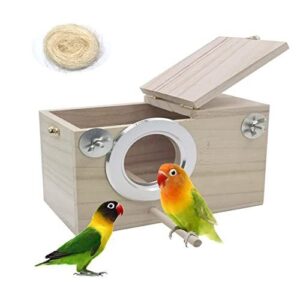
Budgies and small parakeets need a cavity around 7.5 to 8.5 inches long with a 1.5 to 2-inch entrance, wide enough for entry but tight enough to keep bigger birds out.
Look for lightly textured interior walls that give fledglings grip, plus a sloped, waterproofed roof and a removable tray for quick cleanout. Mount it 6 to 10 feet high, entrance away from wind, spaced 15 to 20 feet from other boxes to keep nesting pairs from squabbling over territory.
| Best For | bird owners with medium-sized pet birds like parakeets, cockatiels, lovebirds, and budgies who want a natural, secure nesting spot inside their cage. |
|---|---|
| Material | Wood |
| Predator Guard | No |
| Entrance Hole Size | 1.5 to 2 inch |
| Cleaning Access | Top hinged lid |
| Drainage Ventilation | Not specified |
| Mounting Style | Mount 6 to 10 feet |
| Additional Features |
|
- Top hinged lid makes cleaning and bedding removal quick and easy
- Bolt lock mechanism keeps the shape stable and secure
- Made from 100% natural, non-toxic, eco-friendly wood
- May require purchasing longer bolts or screws for secure mounting
- Metal entryway disk may have sharp edges needing careful handling
- Soft wood may be prone to chewing, and perch diameter may not fit all mounting holes perfectly
8. Navaris Small Pine Wood Birdhouse
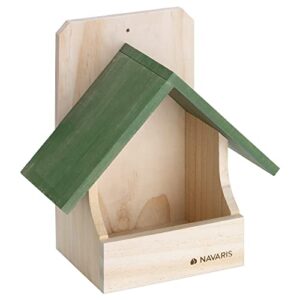
Kiln-dried pine keeps this little box from warping, and the smooth interior walls protect nestlings while making fall cleanup easy. A removable front panel lets you check on chicks without disturbing the whole structure.
It’s sized for wrens and chickadees, not robins or larger species, so match tenants to the cavity. Mount it away from prevailing wind on a post or branch, and expect to sand rough edges before hanging — pine’s forgiving, but it’s not maintenance-free.
| Best For | This little pine birdhouse is best for backyard bird lovers hoping to attract small nesting species like hummingbirds, bluebirds, or parakeets. |
|---|---|
| Material | Pine |
| Predator Guard | No |
| Entrance Hole Size | Standard small |
| Cleaning Access | Removable front panel |
| Drainage Ventilation | Not specified |
| Mounting Style | Post or branch |
| Additional Features |
|
- Made from real pine wood for a natural, inviting nesting spot
- Arrives pre-assembled and ready to hang outdoors right away
- Doubles as a fun way for kids and adults to observe birds up close
- Too small to accommodate larger birds like robins
- Wood may need sanding to smooth out splinters or rough spots
- Long-term weather resistance hasn’t been tested across multiple seasons
9. Cedar Bluebird House Nature’s Way

This one leans on rust-free stainless steel screws and premium cedar, so it shrugs off insects and rot season after season. The built-in predator guard extends the 1.5-inch entrance hole, keeping raccoons and squirrels from reaching in.
An elevated mesh floor cuts down on blowflies, and the crack-resistant viewing window lets you check on nestlings without cracking open the box. Mount it 6 to 8 feet up on a standard 4×4 post, and the overhanging roof sheds the rain.
| Best For | This cedar bluebird house is best for gardeners and nature lovers who want to attract bluebirds and other songbirds while keeping their nests safe and well-ventilated. |
|---|---|
| Material | Cedar |
| Predator Guard | Yes |
| Entrance Hole Size | 1.5 inch |
| Cleaning Access | Viewing window access |
| Drainage Ventilation | Yes |
| Mounting Style | 4×4 post mount |
| Additional Features |
|
- Rot-resistant cedar construction with stainless-steel hardware stands up to years of outdoor use
- Elevated wire mesh floor and integrated air vents help keep the nest clean and well-ventilated
- Predator guard and fledgling kerfs help protect young birds and support safe growth
- Doesn’t come with mounting hardware or hanging hooks, so you’ll need to supply your own
- Wire mesh floor spacing may need adjusting to keep small bird feet safe
- Roof components can be somewhat fragile during shipping
10. Hummingbird House Outdoor Hanging Nesting Box
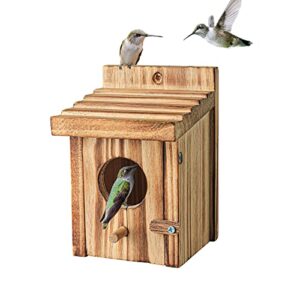
Weighing barely 7.2 ounces, this little natural wood house is built for hummingbirds, chickadees, and wrens rather than heavier species. Its 9/10-inch entrance hole runs larger than the classic 1/2-inch hummingbird opening, so watch for wasps or bigger birds crowding in.
Hang it from a tree branch or mount it on a post for a quick, no-fuss setup. Since it’s untreated wood, a coat of weatherproof sealer will help it outlast a few nesting seasons outdoors.
| Best For | bird lovers and gardeners who want a decorative, easy-to-hang nesting spot for small species like hummingbirds, chickadees, and wrens. |
|---|---|
| Material | Natural Wood |
| Predator Guard | No |
| Entrance Hole Size | 0.9 inch |
| Cleaning Access | Not specified |
| Drainage Ventilation | Not specified |
| Mounting Style | Post or tree hanging |
| Additional Features |
|
- Made from natural solid wood that’s durable and breathable
- Lightweight and simple to hang from a tree or mount on a post
- Includes an entrance perch to help small birds feed safely
- The 9/10-inch entrance hole is larger than ideal for hummingbirds, which may invite wasps or bigger birds
- Untreated wood needs a weatherproof sealer to hold up outdoors
- Better suited as a decorative piece than a specialized nesting box
Frequently Asked Questions (FAQs)
What kind of birdhouses will birds actually use?
Birds settle in when boxes offer rot-resistant wood, correct hole sizing for the species, solid drainage and ventilation, predator guards, and proper mounting height, wind orientation, and spacing—not just any box nailed to a post.
Why is bird’s nest illegal?
Wild bird’s nests are protected under the Migratory Bird Treaty Act, which bans disturbing active nests or eggs without a permit.
Collecting them harms breeding success and can trigger fines up to $15,000, so leave wild nests alone entirely.
Where not to put a birdhouse?
The safest spot looks the emptiest: skip trees, fences, and feeder zones. Avoid south or west-facing sun, low mounts near ground level, and dense shrubs blocking flight paths—these invite predators, overheating, and stressed, reluctant nesters.
How high does a bird nesting box need to be?
Most songbirds do best 2 to 4 meters up (5–13 feet), which keeps ground predators guessing. Bluebirds like the higher end, chickadees and wrens settle lower around 5 to 5 meters—match the height to your species for real success.
What is the difference between a birdhouse and a nesting box?
Think of it like a colonial birdhouse versus a working barn: one’s for show, one’s for shelter.
A nesting box targets specific species with precise dimensions and ventilation, while a birdhouse focuses on decoration, often skipping the drainage and predator guards nesting birds actually need.
Are birdhouses actually good for birds?
Yes, when built with correct dimensions, untreated wood, and predator guards. Proper ventilation and drainage prevent overheating or damp nests, while species-specific entrance holes keep out competitors, giving your local birds a genuine safety boost.
What is the best birdhouse to attract birds?
Funny enough, the fanciest birdhouse on the shelf often sits empty all season. Birds don’t care about paint jobs—they want cedar construction, correct hole sizing for the target species, solid drainage, and placement that feels safe from predators and wind.
Where not to put a bird house?
Skip spots within 50 meters of feeders, near dense shrubs hiding predators, on south-facing walls that trap heat, or beneath overhanging branches.
Avoid low fence posts, loud foot traffic, and open meadows where wind erodes warmth—your birds deserve better real estate.
What is the difference between a nesting box and a birdhouse?
A nesting box is built purely for species-specific function — precise hole sizes, no perches, easy cleaning. A birdhouse leans toward decorative charm, often with trim or paint, sometimes sacrificing the ventilation and safety features real nesting success depends on.
What kind of bird house do birds like the best?
Birds gravitate toward boxes matching their species’ exact needs: untreated cedar or pine, correct entrance size, and proper height. A snug, well-ventilated cavity with drainage and predator protection beats fancy paint every time—function wins over looks.
Conclusion
The devil’s in the details, and nowhere is that truer than a nest box hanging in your backyard. Get the hole size wrong, skip the drainage, or mount it facing a storm, and you’ve built a trap instead of a home.
A proper bird house with nesting box demands precision, not guesswork. Cut clean, drill smart, mount steady. Do that, and you won’t just attract birds. You’ll raise a whole generation of them, safely, season after season.