This site is supported by our readers. We may earn a commission, at no cost to you, if you purchase through links.
A flash of red catches your eye through the kitchen window—there it is again, perched on your fence post. If you live in Rhode Island, chances are that’s a Northern Cardinal, one of dozens of species that call Ocean State backyards home year-round.
From the acrobatic Black-capped Chickadee hanging upside down on your suet feeder to the cheerful American Robin tugging worms from your lawn, these feathered neighbors offer daily entertainment if you know where to look. Learning to identify backyard birds of Rhode Island transforms an ordinary glance outside into a rewarding wildlife observation session, and attracting more species to your yard takes less effort than you’d think.
Table Of Contents
- Key Takeaways
- Common Backyard Birds in Rhode Island
- Seasonal Birds: Visitors and Migrants
- How to Identify Rhode Island Backyard Birds
- Attracting Birds to Your Rhode Island Yard
- Top Rhode Island Birdwatching Hotspots
- Frequently Asked Questions (FAQs)
- What birds are common in Rhode Island?
- What small backyard bird mimics other birds?
- What is the national bird of Rhode Island?
- How do I find out what birds are in my area?
- What is the most common bird you see near your home?
- How many bird species are there in Rhode Island?
- How do birds migrate through Rhode Island annually?
- Which birds are considered rare backyard visitors?
- What time of day are birds most active?
- How can I identify bird sounds and calls?
- Conclusion
Key Takeaways
- Rhode Island backyards host over 120 bird species annually, with year-round residents like Northern Cardinals, Black-capped Chickadees, and Blue Jays joined by seasonal visitors such as Ruby-throated Hummingbirds in summer and White-throated Sparrows in winter.
- Attracting diverse bird species requires offering multiple feeder types with appropriate foods (black oil sunflower seeds work best for most species), fresh water sources, and layered native plantings that provide natural food, shelter, and nesting sites throughout the year.
- Bird identification becomes easier when you focus on key field marks like plumage patterns, size comparisons, beak shapes, and distinctive songs—male Northern Cardinals flash bright red with clear whistled songs while chickadees offer their namesake “chick-a-dee-dee-dee” call.
- Rhode Island’s top birdwatching locations include Norman Bird Sanctuary with 7 miles of trails, Sachuest Point National Wildlife Refuge hosting over 200 recorded species, and Audubon Important Bird Areas that protect critical habitats for rare species like Saltmarsh Sparrows.
Common Backyard Birds in Rhode Island
Rhode Island backyards host over 120 bird species annually, but a few familiar faces show up at feeders year-round.
If you’re curious about woodpecker behavior in particular, woodpeckers in Tennessee share similar foraging patterns and habitat preferences with Rhode Island’s resident species.
You’ll quickly recognize these regulars by their colors, songs, and feeding habits once you know what to look for. Here are the most common backyard birds you’re likely to spot outside your window.
If you’re drawn to striking plumage, check out these black and white birds that stand out with their bold, contrasting patterns.
Northern Cardinal
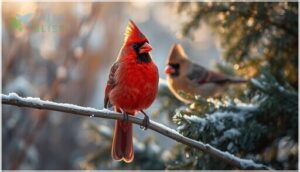
You’ll spot the Northern Cardinal year-round in your Rhode Island backyard—males flash vibrant scarlet plumage while females sport softer brownish tones with reddish accents. These medium-sized songbirds measure 8 to 9 inches with distinctive crests and thick conical beaks perfect for cracking seeds.
Unlike the cardinal’s bold year-round presence, the rarer Bachman’s Sparrow prefers southern pine habitats and shows a much chunkier build despite its smaller 5-6 inch frame.
Listen for their clear whistled songs echoing through dense shrubs where they defend territory and nest throughout breeding season.
These vocal displays differ sharply from the rhythmic drumming of woodpeckers of Colorado, who communicate by percussively tapping on trees instead.
To discover more about their habits, range, and physical traits, check out this guide on bright-red plumage and habitat.
Tufted Titmouse
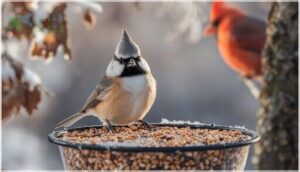
Right alongside those bright cardinals, you’ll find the Tufted Titmouse—a small gray songbird with a charming crest and warm peachy sides. These woodland habitat regulars stay year-round in Rhode Island, making backyard bird watching easy.
Their Tufted Titmouse diet shifts with seasons:
- Summer: mostly caterpillars and beetles
- Fall/winter: sunflower seeds they cache in bark
- Year-round: acorns cracked with their sturdy bills
- Backyard feeding staples: suet and peanuts
Listen for their distinctive “peter-peter-peter” whistle during bird nesting season, and you’ll notice they’re surprisingly bold at feeders—often the first to investigate new offerings in your yard. To learn more, check out the distinctive black patch above the beak that helps identify this species.
Black-capped Chickadee
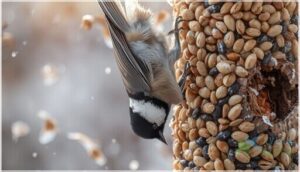
Another frequent visitor is the Black-capped Chickadee—a tiny acrobat you’ll recognize by its solid black cap, white cheeks, and cheerful “chick-a-dee-dee-dee” call. These bold little birds master backyard bird feeders, often hanging upside-down to snatch sunflower seeds.
Their chickadee behavior includes caching food in bark crevices and traveling in winter flocks with nuthatches. Watch for their distinctive feather patterns and listen for their “fee-bee” song during nesting season.
Blue Jay
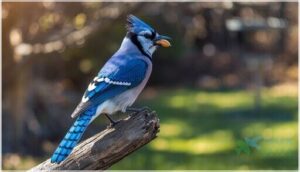
You won’t miss the Blue Jay—a flashy 9-to-12-inch showstopper with vibrant blue plumage, a perky crest, and a black necklace across its throat. These intelligent birds master foraging strategies, from caching acorns to raiding feeders for peanuts. Their loud “jeer” calls echo through Rhode Island backyards year-round.
- Adult plumage shows bright blue wings with black bars and white underparts
- They mimic hawk calls to scare competitors away from food
- Jays travel in family groups and defend their cached food stores
- Look for them in edge habitats where woodlands meet open lawns
- They’ll visit platform feeders stocked with peanuts and sunflower seeds
American Robin
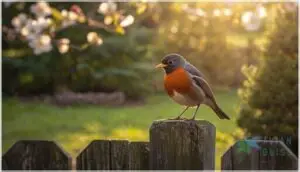
The American Robin is Rhode Island’s cheerful orange-breasted backyard favorite, hopping across lawns hunting earthworms with uncanny precision. You’ll recognize males by their rust-red breast and dark gray back, while females wear more subdued brownish tones.
These 9-to-11-inch songbirds nest in shrubs or eaves, raising broods in mud-lined cups and filling dawn with melodic caroling that signals spring’s arrival.
Downy and Hairy Woodpeckers
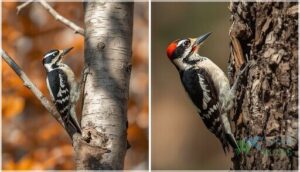
Two look-alike woodpeckers tap Rhode Island’s backyard trees year-round, though telling them apart takes a keen eye.
Identifying subtle differences in plumage and behavior becomes easier once you learn the key traits that distinguish each sparrow species.
You’ll spot the Downy Woodpecker—our smallest at just 5.5 to 7 inches—drumming on thin branches with its stubby bill, while the larger Hairy Woodpecker (9 to 10 inches) excavates deeper into mature trunks with its chisel-like beak, both sporting black-and-white plumage with males flashing red head patches.
American Goldfinch
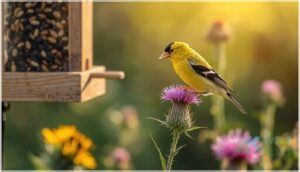
You’ll watch a flash of lemon-yellow bounce across your yard when this 5-inch finch arrives—bright males sport black caps in summer, while both sexes fade to brownish-olive by winter.
American Goldfinches love thistle and sunflower seeds at feeders, and they’re late nesters, raising young in July and August when seed-producing plants peak.
Goldfinch migration patterns bring year-round sightings across Rhode Island backyards.
House Sparrow
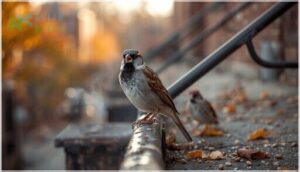
You’ll spot this invasive bird year-round across Rhode Island cities and suburbs—males flash gray crowns and black bibs, while females wear streaked brown plumage.
Their feeding strategies include bold ground foraging for seeds and scraps, making sparrow behavior easy to observe when bird watching in Rhode Island. House sparrows thrive despite habitat destruction through clever urban adaptation, building nests in wall cavities and eaves.
Seasonal Birds: Visitors and Migrants
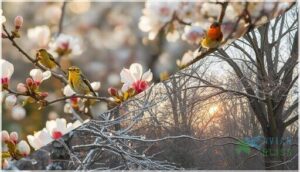
Rhode Island’s backyard bird scene changes with the seasons, bringing different visitors throughout the year. You’ll notice certain species only during their migration periods or when they settle in for colder months.
Let’s look at the seasonal birds you’re most likely to spot at your feeders and in your yard.
Spring and Summer Birds
When spring arrives in Rhode Island, you’ll notice bird migration patterns bring warblers and tanagers through your yard in late April and May.
Ruby-throated hummingbirds appear around the same time, staying through summer for breeding habits and nesting.
American robins and northern cardinals raise one or two broods right in your backyard, making bird watching in Rhode Island rewarding as you observe summer nesting and changing avian diets.
Fall and Winter Birds
As temperatures drop, you’ll witness fascinating Cold Weather Adaptations among Winter Birds in your Rhode Island yard. Seasonal Migration Patterns bring hardy species for Frosty Morning Birding and Snowy Habitat Creation opportunities.
- White-throated sparrows arrive from northern regions, favoring brushy edges
- Dark-eyed juncos form flocks of 10 to 40 birds at ground feeders
- American goldfinches lose their bright yellow, appearing olive-brown
- Northern cardinals fluff up to conserve warmth while feeding
Winter Bird Feeding becomes essential for Backyard Birds’ survival and successful Bird Watching in Rhode Island.
Ruby-throated Hummingbird
From April through October, you’ll catch glimpses of the Ruby-throated Hummingbird, the only breeding hummingbird species in Rhode Island. Males flash a vibrant ruby throat patch, while females sport green backs and pale bellies.
Set up nectar feeders in partial shade by early May to support hummingbird migration and nesting habits. Watch for their zippy, hovering behavior near tubular flowers—they’re fascinating additions to backyard birds across the state.
White-throated Sparrow
While hummingbirds head south, White-throated Sparrows arrive in Rhode Island backyards for the colder months. You’ll recognize these winter visitors by their bright white throat patch and distinctive head stripes—either white or tan.
Watch for sparrow behavior like scratching through leaf litter beneath your feeders, where they’ll happily munch on millet and sunflower seeds. Their clear whistled song sounds like “Oh-sweet-canada-canada.
Dark-eyed Junco
Another common winter visitor you’ll spot alongside White-throated Sparrows is the Dark-eyed Junco. These small, neat birds show smooth slate-gray plumage on top with a clean white belly—they look like they’re wearing little tuxedos. Watch for their signature white outer tail feathers flashing when they flutter up from beneath your feeders.
- Arrive in fall and stay through winter before heading north
- Hop along the ground, scratching through snow to uncover seeds
- Love millet scattered below hanging feeders
- Travel in loose flocks, often feeding together
- Males show darker gray; females look browner but keep the same pattern
Pine Siskin
You might notice small, streaky finches with yellow wing flashes visiting your thistle feeders in winter—those are Pine Siskins.
These acrobatic little birds show up irregularly, following seed crops rather than strict schedules. They’ll hang upside down at feeders, often joining flocks of goldfinches, and their wheezy chatter gives them away before you even spot those distinctive yellow wing patches.
How to Identify Rhode Island Backyard Birds
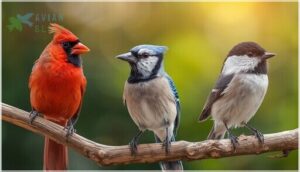
Spotting a flash of red or hearing a cheerful song is one thing, but figuring out which bird you’re actually looking at takes a bit of practice.
The good news is that you don’t need to be an expert—just a few simple clues can help you narrow things down quickly. Let’s walk through the key features that make identifying Rhode Island’s backyard birds easier than you might think.
Key Field Marks and Colors
Learning to identify backyard birds in Rhode Island starts with noticing the obvious stuff—plumage patterns and feather colors are your best friends here. The male Northern Cardinal’s bright red body and black face mask make it unmistakable, while the Blue Jay’s bold blue crest and white underparts stand out at any feeder.
Pay attention to beak shapes and wing marks too; these field marks help you distinguish bird species quickly, even when they’re moving around your yard.
Bird Songs and Calls
Tune in to bird vocalizations and you’ll discover a whole new layer of identification. Northern Cardinal males belt out a clear whistled “what-cheer, cheer, cheer” that rings through Rhode Island backyards, while chickadees offer their namesake “chick-a-dee-dee-dee” call.
Song patterns and melody recognition take practice, but once you’ve got them down, you won’t need binoculars to know who’s visiting.
- Listen for the cardinal’s loud, musical phrases—perfect for defending territory
- Notice how call functions differ: sharp alarm notes versus gentle contact chips
- Track vocal learning in young birds practicing their parents’ melodies each spring
Size and Behavior Tips
Bird Size Variations help you pin down species fast. Northern Cardinal males measure 8 to 9 inches, while chickadees barely reach 5 inches.
Notice how feather density changes a bird’s silhouette in winter, and watch flight patterns—jays glide powerfully, chickadees dart and hover.
Beak shapes reveal diet: cardinals crack seeds with thick bills, robins probe for worms. Bird behavior like nesting habits and feeding posture seal the ID in Rhode Island backyards.
Distinguishing Similar Species
Backyard birds in Rhode Island can look strikingly similar until you know what to watch for. Sharpen your bird identification skills with these practical tips:
- Visual Cues: Check wing bars, head stripes, and tail shapes that separate lookalike bird species.
- Vocal Signatures: Listen for distinct songs and calls unique to each species.
- Behavioral Traits: Notice feeding styles, perching habits, and habitat preferences that reveal true identity.
Attracting Birds to Your Rhode Island Yard
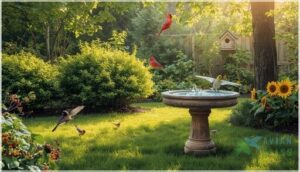
Turning your yard into a bird haven doesn’t require a degree in ornithology—just a few simple changes can bring flocks of cardinals, chickadees, and goldfinches right to your doorstep.
You don’t need a degree in ornithology to transform your yard into a bird haven—just simple changes bring cardinals, chickadees, and goldfinches to your doorstep
The secret lies in offering what birds need most: food, water, shelter, and safe nesting spots. Let’s walk through the essentials that’ll transform your Rhode Island backyard into a year-round destination for your feathered neighbors.
Best Bird Feeders and Foods
You’ll draw more species when you match feeder types to your target birds. Tube feeders work beautifully for finches and chickadees, while hopper feeders attract cardinals with their sheltered design. Platform feeders accommodate ground feeders, and suet cages pull in woodpeckers during cold months.
| Feeder Type | Best Bird Seed |
|---|---|
| Tube | Nyjer, black oil sunflower |
| Hopper | Mixed seed, safflower |
| Platform | White proso millet, fruit |
| Suet cage | Rendered fat blocks, peanut pieces |
Black oil sunflower seed remains the highest quality choice for seed selection—its high fat content and thin hulls make cracking easy for most backyard birds. Safflower discourages squirrels while still feeding cardinals and nuthatches. For attracting birds to your yard effectively, space multiple feeders ten feet apart to reduce competition and allow different species to feed comfortably.
Providing Water Sources
Water matters just as much as food when attracting birds to your yard. A shallow birdbath with water depth between one and three inches lets even small songbirds like chickadees stand safely while bathing.
In Rhode Island winters, heated birdbath models keep water available for bird hydration when puddles freeze. Adding a simple dripper creates moving water that catches light, drawing more species to your setup.
Creating Bird-friendly Habitats
Beyond food and water, your whole yard can become a bird-friendly habitat. Layered shelter—tall trees, mid-sized shrubs, and low groundcover—gives backyard birds places to hide, nest, and hunt insects.
Keep a safe yard by placing feeders close to windows or far away to prevent crashes. Let wild corners stay a bit messy with brush piles and unmown patches. Skip chemicals, and plan year-round with evergreens and fruiting shrubs for wildlife conservation that truly benefits Rhode Island species.
Using Native Plants for Birds
Native plants pack a punch for bird-friendly landscaping and wildlife habitat creation. Rhode Island natives like serviceberry, gray dogwood, and arrowwood viburnum offer berries all season, while oaks and willows support the caterpillars songbirds need.
For pollinator gardens that double as backyard bird magnets, try red columbine for hummingbirds or field thistle for finches—seasonal bloom management keeps natural food flowing and strengthens bird conservation across your whole yard.
Birdhouses and Nesting Sites
Beyond natural food, you’ll want to set up proper nesting sites for your backyard birds. Nest box design matters—choose untreated wood with drainage holes and ventilation near the top.
In Rhode Island, black-capped chickadees need 1⅛-inch entrance holes, while bluebirds prefer 1½ inches. Birdhouse placement should be 6 to 15 feet high with predator guards, and always clean out old nesting materials each fall.
Top Rhode Island Birdwatching Hotspots
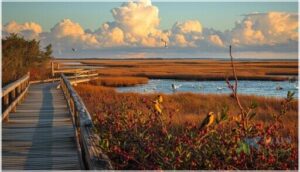
If you’re ready to take your birdwatching beyond the backyard, Rhode Island offers some truly rewarding spots where the variety and activity levels can surprise you.
These locations range from coastal refuges to inland sanctuaries, each with its own mix of habitats and bird populations. Let’s look at a few standout places that consistently deliver memorable sightings throughout the year.
Norman Bird Sanctuary
If you’re looking for more than backyard feeders, Norman Bird Sanctuary in Middletown offers 7 miles of trails across 325 acres of grasslands, woodlands, and rocky ridges.
You’ll find habitat restoration projects supporting Bobolinks and Eastern Bluebirds, plus wildlife education programs and nest boxes for cavity nesters. It’s coastal ecology and bird conservation in action, perfect for deepening your Rhode Island birding skills.
Sachuest Point National Wildlife Refuge
Just south of Norman, Sachuest Point National Wildlife Refuge in Middletown protects 242 acres of coastal ecosystems where bird migration peaks twice yearly. You’ll spot Harlequin Ducks wintering offshore and occasional Snowy Owls along the rocky shore—over 200 species recorded total.
- Three miles of trails with ocean overlooks improve bird identification
- Habitat restoration aids Piping Plovers and migratory shorebirds
- Visitor center offers educational exhibits on wildlife conservation and refuge management
Colt State Park
Colt State Park in Bristol gives you 464 acres of coastal birding access along Narragansett Bay’s shoreline.
Four miles of park trails wind through fields and woods where you’ll spot seasonal migration waves of warblers and sparrows, plus waterfowl viewing in winter when sea ducks and loons gather offshore—perfect for backyard birding practice and bird identification skills year-round.
Audubon Important Bird Areas
Audubon’s Important Bird Area program pinpoints Rhode Island hotspots where wildlife conservation meets real impact—coastal marshes like Sapowet supporting Saltmarsh Sparrows, Trustom Pond hosting thousands of waterfowl, and Block Island’s migration corridors serving 300+ species.
These IBA conservation sites focus ecosystem management and species protection where birds need it most, giving you outstanding backyard birding destinations backed by science and volunteer monitoring year-round.
Tips for Backyard Birdwatching
Your yard becomes the best birding spot when you master a few fundamentals. Position bird feeders 10 to 15 feet from windows and keep them spotless with weekly washing—clean stations prevent disease while giving you perfect views for bird identification and behavior study.
Add nesting boxes and native shrubs to create layered yard habitat, then grab binoculars or wildlife cameras to document seasonal patterns right outside your door.
Frequently Asked Questions (FAQs)
What birds are common in Rhode Island?
Ever wonder which feathered friends call Rhode Island home? You’ll spot northern cardinals, black-capped chickadees, tufted titmice, and American robins year-round.
While white-throated sparrows and dark-eyed juncos visit during winter months.
What small backyard bird mimics other birds?
The Northern Mockingbird excels at mimicry behavior and vocal learning, imitating dozens of bird species and environmental sounds.
Gray Catbirds also demonstrate impressive species imitation, copying neighboring birds through advanced sound reproduction techniques.
What is the national bird of Rhode Island?
Rhode Island’s state bird is the Rhode Island Red chicken, adopted in
This dual-purpose breed reflects the state’s agricultural heritage and remains a celebrated symbol in local wildlife and Rhode Island heritage conservation efforts.
How do I find out what birds are in my area?
Download the free Merlin Bird ID app to see which local species are likely near you, or check eBird for regional guides and recent sightings that help with bird identification in Rhode Island.
What is the most common bird you see near your home?
The black-capped chickadee often tops bird sightings in Rhode Island backyards. You’ll spot this friendly visitor at bird feeders year-round, thanks to its bold nature and love for sunflower seeds.
How many bird species are there in Rhode Island?
Here’s a fun fact: the Ocean State punches above its weight in avian diversity. Rhode Island hosts roughly 420 bird species total, including about 125 marine and coastal water birds across varied habitats.
How do birds migrate through Rhode Island annually?
Each spring and fall, hundreds of bird species follow the Atlantic Flyway through Rhode Island.
You’ll see migrants rest at coastal refuges and islands, with seasonal timing varying by species and habitat needs.
Which birds are considered rare backyard visitors?
While everyday birds fill your feeders year-round, vagrant species like Evening Grosbeaks, Rufous Hummingbirds, and Northern Saw-whet Owls appear unpredictably during winter irruptives or migration, making rare finches and scarce owls treasured Rhode Island backyard sightings.
What time of day are birds most active?
Birds are most active during the dawn chorus, when they establish territories and forage vigorously. You’ll notice a midday lull, then renewed late afternoon activity as temperatures cool before sunset.
How can I identify bird sounds and calls?
Like tuning a radio, learning bird vocalizations means listening for sound patterns first—pitch, rhythm, and tone.
Audio recordings in apps help match calls to species, building vocal learning skills for confident backyard bird identification.
Conclusion
Your backyard isn’t just a patch of grass—it’s a front-row seat to Rhode Island’s living natural theater.
Once you start recognizing the backyard birds of Rhode Island, every morning becomes a new show worth watching.
Keep your feeders stocked, your water fresh, and your eyes open. That flash of red or cheerful song outside your window isn’t background noise anymore; it’s a neighbor you’ve finally gotten to know by name.
- https://en.wikipedia.org/wiki/List_of_birds_of_Rhode_Island
- https://www.nwf.org/Educational-Resources/Wildlife-Guide/Birds
- https://ornithology.com/travel-guides/north-america-birds/
- https://ebird.org/region/US-RI?yr=all
- https://www.bbc.com/future/article/20191211-crows-could-be-the-smartest-animal-other-than-primates