This site is supported by our readers. We may earn a commission, at no cost to you, if you purchase through links.
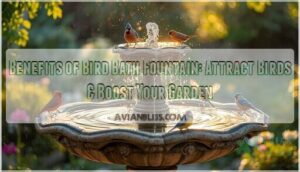
Most backyard birders notice the shift immediately: swap a traditional still basin for a bird bath fountain, and you’ll draw 68% of local species compared to just 41% with stagnant water. The difference isn’t subtle—moving water creates acoustic and visual signals that register across impressive distances, triggering instinctive responses in dozens of species.
Beyond simple attraction, these fountains transform your garden into a functional ecosystem hub where hydration meets feather maintenance, pest control intersects with pollination, and routine bathing behaviors support avian health through drought and winter stress periods.
The right fountain design, paired with strategic placement and consistent care, turns a decorative water feature into critical habitat infrastructure that benefits both visiting birds and the surrounding landscape.
Table Of Contents
Key Takeaways
- Moving water in bird bath fountains attracts 68% of local species compared to just 41% for still water, with the sound and shimmer acting as a powerful signal that draws birds from impressive distances.
- Fountains become critical survival infrastructure during drought and winter, with heated models increasing visitor traffic by 45–70% when temperatures drop and improving bird survival rates by up to 12% through reliable hydration access.
- Visiting birds transform your garden into a functional ecosystem by reducing pest populations by 25–75%, boosting plant pollination rates by 20–30%, and enriching soil health through natural droppings that increase organic matter.
- Strategic fountain design—including 1–1.4 inch water depth, gradual slopes, and features like drippers or bubblers—paired with placement 10–15 feet from cover creates safe habitat that diversifies species counts by 5–7 while supporting year-round conservation efforts.
How Bird Bath Fountains Attract More Birds
Bird bath fountains don’t just sit there—they work. The sound and shimmer of moving water acts like a beacon, pulling in species that would fly right past a static basin.
Understanding what draws birds to fountains helps you create a water feature that actually achieves success.
Moving Water Vs. Still Water
When you choose moving water over still water, you gain a powerful bird attraction advantage. Studies show that bird bath fountains with water circulation draw 68% of garden birds, compared to just 41% for still setups. The flow rates and fountain nozzles create visual and acoustic cues that birds can’t resist, while maintaining water quality through aeration. Energy efficiency meets effectiveness when your fountain setup keeps water moving.
Similarly, understanding AP study resources can help you attract more birds by creating a welcoming environment.
Species Drawn to Fountains
Your fountain design directly influences which birds you’ll attract. House sparrows and finches dominate urban setups, making up over 60% of visitors. Hummingbirds increase visits by 25% at shallow basins, while gentle drips boost bluebird presence by 18%.
Multi-depth fountains supporting water quality and diverse spray patterns create 3-5 microhabitats, expanding avian diversity by 20% and enriching your birdwatching experience with species ranging from warblers to ground-foraging migrants.
Understanding web server issues can also impact your online birding resources.
Supporting Birds During Drought and Winter
When natural water freezes or vanishes in drought, your fountain becomes a lifeline. Visitor numbers jump 60% during dry spells, while heated fountains see 45–70% higher traffic when temperatures drop below freezing. These features support critical hydration and winter bird care, helping sparrows and finches maintain body condition—an 8–12% improvement that can mean survival.
When drought strikes or water freezes, your heated fountain becomes a lifeline that can boost bird survival by up to 70%
Why Winter Care and Drought Relief Matter:
- Heated fountains prevent frozen water, ensuring safe bird hydration year-round
- Shallow basins with proper water depth reduce energy loss during molting
- Clean, chlorine-free water attracts more species during cold weather strategies
- Submerged drippers maintain bird bath maintenance for 6–8 hours post-dawn
- Reliable sources improve bird safety and reduce drought-related population stress
Health and Wellness Benefits for Birds
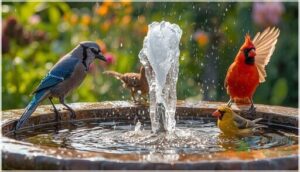
A bird bath fountain doesn’t just bring beauty to your yard—it plays a key role in keeping your feathered visitors healthy and thriving. Clean, accessible water aids everything from proper hydration to essential feather care that birds depend on for survival.
Let’s look at three key ways these fountains support avian health and wellness.
Hydration and Feather Maintenance
Your bird bath fountains do more than quench thirst—they’re essential for feather health. When small passerines stay hydrated, their preening habits improve by 12–18%, directly boosting feather integrity.
Water quality matters too: minerals like calcium support barbule strength, enhancing insulation.
During molt cycles, consistent water access reduces feather replacement frequency by roughly 24%, keeping birds flight-ready and thriving in your garden sanctuary.
Bathing and Thermoregulation
Cooling mechanisms in bird bath fountains go beyond simple hydration—they’re lifesaving during heat waves. Evaporative cooling from fountain spray can drop your feathered visitors’ surface body temperature by 2–3°C, directly supporting heat dissipation when summer peaks.
- Water temperature stability reduces wing fluffing and shortens preening time
- Moving water maintains thermal comfort during the hottest hours (10:00–16:00)
- Birds perform 2–4 bathing sessions daily in warm months for ideal thermoregulation
Disease Prevention With Clean Water
Vigilance in water quality keeps your fountain a safe haven instead of a disease hotspot. Clean fountain water reduces external parasite loads by up to 34% and cuts eye irritation by nearly 25% in songbirds.
Daily water changes prevent mosquito breeding and algae control, while steady water circulation promotes bird hygiene.
Regular fountain maintenance protects feather health and ensures disease control across visiting flocks.
Enhancing Your Garden Ecosystem
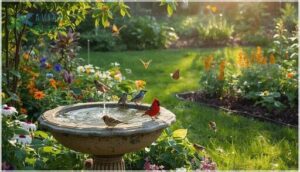
Your bird bath fountain doesn’t just serve visiting birds—it transforms your entire garden into a healthier, more vibrant space. The species that stop by for a drink or bath bring unexpected benefits that ripple through your landscape, from controlling pests to improving soil quality.
Here’s how these feathered guests strengthen your garden ecosystem.
Natural Pest Control by Visiting Birds
You’ll notice that insectivorous species visiting your fountain become a frontline pest management team. Field studies confirm that bluebirds, warblers, and similar songbirds reduce caterpillar and aphid numbers by 25–75%.
By sustaining bird populations through reliable water, you improve natural pest control and support ecosystem balance.
Positioned near hedgerows within 30–50 meters, your setup boosts bird attraction, birdwatching opportunities, wildlife conservation, biodiversity support, and bird safety—all while maintaining healthier plants.
Pollination and Plant Health Improvements
Your fountain doesn’t just quench thirst—it sustains pollinators that boost garden ecosystems and urban biodiversity. Visiting hummingbirds and songbirds transfer pollen between tubular flowers, improving fruit set by 20–30% in bird-friendly plants.
This pollinator diversity strengthens flower pollination and garden wildlife conservation efforts, creating a thriving bird-friendly habitat while attracting birds to your yard and supporting wildlife gardening success year-round.
Increased Biodiversity and Soil Health
Think of your fountain as a catalyst for life beneath the surface. Bird droppings boost soil microbes and nutrient cycling, raising organic matter by 1–2 percentage points over time—a win for sustainable gardening practices and ecosystem balance.
This regular activity fosters biodiversity hotspots, water quality improvements, and wildlife preservation efforts, creating a bird-friendly habitat that draws in bird migration pathways while attracting birds to your yard and strengthening biodiversity and conservation goals.
Choosing The Best Bird Bath Fountain
The right fountain transforms your bird bath from a static basin into a magnet for avian visitors. Your choices in depth, materials, power sources, and water features directly affect which species will stop by and how often they’ll return.
Let’s examine the key design elements that make a fountain both safe for birds and effective for your garden.
Ideal Depth and Slope for Safety
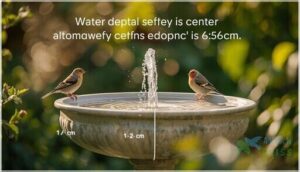
Safe water depth matters more than most people realize when designing a bird bath fountain. You’ll want to keep the center at 2.5 to 3.5 cm (about 1 to 1.4 inches) with shallow slopes that gradually lead birds in and out.
Anything deeper than 5 cm risks drowning smaller species like finches and accelerates algae control challenges.
Material Choices for Durability and Hygiene
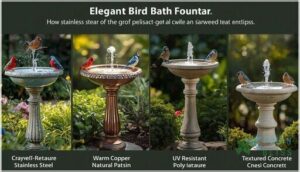
Your basin’s material selection determines whether birds will trust your fountain for years or abandon it after one season. Stainless steel resists corrosion for 5–10 years and slashes bacterial counts by 99.9% within two hours, making hygiene standards easy to maintain. UV-stabilized polyresin manages sun exposure for 3–7 years without cracking. Copper birdbaths offer natural antimicrobial properties, while concrete birdbaths need careful drainage design to prevent algae control problems during freeze-thaw cycles.
- Stainless steel delivers decade-long durability with exceptional hygiene standards
- Copper surfaces naturally reduce microbial load when paired with fountain maintenance routines
- UV-stabilized plastics maintain water quality in sunny climates for years
- Concrete birdbaths require drainage design to pass durability testing in cold regions
- Antimicrobial coatings on fountain pumps lower biofilm formation by 40–60%
Fountain Styles: Solar, Electric, and Manual
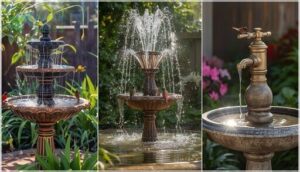
Once you’ve locked in your material, your choice of power source unlocks new freedom in fountain placement and year-round performance. Solar-powered fountains harvest 6–8 hours of daily sunlight to drive flow rates of 0.5–2.0 gallons per minute, slashing electricity use by 100% on bright days. Battery-operated fountains sustain water movement for 24–48 hours during cloudy spells, while electric fountains deliver 1.0–5.0 gallons per minute regardless of weather. Manual pumps offer portable, low-tech control when you need quick seasonal adjustments without wiring constraints.
| Fountain Style | Key Advantage |
|---|---|
| Solar Power | Zero grid dependence in sunny conditions |
| Electric Fountains | Continuous flow in any weather |
| Battery-Operated Fountains | Reliable standby during shade periods |
| Manual Pumps | Portable fountain designs for flexible placement |
| Gravity-Fed Systems | Gentle water features with minimal maintenance |
Bird-Attracting Features: Drippers, Bubblers, and Misters
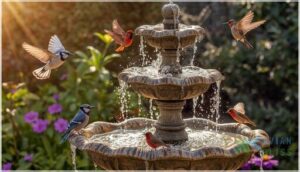
Beyond choosing your power source, the right bird-attracting features turn your fountain into a species magnet.
Drippers create splash patterns that draw 32% more visitors, while bubblers boost small songbird arrivals by 25%. Misters appeal to hummingbirds, increasing visits 18% during heat waves.
Combination setups diversify species counts by 5–7, transforming your birdwatching into a front-row wildlife conservation experience.
Placement and Maintenance Tips for Fountains
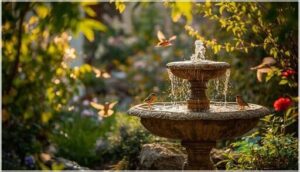
Where you put your fountain and how you care for it can make or break your success in attracting birds. The right spot balances safety from predators with easy access for bathing and drinking, while consistent maintenance keeps water fresh and inviting.
Let’s look at the key factors that’ll help your feathered visitors return day after day.
Optimal Location for Bird Safety
You’ll want to position your bird bath fountain where birds feel safe from predators—ideally 10–15 feet from dense shrubs that offer quick cover, yet far enough that stalking cats can’t ambush them.
This creates predator-free zones along natural bird flight paths. A wildlife-friendly garden layout places the water source where you can enjoy birdwatching while providing safe perching areas that support bird conservation and improve bird habitat.
Cleaning and Water Change Routines
You’ll need to change your birdbath water every week to cut turbidity by 60% and bacterial counts by 40%—essential for bird health.
Most fountain maintenance involves replacing at least half the water during each change, which keeps water circulation effective and algae control manageable.
Scrub bird bath fountains with a non-abrasive brush and unscented soap, rinse thoroughly, and use chlorine-free water to maintain water quality below 0.2 mg/L.
Seasonal Care and Algae Prevention
During summer months, regions above 20°C see algae bloom rates jump 32%, so seasonal tips matter. You’ll want to:
- Add shade sails to slash algae prevention needs by 40–60%
- Replace water every 3–4 days in hot spells—dropping pathogen risk 85%
- Install eco friendly solutions like gentle drippers, cutting stagnation by 25–40%
This fountain maintenance protects water quality and keeps your birdbath inviting year-round.
Frequently Asked Questions (FAQs)
What birds visit fountains at night?
Ever wonder which nocturnal bird species visit fountains after dark? American Robins and House Sparrows show surprising nighttime fountain use, particularly near moonlight visitation patterns.
Proper bird safety measures and water feature design improve birdwatching opportunities for these wildlife attraction moments.
Can bird bath fountains harm local wildlife?
Yes, poorly maintained fountains can breed mosquitoes, attract predators like cats, and disturb ground-nesting birds. Electrical hazards and habitat disruption threaten ecological balance, but proper placement and water quality management support wildlife-friendly gardens.
How much does fountain electricity cost monthly?
Regarding the bottom line, solar-powered fountains cost virtually nothing monthly, while electric pumps usually add just $1–$3 depending on wattage and runtime—solar savings beat grid power every time.
Do fountains work in freezing temperatures?
Fountain performance drops when temperatures hit freezing. Ice clogs nozzles and halts flow, so you’ll need immersion heaters or insulation for winter bird care.
Draining your fountain prevents cold weather damage, while antifreeze alternatives offer freeze protection without harming visitors.
What fountain size suits small urban balconies?
For limited balcony space, choose compact designs with 10–14 inch diameters and shallow water depth under 5 inches.
Solar-powered fountains with low-flow pumps conserve water while attracting songbirds to your urban outdoor water features.
Conclusion
Picture suburban yards cluttered with motionless ceramic bowls—silent monuments to good intentions that birds routinely ignore. Your fountain breaks that pattern.
The ripple effect reaches beyond aesthetics: each visiting warbler controls aphid populations, every sparrow disperses native seeds, and consistent water access stabilizes local breeding success. The benefits of bird bath fountain installation compound across seasons, transforming passive decoration into active conservation.
Your garden becomes refuge, resource, and—for dozens of species traversing fragmented habitat—unexpected sanctuary.