This site is supported by our readers. We may earn a commission, at no cost to you, if you purchase through links.

A bird’s health is built one bite at a time—yet the wrong food can unravel months of careful care. You might be surprised how quickly a vitamin shortage can dull feathers or weaken bones, even in birds that seem lively and alert.
Whether you’re filling a feeder for wild finches or choosing pellets for a cherished parakeet, every ingredient matters. The best foods for bird health don’t just fill the crop—they fuel strong wings, sharp eyes, and resilient bodies.
Knowing what goes into a bird’s bowl is the first step toward keeping your flock thriving, season after season.
Table Of Contents
Key Takeaways
- A balanced bird diet should include pellets as the base, with measured seeds, fresh vegetables, and limited fruits to prevent deficiencies and obesity.
- Key nutrients like protein, vitamin A, calcium, healthy fats, and clean water are essential for strong feathers, immune health, and overall vitality.
- Safe feeding practices—such as proper feeder placement, regular cleaning, and avoiding toxic foods like avocado and chocolate—are crucial for preventing disease and harm.
- Rotating foods and tailoring diets to your bird’s species help prevent nutritional gaps and support long-term health.
Key Nutrients for Optimal Bird Health
Your bird’s body needs specific nutrients to stay healthy, just like yours does. Without the right balance of protein, vitamins, minerals, and fats, even the most well-meaning bird owner can miss important pieces of the nutrition puzzle.
Let’s look at the key nutrients that support everything from strong feathers to a healthy immune system.
Protein Sources for Birds
Protein powers everything from feather growth to immune strength in your birds. Insects like mealworms deliver complete amino acids, making them ideal for insect eaters and omnivores alike. Plant proteins from legumes help, but they’re often low in methionine.
Protein deficiency shows up as brittle feathers and weakness, while excessive protein levels strain kidneys. Balancing these sources ensures your bird gets the nutritional value it needs without overload.
Owners should provide a balanced diet, considering avian species’ needs.
Essential Vitamins and Minerals
Feather health and bright eyes rely on more than just protein—your bird’s avian diet needs Vitamin A, strong Calcium Balance, and safe Iodine Sources. Seed Deficiencies often leave gaps in these essential nutrients for birds. A common issue is vitamin A deficiency.
That’s why a vitamin supplement like AviEra Vitamins, plus Trace Minerals, keeps bird nutrition steady and protects against common health troubles.
Healthy Fats and Their Benefits
Just as vitamins keep your bird’s eyes bright, healthy fats—especially omega-3 and omega-6—play a big role in balanced bird nutrition. A good Omega Balance aids skin, feathers, and immune health, while PUFA Benefits include better fat oxidation and lean growth.
For chicks, the right fats in their avian diet boost Chick Growth and even improve Reproduction Impact.
Hydration and Water Intake
Now, while healthy fats support feathers and growth, clean fresh water is just as essential for avian health. Birds need water daily—about 5–20% of their body weight.
Poor water quality or dehydration effects can quickly harm the best health of birds. Keep water cooler than body temperature, watch intake patterns, and support electrolyte balance for a truly nutritious avian diet.
Best Foods for Pet Birds
Choosing the right foods for your bird can feel overwhelming, but it doesn’t have to be. Each option brings its own benefits to your bird’s health and happiness. Here’s what you need to know about the best choices for your feathered friend.
Seeds Vs. Pellets: Pros and Cons
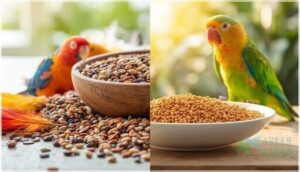
When you’re deciding between bird seeds and bird pellets for your pet’s base diet, think of pellets as the nutritional all-star. Here’s what you need to know about seed benefits and pellet limitations:
- Nutritional completeness: Pellets deliver balanced vitamins and minerals in every bite, while seeds often lack vitamin A and calcium
- Behavioral preferences: Birds naturally prefer high-fat seeds, making diet conversion challenging
- Health outcomes: Seed-heavy diets increase obesity and liver disease risk
- Practical feeding: A nutritious avian diet uses pellets as the foundation (60–80%), with measured seeds for enrichment
Your bird’s well-being depends on getting this balance right.
Safe Fruits and Vegetables for Birds
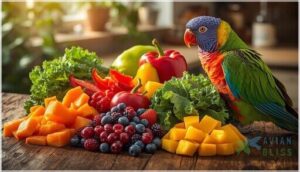
Fresh fruit and leafy greens pack a vitamin punch your bird can’t get from pellets alone. Aim for 20–40% of the daily diet from produce, favoring vegetables over fruits by about 10:1 to limit sugar. Bright orange and dark green choices—carrots, sweet potato, peppers, and collard greens—supply the vitamin A many seed-fed birds lack.
Rotate your fruits and veggies for birds weekly to offer a broader nutrient spectrum. Wash everything, chop it to size, and skip toxic produce like avocado, chocolate, onions, and apple seeds—these can cause serious harm or even death.
| Vitamin-Rich Options | Safe Preparation | Portion Control |
|---|---|---|
| Carrots, sweet potato, pumpkin | Remove pits, seeds, and rinds | Vegetables outnumber fruits 10:1 |
| Broccoli, kale, dandelion greens | Chop to appropriate size | Rotate types weekly for variety |
| Berries, melon, papaya, mango | Wash thoroughly before serving | Limit fruits due to sugar content |
Nuts, Grains, and Edible Flowers
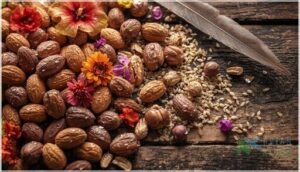
Almonds, walnuts, and hazelnuts deliver concentrated protein and energy-rich fats your bird needs for flight and warmth. But nuts pack 50–70% fat, so keep them under 5% of daily intake to prevent obesity and high blood lipids.
Whole grains like quinoa and rice add fiber and complex carbs, while pesticide-free hibiscus, marigold, and nasturtium petals offer vitamins A, C, and E for immune support.
Cooked Foods and Homemade Diet Options
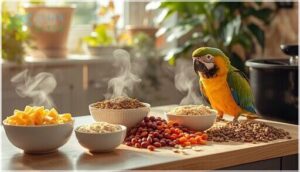
Cooking for your bird can feel like solving a puzzle—you want variety in bird diet without throwing balance out the window. Pasta, oatmeal, quinoa, and fully cooked legumes make up less than 5–10% of a nutritious diet alongside pellets.
Heat everything to 165°F to prevent illness, and keep birds out of the kitchen—overheated cookware releases lethal fumes.
Homecooked meals supplement, never replace, formulated foods that prevent nutrient deficiencies.
Top Foods for Wild Bird Health
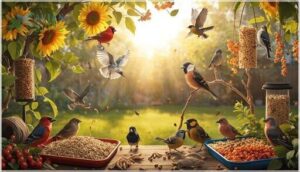
If you want to support the wild birds visiting your yard, the food you offer makes all the difference. The right seeds, seasonal treats, and natural protein sources keep these feathered visitors healthy and thriving year-round.
Let’s look at the best food options to meet the nutritional needs of the wild birds in your area.
Popular Seed Types and Their Benefits
Did you know the right seed selection can shape a bird’s health and happiness? Sunflower benefits include high energy and easy cracking for small birds. Nyjer finches love tiny, oil-rich seeds. Millet nutrition offers quick fuel for ground feeders. Safflower acceptance is high among cardinals, but corn risks include obesity and contamination. Smart seed mixtures boost bird nutrition.
- Sunflower seeds: Energy-dense, easy for small birds
- Nyjer seeds: Favored by finches, high oil
- Millet: Balanced nutrition, aids ground feeders
Seasonal Foods for Wild Birds
Ever wonder how birds survive harsh winters or long migrations? Seasonal changes shape what wild birds need. Winter energy comes from black oil sunflower seeds and suet, while Spring protein means insects and eggshells for nesting. Summer insects support growing chicks, and Autumn fats from berries and acorns fuel migration.
Seasonal bird feeding has year-round impacts, boosting survival and reproductive success.
Attracting Insect-Eating and Nectar-Feeding Birds
If you want more insect-eating and nectar-feeding birds in your yard, start with these four steps:
- Plant Native Plants—boosts insect prey and bird health.
- Use feeders with proper Nectar Concentration (about 35–45% sucrose).
- Choose Feeder Placement near shrubs for safe access.
- Limit Pesticide Impact to improve Habitat Quality and bird nutrition, attracting more bird species.
Supplementing With Fresh Foods
Just as planting for nectar feeders brings variety, offering fresh foods like fruits and veggies can boost wild bird health. Wild birds rely mostly on natural sources, but healthy snacks—especially organic produce—help during lean seasons. Aim for 20–40% fresh food supplementation for birds.
Remember, hygiene and spoilage matter: remove uneaten items within 24–48 hours to keep feeders safe.
Creating a Balanced Avian Diet
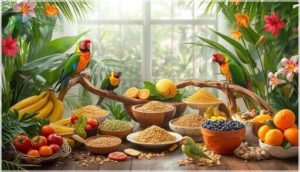
Building a balanced diet for your bird takes a bit of planning and know-how. There are a few key steps to keep in mind for healthy feeding.
Let’s look at what matters most when creating a routine that aids your bird’s well-being.
Daily Feeding Guidelines and Portions
Every bird needs a balanced diet, and getting daily portions right matters. For feeding pet birds, follow these steps:
- Calculate weight-based intake—offer food as a percent of body weight.
- Use diet proportions: 50–75% base diet, 25–50% fresh foods.
- Set meal frequency—two meals daily.
- Monitor intake and adjust portions to support healthy body weight.
Variety and Rotation in Bird Diets
Rotating bird foods throughout the week strengthens immune function and prevents deficiencies that appear when you feed the same items daily. Dietary diversity mirrors natural foraging behavior—wild parrots consume dozens of plant species across seasons.
Offer different vegetables, fruits, and grains each day within your balanced diet framework. This rotation strategy reduces selective eating, broadens accepted foods, and ensures your bird’s nutritional needs are met over time through dietary supplementation.
Breed-Specific Dietary Needs
Because each species evolved to eat different foods, your bird’s breed determines its nutritional requirements. Parrot nutritional needs favor formulated pellets at 60–70% of intake, while finch seed mixes and canary diets do well with 20–30% pellets.
Raptor prey diets require whole animals for balanced calcium, and nectarivore iron levels must stay low to prevent storage disease.
Poultry protein levels shift with growth stage, making breed-specific dietary needs essential for health.
Preventing Nutritional Deficiencies
Because most pet birds arrive on seed-heavy diets, pellet conversion is your first defense against hypovitaminosis A and calcium deficits. Seed limitations leave gaps in amino acids and minerals, so aim for 60–70% bird pellets, then round out nutrition with fruits and veggies.
Skip random dietary supplementation—it risks toxicity. Instead, monitor health through feather quality and weight, adjusting bird foods as needed.
Safe Feeding Practices and Common Risks
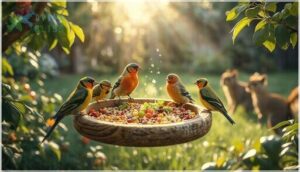
Providing nutritious food is just one part of keeping your birds healthy and safe. You also need to think about how you offer that food and what risks might come with feeding practices.
Let’s look at the key safety considerations that protect both pet and wild birds from common hazards.
Proper Feeder Selection and Placement
Where you place your bird feeders matters as much as what you put in them. Position feeders within three feet of windows or beyond 30 feet to prevent collision-related injuries. Keep them about ten feet from dense cover and at least five feet high for predator avoidance.
Choose feeder types that match your backyard birds’ needs while allowing easy maintenance access for regular cleaning.
Preventing Disease Transmission
Did you know a dirty feeder can turn your backyard into a disease hotspot? Feeder hygiene isn’t just about appearances—it’s about stopping disease transmission in birds.
Stick to cleaning protocols like weekly bleach soaks and regular ground sanitation. Outbreak links show neglected feeders fuel infections.
Good environment management and sanitation protocols protect bird health, yours, and everyone’s peace of mind.
Avoiding Harmful Foods and Toxins
Did you know a single bite of avocado can be deadly for your bird? Toxic human foods like chocolate and onions, environmental fume dangers from nonstick pans, and heavy metal poisoning from cage hardware all pose serious risks. Watch out for toxic plants, salt & additives, and aflatoxins in moldy nuts.
Protect your bird by:
- Checking food sources
- Avoiding fumes
- Removing unsafe objects
Monitoring Bird Health Through Diet
Ever notice your bird’s feathers looking dull or its appetite dropping? These can signal nutrition or health issues. By tracking weight change, excreta analysis, and watching for dietary impact, you catch problems early. Microbiome shifts and clinical responses show how food affects more than just appearance—diet shapes immunity, mood, and resilience.
Changes in your bird’s feathers, appetite, or droppings often reveal hidden nutrition or health problems before they worsen
| Weight Change | Excreta Analysis | Dietary Impact |
|---|---|---|
| Sudden loss | Color/texture | Mood shifts |
| Steady gain | Frequency | Feather shine |
| Stable | Volume | Appetite |
Frequently Asked Questions (FAQs)
How often should I change my birds water?
Your feathered friend’s water deserves daily attention. Change it every 24 hours to prevent bacterial growth risks, and wash containers with hot soapy water.
In hot weather or when adding vitamins, refresh it twice daily.
Can birds eat sprouted seeds safely?
Yes, sprouted seeds are safe when prepared correctly. Rinse seeds thoroughly twice daily during sprouting to prevent bacterial growth.
Offer these nutritious treats 2-3 times weekly as part of a balanced diet.
What temperature should cooked bird food be?
As the saying goes, patience is a virtue—let cooked bird food cool to room temperature before serving.
This safe serving warmth prevents burns while preserving nutrition, with refrigerated storage duration up to three days maximum.
Do older birds need different nutritional requirements?
Older birds need specific nutrition changes—think protein adjustments, fat reduction, and targeted mineral needs. Diet shifts toward more pellets, vitamin supplementation, and careful use of supplements help prevent age-related issues. Veterinarians recommend tailoring dietary needs as birds age.
How do I transition birds between diets?
Much like turning the page in a favorite book, shifting your bird’s diet requires gradual conversion, careful monitoring intake, and behavioral strategies.
Use veterinary guidance, adjust nutrition slowly, and watch for signs that dietary needs and supplements are met.
Conclusion
Think of each meal as a single thread in the tapestry of your bird’s life—woven with care, it creates a picture of health and vitality. Choosing the best foods for bird health isn’t just about filling a bowl; it’s about building strong bones, bright eyes, and lasting energy.
Your attention to detail shapes every season, helping your birds soar with confidence. When you feed with purpose, you’re not just nourishing bodies—you’re nurturing the spirit that makes each bird unique.
- https://www.cabidigitallibrary.org/doi/pdf/10.5555/20210293798
- https://www.northpawsanimalhospital.com/storage/app/media/Avian_Husbandry/healthy-avian-diets-basic-feeding-guidelines.pdf
- https://pdfs.semanticscholar.org/a6cd/563efe7d5fd48d92732a466d62ca6a437a2a.pdf
- https://lafeber.com/pet-birds/bird-food-guide/
- https://avianenrichment.com/staging/learn/physical-needs/diet-nutrition/avian-food-groups-guide