This site is supported by our readers. We may earn a commission, at no cost to you, if you purchase through links.
Every year, over a billion birds die from preventable human-caused threats—window collisions, cat predation, habitat loss, and pesticide exposure top the list.
These aren’t distant problems affecting rare species in remote locations; they’re happening in backyards, cities, and neighborhoods where everyday actions create life-or-death situations for birds. The good news? You don’t need specialized training or expensive equipment to make a meaningful difference.
Simple changes to your home, yard, and daily habits represent some of the best ways to help birds thrive in an increasingly challenging world. From applying window decals to choosing your morning coffee differently, each action builds toward a safer environment for the species that pollinate plants, control pests, and maintain ecological balance in your community.
Table Of Contents
- Key Takeaways
- Make Your Home Safe for Birds
- Create Bird-Friendly Outdoor Spaces
- Support Bird Conservation Efforts
- Adopt Sustainable Living Practices
- Educate and Inspire Others
- Frequently Asked Questions (FAQs)
- What is the best way to help birds?
- How to help a struggling bird?
- How do I help my bird get better?
- What helps birds thrive?
- How can I Help Birds?
- How can I prevent birds from coming to my home?
- How can you help birds in the tropics?
- How can I reduce habitat loss for birds?
- How do I attract more backyard birds?
- How do I stop birds from eating my food?
- Conclusion
Key Takeaways
- Over a billion birds die annually from preventable threats like window collisions and cat predation, but simple home modifications—applying decals spaced 2-4 inches apart, keeping cats indoors, and using shielded lighting—can dramatically reduce bird mortality in your immediate area.
- Replacing traditional lawns with native plants creates essential habitat that provides food sources and nesting opportunities while cutting emissions by up to 50 percent, directly addressing the loss of nearly 3 billion North American birds since 1970.
- Your purchasing decisions matter for conservation: choosing shade-grown, bird-friendly certified coffee protects forest canopies that shelter over 150 migratory species, while reducing single-use plastics prevents the ocean food chain disruptions that kill millions of seabirds.
- Participating in citizen science projects like eBird transforms casual birdwatching into valuable conservation research, while advocating for bird-safe building codes and lighting ordinances can reduce window strikes by up to 30 percent at the community level.
Make Your Home Safe for Birds
Your home might be a danger zone for birds without you realizing it. Window strikes kill millions of birds each year, and everyday choices—from your cat’s outdoor time to the chemicals you spray—can make a real difference.
Simple fixes like applying decals or screens can prevent most bird window strikes and save countless lives each year.
Here are four simple changes that’ll protect the birds in your neighborhood.
Prevent Window Collisions
Window collisions kill millions of birds each year, but you can make your glass safer. Birds don’t perceive transparent or reflective surfaces as barriers, so they fly directly into them.
Here’s how to reduce bird mortality at your windows:
- Apply window films or decals with patterns spaced 2 to 4 inches apart
- Install patterned glass with dense dot designs that birds can detect
- Use UV coatings that increase window visibility to birds without affecting your view
- Add external screens or shading to break up large reflective surfaces
- Turn off unnecessary indoor lighting that attracts birds toward glass
Keep Cats Indoors or Supervised
Cats kill over 2.6 billion birds annually in North America, but keeping your cat indoors or supervised outdoors protects both wildlife and your feline friend.
Indoor cats live longer, enjoy better health benefits, and still thrive with proper feline enrichment like puzzle feeders and climbing trees. If your cat ventures outside, use a leash or secure catio—it’s bird conservation you can control.
Use Bird-Safe Lighting at Night
Artificial light pollution disorients millions of migrating birds each year, pulling them off course during nocturnal flights.
You can help by installing shielded lighting that directs light downward instead of skyward, reducing sky glow that confuses birds. Choose bird-friendly fixtures with warm color temperatures, use timers to turn lights off between 11 pm and 6 am during migration peaks, and support lighting ordinances in your community for broader nighttime conservation impact.
Avoid Pesticides and Toxic Chemicals
Beyond managing light, you can protect birds by avoiding toxic chemicals that poison them directly or destroy their insect food sources. Choose organic gardening methods and eco-friendly products instead.
Use physical barriers like nets and row covers, apply only targeted, low-risk pesticide alternatives when necessary, and prioritize sustainable practices like beneficial insects for pest control—proven wildlife preservation strategies that support bird conservation methods.
Create Bird-Friendly Outdoor Spaces
Your yard can become a crucial bird refuge for the birds that desperately need it. With North America losing nearly 3 billion birds since 1970, every patch of habitat you create makes a measurable difference.
Learning to identify the common birds visiting your yard helps you understand which species depend on your habitat and how to better support them.
Here’s how to transform your outdoor space into a bird-friendly haven.
Plant Native Trees and Shrubs
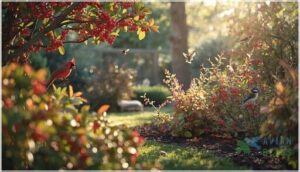
Native plants are the foundation of bird-friendly gardens and local ecosystem restoration. When you plant native trees and shrubs, you create essential habitat for regional bird species by providing food sources like seeds, insects, and berries.
These plants also improve soil conservation methods and support wildlife preservation. Choose species that match your site’s conditions, group shrubs for layered cover, and consult local extension offices for native tree selection guidance.
Reduce Lawn Size and Invasive Plants
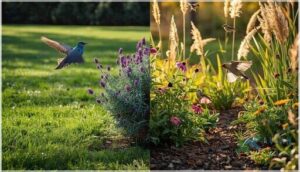
Traditional lawns offer little habitat conservation or wildlife preservation value. When you reduce lawn size and replace turf with native plants, you create birdfriendly gardens that support ecological conservation while cutting emissions by up to 50 percent.
Focus on Invasive Species Removal first, then prepare soil with compost. Native Plant Selection and Sustainable Landscaping deliver Lawn Reduction Benefits that boost biodiversity in just one season.
Add Water Sources Like Birdbaths
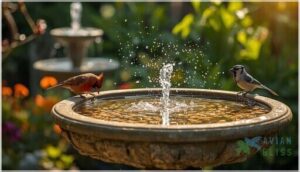
Birds need fresh water sources just as much as food. When you add a birdbath or small water feature to your yard, you boost bird attraction and support wildlife conservation. Birdbath Placement matters—position it near native plants but away from dense cover where predators lurk.
- Refresh Water Quality every one to two days to stop mosquito breeding
- Scrub with a stiff brush every week or two for Bath Maintenance
- Add a gentle fountain or dripper to create Water Features that draw more species
- Place multiple bird-friendly gardens water stations during hot months to meet demand
Shallow edges around one to two inches deep let birds drink and bathe safely, strengthening bird habitats and bird conservation strategies year-round.
Install Nest Boxes and Birdhouses
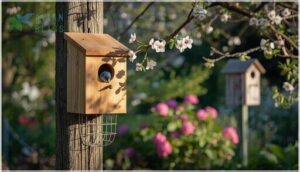
Strategically placed birdhouses offer critical nesting opportunities that support bird conservation strategies and wildlife-friendly gardening. Choose Nest Box Design with 1¼ to 1½ inch entrance holes for bluebirds and chickadees, using untreated cedar or pine.
Follow Installation Tips by mounting boxes 8 to 12 feet high on poles with predator guards. Birdhouse Placement facing away from prevailing winds improves Species Selection success.
Clean during Box Maintenance after each breeding season to prevent parasites.
Support Bird Conservation Efforts

You don’t have to be a scientist to make a real difference for birds—you just need to show up.
North America has lost nearly 3 billion birds since 1970, but conservation efforts backed by research and community action can turn this around.
North America has lost nearly 3 billion birds since 1970, but research-backed conservation efforts can reverse this decline
Here are four powerful ways you can support the work that protects bird populations and their habitats.
Participate in Citizen Science Projects
You can help scientists track bird populations by joining citizen science projects like eBird or Project FeederWatch. These platforms turn your birdwatching outings into valuable conservation research through community involvement. Data collection from backyards and parks feeds into species monitoring databases that guide habitat protection decisions.
Simple ways to start:
- Use apps to log bird counts and locations during your walks
- Submit observations from your backyard feeder or local park
- Participate in seasonal bird surveys during migration or nesting periods
- Join community science events hosted by nature centers or bird clubs
- Track your contributions on real-time dashboards that highlight regional trends
Bird surveys rely on skilled volunteers like you for citizen engagement.
Donate to Conservation Organizations
Your financial support fuels conservation efforts that protect critical habitats and fund field research.
Monthly donations provide unrestricted funds that let organizations respond quickly to emerging threats, while earmarked gifts target specific bird conservation strategies you care about. Choose groups with transparent environmental giving practices and measurable results to amplify your wildlife philanthropy impact.
Buy Migratory Bird Stamps
For just twenty-five dollars, you can buy a Migratory Bird Stamp that directs over 98 percent of proceeds straight to wildlife refuge habitat acquisition and wetland restoration.
You don’t need a hunting license—anyone can purchase this stamp at post offices or online, turning your support into tangible avian protection across millions of acres while gaining free entry to national refuges.
Advocate for Bird-Friendly Policies
Beyond individual purchases, your voice can shape Bird Conservation Strategies through legislative support and policy advocacy for the environment. Contact representatives to cosponsor conservation policies like bird-safe building codes that mandate low-reflectivity glass, reducing window strikes by up to 30 percent.
Five ways you can drive policy reforms:
- Urge city councils to adopt bird-friendly urban planning ordinances for new construction
- Request density bonuses for developers using certified bird-safe facades
- Push for green corridors with native plantings in municipal land use plans
- Demand transparent dashboards tracking local bird collision reductions
- Attend community engagement forums where advisory boards review environmental stewardship proposals
Adopt Sustainable Living Practices

The choices you make every day—from the coffee you drink to the products you buy—ripple outward to affect bird populations across the globe.
Small shifts in your habits can reduce pollution, protect habitats, and support the ecosystems birds depend on. Here are four sustainable practices that directly benefit birds and the planet they share with us.
Choose Shade-Grown, Bird-Friendly Coffee
Every morning, your coffee choice can protect migratory birds. Bird-Friendly coffee is certified organic with shade-grown practices that preserve forest canopies, benefiting over 150 species on some farms.
These sustainable agriculture systems maintain diverse native trees, naturally balancing pests while enhancing flavor. You’re funding habitat preservation through eco-friendly products, turning daily rituals into conservation certification that directly aids bird habitat preservation and sustainable living practices.
Reduce Single-Use Plastics
Plastic pollution disrupts ocean food chains that seabirds depend on—over 2.6 billion birds die annually from human-caused threats.
You can tackle plastic waste by choosing reusable alternatives like shopping bags and water bottles, which cut disposable container use by up to 90 percent. Seek plastic-free packaging and bulk shopping options at your local store.
These household swaps transform sustainable living practices into direct bird protection.
Recycle and Reduce Household Waste
Waste minimization at home directly shields bird populations from habitat destruction and plastic pollution. You can strengthen this approach through smart recycling tips and sustainable living choices.
- Rinse containers before recycling to prevent contamination in processing streams
- Compost vegetable scraps to convert waste into nutrient-rich soil instead of landfill contributions
- Buy concentrated products to cut packaging waste by up to 50 percent
These zero waste habits create eco-friendly ripple effects for conservation.
Support Eco-Friendly Products and Brands
Your purchasing power shapes habitat outcomes when you choose products with green certifications like Fair Trade or Cradle to Cradle. Look for eco labels that verify ethical sourcing, sustainable materials, and eco packaging—especially bird-friendly coffee from shade-grown farms.
These eco-friendly practices protect tropical canopies where migratory species thrive. Transparent supply chains and reusable formats prove that sustainable living doesn’t require sacrifice, just smarter choices.
For a closer look at how brands are leading the way with sustainable practices in business, explore what companies are doing to minimize waste and environmental impact.
Educate and Inspire Others

One of the most powerful tools in conservation is sharing what you know. When you teach others about birds and the challenges they face, you create a ripple effect that extends far beyond your own backyard.
Here are three meaningful ways to spread awareness and build a community of bird advocates.
Teach Children About Birds and Nature
When kids connect with birds early on, you’re creating tomorrow’s conservation champions.
Help them Identify Local Birds like sparrows and robins with simple field guides. Encourage them to Listen to Birdsongs, matching calls to species. Build Bird Feeders together for hands-on learning.
Regular Nature Exploration through birdwatching outings reinforces their curiosity about wildlife. These bird conservation strategies nurture lifelong advocates for birdfriendly habitats.
For a thorough approach to teaching children, consider using this handbook for bird educators as a practical resource.
Join Birdwatching Groups and Events
Connecting with local birding events leads to mentorship and hands-on conservation. Group field trips to nearby wetlands and woodlands sharpen your identification skills through guided outings that last 2 to 4 hours.
You’ll learn citizen science methods like eBird data logging while building community involvement in conservation. These birdwatching activities transform casual interest into meaningful bird conservation strategies that protect habitats.
Organize Community Birding Activities
Leading a birding event planning effort builds community outreach while teaching bird species identification to neighbors of all ages. You can coordinate volunteer coordination through local libraries and nature centers, then host monthly birdwatching activities that feed data into eBird and other community science platforms.
Conservation partnerships with schools strengthen community involvement in conservation through hands-on birdwatching experiences.
Frequently Asked Questions (FAQs)
What is the best way to help birds?
What truly has a positive impact for birds? Creating wildlife-friendly yards with native plants, reducing window collisions, supporting conservation research, and embracing sustainable living practices all contribute to meaningful avian protection and habitat preservation.
How to help a struggling bird?
If you find a struggling bird, place it in a dark container with air holes.
Contact a licensed rehabilitator immediately for emergency care—proper care requires expert knowledge of avian welfare.
How do I help my bird get better?
Your feathered patient won’t heal with wishful thinking alone.
Isolate the sick bird, stabilize temperatures between 75-80°F, and schedule immediate veterinary care—avian welfare depends on swift intervention for proper recovery techniques.
What helps birds thrive?
Birds thrive when you restore habitat with native plants, provide clean bird feeders and nesting boxes, support conservation science through citizen projects, and maintain ecosystem balance by reducing pesticides and protecting wildlife habitat preservation areas.
How can I Help Birds?
You can protect wildlife by installing birdsafe windows, keeping cats supervised, planting native bird habitat, and reducing pesticides.
You can also support conservation tips through citizen science, and choose birdfriendly coffee for sustainable living and eco friendly practices.
How can I prevent birds from coming to my home?
Install window safety screens and visual barriers to reduce reflections.
Prune trees near your structure, close trash cans, and remove bird feeders.
Use noise repellents and modify entry points with attic screens for effective bird deterrents.
How can you help birds in the tropics?
You can support conservation efforts by planting native plants, advocating for sustainable forestry and habitat restoration.
Participating in eco tourism and backing tropical habitat protection programs that aid bird migration and species preservation through birdfriendly practices and biodiversity conservation are also effective approaches.
How can I reduce habitat loss for birds?
You mightn’t realize it, but your own yard plays a vital role in habitat restoration.
Plant native species to support biodiversity conservation, reduce lawn areas, and advocate for sustainable forestry practices that protect natural habitat.
How do I attract more backyard birds?
You’ll boost bird feeder placement success with diverse Bird Seed Types like Nyjer, sunflower, and suet.
While planning Garden Habitat Creation around Native Plant Choices that support wildlifefriendly gardening and stronger bird populations, thoughtful Yard Layout Designs for birdwatching are essential.
How do I stop birds from eating my food?
You can use bird-proof feeders with protective cages, select seeds less favored by problem species, adjust feeder placement strategically, employ bird deterrents like reflective disks, and store food in sealed containers to discourage unwanted visitors.
Conclusion
When birds disappear from the skies, we lose more than feathers and song—we lose the threads that hold ecosystems together.
The best ways to help birds start where you stand: your window, your yard, your choices at the grocery store. Each decal applied, each native plant rooted, each voice raised for protection creates ripples far beyond what you’ll witness.
Birds need advocates who act, not observers who wait. That work begins today.
- https://www.allaboutbirds.org/in-colombia-shade-grown-coffee-sustains-songbirds-and-people-alike/
- https://nationalzoo.si.edu/migratory-birds/bird-friendly-coffee
- https://celebrateurbanbirds.org/
- https://www.birds.cornell.edu/home/citizen-science-be-part-of-something-bigger/
- https://bioone.org/journals/The-Condor/volume-116/issue-1/CONDOR-13-090.1/Birdbuilding-collisions-in-the-United-States--Estimates-of-annual/10.1650/CONDOR-13-090.1.full