This site is supported by our readers. We may earn a commission, at no cost to you, if you purchase through links.

Your seven-year-old spots a hawk circling overhead, squints, and asks what kind it is—but by the time you pull out your phone, it’s gone. Kids notice everything in nature, from distant birds to rustling leaves, yet they’re stuck viewing the world through a tiny human-sized lens.
A good pair of binoculars for kids changes that situation entirely, transforming fleeting glimpses into detailed observations that fuel genuine curiosity. Unlike adult models that are too heavy, too fragile, or too complicated for small hands, kid-specific binoculars balance optical clarity with the durability and ergonomics young explorers actually need.
Whether your child is tracking backyard birds, scanning tree canopies for wildlife, or studying constellations after dark, the right pair turns outdoor time into an adventure in focused discovery.
Table Of Contents
- Key Takeaways
- Best Binoculars for Kids: Top 9 Picks
- Key Features of Kids Binoculars
- How to Choose Binoculars for Kids
- Benefits of Binoculars for Children
- Binoculars Safety Tips for Kids
- Durability and Design in Kids Binoculars
- Understanding Binocular Magnification
- Educational Value of Kids Binoculars
- Age Guidelines for Using Binoculars
- Best Outdoor Activities With Binoculars
- Frequently Asked Questions (FAQs)
- Conclusion
Key Takeaways
- Kid-specific binoculars balance real optical performance with features like soft rubber eyepieces, shockproof construction, and lightweight designs under 250 grams that protect young users while delivering genuinely usable magnification for nature observation.
- The right magnification matters by age—preschoolers thrive with 4x-6x focus-free models, elementary kids handle 6x-8x adjustable options, and preteens can manage 8x-10x optics as their hand stability and attention spans develop.
- Quality binoculars transform passive outdoor time into active learning by sharpening observation skills, supporting hands-on STEM education, and encouraging up to 60 extra minutes weekly in nature exploration compared to screen-based activities.
- Durability features like rubberized armor, waterproof seals, and breakaway neck straps aren’t optional extras—they’re essential safety elements that let kids actually use their binoculars through drops, splashes, and rough handling during real adventures.
Best Binoculars for Kids: Top 9 Picks
Finding the right binoculars for your kids means balancing real optical performance with durability they can actually handle. You want something that won’t break after the first drop but still delivers clear, usable magnification for nature walks, birdwatching, or backyard adventures.
Here are nine solid options that work for different ages, budgets, and activity levels.
1. Scotamalone Kids Binoculars Set
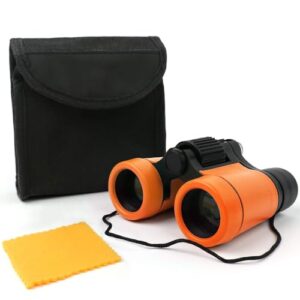
The Scotamalone Kids Binoculars Set delivers a solid entry point for young explorers, featuring 4x30mm optics that balance magnification with a wide field of view. Its shockproof features and soft rubber grip protect against inevitable drops during nature hikes, while the rubber-surrounded eyepieces guarantee eye safety for children aged 3-12.
Weighing just 4.2 ounces, these compact binoculars won’t tire small hands. The included neck strap and carrying case make them genuinely portable, though some users report durability concerns with extended rough use.
| Best For | Parents looking for an affordable first pair of binoculars to encourage outdoor exploration and nature observation in kids ages 3-12. |
|---|---|
| Magnification | 4x30mm |
| Age Range | 3-12 years |
| Eye Protection | Rubber eyepieces |
| Weight | 4.2 oz |
| Included Accessories | Neck strap, bag, cloth |
| Design | Shock-proof, non-slip |
| Additional Features |
|
- Lightweight at 4.2 ounces with soft rubber grips and eye protection designed specifically for small hands and faces
- Comes with everything needed to get started—neck strap, carrying bag, and lens cloth included
- Shockproof construction handles the drops and bumps that come with active kids
- Limited 4x magnification won’t satisfy kids wanting to see distant objects up close
- Quality control issues reported by some users, with concerns about durability over time
- Focusing mechanism can be tricky for younger children to adjust properly
2. Essenson Kids Binoculars

Essenson Kids Binoculars step up the game with 4x30mm adjustable optics and natural rubber construction that prioritizes child safety. At just 5.3 ounces, these best binoculars for children feature rubberized eyepieces that protect young eyes during bird watching, hiking, and backyard exploration. The adjustable eye distance accommodates kids aged 3-12, making them genuinely kid-friendly for outdoor fun.
You’ll get a complete package: canvas bag, neck strap, and lens cloth for proper binocular care. However, durability varies—some families report months of reliable use, while others experience quality issues.
| Best For | Parents looking for lightweight, affordable binoculars to introduce kids ages 3-12 to bird watching, hiking, and nature exploration. |
|---|---|
| Magnification | 4x30mm |
| Age Range | 3-12 years |
| Eye Protection | Rubber eyepieces |
| Weight | 5.3 oz |
| Included Accessories | Neck strap, bag, cloth |
| Design | Natural rubber material |
| Additional Features |
|
- Lightweight at 5.3 ounces with rubberized eyepieces that protect young eyes during active outdoor play
- Adjustable eye distance fits a wide age range from toddlers to preteens as they grow
- Complete starter kit includes carrying bag, neck strap, and lens cloth for easy transport and maintenance
- Durability is inconsistent, with some units breaking or falling apart after a few months of use
- Vision quality receives mixed reviews, with several customers reporting blurry or unclear lenses
- Size may be too small for older kids in the 10-12 age range despite the advertised compatibility
3. Kids Binoculars With Compass And Magnifier
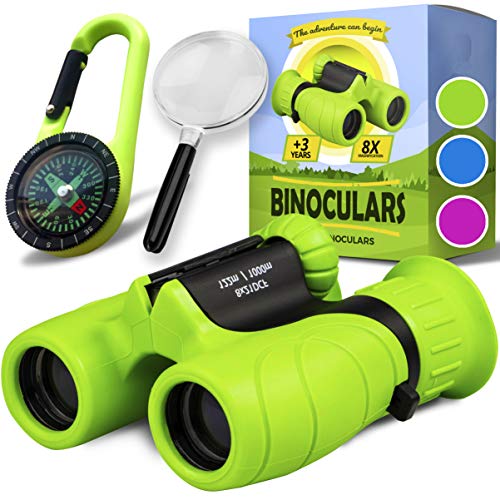
Promora’s 8×21 binoculars for kids bundle outdoor exploration with built-in compass navigation and a detachable magnifying glass—transforming nature walks into full-blown adventures. Weighing under 200 grams, this kid-friendly design features impact-resistant rubber coating, adjustable focus, and soft eyecups that protect developing eyes during birdwatching or stargazing.
The integrated compass introduces basic directional awareness, while the magnifier lets kids examine leaves, insects, and textures up close.
Though some users report fogging issues and occasional plastic strap failures, this educational toy remains a solid choice for children aged 3-12 exploring the outdoors.
| Best For | Parents looking for an affordable starter binocular set that bundles basic navigation tools and hands-on learning features for kids aged 3-12 who love outdoor exploration. |
|---|---|
| Magnification | 8×21 |
| Age Range | 3-12 years |
| Eye Protection | Soft eyecups |
| Weight | Not specified |
| Included Accessories | Compass, magnifier, bag |
| Design | Rubber coating |
| Additional Features |
|
- Lightweight design under 200 grams with rubber coating makes it easy for small hands to grip and carry during hikes or camping trips
- Built-in compass and magnifying glass encourage kids to learn directional awareness and observe nature details without needing separate tools
- Adjustable focus and soft eyecups provide comfortable viewing for young explorers discovering birds, wildlife, and distant objects
- Lens quality issues reported by some users, including fogging problems that can interfere with clear viewing
- Plastic components like straps and attachments may break easily, reducing overall durability during active outdoor use
- Quality control concerns with some customers receiving defective or damaged products out of the box
4. Obuby Kids Binoculars
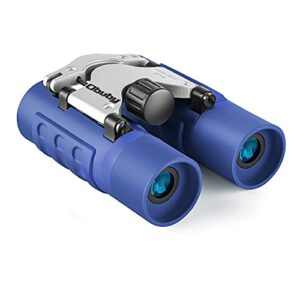
Obuby’s 8×21 compact binoculars deliver reliable outdoor fun for kids aged 3-12, with soft rubber eyepieces that cushion young faces during nature exploration. Weighing just 7.5 ounces and available in 13 vibrant colors, these kid-friendly binoculars feature shockproof construction and an adjustable center knob that even preschoolers can manage.
Obuby reviews mention occasional clarity concerns and tricky field-of-view alignment, but for wildlife observation and backyard discovery, they’re surprisingly durable.
Pair them with simple binocular care habits—gentle lens wipes, secure neck straps—and you’ve got a solid gateway into outdoor activities for kids.
| Best For | Parents looking for a durable, kid-friendly introduction to birdwatching and nature exploration for children ages 3-12. |
|---|---|
| Magnification | 8×21 |
| Age Range | 3-12 years |
| Eye Protection | Soft rubber eyepieces |
| Weight | 7.5 oz |
| Included Accessories | Not specified |
| Design | Shockproof, 13 colors |
| Additional Features |
|
- Lightweight 7.5-ounce design with soft rubber eyepieces makes them comfortable for young users
- Shockproof construction withstands drops and rough handling during outdoor adventures
- Simple center focus knob and compact size let even preschoolers operate them independently
- Optical clarity doesn’t match adult-grade binoculars, which may frustrate older kids
- Aligning both eyepieces can be challenging for younger children learning to use binoculars
- Not waterproof, so they’re vulnerable to damage in wet conditions
5. Kids Pink Binoculars For Birdwatching
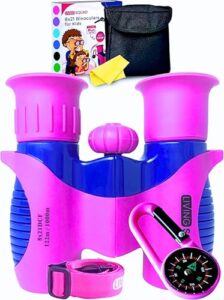
Pink binoculars might seem like pure style, but they’re surprisingly smart for birdwatching—young kids lock onto bright, familiar colors, making 6×21 or 8×21 configurations far more inviting for nature exploration. Soft rubber eye cups and breakaway neck straps keep outdoor activities safe, while splash-resistant bodies handle light rain during family hikes.
With adjustable interpupillary distance and ergonomic grips, these kid-friendly binoculars fit smaller hands comfortably, helping children track birds in flight without fatigue.
Pair them with simple birdwatch tips—start with backyard feeders, practice steady breathing—and you’ll spark genuine curiosity in outdoor fun.
| Best For | Parents looking for durable, easy-to-use binoculars that encourage young kids (ages 4–8) to explore birdwatching and outdoor play without breaking the bank. |
|---|---|
| Magnification | 8×21 |
| Age Range | 3-12 years |
| Eye Protection | Adjustable eyepieces |
| Weight | 9.4 oz |
| Included Accessories | Case, strap, compass |
| Design | Shockproof, rubberized |
| Additional Features |
|
- Lightweight 8×21 design with soft rubber eye cups makes it comfortable for small hands and safe for extended viewing sessions
- Shockproof body with rubberized coating handles rough play, plus includes useful extras like a carrying case, neck strap, and compass
- Adjustable eyepieces and simple center-focus knob let kids quickly track moving birds without frustration
- Some users reported quality issues like fogging lenses or defects after a few months of regular use
- Not suitable for children under 3 years old due to small parts and potential choking hazards
- Entry-level lens coatings may not deliver the brightness or clarity of higher-end optics, limiting performance in low light
6. BeBison Kids Binoculars
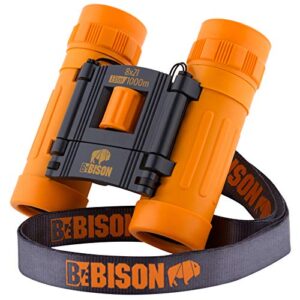
BeBison stands out with lightweight, shockproof housing and soft rubber eyepices that protect younger users during outdoor fun. Its adjustable center focus and 8×21 configuration deliver solid optical quality for nature walks or backyard bird-spotting.
The included neck strap and carrying case reinforce the safety-first philosophy every parent appreciates. You’ll find it kid-friendly enough for beginners aged four and up, yet durable enough to survive the rough-and-tumble world of actual exploration.
It’s a smart entry point for budding naturalists ready to zoom in on their next adventure.
| Best For | Parents seeking an affordable, durable first binocular for young explorers aged four and up who love bird watching, nature hikes, and outdoor games. |
|---|---|
| Magnification | 8×21 |
| Age Range | 4+ years |
| Eye Protection | Soft rubber eyepieces |
| Weight | 7.7 oz |
| Included Accessories | Neck strap |
| Design | Compact folding |
| Additional Features |
|
- Shockproof construction with soft rubber eyepieces protects kids during active play and reduces the risk of injury during falls or bumps.
- Lightweight 8×21 design with adjustable focus makes it easy for small hands to handle and operate without fatigue.
- Includes neck strap and carrying case for added safety and convenience during outdoor adventures.
- Size may be too small for children with larger heads or faces, limiting comfort and usability for some kids.
- Durability concerns reported by some users, with instances of breakage after minimal use despite shockproof claims.
- Quality control issues noted, with occasional defective units arriving, though customer service typically resolves problems.
7. Makino Kids Binoculars
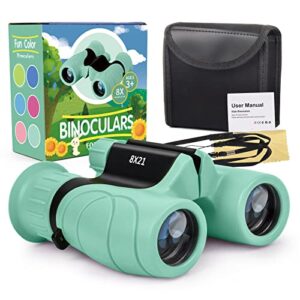
Makino features a textured, non-slip grip that keeps binoculars for kids steady in small hands during outdoor fun, whether you’re tracking robins or scanning distant trails. Its 8×21 magnification and soft rubber eyecups protect young eyes while delivering clear close-ups—binocular safety meets real functionality.
The shockproof body withstands drops that come with genuine exploration, and the included neck strap plus carrying case reinforce kid-friendly design.
You’ll appreciate how this best binoculars for children’s outdoor activities option fosters child development through hands-on discovery without breaking the bank.
| Best For | Parents looking for an affordable, durable first pair of binoculars for kids aged 3-12 who love exploring nature, bird watching, or outdoor adventures. |
|---|---|
| Magnification | 8×21 |
| Age Range | 3-12 years |
| Eye Protection | Soft rubber eyepieces |
| Weight | 0.013 oz |
| Included Accessories | Neck strap, bag |
| Design | Shock-absorbing, flexible |
| Additional Features |
|
- Lightweight 8×21 magnification with soft rubber eyecups protects young eyes while delivering clear views for bird watching and nature exploration
- Shockproof, kid-safe design with textured non-slip grip withstands drops and rough handling during outdoor play
- Comes with neck strap and carrying case, making it easy for kids to transport and keep track of during hikes and camping trips
- Lenses can fog up in cold weather, limiting use during winter outdoor activities
- Included cleaning cloth may leave greasy residue instead of properly cleaning the lenses
- Durability varies—some users report the binoculars lasting less than a month despite shockproof claims
8. Kids Waterproof Binoculars
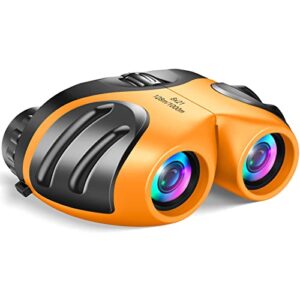
When rain clouds roll in during a nature walk, waterproof binoculars keep the adventure alive. Kids’ waterproof binoculars with IPX4 ratings or higher shield sealed lenses from splashes and light rain, while fog resistance prevents internal condensation that ruins views. Rubberized coatings absorb impacts and maintain outdoor safety through inevitable tumbles.
You’ll find kid-friendly designs pair waterproof features with floating straps, preventing loss near streams or ponds. This binocular maintenance advantage—simply wipe clean with mild soap—lets binoculars for children handle real exploration without constant worry about weather or wet hands.
| Best For | Parents looking for durable outdoor binoculars that can handle rain, splashes, and rough play during nature walks, camping trips, or backyard exploration with kids ages 3-12. |
|---|---|
| Magnification | 8×21 |
| Age Range | Kids/Adults |
| Eye Protection | Soft rubber eyepieces |
| Weight | 6.34 oz |
| Included Accessories | Not specified |
| Design | Non-slip ergonomic grip |
| Additional Features |
|
- IPX4 waterproof rating with sealed lenses protects against rain and splashes, while rubberized coatings absorb drops and impacts
- Soft rubber eyecups and rounded edges protect young eyes and minimize injury risk during active outdoor use
- Lightweight design under 300 grams with adjustable interpupillary distance grows with your child and makes extended viewing comfortable
- Not suitable for underwater use or full submersion—only handles light rain and surface splashes
- 6x-8x magnification works best for nearby viewing rather than distant objects, limiting some wildlife watching scenarios
- May be challenging for very young children with smaller hands to adjust zoom or handle independently
9. Blackice Kids Binoculars
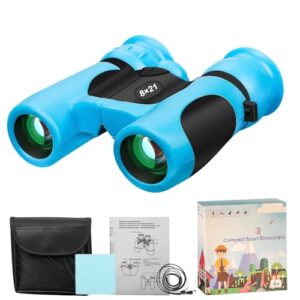
Blackice features an 8×21 configuration that hits the sweet spot for kids’ binoculars—delivering 6.8° viewing angles in a compact 4.76 x 4.69 x 2.13-inch frame weighing just 8.8 ounces. You’ll appreciate the soft rubber eyepieces that protect against bumps, while BAK 4 Porro Prism optics with blue coating provide sharp images during outdoor fun.
The adjustable neck strap and carrying bag make binocular care simple, though some users report quality control issues with loose eye pieces.
At an affordable price point, these kid-friendly binoculars suit nature walks and backyard exploration for ages 3+.
| Best For | Parents looking for an affordable, lightweight first binocular for kids aged 3+ who want to explore nature, birdwatching, and outdoor adventures. |
|---|---|
| Magnification | 8×21 |
| Age Range | 3+ years |
| Eye Protection | Flexible rubber eyepieces |
| Weight | 8.8 oz |
| Included Accessories | Neck strap, bag |
| Design | Shockproof, textured rubber |
| Additional Features |
|
- Compact and lightweight at 8.8 ounces with soft rubber eyepieces that keep young explorers safe during active play
- Sharp 8×21 magnification with BAK 4 Porro Prism optics delivers clear images for the price point
- Comes with adjustable neck strap and carrying bag, making it easy for kids to transport and store
- Mixed feedback on build quality with reports of broken straps and loose eyepieces
- Contains small parts that pose choking hazards for children under 4 years old
- Not suitable for serious birdwatching or professional use due to entry-level optical performance
Key Features of Kids Binoculars
Not all kids’ binoculars are created equal, and the features that matter most aren’t always obvious at first glance. You want binoculars that can keep up with your child’s adventures while actually being comfortable enough to use for more than five minutes.
Let’s break down the essential features that separate genuine outdoor tools from plastic toys that’ll end up forgotten in a drawer.
Soft Rubber Eyepieces
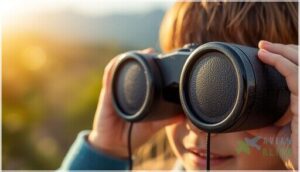
Soft rubber eyepieces are a breakthrough for eye comfort and kids’ safety in binoculars for kids. These cushioned optical instruments for kids protect young eyes from hard plastic edges while creating a comfortable seal that blocks stray light—essential for the best binoculars for children’s outdoor activities.
- Rubber materials compress gently against the eye socket, reducing pressure during extended nature exploration
- Eyepiece design with rounded edges prevents scratches and injuries if kids accidentally bump the binoculars
- Soft focus zones accommodate smaller faces, making kids’ optical instruments for nature exploration more accessible
The importance of rigorous testing and validation, similar to scientific study methods, ensures the quality and safety of kids’ binoculars.
Adjustable Focus
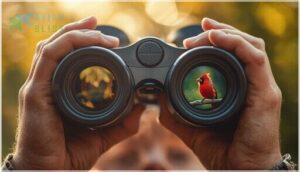
Adjustable focus mechanisms transform how kids use optical instruments for nature exploration, letting them dial in optical clarity without adult help. A central wheel—usually requiring just 2 to 4 turns—shifts seamlessly from near-to-far subjects, while simple diopter settings correct eye alignment differences between left and right eyes.
This focus calibration enables young explorers to independently sharpen images, making the best binoculars for children’s outdoor activities genuinely kid-friendly.
Lightweight Design
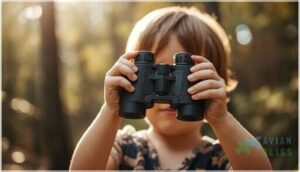
Once your child can focus independently, weight becomes the deciding factor in whether those optical instruments for kids stay in the backpack or get left behind.
The best binoculars for children’s outdoor activities usually weigh under 250 grams, using compact frames and balanced optics that don’t tug on small necks.
Portable designs with ergonomic grip surfaces and smart weight distribution let young explorers track birds for hours without fatigue.
Shockproof Construction
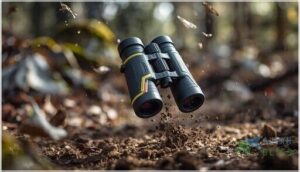
Even lightweight binoculars need impact resistance—kids drop things, and optical instruments for kids should survive the inevitable fumble. Look for durable materials like polymer overmolding that absorbs shocks, plus rubberized armor for slip resistance.
Drop test methods verify these children’s optical instruments can handle real-world bumps, while sealed housings protect against light rain.
A rugged design with a reinforced chassis prevents lens misalignment, ensuring toy safety and durability through years of backyard adventures.
How to Choose Binoculars for Kids

Picking the right binoculars for your kid isn’t about grabbing the cheapest pair off the shelf and hoping for the best. You need to think about what actually works for their age, how the thing feels in their hands, and whether it’ll survive the inevitable drops and tumbles.
Here’s what matters most when you’re shopping around.
Age and Skill Appropriateness
Matching binoculars to your child’s developmental needs isn’t rocket science, but it makes all the difference. Here’s a quick skill assessment guide:
- Ages 3–6: Start with 4x–6x magnification and focus-free designs to accommodate emerging motor skills and shorter attention spans.
- Ages 7–9: Shift to 6x–8x models with adjustable focus as hand stability improves and the learning curve levels out.
- Ages 10+: Consider 8x–10x magnification for experienced young explorers ready for serious nature observation.
Age guidelines help, but watch how your child manages the binoculars—comfort and confidence matter more than numbers on a box.
Sizing and Comfort
Getting the fit right prevents headaches—literally. Eye relief should accommodate your child’s face without gaps, while ergonomic grips and proper grip design help small hands maintain control during hikes. Weight distribution under 250 grams keeps neck strain at bay, so face fitting becomes seamless when kids adjust the interpupillary distance themselves.
| Comfort Factor | Ideal Spec | Why It Matters |
|---|---|---|
| Weight | Under 250g | Reduces fatigue during long sessions |
| Eye Relief | Wide diameter eyepiece | Prevents discomfort, fits varied faces |
| Grip Design | Textured, contoured surface | Improves hold, reduces drops |
Best binoculars for kids balance technical precision with real-world playfulness—kids’ optical instruments for nature exploration shouldn’t feel like wrestling a telescope.
Durability and Materials
Your best outdoor gear for kids won’t survive a single camping trip if the frame construction crumbles on contact. Look for high-impact ABS or polystyrene housings with rubberized armoring—shock resistance matters when binoculars tumble from tree forts.
Weather durability through sealed O-rings manages light rain, while quality optical-grade acrylic lenses resist scratches better than cheap plastic alternatives in kids’ optical instruments.
Price and Value for Money
You’ll find solid kids binoculars starting around $10 to $25 for basic models, though mid-range options between $25 and $40 deliver better optics and rubberized grips worth the upgrade. Premium models from $40 to $60 offer waterproof housings and enhanced optical coatings.
Value assessment improves dramatically when manufacturers include carrying cases, neck straps, and lens cloths—these outdoor gear for kids bundles stretch your budget further.
Benefits of Binoculars for Children

Binoculars aren’t just toys—they’re tools that open up a whole new world for kids who are ready to explore beyond what’s right in front of them. When you hand a child a pair of quality binoculars, you’re giving them the ability to notice things they’d otherwise miss, whether it’s a bird’s nest high in a tree or the craters on the moon.
Binoculars transform kids from passive observers into active explorers, revealing hidden details in nature that spark lifelong curiosity
Here’s a closer look at the real benefits that come from letting kids experience the world through magnified lenses.
Encouraging Outdoor Exploration
When your kid straps on binoculars for kids, something shifts—screens fade and curiosity takes over. Research shows children with kid-friendly optics spend up to 60 extra minutes weekly in nature exploration compared to those stuck indoors. That’s real outdoor adventures happening:
- Family nature walks transform into wildlife observation for children
- Eco conservation lessons stick when kids spot habitats firsthand
- Environmental education becomes tangible through wildlife watching
- Nature escapes build lifelong outdoor habits
- Outdoor activities spark genuine wonder about the living world around them
Developing Observation Skills
Binoculars for kids sharpen visual awareness far beyond simple looking—they teach observation techniques that build critical thinking. When children zoom in on bird markings during wildlife observation, they’re practicing skill building that carries into classrooms.
Regular nature exploration with kids binoculars trains young minds to notice patterns, compare details, and ask “why?” Those habits strengthen systematically with each stargazing for kids session or backyard discovery.
Enhancing STEM Learning
Science exploration becomes tangible when kids binoculars transform abstract STEM education into outdoor learning adventures. You’re giving children environmental studies tools that develop critical thinking through hands-on discovery.
Educational gifts like these support science education by:
- Encouraging data collection during field observations
- Building measurement skills and hypothesis testing
- Increasing focus on pattern recognition and detail work
That’s learning that sticks beyond textbooks.
Binoculars Safety Tips for Kids
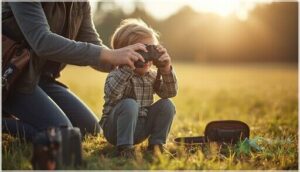
Getting binoculars into your kid’s hands is exciting, but safety comes first—and it’s simpler than you might think. A few thoughtful precautions protect their eyes, prevent accidents, and keep the experience fun rather than stressful.
Here are the essential safety tips every parent should know before handing over those optics.
Eye Safety Considerations
Protecting young eyes starts with smart choices. You want binoculars with appropriate eye relief to prevent strain and misalignment, magnification around 6x to 8x to minimize shake, and rounded, non-toxic edges. Limit viewing sessions to 10-15 minutes with breaks, supervise initial use, and never allow kids to point optical instruments at the sun—retinal injury is real. These safety guidelines guarantee vision care while your child explores nature.
| Safety Feature | Why It Matters | What to Check |
|---|---|---|
| Eye Relief | Prevents strain and misalignment | Adequate spacing for comfortable viewing |
| Magnification Level | Reduces shake and fatigue | 6x to 8x range ideal for child vision |
| Material Safety | Avoids injury and irritation | Non-toxic, rounded edges, no sharp parts |
| Supervision | Teaches proper handling | Guide focus adjustments away from eyes |
| Sun Protection | Prevents retinal damage | Never view sun; use sunglasses outdoors |
Non-Toxic Materials
What touches your child’s skin matters just as much as what they see through it. Look for binoculars for kids with toxic-free optics, BPA-free chemical-free plastics, and safe lens coatings that meet EN71 or ASTM standards.
Many educational toys now use eco-friendly designs with phthalate-free rubber grips and water-based paints—sustainable materials that protect curious explorers without compromising durability in kids’ outdoor gear.
Use of Neck Straps
A secure attachment point means nothing if the strap itself fails during a tumble down a hillside. Padded, adjustable lengths with reinforced connection points prevent accidental drops while reducing neck strain during long nature walks. For binoculars for kids exploring rugged terrain, quick releases and non-toxic strap materials offer safety features that balance freedom with protection:
- Quick-release buckles enable rapid removal in emergencies
- Reinforced attachment points withstand rough handling and drops
- Padded adjustable straps distribute weight evenly across shoulders
- Bright reflective accents improve visibility in outdoor settings
- Hypoallergenic materials prevent irritation during extended wear
Check stitching and hardware regularly—worn straps compromise safety standards that keep your young explorer’s best binoculars for children’s outdoor activities secure. Replace frayed components promptly, and teach one-handed clip techniques so kids can shift between handheld use and neck wear without fumbling. These kids’ optical instruments for nature exploration deserve secure attachments that match their durability.
Durability and Design in Kids Binoculars

Kids don’t exactly treat their gear with museum-level care, which means binoculars need to survive drops, splashes, and the kind of rough handling that comes with genuine outdoor excitement.
The best designs balance toughness with features that actually make sense for small hands and unpredictable weather.
Here’s what separates binoculars that last from those that end up in the donation bin after one camping trip.
Shockproof and Waterproof Features
Ever wondered if kids’ binoculars can handle a tumble or splash during wild outdoor adventures? With shock absorption rubber armor and Water Resistance sealing, most models pass drop testing from shoulder height and brief rain exposure. Fog Protection and Seal Quality matter, too—keeping the view clear, even after rough play.
| Feature | Benefit |
|---|---|
| Shockproof Armor | Survives drops |
| Waterproof Seals | Manages splashes |
| Fog Protection | Clear visibility |
Secure Grip and Handling
Grip matters, especially when small hands meet big adventures. The best binoculars for kids feature ergonomic design and thoughtful grip materials, boosting handheld stability and comfort. You’ll want:
- Non-slip rubber surfaces
- Contoured bodies for easy finger placement
- Textured thumb rests
- Lightweight frames for wrist support
- Guarded eyepieces for safe handling
That’s how you keep exploring, worry-free.
Longevity for Active Use
Resilience is the heart of kids binoculars that last. Through Durability Tests and smart Material Selection, shock resistance keeps lens housings intact after countless drops.
Lens Longevity stands strong, with coatings holding clarity after 1,000 hours outdoors. Rigorous Wear Analysis proves the Best Binoculars for Children’s Outdoor Activities won’t quit—these Kids Optical Instruments for Nature Exploration are built for years of adventure.
Understanding Binocular Magnification
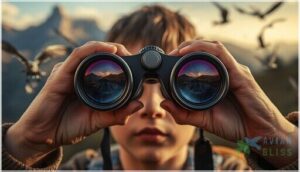
Magnification is one of those features that can make or break your kid’s binocular experience. If you’re wondering what those numbers like 8×21 or 8×25 actually mean, you’re in the right place.
Let’s break down the basics so you can pick the best option for your child’s next adventure.
What 8×21 or 8×25 Means
Curious about those numbers stamped on Kids binoculars? With Magnification Basics, “8×21” means objects look eight times closer, while “21” is the Lens Diameter in millimeters.
Larger lenses, like 25mm in Best Binoculars, boost Optical Quality and brightness.
For sharp Field Views and comfortable Eye Relief, these specs shape how Kids Optical Instruments perform outdoors.
Appropriate Magnification for Kids
Think of Magnification Levels like training wheels—3x to 6x is ideal for Kid Friendly Optics, letting young hands master Focus Techniques without frustration. Higher numbers, like 8x, offer sharper views but challenge steadiness.
When Choosing the Right Binoculars for Kids, prioritize Lens Quality and Eye Safety Tips to guarantee Kids Binoculars are both fun and safe for outdoor adventures.
Exit Pupil and Field of View
Ever wonder why some Kids Binoculars feel easier to use? The secret’s in Pupil Size and Field Width. For the Best Binoculars, look for:
- Exit pupil of 2–4 mm for bright, forgiving views.
- Wide Field Width to track moving birds.
- Long Eye Relief—essential for glasses.
Optical Coatings and Prism Design sharpen every detail.
Educational Value of Kids Binoculars

Binoculars aren’t just for looking—they’re tools for learning, sparking curiosity every time your child steps outdoors. With the right pair, you can turn a simple walk into a hands-on science lesson or a birdwatching adventure.
Here’s how different binocular options help kids explore nature, wildlife, and the night sky.
Nature and Wildlife Observation
Binoculars for kids transform wildlife observation from abstract learning into hands-on discovery. When your child spots a squirrel’s cache or tracks a hawk’s glide path, those kids binoculars turn outdoor exploration into real ecosystem studies.
Nature journaling paired with wildlife tracking teaches pattern recognition—seasonal changes, bird behavior, even insect life cycles become vivid lessons. It’s curiosity meeting science, one magnified moment at a time.
Birdwatching for Kids
Birdwatching for kids turns those 8×21 or 8×25 binoculars into bird species detectives. Your child learns to spot common backyard visitors—robins, cardinals, blue jays—while practicing kid-friendly outdoor safety and patience.
Start with these beginner steps:
- Identify field marks like wing bars, beak shape, and color patterns
- Practice quiet observation to minimize disturbance and increase sightings
- Keep a simple bird journal tracking species, behaviors, and locations
Nature exploration meets wildlife conservation, one feathered discovery at a time.
Stargazing and Science Exploration
After spotting cardinals, swing those binoculars for kids skyward—celestial observations become your next adventure.
Kids binoculars with 7–8x magnification reveal lunar craters, Jupiter’s moons, and constellation patterns, turning cosmic education into hands-on science and technology.
Pair astronomy basics with simple star charts to fuel galactic wonder and space exploration curiosity.
Your child’s educational tools now bridge birdwatching and stargazing, building observation skills that span earth and sky.
Age Guidelines for Using Binoculars
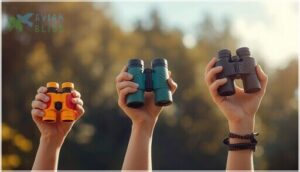
Choosing binoculars based on your child’s age isn’t just about safety—it’s about matching their developmental stage with tools they can actually use and enjoy. A three-year-old needs something completely different than a ten-year-old who’s ready for real optics and outdoor adventures.
Let’s break down what works best for each age group so you can find the right fit.
Recommended Ages
Most manufacturers label kids binoculars for age groups spanning 3 to 12 years, with younger children (3–6) thriving on 6x magnification limits and shockproof designs that pass rigorous durability tests. As skill levels advance through elementary years, 8x models suit ages 6–8, while preteens handle 10x magnification.
Safety tips emphasize supervised initial use, non-toxic materials, and neck straps—essential for children’s learning during outdoor activities.
Preschool Vs. Older Children Options
Preschool models under 5 ounces suit ages 3–6 with 6x magnification, soft eyecups, and simple focus knobs that support child development through hands-on outdoor education.
Older children benefit from 8×21 or 8×25 age-appropriate optics with enhanced durability for kids’ outdoor activities—these learning tools balance usability with brighter images.
For mixed-age households, selecting adjustable kids binoculars accommodates both groups while supporting children’s learning and exploration.
Best Outdoor Activities With Binoculars

Once your kids have their binoculars, you’ll want to put them to good use in ways that keep them excited and engaged. The right activities transform a simple piece of equipment into a gateway for discovery, turning ordinary outings into adventures they’ll remember.
Here are three tried-and-true activities that work beautifully with kids’ binoculars, whether you’re exploring trails or just stepping into your own backyard.
Family Nature Walks
Grab your kids binoculars and hit the trail—regular nature walks transform outdoor activities for families into hands-on eco education. Depending on your child’s age and interest, you can plan 20–60 minute excursions that build observation skills while ensuring outdoor safety through proper hydration, sun protection, and child-friendly gear with wrist straps.
- Schedule weekly walks to different ecosystems for wildlife viewing and nature exploration
- Use observation prompts to identify birds, insects, and plants during hiking adventures
- Follow up with drawings or discussions that reinforce learning and family bonding
Scavenger Hunts
Turn your kids binoculars into treasure-hunting tools by organizing scavenger hunts that blend outdoor games with wildlife tracking. Print a simple list of 6–12 nature targets—specific leaf shapes, bird species, or insects—and watch your team tackle challenges together.
This outdoor activity sharpens observation skills while sparking curiosity about local ecosystems, making nature exploration feel like an adventure rather than a lesson.
Backyard Exploration
Your own yard becomes a wildlife observatory when kids aim binoculars at birds, butterflies, and squirrels just beyond the patio. Garden exploration builds observation skills through nature scavenger games that track insect behaviors or seasonal changes, with children spending 15–60 extra minutes outdoors per session.
These kids outdoor activities transform everyday spaces into environmental education labs, sparking curiosity about backyard wildlife without leaving home.
Frequently Asked Questions (FAQs)
Can kids use binoculars with glasses on?
Like threading a needle with mittens on, using kids binoculars with glasses can feel tricky—but it absolutely works. Most children’s optics feature adjustable eye relief and fold-down eyecups, ensuring glasses-wearing kids enjoy full, comfortable views outdoors.
How do you clean kids binoculars properly?
Use a microfiber cloth dampened with lens cleaning solution to gently wipe kids binoculars. Avoid harsh chemicals near coatings, supervise children during maintenance, and store in protective cases between outdoor adventures.
Whats the ideal interpupillary distance for children?
Most children’s eyes sit about 52 to 60 millimeters apart, though this narrows with age. Quality kids binoculars adjust from 50 to 70 millimeters, ensuring proper eye alignment and optical comfort throughout childhood.
Are theater binoculars suitable for outdoor use?
Theater binoculars typically lack weather resistance and outdoor durability—their lens coatings suit indoor lighting, not nature observation.
For kids’ outdoor activities, choose binoculars with rubberized armor, weatherproofing, and sturdy eyepiece design for real field visibility.
Do kids binoculars work in low light?
Most compact optics disappoint once the sun dips—unless you enjoy squinting at gray blobs. Kids binoculars often struggle in low light due to smaller objective lenses (21–25mm) and limited light transmission, affecting image brightness and optical quality noticeably.
Conclusion
The right binoculars for kids don’t just magnify distant objects—they reveal an entirely new dimension of engagement with the natural world. By prioritizing durability, comfortable ergonomics, and age-appropriate optics, you’re equipping your child with a tool that transforms casual glances into intentional discoveries.
Whether they’re tracking a cardinal’s flight path or counting crater details on the moon, quality binoculars turn fleeting outdoor moments into formative experiences that sharpen curiosity, patience, and scientific thinking for years ahead.
- https://www.space.com/
- https://www.jasonpb.com/clients
- https://www.nikon-photocontest.com/en/awards/2018/The_Open_Award_single_photo/art_01.html
- https://ny.audubon.org/news/guide-birding-binoculars
- https://act.audubon.org/a/annual-donate-stepped?ms=digital-fund-web-website_donate_url_202110&aud_path=/news/black-vultures-northward-expansion-creates-new-conflicts-farmers&aud_path=/news/foraging-isnt-just-birds&aud_path=/news/dont-sleep-other-sandhill-season&aud_path=/news/we-go-where-birds-go&aud_path=/news/mixed-emotions