This site is supported by our readers. We may earn a commission, at no cost to you, if you purchase through links.

North American bird populations have declined by nearly 3 billion individuals since 1970—a staggering loss that represents one in four birds vanishing from our skies. Yet this ecological crisis has sparked something extraordinary: a growing movement of everyday people stepping into bird conservation volunteer work, transforming backyards, parks, and wild spaces into havens for threatened species.
You don’t need a biology degree or specialized equipment to join them. Local Audubon chapters, wildlife refuges, and conservation groups across the country are actively seeking volunteers who can commit just a few hours each month to activities ranging from habitat restoration to citizen science surveys.
The work is surprisingly accessible, deeply rewarding, and measurably effective at reversing population declines—one restored wetland, monitored nest, and removed invasive plant at a time.
Table Of Contents
- Key Takeaways
- How to Get Started in Bird Conservation
- Types of Bird Conservation Volunteer Roles
- Training and Support for Volunteers
- Making an Impact Through Volunteer Work
- Staying Engaged and Growing as a Volunteer
- Frequently Asked Questions (FAQs)
- What are the benefits of volunteering for Conservation?
- What does a nature reserve volunteer do?
- How do I volunteer for a Wildlife Center?
- How do I become a Bird Rescue Volunteer?
- How can I help save birds?
- What can volunteers do to help the environment?
- How can I make bird conservation a career?
- What skills do I need to volunteer?
- Are there opportunities for remote volunteering?
- How do conservation efforts impact bird populations?
- Conclusion
Key Takeaways
- Bird conservation volunteer work is surprisingly accessible, requiring no specialized training or degree—just a few hours monthly commitment to activities like habitat restoration, citizen science surveys, or invasive species removal that produce measurable results including 40% higher nesting success and 25% increases in local bird diversity.
- Your volunteer contributions directly translate to quantifiable conservation wins: native plant cover jumps 35% after invasive removal, breeding pair counts climb 12-20% within three to five years, and programs with active volunteers show 22% higher habitat preservation success rates.
- Getting started is straightforward through local Audubon chapters, wildlife refuges, and conservation groups that offer flexible roles matching your interests—from hands-on fieldwork and data entry to education outreach—with structured onboarding, safety training, and mentorship programs that boost retention by 22%.
- Sustained volunteer engagement creates ripple effects beyond fieldwork, strengthening community involvement that raises local conservation awareness by 34%, influences environmental policy (12 new state bird protection laws since 2018), and opens pathways to leadership roles and conservation careers.
How to Get Started in Bird Conservation
Getting started with bird conservation volunteer work doesn’t require specialized training or a biology degree—just a willingness to show up and help.
You’ll need to identify opportunities in your area, navigate a straightforward application process, and figure out how your schedule and skills fit with the work at hand.
Here’s what you need to know to take those first practical steps.
Finding Local Volunteer Opportunities
To discover local volunteer opportunities in bird conservation, start by exploring state parks and national wildlife refuges—many host quarterly events with openings for 20 to 60 people. Check Audubon chapters and regional bird clubs for monthly work days, generally offering three to six chances each month.
Municipal parks departments and nonprofit conservation groups maintain online calendars listing habitat restoration and community outreach events across your area.
When addressing website issues for these organizations, understanding error code explanations is essential for resolving technical problems.
Application and Eligibility Requirements
Once you’ve found volunteer opportunities in wildlife management, you’ll complete an application process that usually includes an online form with your contact information and a brief motivation statement. Most wildlife conservation volunteer work requires you to be at least 16 or 18 years old.
About 37% of programs conduct background checks and eligibility criteria screenings before your first shift, guaranteeing volunteer screening protocols protect sensitive habitats and vulnerable species.
To guarantee the effectiveness of these programs, it’s vital to conduct a literature review process to evaluate the current state of conservation efforts.
Matching Your Skills and Interests
Once you’ve cleared the application hurdles, you’ll want to find roles that genuinely excite you. Skill alignment and interest matching aren’t just buzzwords—they’re the secret to volunteer retention and personal growth in conservation careers. Programs using structured matching report 15% higher satisfaction, turning volunteer opportunities into meaningful ecovolunteering experiences.
Consider these paths in wildlife conservation volunteer work:
- Habitat restoration if you love hands-on landscape work
- Citizen science projects when data collection sparks your curiosity
- Community outreach if you’re passionate about education
- GIS and data analysis for tech-savvy conservationists
- Species-specific monitoring when certain birds capture your heart
Volunteers matched to their interests stay 11% longer and contribute more meaningfully to bird conservation outcomes.
Scheduling and Time Commitments
Before you commit, understand what time management actually looks like in volunteer work in nature. Most programs expect 2–4 hours weekly for ongoing stewardship, though flexible hours exist for 60–75% of roles.
Setting clear commitment levels from the start—whether you can spare 30 or 100 hours annually—prevents burnout prevention issues and helps volunteer management match you with sustainable ecovolunteering opportunities.
Types of Bird Conservation Volunteer Roles
Bird conservation work isn’t one-size-fits-all—there’s a role for every interest and skill level. Whether you’re drawn to hands-on fieldwork, prefer organizing data from home, or love sharing your passion with others, you’ll find opportunities that match what you bring to the table.
Here’s a look at the main types of volunteer roles you can explore.
Habitat Restoration and Invasive Species Removal

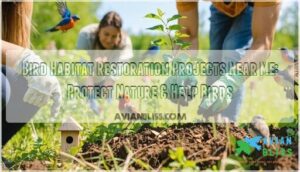
If you’re drawn to hands-on conservation, habitat restoration and invasive species removal let you rebuild ecosystems from the ground up. You’ll pull invasive plants that choke native vegetation, restore wetlands, and create space for species reintroduction—work that can boost nesting success by up to 40% within just a few breeding seasons.
- Native plantings increase local bird richness by approximately 25% in urban waterfront areas over five years
- Invasive control raises native understory cover by 30–50% within 12–24 months, improving ground-nesting habitat
- Wetland restoration paired with invasive species management maintains ecosystem balance and fledgling survival
- Habitat management creates measurable improvements in vegetation structure within three years
- Wildlife habitat restoration correlates with 10–20% higher breeding pair density across multiple regions
Bird Surveys and Citizen Science Projects

Participating in bird monitoring through citizen science turns your field observations into conservation research that shapes wildlife management. You’ll conduct surveys at dawn—when detection rates jump by 28–35%—record species tracking data on user-friendly platforms, and contribute to shorebird surveys that inform avian disease prevention strategies. Proper training boosts your identification accuracy by 15–25%, and your entries feed data analysis that guides real-time conservation decisions.
| Survey Type | Impact |
|---|---|
| Point counts | Detect 28–35% more birds at dawn |
| Breeding surveys | Achieve 0.4–0.8 detection probability |
| Annual counts | Drive conservation action in 40–60% of communities |
Education, Outreach, and Advocacy

Conservation literacy grows when you bring birds to people—through workshops, school visits, and community events that raise public awareness by up to 35%. Education and outreach remains the top volunteer recruitment channel for 62% of programs. You’ll:
- Lead workshops that boost local bird sightings by 28%
- Present at schools (40% of formal environmental education)
- Staff community events that improve conservation literacy scores
- Create multilingual materials to expand community engagement by 22%
Data Entry and Digital Support

Behind every field sighting lies hours of digital work—and you can help close the gap. Seventy-two percent of citizen science bird projects depend on volunteers for data entry and verification tasks using conservation apps and volunteer software.
Through online portals, you’ll transfer observation data, curate inconsistencies, and support wildlife preservation efforts that connect community engagement with environmental conservation—all from home.
Training and Support for Volunteers

You won’t be thrown into the field without preparation. Most bird conservation programs build training right into your first month, covering everything from identifying species to staying safe during fieldwork.
Here’s what you can expect as you get started and continue to grow in your volunteer role.
Orientation and Onboarding Process
Once you’ve signed up, expect a well-structured onboarding experience designed to set you up for success. Most bird conservation efforts walk you through a volunteer intake process within your first week—usually lasting around two hours—where you’ll review safety protocols, data handling policies, and digital orientation materials. Programs increasingly use onboarding modules and mentorship programs to help you feel confident in the field.
- Hands-on field demonstrations help you practice protocols before your first real assignment
- Digital tools and mobile apps simplify data collection and standardize what you’ll learn
- Dedicated mentors guide you through Northern Virginia Bird Alliance volunteer opportunities during your essential first month
Species Identification and Safety Training
You’ll sharpen your Bird Identification through hybrid training that boosts retention by 22%—think online modules followed by field coaching with experienced mentors.
Safety Protocols cover everything from proper Wildlife Handling techniques to tick prevention, cutting injury rates nearly in half.
Most programs provide a Bird Guide and require you to master Species Recognition and the Birding Code of Ethics before your first Wildlife Survey, ensuring both Conservation Ethics and your confidence during Birdwatching sessions supporting Bird Conservation Efforts.
Ongoing Education and Professional Development
Once you’ve nailed the basics, your learning doesn’t stop—68% of volunteers pursue formal coursework or certificates within two years, opening doors to Career Advancement. You’ll find Mentorship Programs that pair you with experienced guides, Skill Building through online courses, and Certification Paths aligned with wildlife agencies.
These Environmental Education Programs and Professional Networking opportunities turn weekend passion into genuine expertise in Wildlife Conservation and Bird Conservation Efforts.
Making an Impact Through Volunteer Work

You didn’t just sign up to show up—you’re here to see real change happen. The work you do as a volunteer directly shapes the survival and recovery of bird populations, one restored habitat and data point at a time.
Your volunteer work directly shapes bird survival through every restored habitat and documented data point
Here’s how your efforts translate into measurable conservation wins.
Monitoring Bird Populations and Nesting Sites
Your volunteer efforts in bird surveys and nest monitoring directly fuel wildlife research and monitoring that tracks population trends over time. Point counts and acoustic monitoring help you detect elusive species, while nest site identification protects critical breeding areas and aids avian disease prevention.
Through species tracking and habitat assessment—including shorebird surveys—you’ll document nesting success and contribute data that guides species monitoring and habitat restoration priorities across entire regions.
Measuring Habitat Restoration Success
Beyond counting birds, you’ll measure restoration outcomes using habitat metrics that reveal real conservation impact. Native plant cover generally jumps 35% after your invasive species removal work, while breeding pair counts climb 12–20% within three to five years.
These ecological restoration benchmarks—vegetation structure, nesting success rates, species monitoring data—prove your habitat management efforts strengthen biodiversity conservation and ecosystem health in measurable, meaningful ways.
Supporting Community and Conservation Goals
Your work ripples far beyond field sites—it strengthens community engagement and shapes environmental policy. When you join conservation efforts, you’re part of something proven: volunteer-driven projects boost habitat preservation success rates by 22% through shared stewardship, while community outreach and education increases local awareness by 34%.
Strong conservation partners depend on volunteer retention, and your sustained involvement directly aids:
- Wildlife preservation and management programs reaching 73% of counties
- Community involvement that raises youth science interest 15%
- Environmental conservation efforts yielding measurable nest success gains
- Advocacy work that has enacted 12 new state bird protection policies since 2018
Staying Engaged and Growing as a Volunteer

Once you’ve found your rhythm in bird conservation work, the real fun begins—there’s always a new skill to learn, a fresh project to join, or a chance to step into something bigger.
Staying connected means more than showing up; it’s about building relationships, seeking out meaningful experiences, and finding ways to deepen your impact over time.
Here’s how you can keep the momentum going and grow alongside the birds you’re helping to protect.
Participating in Special Events and Counts
One of the most rewarding ways to deepen your commitment is through special events like bird counts and shorebird surveys. These community events bring citizen science to life—you’ll track species, contribute to data analysis, and help detect population trends that shape conservation planning.
Colonial waterbird monitoring and spring migration counts offer hands-on experience in event planning while connecting you with passionate bird watching communities.
Networking With Conservation Organizations
As you grow in volunteer coordination and conservation activities, building relationships across conservation networks creates opportunities for collaborative research and wildlife preservation efforts. Strengthening your role in environmental stewardship means:
- Joining cross-organization task forces that coordinate nature preservation initiatives and reduce project overlap by 20%
- Attending partnership building events where community engagement usually connects you with 5,000 like-minded advocates
- Participating in data-sharing agreements that improve sustainability and conservation initiatives across regions
Advancing to Leadership Roles
Leadership development transforms committed volunteers into conservation changemakers. Your path forward includes mentorship programs that boost supervisory readiness by 24% within a year, formal training that raises decision-making confidence by 33%, and team management opportunities overseeing habitat projects with 14–22% higher plant survival rates.
Many natural resource volunteer programs offer docent programs, event volunteers coordination, and office volunteers supervision—roles where you’ll empower others while strengthening conservation outcomes.
| Leadership Pathway | Impact Outcome |
|---|---|
| Team Lead Training | 31% fewer field incidents |
| Volunteer Mentorship | Faster leadership progression |
| Multi-Site Coordination | Consistent protocol adherence |
| Role Empowerment Certification | 15% higher long-term retention |
| Conservation Leadership Programs | 9–15% improved nesting success |
Frequently Asked Questions (FAQs)
What are the benefits of volunteering for Conservation?
Conservation volunteering strengthens community engagement, with programs seeing 23% increases in local participation.
You’ll help drive measurable habitat restoration success—volunteers improve vegetation metrics by 12%—while supporting biodiversity and building lasting environmental awareness.
What does a nature reserve volunteer do?
You’ll restore habitat by removing invasive plants, conduct bird surveys and species monitoring, and assist with reserve management tasks.
You’ll also support volunteer coordination efforts and contribute to nature preservation through hands-on wildlife conservation work.
How do I volunteer for a Wildlife Center?
Most wildlife centers welcome you with a simple online application—78% use formal forms. You’ll answer questions about your skills and interests, then staff will match you with habitat restoration, surveys, or community engagement roles that fit.
How do I become a Bird Rescue Volunteer?
Reach out to local wildlife rehabilitation centers to learn about their volunteer screening process. This usually includes background checks, emergency response training, and bird handling certification. Most programs require a commitment of 4–6 hours monthly.
How can I help save birds?
You can protect birds by creating Bird Friendly Gardens with native plants, supporting Conservation Efforts through donations or advocacy, participating in Avian Research Studies as a volunteer, and promoting Wildlife Preservation in your community.
What can volunteers do to help the environment?
Want to make a tangible difference? You can join habitat restoration projects, participate in wildlife surveys, support green initiatives, and advocate for environmental stewardship—all while protecting biodiversity through hands-on conservation efforts.
How can I make bird conservation a career?
You can shift from volunteer to paid conservation jobs by building field experience, pursuing relevant degrees in wildlife management or bird research, earning certifications, and networking at conferences—pathways that lead to environmental policy and habitat restoration careers.
What skills do I need to volunteer?
You don’t need a resume to start—most programs welcome beginners and provide volunteer training in bird identification, habitat restoration, conservation tools, and data analysis as you learn species research and outdoor education through hands-on wildlife management experience.
Are there opportunities for remote volunteering?
Yes, you can contribute remotely through virtual outreach, online volunteering for bird monitoring projects, remote data entry tasks, and digital conservation support—helping habitat restoration and preservation efforts from anywhere with an internet connection.
How do conservation efforts impact bird populations?
Conservation efforts can reverse what seemed impossible—declining bird populations actually stabilized within four to nine years through habitat restoration, while protected areas boosted population persistence by 8–14% in surrounding landscapes.
Conclusion
Your first season of bird conservation volunteer work might feel like tending a medieval monastery garden—small acts of care that ripple far beyond what you can see. Every invasive plant you remove, every nest you monitor, every data point you record becomes part of a continental effort to rebuild what we’ve lost.
The birds don’t need your flawlessness. They need your presence, your consistency, and your willingness to show up when it matters most.