This site is supported by our readers. We may earn a commission, at no cost to you, if you purchase through links.
Every three minutes, a bird species edges closer to extinction—and the fragmented patches of habitat we’ve left behind can’t hold the line alone.
Bird conservation areas exist precisely because birds don’t respect property boundaries: a warbler wintering in a Yucatán forest depends just as much on its Pennsylvania breeding ground as on every stopover marsh in between.
Protecting one without the others accomplishes little.
From the Prairie Potholes flooding with nesting ducks to the remote Revillagigedo Archipelago sheltering birds found nowhere else on Earth, these designated regions form the backbone of modern avian conservation.
Table Of Contents
- Key Takeaways
- What Bird Conservation Areas Are
- North America’s Key Bird Regions
- Notable Bird Conservation Area Examples
- How Bird Areas Are Designated
- Protecting Bird Areas Effectively
- Frequently Asked Questions (FAQs)
- What are bird conservation regions?
- Can I give my bird to a bird sanctuary?
- Where is the birding capital of the United States?
- What three birds are not protected?
- How can individuals volunteer at bird conservation areas?
- What species have been successfully recovered through conservation?
- Are bird conservation areas open to public visitation?
- How do conservation areas handle conflicting land uses?
- What technology is used to track bird populations?
- How does climate change shift bird migration timing?
- Conclusion
Key Takeaways
- Bird conservation areas don’t just protect one patch of land — they safeguard full journey a bird takes, from Arctic breeding grounds to tropical wintering spots, because losing any link in that chain breaks the whole thing.
- What separates a Bird Conservation Area from an Important Bird Area is action: one flags a site as significant, while the other backs it up with legal protection, funding, and real governance across borders.
- Designation isn’t handed out loosely — sites earn protected status by meeting hard criteria around habitat quality, species concentration, and how critical they are across all three life stages: breeding, migration, and wintering.
- You don’t need a biology degree to matter here — volunteering, submitting bird checklists, or simply advocating for these landscapes feed directly into the monitoring data that shapes real conservation decisions.
What Bird Conservation Areas Are
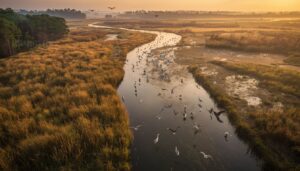
Bird Conservation Areas are more than just protected patches of land — they’re carefully defined spaces built around the needs of birds and the habitats they depend on. Understanding what makes a place qualify, and how it gets protected, helps you see why these areas matter so much to wildlife survival.
From the criteria used to designate a site to the protections that follow, habitat preservation practices for birds shape every decision made within these boundaries.
Here’s what you need to know.
Definition and Conservation Purpose
Bird Conservation Areas are designated zones that protect the full range of habitats birds depend on — wetlands, forests, and grasslands — maintaining the habitat heterogeneity that sustains population viability and ecological resilience across generations. They preserve migratory connectivity along flyways and safeguard genetic diversity by protecting birds at multiple sites within a protected areas network.
Implementing an in‑situ conservation approach ensures habitats are protected within their natural settings.
- Protect breeding, feeding, and migratory stopover sites
- Prevent habitat loss from development and unsustainable land use
- Support state-owned land and water habitat protection programs
- Enable designation and management of Bird Conservation Areas under coordinated frameworks
- Integrate conservation into agency planning across public and private lands
How They Protect Habitats and Species
Once a site earns protected status, Bird Conservation Areas use buffer zones and ecological corridors to shield core habitats from surrounding pressures.
Legal enforcement restricts harmful land uses, while species-specific management covers the needs of species at risk — whether that’s wetland preservation for waterfowl or restoring migration corridors for forest birds.
Adaptive management keeps strategies current as conditions change.
Bird Conservation Areas Vs. Important Bird Areas
Think of them as cousins, not twins.
Important Bird Areas — identified through the Partnership between Audubon and BirdLife International — flag globally significant sites using standardized Criteria for Bird Conservation Area Designation.
The Bird Conservation Area Program goes further, translating that recognition into Legal Status, Funding Mechanisms, and Stakeholder Engagement through Data Sharing and Cross-border Governance frameworks that actively protect state-owned Land and Water Habitat.
Public, Private, and Mixed-land Protection
Protection doesn’t stop at the property line.
The Bird Conservation Area Program works across public lands — where federal and state agencies hold title to critical wetlands — and private parcels secured through easement incentives and tax credit programs.
Land trusts bridge both worlds, enabling public-private partnerships and landscape connectivity strategies that keep migratory corridors intact across North American regions, with legal enforcement mechanisms ensuring commitments hold long-term.
North America’s Key Bird Regions
North America isn’t one bird world — it’s many, each shaped by its own climate, landscape, and the species that depend on it. From frozen tundra to tropical archipelagos, these regions tell you a lot about why protecting the right place matters so much.
Here are the key bird regions worth knowing.
Arctic and Boreal Breeding Grounds
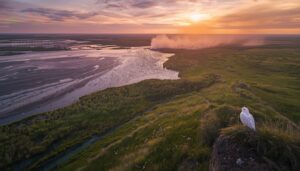
Arctic Plains and Mountains and the Boreal Taiga Plains pack as much ecological intensity into a single season as few places on Earth.
Snowmelt timing triggers insect pulses that fuel nestling growth almost overnight.
Permafrost thaw shapes wetland availability, while fire regime effects refresh boreal habitat structure.
Indigenous stewardship remains central to protecting these tundra and boreal ecosystems supporting endemic birds across the Arctic Slope and Boreal Softwood Shield.
Prairie Potholes for Waterfowl Production
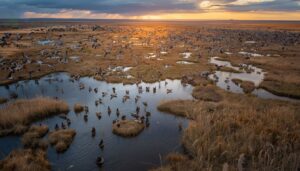
Few wetland ecosystems rival the Prairie Potholes as waterfowl breeding grounds — glacially carved basins that fill each spring and hum with life.
Duck Production Metrics tell the story clearly:
- Breeding densities exceeding 100 duck pairs per square mile.
- Hydroperiod Variability driving annual nest initiation cycles.
- Pothole Restoration rebuilding degraded basins across private lands.
- Grassland Buffer zones shielding nesting hens from predators.
- Incentive Programs engaging landowners in habitat stewardship.
These Important Bird Areas anchor bird habitat conservation across the northern plains.
Eastern Forests and Migratory Corridors
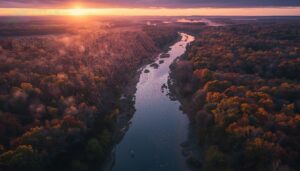
From southern Canada through the eastern U.S., Migratory bird corridors follow Riparian Greenways and river valleys where Riverine wetland habitats refuel long-distance travelers. Hedgerow Buffer Zones on private lands widen these routes, supported by Private Land Incentives.
Bird Conservation Areas and Important Bird Areas — including Atlantic Northern Forest sites — also address Light Pollution Mitigation and Climate-driven Phenology Shifts, disrupting migration timing.
Coastal, Island, and Seabird Habitats

Coastal and marine islands don’t just shelter seabirds — they’re where entire species survive or vanish.
From Texas coastal bird sanctuaries to remote Pacific outcrops, these Important Bird Areas depend on four interlocking systems:
- Tidal Marsh Dynamics, feeding shorebirds through invertebrate pulses
- Cliff Nesting Strategies, protecting eggs from mainland predators
- Seagrass Foraging Benefits, sustaining plunge-divers near shallow beds
- Island Predator Management and Pelagic Feeding Hotspots, anchoring seabird breeding colonies offshore.
Mexican Endemism Hotspots and Archipelagos

Mexico punches well above its weight in Bird Conservation Regions.
The Revillagigedo Archipelago shelters Socorro Doves and Townsend’s Shearwaters — species found nowhere else.
Sierra Madre Endemism corridors, Yucatan Karst Endemism zones, Cozumel Mangrove Habitat, and the Trans-Mexican Volcanic Belt each anchor distinct biodiversity hotspots and endemism in Mexican BCRs, making regional bird conservation planning across North America incomplete without them.
Endemic bird species here don’t share zip codes.
Notable Bird Conservation Area Examples

bird conservation areas are textbook examples of what smart, sustained protection can actually accomplish. Across the continent, a handful of sites stand out for the scale of their habitat, the diversity of species they shelter, and the conservation partnerships that keep them intact.
Here are some of the most significant ones worth knowing.
Everglades and Other Wetland Strongholds
Few places on Earth pack as much into their wetlands as the Everglades National Park — a Global Important Bird Area where hydroperiod management keeps sawgrass fire regimes and mangrove buffer zones functioning for waterfowl seasonal use.
The Everglades is a Global Important Bird Area where precise wetland management sustains entire ecosystems of waterfowl
Invasive python impacts and habitat loss have reshaped predator-prey dynamics, making careful assessment of habitat loss and restoration priorities essential for protecting priority bird species here.
Arctic Slope and Tundra Breeding Zones
Shifting from the warm subtropical marshes of the Everglades to the Arctic Slope feels like a completely different world — yet it faces equally urgent pressures. Peatland hydrology, microtopography, pond formation, and insect swarm timing together determine whether shorebirds and waterfowl successfully raise chicks across tundra and boreal ecosystems each short summer.
- Permafrost thaw impacts are quietly rewiring drainage networks, shrinking the ephemeral ponds that nesting birds depend on.
- Shrub expansion effects alter local microclimates, reducing open-ground visibility that ground-nesting species need.
- These Important Bird Areas face mounting threats from infrastructure fragmentation across sensitive Arctic Slope habitat.
Mississippi Alluvial Valley Stopover Habitat
From Arctic tundra to the Mississippi Delta, the contrast is striking — yet the same fragility applies. The Floodplain Mosaic of bottomland hardwoods and riverine wetland habitats here acts as a critical refueling station along migration corridors and habitat connectivity networks.
| Habitat Feature | Conservation Value |
|---|---|
| Bottomland hardwood forests | Canopy cover for migrating songbirds |
| Invertebrate Pulses post-flooding | High-protein foraging for insectivorous migrants |
| Riverine Corridors | Safe travel routes between seasons |
| Age-Class Diversity in reforested stands | Long-term habitat resilience |
| Stewardship Collaboration with landowners | Expanded Important Bird Areas protection |
Wetland and grassland importance for priority bird species can’t be overstated here — these floodplain mosaics keep millions of birds moving.
Prairie and Grassland Priority Landscapes
From floodplains to wide-open skies — grasslands tell a different conservation story. Shortgrass Prairie and Central Mixedgrass Prairie systems support grassland bird species like the western meadowlark and lesser prairie chicken through:
- Prescribed Burning to reset plant structure
- Adaptive Grazing that mimics historical patterns
- Native Seed Mixes restoring forb diversity
- Pollinator Habitat enriching insect communities
- Landscape Connectivity linking Prairie Potholes via Habitat mapping
Island Reserves for Endemic Bird Species
While grasslands stretch to the horizon, island reserves operate on a completely different scale — every acre counts when you’re protecting birds found nowhere else on Earth. Think of BCR 1’s Aleutian/Bering Sea Islands, where Predator Eradication programs restore nesting success for McKay’s Bunting and Red-legged Kittiwake within coastal and island habitats for seabird colonies.
| Reserve Feature | Conservation Role | Example |
|---|---|---|
| Microhabitat Diversity | Provides nesting, foraging, and cover | Cliff ledges, coastal scrub |
| Sea‑Level Resilience | Buffers shoreline loss | Dune and marsh stabilization |
| Community Monitoring | Tracks population trends locally | Resident watch programs |
| Funding Mechanisms | Sustains long-term protection | Grants, ecotourism revenue |
Bird Conservation Areas and Important Bird Areas share responsibility for these endemic bird species — your support, through citizen science or advocacy, keeps these irreplaceable refuges standing.
How Bird Areas Are Designated
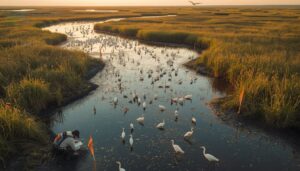
Not every patch of habitat earns protected status by chance — there’s a real process behind it. Designation depends on specific criteria, from the number of species a site hosts to how critical it’s during migration or breeding season.
Here’s a closer look at how that process actually works.
Habitat Quality and Species Concentration Criteria
Not every patch of land qualifies — designation hinges on measurable standards. When evaluating a site, you’re basically asking: does this place truly deliver for birds?
Criteria include:
- Prey Density Metrics and foraging success rates
- Vegetation Complexity Index and structural diversity
- Hydrology Thresholds for seasonal wetland function
- Disturbance Tolerance Levels from human activity
- Connectivity Habitat Mapping across ecological zones
These benchmarks identify genuine Important Bird Areas supporting priority species of concern.
Breeding, Migration, and Wintering Importance
A bird’s year doesn’t end at the nest.
Clutch size and fledgling survival hinge on breeding conditions, but fuel accumulation at stopover habitat — and winter survival in reliable wintering grounds — matter just as much.
That’s why Bird Conservation Areas and Important Bird Areas evaluate all three life stages.
| Season | What’s at Stake |
|---|---|
| Breeding | Clutch size, chick survival |
| Migration | Fuel accumulation, stopover habitat |
| Wintering | Energy reserves, winter survival |
| Year-round | Migratory connectivity |
Mapping, Inventories, and Spatial Analysis
Behind every designated Bird Conservation Area is a stack of spatial data telling the story of where birds actually live — and why.
Conservation scientists use IBA spatial data alongside Bird Conservation Regions frameworks to build that picture through:
- Hotspot Mapping — pinpointing where bird activity clusters most intensely
- Connectivity Modeling — tracing how species move between habitat patches
- Temporal Change Detection — catching habitat loss before it’s irreversible
- Data Harmonization Standards — unifying Citizen Science Integration with professional survey records
- Mapping and Inventory of Conservation Sites — combining data collection and spatial analysis of IBAs into living, updatable databases
State and Cross-border Planning Frameworks
No bird stops at a state line — and conservation planning can’t either.
Joint Governance Agreements and Transboundary Habitat Zoning align how neighboring states manage shared corridors, while Cross-State Funding Pools and Shared Monitoring Protocols keep everyone working from the same data.
Integrated GIS Mapping ties it all together, connecting State-level Important Bird Area initiatives into a coherent, cross-border habitat and species management system built for regional bird conservation planning.
Role of Audubon and BirdLife Partners
Think of Audubon and BirdLife International as the connective tissue holding regional bird conservation planning together across borders.
Their conservation partnership drives real outcomes through:
- International partnership networks linking 100+ organizations for shared data integration platforms and coordinated site assessments.
- Funding and grants channeled through public-private partnerships to sustain capacity building programs at the local level.
- Community engagement initiatives that translate science into action on the ground.
Protecting Bird Areas Effectively
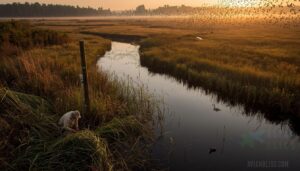
Designating a bird area is only half the work — keeping it healthy is where the real effort begins. That means everything from pulling invasive plants to running acoustic monitoring equipment deep in a forest at 2 a.m.
Here’s a closer look at the key practices that actually make protection work.
Habitat Restoration and Invasive Species Control
Restoring a degraded habitat is a bit like rebuilding a home after a storm — you don’t just patch walls, you fix the foundation. Within the Bird Conservation Area Program, habitat restoration projects tackle invasive species impacts head‑on using mechanical removal techniques before reintroducing native seed mixes suited to local soils and hydrology, re‑engineering to revive wetland function.
| Restoration Phase | Key Action | Bird Benefit |
|---|---|---|
| Site Assessment | Map invasive species spread | Identifies priority habitat zones |
| Active Removal | Mechanical removal techniques | Reduces competition for native plants |
| Adaptive Replanting | Native seed mixes + adaptive replanting strategies | Restores nesting and foraging structure |
| Long-Term Stewardship | Public engagement programs + monitoring | Sustains habitat protection gains |
Land stewardship doesn’t stop at planting — public engagement programs keep communities invested long after crews leave.
Monitoring Birds With Surveys and Acoustic Tools
Once native vegetation takes hold, you need to know what’s working — and that’s where bird population monitoring earns its keep.
Autonomous Recording Units deployed across seasonal sampling protocols capture species activity around the clock, while species classification algorithms process thousands of hours of audio that no field team could manually review.
Metadata standards keep everything organized, turning raw sound into real ecological monitoring data you can actually trust.
Managing Wetlands, Grasslands, and Forests
Good monitoring data only matters if land managers act on it. Hydrological Management keeps wetlands functional — restoring natural flood cycles that marsh-dependent birds like Piping Plover genuinely need. Meanwhile, Prescribed Fire Regimes and Native Seed Mixes sustain open grasslands for grassland bird species facing steep population declines.
Healthy habitat management covers:
- Deadwood Retention for cavity-nesting forest bird communities
- Ecological Corridors connecting fragmented wetland and grassland patches
- Buffer zones reducing runoff into sensitive marsh conservation areas
Community Stewardship and Citizen Science
Land management only works when communities show up for it. Through Volunteer Training programs and School Partnerships, everyday people contribute real Citizen Data Dashboards that track Neighborhood Monitoring trends across public and private land protection zones.
Your observations — submitted via standardized checklists — directly inform Local Habitat Restoration timing, supporting broader bird conservation initiatives and Citizen science contributions to IBA monitoring of declining populations.
Funding, Policy Support, and Long-term Planning
All that citizen data needs is somewhere to go — and that’s where Strategic Funding Models come in. Multi-year Grants spanning five to ten years give conservation teams the stability to see bird conservation plans through.
Public-Private Partnerships stretch every dollar further, while Incentive Programs reward landowners who do the right thing.
Regional bird conservation plans now even account for Future Climate Scenarios, keeping conservation funding and conservation policy aligned for decades ahead.
Frequently Asked Questions (FAQs)
What are bird conservation regions?
Bird conservation regions are ecologically defined Conservation Planning Units that group biogeographic regions sharing similar habitats, climates, and Regional Species Assemblages — making transnational management networks and regional bird conservation plans far more targeted and effective at the BCR scale.
Can I give my bird to a bird sanctuary?
Yes, you can move your bird to a sanctuary — most reputable facilities require sanctuary screening, health documentation, and clear transport logistics before accepting, often with adoption fees and legal licensing, to guarantee responsible placement.
Where is the birding capital of the United States?
New York City earns that title — Central Park alone sees over 270 species annually, funneled through urban migratory corridors along the Atlantic Flyway, with Audubon-backed citizen science networks active year-round.
What three birds are not protected?
Three urban nuisance birds — feral pigeons, European starlings, and house sparrows — lack federal protection status, meaning you can manage them without a control permit in most jurisdictions.
How can individuals volunteer at bird conservation areas?
You don’t need a biology degree to make a real difference.
From trail maintenance and bird identification training to data entry support and guided nature walks, seasonal habitat projects connect you to citizen science, community engagement, and stewardship for bird conservation.
What species have been successfully recovered through conservation?
Bald Eagle resurgence, California Condor rebound, Gray Wolf reintroduction, Iberian Lynx recovery, and Arabian Oryx revival prove that targeted conservation pulls species from extinction’s edge.
Are bird conservation areas open to public visitation?
Yes, most bird conservation areas welcome visitors — though rules vary. You’ll often find seasonal trail access, permitted activities like birdwatching, and guidelines to minimize visitor impact while protecting nesting habitat.
How do conservation areas handle conflicting land uses?
Zoning regulations separate strict conservation zones from recreational areas, while seasonal restrictions protect birds during breeding.
Co‑management councils negotiate land use, water allocation plans balance resource needs, and enforcement penalties deter violations.
What technology is used to track bird populations?
Modern eyes in the sky and hidden sensors on the ground are quietly rewriting what’s known about birds.
GPS telemetry, geolocator tags, RFID PIT tags, drone surveys, and thermal imaging power today’s data-driven conservation.
How does climate change shift bird migration timing?
Spring arrival advances are reshaping migration timing—birds now face phenology mismatches when food peaks don’t align with their arrival, creating stopover food scarcity and forcing elevational route shifts driven by temperature cue reliance.
Conclusion
Think of a migratory warbler as a single thread—pull it loose, and the whole tapestry unravels. Bird conservation areas are the loom holding everything together, ensuring that thread has somewhere safe to land at every stage of its journey.
You don’t have to be a biologist to play a role.
Supporting these designated landscapes—through advocacy, citizen science, or local stewardship—keeps the pattern intact for every species, and every person, connected to it.