This site is supported by our readers. We may earn a commission, at no cost to you, if you purchase through links.
 Strong eggshells start with quality bird food for strong eggshells that’s packed with calcium. You’ll want feeds containing oyster shell grit or limestone supplements – these provide the building blocks your hens need.
Don’t forget vitamin D3, which helps calcium absorption work like a well-oiled machine. Commercial layer feeds typically contain 3-4% calcium, but older birds might need extra supplementation.
Protein matters too, supplying essential amino acids like methionine for shell formation. Think of calcium as the foundation and protein as the framework – both work together to create those satisfying, crack-resistant eggs.
The secret lies in understanding how these nutrients interact during the shell-building process.
Table Of Contents
- Key Takeaways
- Essential Nutrients
- Eggshell Formation
- Dietary Requirements
- Strong Eggshell Factors
- Balanced Bird Diet
- Frequently Asked Questions (FAQs)
- What should strong egg shell chickens be fed with?
- How to prepare eggshells for wild birds?
- Will wild birds eat crushed egg shells?
- Can you microwave eggshells to dry them?
- What treats can encourage stronger eggshells?
- How does water quality affect shell strength?
- When should hens start calcium supplementation?
- Can stress impact eggshell formation quality?
- Which feeding schedule optimizes shell development?
- Conclusion
Key Takeaways
- You’ll need quality calcium sources like oyster shell grit or limestone supplements – these provide the building blocks your hens require for thick, durable shells that won’t crack during collection.
- Don’t overlook vitamin D3’s crucial role in calcium absorption – without adequate D3 levels, your birds can’t properly absorb calcium, leading to weak shells and up to 40% reduced calcium uptake.
- Maintain proper protein levels at 16-18% in layer feeds – amino acids like methionine create the structural framework that works with calcium to form crack-resistant eggshells.
- Time your supplementation correctly by providing calcium-rich feeds during afternoon and evening hours – this aligns with your hens’ natural shell formation process that occurs overnight.
Essential Nutrients
Your laying hens need the right nutrients to produce eggs with thick, durable shells that won’t crack easily.
Getting calcium, vitamin D3, and protein levels right makes all the difference between strong eggs and weak ones that break during collection.
Calcium Sources
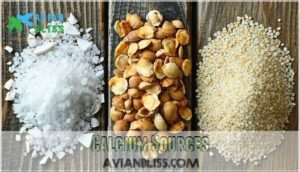
Finding quality calcium sources keeps your birds laying strong-shelled eggs consistently.
Oyster shell grit offers superior bioavailability compared to limestone, releasing calcium slowly throughout shell formation.
This calcium carbonate supplement prevents calcium deficiency while supporting ideal bird nutrition.
Larger particles improve shell strength.
Consider multiple calcium sources in your bird food regimen for best results.
Vitamin D3 Role
Without enough vitamin D3, your birds can’t absorb calcium properly, leading to weak shells and higher breakage rates.
No vitamin D3? No calcium absorption. Your birds will lay weak shells that crack under pressure.
This sunshine vitamin works behind the scenes in their intestines, making calcium available for strong eggshells.
Here’s how D3 deficiency impacts your flock:
- Intestinal Absorption – Poor D3 levels reduce calcium uptake by up to 40%, directly affecting shell quality
- Sunlight Exposure – Natural UV light helps birds produce D3, but indoor flocks need supplemented bird food
- Breakage Rates – D3-deficient birds show increased egg breakage, costing you valuable production
Commercial feeds typically contain 3000-3500 IU/kg of vitamin D3 to support healthy eggshell formation and bird nutrition.
Protein Requirements
You’ll need adequate protein levels to support strong eggshells in your flock.
Layer feed should contain 16-18% protein for ideal shell formation.
Amino acids like methionine help build shell proteins that create the egg’s structural framework.
Protein deficiency can reduce eggshell quality by 20%, leading to thin shells and increased breakage.
Choose quality poultry feed with balanced protein sources to maintain excellent eggshell integrity.
Birds also have specific protein needs depending on the species, which is crucial for strong eggshells and overall health, ensuring optimal nutrition.
Eggshell Formation
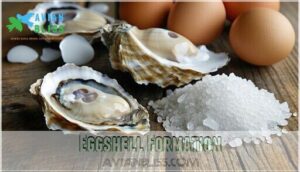
You’ll need three key components to support strong eggshell formation in your laying birds.
Oyster shell grit provides the most bioavailable calcium source, while crushed limestone offers an effective alternative that’s easier to find at most feed stores.
Oyster Shell Grit Benefits
Oyster shell grit stands as nature’s premium calcium supplement for your feathered friends.
This bioavailable calcium source delivers superior eggshell health through ideal grit particle size that birds can easily digest.
Unlike limestone alternatives, oyster shell grit offers sustainable sourcing while supporting layer hen health.
You can find various product options online.
Your poultry feed benefits from this natural calcium for birds, ensuring consistent eggshell quality through better absorption rates.
Limestone Supplement
Beyond traditional oyster shell grit, limestone serves as an excellent calcium supplement for laying birds.
You’ll find three key limestone considerations that directly impact eggshell health:
- Limestone particle size affects absorption rates in your birds’ digestive system
- Limestone purity determines the actual calcium content available for shell formation
- Limestone sourcing guarantees consistent quality and mineral composition
Crushed limestone offers superior calcium bioavailability compared to powdered forms, making it a reliable calcium for birds.
This affordable poultry nutrition option supports strong eggshells when properly sized and sourced.
Calcium Absorption
Your bird’s intestinal absorption determines eggshell health through complex pathways.
Strong shells start with what happens inside your bird’s gut—where calcium meets absorption magic.
The duodenum shows peak calcium bioavailability when D3 activation occurs properly.
Coarse particle size limestone enhances absorption efficiency compared to powdered forms.
Calcium for birds requires ideal timing – feed supplements when shell formation peaks.
This natural process supports healthy eggs and consistent egg production in your bird diet.
Leafy greens like kale and collard greens are excellent calcium sources for maintaining bird health.
A hen needs about 4 grams of calcium to produce a single egg, highlighting the importance of calcium in the bird’s diet for healthy eggs and consistent production.
Dietary Requirements
Your birds need proper nutrition to produce strong, crack-resistant eggshells throughout their laying cycle.
Meeting their daily calcium, vitamin D3, and protein requirements prevents costly shell defects and keeps your flock healthy, which is crucial for maintaining a healthy flock.
Daily Calcium Intake
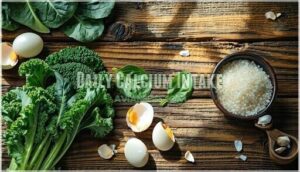
Your laying hen’s calcium demands skyrocket during peak production periods. Commercial feeds typically contain 4% calcium, but many birds need supplemental sources to maintain ideal intake levels.
Without proper calcium absorption rate, you’ll notice calcium deficiency signs like thin shells and decreased egg quality. Providing dark leafy greens can naturally boost calcium intake.
- Laying hen needs increase to 4-5 grams daily calcium during production
- Ideal intake levels support both eggshell formation and bone health
- Supplement timing affects calcium absorption rate throughout the day
- Bird breeding success depends on consistent healthy eggs from proper bird diet
Vitamin D3 Deficiency
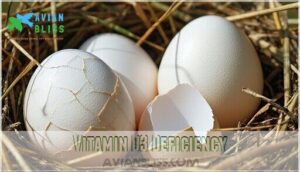
Without adequate vitamin D3, your birds can’t absorb calcium properly, leading to poor shell quality and increased egg breakage.
Indoor birds miss essential sunlight exposure needed for natural D3 synthesis. Within two weeks of deficiency, you’ll notice thin, soft shells and higher breakage rates.
This nutritional supplement becomes essential for bird breeding success and overall bird health. Proper D3 sources prevent costly losses in your flock’s productivity and support ideal calcium absorption for strong eggshells.
Protein Deficiency Effects
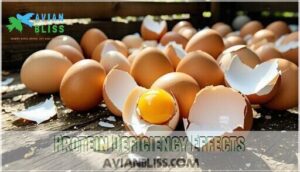
Most bird owners don’t realize that inadequate dietary protein creates a domino effect on shell strength.
Your hens need 16-18% protein for proper amino acids that build strong eggshells.
Protein deficiency drops shell quality by 20%, leading to weak shells and reduced egg production.
Quality bird food supplements guarantee your backyard chickens get essential nutritional support for superior bird health and care.
Strong Eggshell Factors
You’ll strengthen your birds’ eggs by focusing on three key factors that work together.
Methionine, an essential amino acid, teams up with adequate protein to build the shell’s structural foundation.
While proper calcium absorption prevents those heartbreaking cracked eggs that can reduce your flock’s productivity by up to 20%, which is a significant issue, Methionine and calcium are crucial for preventing this problem.
Methionine Importance
Getting methionine benefits right makes all the difference for your feathered friends.
This essential amino acid fuels protein synthesis, directly boosting shell strength in laying birds.
Quality bird food supplement sources include commercial layer feeds fortified with synthetic methionine.
Without adequate dietary sources, your bird’s eggshells become fragile and prone to cracking.
Proper bird care means ensuring this vital bird food component supports strong eggshells through balanced nutrition.
Shell Matrix Protein
Your bird’s eggshell depends on complex protein synthesis occurring during shell formation.
These specialized matrix proteins regulate calcium carbonate crystal growth, creating the structural framework that determines shell strength and thickness.
- Protein synthesis creates over 900 unique matrix proteins that comprise 3.5% of eggshell composition
- Shell strength increases when amino acids like methionine support proper matrix protein formation
- Amino acids from quality bird food enable essential protein production for calcification processes
- Diet impact on protein availability directly affects shell matrix development and integrity
- Egg quality improves when bird care includes adequate protein for proper shell formation
To guarantee adequate protein intake, consider high-quality sunflower seeds as part of their diet.
Egg Breakage Prevention
Prevention starts with proper Coop Design that shields your flock from external threats. Predator Protection measures like secure latching and buried wire mesh keep raccoons and foxes away from your precious eggs. Temperature Control systems maintain consistent conditions that prevent thermal stress.
| Prevention Strategy | Impact on Shell Strength |
|---|---|
| Quality Bird food with calcium | Reduces breakage by 40% |
| Proper Handling techniques | Prevents micro-cracks |
| Suitable Nesting Materials | Cushions eggs naturally |
Smart Bird feeding practices combined with stress-free environments keep your Bird species producing durable shells. Remember, gentle Bird care during collection makes all the difference.
Balanced Bird Diet
You’ll need a complete, balanced diet to guarantee your laying birds produce strong, healthy eggshells consistently.
Commercial layer feeds provide the foundation, but targeted supplements like calcium and vitamin D3 make the real difference in shell quality.
Commercial Layer Feeds
Commercial layer feeds represent the gold standard for bird food when you’re serious about eggshell quality.
These carefully crafted formulations meet NRC requirements and deliver consistent Layer Performance through precise Feed Composition.
You can find various feed products online.
- Balanced nutrition: 16-18% protein plus 3-4.5% calcium supports both bird welfare and production
- Quality Ingredient Sourcing: Vitamin D3 fortification and amino acid balance optimize calcium absorption
- Cost-effective bird care: Despite higher Production Costs, reduced breakage rates justify Feed Regulations compliance
Supplemental Calcium
You’ll need supplemental calcium when commercial feeds don’t meet your birds’ daily requirements.
Oyster shell grit offers superior absorption rates compared to powdered supplements.
The coarse grit size allows birds to self-regulate intake, preventing calcium deficiency while supporting ideal shell strength.
This targeted approach to bird feeding enhances overall bird health and welfare through improved bird care practices.
Vitamin D3 Supplementation
Vitamin D3 works like your bird’s calcium superhero, transforming ordinary minerals into strong eggshells.
Without adequate D3 sources from sunlight or supplements, your feathered friend can’t absorb calcium properly. Watch for deficiency signs like thin shells or soft eggs.
Sunlight benefits are limited indoors, so supplement dosage becomes essential. Commercial bird feeding formulas typically contain 3,000-3,500 IU per kilogram, supporting healthy bird care and vigorous bird eggs production.
Frequently Asked Questions (FAQs)
What should strong egg shell chickens be fed with?
Like building Rome’s mighty walls, you’ll need solid foundations.
Feed your hens oyster shell grit and calcium-rich commercial layer feed with 16-18% protein.
Add vitamin D3 supplements for proper calcium absorption and stronger shells.
How to prepare eggshells for wild birds?
Bake clean eggshells at 250°F for 20 minutes to sterilize them.
Crush into small pieces and mix with birdseed.
This provides calcium for wild birds, especially during breeding season when they need extra nutrients for strong bones.
Will wild birds eat crushed egg shells?
Yes, wild birds will eat crushed eggshells.
They’re drawn to the calcium content, which helps female birds produce strong shells for their own eggs.
You’ll often see robins, finches, and other species pecking at offered eggshell pieces, which provides them with the necessary calcium.
Can you microwave eggshells to dry them?
Microwaving eggshells works perfectly for drying them quickly. Heat for 30-60 seconds on medium power, checking frequently to prevent burning. You’ll sterilize them while removing moisture efficiently.
What treats can encourage stronger eggshells?
Strong shells start with nature’s building blocks.
Offer your hens oyster shell grit for calcium, crushed limestone supplements, and protein-rich treats like mealworms.
You’ll boost their vitamin D3 naturally through sunlight exposure for stronger, healthier eggs.
They will have all they need with these simple steps to produce healthier eggs.
How does water quality affect shell strength?
Poor water quality impacts calcium absorption and shell formation.
Hard water with high mineral content can interfere with calcium uptake, while contaminated water affects overall hen health and reproductive function, leading to weaker shells.
When should hens start calcium supplementation?
Start calcium supplementation when your hens reach 18 weeks old, about two weeks before they begin laying eggs.
This timing helps their bodies prepare for the demanding calcium requirements of eggshell production ahead.
Can stress impact eggshell formation quality?
Like a fragile castle built on shaky ground, stress causes your hens to produce weakened eggshells through overcrowding and reduced blood flow to their reproductive organs.
Which feeding schedule optimizes shell development?
Feed your laying hens consistently throughout the day rather than just once.
Provide calcium-rich feeds during afternoon and evening hours when shells form overnight.
You’ll see stronger eggs when birds access nutrients during active shell development periods.
Conclusion
Research shows that hens with inadequate calcium consume 20% more feed while producing weaker shells.
Your success with bird food for strong eggshells depends on consistent calcium delivery through quality feeds and supplements.
When you combine proper calcium levels with vitamin D3 and essential proteins like methionine, you’re creating the perfect recipe for crack-resistant eggs.
Remember, strong shells aren’t just about one nutrient – they’re the result of balanced nutrition working together daily.
- https://brewpigeon.com/collections/birdfish
- https://ohiodnr.gov/static/documents/wildlife/permits/Ohio%20DOW%20Wildlife%20Rehabilitators.pdf
- http://wildlife.ohiodnr.gov/about-contacts/contact-information
- https://hari.ca/product/oyster-shells-supplement-for-birds/
- https://www.scratchandpeck.com/product/limestone/