This site is supported by our readers. We may earn a commission, at no cost to you, if you purchase through links.
North America has lost nearly 3 billion birds since 1970—a staggering decline that’s reshaping ecosystems across the continent. The good news? You don’t need a degree in ornithology or acres of untouched wilderness to make a difference.
Bird habitat preservation methods work at any scale, from a modest backyard garden to community-wide conservation efforts. The secret lies in understanding what birds actually need: native plants that support the insects their chicks depend on, clean water sources, safe nesting sites, and spaces free from the chemicals that disrupt their delicate systems.
Whether you’re planting your first native shrub or advocating for wetland protection in your town, the strategies that protect bird populations are more accessible—and more powerful—than most people realize.
Table Of Contents
- Key Takeaways
- Key Elements of Bird Habitat Preservation
- Creating Bird-Friendly Spaces at Home
- Effective Conservation Strategies for Bird Habitats
- Sustainable Practices to Support Bird Populations
- Community Involvement in Bird Habitat Preservation
- Frequently Asked Questions (FAQs)
- What are the best methods for preserving and protecting wildlife?
- How do you keep birds in your yard?
- How can we protect wildlife?
- How can I protect the natural habitats of nearby animals?
- How do seasonal changes affect bird habitat needs?
- What role do dead trees play in habitats?
- How can agricultural lands support bird populations better?
- What are the best practices for window collision prevention?
- How does climate change impact bird migration patterns?
- Conclusion
Key Takeaways
- Planting native species, providing clean water, and minimizing chemicals in your yard directly help birds thrive.
- Safe nesting sites like brush piles, dead trees, and well-designed birdhouses boost bird survival and breeding success.
- Reducing habitat fragmentation and connecting green spaces creates healthier environments for both migratory and local birds.
- Everyday choices—like keeping cats indoors, limiting pesticides, and joining community conservation efforts—play a vital role in reversing bird population declines.
Key Elements of Bird Habitat Preservation
If you want to help birds thrive in your area, you need to understand what they’re looking for in a habitat. Birds aren’t just passing through—they’re searching for the essentials that keep them alive and healthy year-round.
Let’s walk through the four key elements that make a real difference in creating spaces where birds can feed, rest, and raise their young.
Importance of Native Plants
Native plants form the backbone of a thriving bird-friendly habitat. Unlike ornamental species, these locally adapted plants support the insects that fuel bird reproduction.
Research shows yards with at least 70% native plant biomass sustain healthy populations, while those dominated by nonnatives become habitat traps.
By choosing native plants, you’re creating genuine wildlife corridors that offer bird food sources and ecosystem services critical for biodiversity preservation. Understanding the importance of native plant species is essential for effective bird habitat preservation.
Water Sources for Birds
Water sources rank among the most powerful tools in bird habitat preservation. Whether you install a simple pedestal bird bath or a shallow backyard pond, you’re addressing a critical need—especially in urban areas where natural water has vanished.
Regular bird bath maintenance matters: change water daily during warm months to prevent disease transmission. Well-designed water features, from wetland restoration projects to basic birdfriendly habitat additions, directly boost wildlife conservation efforts and local bird populations.
The growth of the bird feeding market, driven by trends in wildlife conservation, reflects the importance of preserving natural habitats.
Providing Safe Shelter and Nesting Sites
Beyond water, birds need shelter to survive predators and weather. Dense native shrubs, standing dead trees, and brush piles create bird sanctuary spaces where species can nest and hide.
Well-designed birdhouses and nesting boxes with proper entrance sizes and predator management features boost success—studies show predator guards increase fledging rates by about 7%.
Even urban roofs provide resting spots, supporting bird habitat preservation across diverse landscapes.
Minimizing Chemical Use
Pesticides pose direct dangers to birds—eating just a few treated seeds can damage reproduction for months. In one nationwide study, a small increase in neonicotinoid use reduced grassland birds by over 2% annually, an impact 40 times greater than older pesticides.
Pesticides devastate bird populations—even small exposure damages reproduction for months, with neonicotinoids proving 40 times deadlier than older chemicals
Choosing eco-friendly gardening alternatives and sustainable practices protects birds from toxic substances while maintaining healthy yards, supporting wildlife conservation strategies through simple chemical reduction at home.
Creating Bird-Friendly Spaces at Home
You don’t need a sprawling estate to make a real difference for birds—your own backyard can become an essential refuge. By making a few thoughtful changes to your outdoor space, you can provide the food, water, and shelter that birds desperately need.
Here are four practical ways to transform your yard into a bird-friendly haven.
Designing Native Plant Gardens

You can transform your yard into a thriving bird habitat preservation haven by focusing on Native Plant Selection that mirrors your local ecosystem. Research shows properties with more than 70% native plants support reproductively successful bird populations, while non-native–dominated landscapes often fail to sustain breeding.
Start with Plant Diversity that includes native oaks, fruit-bearing shrubs, and seed-producing flowers. Layer your Garden Layout with trees, shrubs, and groundcovers—this BirdFriendly Gardens approach provides essential Ecosystem Services while supporting ecofriendly gardening principles that deliver real results for wildlife.
Installing Bird Baths and Water Features
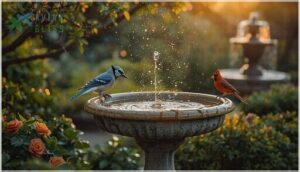
Clean, fresh water stands at the heart of creating a bird-friendly habitat that delivers measurable wildlife conservation results. When tackling water feature installation, follow these bird bath design essentials:
- Keep water depth between 1–2.5 inches with a textured surface for safe footing
- Place baths where birds have clear sightlines to predators, near escape cover
- Scrub weekly and refill daily to prevent disease—bath maintenance tips that genuinely protect bird populations
Moving water benefits include attracting more species while reducing mosquitoes naturally.
Setting Up Nest Boxes and Brush Piles
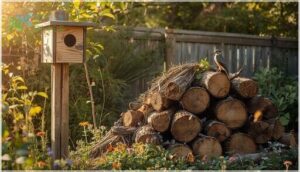
Cavity nesting birds thrive when you install species-matched nest boxes—aim for 8×8-inch floors with 3-inch entrance holes for kestrels, mounted 10+ feet high in open habitat.
Combine these with brush pile design featuring 6–10-inch logs stacked 3–6 feet high, creating wildlife shelters that deliver genuine bird refuges from predators.
This pairing transforms your yard into a functional bird sanctuary, supporting habitat preservation through proven bird conservation methods.
Reducing Lawn Areas
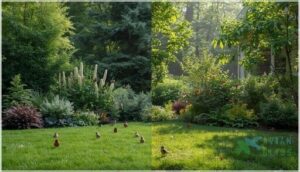
Your lawn might look tidy, but it’s a food desert for birds—native plant conversions change that dramatically. Research shows yards with native landscaping support 2.2 times more birds than turf-dominated spaces, while slashing water use by 60%.
Start small: replace lawn patches with layered native plantings featuring groundcovers, shrubs, and trees. This sustainable landscaping creates genuine bird habitat through ecofriendly practices that deliver urban wildlife conservation results.
Effective Conservation Strategies for Bird Habitats
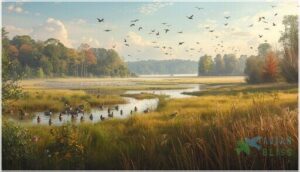
Beyond your own backyard, protecting birds requires coordinated efforts to safeguard the larger landscapes they depend on. From wetlands to forests, these broader conservation strategies work together to give bird populations the space and resources they need to thrive.
Let’s look at four approaches that make a real difference in preserving critical bird habitats.
Protecting Wetlands and Forests
Protecting wetlands and forests stands as one of the most powerful ways you can support bird populations. These ecosystems provide critical stopover habitats for over 4 billion migratory birds. Focus your conservation efforts on three priorities:
- Support wetland restoration projects that have helped increase half of all bird species by 42–159%
- Advocate for forest conservation to reverse the 1 billion bird loss since 1970
- Promote habitat preservation policies that boost endangered populations by 624% on average
Restoring Degraded Habitats
Restoring degraded habitats brings outstanding results. Urban forests show native bird richness increasing with each decade of ecosystem restoration, while selectively logged sites can recover comparable diversity in as little as 19 years.
You’ll see the fastest gains through active restoration: tree planting and assisted regeneration accelerate forest regeneration and biodiversity restoration more effectively than letting nature heal alone in heavily degraded areas.
Reducing Habitat Fragmentation
Restoring habitats works best when you also tackle fragmentation. Birds in small forest patches face lower diversity and abundance than those in continuous woodland, especially near edges where nest predation and cowbird parasitism spike.
Roads fragment landscapes dramatically—about 72% of Britain’s land sits within 700 meters of a road, reducing bird numbers by roughly 40% for sensitive species.
Smart landscape planning clusters habitat into larger blocks, limits new road construction, and uses corridor design to maintain interior conditions that forest birds need.
Maintaining Habitat Connectivity
Linking fragments through landscape corridors boosts bird movement by roughly 50% compared to isolated patches. You’ll see 20–30% more species when habitat patches connect, especially for bird migration routes.
Urban connectivity matters too—even city greenspaces support richer bird communities when they’re linked. These wildlife conservation strategies strengthen ecosystem services, from seed dispersal to biodiversity preservation, making habitat preservation work across entire landscapes.
Sustainable Practices to Support Bird Populations
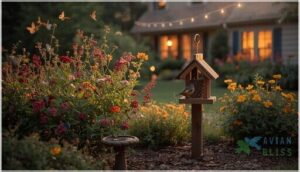
Beyond protecting habitats, the everyday choices you make can have a real impact on bird populations. From what you spray in your garden to how you light your home at night, small shifts in your daily habits create safer spaces for birds to thrive.
Let’s look at four practical ways you can support birds through more sustainable, bird-friendly practices.
Limiting Pesticide and Herbicide Use
Cutting back on pesticides and herbicides makes a real difference for birds in your yard. These chemicals don’t just kill insects—they wipe out the food many birds rely on and can poison songbirds outright.
Try integrated pest management, spot-treat problem areas instead of spraying everywhere, and keep buffer zones around hedgerows.
Choosing chemical-free, ecofriendly gardening methods protects wildlife while supporting sustainable farming and sustainable living practices that nurture bird habitat preservation.
Managing Light and Noise Pollution
Just as chemicals harm birds, so do artificial light and chronic noise. Urban Planning Strategies that address Light Pollution Effects can protect Bird Migration Patterns, while Noise Reduction Methods support nesting success—both essential for Wildlife Conservation and Bird Habitat Preservation.
Conservation Technologies and Environmental Sustainability practices that reduce these stressors include:
- Turning off nonessential building lights during migration seasons (April–May, August–October)
- Using warmer outdoor lighting below 3000 K to minimize skyglow
- Shielding fixtures to direct light downward, not upward
- Installing motion sensors so lights activate only when needed
- Reducing traffic and construction noise near breeding areas during nesting periods
These steps strengthen Ecosystem Conservation by letting birds rest, navigate, and raise young without unnecessary disruption.
Choosing Eco-Friendly Products
The things you buy can either support bird populations or degrade their habitats. When you choose Bird Friendly Products like certified coffee and cocoa, Organic Options for your garden, and Sustainable Materials such as FSC-certified wood, you’re adopting Wildlife Friendly Habits that protect forests and reduce pesticide exposure.
Look for Eco Labels, select Green Packaging, and embrace EcoFriendly Practices—these Sustainable Living choices add up to meaningful conservation impact.
Responsible Pet Ownership to Protect Birds
Surprisingly, household pets pose one of the largest threats to bird populations, but responsible ownership can turn this around. Indoor Cat Confinement, supervised outdoor time, and Pet Safety Nets dramatically reduce predation—cats kill over 2.6 billion birds annually in North America. Consider these Bird Friendly Fencing and wildlife protection steps:
- Keep cats indoors or use predation-reduction devices like bibs
- Leash dogs near ground-nesting bird habitat during breeding season
- Create enclosed outdoor “catios” for safe Pet Wildlife Impact reduction
These Responsible Ownership practices support bird conservation and habitat preservation efforts.
Community Involvement in Bird Habitat Preservation

You don’t have to be a scientist to make a real difference for birds in your community. From tracking migration patterns to supporting local conservation efforts, there are practical ways you can contribute to protecting bird habitats right where you live.
Here are four meaningful ways to get involved and help reverse the troubling decline in bird populations.
Participating in Citizen Science Projects
You can contribute directly to bird conservation by joining citizen science projects like the Great Backyard Bird Count or eBird. These bird surveys let you track species in your area while helping researchers analyze population trends and habitat needs.
Your observations become part of conservation research that guides biodiversity conservation efforts worldwide. It’s meaningful citizen engagement that connects you with wildlife conservation work happening right in your backyard.
Supporting Conservation Organizations
Your financial support turns research into real protection for birds. Organizations like the American Bird Conservancy have safeguarded over 1.1 million acres through strategic conservation efforts, showing how donation strategies fuel bird sanctuary expansion and wildlife conservation.
- Recurring monthly gifts provide steady funding for long-term bird habitat restoration projects
- Volunteer opportunities let you participate in hands-on conservation efforts at local preserves
- Conservation grants from your employer can double your impact through matching programs
- Partnership models connect you with grassroots groups protecting critical migration corridors
- Fundraising events build community while supporting specific bird conservation initiatives
Promoting Public Awareness and Education
You can boost bird conservation by sharing what you know. School-based bird feeding programs boost identification skills dramatically, especially among kids with limited nature exposure, while community programs help adults connect yard habits to wildlife conservation.
Your conversations at neighborhood gatherings, social media posts about local species, and involvement in environmental literacy workshops build ecological awareness that transforms how communities value and protect their feathered neighbors.
Advocating for Bird-Friendly Policies
Your voice carries real weight in shaping bird-friendly policies and conservation laws. Environmental advocacy transforms local ordinances and urban planning decisions that determine whether millions of birds survive their journeys through our cities.
Here’s how you can drive meaningful policy reforms for bird safety and habitat preservation:
- Support bird-safe building ordinances requiring collision-preventing glass and reduced nighttime lighting in new construction
- Push for “Lights Out” programs during peak migration seasons in your city or workplace
- Advocate for stronger enforcement of the Migratory Bird Treaty Act and wildlife conservation protections
- Contact local officials about integrating bird conservation into zoning codes and green building standards
- Join campaigns addressing outdoor cat management and environmental conservation priorities
These conservation efforts for birds need your participation to succeed.
Frequently Asked Questions (FAQs)
What are the best methods for preserving and protecting wildlife?
Protecting wildlife starts with habitat preservation, ecosystem management, and biodiversity protection.
You can restore degraded areas, reduce pollution, support environmental sustainability efforts, and promote wildlife conservation through both individual actions and community-based ecosystem conservation initiatives.
How do you keep birds in your yard?
You’ll keep birds coming back when your yard offers what they need most—native plants rich in insects and seeds, fresh water for drinking and bathing, safe shelter spots like brush piles or nesting boxes, and minimal chemical use.
How can we protect wildlife?
Wildlife conservation starts with habitat restoration and biodiversity protection.
You can support species preservation by participating in conservation efforts, advocating for protected areas, choosing sustainable products, and joining community-based wildlife management initiatives that strengthen ecosystem services.
How can I protect the natural habitats of nearby animals?
Picture a chickadee family struggling to raise chicks in a yard with mostly exotic shrubs—they need 70% native plants to thrive.
You can protect nearby wildlife by planting native vegetation, reducing pesticides, keeping cats indoors, and maintaining habitat connectivity through wildlife corridors.
How do seasonal changes affect bird habitat needs?
Seasonal changes shift birds’ food sources, shelter needs, and migration patterns. For example, spring boosts insect abundance, while winter demands denser cover.
Climate change complicates habitat adaptation, challenging ecosystem resilience and pushing bird conservation and habitat preservation efforts.
What role do dead trees play in habitats?
Dead trees, or snags, are essential for wildlife shelter and Cavity Nesting, supporting over 80 North American bird species.
High snag density and diverse deadwood ecology boost Forest Regeneration, maintain ecological balance, and strengthen bird conservation efforts.
How can agricultural lands support bird populations better?
You’ll see farmland bird populations thrive when agricultural practices embrace crop diversification, field margins, and reduced pesticides.
Sustainable agriculture methods like agroecology create ecosystem services that support farm wildlife while maintaining productive landscapes.
What are the best practices for window collision prevention?
You can prevent window collisions by applying external decals in a 2×4 inch grid, using bird-friendly glass with visible patterns, reducing reflections with screens, and placing feeders within three feet of windows.
How does climate change impact bird migration patterns?
Climate change disrupts bird migration by shifting migration timing, causing phenological mismatches with food sources, increasing extreme weather risks, and driving habitat loss.
These climate shifts force birds to adjust routes, often with lower survival and breeding success.
Conclusion
Think of your yard as a welcome mat for wildlife—every native plant, water source, and safe shelter you add rolls out the red carpet for birds. By using bird habitat preservation methods, you’re not just improving your own space; you’re helping stitch together a patchwork of safe havens across your community.
Each small change is a lifeline for species in decline. When you create room for birds, you’re also opening your world to wonder and connection.
- https://pmc.ncbi.nlm.nih.gov/articles/PMC7163781/
- https://www.swansea.ac.uk/press-office/news-events/news/2025/06/new-research-examines-the-impact-protected-areas-have-on-preserving-biodiversity.php
- https://bou.org.uk/blog-wright-ueda-protected-areas/
- https://datadryad.org/dataset/doi:10.5061/dryad.p2ngf1vv8
- https://www.nature.com/articles/s41559-022-01737-8