This site is supported by our readers. We may earn a commission, at no cost to you, if you purchase through links.

You’d be surprised how many apartment dwellers think their balcony can’t support real wildlife—but that’s changing fast. Cities are becoming unexpected hotspots for bird activity, with species like chickadees, wrens, and even bluebirds actively seeking out urban nesting sites when they can find them.
The secret is choosing bird houses for apartments that work within your space constraints while meeting birds’ surprisingly specific needs. Your 6×8 balcony can become a genuine sanctuary with the right setup—proper ventilation, species-appropriate entry holes, and predator guards that actually keep squirrels from treating your birdhouse like a personal buffet.
Once you understand what makes apartment birdhouses effective, you’ll attract feathered neighbors you never knew were looking for a home.
Table Of Contents
Key Takeaways
- Urban apartments can successfully attract chickadees, wrens, bluebirds, and other species with properly sized birdhouses (1⅛ to 1½ inch entry holes) that include ventilation, drainage, and predator guards to create genuine nesting sites on balconies as small as 6×8 feet.
- Cedar or cypress construction with ¾-inch thick walls, galvanized screws for easy cleaning access, and non-toxic water-based sealants provides the durability and safety birds need while withstanding weather exposure in urban environments.
- Strategic placement combining east-facing positions for gentle morning sun, proximity to feeders and water sources (10-15 feet apart), and distance from noise sources (15+ feet from HVAC) transforms balconies into active wildlife corridors that support bird migration and conservation.
- Regular maintenance including daily dish cleaning, weekly deep sanitization with bird-safe solutions like diluted vinegar (1:4 ratio), and twice-yearly structural inspections prevents disease while keeping your birdhouse functional across seasons.
Choosing The Best Bird Houses for Apartments
Finding the right birdhouse for your apartment means balancing what birds need with what works in a smaller space. You’ll want to look for features like proper ventilation, durable materials, and entry holes sized for the birds in your area.
Choosing the right design and understanding how to attract birds with your birdhouse will help ensure your feathered visitors actually stick around.
Let’s break down the key things to keep in mind so you can create a safe, inviting home for your feathered neighbors.
Key Features for Apartment Birdhouses
Apartment balcony bird houses need features that keep your feathered friends safe and comfortable in tight urban spaces. You want a birdhouse designed with smart details—not just a pretty box.
Here’s what matters most for birdhouse selection:
- Proper ventilation systems with holes near the top guarantee fresh airflow without creating drafts
- Correctly sized entry hole sizes (1⅛ to 1½ inches) welcome chickadees and bluebirds while blocking predators
- Drainage designs with floor holes prevent water buildup that threatens bird safety and health
For additional safety and comfort, sturdy construction and weather protection are emphasized in.
Recommended Materials and Construction
You’ll want to build your birdhouse from cedar or cypress—these woods pack natural oils that fight off insects and rot without toxic chemicals. For apartment-friendly durability, stick with ¾-inch thick exterior plywood or redwood sides, then seal everything with a water-based, non-toxic finish.
Here’s your construction quick-reference:
| Material Choice | Why It Works |
|---|---|
| Cedar/cypress wood | Natural pest resistance, long-lasting |
| ¾” exterior plywood | Structural strength, weather protection |
| Galvanized screws | Rust-proof, easy cleaning access |
| Water-based sealant | Safe protection, moisture control |
Use galvanized or stainless steel screws—not nails—so you can easily remove panels for seasonal cleaning. Add rear vents near the top and small drainage holes at the base to keep air flowing and water draining away from nests.
Entry Hole Sizes for Urban Birds
Your birdhouse entry hole diameter makes or breaks urban nesting success. Match hole size to bird species you want to attract:
- Bluebirds: 1½ inches—perfect balance for access and protection
- Wrens and chickadees: 1¼ inches keeps larger competitors out
- Nuthatches and finches: 1½ inches offers comfortable entry
- Hummingbirds: 1 inch or smaller reduces predation risk
- Owls: 4-6 inches for appropriate roosting spaces
Smooth, centered holes prevent injury during daily use. Understanding the significance of an is essential to boost your desired bird species and improve nesting success.
Safety and Predator Prevention
Beyond sizing your entry hole correctly, you’ll need defenses against urban predators like squirrels and raccoons. Look for birdhouses with metal predator guards around entry holes—they prevent gnawing and keep intruders out. Cedar materials naturally deter chewers, while elevated mounting (4+ feet high) reduces ground predator reach. Reinforced entrances with metal grommets and smooth interior surfaces create truly squirrel-proof designs that protect nesting birds season after season.
Top Bird Houses and Accessories for Apartments
Now that you know what to look for, let’s explore some great options that actually work in apartment settings.
I’ve rounded up birdhouses, feeders, and accessories designed for balconies and windows—each one offers something unique for your space. Here’s what made the cut.
1. Window Bird House with Clear Viewing Panel
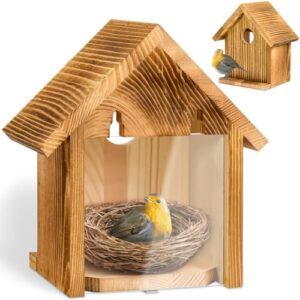
Watching birds build nests right outside your window — it’s like having a front-row seat to nature’s tiny miracle. The ANSTEEP Window Bird House makes this possible with its clear acrylic viewing panel, so you can observe nesting activity without disturbing your feathered neighbors.
For best results, consider placing your bird house where it gets gentle morning light but stays cool during hot afternoons.
The ANSTEEP Window Bird House turns your window into a front-row seat to nature’s tiny miracle
Two sturdy hooks make installation a breeze, and the removable panel means cleaning takes just minutes. The waterproof wood construction withstands weather beautifully, while the 1.125 to 1.5-inch entry works perfectly for chickadees, wrens, and finches.
| Best For | Bird lovers who want to watch nesting activity up close and families looking to teach kids about wildlife in a hands-on way. |
|---|---|
| Material | Plastic |
| Weight | 8.1 ounces |
| Color | Brown |
| Installation | Easy to hang |
| Cleaning | Easy refills and cleaning |
| Target Birds | Finches and cardinals |
| Additional Features |
|
- Clear viewing window lets you see everything from nest building to baby birds without disturbing them
- Quick setup with two hooks and easy cleaning thanks to the removable acrylic panel
- Weather-resistant wood construction that holds up through rain and sun
- Entry hole size may be too small for some birds, with reports of birds struggling to fit inside
- Quality control issues reported, including broken products on arrival
- Some users waited months without attracting any birds
2. Neoguly Parakeet Nesting Box
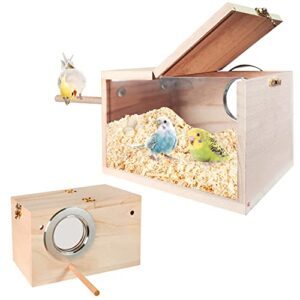
If you’re keeping parakeets or lovebirds indoors, the Neoguly Nesting Box offers something special — you can watch the whole nesting process through its transparent acrylic panel. At 7.4×4.7×4.7 inches, it’s perfectly sized for small to medium birds, and the hinged lid makes cleaning incredibly easy.
Natural pine wood creates a cozy environment, while the smooth entry hole protects delicate beaks and claws. The non-toxic finish keeps your birds safe, and reinforced corners handle daily apartment life beautifully.
| Best For | Bird owners who want to monitor nesting activity without disturbing their parakeets, lovebirds, or small parrots. |
|---|---|
| Material | Wood |
| Weight | 0.61 Kilograms |
| Color | Brown |
| Installation | Two sturdy hooks |
| Cleaning | Removable acrylic panel |
| Target Birds | Bluebirds, finches, chickadees |
| Additional Features |
|
- Transparent design lets you watch the entire nesting and hatching process
- Hinged lid makes cleaning and bedding changes quick and simple
- Natural pine wood with smooth entry hole creates a safe, cozy space
- Not durable for birds that chew heavily or aggressively
- Some birds show no interest in using it despite proper setup
- Wood and acrylic may warp or arrive damaged during shipping
3. Hanizi Deck Mounted Bird Bath
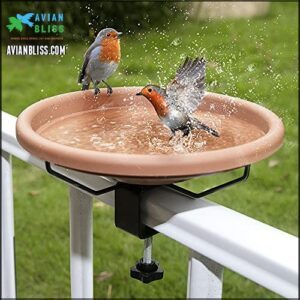
A reliable water source transforms your balcony into a bird magnet — and the Hanizi Deck Mounted Bird Bath delivers exactly that. This 12-inch plastic bowl clamps securely onto railings up to 2 inches thick, no tools required.
The weather-resistant steel ring keeps everything stable, while the detachable bowl makes cleaning a breeze. At just $20.99, you’re giving neighborhood birds a place to drink and splash.
Just remember: the plastic construction won’t handle freezing temperatures, so plan accordingly during winter months.
| Best For | Apartment dwellers and renters who want to attract birds without permanent installations or drilling into their deck railings. |
|---|---|
| Material | Plastic and Steel |
| Weight | Lightweight |
| Color | Not specified |
| Installation | Adjustable clamp |
| Cleaning | Detachable plastic bowl |
| Target Birds | Various bird species |
| Additional Features |
|
- Tool-free clamp installation means you can set it up in seconds and move it whenever needed
- Detachable bowl makes refilling and cleaning quick and hassle-free
- At $20.99, it’s an affordable way to bring birds to your outdoor space
- Plastic construction can crack during freezing weather, so you’ll need to bring it inside for winter
- The bowl might be too deep for smaller birds to comfortably bathe in
- Some customers report the measurements don’t match the listing, so double-check your railing thickness
4. Hanizi Outdoor Bird Feeder
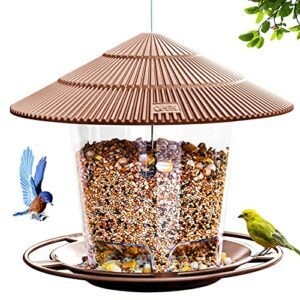
You’ll want steady seed delivery without constant refills — that’s where the Hanizi Outdoor Bird Feeder shines. This 47-ounce capacity feeder uses a gravity-feed mechanism that drops seeds as birds eat, minimizing waste while you monitor levels through the clear plastic body.
The sloped roof keeps rain off your seed supply, and the metal rope with twist lock helps deter squirrels. At 8.1 ounces, it’s lightweight enough for balcony rails yet durable for outdoor exposure. Just clean it every two weeks during peak season.
| Best For | Backyard birders who want a large-capacity feeder that’s easy to refill and monitor without dealing with constant maintenance. |
|---|---|
| Material | Alloy Steel, Metal |
| Weight | 3.2 ounces |
| Color | Not specified |
| Installation | Hook for hanging |
| Cleaning | Not specified |
| Target Birds | Hummingbirds |
| Additional Features |
|
- 47-ounce capacity means fewer refills, and the clear plastic lets you check seed levels at a glance
- Sloped roof and drainage holes keep seeds dry even in wet weather
- Lightweight at 8.1 ounces but built with metal rope and twist lock to help keep squirrels out
- Not fully squirrel-proof—determined squirrels can still find ways to get the seeds
- Plastic construction feels cheap and the lid can crack in cold weather
- Small perches only work for finches and cardinals, not larger birds like blue jays
5. Winemana Hummingbird Swings and Perches
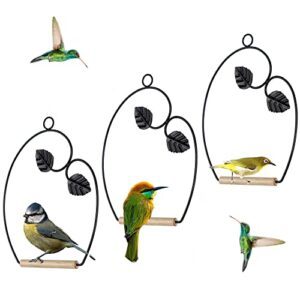
Hummingbirds zip from flower to feeder in seconds — but with the Winemana Hummingbird Swings set, you’ll catch them resting between sips. These three leaf-shaped perches feature 1.25-inch smooth wooden dowels that cradle tiny feet without stress, while the rust-resistant metal frame holds up to rain and humidity.
Hang them 3–6 feet from your nectar source using the built-in hook, and watch birds pause for 10–20 minutes daily during active seasons. Each 5.51 x 7.28-inch swing weighs just 3.2 ounces, perfect for balcony setups.
| Best For | Bird lovers who want a front-row seat to watch hummingbirds rest and preen between feedings, especially near existing nectar feeders. |
|---|---|
| Material | Wood |
| Weight | 13.7 ounces |
| Color | White |
| Installation | Not specified |
| Cleaning | Hinged lid for easy cleaning |
| Target Birds | Budgies, parrots, lovebirds |
| Additional Features |
|
- Leaf-shaped design with smooth wooden dowels gives hummingbirds a comfortable, natural-looking perch
- Rust-resistant metal frame works indoors or outdoors without corroding
- Lightweight hook makes installation simple on balconies, branches, or porch ceilings
- Some buyers received broken pieces or products missing parts
- Welding quality issues mean durability varies between units
- May need extra wire or glue to keep pieces secure during assembly
6. LaElvish Glass Hummingbird Feeder
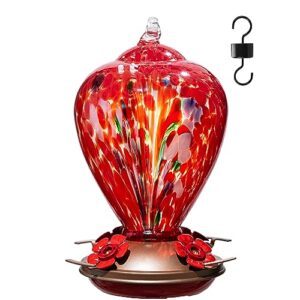
This hand-blown glass feeder holds 34 ounces of nectar in a unique floral design that doubles as porch art. You’ll love the leakproof copper ports and built-in ant moat — two features that keep your hummingbird station clean and functional.
The wide 5.1 x 5.1 x 9.1-inch opening makes refilling simple, while the transparent body lets you check nectar levels from your window. At 2.12 pounds, it hangs securely from balcony hooks without tipping in wind.
| Best For | Gardeners and bird lovers who want a decorative feeder that’s easy to maintain and keeps ants away from the nectar. |
|---|---|
| Material | Glass |
| Weight | 2.12 pounds |
| Color | Floral Balloon |
| Installation | Easy to hang |
| Cleaning | Wide mouth opening |
| Target Birds | Hummingbirds |
| Additional Features |
|
- Hand-blown glass design with colorful floral pattern adds visual appeal to outdoor spaces
- Leakproof copper feeding ports and built-in ant moat keep nectar fresh and pest-free
- Wide mouth opening makes filling and cleaning straightforward
- Ant moat holds minimal water and evaporates quickly in warm weather
- Some customers report the actual product doesn’t match promotional photos
- May leak or have evaporation issues in very hot or sunny locations
Installing Bird Houses on Balconies and Windows
Installing a birdhouse in your apartment takes a bit of planning, but it’s totally doable—even without a yard. You’ll want to focus on secure mounting, smart placement for sun and shade, and keeping things quiet and safe for your feathered visitors.
Let’s walk through the key steps to set up your birdhouse so it becomes a favorite nesting spot.
Secure Mounting Methods for Apartments
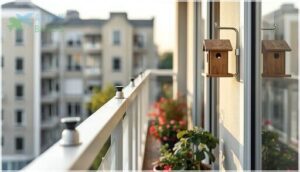
You can skip the drill entirely—damage-free adhesive hooks and tension rods handle lightweight urban birdhouses perfectly on apartment balconies. For heavier builds, rail clamps and wall brackets distribute weight across balcony rails without penetrating surfaces.
Suction mounts work great on windows, though you’ll want weatherproof options rated for outdoor use.
Regular birdhouse maintenance checks verify your hardware stays secure through storms and temperature swings.
Ideal Placement for Sunlight and Shade
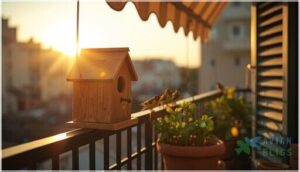
Once your apartment balcony bird house is mounted, sunlight balance becomes your next priority. East-facing spots deliver gentle morning rays without afternoon overheating—perfect for urban birding comfort.
Shade optimization matters too: overhangs cut peak sun by 50 to 70 percent, keeping climate control stable. Pair smart birdhouse designs with ventilation tips like louvered screens, and you’ll create a bird-friendly haven year-round.
Avoiding Hazards and Noisy Areas
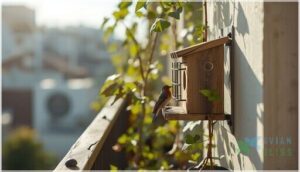
But sunlight isn’t the only factor—Noise Reduction matters too. Keep your birdhouse at least 15 feet from HVAC vents and construction rumble to cut stress vocalizations. Avoid barking dogs and busy social spots, opting instead for Quiet Zones on the leeward side of your balcony.
For Bird Safety and Hazard Avoidance, install predator guards, seal gaps, and use solid mounts to prevent rattles that frighten nesting parents.
Tips for Maximizing Bird Activity
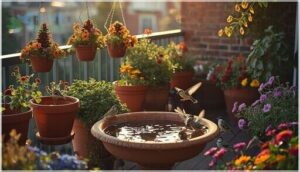
Once noise and hazards are tamed, you can unleash serious bird action. Position feeders and houses to form a birding corridor—think trees, shrubs, and water within sight—so migrating songbirds feel welcome. Seasonal planting in containers boosts cover and foraging, ramping up bird species diversity. Keep a consistent feeding schedule, monitor placement monthly, and watch your balcony transform into a thriving nesting site for urban bird conservation and year-round bird watching.
- Layer your setup: Hang feeders at multiple heights to attract chickadees up high and ground-feeders below.
- Add native blooms: Coneflowers and zinnias in pots draw butterflies and seed-loving finches alike.
- Install a shallow birdbath: Fresh water magnetizes warblers and sparrows, especially during dry spells.
- Rotate perch styles: Swap swings and platforms monthly to keep curious species exploring your bird-friendly zone.
Maintaining and Cleaning Apartment Bird Houses
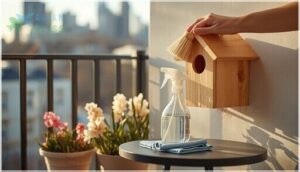
Once you’ve got birds visiting your apartment birdhouse, keeping it clean becomes your most important job—and it’s easier than you might think. A little routine care keeps your feathered friends healthy and coming back season after season.
Here’s what you need to know about maintaining your birdhouse without making it a complicated weekend project.
Regular Cleaning Routines
Keeping your birdhouse sparkling clean isn’t just about aesthetics—it’s essential for Feathered Friend Health. Daily sanitizing involves wiping feeding dishes and water containers with warm soapy water to prevent droppings from building up. Weekly deep cleans tackle the whole birdhouse, requiring the temporary removal of occupants while you scrub perches and disinfect with bird-safe solutions. Proper cleaning schedules protect your winged visitors from disease and parasites.
| Cleaning Task | Frequency |
|---|---|
| Wipe dishes and perches | Daily |
| Vacuum surrounding area | Daily |
| Full house wash and disinfect | Weekly |
| Inspect vents and entrance | Weekly |
| Dry all surfaces completely | After each clean |
Seasonal Maintenance and Repairs
Twice a year—spring and fall—you’ll want to inspect your birdhouse for wear and tear, just like you’d check gutters or ventilation in your apartment. Look for loose screws, cracks in the wood, or gaps where predators could sneak in. Prompt repairs keep your bird-friendly setup safe and welcoming.
Winterization tips? Seal drafts and reinforce mounts before cold winds arrive!
Safe Cleaning Solutions for Birds
Safety matters when you’re scrubbing your birdhouse—birds breathe differently than we do! Skip harsh chemicals and reach for bird-friendly soaps like plain water with mild dish soap, rinsing thoroughly.
Vinegar solutions (one part vinegar, four parts water) work as natural disinfectants without toxic fumes.
Need something stronger? A 3% hydrogen peroxide mix offers mild bleach alternatives that protect your feathered visitors during birdhouse maintenance and cleaning.
Inspecting for Damage and Debris
Think of damage inspections as your birdhouse check-up—quick scans that prevent bigger headaches later. Here’s what you should monitor during birdhouse maintenance and cleaning:
- Clear debris from drainage holes and ventilation gaps every season
- Check structure around the entry hole for cracks or loose mounting screws
- Monitor moisture stains inside nesting boxes that signal condensation issues
- Spot pests like wasps or scratches indicating predator attempts
- Plan full inspections every six months to catch early wear
Creating a Bird-Friendly Apartment Environment
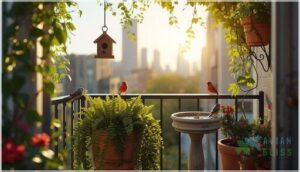
A birdhouse on your balcony is just the beginning—you can turn your apartment into a genuine haven for feathered friends with a few thoughtful additions.
Small changes like adding potted plants, pairing your house with feeders, and offering fresh water make a real difference for urban birds.
Here’s how to build a welcoming space that nurtures local wildlife right outside your door.
Adding Native Plants in Containers
Native plants in containers transform your balcony into a bird-friendly haven—and they’re surprisingly easy. Choose drought-tolerant natives in terracotta pots with drainage holes, using a 50-50 mix of potting soil and coarse compost. Place them where they’ll get morning sun and midday shade, then add a 1-inch mulch layer.
This small-space botany fosters urban wildlife conservation while beautifying apartment living effortlessly.
Pairing Birdhouses With Feeders and Baths
You’ll see real magic happen when you place feeders within 10 to 15 feet of your bird house—close enough to invite lingering without crowding the entrance. A tube feeder with sunflower or nyjer seeds and a shallow bird bath just 6 to 10 feet away creates an irresistible bird-friendly zone.
- Choose seed type selection that matches your target species to reduce competition
- Install predator guard installation on mounting poles to deter cats and raccoons
- Clean your balcony bird feeder every two weeks with dish soap to prevent mold
- Position the bird bath for easy access between the nesting box design and feeder
Attracting Diverse Bird Species
Once you’ve got your feeder-bath combo working, you can push Bird Species Diversity even higher. Here’s how Urban Bird Conservation starts right on your balcony—with simple tweaks that transform your setup into a thriving Avian Habitat Creation zone for Wild Bird Support and better Bird Watching Tips.
| Strategy | Species It Attracts |
|---|---|
| Mix sunflower seeds with nyjer at different heights | Finches, chickadees, sparrows |
| Add fruit slices near your Bird House | Orioles, waxwings, thrushes |
| Install a drip fountain in your bath | Warblers, hummingbirds |
| Plant native blooms in containers | Nectar feeders, insect foragers |
| Rotate suet cakes seasonally | Woodpeckers, nuthatches, wrens |
Feathered Friend Attraction really kicks in when you layer food, water, and shelter—Attracting Birds to Your Balcony becomes seamless, and Backyard Bird Conservation feels deeply rewarding.
Supporting Urban Bird Conservation
Your balcony isn’t just about attracting birds—it’s part of a bigger Urban Habitat network that bolsters Bird Migration and Wildlife Preservation citywide.
When you add native plants and bird-friendly features to your Apartment Living and Wildlife setup, you’re joining Bird Conservation Efforts that turn fragmented Green Spaces into essential corridors.
This proves that Eco Friendly Designs and Urban Birding fuel real Urban Wildlife Habitat Creation.
Frequently Asked Questions (FAQs)
Can apartment landlords prohibit installing bird houses?
Think of your lease as a map—it shows what paths you can take. Landlords can prohibit bird houses if lease restrictions clearly ban installations that risk property damage, though apartment dwellers should review tenant obligations and fair housing laws first.
How do weather conditions affect balcony birdhouses?
Temperature swings can warp wooden bird house ideas, narrowing entrances—while rain damage promotes mold without proper drainage. Wind exposure loosens mounts, so choose weather-resistant material and secure balcony bird houses in sheltered outdoor space design locations for a bird friendly habitat.
What birds commonly nest in urban apartments?
Rock pigeons, house sparrows, and European starlings are the most common urban nesters you’ll spot around apartment dwellers. These city birds eagerly use balconies, ledges, and building nooks as sheltered nesting sites.
Do birdhouses attract unwanted pests or insects?
Yes—poorly maintained birdhouses can invite pests. Proper placement prevents problems: choose pest deterrent materials like cedar, maintain birdhouse sanitation through regular cleaning, use insect repellent designs with drainage holes, and apply smart pest control methods for bird-friendly safety.
When is the best season to install?
Early spring is ideal for installation timing—mild weather considerations make mounting safer, and bird migration brings nesting activity.
Fall works too, letting birds acclimate before the breeding season while you focus on seasonal preparation and creating a bird-friendly environment.
Conclusion
Think of your balcony as unclaimed real estate in a crowded city—birds are actively searching for it. With the right bird houses for apartments, proper placement, and a little maintenance, you’re not just decorating your outdoor space—you’re answering a genuine need for urban wildlife.
Those morning songs and fluttering wings aren’t just pleasant bonuses; they’re proof you’ve created something rare: a true sanctuary in the middle of concrete and glass.