This site is supported by our readers. We may earn a commission, at no cost to you, if you purchase through links.
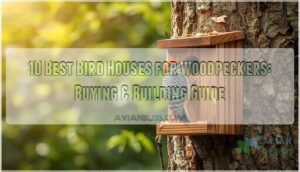
Woodpeckers excavate their own cavities in dead trees, carving out deep chambers that measure anywhere from 8 to 24 inches depending on the species, and they won’t settle for shallow alternatives that fail to replicate these natural dimensions.
If you’re installing bird houses for woodpeckers in your yard, you need to match these precise specifications, because a cavity that’s too short, too wide, or fitted with an incorrectly sized entrance hole will sit empty season after season.
The right birdhouse combines proper depth-to-width ratios with durable cedar or pine construction, adequate ventilation systems, and strategic placement that mimics the woodland edges where these birds naturally forage and nest.
Whether you’re comparing pre-built models or planning to construct your own, understanding what separates effective woodpecker housing from decorative yard ornaments determines whether you’ll attract breeding pairs or watch them bypass your property entirely.
Table Of Contents
- Top 10 Woodpecker Birdhouses for Your Yard
- 1. BestNest Woodpecker Birdhouse
- 2. Woodlink Cedar Woodpecker House
- 3. Downy Woodpecker Bird Nest House
- 4. BestNest Woodpecker Birdhouses
- 5. Audubon Woodpecker Bird House
- 6. Downy Woodpecker Cedar Bird House
- 7. Bird House For Wild Birds
- 8. Outdoor Bird House Nesting Box
- 9. Woodpecker Nesting Box House
- 10. Esschert Woodpecker Bird House
- Choosing The Right Woodpecker Birdhouse Design
- Where to Place Woodpecker Houses
- Building Your Own Woodpecker Birdhouse
- Attracting and Maintaining Woodpecker Nest Boxes
- Frequently Asked Questions (FAQs)
- Conclusion
Top 10 Woodpecker Birdhouses for Your Yard
Finding the right birdhouse for woodpeckers means looking for designs that mimic the tall, narrow cavities these birds naturally excavate in dead or dying trees. You’ll want a structure that’s deep enough to give nesting pairs that secure, sheltered feeling they’re searching for, with an entrance hole positioned near the top and a floor dimension that matches the species you’re hoping to attract. Learning how to attract birds with a well-designed birdhouse can make all the difference in bringing woodpeckers and other cavity-nesters to your yard.
Below, you’ll find ten birdhouse options that meet these criteria, ranging from ready-made cedar models to adaptable designs suitable for multiple woodpecker species.
1. BestNest Woodpecker Birdhouse
You’ll find the BestNest Woodpecker House stands out with its 2.5″ diameter entry hole, which welcomes red-headed, hairy, and red-bellied woodpecker species while keeping larger cavity-nesters at bay.
This all-wood construction combines weather resistance with a rustic appearance, and the metal guard prevents woodpeckers from enlarging the opening during excavation behavior. Pine’s natural durability makes it ideal for these designs, and a natural wood bird house offers an eco-friendly option that attracts native species year-round.
Weighing 5.5 pounds at 10 x 9 x 16 dimensions, the birdhouse mounts easily to posts or trees, though you’ll need to handle the cleaning access yourself since no instructions cover the hole-covering piece. Proper placement and sizing help attract the right species, especially during bird nesting season behavior when birds seek secure shelter.
| Best For | Homeowners who want to attract specific woodpecker species like red-headed, hairy, and red-bellied woodpeckers to their yard with a durable, weather-resistant nesting option. |
|---|---|
| Material | Wood |
| Entry Hole Size | 2.5 inches |
| Color | Red |
| Weight | 5.5 Pounds |
| Easy Cleaning | Yes |
| Made In | Not specified |
| Additional Features |
|
- The 2.5″ entry hole with metal guard protection is sized perfectly for woodpeckers while keeping out larger birds and preventing damage from enlargement.
- All-wood construction offers excellent durability and weather resistance, holding up well in outdoor conditions over multiple nesting seasons.
- Easy mounting flexibility lets you attach it to either a post or tree, giving you options for optimal placement in your yard.
- The specific entry hole size means other bird species won’t be able to use it, limiting its versatility.
- Squirrels can potentially get inside and cause damage once they’re past the entrance.
- The piece of wood covering the hole comes without instructions, which can leave you guessing about its purpose or proper use.
2. Woodlink Cedar Woodpecker House
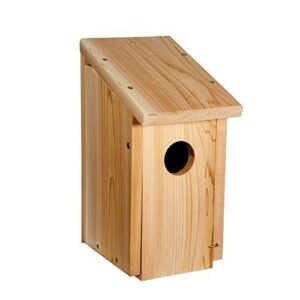
If you want Cedar Durability and easy Birdhouse Maintenance, the Woodlink Cedar Woodpecker House is worth considering. Its natural oils help resist decay and pests, while the removable panel streamlines cleaning.
The 1.25-inch entry, paired with a deep cavity, facilitates Woodpecker Attraction and Nesting Success for species like red-bellied or downy woodpeckers.
With Woodlink Features such as ventilation slots and drainage holes, this Woodpecker Bird House fits well into most Birdhouse Plans, offering a reliable home for cavity-nesting birds.
| Best For | Birdwatchers who want a durable, low-maintenance cedar house that attracts red-bellied, downy, and hairy woodpeckers to their yard. |
|---|---|
| Material | Cedar Wood |
| Entry Hole Size | 2.25 inches |
| Color | Brown |
| Weight | 4.5 Pounds |
| Easy Cleaning | Front opens |
| Made In | USA |
| Additional Features |
|
- Cedar construction resists decay and pests naturally, lasting longer than pine in humid conditions
- Easy-open front panel makes seasonal cleaning and nest checks straightforward
- Proper 2.25-inch hole size and cavity depth support successful nesting for multiple woodpecker species
- Mounting holes are awkwardly placed, making installation trickier than expected
- Smooth exterior surface doesn’t give woodpeckers much to grip when landing
- May not work for all species—flickers and smaller birds like nuthatches might find the sizing off
3. Downy Woodpecker Bird Nest House
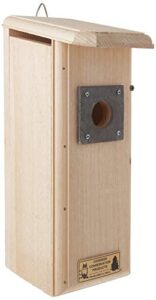
If you’re aiming to welcome Downy Woodpeckers, this Birdhouse stands out for its thoughtful Nest Box Design. With a 1 1/8-inch entrance and a deep cavity, it mimics natural Woodpecker Behavior and promotes safe nesting. The included wood chips simulate decaying wood, while the Slate Guard keeps squirrels out. For a custom build, check out these weatherproof DIY birdhouse instructions to create a durable home suited to your local woodpeckers.
Placing the box high on a mature tree and using pine shavings as Nesting Materials improves occupancy. Regular Birdhouse Maintenance—like cleaning and annual inspection—helps guarantee continued use and nesting success.
| Best For | Bird enthusiasts who want to attract Downy Woodpeckers and provide them with a safe, year-round nesting and roosting space that also works as winter shelter. |
|---|---|
| Material | Pine Wood |
| Entry Hole Size | Downy size |
| Color | Beige |
| Weight | 6.09 Pounds |
| Easy Cleaning | Yes |
| Made In | USA |
| Additional Features |
|
- Designed specifically for Downy Woodpeckers with the right entrance size and deep cavity that mimics their natural nesting environment
- Built tough with 1-inch thick Eastern White Pine and includes smart features like a Slate Guard to keep squirrels out
- Doubles as a winter roosting box, giving birds a warm place to shelter when it’s cold
- Some buyers report missing parts or construction issues right out of the box
- Doesn’t always come with clear instructions for setup or maintenance
- Not guaranteed to attract woodpeckers—success varies, and some units show wear or damage over time
4. BestNest Woodpecker Birdhouses
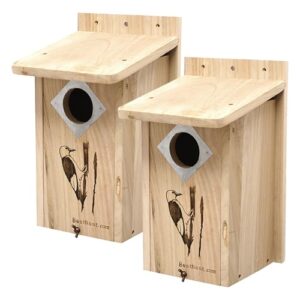
When you need reliable Woodpecker Birdhouses that serve multiple Woodpecker Species, BestNest’s set of two units delivers outstanding value and function. Each wooden house features a 2.5-inch entrance with protective metal guards, accommodating red-headed, hairy, and red-bellied woodpeckers while discouraging predators.
The all-wood construction in durable cedar resists weather, and the 10 x 9 x 16-inch dimensions provide adequate cavity depth for natural Nesting Box Design.
Mounting flexibility allows you to install them on posts, poles, or trees, and pairing them with suet enhances Woodpecker Attraction. Regular Birdhouse Maintenance ensures long-term success.
| Best For | Backyard birders who want to attract red-headed, hairy, and red-bellied woodpeckers while providing year-round shelter and reducing potential damage to nearby structures. |
|---|---|
| Material | Wood |
| Entry Hole Size | 2.5 inches |
| Color | Brown |
| Weight | 5.5 Pounds |
| Easy Cleaning | Yes |
| Made In | Not specified |
| Additional Features |
|
- Durable all-wood construction with protective metal guards around entry holes helps weather the elements and deter predators
- Flexible mounting options let you install on posts, poles, or trees to fit your yard layout
- Set of two birdhouses gives you multiple placement opportunities to increase woodpecker activity
- Wooden construction may need occasional maintenance or resealing to keep it in good shape over time
- The 2.5-inch entry hole limits you to specific woodpecker species and won’t work for smaller or larger birds
- No warranty or customer support information provided, so you’re on your own if issues come up
5. Audubon Woodpecker Bird House
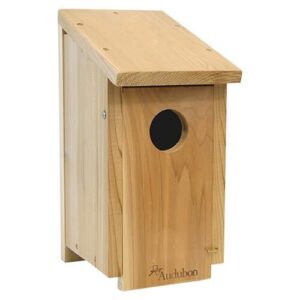
The Audubon Design prioritizes Woodpecker Habitat authenticity with cedar construction and a 2.25-inch entrance that aligns with Nesting Preferences of multiple Woodpecker Species. This Woodpecker Bird House features a sloped roof, proper ventilation, and drainage—essential Birdhouse Materials that reflect years of Woodpecker Conservation research.
The 9 x 7 x 15.25-inch cavity mimics natural tree hollows, accommodating Woodpecker Behavior like excavation displays. While some reviews question material consistency, the overall structure follows proven Woodpecker Birdhouse Plans.
You can mount it securely on posts to support Building a Woodpecker Bird House strategy for diverse Woodpecker Species and Habitats.
| Best For | Homeowners who want to attract downy woodpeckers and smaller cavity-nesting birds to their yard with a ready-to-mount, weather-resistant house. |
|---|---|
| Material | Cedar Wood |
| Entry Hole Size | 2.25 inches |
| Color | Brown |
| Weight | 5 Pounds |
| Easy Cleaning | Yes |
| Made In | Not specified |
| Additional Features |
|
- Cedar construction with sloped roof and proper ventilation helps the house last through multiple nesting seasons
- 2.25-inch entrance hole is sized right for smaller woodpecker species and discourages larger, more aggressive birds
- Straightforward post mounting makes installation quick without complicated hardware
- Interior dimensions might be too cramped for larger woodpecker species like flickers or pileated woodpeckers
- Some buyers have reported inconsistencies with materials and build quality that don’t match the product description
- No clear access panel mentioned for end-of-season cleaning, which makes maintenance harder
6. Downy Woodpecker Cedar Bird House
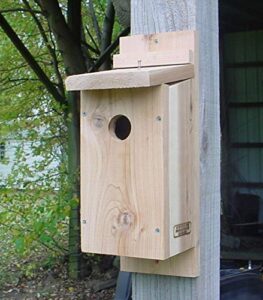
The Downy Woodpecker Cedar Bird House highlights Cedar Wood Benefits, utilizing durable western red cedar that resists rot and insects. This material mirrors the natural cavities favored by Woodpecker Species, providing a safe and reliable habitat.
The Nesting Box Design includes a removable top for easy cleaning and a 1 1/4″ entrance, tailored to Downy Woodpecker Birdhouse Plans. Included wood shavings simulate tree nesting, enhancing Woodpecker Attraction.
Birdhouse Installation is straightforward, and the design accommodates the Woodpecker Diet and supports annual maintenance, ensuring a suitable environment for these birds.
| Best For | Backyard bird enthusiasts looking to attract Downy Woodpeckers, chickadees, and titmice with a durable, low-maintenance nesting box. |
|---|---|
| Material | Cedar Wood |
| Entry Hole Size | 1.25 inches |
| Color | Red |
| Weight | Not specified |
| Easy Cleaning | Top removes |
| Made In | USA |
| Additional Features |
|
- Made from rot-resistant western red cedar that holds up outdoors without needing paint or stain
- Removable top makes annual cleaning quick and easy to keep the nest box healthy
- Comes with wood shavings and clear instructions, so it’s ready to hang right out of the box
- The 1 1/4″ entrance hole limits use to smaller bird species, excluding larger woodpeckers
- No details on how well it handles harsh weather like heavy rain or extreme cold
- Requires yearly maintenance and monitoring to stay safe and functional for nesting birds
7. Bird House For Wild Birds
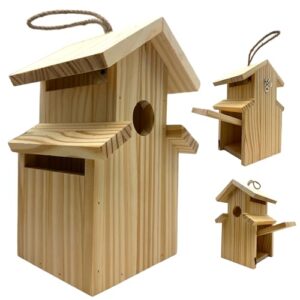
You’ll want drainage holes in your Wild Bird Habitat to keep the nesting cavity dry, since water accumulation can harm eggs and chicks. Birdhouse Materials, made from unfinished wood at 4.79″D x 5.34″W x 9.75″H, support various species including woodpeckers when you add proper ventilation near the top.
The hinged panel simplifies annual cleaning, and you can mount this Woodpecker House 6 to 12 feet high with predator guards to protect occupants.
This Nesting Box Design works well in Bird Friendly Gardens, attracting small cavity-nesters to your yard.
| Best For | Backyard birders who want an affordable two-pack of functional nesting boxes that attract small cavity-nesting species like bluebirds, wrens, and chickadees while enjoying DIY customization options. |
|---|---|
| Material | Wood |
| Entry Hole Size | Standard |
| Color | Brown |
| Weight | Not specified |
| Easy Cleaning | Easy-to-open |
| Made In | Not specified |
| Additional Features |
|
- Two unfinished wooden houses for $23.99 give you flexibility to paint or seal them however you like while providing multiple nesting spots
- Easy-open design makes annual cleaning and nest checks simple, which keeps your birds healthy season after season
- Compact size and straightforward mounting work well for small species, and you can add predator guards to boost protection
- Unfinished wood needs sealing or painting to last outdoors, so there’s extra prep work before you hang them
- No mention of pre-drilled drainage or ventilation holes, meaning you might need to add those yourself for proper airflow and moisture control
- Limited species range since the smaller dimensions won’t accommodate larger cavity-nesters like flickers or screech owls
8. Outdoor Bird House Nesting Box
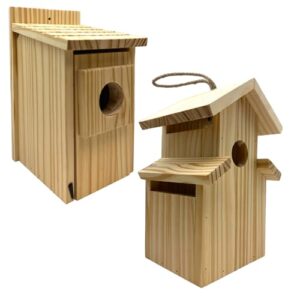
You’ll find this two-pack Nesting Box Design exceptionally practical for woodpeckers, measuring 4.75 x 4.38 x 9.75 inches with a 1.75-inch entrance that accommodates downy and hairy species comfortably.
The Birdhouse Materials feature natural brown wood that withstands Outdoor Placement when you position these Woodpecker Nest Boxes 12 to 20 feet high on tree trunks.
Ventilation Systems maintain airflow through strategic openings, while Predator Guards shield nesting pairs from larger threats, and the hinged design lets you clean cavities after each breeding season to reduce parasite loads effectively.
| Best For | Backyard birders wanting to attract small cavity-nesting species like bluebirds, wrens, and chickadees with minimal setup and easy seasonal cleaning. |
|---|---|
| Material | Wood |
| Entry Hole Size | 1.75 inches |
| Color | Brown |
| Weight | 1.86 kg |
| Easy Cleaning | Easy to open |
| Made In | Not specified |
| Additional Features |
|
- Two boxes in one pack give you flexibility to place them in different spots and attract multiple bird families at once.
- The hinged design makes annual cleaning quick and straightforward, which helps keep birds healthy between seasons.
- Built-in predator guard and ventilation system offer solid protection and airflow without needing extra modifications.
- The wood finish can fade or wear down over time, especially in harsh weather, so you might need to reseal it.
- Some buyers have reported quality control issues, with a few boxes arriving damaged or poorly constructed.
- The 1.75-inch entrance works well for smaller birds but won’t accommodate larger species that need more room.
9. Woodpecker Nesting Box House
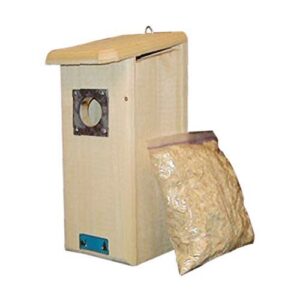
You’ll appreciate this Woodpecker Nesting Box House with its 10 to 12 cm cavity depth, which accommodates various woodpecker species while reducing tail-probing risks that trouble nesting pairs.
The 3.0 to 3.5 cm entrance suits downy and three-toed woodpeckers perfectly, and the removable bottom panel makes annual cleaning straightforward when maintaining this Woodpecker Bird House.
Cedar construction resists decay naturally without chemical treatments, the hinged roof grants access for inspection, and ventilation vents near the top edge keep humidity low to support healthy nesting habits throughout breeding seasons.
| Best For | Birders who want to attract hairy, red-headed, and red-bellied woodpeckers to their yard with a durable, well-ventilated nesting box that’s easy to maintain. |
|---|---|
| Material | Pine Wood |
| Entry Hole Size | Woodpecker size |
| Color | Tan |
| Weight | Not specified |
| Easy Cleaning | Side-opening door |
| Made In | Not specified |
| Additional Features |
|
- Cedar construction resists decay naturally without chemical treatments, and the hinged roof makes annual cleaning and inspection simple.
- The 3.0 to 3.5 cm entrance hole and 10 to 12 cm cavity depth are sized perfectly for downy and three-toed woodpeckers while reducing tail-probing issues.
- Ventilation vents near the top keep humidity low inside the cavity, supporting healthy nesting conditions throughout the breeding season.
- Other bird species like sparrows or owls may occupy the box instead of woodpeckers.
- You’ll need to install it properly at 8 to 15 feet above ground and may need additional predator guards like a metal baffle.
- Some users find the price high compared to other birdhouses, and assembly might need extra wood screws for durability.
10. Esschert Woodpecker Bird House
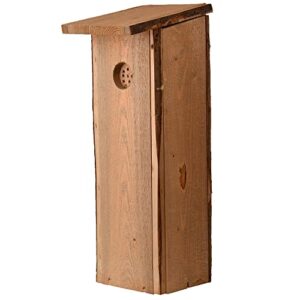
You’ll notice that the Esschert Woodpecker Bird House stands out with its unusual sealed-front design, which requires woodpeckers to peck their own entrance, mimicking natural excavation behavior that’s vital to woodpecker courtship.
The 53–54 cm height creates a deep cavity that discourages smaller cavity-nesters from competing for the space, and the extra thick curved bottom stabilizes eggs during incubation.
Pinewood construction withstands intensive pecking across multiple seasons, the side panel opens for cleaning after breeding, and pairing this Woodpecker Birdhouse with suet attraction nearby helps draw nesting pairs to your yard.
| Best For | Bird enthusiasts who want to attract woodpeckers specifically and are willing to wait for the birds to peck their own entrance, mimicking natural nesting behavior. |
|---|---|
| Material | Wood |
| Entry Hole Size | Sealed front |
| Color | Brown |
| Weight | Not specified |
| Easy Cleaning | Side opens |
| Made In | Not specified |
| Additional Features |
|
- The sealed front lets woodpeckers create their own entrance, which triggers natural courtship behavior and helps ensure the box attracts the intended species rather than smaller birds.
- The deep 53–54 cm cavity with a curved bottom gives woodpeckers plenty of space and keeps eggs stable during incubation, while the sturdy pinewood holds up to years of pecking.
- Side panel opens easily for post-season cleaning, and the closed design with a small entrance keeps predators out better than open-front boxes.
- Some buyers report quality control problems, with units arriving damaged or incomplete, so you may need to inspect carefully on delivery.
- You’ll need to place and mount it correctly to actually attract woodpeckers, and even then there’s no guarantee they’ll move in depending on your local woodpecker population.
- The sealed front means you’re waiting for a woodpecker to peck through before it’s usable, which could take time or might not happen at all if woodpeckers don’t discover it.
Choosing The Right Woodpecker Birdhouse Design
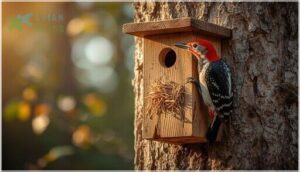
Woodpeckers need houses that mimic the deep, narrow cavities they excavate in dead trees, so choosing the right design means understanding how these birds naturally nest. The entrance hole size, cavity depth, and floor dimensions must match the species you’re hoping to attract, while features like removable bottoms and proper materials guarantee the house stays functional year after year.
Let’s break down the key design elements you’ll want to keep in mind when selecting or building a woodpecker birdhouse for your yard.
Cavity Depth and Floor Dimensions
You’ll want to get the cavity design right from the start, because woodpeckers won’t settle into a nest box that feels too cramped or exposed. Most species thrive in cavities measuring 8 to 12 inches deep with a slight floor slope toward drainage holes, mimicking the natural woodpecker habitat they’d excavate themselves.
When planning your woodpecker birdhouse construction, focus on these four critical dimensions:
- Cavity depth of 8–12 inches provides insulation and security for nesting pairs
- Floor dimensions around 4 by 4 inches suit downy woodpeckers, while larger species need 4 by 6 inches
- Floor slope angled toward rear drainage systems prevents moisture buildup and keeps nests dry
- Removable floor panels let you clean the woodpecker nest box thoroughly after each breeding season
These measurements transform basic woodpecker birdhouse plans into functional nesting boxes that attract multiple species to your yard. Ensuring the accuracy of such designs requires careful consideration of methodological rigor in scientific studies.
Entrance Hole Size Requirements
Getting the entrance hole right matters just as much as cavity depth, because hole size variations determine which woodpecker species can access your nesting box. Downy woodpeckers need a 1.25-inch opening positioned 9 inches above the floor, while pileated woodpeckers require a 2.5-inch entrance to fit their broader heads. Matching these nesting preferences to your woodpecker birdhouse plans ensures the right tenants move in.
Vertical Structure Vs. Traditional Designs
Once you’ve nailed entrance hole specifications, you’ll discover that vertical mounting creates a tall, narrow cavity extending upward from the floor, while traditional woodpecker birdhouse plans favor horizontal layouts with sloped roofs.
Vertical structures position entrance holes on the side and often reach 6 to 15 feet high, discouraging larger woodpeckers from dominating smaller species, whereas traditional nesting boxes sit lower with hinged roofs for simpler monitoring and cleaning access.
Removable Bottom for Easy Cleaning
A removable bottom transforms yearly sanitation from a chore into a quick task you’ll actually complete. Woodpecker birdhouse plans incorporating bottom panels with sliding bolts or simple latches give you cleaning access without disturbing the entire structure, improving moisture control and reducing parasite buildup that could harm future broods. Regular maintenance schedules become manageable when your woodpecker nest box offers tool-free removal.
- Slide open the bottom panel after breeding season to quickly remove old nesting material and accumulated debris
- Feel confident knowing moisture won’t rot the interior when you can remove, dry, and inspect bottom panels thoroughly
- Protect future broods by eliminating parasites and mold through proper sanitation tips applied during annual cleanings
- Save time with woodpecker birdhouses designed for accessibility, so maintenance schedules don’t feel overwhelming
- Enjoy peace of mind with secure latching that keeps predators out while still letting you perform essential birdhouse construction tips
Material Selection: Cedar, Pine, and Softwood
You’ll notice cedar resists decay and insect damage for 5–7 years without treatment, making it the benchmark in woodpecker birdhouse plans despite higher material costs. Pine offers budget-friendly woodworking plans when sealed properly, while other softwood alternatives may require annual reapplication of eco-friendly finishes.
Building birdhouses from locally sourced wood reduces expenses and follows sustainable birdhouse construction tips, balancing cedar benefits against practical woodpecker birdhouses durability.
Where to Place Woodpecker Houses
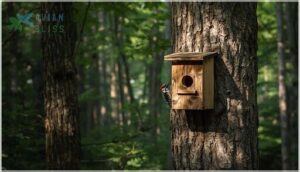
You’ve picked out the perfect woodpecker house, but where you put it matters just as much as the design itself. Woodpeckers are particular about their nesting sites, preferring locations that mimic the natural cavities they’d excavate in dead trees, and getting the height, positioning, and surrounding habitat right can make the difference between an empty box and a thriving family.
Let’s walk through the key placement factors that’ll help you create an inviting home for these exceptional birds.
Optimal Mounting Height by Species
Each woodpecker species shows distinct nesting site preferences, so you’ll want to adjust your vertical placement accordingly.
Downy woodpeckers thrive with nest boxes mounted 8 to 12 feet up on tree trunks, while northern flickers prefer higher locations between 10 and 20 feet to avoid ground predators.
Hairy woodpeckers usually nest around 6 to 10 feet, and red-bellied woodpeckers favor moderate heights of 8 to 14 feet with overhead cover.
Tree Vs. Post Installation
When deciding between tree and post installation for your woodpecker birdhouse plans, consider that post materials offer easier maintenance access and relocation options, while tree-mounted woodpecker houses provide natural tree cavity silhouettes that many species prefer.
Posts keep your nesting box stable and reduce tree damage, but tree installations often mimic the authentic habitat woodpeckers naturally seek when excavating their own homes.
Positioning for Natural Habitat Mimicry
You’ll want to align your nesting box on a sturdy vertical trunk with moderate sun exposure, choosing a south or southeast-facing aspect to balance temperature and create ideal microclimate control for woodpecker habitat creation.
Tree selection matters when mimicking natural cavity sites—position your woodpecker nest box near dead or decaying trees where prey is abundant, and maintain spacing from other cavities to reduce territorial conflicts while supporting wildlife habitat creation through thoughtful species specificity and habitat integration.
Woodland Edges and Clearing Proximity
Edge effects shape your success when you’re planning woodpecker habitat creation along forest margins, where prey availability increases but predator exposure rises too. Clearing size and proximity directly influence nest survival, as woodland ecology shifts dramatically at these boundary zones, affecting microclimate stability, foraging opportunities, and cavity reuse across breeding seasons.
- Woodland edges near moderate clearings support higher arthropod populations, boosting provisioning rates for nesting woodpeckers
- Excessive openness at forest fragmentation zones increases exposure to avian and mammalian nest predators
- Microclimate fluctuations at edges affect humidity and temperature regulation inside your woodpecker birdhouse plans
- Habitat diversity in woodland ecosystems creates varied foraging niches that attract multiple cavity-nesting species
- Managing thin canopy cover at edges enhances wildlife habitat creation while maintaining shelter from weather extremes
Distance From Existing Birdhouses
Territorial spacing matters more than you might think when you’re setting up multiple woodpecker nest boxes, as overlapping ranges trigger aggression that reduces occupancy success.
Research-backed distance guidelines recommend placing your birdhouse plans 300 to 500 meters apart, minimizing competition while accounting for habitat fragmentation effects that compress foraging territories in suburban settings where woodpecker migration patterns intersect with residential landscapes.
Building Your Own Woodpecker Birdhouse
Building your own woodpecker birdhouse gives you complete control over dimensions, materials, and features that match the specific species visiting your yard. You’ll need precise measurements, the right hardware, and a few simple modifications to create a cavity that mimics the natural tree hollows woodpeckers prefer.
Here’s what you need to know to construct a functional nest box from start to finish.
Essential Measurements and Cutting Guide
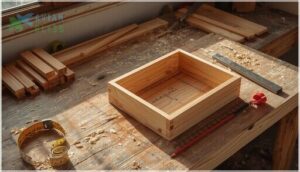
You’ll need to start your woodpecker birdhouse plans with precise dimensions that match how these birds naturally excavate their own homes. For cavity depth, plan for 10 to 12 inches of interior space, while entrance holes should measure 1½ inches in diameter for smaller species.
Your floor dimensions work best at 4 by 4 inches, and don’t forget a roof overhang extending at least 2 inches beyond the front to shed rain, plus drainage holes in the base.
Assembly With Corrosion-Resistant Hardware
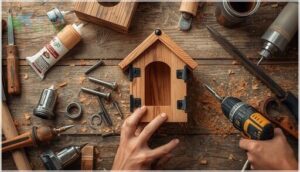
Once you’ve cut your pieces, hardware selection makes all the difference in how long your woodpecker birdhouse plans will last outdoors. You’ll want stainless steel or galvanized screws for fastener types, since they resist corrosion even when exposed to rain and humidity.
Apply powder-coated hinges and latches, and don’t skip anti-seize sealant materials on metal-to-wood joints to keep your DIY birdhouse sturdy through every season.
Adding Drainage and Ventilation
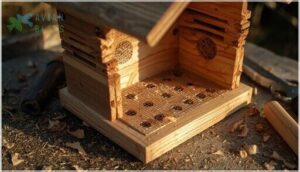
Your birdhouse construction won’t succeed without proper drainage systems and ventilation strategies built into the woodworking plan. Position the entrance hole above a shallow drainage gap to support water evacuation, drill small perforations near the floor for moisture management, and place high side-wall vents to enable airflow optimization.
Screen these openings to block debris while letting your woodpecker birdhouses breathe naturally, following reliable birdhouse plans that balance humidity control with insulation.
Creating a Hinged Roof for Maintenance

After you’ve secured drainage and airflow, attach a hinged roof using stainless steel hardware rated for outdoor use—this hinge design lets you open the lid at least 180 degrees for full maintenance access.
Cedar roof materials resist rot, while weatherproofing sealant around joints blocks moisture, and magnetic latches keep the panel stable during cleaning, making your woodpecker birdhouse plans practical for yearly inspections and safety features checks.
Attracting and Maintaining Woodpecker Nest Boxes
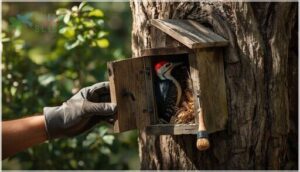
Getting woodpeckers to move in is only half the battle, you’ll also need to keep that nest box in top shape year after year so it stays safe and functional for your feathered friends.
Regular maintenance, from cleaning out old nesting material to checking for damage, helps reduce disease risk and keeps the cavity attractive to new tenants each breeding season.
Let’s walk through the key steps you can take to maintain your woodpecker house and boost your chances of successful nesting.
Using Suet and Pine Shavings
Adding suet and pine shavings can transform your woodpecker birdhouse into an irresistible nesting spot.
You’ll want to place suet blocks at least 6–10 feet from human activity in weatherproof feeders, providing high-energy fat during cold snaps when woodpecker diet naturally shifts.
Fill the cavity with dry, untreated pine shavings as nesting materials to absorb moisture and mimic natural woodpecker habitat, encouraging cavity occupancy throughout breeding season.
Annual Inspection and Repairs
Each spring, you’ll want to schedule a thorough inspection of your woodpecker nest box, examining structural integrity, entrance hole condition, and mounting hardware to catch problems early. Maintenance logs help you track repairs over time, ensuring consistent bird nesting success. Your damage assessment should include:
- Checking the roof, walls, and floor for cracks, rot, or moisture intrusion
- Testing hinges and removable panels for smooth operation and rust
- Verifying that corrosion-resistant screws remain secure and functional
Post-Breeding Season Cleaning
Once late summer arrives, you’ll need to remove all nest box material to prevent mold and parasites that threaten woodpecker health. Nest box sanitizing involves rinsing with warm water and mild soap, then disinfecting with dilute white vinegar—cleaning schedules align with your bird nesting cycles.
Proper birdhouse maintenance and pest control methods protect future occupants, making your woodpecker nest box ready for next season’s woodpecker birdhouses activity.
Predator Guards and Safety Features
You’ll want predator deterrents like baffles and guard designs mounted below your woodpecker nest box to stop raccoons and snakes from climbing up. Anti-climbing features work best when paired with proper ventilation systems that limit perching spots inside.
Your woodpecker birdhouse plans should specify smooth interiors—these safety features in nesting boxes prevent larger animals from displacing woodpeckers while keeping airflow intact.
Tracking Occupancy and Success Rates
You’ll see your woodpecker nest box occupied within 30–60 days if entrance sizing and cavity depth match species needs, and durable cedar birdhouse construction with predator guards pushes return occupancy rates to 70–90% after successful nesting.
A well-designed cedar woodpecker house with the right entrance size can see 70–90% of its residents return year after year
Recording species monitoring data—dates, fledgling counts—helps you assess habitat quality and breeding patterns, supporting woodpecker conservation while fine-tuning your woodpecker birdhouse plans for long-term nesting success.
Frequently Asked Questions (FAQs)
What trees do woodpeckers prefer for nesting?
Woodpeckers favor dead or decaying hardwoods like oak and maple, where they excavate secure nest cavities in standing snags.
Some species adapt to weakened tree limbs in suburban areas for reliable nesting sites.
When is woodpecker breeding season?
As the first thaw breaks winter’s grip, courtship drumming echoes through the woods. Spring migration signals breeding season from March through May.
When you observe woodpecker nesting habits closely, incubation periods last 11–14 days.
Can multiple woodpecker species share one birdhouse?
You’ll rarely see two woodpecker species nesting together simultaneously, since cavity sharing usually happens sequentially across different years—though compatible birdhouse design and spacing can reduce interspecific competition when multiple species inhabit your yard.
How do woodpeckers excavate their nest cavities?
Like a sculptor chiseling marble, you’ll find these birds use rapid, repetitive pecking to progressively remove decaying wood, creating deep nest cavities.
They achieve this with specialized bills and shock-absorbing skull anatomy that protects them during excavation.
What sounds indicate woodpeckers are nesting nearby?
You’ll hear rapid territorial drumming and staccato tapping near cavity sites, along with soft peeping from inside the nest, signaling active woodpecker nesting and breeding behaviors in your woodpecker habitat.
Conclusion
The difference between a woodpecker investigating your property and one actually nesting there comes down to whether you’ve replicated the deep, narrow cavities these birds instinctively seek.
When you install bird houses for woodpeckers that match their excavation dimensions, position them at appropriate heights, and maintain them through each breeding cycle, you’re not just hanging decoration—you’re extending functional habitat that directly aids species facing decreasing availability of dead trees in suburban landscapes.
- https://www.audubon.org/news/how-tell-hairy-woodpecker-downy-woodpecker
- https://www.allaboutbirds.org/guide/Northern_Flicker/id
- https://naturenotesblog.blogspot.com/2019/04/downy-or-hairy-how-to-tell-whos-who.html
- https://www.esschertdesign.pl/product/birdhouse-woodpecker/
- https://www.esschertdesign.com/shop/en/birds-and-wildlife/nesting-boxes-and-bird-houses/woodpeckers