This site is supported by our readers. We may earn a commission, at no cost to you, if you purchase through links.
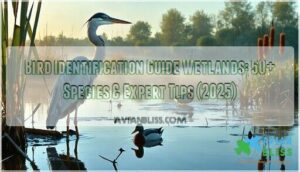 You’ll spot wetland birds everywhere from shallow ponds to expansive marshes, but identifying them can feel like solving a puzzle.
A thorough bird identification guide for wetlands focuses on key features: bill shape, leg length, and feeding behavior.
Herons stand motionless like statues, while ducks dabble and tip forward. Look for size comparisons—is it pigeon-sized or crane-tall?
Notice colors, markings, and flight patterns. Mallards paddle with bright green heads, kingfishers flash blue streaks, and red-winged blackbirds perch on cattails.
Water birds often gather in mixed flocks, creating perfect learning opportunities. The secret lies in observing their unique adaptations and preferred microhabitats, which is the key to successful bird identification.
Table Of Contents
- Key Takeaways
- Wetland Bird Species
- Bird Identification Tips
- Wetland Habitat Birds
- Water Bird Characteristics
- Wetland Bird Conservation
- Frequently Asked Questions (FAQs)
- What type of birds live in wetlands?
- Is the Audubon Bird Guide app free?
- What is the best free app to identify birds?
- What is the best bird identification book?
- What equipment do I need for wetland birding?
- When is the best time for wetland birding?
- How do I distinguish juvenile from adult birds?
- What sounds do different wetland birds make?
- Which wetland birds are year-round versus migratory?
- Conclusion
Key Takeaways
- Focus on distinctive physical features – You’ll identify wetland birds faster by observing bill shape, leg length, and size comparisons rather than just colors, since herons have long bills for probing while ducks have flat bills for dabbling.
- Watch feeding behaviors and flight patterns – You can distinguish species by how they hunt and move, as cranes fly with necks extended straight while herons curve theirs into an "S" shape, and kingfishers dive headfirst while mallards paddle on the surface.
- Use habitat clues to narrow down possibilities – You’ll spot different species in specific wetland zones, with rails preferring dense vegetation, avocets favoring open shallow waters, and larger birds like pelicans needing deeper water and open space.
- Time your visits for peak activity – You’ll see the most wetland birds during early morning hours and late afternoon when they’re actively feeding, with spring and fall migrations bringing the greatest species diversity to observe.
Wetland Bird Species
You’ll encounter over 50 different wetland bird species across North America’s marshes, lakes, and coastal areas, from towering cranes with their distinctive calls to colorful kingfishers that snatch fish from the water’s surface.
From majestic cranes to diving kingfishers, North America’s wetlands showcase nature’s most spectacular aquatic bird diversity.
These diverse birds have adapted unique features like webbed feet for swimming, long bills for probing mud, and specialized feathers that help them thrive in aquatic environments.
Cranes and Herons
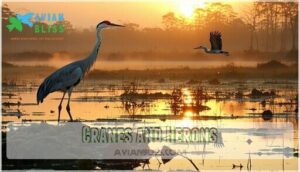
Distinguishing cranes from herons becomes straightforward once you know their key differences.
These wetland birds share similar habitats, but their distinct characteristics make wetland bird identification easier than you’d think.
Here’s how to tell them apart:
- Flight patterns – Cranes fly with necks extended straight, while herons curve theirs into an "S" shape
- Social behavior – Cranes flock together during migration, but herons prefer solitary hunting
- Physical features – Cranes have bare red heads and shorter beaks; herons sport fully feathered heads
Kingfishers and Mallards
Moving from the statuesque cranes and herons, you’ll encounter two vastly different wetland species.
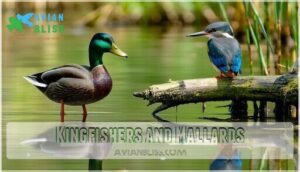
The belted kingfisher’s striking blue-gray plumage makes wetland bird identification straightforward, while mallard behavior includes distinctive head-bobbing displays.
Habitat loss threatens both species’ conservation status, though mallards adapt better to urban environments than kingfishers.
| Feature | Belted Kingfisher | Mallard |
|---|---|---|
| Kingfisher Diet | Fish, amphibians, aquatic insects | Aquatic plants, seeds, small invertebrates |
| Plumage Variation | Blue-gray above, white below; females have chestnut band | Males: green head, white collar; females: mottled brown |
| Hunting Style | Dramatic headfirst plunge from perch | Surface dabbling and upending |
Grebes and Ibises
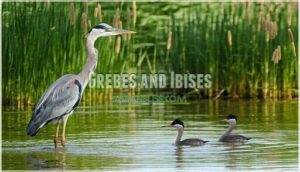
Looking for sleek divers and elegant waders? Grebes excel at underwater hunting, with their grebe diving techniques making them wetland specialists.
These compact birds show striking plumage variations between seasons.
Meanwhile, long-legged wading bird species like ibises probe muddy shallows with curved bills during ibis feeding sessions.
Both groups face changing conservation status, making proper wetland bird identification essential for monitoring populations.
Large Wetland Birds
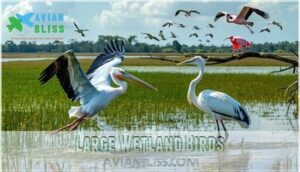
Pelican Behavior reveals fascinating feeding strategies as these giants plunge-dive for fish, while Spoonbill Diet consists mainly of crustaceans that create their signature pink coloring.
Stork Regurgitation helps cool chicks during hot weather, and Crane Migration patterns span thousands of miles seasonally.
Eagle Conservation efforts have successfully restored populations in wetland bird habitats nationwide.
Duck-Sized Wetland Birds
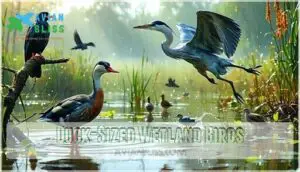
You’ll spot five key duck-sized species in wetlands, each with distinct traits.
The introduced Muscovy Duck varies in plumage near settlements, while Great Blue Heron ID becomes easier with its tall gray frame and orange bill.
Watch Double-crested Cormorant behavior as they dive for fish, and notice Anhinga adaptations like spread wings for drying.
Osprey hunting involves dramatic plunges for fish.
Bird Identification Tips
Identifying wetland birds becomes much easier when you know what to look for. Think of it like solving a puzzle – each piece of information helps complete the picture.
Start by observing from a distance to avoid disturbing the birds, then use these key identification strategies:
- Size comparison – Compare birds to familiar species like crows or ducks to gauge their relative size
- Plumage variations – Note distinctive colors, patterns, and seasonal changes in feather appearance
- Behavior patterns – Watch how birds feed, swim, or wade through water
- Vocalizations analysis – Listen for unique calls, songs, or distinctive sounds each species makes
Habitat clues also provide valuable information for bird identification. A great blue heron‘s patient stalking differs dramatically from a mallard’s dabbling behavior.
Your bird identification guide should include range maps and seasonal timing. Successful birdwatching tips include bringing binoculars, staying quiet, and visiting during early morning hours when wetland bird species are most active.
Enhance your viewing experience with quality birding optics.
Wetland Habitat Birds
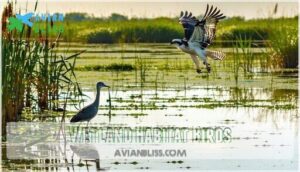
You’ll encounter wetland birds in four distinct size categories, each adapted to specific feeding zones and water depths within marsh ecosystems.
From pigeon-sized rails that skulk through dense vegetation to soaring ospreys with six-foot wingspans, these species have evolved specialized hunting techniques that make identification easier once you understand their ecological niches.
Pigeon-Sized Wetland Birds
You’ll encounter several pigeon-sized birds during your wetland adventures.
These compact species pack unique characteristics into smaller frames, making Rail Identification and understanding Gallinule Behavior essential skills for any wetland bird guide enthusiast.
| Species | Key Features |
|---|---|
| King Rail | Orange-brown plumage, streaked back, freshwater edges |
| Common Gallinule | Blackish body, white sideband, red forehead shield |
| Purple Gallinule | Vibrant blue-purple, greenish back, yellow legs |
| Green Heron | Bluish-gray wings, chestnut neck, secretive nature |
| Virginia Rail | Rusty breast, gray cheeks, marsh specialist |
These common wetland birds showcase diverse wetland bird characteristics.
The Purple Gallinule’s rainbow colors contrast sharply with the Green Heron’s subdued tones.
Each species demonstrates specific Habitat Preferences – rails prefer dense vegetation while herons favor open water edges.
Consider purchasing rail products to further support conservation efforts.
Understanding wetland bird behavior helps distinguish between similar species when identifying wetland birds in their natural environments, which is crucial for effective birding and wildlife conservation.
Blackbirds and Avocets
When comparing these distinctive species, you’ll notice striking differences in their wetland bird guide profiles.
Red-winged blackbird behavior includes territorial displays and flocking, while American avocet diet focuses on crustaceans and insects.
Plumage variations range from blackbirds’ glossy feathers to avocets’ elegant black-and-white patterns.
Their habitat comparison reveals blackbirds prefer marsh edges, whereas avocets favor open shallow waters for identifying wetland birds.
Ospreys and Stilts
You’ll easily recognize ospreys by their distinctive brown upperparts and white underparts as they soar over wetlands hunting fish.
Their osprey diet consists almost entirely of fish, making osprey conservation essential for healthy ecosystems.
For accurate species confirmation, consider a helpful osprey identification resource.
Black-necked stilts wade through shallow waters on impossibly long pink legs, their stilt migration patterns following seasonal wetland availability, showcasing remarkable nesting behavior in their preferred stilt habitat.
Loons and Grebes
While ospreys soar overhead, look down to spot nature’s underwater acrobats. Loon diving behavior sets them apart from other wetland species. These expert swimmers disappear beneath the surface for extended periods, using solid bones that help them stay submerged.
Grebe molting patterns also create identification opportunities during seasonal changes.
- Listen for haunting loon vocalizations echoing across open water at dawn
- Spot grebe nests floating like small rafts among cattails and marsh vegetation
- Watch grebes perform their elaborate courtship dances during spring breeding season
- Notice how grebe migration brings flightless birds together in massive staging areas
Water Bird Characteristics
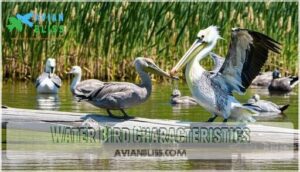
You’ll discover that water birds have evolved remarkable adaptations, from the cormorant’s non-waterproof feathers that require frequent drying to the pelican’s stretchy throat pouch that can hold three gallons of water.
Understanding these unique characteristics, along with their feeding behaviors and physical traits, will help you accurately identify each species during your wetland adventures.
Unique Water Birds
You’ll discover fascinating behaviors among wetland’s most distinctive species.
Brown Pelicans execute dramatic pelican plunge dives, while Roseate Spoonbills get their pink coloring from their spoonbill diet of crustaceans.
Watch for Anhinga drying their wings after underwater hunts, Wood Storks stork cooling chicks by regurgitating water, and Common Loons producing haunting loon vocalizations that echo across water.
| Species | Unique Behavior |
|---|---|
| Brown Pelican | Headfirst plunge diving |
| Roseate Spoonbill | Pink from crustacean diet |
| Anhinga | Wing-spreading to dry |
| Wood Stork | Water regurgitation cooling |
Bird Species Descriptions
Understanding wetland bird species requires recognizing key distinguishing features that separate one species from another.
You’ll notice distinct characteristics across different bird families that make identification straightforward once you know what to look for.
Here are five essential bird species characteristics to observe:
- Plumage Variations – Color patterns change seasonally in many species
- Vocalizations – Each species produces unique calls and songs
- Feeding Habits – Bill shape reflects preferred food sources
- Nesting Behaviors – Location preferences vary dramatically between species
- Migration Patterns – Timing and routes differ among wetland bird species
Conservation and Behavior
You’ll notice wetland bird conservation efforts directly impact species’ Nesting Habits and Mating Rituals.
Many birds like redheads practice brood parasitism, while others form lifelong pairs.
Migration Patterns reveal incredible journeys—some grebes travel 3,700 miles annually.
Understanding Feeding Ecology and Parental Care behaviors helps you identify species and supports avian conservation.
Bird behavior reflects wetland ecology conservation success.
Bird Species by Size
Bird size provides your best starting point for wetland identification.
Large species like pelicans and cranes dominate open waters, while pigeon-sized rails prefer dense vegetation.
Size identification correlates directly with habitat preferences – bigger birds need deeper water and open space.
Notice how plumage variation often matches size categories, helping you narrow down possibilities quickly during field observations, which is related to size categories.
Wetland Bird Conservation
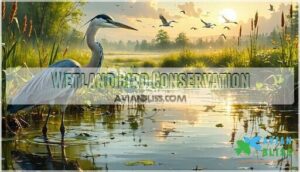
You’ll discover that wetland birds face serious challenges from habitat loss, pollution, and climate change, making conservation efforts more critical than ever.
By understanding these threats and supporting protection programs, you can help guarantee future generations will still spot herons wading through marshes and hear the distinctive calls of cranes echoing across wetlands.
Threats to Wetland Birds
Wetland bird species identification becomes challenging when their populations decline due to mounting pressures.
You’ll witness these magnificent creatures struggling against multiple threats that jeopardize their survival and disrupt wetland bird ecology across North America and beyond.
- Habitat Loss – Agricultural conversion destroys 84% of critical wetland bird species nesting areas
- Pollution Impacts – Chemical runoff from farms and industrial waste poison feeding grounds
- Climate Change – Rising temperatures and sea levels alter traditional migration patterns
- Invasive Species – Non-native plants crowd out food sources birds depend on
- Hunting Pressure – Illegal hunting activities threaten already vulnerable wetland conservation efforts
Protecting Wetland Habitats
Now that you understand the threats, let’s explore how you can make a real difference.
Wetland protection requires your active participation in habitat restoration and pollution control efforts.
Supporting wetland conservation efforts through community programs helps combat climate change and invasive species while improving water management practices.
| Protection Strategy | Your Role | Bird Impact |
|---|---|---|
| Habitat Restoration | Volunteer for planting events | Creates nesting sites for herons and cranes |
| Pollution Control | Reduce pesticide use at home | Protects food sources for kingfishers and grebes |
| Invasive Species Management | Report non-native plants | Preserves native vegetation for waterfowl |
| Water Management Support | Advocate for wetland policies | Maintains water levels for all wetland species |
Bird Watching and Tourism
Responsible wetland bird watching creates a ripple effect that benefits everyone involved.
When you practice Ethical Birding and follow Photography Tourism guidelines, you’re supporting Local Economies through Ecotourism Benefits.
Many destinations now offer Accessible Birding trails and expert-led tours.
Your bird identification guide becomes more valuable when combined with sustainable practices that protect these precious wetland habitats for future generations.
Community Involvement and Education
Getting involved locally makes a real difference for wetland conservation.
Join Citizen Science projects to contribute valuable data while learning identification skills.
Educational Programs at nature centers offer hands-on experience with expert guides.
Local Partnerships connect you with bird watching organizations that provide resources and volunteer opportunities.
Your participation builds Community Awareness and helps protect these essential habitats, making valuable data collection possible.
Frequently Asked Questions (FAQs)
What type of birds live in wetlands?
You’ll spot cranes, herons, and ducks wading through shallow waters. Kingfishers dive for fish while coots paddle with lobed toes. These diverse species thrive in marshes, swamps, and lakeshores.
Is the Audubon Bird Guide app free?
Looking for a digital birding companion that won’t break the bank?
You’ll find the Audubon Bird Guide app completely free to download and use, offering extensive species information, photos, and sounds without any hidden costs.
The app provides extensive species information.
What is the best free app to identify birds?
Several excellent free bird identification apps can help you identify species.
Merlin Bird ID by Cornell Lab stands out as the top choice, offering photo identification, sound recognition, and extensive species information for birders worldwide, with Merlin Bird ID being a notable example.
What is the best bird identification book?
The Sibley Guide to Birds remains the gold standard for North American bird identification.
You’ll find detailed illustrations, range maps, and behavioral notes that make field identification easier than ever before.
What equipment do I need for wetland birding?
Like a scout preparing for adventure, you’ll need waterproof binoculars, a field guide, waterproof boots or waders, and a spotting scope for distant birds.
Don’t forget a notebook and comfortable clothing for extended observation sessions.
When is the best time for wetland birding?
Early morning hours offer peak activity when birds feed actively before the day heats up.
Late afternoon provides another excellent window.
Spring and fall migrations bring the greatest species diversity to wetland areas.
How do I distinguish juvenile from adult birds?
You’ll notice juveniles often have duller colors, streaked or mottled plumage, and shorter bills compared to adults.
Look for brownish tones where adults show bright colors, and watch for begging behaviors near parent birds.
What sounds do different wetland birds make?
Wetland birds create an absolutely mind-blowing symphony of sounds! You’ll hear Common Loons’ eerie wails, Pied-billed Grebes’ "kuk-kuk-kuk-kaow-kaow" calls, Red-winged Blackbirds’ trills, and Bitterns’ distinctive booming during mating season.
Which wetland birds are year-round versus migratory?
You’ll find some wetland birds stick around all year like Great Blue Herons and Red-winged Blackbirds.
While others migrate seasonally – Tundra Swans and Snow Geese head south for winter warmth.
Conclusion
Practice makes perfect, and mastering wetland bird identification becomes second nature with consistent observation.
You’ve now got the essential tools to distinguish herons from egrets, spot diving ducks versus dabblers, and recognize unique feeding behaviors.
This bird identification guide for wetlands equips you with 50+ species knowledge and expert techniques.
Remember, every birding trip adds to your expertise, so grab your binoculars, head to your nearest marsh, and start building your wetland bird identification skills today.