This site is supported by our readers. We may earn a commission, at no cost to you, if you purchase through links.
 Proper bird nest placement guide starts with timing – install boxes in late winter before breeding season begins.
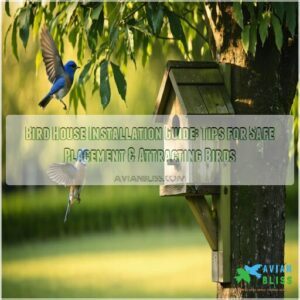
Choose locations 5-15 feet high, facing away from prevailing winds and afternoon sun. You’ll want partial shade to prevent overheating while ensuring morning sunlight warms the entrance.
Mount boxes on poles with predator guards rather than trees, which offer easy access for cats and raccoons. Space boxes at least 25 feet apart for territorial species, but house wrens and bluebirds can handle closer neighbors.
Different species need specific entrance hole sizes – 1.25 inches for chickadees, 1.5 inches for bluebirds. The secret lies in understanding each species’ unique preferences and local habitat requirements.
Table Of Contents
- Key Takeaways
- Nest Box Placement Timing
- Choosing Nest Box Location
- Nest Box Construction Requirements
- Species Specific Nesting Needs
- Nest Box Maintenance and Safety
- Frequently Asked Questions (FAQs)
- How do I choose a bird nest?
- When should a bird nest box be placed?
- Where do birds nest?
- How do I choose a nest box for a Bluebird?
- How far apart should a bird nest be placed?
- Do Bird Box placement strategies work?
- Where is the best place to put a bird nest?
- Which direction should a birdbox face?
- Why do bluebird houses have to face east?
- Will mama birds return to a disturbed nest?
- Conclusion
Key Takeaways
- Time your installation perfectly – You’ll want to set up boxes by late winter, before breeding season starts, giving birds time to discover and accept their new homes, while providing winter roosting shelter.
- Match species to their preferred spots – You’ll need specific entrance hole sizes (1.5 inches for bluebirds, 1.125 inches for chickadees) and proper spacing (300 feet apart for bluebirds, 25 feet for chickadees).
- Position strategically for safety and comfort – You should mount boxes 5-15 feet high on metal poles with predator guards, facing away from prevailing winds, with 40-60% partial shade to prevent overheating.
- Maintain annually for healthy nesting – You’ll need to clean boxes between September and February, using boiling water to eliminate parasites, inspect for damage, and replace worn materials to keep birds returning year after year.
Nest Box Placement Timing
Timing your nest box installation correctly makes the difference between an empty box and a thriving bird family.
You’ll want to have your boxes ready by late winter or early spring, when birds start scouting for potential nesting sites but before they’ve committed to other locations, which is a critical time for nesting.
Smart timing beats perfect boxes every time—ready by late winter wins the housing market.
Optimal Placement Months
Timing your Nest Box Scheduling can make all the difference between hosting happy birds and empty boxes. Seasonal Installation works best during autumn through early February, giving birds time to discover and accept their new homes before Breeding Season begins.
Optimal Placement timing creates these advantages:
- Birds familiarize themselves with boxes during quiet winter months
- Early nesters like owls start searching in February
- Boxes provide essential winter roosting shelter during harsh weather
- Multiple nesting attempts benefit from established availability
Autumn Installation and Winter Preparation set the stage for successful nesting season outcomes.
Regional Timing matters too—while this bird nest placement guide recommends general autumn placement, specific nesting box placement schedules vary by location and target species. Understanding bird conservation efforts is essential for effective nest box installation.
Regional Placement Considerations
Climate zones determine your nest box success more than any other factor.
Southern placement allows installation through March, while northern regions require February timing before harsh weather arrives.
Geographic barriers like mountains and coastal areas create unique microclimates affecting placement strategies.
| Climate Zone | Installation Window |
|---|---|
| Southern States | February – March |
| Northern Regions | Late January – February |
| Mountain Areas | Early February |
| Coastal Zones | February – Early March |
Urban landscapes demand different approaches than rural settings.
City boxes need stronger predator protection and height restrictions per local ordinances.
Geographic factors including prevailing winds and elevation influence positioning success.
Study your area’s regional placement considerations and microclimate patterns when selecting ideal nesting site selection spots for maximum occupancy rates.
Breeding Season Timing
Birds don’t wait around for last-minute housing decisions.
Understanding breeding seasons and nesting cycles helps you get ahead of bird migration patterns and seasonal patterns.
Your nest placement guide should consider these timing considerations:
- February scouts – Early nesters like owls begin territory searches during pre-breeding periods
- March arrivals – Most songbirds start nesting season as temperatures warm and food sources increase
- Extended breeders – Some species continue bird nesting habits through summer for second broods
Smart timing during breeding season maximizes your bird nesting tips success rate.
Choosing Nest Box Location
Selecting the right location determines whether your nest box attracts birds or becomes expensive yard decoration.
You’ll need to match specific habitat preferences with proper sun exposure and predator protection to create an irresistible nesting opportunity, considering proper sun exposure is crucial.
Habitat Preferences for Species
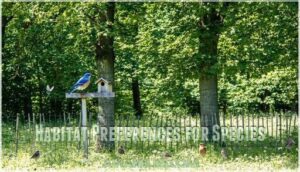
Finding the right spot for your nest box means matching each species to their preferred real estate. Bird species preferences shape where you’ll have the most success.
Forest edges attract chickadees and nuthatches who love the shift between woods and clearings. These cavity-nesting birds scout areas where mature trees meet open spaces, creating perfect hunting grounds.
Bluebirds prefer open meadows with scattered perches – think pastures, orchards, and golf courses. Their habitat requirements center on low ground cover where they can spot insects from above.
Water sources draw tree swallows, wood ducks, and other species that depend on aquatic environments. Place boxes near ponds, streams, or wetlands for these birds.
Shrubland habitats appeal to Carolina wrens who utilize thick underbrush and woodland clearings. Even urban landscapes work when they mimic natural conditions.
Bird habitat preferences directly influence reproductive success. Nesting trees near food sources increase your chances of attracting pairs. Bird nesting habits show that proximity to foraging areas matters more than perfect aesthetics.
Understanding nest site selection is vital for effective birdhouse setup. Study your local environment to identify these key microhabitats before installation.
Sunlight and Weather Considerations
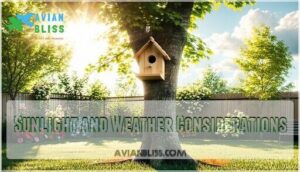
Weather-savvy nest box placement guarantees your birds’ comfort through climate zones.
Target 40-60% partial sun exposure for ideal temperature regulation without overheating risks.
Position boxes away from harsh prevailing winds for essential wind protection measures.
This sunlight considerations approach meets shade requirements while providing weather resistance.
Smart sun exposure management creates perfect microclimate conditions that support successful nesting seasons.
Effective nest box installation requires understanding of proper Nest Box Placement to guarantee the birds’ safety and comfort.
Predator Protection Strategies
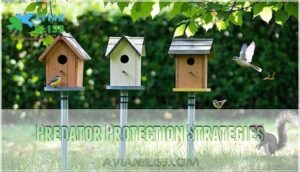
Smart positioning protects your feathered tenants from unwanted visitors.
Strategic placement beats random box hanging every time.
Metal baffles mounted below boxes create unbeatable climber deterrents that stop raccoons and snakes cold. Mount boxes on smooth metal poles rather than wooden posts—predators can’t grip slick surfaces.
Keep boxes away from overhanging branches where squirrels leap down. Camouflage painting helps boxes blend into surroundings, reducing visibility to aerial hunters.
Predator guards work best when combined—pair pole mounting with baffles for maximum nest box placement security against determined threats.
Nest Box Construction Requirements
Building the right nest box requires attention to three critical construction elements that determine whether birds will actually use your creation.
You’ll need to select appropriate materials, size entrance holes correctly, and incorporate proper ventilation and drainage features for successful nesting outcomes.
These elements are crucial for the birds to safely and effectively use the nest box, ensuring successful nesting outcomes.
Wood Selection and Treatment

Your nest box foundation matters. Wood selection begins with choosing natural materials like cedar, oak, or beechwood—these wood types offer superior rot resistance through natural durability. Durability tests consistently show these outperform softer alternatives.
Skip pressure-treated lumber completely. Treatment options that include chemicals harm birds. Untreated wood keeps families safe while thick planks provide better insulation. Sustainable sourcing guarantees environmental responsibility.
Cedar’s natural oils resist decay, oak’s dense grain blocks moisture, and beechwood weathers beautifully without chemicals.
Wood Types Treatment Options Natural Durability
rot resistance
Quality wood selection guarantees years of successful nesting seasons ahead. When building a nest box, consider using cedar wood products to enhance the overall durability and resistance to rot.
Entrance Hole Size and Design
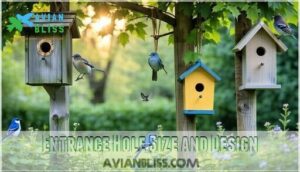
Proper hole diameter creates nature’s security system, blocking unwanted species while welcoming your target birds. You’ll match entrance hole size to specific species requirements for successful nesting.
Here’s your species-specific entrance design guide:
- Bluebirds need 1.5-inch diameter holes positioned 6 inches above the floor
- Chickadees require 1.125-inch openings with smooth, reinforced edges
- Screech owls use 3-inch round entrances mounted at proper heights
- Wood thickness around holes should be 3/4-inch minimum for durability
Getting birdhouse design right means understanding nesting box basics. Each bird species has evolved specific entrance hole dimensions that exclude competitors and predators. Your bird nesting box design success depends on precise entrance hole measurements that create safe, species-appropriate nesting environments.
Ensuring the right entrance hole size is essential for attracting the desired bird species and preventing nest failures.
Ventilation and Drainage Features
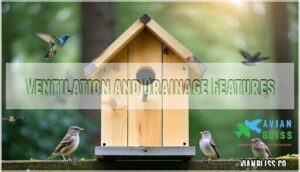
Beyond proper entrance holes, your nest box needs ventilation systems and drainage holes to keep birds healthy.
Slot vents near the roof prevent deadly overheating while air gaps between walls stop condensation buildup. Drainage holes in floor corners allow moisture control, keeping nests dry during storms.
| Feature | Location | Function |
|---|---|---|
| Slot Vents | Near roof | Prevents overheating |
| Drainage Holes | Floor corners | Removes excess water |
| Air Gaps | Wall joints | Controls condensation |
These roof vents and air flow features turn your box into a comfortable home that birds will return to year after year.
Species Specific Nesting Needs
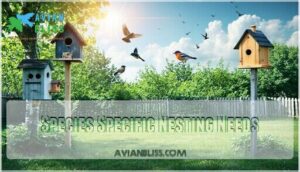
Different bird species require specific box dimensions, mounting heights, and spacing to guarantee successful nesting.
You’ll need to match these requirements precisely, as even small variations can determine whether your target species will accept or reject the nest box.
Size and Spacing Requirements
When designing your backyard bird sanctuary, nest box dimensions follow strict blueprints that determine success or failure.
Bluebirds require 5×5-inch floors with 1.5-inch Entrance Size, while chickadees thrive in compact 4×4-inch spaces featuring 1.125-inch hole size.
Minimum spacing prevents territorial warfare—place bluebird boxes 250-300 feet apart, but chickadees tolerate closer neighbors at 25-foot intervals.
Species Density calculations matter: overcrowded boxes create stress and abandonment.
Purple martins break conventional Nest Spacing rules, preferring colonial living with compartments just 10 feet apart.
Birdhouse placement tips emphasize precision over guesswork.
Barn owls demand massive 18×20-inch floors, while Wood Ducks need specialized 10×18-inch Mounting Depth configurations.
Remember, undersized boxes cramp growing families, while oversized ones invite predators and invasive species to crash your carefully planned bird neighborhood.
Height Adjustments for Species
Height matters more than you might think when installing nest boxes. Each bird species has evolved specific species preferences for nesting height based on their natural behaviors and safety needs.
Mounting options should match these instincts. Species heights aren’t arbitrary—they’re survival strategies that determine whether birds will actually use your boxes.
Here’s your height adjustments guide for installation levels:
- American Kestrels: Mount 10-30 feet high for hunting visibility
- Purple Martins: Install 10-15 feet up for aerial access
- Eastern Screech Owls: Position 10-30 feet high in mature trees
- Tree Swallows: Place 5-6 feet high near water sources
- Carolina Wrens: Set 3-6 feet high with shrub cover
Pole heights offer flexibility for nest box elevations. Metal poles allow precise box height adjustments while deterring climbing predators better than fence posts.
Match your birdhouse height to each species’ comfort zone. A bluebird won’t nest in a box meant for screech owls, and vice versa. Getting the elevation right is half the battle in attracting your target species.
Species Preferences for Open Areas
Several open area birds show distinct species preferences for expansive habitats.
Nesting preferences reveal Mountain and Western Bluebirds favor grasslands with scattered trees, avoiding dense woodland. Tree Swallows select meadows near water, while Purple Martins require broad open space requirements with no structures within 40 feet. American Kestrels prefer pastures and orchards.
Understanding these bird behavior patterns guarantees your bird nesting locations match natural species habitat needs for successful nesting habitat creation. Effective nest box placement requires consideration of regional climate factors to support local bird species.
Nest Box Maintenance and Safety

Proper nest box maintenance guarantees your feathered tenants stay healthy and return year after year.
You’ll need to clean boxes annually, repair any damage, and protect against parasites that can harm nesting birds.
Annual Cleaning and Inspection
Your nest boxes deserve regular attention to keep birds healthy and happy. Nest box cleaning between September and February prevents parasite buildup and bacterial infections that threaten next season’s occupants.
Annual cleaning follows a simple three-step process that guarantees favorable conditions:
- Remove all old nesting material wearing gloves for protection
- Apply boiling water inside for effective parasite control without chemicals
- Allow complete drying before reassembling the structure
This maintenance schedule keeps your boxes welcoming for returning birds. Box inspection during cleaning reveals wear patterns and structural issues. Professional birdhouse maintenance tips emphasize timing – clean when birds aren’t actively nesting to avoid disruption.
Cleaning methods using hot water eliminate parasites naturally while preserving wood integrity. Regular birdhouse inspection combined with proper nest removal creates healthy environments that encourage multiple broods per season. Effective birdhouse design incorporates bird house features to support the local bird population.
Damage Repair and Replacement
After your annual inspection, damage assessment reveals exactly what needs attention.
Replace rotted sections with untreated wood and rust-proof fasteners. Hole fixing requires careful patching to maintain species-specific dimensions – measure twice, cut once.
When wood repair isn’t feasible, complete nest box replacement becomes your best option.
Focus roof repair on loose joints and weathered surfaces first. Quality box refurbishment extends lifespan substantially while preventing costly replacements.
Rot damage spreads quickly, so address it immediately to maintain structural integrity and guarantee continued bird occupancy success. Using proper wood repair kits is essential for effective nest box maintenance.
Parasite Prevention and Control
Effective parasite control protects nesting birds from harmful mites, lice, and disease-carrying insects that threaten their health.
Parasite Removal starts with thorough Nest Sanitation using boiling water to eliminate eggs and larvae. Cleaning Methods should include complete removal of old materials where parasites hide.
Essential Pest Deterrents include:
- Annual cleaning between September and February for maximum Disease Prevention
- Diatomaceous earth application as natural Insect Control
- Fresh aromatic herbs (mint, thyme) as Natural Pest Management
- Proper drainage installation to prevent moisture buildup
- Weekly monitoring during breeding season for early detection
These Pest Control Tips guarantee healthy nesting environments through proven Pest Management strategies.
Frequently Asked Questions (FAQs)
How do I choose a bird nest?
Choose your nest box by matching entrance hole size to target species: 5 inches for bluebirds, 125 inches for chickadees, 3 inches for screech owls. Use untreated cedar or oak construction.
When should a bird nest box be placed?
You’ll want to install your nest box between late autumn and early spring, ideally by February in southern regions and mid-to-late March up north.
This timing gives birds plenty of scouting time before breeding season kicks in, allowing them to prepare for the upcoming season with breeding season being a critical period.
Where do birds nest?
Birds create their "home sweet homes" in surprisingly diverse spots.
You’ll find cavity-nesters choosing tree hollows, while bluebirds prefer open fields.
Chickadees select mature woods, wrens favor shrubland, and tree swallows pick sites near water.
How do I choose a nest box for a Bluebird?
Select bluebird boxes with 5-inch entrance holes and 5×5-inch floors. Mount 3-6 feet high in open fields or meadows, spacing them 300 feet apart for territorial needs.
How far apart should a bird nest be placed?
Spacing varies by species – bluebirds need 300 feet between boxes, chickadees only 25 feet, while purple martins can handle just 10 feet apart for colonial nesting.
Do Bird Box placement strategies work?
Yes, bird box placement strategies definitely work when you follow proper guidelines.
Strategic placement considering species preferences, habitat requirements, entrance hole sizes, mounting heights, and predator protection substantially increases nesting success rates.
Where is the best place to put a bird nest?
Choose locations with 40-60% partial sunlight, away from prevailing winds.
Position boxes near forest edges for chickadees, open meadows for bluebirds, or wetlands for wood ducks, matching each species’ natural habitat preferences, to support species like wood ducks.
Which direction should a birdbox face?
While you’d think facing east captures morning sun, north or northeast actually works best.
You’ll avoid harsh afternoon heat that can overheat eggs and chicks.
This orientation protects from prevailing winds while providing gentle morning warmth for healthy nesting.
Why do bluebird houses have to face east?
Bluebird houses don’t actually have to face east.
You’ll find success positioning them southeast to avoid harsh afternoon sun and prevailing winds while capturing gentle morning warmth that helps chicks thrive.
Will mama birds return to a disturbed nest?
Mother birds often abandon nests after disturbance, but it depends on timing and species. Early disturbance during nest-building causes more abandonment than disturbance during incubation or feeding phases.
Conclusion
Successfully setting up your bird nest placement guide requires patience and attention to detail.
You’ve learned the fundamentals of proper positioning, predator protection, and species-specific requirements.
Regular monitoring and maintenance will guarantee your boxes remain safe havens for nesting birds.
Remember that placement isn’t permanent – you can adjust locations based on what works best in your yard.
Your dedication to creating ideal nesting conditions will reward you with years of successful breeding activity and the joy of watching bird families thrive in your carefully chosen locations, fostering a sense of successful breeding.
- https://www.bto.org/learn/helping-birds/nest-boxes/putting-nest-box
- https://eggologic.com/pages/bird-nest-guide
- https://nestera.us/blogs/blog/where-is-the-best-place-to-put-my-bird-box
- https://www.adfg.alaska.gov/index.cfm?adfg=livingwithbirds.birdhousetips
- https://www.birdlife.org/news/2021/02/25/how-to-protect-bird-nests-if-you-love-them-leave-them-alone/