This site is supported by our readers. We may earn a commission, at no cost to you, if you purchase through links.
 Your bird nutrition food guide starts with understanding that proper nutrition forms the foundation of avian health.
You’ll need to balance proteins, carbohydrates, fats, vitamins, and minerals while considering your bird’s species, age, and activity level.
Commercial pellets often provide better nutrition than seed-only diets, though fresh fruits and vegetables add essential variety.
Water quality matters just as much as food quality, and seasonal adjustments help support natural behaviors like molting and breeding.
Different species have unique requirements that you can’t ignore, and understanding these needs is crucial for avian health, balanced proteins, and overall well-being.
Table Of Contents
- Key Takeaways
- Bird Nutrition Basics
- Choosing Bird Food
- Avian Dietary Needs
- Seasonal Feeding Strategies
- Bird Species Nutrition
- Frequently Asked Questions (FAQs)
- What should a bird eat?
- How do you feed wild birds a healthy diet?
- How much protein should a bird eat a day?
- How to feed a pet bird a healthy diet?
- What nutrients do birds need?
- What is a good source of protein for a bird?
- How often should I change bird food?
- Can birds eat cooked grains and legumes?
- What foods are toxic to birds?
- How much should my bird weigh?
- Conclusion
Key Takeaways
- You’ll need to balance 50-80% high-quality pellets with 20-40% fresh fruits and vegetables, avoiding seed-only diets that cause malnutrition in 70% of pet birds.
- Your bird’s protein requirements change dramatically based on life stage – adults need 12-15% protein daily while growing chicks require up to 30% for proper feather and muscle development.
- You must provide fresh, clean water daily and adjust feeding strategies seasonally, increasing protein during breeding season and offering high-fat foods during winter months.
- You can’t ignore species-specific dietary needs since parrots, finches, and raptors have completely different nutritional requirements that affect their long-term health and survival.
Bird Nutrition Basics
You’ll need to understand your bird’s unique nutritional needs to keep them healthy and vibrant throughout their life.
A balanced diet forms the foundation of good health, combining the right mix of pellets, fresh foods, and clean water to support everything from feather quality to immune system function.
Balanced Diet Importance
A balanced bird diet forms the foundation for peak health, preventing disease and extending your feathered friend’s lifespan.
Poor nutrition can trigger behavioral problems within months, while proper feeding guarantees breeding success and vibrant plumage that signals wellness.
Good nutrition transforms your bird from surviving to thriving—the difference between dull feathers and brilliant plumage.
- Bright, lustrous feathers that catch the light like tiny jewels
- Active, playful behavior that fills your home with joyful chirping
- Strong immune system that keeps your bird healthy for years to come
Your bird’s dietary needs mirror building a house—without a solid nutritional foundation, everything else crumbles.
A balanced diet combining pellets, fresh vegetables, and limited seeds creates the perfect recipe for longevity impact and disease prevention.
Nutrient Requirements
In regards to bird nutrition, understanding specific nutrient requirements becomes your roadmap to avian health.
Your feathered friend needs precise amounts of proteins, fats, vitamins, and minerals to thrive—think of it as their personal nutritional blueprint.
| Nutrient Type | Key Requirements |
|---|---|
| Protein Needs | 12-30% for growth and feather development |
| Fat Intake | 2-20% for energy and vitamin absorption |
| Vitamin Sources | A, D3, E, B-complex for immune function |
| Mineral Balance | Calcium, phosphorus (2:1 ratio) for bones |
Water Importance can’t be overstated—it’s the foundation supporting all these nutritional processes in your bird’s body.
Ideal bone development relies on phosphorus and calcium levels.
Water Quality and Availability
Clean water serves as your bird’s lifeline, requiring daily replacement in spotless dishes.
Fresh water prevents contamination risks from bacteria and algae that thrive in stagnant conditions. Monitor hydration signs like bright eyes and active behavior, while ensuring water quality meets drinking standards.
Beyond drinking needs, birds require shallow water for bathing needs, supporting feather health and temperature regulation through natural grooming behaviors.
Species-Specific Dietary Needs
Understanding different bird species and their unique nutritional needs helps you provide targeted care for ideal health.
While water keeps birds hydrated, each species has evolved specific dietary requirements that you must address for proper development and longevity.
- Parrot Diets require 10-15% protein with vitamin A-rich foods like carrots and leafy greens
- Raptor Nutrition demands whole prey items providing 70-100% animal matter for proper development
- Finch Food should emphasize small seeds, millet, and nyjer with occasional fresh vegetables
- Baby Bird Needs vary dramatically by growth stage, requiring precise hand-feeding formulas
- Diet Changes must happen gradually over 7-10 days to prevent digestive upset
Choosing Bird Food
Choosing the right bird food transforms your feathered friend’s health and happiness from ordinary to extraordinary.
You’ll navigate commercial pellets, fresh produce, and supplements to create a nutrition plan that keeps your bird thriving year-round, focusing on a plan that brings happiness.
Commercial Food Options
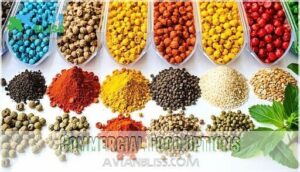
Navigate commercial bird food options by reading food labels carefully and comparing nutritional content.
Quality brands like Lafeber offer extensive product lines including NutriBerries and Premium Daily Diet Pellets that combine pellets with seeds.
Consider the benefits of high-quality bird pellets for ideal avian health.
Look for organic bird food and fortified options that provide essential vitamins and minerals.
These complete diets eliminate guesswork in bird nutrition.
Pellets and Seeds Comparison
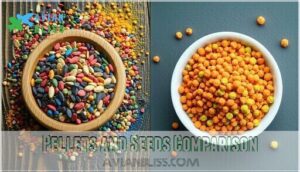
Pellet Nutrition offers complete, balanced meals in every bite, while Seed Variety provides natural foraging enjoyment but lacks essential nutrients.
Bird pellets prevent selective eating and reduce obesity risk compared to high-fat bird seeds.
Cost Analysis shows pellets deliver better nutritional value per dollar.
Palatability Factors favor seeds initially, though birds adapt to pellets with patience.
Storage Differences make pellets less prone to spoilage than seeds.
Seed-only diets can lead to essential nutrient deficiencies.
Fresh Fruits and Vegetables Benefits
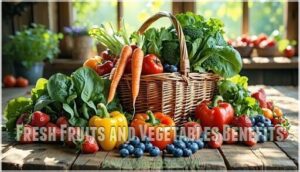
Beyond the pellet bowl, fresh produce transforms your bird’s health with nature’s finest nutrients.
These colorful additions deliver essential vitamins, minerals, and fiber that processed foods can’t match.
- Vitamin Sources: Orange and dark green produce like carrots, sweet potatoes, and leafy greens provide beta-carotene for vitamin A
- Fiber Benefits: Fresh vegetables aid digestion and prevent constipation while keeping your bird satisfied longer
- Safe Produce: Wash all fruits and vegetables thoroughly, choosing organic when possible to reduce pesticide exposure
- Variety Importance: Rotate different colors and textures to prevent boredom and guarantee thorough nutrition
- Avoiding Toxins: Never offer avocado, iceberg lettuce, or unwashed produce that could harm your feathered friend
Supplementing With Vitamins and Minerals
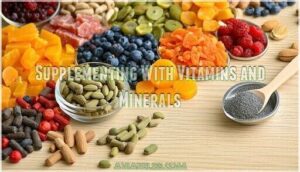
Beyond just relying on commercially balanced diets, you’ll sometimes need bird dietary supplementation for seed-only diets or stressed birds.
Consult an avian veterinarian before adding bird vitamins or minerals – supplement toxicity happens with overuse.
Powdered supplements work best in water, requiring twice-daily changes.
Essential nutrients for birds include proteins and carbohydrates.
Lafeber supplements offer quality options, though complete diets reduce supplementation needs substantially, and understanding avian veterinarian guidance is crucial.
Avian Dietary Needs
Understanding your bird’s specific nutritional requirements helps you provide the right balance of macronutrients and micronutrients for peak health.
Your feathered friend needs precise amounts of proteins, carbohydrates, fats, vitamins, and minerals to maintain strong bones, vibrant feathers, and a healthy immune system.
Macronutrients and Micronutrients
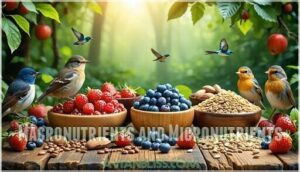
Your bird’s body runs on six key fuel types that work like a well-oiled machine.
Protein Sources build strong muscles and shiny feathers, while Carb Types provide daily energy.
Fat Benefits include vitamin absorption and insulation.
Vitamin Variety supports immune function, and Mineral Balance strengthens bones.
Understanding these macronutrients and micronutrients helps you create the perfect nutritional foundation for ideal bird health.
Vitamin and Mineral Deficiencies
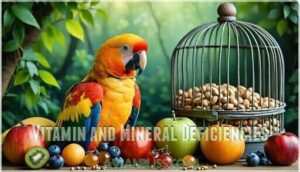
When nutritional deficiencies strike, your bird’s health deteriorates rapidly.
Vitamin A deficiency causes respiratory issues and poor feathers, while calcium deficiency leads to bone problems and seizures.
Common deficiencies include vitamins E, K, and B-complex, plus essential bird minerals like iodine.
Deficiency prevention starts with balanced pellets, not all-seed diets.
However, supplement toxicity poses risks—over-supplementation harms birds.
Diet conversion requires patience and veterinary guidance for ideal deficiency symptoms management.
Protein and Energy Requirements
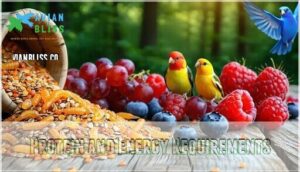
Your bird’s protein requirements vary dramatically based on activity levels and growth stages. Active birds need 12-30% protein for muscle maintenance, while growing chicks require protein-rich diets up to 25%.
Energy balance becomes your top priority during breeding season. A balanced avian diet is essential for proper digestion and sustained energy.
Here are three key protein and energy guidelines:
- Match protein sources to life stage – Young birds need higher protein percentages than adults
- Balance energy with activity – High-fat options work well for active species during cold weather
- Monitor for dietary imbalances – Too much protein can stress kidneys, while too little affects feather quality
Calcium and Phosphorus Importance
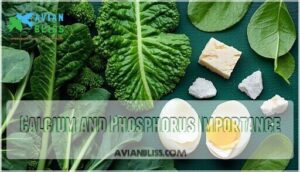
Calcium acts like building blocks for your bird’s skeleton, supporting bone development and eggshell formation in breeding females.
These minerals also control nerve function and muscle contractions.
Watch for deficiency symptoms including soft bones, thin eggshells, and seizures.
Provide supplement sources like cuttlebones, mineral blocks, or calcium-rich vegetables to maintain proper bird nutrition and prevent serious nutritional deficiencies.
Seasonal Feeding Strategies
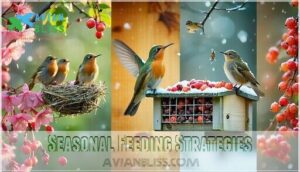
Birds need different foods throughout the year as their energy requirements change with seasons and life cycles.
You’ll want to adjust feeding strategies based on breeding schedules, migration patterns, and weather conditions to keep your feathered friends healthy year-round, considering complete concepts like these.
Spring and Summer Diet Adjustments
During spring and summer’s peak activity, you’ll need to adjust your bird feeding strategy to match nature’s bounty.
These warmer months bring breeding season demands and molting support requirements that differ substantially from winter feeding patterns.
- Boost protein levels with live insects and mealworms for breeding nutrition and growing chicks
- Increase fresh fruit offerings to support fruit and nectar feeders during abundant foraging opportunities
- Provide extra calcium sources through cuttlebone and mineral blocks for eggshell formation
- Maintain consistent hydration needs with multiple clean water sources and shallow birdbaths
- Reduce seed portions as insect abundance provides natural protein for insect eaters
Fall and Winter Feeding Considerations
As autumn arrives, you’ll need to boost your birds’ Cold Weather Calories with high-energy foods like sunflower seeds and suet.
Winter Water Sources become scarce, so provide unfrozen options daily.
Focus on Seasonal Food Storage in weatherproof feeders and prepare Fall Foraging Prep areas.
Make certain Shelter Food Access is near protective cover, as fall and winter feeding requires consistent, nutrient-dense bird food to sustain them through harsh conditions.
Migration and Breeding Season Nutrition
During migration and breeding season, birds face their highest energy demands of the year.
Fuel up your feathered friends—they’re running marathons in the sky.
You’ll need to offer highfat options like sunflower seeds and nuts to fuel long journeys.
Nesting birds require proteinrich diets and breeding calcium boost through cuttlebones or crushed eggshells.
Seasonal food sources should include mealworms for chick growth diets, supporting fledglings through post-breeding recovery periods.
To guarantee birds stay healthy through the winter, consider morning feeding importance for a healthy winter.
Adjusting Diet for Climate Change
Climate change reshapes bird feeding patterns dramatically. You’ll need to adapt your bird diet strategies as Extreme Weather events increase and Habitat Loss accelerates.
Rising temperatures create Heatwave Diet needs while Insect Decline forces dietary shifts.
Consider these climate-conscious bird feeding practices:
- Offer Drought Foods like sunflower seeds that don’t spoil quickly in heat
- Provide extra water sources during temperature spikes above 85°F
- Stock high-energy options when wild bird diets face seasonal mismatches
- Add protein-rich foods to compensate for declining insect populations
- Install shaded feeders to protect bird nutrition during extreme conditions
Bird Species Nutrition
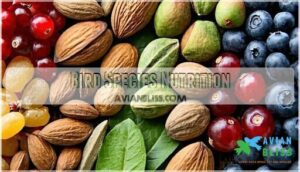
Different bird species require completely different nutritional approaches, whether you’re caring for backyard visitors or exotic pets.
Understanding these specific dietary needs guarantees your feathered friends stay healthy and vibrant throughout their lives.
Garden Birds and Their Diets
Attracting birds to your backyard starts with understanding what different species actually eat.
Cardinals love sunflower seeds, while goldfinches prefer nyjer.
Creating backyard habitats with native plants encourages natural foraging behaviors that support winter survival.
Your bird feeding guide should include varied seed blends since garden birds have different nutritional needs throughout seasons.
Bird feeding can also help to increase biodiversity in your garden, which is crucial for winter survival and supports backyard habitats with native plants.
Exotic and Pet Birds Nutrition
Pet-bird nutrition requires careful attention to species-specific needs and dietary conversion from seed-only diets.
Proper avian diet planning prevents obesity and supports long-term health through balanced nutrition.
Essential exotic bird feeding guidelines:
- Toxic Foods awareness – Avoid chocolate, avocado, and onions that can poison your feathered friend
- Foraging Enrichment – Hide treats in paper cups or puzzle feeders to stimulate natural behaviors
- Obesity Prevention – Monitor seed intake and offer pellets as the primary food source for healthy weight management
Hand-Feeding and Weaning Techniques
Hand-feeding baby birds requires precise formula preparation and careful crop management.
You’ll need to follow strict feeding schedules, typically every 2-3 hours for newly hatched chicks.
The weaning timeline varies by species, but gradual introduction of fledgling diets around 4-6 weeks helps ease the change.
Socialization during weaning prevents behavioral issues later.
Storing Bird Food Properly
Proper storage keeps your bird food fresh and safe. You wouldn’t want stale cereal, and neither does your feathered friend.
Follow these bird food storage tips to maintain quality:
- Use airtight containers to seal out moisture and preserve bird seed mix freshness
- Control temperature by storing food in cool, dry locations away from heat sources
- Monitor humidity effects since dampness spoils bird food ingredients quickly
- Implement pest prevention measures to keep insects and rodents away
Check shelf life dates regularly and rotate stock to guarantee the best nutrition for your birds. Consider using specialized bird containers for superior freshness.
Frequently Asked Questions (FAQs)
What should a bird eat?
Seventy percent of pet birds suffer from malnutrition-related health issues, making diet essential.
You’ll need balanced pellets (50-80%), fresh vegetables and fruits (20-40%), plus limited seeds (under 30%).
Clean water daily completes their nutritional foundation.
How do you feed wild birds a healthy diet?
Offer wild birds a balanced mix of high-quality seeds, suet, and fresh water. Use species-appropriate feeders and clean them regularly to prevent disease spread and support healthy populations.
How much protein should a bird eat a day?
Like feeding a high-performance engine, your bird’s protein needs depend on species and life stage.
Most companion birds thrive on 12-15% protein daily, while growing chicks need up to 30% for proper development.
How to feed a pet bird a healthy diet?
Feed your bird a balanced diet with 50-80% high-quality pellets, 20-25% fresh vegetables and fruits, and limited seeds. Provide clean water daily and avoid toxic foods like avocado.
What nutrients do birds need?
Birds require six essential nutrients: proteins (12-30%) for feather development, carbohydrates (20-50%) for energy, fats (2-20%) for insulation, plus vitamins A/D3/E and minerals like calcium.
Water remains most critical for all bodily functions, and nutrients like proteins are vital for overall health.
What is a good source of protein for a bird?
High-quality pellets provide complete protein for your feathered friend, containing essential amino acids needed for strong feathers and muscles.
You can also offer cooked eggs, legumes, or small amounts of lean cooked chicken as protein-rich treats.
How often should I change bird food?
Change your bird’s food daily to prevent spoilage and bacterial growth. Fresh fruits and vegetables should be removed after 2-4 hours since they spoil quickly at room temperature.
Can birds eat cooked grains and legumes?
Like opening a treasure chest of nutrition, cooked grains and legumes offer birds valuable protein and carbohydrates.
You’ll want to serve them plain, fully cooked, and cooled—no salt, spices, or seasonings that could harm your feathered friend’s health.
What foods are toxic to birds?
Avocado, chocolate, caffeine, alcohol, and onion can be deadly.
Skip celery and iceberg lettuce—they offer little nutrition.
Moldy food, salty snacks, and processed treats are risky.
Always double-check before sharing your favorite foods.
How much should my bird weigh?
Surprisingly, there’s no universal "perfect" weight for your feathered friend.
Bird weight varies dramatically by species, age, and individual build.
You’ll need to research your specific bird’s healthy weight range and monitor changes rather than fixating on exact numbers.
Conclusion
Like a compass guiding birds through their natural habitat, this bird nutrition food guide points you toward superior feeding practices for your feathered companions.
You’ve learned that balanced nutrition requires careful attention to proteins, carbohydrates, vitamins, and minerals suited to each species’ unique needs.
Fresh foods complement quality pellets, while clean water remains essential year-round.
Remember to adjust feeding strategies seasonally and monitor your birds’ health regularly, to support their natural behaviors and guarantee long, healthy lives for your birds.
- https://brookfallsveterinary.com/service/bird-nutrition/
- https://www.cascadekennels.com/avian-nutrition/
- https://www.revivalanimal.com/learning-center/important-vitamins-and-minerals-for-pet-birds
- https://nessexotic.com/wp-content/uploads/2022/04/2-Birds-Nutrition.pdf
- https://www.petsmart.com/learning-center/bird-care/what-do-pet-birds-eat/A0099.html