This site is supported by our readers. We may earn a commission, at no cost to you, if you purchase through links.
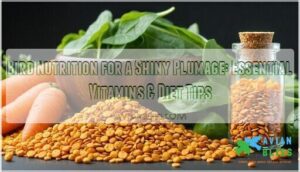 Achieving ideal bird nutrition for a shiny plumage starts with understanding your feathered friend’s dietary needs.
You’ll want to provide high-quality protein sources like cooked eggs or legumes, which serve as the building blocks for strong feathers.
Vitamin A proves essential – think orange and dark leafy vegetables like carrots, sweet potatoes, and spinach.
Don’t overlook omega-3 fatty acids from flax seeds or fish oil, which create that coveted lustrous sheen.
A balanced mix of pellets, fresh produce, and quality seeds works best.
Remember, stressed birds can’t maintain beautiful plumage regardless of nutrition, so keep their environment calm and consistent.
The secret lies in specific vitamin ratios and feeding schedules that most bird owners get wrong.
Table Of Contents
- Key Takeaways
- Essential Nutrients
- Balanced Diet
- Environmental Factors
- Feather Care Practices
- Common Feather Problems
- Optimal Nutrition Tips
- Frequently Asked Questions (FAQs)
- Are feather plucking supplements good for parrots?
- How can I improve my bird’s feather health?
- What are the best vitamins for songbirds?
- What vitamins are in bird feather growth supplements?
- Why do birds need vitamin A?
- What foods are safe for birds to eat?
- How do I make my bird’s feathers shiny?
- Why are my bird’s feathers oily?
- Why are some birds shiny?
- What is the best nutrition for birds?
- Conclusion
Key Takeaways
- Focus on protein-rich foods – You’ll need high-quality protein sources like cooked eggs, lean meats, and legumes to build strong feather structure, especially during molting when protein needs jump to 20% of their diet.
- Include omega-3 fatty acids daily – Add hemp seeds, flax seeds, or chia seeds to your bird’s diet for that lustrous shine and feather flexibility that makes plumage look healthy and vibrant.
- Provide vitamin A through colorful vegetables – Feed your bird orange and dark leafy vegetables like carrots, sweet potatoes, and spinach to prevent dull, brittle feathers and support proper feather development.
- Create a stress-free environment – You can’t achieve shiny plumage through nutrition alone if your bird’s stressed, so maintain stable temperatures, minimize noise, and provide consistent lighting for optimal feather health.
Essential Nutrients
Your bird’s feathers are basically protein structures that need specific nutrients to maintain their lustrous shine and structural integrity.
Think of feathers as your bird’s natural armor—they need the right fuel to shine bright and stay strong.
Essential nutrients like high-quality proteins, vitamin A, omega-3** fatty acids, and key minerals work together to support healthy feather development from the inside out.
Protein Sources
Building strong feathers requires high-quality protein sources. Your bird needs lean meats, egg whites, and legume options like cooked quinoa and lentils.
These protein-rich foods supply essential amino acids, particularly methionine, which prevents feather-eating behaviors. Fish oil and seed proteins from hemp or pumpkin seeds complement these sources.
During molting, protein needs jump from 15% to 20% of their diet. Providing a high protein diet is essential for maintaining healthy feathers and overall bird health.
Vitamin a Importance
When vitamin A deficiency strikes, your bird’s feathers become dull and brittle while their skin turns flaky.
Without vitamin A, your bird’s feathers lose their sparkle and turn into brittle, lackluster plumage that screams poor health.
This powerhouse vitamin supports feather growth, maintains bird vision, and strengthens the immune system.
Adequate vitamin A intake transforms lackluster plumage into vibrant, healthy feathers that shine.
Your bird’s skin health depends on this essential nutrient for ideal feather care, and ensuring proper parrot health checks is vital for maintaining overall well-being and preventing vitamin A deficiency.
Omega-3 Fatty Acids
Omega-3 fatty acids act like your bird’s personal glow-up crew, transforming dull feathers into lustrous plumage.
These omega3 fatty acids reduce inflammation while promoting proper hydration, creating those coveted feather shine boosters.
Hemp seeds, flaxseeds, and chia seeds pack powerful omega 3 benefits, offering convenient omega3 sources.
Fish oil supplements provide concentrated EPA and DHA, though dosing requires veterinary guidance.
Maintaining proper EFA balance prevents brittle feathers and supports overall seed nutrition absorption for maximum omega 3 benefits.
Mineral Blocks
Mineral blocks pack calcium and zinc directly into your bird’s diet, supporting strong feather structure and vibrant coloration.
These calcium supplements offer mineral richness that regular seeds can’t match.
Block composition includes dietary additives that work as natural feather fortifiers.
You’ll find mineral blocks complement omega 3 benefits perfectly, creating a balanced bird diet.
Place blocks where your bird can nibble freely—they’ll instinctively know when they need extra minerals for healthy plumage development.
Balanced Diet
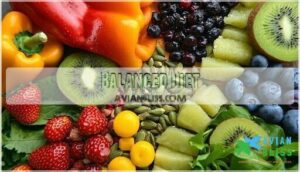
A balanced diet forms the foundation of healthy feather development, requiring careful attention to four key components that work together to support ideal plumage.
You’ll need to combine seed variety, fresh produce, formulated pellets, and healthy fats to create the nutritional profile your bird requires for vibrant, strong feathers, which includes a balance of nutrients for healthy fats.
Seed Variety
Your feathered friend deserves more than just sunflower seeds from the corner store. Smart seed selection means mixing nutrient-rich varieties that pack different vitamins and minerals. Think of it like creating a gourmet trail mix—each seed brings something unique to the table.
Here’s your seed variety game plan:
- Hemp seeds – Nature’s omega-3 powerhouse that’ll make those feathers gleam like they’re Instagram-ready
- Chia seeds – Tiny but mighty protein-rich warriors that support strong feather structure
- Flax seeds – The fatty acid balance champions your bird’s body craves
- Pumpkin seeds – Zinc-loaded gems that boost feather color and strength
- Safflower seeds – The oil sources that keep plumage soft and flexible
Raw, organic varieties work best since processing strips away essential nutrients. Soak overnight to boost absorption—your bird’s digestive system will thank you. Understanding hemp bird benefits is essential for creating a well-rounded diet.
Fresh Fruits and Vegetables
Beyond seeds, fresh produce transforms your bird’s diet into a rainbow of nutrients.
Colorful fruits and fresh veggies deliver essential vitamins, antioxidants, and water-rich foods that keep feathers vibrant.
Choose nutrient-dense foods like dark leafy greens, orange vegetables, and berries for maximum health.
| Fresh Produce | Nutrient Content |
|---|---|
| Dark leafy greens | Vitamin A, iron, calcium |
| Orange vegetables | Beta-carotene, fiber |
| Berries | Antioxidants, vitamin C |
| Apples | Fiber, natural sugars |
| Broccoli | Vitamin K, folate |
A balanced parrot diet requires understanding balanced nutrition requirements to promote maximum health.
Offer fruit variety and veggie benefits through birdsafe foods daily.
These healthy snacks provide moisture and essential nutrients that supplement your bird’s core diet perfectly.
Formulated Pellets
High-quality pellets form the foundation of balanced bird nutrition, providing consistent nutrient ratios that seeds alone can’t match.
When selecting formulated diets, examine pellet composition for complete amino acid profiles and essential vitamins.
Proper pellet size guarantees efficient feed conversion while supporting your bird’s natural foraging behaviors.
The manufacturing process preserves key nutrients, making these nutrient-rich options superior to basic seed mixes for prime plumage health, with balanced bird nutrition being the ultimate goal.
Healthy Fats
Essential fatty acids reveal your bird’s natural glow.
You’ll need omega-3 sources like hemp seeds and flaxseed oil to balance omega-6 ratios. These healthy fats support cell membranes and feather flexibility.
Add EFA supplements or seed oils sparingly—about 5-10% of daily calories. Think of EFAs as your bird’s beauty secret for lustrous plumage.
Environmental Factors

Your bird’s environment plays a vital role in maintaining healthy, vibrant plumage that you’ll both be proud of.
Poor air quality, extreme temperatures, and high stress levels can quickly turn those beautiful feathers dull and brittle, making proper environmental control essential for ideal feather health.
Stable Temperatures
Your feathered friend’s thermostat matters more than you think.
Temperature Control between 65-80°F creates ideal Thermal Comfort for healthy plumage development.
Fluctuating temperatures stress birds, causing brittle feathers and poor molting cycles.
Consistent Climate Regulation supports vitamin absorption from protein-rich foods and feather health supplements.
Maintain stable temperatures alongside proper Humidity Levels for peak Air Quality and vibrant feathers.
Soft Lighting
With proper photoperiod management, you’ll create the ideal environment for vibrant feather health.
Full spectrum lighting systems that mimic natural light provide essential UV exposure for vitamin D synthesis and calcium absorption. Your bird needs consistent light cycles to regulate molting patterns effectively.
Consider these lighting essentials:
- Full-spectrum bulbs that emit UV-A and UV-B wavelengths
- 10-12 hour photoperiods to maintain natural circadian rhythms
- Dimming options for gradual shifts between day and night
- Proper placement 12-18 inches above your bird’s favorite perch
Quality lighting systems prevent stress-related feather plucking while promoting healthy molting cycles. Remember, consistent light exposure supports your bird’s natural behaviors and enhances feather coloration through improved nutrient absorption.
Minimizing Noise
Loud sounds can trigger anxiety in birds, leading to feather plucking and poor plumage quality.
You’ll want to create quiet spaces away from televisions, appliances, and high-traffic areas.
Sound proofing your bird’s room with soft furnishings helps minimize noise levels, and a peaceful habitat promotes natural preening behaviors and healthy molting cycles, supporting vibrant feather development.
Reducing Stress
When chronic stress takes hold, your bird’s feathers suffer the consequences.
Environmental enrichment through interactive toys and foraging activities promotes natural behaviors, reducing anxiety-induced feather plucking.
Social interaction with compatible companions or regular human contact prevents isolation stress.
Calming techniques like maintaining predictable routines and noise reduction create a stress-free environment.
These relaxation methods support ideal stress management for healthy plumage.
By creating a bird-friendly habitat with native plant species, you can also contribute to the well-being of birds in your community.
Feather Care Practices
Beyond feeding your bird the right nutrients, proper care practices keep those feathers looking their absolute best.
You’ll need to master gentle brushing techniques, maintain beak health, and provide chemical-free baths to support your bird’s natural preening routine.
Schedule professional wing clips to ensure your bird’s overall well-being and natural beauty.
Gentle Brushing
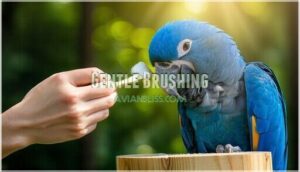
Your bird’s feathers deserve the same attention you’d give your own hair. Gentle feather brushing removes debris while maintaining structural integrity, supporting your pet’s natural preening process.
Essential Soft Brushing Techniques:
- Use goat or sheep hair brushes – These natural bristles won’t damage delicate barbules
- Brush in feather growth direction – This prevents structural damage and maintains sheen
- Combine with light misting – Minimal moisture helps reshape feathers without saturation
- Choose appropriate brush shapes – Flat brushes for dust, fan brushes for larger particles
- Monitor for stress signals – Stop if your bird shows discomfort during sessions
This preening tool mimics natural allopreening behaviors, creating bonding opportunities while preventing feather mite infestations and preserving that coveted shiny plumage.
Regular Beak Care
Beyond brushing, your bird’s beak needs regular attention to prevent overgrowth and maintain proper function. A healthy beak allows effective preening, which directly impacts feather quality and overall plumage condition.
Birds also benefit from textured perches to help keep their beaks healthy.
| Beak Health Aspect | Natural Maintenance | When to Seek Help |
|---|---|---|
| Natural Wear | Wooden perches, cuttlebone, mineral blocks | Beak grows faster than it wears down |
| Safe Tools | Varied textures, appropriate toys | Overgrowth requires professional trimming |
| Regular Health Checks | Weekly visual inspections | Cracks, discoloration, or asymmetry present |
Monitor your bird’s beak weekly for signs of overgrowth, cracks, or unusual growth patterns. Providing varied perch materials and appropriate chew toys promotes natural wear, but consult your veterinarian for professional trimming techniques if overgrowth occurs.
Proper beak care guarantees your bird can effectively distribute natural oils throughout their feathers during preening sessions.
Professional Wing Clipping
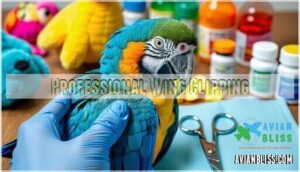
Professional wing clipping requires proper clipping techniques to maintain bird safety while preserving natural preening abilities.
When seeking vet consultation, discuss clipping alternatives that support your bird nutrition tips and shiny plumage secrets. Understanding feather regrowth cycles helps time procedures appropriately for ideal feather care advice.
- Schedule clipping every 3-4 months during molting periods
- Trim only primary flight feathers, leaving secondary feathers intact
- Use sharp, sterile scissors designed specifically for avian care
- Monitor stress levels and provide vitamin supplements post-procedure
Chemical-Free Baths
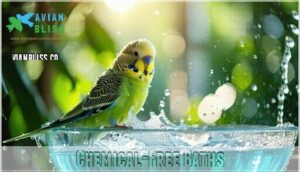
After proper wing clipping, you’ll want to keep your bird’s feathers clean through regular chemical-free baths.
Use lukewarm water in shallow baths for gentle cleansing, avoiding harsh soaps that strip natural oils. Natural shampoos work best when needed.
Misting creates a clean environment between baths. After bathing, use soft toweling for initial feather drying, then allow air-drying in fresh water areas.
For ideal feather health, consider using bird bath products to create a safe and clean bathing experience, promoting overall wellness.
Common Feather Problems
Even the most well-cared-for birds can develop feather problems that signal underlying health issues or environmental stress.
Recognizing these common problems early allows you to address nutritional deficiencies and restore your bird’s vibrant plumage before minor issues become serious health concerns.
Feather Mites
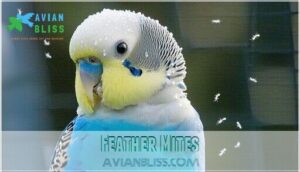
Feather mites affect nearly half of all birds, making them one of the most common bird parasites you’ll encounter.
These microscopic troublemakers feed on skin debris and oils, causing dull plumage and excessive feather picking.
Effective mite control requires treating all birds simultaneously with veterinary-approved medications.
Proper mite treatment combined with thorough cage cleaning prevents reinfection and maintains ideal feather health.
Brittle Feathers

When your bird’s feathers start cracking like autumn leaves, it’s time to examine their nutritional foundation.
Brittle feathers signal serious nutrient deficiency that compromises your bird’s health and beauty.
Essential solutions for feather repair:
- Boost fatty acid balance – Add omega-3 rich hemp seeds and flaxseed oil to restore flexibility and prevent dry feathers
- Increase protein intake – Provide 16-20% protein through eggs and lean meats for proper feather growth vitamins
- Add vitamin supplements – Focus on vitamins A, E, and biotin for stronger feather structure during molting cycles
- Include feather supplements – Offer cuttlebone and mineral blocks containing zinc and calcium for thorough feather care
Feather Loss
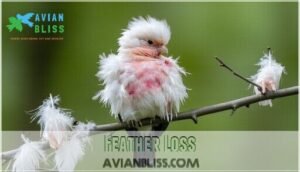
When you notice patches of missing plumage, you’re likely dealing with feather loss—a common issue that can stem from poor nutrition, stress, or underlying health problems.
Unlike feather breakage, complete feather loss often indicates systemic issues affecting your bird’s overall well-being.
Feather plucking behaviors, molting issues, and environmental stressors frequently contribute to this problem, requiring immediate attention to restore healthy plumage repair.
Stress Bars
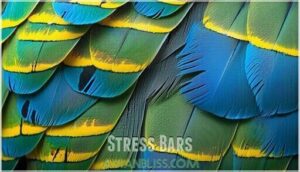
Looking at your bird’s feathers, you might spot horizontal bars running across individual feathers – these are stress bars, clear stress signals that something wasn’t right during feather development.
When your bird experiences poor nutrition, illness, or environmental stress during the molting cycle, these telltale marks appear permanently in the growing feather.
Unlike feather plucking or picking behaviors, stress bars remain visible until the next molt, serving as a historical record of your bird’s health challenges, and indicating that something was amiss, such as poor nutrition.
Optimal Nutrition Tips
You’ll maximize your bird’s feather health by focusing on four key nutrition strategies that work together to create stunning plumage.
These evidence-based approaches address the most common dietary gaps that prevent birds from achieving their full feather potential.
Varied Diet
Your feathered friend’s diet shouldn’t be a one-trick pony.
A balanced bird diet combines high-quality seed mix with fresh foods like leafy greens and colorful vegetables.
Add formulated pellet options as your foundation, then sprinkle in healthy oils from nutrient rich seeds.
This nutrient balance approach delivers essential fatty acids and creates a protein-rich diet that supports vibrant plumage naturally.
Adequate Water Intake
While your bird’s varied diet sets the foundation for healthy feathers, proper hydration serves as the cornerstone of vibrant plumage.
Fresh water isn’t just about quenching thirst—it’s about maintaining that glossy sheen you’re after.
Hydration Tips for Ideal Feather Health:
- Water Quality Matters – Provide fresh, clean water daily to prevent bacterial growth and maintain proper fluid intake
- Monitor Drinking Habits – Small finches need 0.5 oz daily while larger parrots require up to 6 oz for adequate hydration
- Boost Moisture Levels – Offer water-rich foods like cucumber and leafy greens to supplement direct water consumption
- Maintain Clean Living Environment – Change water containers every few days to prevent algae buildup and disease transmission
Supplementing With Cuttlebone
Calcium’s building power transforms your bird’s feathers from fragile to fabulous.
Cuttlebone provides essential calcium supplements that strengthen feather structure and support beak health. These natural mineral blocks deliver critical nutrients for balanced mineral balance.
Simply clip cuttlebone to your bird’s cage—it’s like giving them a calcium-packed gym membership for stronger, shinier plumage.
Birds also benefit from proper cuttlebone supplements to guarantee a balanced diet with proper care.
Probiotics for Nutrient Absorption
Beyond cuttlebone, probiotics revolutionize your bird’s gut microbiome by boosting absorption efficiency up to 16%.
These beneficial probiotic strains like Lactobacillus enhance nutrient absorption while providing immune support.
Your bird’s digestive system processes proteins and vitamins more effectively, directly improving feather quality.
Adding bird health supplements with live probiotics to a balanced diet transforms how your feathered friend utilizes bird nutrition for peak wellness.
A varied diet guarantees balanced nutrition for birds for peak wellness.
Frequently Asked Questions (FAQs)
Are feather plucking supplements good for parrots?
Nearly 50% of birds develop feather mites, making targeted supplements essential for parrot health.
You’ll find feather plucking supplements containing essential fatty acids, vitamin A, and biotin effectively address nutritional deficiencies that trigger destructive behaviors in stressed parrots.
How can I improve my bird’s feather health?
Feed your bird a protein-rich diet with lean meats, eggs, and legumes.
Add omega-3 sources like hemp seeds and flaxseed oil. Provide vitamin A, E, and biotin supplements.
Guarantee proper humidity, lighting, and regular bathing for ideal feather health.
What are the best vitamins for songbirds?
While wild songbirds thrive on diverse diets, captive birds often lack essential nutrients.
You’ll need vitamins A, E, and biotin for strong feathers, plus omega-3 fatty acids for shine and flexibility.
What vitamins are in bird feather growth supplements?
Quality feather growth supplements contain vitamins A, E, and biotin for strength, plus B-complex vitamins for metabolism.
You’ll also find zinc, calcium, and omega-3 fatty acids supporting structural integrity and shine.
Why do birds need vitamin A?
Vitamin A keeps your bird’s feathers strong and vibrant by supporting healthy skin cell production and proper feather pigmentation. Without it, you’ll notice dull, brittle plumage and poor molting cycles.
What foods are safe for birds to eat?
Ironically, you’ll find birds can’t eat everything they want, but they thrive on formulated pellets, fresh vegetables, fruits, cooked grains, and lean proteins like eggs.
They should avoid certain foods completely, including chocolate, avocado, and caffeine.
How do I make my bird’s feathers shiny?
Feed your bird omega-3 rich seeds like hemp, chia, and flax. Add essential fatty acids through quality pellets and fresh vegetables. Proper nutrition creates lustrous feathers naturally.
Why are my bird’s feathers oily?
Like a car engine running too rich, your bird’s feathers appear oily when they’re over-preening or have dietary imbalances.
Check for excess fatty acids in their diet, skin irritation, or stress-related behaviors causing excessive oil distribution.
Why are some birds shiny?
Birds shine because healthy feathers contain microscopic structures called barbules that reflect light like tiny mirrors.
You’ll notice this iridescent quality most in well-nourished birds with adequate omega-3 fatty acids and proper preening habits maintaining their plumage’s natural oils.
What is the best nutrition for birds?
You’ll want to focus on high-quality pellets as your bird’s foundation, then add fresh vegetables, fruits, and lean proteins.
Essential fatty acids from hemp or flax seeds create that gorgeous shine you’re after, with essential fatty acids being key to achieving this.
Conclusion
Remarkably, the same nutrients that support your bird’s overall health happen to be the exact components needed for spectacular feather development.
Perfect bird nutrition for a shiny plumage isn’t just about feeding—it’s about creating a thorough care system.
You’ll need consistent protein sources, vitamin A-rich vegetables, and omega-3 fatty acids working together.
Remember, stressed birds can’t utilize nutrients effectively, so maintain calm environments alongside proper nutrition.
With patience and the right approach, you’ll see dramatic improvements in your bird’s plumage quality within weeks.
- https://avianenrichment.com/index.php/learn-mobile/the-physical-needs-of-parrots/diet-nutrition
- https://birdreel.com/blogs/news/diet-and-nutrition-in-wild-birds-a-scientific-perspective
- https://www.dvm360.com/view/pet-birds-need-fewer-seeds-more-formulated-diets
- http://www.wildbirdsgpw.com/molting-birds-need-fat-and-protein/
- https://thisisreno.com/2013/05/high-protein-diet-will-help-molting-birds/