This site is supported by our readers. We may earn a commission, at no cost to you, if you purchase through links.
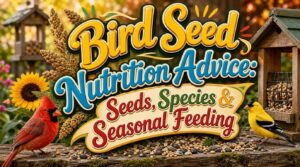
Most backyard feeders run on autopilot—grabbing a cheap mixed bag, filling the hopper, done. But a cardinal and a goldfinch don’t share the same nutritional needs any more than a marathon runner and a newborn do.
The seed you choose directly affects whether visiting birds thrive or merely survive, especially during breeding season, molt, and the brutal energy demands of winter.
Getting bird seed nutrition advice right means understanding fat percentages, protein ratios, and which species will actually eat what you’re offering—so nothing goes to waste and every bird that visits your feeder leaves better fueled than it arrived.
Table Of Contents
- Key Takeaways
- Bird Seed Nutrition Basics
- Protein for Muscle, Egg Production, and Chick Growth
- Fats for Migration, Winter Energy, and Thermoregulation
- Carbohydrates as Quick Daily Fuel
- Fiber for Healthy Digestion
- Vitamins That Support Immunity and Feather Quality
- Minerals for Bones, Nerves, and Metabolism
- Why Seeds Should Not Be The Only Food Source
- Nutrient Profiles of Common Seeds
- Black-oil Sunflower Seeds for High Fat and Broad Nutrition
- Striped Sunflower Seeds for Larger-billed Birds
- Safflower Seeds for Protein, Fat, and Selective Feeding
- Nyjer Seeds for Finches and High-energy Feeding
- White Proso Millet for Lower-fat Ground Feeding
- Flax, Hemp, and Chia for Omega-3 Fatty Acids
- Peanuts and Cracked Corn as Calorie-dense Options
- Low-value Fillers to Limit or Avoid
- Species-Specific Seed Choices
- Cardinals, Chickadees, and Nuthatches With Sunflower Seeds
- Finches, Siskins, and Redpolls With Nyjer Seed
- Doves, Juncos, and Towhees With Millet
- Cardinals and Grosbeaks With Safflower Seed
- Jays, Woodpeckers, and Crows With Peanuts
- Squirrel-resistant and Starling-resistant Seed Strategies
- Matching Seed Size to Beak Strength
- Adjusting Blends Based on Feeder Visitors
- Top 10 Bird Seed Products
- 1. Wagner 25 lb Black Oil Sunflower Bird Seed
- 2. Lyric No Waste Sunflower Wild Bird Seed 25 lb
- 3. Kaytee 5lb Striped Sunflower Bird Seed
- 4. Wagner 62050 10 Pound Nyjer Seed Bird Food
- 5. Droll Yankees Finch Flocker Bird Feeder 36 Inch
- 6. Wagner 57075 Safflower Seed Wild Bird Food
- 7. Wagner 18542 10 Pound Cracked Corn Wild Bird Food
- 8. Lyric No Waste Wild Bird Seed Peanut Pieces
- 9. Wagner 62059 Wild Bird Food Variety Blend
- 10. Wagner Songbird Supreme Wild Bird Food 8lb
- Safe Seasonal Feeding Advice
- Spring Protein Needs for Breeding Birds
- Summer Feeding During Molt and Chick Growth
- Fall High-fat Seeds for Migration Fuel
- Winter Calorie-dense Seeds for Cold Survival
- Avoiding Salted, Roasted, or Seasoned Seeds
- Preventing Mold, Rancidity, and Aflatoxin Exposure
- Storing Seed in Cool, Dry, Airtight Containers
- Balancing Seed Mixes With Natural Foods and Variety
- Frequently Asked Questions (FAQs)
- What is the 5 7 9 rule for bird feeders?
- What is the healthiest bird seed for birds?
- What is the healthiest thing to feed birds?
- What is the most critical nutrient to birds?
- Do wild birds recognize humans who feed them?
- How do you prevent mold in bird seed?
- What seeds attract hummingbirds to feeders?
- Can bird seed harm pets or wildlife?
- How to reduce waste from spilled bird seed?
- Are sprouted seeds healthy for wild birds?
- Conclusion
Key Takeaways
- Black-oil sunflower seeds deliver the best all-around nutrition for backyard birds, packing 45–50% oil content and broad species appeal that cheaper mixed bags simply can’t match.
- Fat is your birds’ most critical seasonal nutrient—it powers winter thermoregulation, fuels migration, and lets birds nearly double their body weight before long flights.
- Matching seed to species matters more than filling the feeder: finches need nyjer, cardinals thrive on safflower, and ground feeders like juncos and doves do best with scattered white proso millet.
- Seeds alone won’t cut it year-round—rotating in mealworms, suet, and fresh fruit closes the protein and vitamin gaps that even the best seed blends leave open.
Bird Seed Nutrition Basics
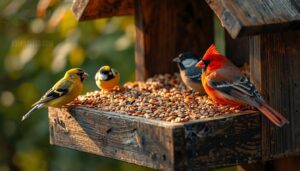
Seeds aren’t just filler in a feeder — they’re a surprisingly complex source of nutrients that affect everything from feather quality to winter survival. What’s inside each seed matters more than most people realize.
Vitamin E in particular does heavy lifting here — it supports immune health and feather quality in ways explored by woodpecker seed nutrition and feeding guides.
Different birds need different things depending on the season and their life stage. Here’s a closer look at the core nutrients your backyard birds rely on.
Protein for Muscle, Egg Production, and Chick Growth
Protein is the foundation of muscle maintenance in birds, chick development, and consistent egg production. Amino Acid Balance—especially Lysine Methionine ratios—directly affects how efficiently birds use what they eat.
Laying hens require at least 16% crude protein in their diet for maximum egg production.
Watch for these Growth Phase Needs:
- Chick starters need 22–24% crude protein for early muscle accretion
- Eggshell strength depends on adequate protein alongside minerals
- Protein digestibility determines real amino acid availability, not just label percentages
Essential amino acids must come from quality sources.
Fats for Migration, Winter Energy, and Thermoregulation
Fats do what protein can’t — they pack roughly twice the energy per gram, making them essential for migration and cold-weather survival. This efficiency enables pre-migratory fat loading, allowing birds to double their body weight before long flights, while stopover fat accumulation ensures sustained fuel during mid-journey pauses.
Fats pack twice the energy of protein, letting birds double their body weight before long migratory flights
Fat serves multiple critical functions beyond energy storage. It generates metabolic heat to combat cold, provides winter insulation to reduce heat loss, and supports sustained flight through efficient fuel consumption. Bird metabolism excels at converting stored lipids into usable energy, powering both nocturnal and diurnal migration.
| Fat’s Role | Why It Matters |
|---|---|
| Metabolic heat generation | Keeps birds warm during cold snaps |
| Winter insulation fats | Reduce heat loss from the body |
| Fuel consumption rates | Sustain flight for hours without food |
| Fat metabolism in birds | Converts stored lipids into usable energy |
| Energy provision for migrating birds | Powers sustained nocturnal and diurnal flights |
To directly support winter survival, offer highest-fat seed options like black oil sunflower seeds and Nyjer. These provide the concentrated calories needed to meet birds’ extreme energy demands during harsh conditions.
Carbohydrates as Quick Daily Fuel
While fats handle the heavy lifting, carbohydrates cover birds’ quick daily energy needs. Seeds like cracked corn and millet act as simple sugar sources, delivering rapid glucose for immediate activity. Unlike high-fat options, these low-glycemic seeds support steady energy burst control without overwhelming calorie requirements.
Smart carb timing — offering millet in the morning feeding — matches birds’ peak activity and meets their carbohydrate source needs efficiently.
Fiber for Healthy Digestion
Beyond quick fuel, fiber quietly keeps birds’ digestive systems running smoothly. Soluble fiber gel slows gut transit, supporting gut microbiome fermentation and short-chain fatty acids that nourish intestinal cells.
Insoluble bulk benefits seed digestibility by aiding gizzard grinding — a cornerstone of digestive physiology in seed-eating birds.
Gradual fiber increase through varied seeds prevents digestive stress. This makes dietary fiber and its importance for birds hard to overlook.
Vitamins That Support Immunity and Feather Quality
Think of vitamins as your birds’ internal maintenance crew. Vitamin A barrier keeps skin and feather follicles healthy, while Vitamin E antioxidant protection shields growing feathers from cellular damage.
Biotin keratin synthesis builds strong, smooth feathers, and Vitamin D3 calcium absorption aids the skeletal demands of feather growth.
B-vitamins energy metabolism keeps follicles productive, ensuring consistent feather development. Meanwhile, antioxidants in bird seed directly influence feather condition year-round.
Minerals for Bones, Nerves, and Metabolism
Minerals quietly run the show beneath every wing beat and heartbeat. Calcium bone health starts with strong skeletal structure, while Phosphorus mineralization locks that strength in place — about 85% of a bird’s phosphorus lives in its skeleton.
Magnesium nerve support keeps muscles firing correctly, and Potassium metabolic balance steadies cellular signaling.
Iron oxygen delivery fuels every flight.
Zinc and Copper round out enzyme function and tissue repair.
Why Seeds Should Not Be The Only Food Source
Seeds alone can’t carry the full load. Vitamin A gaps weaken immunity, Calcium deficiency softens bones, and Amino acid deficiency stalls feather regrowth—especially during molt when protein requirements spike sharply.
Obesity risk climbs fast on fat-heavy diets, and Foraging deprivation dulls natural behavior.
Integrating seeds with pellets, vegetables, and fruit, along with dietary fiber for birds and seasonal feeding considerations for winter, closes those nutrient deficiencies for good.
Nutrient Profiles of Common Seeds
Not all seeds are created equal, and knowing what’s actually inside them changes how you feed your birds. Each seed brings its own mix of fat, protein, fiber, and micronutrients that either benefits your flock well or falls short.
Here’s a closer look at the most common seeds and what they actually deliver.
Black-oil Sunflower Seeds for High Fat and Broad Nutrition
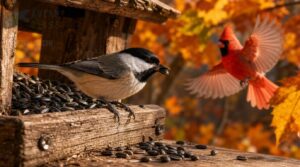
Black oil sunflower seeds are the workhorse of any feeder setup. Their high oil content delivers serious energy density — around 190–210 calories per ounce — fueling winter thermoregulation and migration alike. Fat digestion runs efficiently thanks to unsaturated fats and strong omega-6 content.
Protein and fat content of common bird seeds rarely match this range. Practicing shelf-life monitoring ensures optimal freshness, while implementing seasonal feeding strategies for winter birds enhances effectiveness.
Striped Sunflower Seeds for Larger-billed Birds
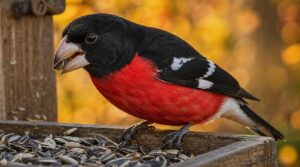
Striped sunflower seeds aren’t for every beak — and that’s actually the point. Their shell hardness filters out smaller birds naturally, giving cardinals and grosbeaks priority access.
Beak compatibility matters here: larger, stronger bills crack these seeds efficiently, reducing dominance control issues at feeders.
High oil content stays stable longer due to thicker shells slowing oil oxidation, preserving nutritional value.
Adjust your feeding timing seasonally to increase visits from target species, aligning with their natural foraging patterns.
Safflower Seeds for Protein, Fat, and Selective Feeding
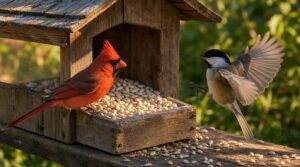
Safflower seeds punch above their weight nutritionally. You’re looking at 17–20% crude protein with a solid Amino Acid Balance — methionine and lysine both present — plus a Fatty Acid Profile dominated by polyunsaturated fats like linoleic acid. That’s real Protein Density Comparison value.
- Protein: Promotes feather growth and tissue repair
- Healthy fats: Fuel winter energy and migration needs
- Targeted Species Management: Cardinals and grosbeaks love them; squirrels and starlings don’t
- Safflower Storage Tips: Seal in a cool, dry container to preserve fat quality
Understanding seed preferences of different bird species helps when Choosing the healthiest seed for birds — and Safflower Seeds genuinely deliver.
Nyjer Seeds for Finches and High-energy Feeding
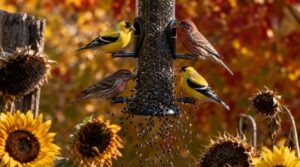
Tiny but mighty, Nyjer seeds are a step up from safflower for small finches with narrow beaks. American Goldfinches and pine siskins rely on Nyjer seed’s oil metabolism to convert its 35% fat content into warmth—delivering the finch’s thermogenic benefits on cold mornings.
Feeder Port Precision matters here: small tube openings cut waste and keep larger birds out.
Stocking high-fat seeds in fall builds Seasonal Fat Reserves, but rotate stock regularly—Nyjer seed’s shelf-life drops fast once opened.
White Proso Millet for Lower-fat Ground Feeding
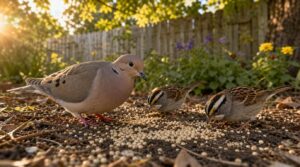
Not every bird hunts from a hanging feeder. Ground-feeding birds like juncos, doves, and towhees prefer foraging low, and white proso millet fits that habit perfectly. It has around 4 percent fat and 11 percent protein — modest numbers that support feather maintenance without pushing seasonal fat management concerns.
Scatter it widely using smart feeder placement techniques, and you’ll attract steady visitors year-round.
Flax, Hemp, and Chia for Omega-3 Fatty Acids
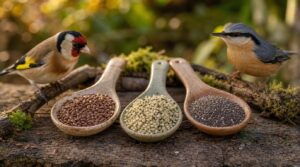
Millet provides a light base, while flax, hemp, and chia seeds deliver omega-3 fatty acids critical for feather quality and immune function. These seeds offer distinct benefits when properly prepared: grinding flax maximizes ALA conversion efficiency, and soaking chia unlocks hydration gel benefits that enhance digestion.
Pairing these seeds with antioxidant-rich berries creates a synergistic nutritional profile.
To maintain balanced rotational omega-3 feeding, ensure all three seeds are cycled regularly in the diet.
Peanuts and Cracked Corn as Calorie-dense Options
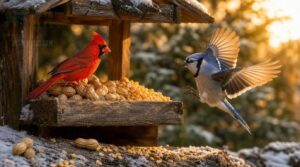
While omega-3 seeds cover micronutrient needs, peanuts and cracked corn handle raw energy demands.
Peanuts pack 567 calories per 100g — a serious calorie calculation win for cold-weather fat carb ratio balancing. Cracked corn delivers ~365 calories, mostly carbs for quick energy surge timing.
Keep feeder placement away from squirrels and follow these portion limits:
- Shelled peanuts: 5–8 pieces for large birds daily
- Cracked corn: mix at 20–25% of blend, not solo
- Highfat seeds like peanuts suit energy needs of birds during seasonal feeding strategies — especially winter.
Low-value Fillers to Limit or Avoid
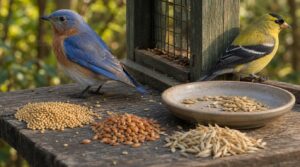
Cheap mixes often lean on fillers like cracked corn, red milo, and white proso millet, creating real Filler Nutrient Dilution that crowds out seeds birds actually need.
Feeder Fouling follows when ignored fillers pile up and mold. Aflatoxin Concern is serious — contaminated corn and millet cause liver damage.
Supply Chain Variability means nutrient content shifts batch to batch, and Obesity Potential climbs when high-starch fillers replace safflower seed or sunflower chips.
Species-Specific Seed Choices
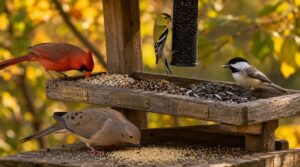
Not every bird eats the same way, and choosing the right seed for the right species makes all the difference at your feeder. Match the seed to the bird, and you’ll see more of the visitors you actually want.
Here’s how the most common backyard species line up with the seeds they prefer.
Cardinals, Chickadees, and Nuthatches With Sunflower Seeds
Black-oil sunflower seeds are the single best feeder investment for attracting cardinals, black-capped chickadees, and nuthatches. Their high-fat content aids each species’ energy budget differently across seasons.
Feeder placement tips and daily intake limits matter too. Each species interacts uniquely with feeders:
- Cardinals crack hulls easily at platform feeders
- Chickadees cache seeds, boosting social foraging dynamics
- Nuthatches prefer vertical tube feeders
- Attraction rate metrics peak in winter cold
Finches, Siskins, and Redpolls With Nyjer Seed
If you want to attract finches, Pine Siskins, and redpolls consistently, nyjer or thistle is your go-to seed. Finch feeding habits center on small, oil-rich seeds they crack with slender beaks — nyjer delivers exactly that. Tube feeder design matters here: small ports and mesh openings reduce spillage and keep larger birds out.
| Nyjer Feeder Factor | Practical Guideline |
|---|---|
| Feeder Placement | 3–5 feet above ground |
| Predator Guarding | Keep away from dense cover |
| Winter Nyjer Peaks | Refill every 3–7 days |
| Tube Feeder Design | Small ports or fine mesh only |
| Seed preferences | Goldfinches, siskins, redpolls prefer nyjer |
Seasonal considerations in bird feeding shift nyjer demand sharply upward in winter, when natural seed is scarce and energy needs spike.
Doves, Juncos, and Towhees With Millet
Ground placement makes all the difference for millet-loving species. Doves, juncos, and towhees are natural ground feeders — scatter white proso millet low and open to match their foraging style.
- Use flat, low trays for feeder design that suits scratching behavior
- Place near shrub edges for predator avoidance
- Refill during winter for reliable seasonal feeding considerations
- Minimize waste by offering small, fresh amounts daily
- Match seed preference by species — these birds choose millet over larger seeds consistently
Cardinals and Grosbeaks With Safflower Seed
Safflower seeds are a smart pick if cardinals and grosbeaks are your target visitors. Their strong bills let them crack the thick shell with ease—a shell hardness deterrent that keeps starlings and house sparrows away.
Cardinals show strong winter visitation patterns, drawn by safflower’s high-fat, protein-rich nutritional benefits.
Use a hopper or tube feeder, and watch feeder traffic improve.
Jays, Woodpeckers, and Crows With Peanuts
Peanuts bring out the big personalities at your feeder. Jays use vocal recruitment to call others in when peanuts appear, then dominate through feeder hierarchy, often displacing smaller birds. Their beak adaptation lets them crack shells and cache peanuts for later.
Woodpeckers wedge kernels into bark for leverage, showcasing their own beak adaptation. These caching strategies highlight how different species utilize peanuts for survival.
Cache dynamics aside, the nutritional benefits of bird seeds like peanuts—dense protein and high-fat seeds for quick energy—make them worth the chaos.
Squirrel-resistant and Starling-resistant Seed Strategies
The chaos peanuts bring extends beyond jays and crows — squirrels and European Starlings can empty your feeder just as fast. Safflower-dominant blends naturally discourage both, forming the first line of defense. Pair these blends with weight-activated feeders, mesh-caged designs, and narrow seed ports to further restrict access, effectively cutting off most pest intrusion.
Adding squirrel baffles to elevated bait stations provides an additional barrier, ensuring your target birds finally receive their fair share of food.
Matching Seed Size to Beak Strength
Beak depth matching matters more than most people realize. A cardinal’s deep, stout bill manages the hardness of seed shells that would stop a finch cold. Gape width and crushing capability determine which seeds a bird can process efficiently — large seeds demand thick-walled bills, while tiny seeds suit slender beaks.
Offering a mixed seed blend with varied seed hardness alignments gives every species its natural beak exercise.
Adjusting Blends Based on Feeder Visitors
Once you know which birds are actually showing up, tweaking your blend becomes straightforward. Visitor data tracking turns guesswork into a real feeding strategy.
- Increase nyjer and millet for smaller visitors needing beak size calibration with finer seeds.
- Boost safflower for cardinals and grosbeaks — solid species-specific seed recommendations.
- Rotate blend ratio adjustments every 1–2 weeks using seasonal mix scheduling.
- Match feeder type alignment to ground vs. platform feeders.
- Prioritize nutrient density in your seed blend for seasonal feeding considerations for winter.
Top 10 Bird Seed Products
Knowing which seeds work best is only half the equation — you also need products that deliver on quality and consistency. The right bird seed brand can make a real difference in feeder activity and bird health.
Here are ten options worth keeping on your radar.
1. Wagner 25 lb Black Oil Sunflower Bird Seed
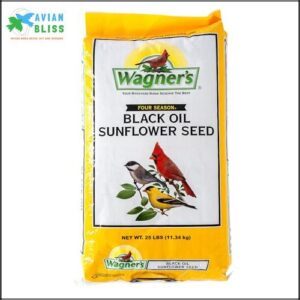
Wagner’s 25 lb Black Oil Sunflower Bird Seed is one of the most practical choices for a backyard feeder. Its thin shells allow small-beaked birds like chickadees, finches, and nuthatches to crack them effortlessly.
At $41.98 for 25 lbs, a single bag typically lasts about six weeks with daily refills.
The bag isn’t resealable, so immediately transfer it to an airtight container to prevent moisture and rancidity.
| Best For | Backyard bird enthusiasts who want to attract a wide variety of songbirds like cardinals, finches, and chickadees with a single, high-quality seed. |
|---|---|
| Seed Type | Black Oil Sunflower |
| Package Weight | 25 lb |
| Price | $41.98 |
| Target Birds | Cardinals, finches, chickadees |
| Squirrel Risk | High |
| Feeder Compatibility | Tube, hopper, platform |
| Additional Features |
|
- Thin shells make it easy for small-beaked birds to eat, so you get more visitors at your feeder
- One 25 lb bag lasts about six weeks with daily fills — solid value for the size
- Made in the USA and free of common allergens, so you know what you’re putting out
- No resealable closure on the bag, so you’ll need an airtight container after opening
- Some batches include wood chips or debris that can clog up your feeder
- Squirrels will go after any seeds that hit the ground, which can get frustrating fast
2. Lyric No Waste Sunflower Wild Bird Seed 25 lb
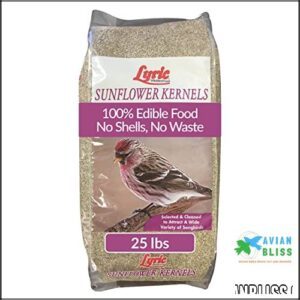
Lyric’s 25 lb No Waste Sunflower Seed takes a smart approach — pre-hulled kernels mean zero shell debris under your feeder. That’s a real win if you’re tired of dead patches in your lawn or frequent ground clean-up.
Both whole and split hearts are included, so birds like chickadees, cardinals, and finches can feed easily. It works with tube, hopper, and platform feeders.
At $50+ per bag, it costs more, but the cleaner feeding experience often justifies it.
| Best For | Backyard bird watchers who want a cleaner feeding setup and don’t mind paying a premium to keep their lawn and patio tidy. |
|---|---|
| Seed Type | Hulled Sunflower Hearts |
| Package Weight | 25 lb |
| Price | $50+ |
| Target Birds | Cardinals, finches, chickadees |
| Squirrel Risk | High |
| Feeder Compatibility | Tube, hopper, platform |
| Additional Features |
|
- No shells means no dead grass, no hull piles, and way less mess under the feeder
- Attracts a solid variety of songbirds — cardinals, finches, chickadees, nuthatches, and more
- Works with most feeder types, so you don’t need to swap anything out
- At $50 for 25 lbs, it’s pricier than most seed options on the market
- Fine seed dust can still fall and attract mice or small critters
- Squirrels can still get to it unless you’ve got a baffle or squirrel-proof feeder in place
3. Kaytee 5lb Striped Sunflower Bird Seed
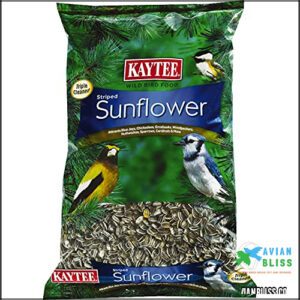
Kaytee’s 5 lb striped sunflower seed is a solid pick if your yard receives visits from cardinals, blue jays, woodpeckers, and grosbeaks. The shells remain intact, requiring birds with strong beaks to handle the cracking. This encourages natural foraging behavior, keeping them engaged at your feeder longer.
With roughly 22% fat and 16% protein, each seed delivers genuine energy, not filler. Triple-cleaned processing reduces hull debris and dust, ensuring a cleaner feeding experience.
One trade-off: smaller species like finches won’t find it as easy to handle, making it less ideal for their needs.
| Best For | Backyard birders who want to attract larger birds like cardinals, blue jays, woodpeckers, and grosbeaks with a high-energy, low-mess seed option. |
|---|---|
| Seed Type | Striped Sunflower |
| Package Weight | 5 lb |
| Price | Not listed |
| Target Birds | Cardinals, jays, woodpeckers |
| Squirrel Risk | High |
| Feeder Compatibility | Tube, hopper, platform |
| Additional Features |
|
- High fat and protein content gives birds real nutritional value, not just empty filler
- Triple-cleaned seeds mean less hull debris and dust in and around your feeder
- The 5 lb bulk bag cuts down on how often you need to restock
- Not a great fit for smaller birds like finches that struggle with the larger shells
- Squirrels and chipmunks love these too, so you may need a deterrent
- Single-seed format won’t give you the variety of a mixed-seed blend
4. Wagner 62050 10 Pound Nyjer Seed Bird Food
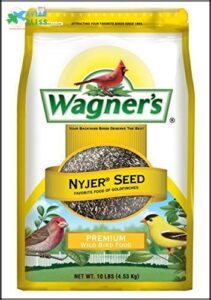
If goldfinches, pine siskins, and house finches are your target visitors, this 10 lb bag of Nyjer seed is designed for them. Wagner’s 62050 offers exceptional value, packing roughly 150,000 seeds per pound to maximize feeder activity for your investment.
With 20 g protein and 36 g fat per 100 g, this seed delivers serious energy for small songbirds, supporting their high metabolic needs.
The resealable press-lok closure ensures freshness between refills, preserving seed quality over time.
For optimal results, use a proper finch tube feeder with small ports, tailored to accommodate the seed size and your target birds’ feeding habits.
| Best For | Backyard bird lovers who want to attract goldfinches, pine siskins, and house finches with a reliable, high-energy seed. |
|---|---|
| Seed Type | Nyjer/Thistle |
| Package Weight | 10 lb |
| Price | Not listed |
| Target Birds | Goldfinches, siskins, house finches |
| Squirrel Risk | Moderate |
| Feeder Compatibility | Finch tube feeder |
| Additional Features |
|
- Roughly 150,000 seeds per pound means you get a ton of feeder activity for the price
- The press-lok closure keeps things fresh and mess-free between refills
- Works great with standard finch tube feeders for easy, low-maintenance feeding
- The bag can develop leaks, so you might end up with seed scattered before it ever hits the feeder
- Those tiny seeds can draw rodents if your feeder is close to the house
- Only works for small finch-style feeders — not useful if you’re trying to feed a mixed crowd of birds
5. Droll Yankees Finch Flocker Bird Feeder 36 Inch
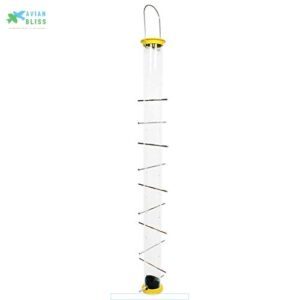
The Droll Yankees Finch Flocker transforms your yard into a finch gathering spot, offering a 36-inch UV-stabilized polycarbonate tube that holds up to 3½ lb of Nyjer seed. Its 20 feeding ports allow multiple birds to eat simultaneously without crowding. An internal seed baffle ensures seed flows downward efficiently, preventing waste or blockages.
Constructed with die-cast zinc, the feeder withstands year-round weather conditions. The slide-up cap enables quick, hassle-free refills.
If attracting goldfinches is your goal, this feeder is purpose-built for their needs.
| Best For | Backyard bird watchers who want to attract goldfinches and other small finches with a high-capacity, low-maintenance feeder. |
|---|---|
| Seed Type | Nyjer Feeder |
| Package Weight | N/A (feeder) |
| Price | Not listed |
| Target Birds | Goldfinches, small finches |
| Squirrel Risk | Moderate |
| Feeder Compatibility | Finch tube feeder only |
| Additional Features |
|
- 20 feeding ports mean a whole flock can eat at once — no crowding, no waiting
- The internal seed baffle keeps seed moving down to the bottom so nothing goes to waste
- Built tough with UV-stable polycarbonate and die-cast zinc, so it holds up in sun, rain, and everything in between
- Finches can be picky — there’s no guarantee they’ll actually show up, even with fresh Nyjer seed
- At 40 inches tall, it needs decent clearance to hang, so small trees or low branches won’t cut it
- Cleaning is a bit of a chore since you have to dig into the internal baffle to fully clear out old seed residue
6. Wagner 57075 Safflower Seed Wild Bird Food
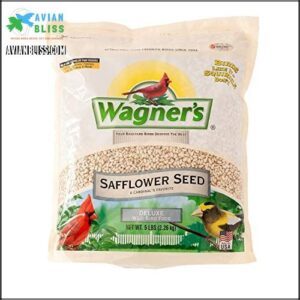
Wagner’s 57075 safflower seed is one of the better single-ingredient options you’ll find for attracting cardinals, chickadees, grosbeaks, and nuthatches. At $11.98, it delivers solid value — especially since squirrels and feeder hogs like starlings tend to leave it alone.
The mild, nutty flavor comes from USA-grown grain, and the resealable bag keeps moisture out between fills.
Mix it into your existing blend or offer it straight. Either way, your target birds get a high-fat, protein-rich seed that earns its place at the feeder.
| Best For | Backyard bird lovers who want to attract cardinals, chickadees, and nuthatches while keeping squirrels and feeder hogs away. |
|---|---|
| Seed Type | Safflower |
| Package Weight | N/A (small bag) |
| Price | $11.98 |
| Target Birds | Cardinals, chickadees, nuthatches |
| Squirrel Risk | Low |
| Feeder Compatibility | Tube, hopper, platform |
| Additional Features |
|
- Naturally deters squirrels and nuisance birds like starlings and grackles, so your target birds actually get to eat
- Made in the USA with quality grains — mild, nutty flavor that songbirds love
- Resealable bag locks in freshness, and the high fat content gives birds a solid energy boost in colder months
- Pricier than basic sunflower seed, so it’s often better used as a blend rather than a standalone fill
- Doesn’t deter every nuisance bird — some grackles and blackbirds will still show up
- High fat content can go rancid after a year or two, so long-term storage means fridge or freezer space
7. Wagner 18542 10 Pound Cracked Corn Wild Bird Food
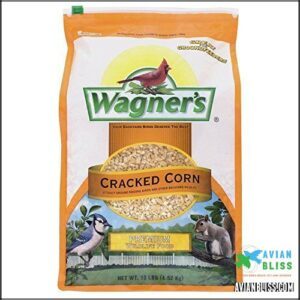
Cracked corn is the unsung workhorse of ground feeding setups. Wagner’s 18542 offers 10 pounds of allergen-free, irregularly fragmented corn that attracts Blue Jays, Cardinals, Doves, Juncos, and Quail, which eagerly forage through it.
This product serves primarily as a carbohydrate source, providing quick energy rather than comprehensive nutrition. For a balanced diet, mix it with protein-rich seeds.
A practical bonus: scatter some away from your main feeder to redirect squirrels and rabbits, protecting your primary feeding area.
Remember to reseal the bag carefully, as it doesn’t close on its own, to maintain freshness.
| Best For | Backyard bird watchers who want to attract ground-feeding birds and wildlife, or anyone looking to keep squirrels away from their main feeder. |
|---|---|
| Seed Type | Cracked Corn |
| Package Weight | 10 lb |
| Price | Not listed |
| Target Birds | Jays, doves, juncos, quail |
| Squirrel Risk | Moderate |
| Feeder Compatibility | Ground/platform |
| Additional Features |
|
- Pulls in a great mix of birds — Blue Jays, Cardinals, Doves, Quail, and more
- Works as a squirrel decoy to protect your hanging feeders
- Easy to blend into custom seed mixes with little waste
- Bag doesn’t reseal, so you’ll need to store it in a separate container after opening
- May attract more wildlife than you bargained for — rabbits, squirrels, geese
- At 10 lbs, it can feel pricey if you’re feeding a lot of birds regularly
8. Lyric No Waste Wild Bird Seed Peanut Pieces
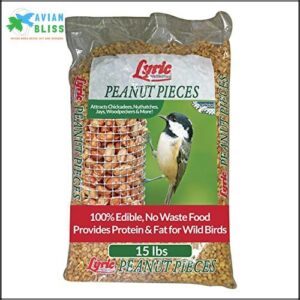
Lyric’s No Waste Peanut Pieces cover the heavy nutrition, offering serious fuel without the mess of whole peanuts. At roughly 25% protein and 35% fat, these shelled pieces attract woodpeckers, chickadees, and nuthatches while eliminating no wasted hulls under your feeder.
At $32.99 for 15 lb, it’s solid value. However, wet peanuts mold fast, so refill in smaller amounts during rainy stretches to avoid spoilage.
| Best For | Backyard birders who want to attract a wide variety of songbirds and woodpeckers year-round without dealing with shell mess. |
|---|---|
| Seed Type | Shelled Peanut Pieces |
| Package Weight | 15 lb |
| Price | $32.99 |
| Target Birds | Woodpeckers, chickadees, nuthatches |
| Squirrel Risk | High |
| Feeder Compatibility | Tube, hopper, platform |
| Additional Features |
|
- High protein and fat content gives birds serious energy, especially during winter and nesting season
- Works with almost any feeder style — tube, hopper, platform, you name it
- Less waste than whole peanuts, so you’re getting more value per bag
- Wet weather is the enemy here — peanuts mold quickly, so you’ll need to stay on top of refills during rainy stretches
- Squirrels and chipmunks love these just as much as the birds do, so a baffle or deterrent might be necessary
- Some pieces arrive broken or fragmented, which can lead to extra cleanup under certain feeder types
9. Wagner 62059 Wild Bird Food Variety Blend
If you want one bag that does a little bit of everything, this 16 lb variety blend covers a lot of ground. With over 40% sunflower content — black oil, striped, and chips combined — plus millet, safflower, nyjer, peanut pieces, and canary seed.
It pulls in chickadees, cardinals, finches, jays, and ground feeders like doves all at once.
Transfer it to an airtight container right away — the bag isn’t resealable, and moisture turns a good mix bad fast.
| Best For | Backyard birders who want to attract a wide variety of songbirds and ground feeders without juggling multiple seed types. |
|---|---|
| Seed Type | Multi-Seed Blend |
| Package Weight | 16 lb |
| Price | Not listed |
| Target Birds | Cardinals, finches, jays, doves |
| Squirrel Risk | High |
| Feeder Compatibility | Tube, hopper, platform |
| Additional Features |
|
- The 40% sunflower blend draws a ton of species — cardinals, chickadees, finches, jays, and doves all in one spot
- Works with tube, hopper, and platform feeders, so no specialty equipment needed
- Made in the USA with a solid 11-ingredient mix that goes beyond basic filler seed
- The bag isn’t resealable or waterproof, so you’ll need to move it to an airtight container right away
- Peanuts in the mix can bring squirrels to the party pretty quickly
- Pricier than bulk seed options, and some users have run into clumping or mold if storage isn’t handled carefully
10. Wagner Songbird Supreme Wild Bird Food 8lb
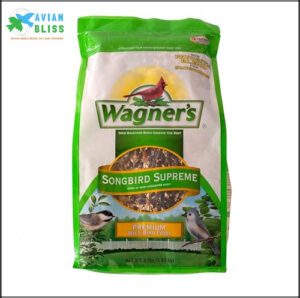
The Wagner Songbird Deluxe 8 lb bag is ideal for attracting backyard songbirds. It combines black-oil, striped, and sunflower chips with safflower, white millet, and peanut kernels, resulting in a mix that’s roughly 50% sunflower overall. This ratio reliably draws cardinals, chickadees, titmice, and woodpeckers. At $14.98, it offers a solid everyday option.
One notable gap is the absence of nyjer seed, which means goldfinches won’t visit. The resealable slider helps maintain freshness, but storing the mix in a cool, dry place remains essential regardless.
| Best For | Backyard bird enthusiasts who want to attract a wide variety of songbirds like cardinals, chickadees, and woodpeckers with a single, versatile seed mix. |
|---|---|
| Seed Type | Multi-Seed Blend |
| Package Weight | 8 lb |
| Price | $14.98 |
| Target Birds | Cardinals, chickadees, titmice, sparrows |
| Squirrel Risk | Moderate |
| Feeder Compatibility | Tube, hopper, platform |
| Additional Features |
|
- Solid blend of sunflower, peanut, safflower, and millet that pulls in a good range of common backyard birds
- Works with tube, hopper, and platform feeders, so no special setup needed
- Made in the US and comes in a resealable bag for easy storage
- No nyjer seed, so don’t expect goldfinches or finches to show up
- Popular mix gets eaten fast, which means frequent refilling and higher ongoing costs
- Seed spillage can sprout weeds and draw in squirrels
Safe Seasonal Feeding Advice

Feeding birds well isn’t a set-it-and-forget-it habit — what works in January won’t cut it come April. Each season brings different demands, and the seeds you offer should reflect that.
Here’s how to match your feeding strategy to what birds actually need throughout the year.
Spring Protein Needs for Breeding Birds
Spring is when protein demand spikes — breeding birds require a balanced amino acid intake to support egg formation, tissue repair, and nestling growth support. Seed protein content alone often falls short, making protein source diversity essential.
To address this gap, incorporate mealworms or suet for insect supplementation. These additions provide critical nutrients that seeds lack.
A pre-lay protein boost, initiated a few weeks before nesting begins, is particularly vital. This timing directly impacts the reproductive health of birds, ensuring optimal conditions for successful breeding.
Summer Feeding During Molt and Chick Growth
Summer puts serious demands on birds — molting and chick growth both spike protein requirements by up to 25 percent during summer. High-protein seed blends and insect protein supplements help close that gap when seed protein content alone falls short.
Focus your summer setup on:
- Nutrient needs during molting and feather growth: Calcium-Phosphorus Balance and vitamin A support keratin formation and skin health
- Hydration Management: Fresh water daily, since feather synthesis increases water loss noticeably
- Daily Portion Limits: Keep Heat-Tolerant Feeders stocked with nutrient-dense, high-protein seed and low-filler blends
Fall High-fat Seeds for Migration Fuel
Fall migration pushes birds hard — their energy demands can spike dramatically as they fuel up for long flights.
| Seed | Fat Content | Best For |
|---|---|---|
| Black oil sunflower | 45–50% oil | Broad species appeal |
| Nyjer | High-fat, compact | Finches, siskins |
| Safflower | ~25% protein/fat | Cardinals, grosbeaks |
| Peanuts | Dense calories | Jays, woodpeckers |
| Safflower + sunflower mix | Balanced fat blend | Mixed migrants |
Stock high-fat seeds for quick energy, prioritize oil freshness through seed rotation, and adjust your seed mix as nights cool. Strategic feeder placement and migration timing awareness ensure migratory bird fuel remains available precisely when passing birds need it most.
Winter Calorie-dense Seeds for Cold Survival
Winter strips away natural food fast, so your feeder becomes a lifeline.
- Stock black oil sunflower and nyjer as your core high-fat seeds
- Practice smart energy budgeting — prioritize calorie-dense varieties over filler
- Use cold-resistant feeders that won’t crack or jam in freezing temps
- Improve feeder placement near shrubs that create a thermal microclimate
- Increase feeding frequency during cold snaps to meet rising calorie requirements for winter survival
Avoiding Salted, Roasted, or Seasoned Seeds
Roasted or salted seeds might seem harmless, but they’re genuinely dangerous for birds. Sodium-free and additive-free sourcing isn’t just a marketing phrase — it’s essential for safe seed selection for avian nutrition.
Seasoned seeds introduce toxic compounds that disrupt digestion and thirst cues. These additives interfere with a bird’s natural regulatory systems, posing serious health risks.
Raw nutrient retention drops sharply when heat processes seeds. This degradation undermines the nutritional value critical for avian well-being.
Flavor bias avoidance keeps birds eating balanced diets instead of chasing coated kernels. Prioritizing unprocessed seeds ensures birds receive essential nutrients without developing unhealthy preferences.
Preventing Mold, Rancidity, and Aflatoxin Exposure
Mold doesn’t announce itself — it spreads quietly, and aflatoxins follow. Proper storage and handling of bird seeds starts with moisture management: keep humidity below 60% and seed moisture under 12%. Temperature regulation also matters; avoid heat sources that trigger rancidity.
Mycotoxin binders and antifungal treatments help reduce aflatoxin monitoring concerns, while weekly inspections catch rancid or moldy seeds before they cause harm.
Storing Seed in Cool, Dry, Airtight Containers
Good seed storage is the last line of defense between your birds and a spoiled batch. Proper storage and handling of bird seeds comes down to four non-negotiables:
- Container material: Glass jars or metal tins with airtight seals block moisture and pests best
- Temperature control: Keep seeds between 32–41°F to slow degradation
- Ideal humidity: Use silica gel desiccants to hold humidity under 15%
- Pest prevention: Store off the floor, away from sunlight and strong chemicals
Moisture testing before sealing matters too — seeds above 10% moisture will spoil quickly, especially during humid weather, when spoilage risk peaks. These seed storage best practices keep every batch as fresh as possible.
Balancing Seed Mixes With Natural Foods and Variety
Seeds alone don’t cut it — think of them as the base layer, not the whole picture. Fruit Supplements like ripe berries and fresh vegetables give birds vitamins that seeds simply can’t deliver.
Toss in Insect Treats during molt, and you’re covering protein gaps naturally.
Rotate blends with Seasonal Mix Rotations, and use Feeder Placement Variety so birds discover new food sources throughout the year.
Frequently Asked Questions (FAQs)
What is the 5 7 9 rule for bird feeders?
The 5-7-9 rule covers Height Guidelines, Structure Clearance, and Branch Distance: place feeders 5 feet high for Predator Deterrence, 7 feet from structures, and 9 feet from climbable branches.
What is the healthiest bird seed for birds?
Black-oil sunflower seeds top the nutrient density charts — high in fat, substantial protein, and with broad species appeal.
For balanced backyard feeding, pair them with nyjer and safflower based on your visitors’ protein and fat requirements.
What is the healthiest thing to feed birds?
The healthiest diet combines high-quality seeds as a balanced seed component with fresh fruit, vegetable greens, insect protein, and live worms as seasonal nutrient boosters. Together, these elements meet the full protein and fat requirements in avian diets.
What is the most critical nutrient to birds?
Water sits at the top of every nutrient hierarchy.
Without proper hydration, absorption efficiency drops completely — protein, essential fatty acids, calcium, and vitamin A can’t do their job no matter how balanced your mix is.
Do wild birds recognize humans who feed them?
Yes, wild birds do recognize you. Through memory retention and human recognition cues like your clothing and routine, they learn to trust consistent feeders.
This trust manifests through behavioral indicators such as closer approach and reduced alarm.
How do you prevent mold in bird seed?
Store seeds in airtight containers with desiccant packs, conduct weekly inspections, and use airflow feeders.
Elevated storage and seal checks prevent mold and bacterial growth before humid weather leads to seed spoilage.
What seeds attract hummingbirds to feeders?
Hummingbirds don’t visit feeders for seeds — they’re drawn to nectar-rich perennials and tubular flower colors instead. Plant native blooms and use sugar-water feeders to catch them during migration nectar windows.
Can bird seed harm pets or wildlife?
Bird seed can harm pets through aflatoxin exposure, salt toxicity, pancreatitis risk, and choking hazards. Feeder spillage exposes dogs to toxic compounds, cyanogenic compounds, and gossypol toxicity.
Always offer safe seeds for pet birds only.
How to reduce waste from spilled bird seed?
Use spill catchers and tray cleaning routines weekly, choose low‑mess blends, and focus on feeder placement away from dense cover. Airtight storage keeps seed fresh and cuts waste fast.
Are sprouted seeds healthy for wild birds?
Yes, sprouted seeds offer real benefits for wild birds. Enzyme activation unlocks nutrients, vitamin boost improves availability, and antinutrient reduction aids digestibility improvement.
Prioritize microbial safety — remove uneaten sprouts promptly.
Conclusion
The cheapest bag on the shelf might fill your feeder, but it won’t fuel a cardinal through January or carry a warbler through migration. Solid bird seed nutrition advice closes that gap—matching fat percentages and protein ratios to the species actually showing up at your yard.
Swap fillers for black-oil sunflower, nyjer, or safflower, and adjust with the seasons. This ensures your feeder meets the birds’ evolving needs, whether during harsh winters or demanding migrations.
Your feeder stops being a habit and starts being a lifeline.