This site is supported by our readers. We may earn a commission, at no cost to you, if you purchase through links.
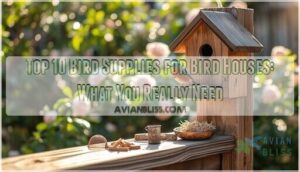
A bluebird lands on your fence, scouts the yard, then flies off for good—and nine times out of ten, the wrong setup drove her away. Most backyard birders focus on the house itself, but the structure is only part of the equation.
The right supplies for bird houses—from entrance guards sized to the species to cedar shavings that wick moisture off eggs—make the difference between a visited box and an empty one. Get those details right, and you’re not decorating your yard; you’re building a neighborhood.
Table Of Contents
- Key Takeaways
- Essential Bird House Supplies
- Top 10 Bird House Supplies
- 1. Audubon Swirl Glass Hummingbird Feeder
- 2. Audubon Combo Mesh Bird Feeder
- 3. Thick Thin DIY Wooden Bird House
- 4. Natural Wood Bird House Feeder
- 5. Wooden Bird House with Copper Guard
- 6. Stainless Steel Birdhouse Predator Guard
- 7. Nature’s Way Cedar Wren House
- 8. Rakovar Wooden Hummingbird House
- 9. Natural Wooden Hanging Bird House
- 10. Litewoo Winter Warm Bird Hammock
- Mounting Hardware and Pole Systems
- Predator Guards and Entry Protection
- Cleaning, Nesting, and Seasonal Care
- Frequently Asked Questions (FAQs)
- How often should birdhouses be cleaned annually?
- What entrance hole size suits each species?
- Can birdhouses face any compass direction safely?
- Do painted birdhouses deter nesting birds effectively?
- Should birdhouses remain up during winter months?
- How do I attract specific bird species naturally?
- What lighting conditions suit birdhouse placement best?
- Can multiple birdhouses coexist in one yard?
- Which wood treatments are safe for birds?
- How often should birdhouse entry holes be inspected?
- Conclusion
Key Takeaways
- Matching your birdhouse supplies to the specific species — right entrance size, pole height, and predator guard — makes the difference between a box that birds move into and one they fly past.
- go-to material because it naturally resists rot and handles weather without paint or sealant, keeping the nesting space safe and chemical-free.
- Layered protection matters: a stovepipe baffle on the pole, a metal portal guard at the hole, and sparrow deterrents together give nesting birds a real shot at raising a brood.
- Seasonal care — cleaning out old nests, checking drainage, and refreshing nesting material — keeps your birdhouse working season after season instead of sitting empty.
Essential Bird House Supplies
Setting up a great bird house goes beyond just picking a pretty box and nailing it to a tree. The right supplies make a real difference in whether birds actually move in — and stick around. Here’s what you’ll want to have on hand before nesting season gets going.
From pole mounts to predator guards, you’ll find everything you need at a good bird house and supply store before the first scouts start scouting for real estate.
Bird House Materials and Weather Resistance
Your untreated wood choice matters more than most people realize. Cedar durability makes it the top pick — it resists rot naturally and manages weather without paint.
- Use ¾‑inch boards for insulation
- Design roof overhang to shed rain
- Install a drainage ventilation system in floors and eaves
- Secure joints with galvanized fasteners
- Choose a heavy duty sectional pole for stable mounting
Add a waterproofing membrane layer to the roof to keep moisture out.
Feeders That Complement Bird House Setups
Once your house is weather-tight, feeders become your next move. A mealworm tray design draws bluebirds and wrens right where you want them — near the nest box, in the open.
Make sure the pole follows the minimum horizontal distance guidelines of 8–10 ft from launch points.
Get pole-mounted feeder stability right by pairing it with squirrel baffle placement low on the shaft.
Seed platform height keeps feed accessible.
Hummingbird nectar zones work best when set apart, around 10–15 feet away.
Bird Baths Near Nesting Areas
Water brings birds in close — and keeps them there. Place your bath 5 to 15 feet from your nesting setup, using shade placement to slow algae growth. Keep water depth at 1 to 2 inches and rotate bath locations seasonally for parasite control.
Water draws birds in and keeps them close — place your bath nearby, shallow, and shaded
In your outdoor bird habitat or wildlife garden, predator barriers and clear sightlines work alongside your birdhouse mounting hardware for real predator protection solutions.
Bird Food Suited to Backyard Nesters
Food matters just as much as shelter. Stock your Backyard Bird Center with High Fat Seeds like black oil sunflower for cardinals and chickadees, plus Seasonal Suet for woodpeckers during cold snaps.
- Protein Rich Insects (dried mealworms) support nesting bluebirds
- Calcium Enriched Mix strengthens eggshells during peak weeks
- Bird Seed Blends with hulled chips reduce waste
- Ground Feeder Strategies using millet trays attract juncos and sparrows
Species-specific Supplies for Wrens, Bluebirds, and Hummingbirds
Each species has its own checklist.
Wrens need a tight Wren Entrance Size (1–1.25") and a Wren Guard to block competition.
Bluebirds thrive with proper Bluebird Nest Height and a Bluebird Pole Set with Twist In Ground Socket for stability.
Hummingbirds rely on the right Hummingbird Platform Diameter and Species‑specific Nest Materials.
| Feature | Wrens | Bluebirds | Hummingbirds |
|---|---|---|---|
| Entrance/Size | 1–1.25" hole | 1.5" hole | 4–6" platform |
| Mount Height | 5–10 ft | 4–6 ft | 10–15 ft |
| Key Accessory | Wren Guard | Bluebird Nest Lift | Hummingbird Nest Material Refill |
| Predator Defense | customized Predator Guards | Pole baffle | Platform shield |
| Maintenance | Seasonal cleaning | Hummingbird Feeder Cleaner 16 oz | Nest cup refresh |
Top 10 Bird House Supplies
Now that you know what to look for, it’s time to put that knowledge to work.
These ten picks cover a solid range of options — from feeders and houses to protective gear for your backyard birds. Let’s get into what made the cut.
1. Audubon Swirl Glass Hummingbird Feeder
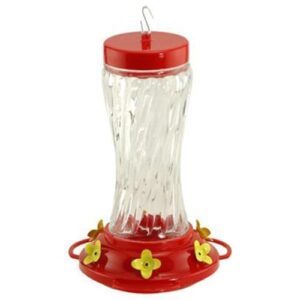
Audubon Swirl Glass Hummingbird Feeder earns its spot on this list.
It holds 16 oz of nectar in a clear glass reservoir, so you can monitor levels without taking anything apart.
Six flower-shaped ports and three perches let multiple birds feed at once.
At $21.93, it’s solid value — just know the plastic base can fade after a year or two.
The wide twist-off opening makes cleaning genuinely easy, which matters more than most people realize.
| Best For | Backyard bird-watchers who want an easy-to-clean, mid-range feeder that lets them keep an eye on nectar levels without any fuss. |
|---|---|
| Material | Glass & plastic |
| Price | $21.93 |
| Mounting Style | Hanging |
| Bird Type | Hummingbirds |
| Ease of Cleaning | Dishwasher-safe glass |
| Included Hardware | None |
| Additional Features |
|
- Clear glass body makes it easy to see when it’s time for a refill
- Six ports and three perches mean several hummingbirds can feed at the same time
- Wide twist-off opening makes cleaning quick and straightforward
- Plastic base and top tend to fade and get brittle within a couple of years
- Nectar reservoir isn’t included, so it’s an extra purchase on top of the $21.93
- Some buyers have received units with missing parts or minor cracks near the flower inserts
2. Audubon Combo Mesh Bird Feeder
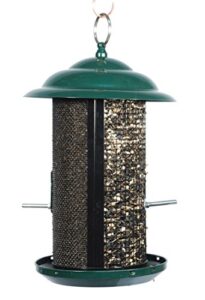
If you’re aiming to draw a crowd, this combo mesh feeder steps up. You can fill two seed types at once—think Nyjer for finches, mixed seed for sparrows. The mesh keeps seed dry and deters squirrels, while the easy‑open top saves you time. It hangs right out of the box, fits in tight spots, and holds three pounds.
You might notice the bottom tray is a bit steep, but most birds adapt quickly. It’s a sturdy, practical choice for busy yards.
| Best For | Backyard bird lovers who want to attract a variety of species without cluttering their yard with multiple feeders. |
|---|---|
| Material | Powder-coated metal |
| Price | $43.07 |
| Mounting Style | Hanging |
| Bird Type | Mixed species |
| Ease of Cleaning | Easy-open top |
| Included Hardware | Hanging hardware |
| Additional Features |
|
- Fill two seed types at once, so you can cater to finches and sparrows from a single spot
- Mesh design helps keep seed dry and makes it harder for squirrels to raid
- Comes fully assembled and ready to hang — no setup hassle
- Metal feels thinner than older Audubon models, so long-term durability is a question mark
- The steep bottom tray can be less inviting to some birds right out of the box
- Fine mesh makes filling a little awkward and can lead to spills or moisture buildup over time
3. Thick Thin DIY Wooden Bird House
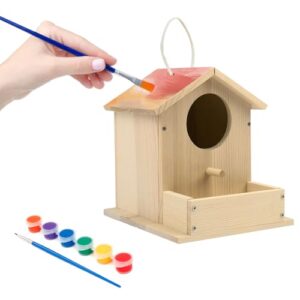
Want a weekend project that actually ends up in your yard?
The Thick&Thin DIY Wooden Bird House ($13.99) gives you 10 pre‑cut pine pieces, 6 paint colors, and everything you need to build something real.
The 2.55‑inch entrance and built‑in perch make it functional right away.
It’s small — 6×6.5×6.75 inches — so it suits wrens and similar birds best.
No sealant is included, so add one before hanging it outside.
| Best For | Families, hobbyists, and kids (with a little adult help) who want a fun, low-cost craft project they can actually use in their backyard. |
|---|---|
| Material | Pine wood |
| Price | $13.99 |
| Mounting Style | Hanging rope |
| Bird Type | Small birds |
| Ease of Cleaning | No clean-out door |
| Included Hardware | Screws & rope |
| Additional Features |
|
- Everything’s pre-cut and pre-drilled, so the build is simple — just grab a Phillips screwdriver
- Comes with 6 paint colors and 2 brushes, so you can make it your own right out of the box
- At $13.99, it’s an affordable hands-on activity that gets you off the screen and outside
- No sealant included, so you’ll need to grab one separately before leaving it outdoors
- Pine wood can warp over time, especially in wet or extreme climates
- It’s on the smaller side, so don’t expect larger bird species to move in
4. Natural Wood Bird House Feeder
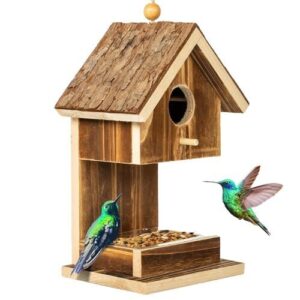
The Karlliu Natural Wood Bird House Feeder ($14.99) pulls double duty — shelter and feeding station in one compact package. At just 5.25 × 3.75 × 8.25 inches, it’s sized for hummingbirds and similarly tiny species.
The 1.25-inch inlet keeps larger birds out, and the separate plastic tray holds food and water. Setup is tool-free; just hang it from a sturdy branch. It’s lightweight enough to relocate anytime. Fair warning: the feeder tray runs small, so don’t expect heavy traffic — it shines as a charming garden accent.
| Best For | Gardeners and bird lovers who want a cute, low-maintenance accent piece that might attract hummingbirds or other tiny birds. |
|---|---|
| Material | Solid wood |
| Price | $14.99 |
| Mounting Style | Hanging |
| Bird Type | Small/tiny birds |
| Ease of Cleaning | No clean-out door |
| Included Hardware | None |
| Additional Features |
|
- Natural wood finish looks great in any backyard or garden setting
- No tools needed — just hang it and you’re done
- Lightweight and easy to move around whenever you want a change
- Tiny feeder tray means most birds won’t get much use out of it
- Only fits one very small bird at a time — no room for guests
- Build quality can be hit or miss, so don’t expect it to last for years
5. Wooden Bird House with Copper Guard
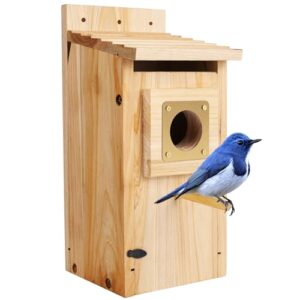
ColorfulLaVie Wooden Bird House ($16.99) is a solid pick for cavity-nesting birds like bluebirds, wrens, and chickadees. Its 1.5‑inch entrance hole is just right, and the built‑in copper predator guard stops squirrels and woodpeckers from chewing it wider.
The front door unlatches for easy seasonal cleaning — no tools needed. Pine construction keeps it lightweight at 1.43 lb, and it mounts on poles, trees, or fences.
It’s simple, practical, and gets the job done.
| Best For | Backyard birders who want an affordable, easy-to-clean home for cavity-nesting birds like bluebirds, wrens, and chickadees. |
|---|---|
| Material | Pine wood |
| Price | $16.99 |
| Mounting Style | Pole/tree/wall |
| Bird Type | Cavity nesters |
| Ease of Cleaning | Front latch door |
| Included Hardware | Screws & rope |
| Additional Features |
|
- Copper predator guard keeps squirrels and other pests from widening the entrance hole
- Front latch door makes seasonal cleaning quick and tool-free
- Versatile mounting options — poles, trees, walls, or fences all work
- Pine construction may not hold up well past a few years, especially in harsh climates
- Pre-drilled holes can be misaligned, making assembly a little frustrating
- Instructions are vague about where the longer screws actually go
6. Stainless Steel Birdhouse Predator Guard
If your birdhouse already has the right hole size, keeping it that way is half the battle.
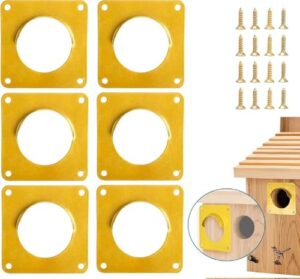
The Cedar Alpha Stainless Steel Predator Guard ($9.89) does exactly that — a pack of two metal plates that screw directly over the entrance hole, stopping squirrels and woodpeckers from chewing it wider.
The 1.5‑inch opening works well for bluebirds and wrens. Stainless steel holds up through rain and cold, and the 24 included screws make installation straightforward on most standard wooden houses.
| Best For | Bird lovers who want to protect their bluebird or wren houses from squirrels and woodpeckers without spending a lot. |
|---|---|
| Material | Stainless steel |
| Price | $9.89 |
| Mounting Style | Screw-on plate |
| Bird Type | Small birds |
| Ease of Cleaning | Not applicable |
| Included Hardware | 24 screws |
| Additional Features |
|
- Two plates for under $10 — solid value if you have more than one birdhouse
- Stainless steel holds up in the weather, so you’re not replacing it every season
- Comes with 24 screws and fits most standard wooden houses right out of the box
- The square opening might not suit every species — some birds prefer a round entrance
- A few buyers have reported staining on the front that doesn’t match the product photos
- Not a fit for larger birds that need a bigger hole than 1.5 inches
7. Nature’s Way Cedar Wren House
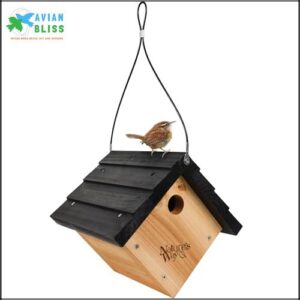
Cedar works well for birdhouses, and Nature’s Way puts it to good use. Their Cedar Wren House ($19.61) is built around a 1⅛-inch entrance — just right for wrens and chickadees, and small enough to keep sparrows out.
Built-in vents and floor drainage keep the interior healthy through the nesting season.
The clean-out door makes end-of-season maintenance easy.
At under $20, it’s a simple, solid choice that does what it promises without overcomplicating things.
| Best For | Backyard birders who want to attract wrens and chickadees with a low-maintenance, naturally durable nesting box. |
|---|---|
| Material | Cedar wood |
| Price | $19.61 |
| Mounting Style | Hanging cable |
| Bird Type | Wrens/chickadees |
| Ease of Cleaning | Side clean-out door |
| Included Hardware | Hanging cable |
| Additional Features |
|
- Cedar construction with stainless hardware means it holds up season after season without rotting or rusting.
- Built-in vents and floor drainage keep the interior healthy for eggs and nestlings.
- The clean-out door makes end-of-season maintenance quick and painless.
- The 1⅛-inch entrance limits you to wrens and chickadees — no flexibility for other species.
- The latch can arrive loose and may need tightening right out of the box.
- The hanging cable lets the house swing in wind, so you may need to adjust the setup.
8. Rakovar Wooden Hummingbird House
If wrens and chickadees have your heart, hummingbirds might just steal it next.
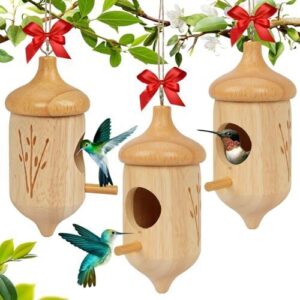
The Rakovar Wooden Hummingbird House ($15.99) is a compact boxwood house — about 5 inches long with a 1.06‑inch entrance — built for tiny nesters. It hangs easily from a rope and gold ring, so you can tuck it under an eave or porch overhang where hummingbirds feel safest. It’s lightweight, moveable, and doubles as natural garden decor. Just protect it from heavy rain to extend its life.
| Best For | Bird lovers, gardeners, and gift-givers who want to attract hummingbirds to a patio, balcony, or garden without spending much. |
|---|---|
| Material | Boxwood |
| Price | $15.99 |
| Mounting Style | Hanging ring |
| Bird Type | Hummingbirds |
| Ease of Cleaning | No clean-out door |
| Included Hardware | Rope |
| Additional Features |
|
- Made from natural boxwood — lightweight, breathable, and looks great hanging outdoors or inside
- Super easy to hang with the included rope and gold ring, no tools needed
- Comes as a 3-pack at $15.99, so you can spread them around or gift a few
- Some buyers have received only 2 houses instead of 3, so check your order when it arrives
- No guarantee hummingbirds will actually move in — it depends on your location and the season
- Wood can wear down in wet weather, so you’ll want to bring it in or protect it during heavy rain
9. Natural Wooden Hanging Bird House
If hummingbirds inspired you, this next pick keeps that same hands-on charm — just broader in appeal.
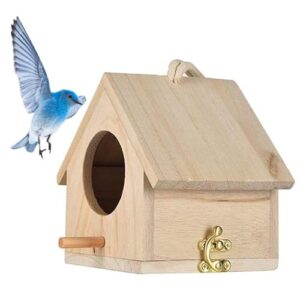
The Natural Wooden Hanging Bird House ($14.99) is a compact 4.5 × 4.5 × 5.6-inch log-cabin-style house built from untreated wood. It comes fully assembled with a metal hanging ring, a perch dowel, and a lockable side panel you can personalize with paint or grass. It’s best for small species like finches or sparrows. Lightweight and easy to hang — no tools, no fuss.
| Best For | Kids, crafters, and gardeners who want a charming decorative birdhouse they can personalize and hang up without any hassle. |
|---|---|
| Material | Untreated wood |
| Price | $14.99 |
| Mounting Style | Hanging ring |
| Bird Type | Small birds |
| Ease of Cleaning | Hatch door access |
| Included Hardware | Metal ring |
| Additional Features |
|
- Comes fully assembled — just hang it and you’re done
- The lockable side panel makes it easy to paint, decorate, or add a personal touch
- Works great as a feeder, garden accent, or hands-on craft project for kids
- The large entrance opening isn’t ideal for keeping predators out
- Light balsa-type wood can split if you’re not careful during painting or handling
- Interior space is tight — really only suited for one small bird at a time
10. Litewoo Winter Warm Bird Hammock
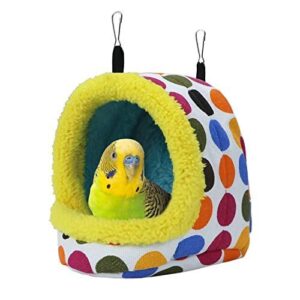
Cold nights hit small birds hard. The Litewoo Winter Warm Bird Hammock ($11.99) gives your bird a cozy spot to retreat when temperatures drop.
It’s double-layered fleece with a canvas exterior, a wood perch for easy access, and two clips for quick cage installation.
Available in medium or large, it fits most small species — budgies, cockatiels, finches, and even small mammals.
Just inspect it regularly for loose threads, since stray fibers can snag tiny toes.
| Best For | Small bird owners — budgies, cockatiels, finches, lovebirds — who want an affordable, cozy resting spot for their pet during colder months. |
|---|---|
| Material | Plush fabric |
| Price | $11.99 |
| Mounting Style | Cage clips |
| Bird Type | Small cage birds |
| Ease of Cleaning | Removable clips |
| Included Hardware | Two cage clips |
| Additional Features |
|
- Super affordable at $11.99, so it’s easy to try without much risk
- Two clips make setup and removal quick, which is handy on cleaning days
- Soft plush material gives small birds a warm, secure place to settle in
- Loose threads are a real concern — stray fibers can catch on tiny toes and cause injury
- Not all birds warm up to it right away; some may ignore it or treat it like a threat at first
- Durability takes a hit over time — the plush fabric tends to wear and tear with regular use
Mounting Hardware and Pole Systems
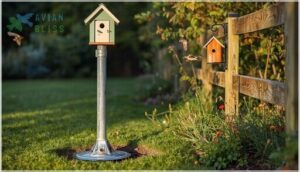
Getting your birdhouse off the ground — literally — starts with the right hardware.
A wobbly pole or a poorly mounted bracket can undo everything else you’ve done right. Here’s a look at the mounting options worth knowing about.
Birdhouse Mounting Poles and Sectional Kits
Getting your birdhouse at the right height changes everything. Your Pole Material Choices matter — powder-coated steel resists rust for years, while sectional designs let you dial in the perfect height.
- Universal 72 Sectional Pole Kit ($29.95) assembles tool‑free
- Heavy Duty Pole Twister ($89.95) manages wind gusts confidently
- Bluebird Pole Set with Twist In Ground Socket ($89.95) uses auger base installation for rock‑solid stability
Mounting Brackets for Walls, Fences, and Posts
Not every yard has the right spot for a pole. That’s where Fixed Wall Brackets, Corner L‑Shaped Brackets, and Adjustable Angle Mounts come in — they let you mount directly to a fence, wall, or post.
Galvanized Steel brackets and Stainless Steel Fasteners hold firm through rough weather. The Steel 4×4 Mounting Bracket ($24.95) and Flat Mounting Plate ($13.95) are solid, affordable choices for stable placement.
Flange Plates for Tubular Pole Setups
Flange plates are the unsung connectors between your bird house and its pole. Most fit 1‑inch tubular poles — check your Pole Diameter Compatibility before buying.
Options like the HB1 Birdhouse Mounting Bracket and SE6014 T‑Post Mounting Plate offer Vertical vs Top Mounting flexibility. Thumb‑Screw Installation makes repositioning easy, while Weather‑Resistant Finishes and Made‑in‑USA Steel construction keep things solid season after season.
Ground Sockets and Twist-in Auger Bases
twist-in auger base takes the headache out of pole setup.
Twister Ground Socket sinks 20 inches into the soil — no concrete needed.
Basic Soil Preparation (clearing rocks, checking alignment) keeps your Heavy Duty Pole Twister straight.
Its Galvanized Finish resists rust, the built‑in Drainage System prevents water pooling, and the Twist Mechanism locks your pole firmly in place.
Placement Tips for Stability and Safe Access
Where you place your birdhouse matters just as much as how you mount it. Keep these four tips in mind:
- Windward Orientation – Face the entrance away from prevailing winds.
- Ground Anchor Depth – Sink your pole at least 20 inches for stability.
- Clear Flight Path – Avoid obstructions like dense branches near the entry hole.
- Height Above Ground – Mount between 5–10 feet for safe access and predator protection.
Predator Guards and Entry Protection
Once you’ve got your birdhouse mounted, the next challenge is keeping it safe — from squirrels, predators, and even aggressive birds competing for the space. The right guards and protectors can make a real difference in whether your nesting birds actually stick around.
Here’s what’s worth having.
Portal Protectors for Entrance Hole Durability
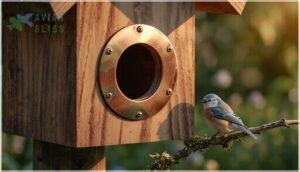
Portal Protectors keep your entrance hole the right size — no wider, no narrower for predators. Size Matching matters here: a Metal Portal Protector 1 12 inches Bluebird fits bluebird houses precisely, while Copper Portal Protectors handle wren and chickadee openings. Screw Alignment and Thickness Standards guarantee a flush, secure fit. UV Coating and natural Patina Development protect long‑term.
| Feature | Benefit |
|---|---|
| Size Matching | Keeps out larger birds |
| Copper Material | Patina Development resists wear |
| Thickness Standards | Prevents predator gnawing |
| Screw Alignment | Flush, secure installation |
| UV Coating | Withstands sun and rain |
Bird House Portals Tan and the Predator Guard With Metal Portal offer reliable options too.
Copper and Steel Guard Options
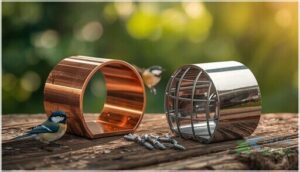
Copper and steel each bring something different to the table.
Copper Portal Protectors offer natural Patina Development over time, and Hole Size Matching covers wrens, chickadees, nuthatches, and bluebirds — including the Metal Portal Protector 1‑12 inches Bluebird.
Zinc Screw Compatibility keeps rust out.
Steel options like the Birdhouse Predator Guard and ScrewOn Bird Guardian win in Durability Comparison.
Installation Timing matters — mount before birds arrive.
Predator Guards for Bluebird and Songbird Houses
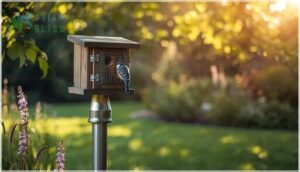
Beyond copper and steel portals, your bluebird and songbird boxes need full-coverage defense. Consider these layered options:
- Stovepipe Guard Design creates an unstable grip for climbing predators
- Cage Mesh Ventilation maintains airflow while blocking snakes and raccoons
- Wire Mesh Durability resists rust through seasons
Products like the ScrewOn Bird Guardian Birdhouse Protector and Predator Guard Products for Birdhouses install without special tools.
Squirrel Baffles and Pole-mounted Deterrents
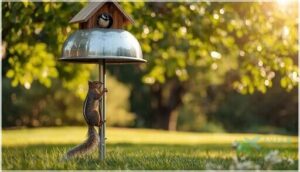
Even the best portal guards can’t stop a squirrel determined to raid from below. That’s where a Squirrel Baffle paired with solid birdhouse mounting poles makes all the difference.
| Setup Factor | Recommended Standard |
|---|---|
| Baffle Height Guidelines | 4–4.5 ft above ground |
| Clearance Distance Planning | 8–10 ft from trees/fences |
| Material Durability Comparison | Galvanized steel beats plastic |
| Spring‑Action Mechanisms | Shifts on contact |
| Installation Safety Tips | Check stability after install |
Products like the Squirrel Stopper Universal Mounting Flange and Heavy Duty Pole Twister work with most setups. The Squirrel Stopper 4 x 4 Mounting Bracket Flange Set adds extra anchoring for heavier houses.
Sparrow and Wren Control Accessories
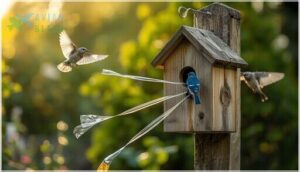
House sparrows and wrens can take over a nest box fast. These accessories help you stay in control:
- Wren Guard Designs and the Wren Guard for Slope-Roofed Nest Boxes block unwanted entry without stressing target birds
- Sparrow Spooker Arms with Mylar streamers startle sparrows effectively
- Entry Hole Reducers — try the Metal Portal Protector 1-1/8 inches for wrens or 1-1/2 inches for bluebirds
- Van Ert Traps, Slotted Entrances, and the Sparrow Shield Invasive House Sparrow Deterrent round out your predator guard toolkit
Cleaning, Nesting, and Seasonal Care
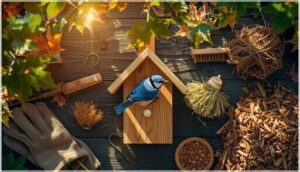
Once the nesting season wraps up, what you do next makes all the difference for nesting season residents.
A clean, well-prepped birdhouse isn’t just nice to have — it’s what keeps birds coming back. clean, well-prepped birdhouse
Here’s what you actually need to make seasonal care simple and effective.
Birdhouse Cleaners and Nest Box Brushes
Keeping your nest boxes truly clean takes more than a quick wipe-down. Grab gloves first — safety gear matters when dealing with mites and old debris.
Stiff‑bristled brushes tackle dried droppings in tight corners, while a 1:9 bleach disinfectant mix deals with bacteria. Products like the Birdhouse Nesting Pocket Spray Cleaner ($19.95) and Hummingbird Feeder Cleaner 16 oz ($19.95) simplify the job.
Always dry boxes fully in open sun afterward.
Safe Removal of Old Nesting Material
Timing considerations matter — wait until nesting season wraps before clearing anything out.
Once you’re sure the box is empty, put on gloves and a dust mask (protective gear is non-negotiable here). Removal methods are simple: lift out the old nest by hand, then scrape corners clean. Seal and bin the waste immediately — disposal practices keep pests away. Let the box dry fully for moisture prevention.
Cedar Shavings and Natural Nesting Fibers
Cedar shavings offer solid Cedar Moisture Control — they absorb dampness and keep nest boxes warmer.
However Cedar Moisture Control comes with Safety Vapor Concerns; aromatic cedar oils can irritate sensitive respiratory systems. When in doubt, go with DIY Fiber Mixes using safer alternatives:
- Alpaca Fleece Nesting Material for soft lining
- Cottontail Nest Building Material for natural bulk
- Eco‑friendly nesting materials and refills like cotton or coconut fiber
- Follow Fiber Length Guidelines: cut strips 1–6 inches
- Match Species Fiber Preferences — bluebirds love grass, wrens prefer moss
Nest Lifts for Drainage and Parasite Control
A soggy nest floor is a parasite’s paradise.
That’s where the SE6015 Bluebird Nest Lift earns its keep — a simple tool that makes a real difference.
Its perforated base facilitates moisture flow beneath the nest, while adjustable height fits different box depths.
The removable tray simplifies cleanouts, and a durable material coating manages season after season.
Pair it with a nesting pocket cleaner and ventilation and airflow tools for complete nest health.
Seasonal Maintenance Checklist for Reusable Bird Houses
A well-loved bird house rewards you back — but only if you show up for it each season.
Clear drainage holes and check ventilation inspection points after every brood. Tighten hardware, reseal worn surfaces, and mark boxes with a maintenance date.
With the right cleaning and maintenance supplies for bird houses, seasonal care and upkeep become second nature, not a chore.
Frequently Asked Questions (FAQs)
How often should birdhouses be cleaned annually?
Clean birdhouses at least once a year. Fall is the best time — after birds fledge. Heavy-use boxes may need cleaning twice.
Always wear gloves and rinse out any cleaning sprays completely.
What entrance hole size suits each species?
Bluebird hole specs call for 1½ inches. Chickadee entrance needs 1⅛ inches. Purple Martin size is 2¼ inches. Smaller holes handle starlings exclusion and squirrel proofing automatically.
Can birdhouses face any compass direction safely?
Not every direction is safe. East-facing benefits nesting birds most — it blocks west winds and controls sunlight heat without overheating.
West or south exposure can raise nest temperatures dangerously, cutting nesting success considerably.
Do painted birdhouses deter nesting birds effectively?
Paint doesn’t really read the riot act to nesting birds. Color preference matters less than safety.
Use light tones, cure paint seasonally, and keep fumes low — birds prioritize entry size over exterior color.
Should birdhouses remain up during winter months?
Yes, keep them up. Birdhouses offer winter roosting shelter, cutting energy loss on cold nights.
Focus on Elevated Placement, Predator Guard Maintenance, and Winter Insulation to keep birds safe and warm.
How do I attract specific bird species naturally?
Match the habitat to the bird.
Native plantings draw the right insects. Berry shrub selection feeds migrants.
Water feature placement near cover invites daily visitors.
Nest box orientation and predator guards seal the deal.
What lighting conditions suit birdhouse placement best?
Face the opening east.
Morning Sun Benefits nestlings with gentle warmth, while Afternoon Shade Strategies prevent overheating.
East‑Facing Placement balances Partial Shade Balance perfectly — especially critical for Hot‑Weather Ventilation in summer nesting seasons.
Can multiple birdhouses coexist in one yard?
Multiple birdhouses can absolutely share a yard — just mind species spacing and territorial behavior. Keep same-species boxes 100+ yards apart, vary your yard layout, and stay on top of seasonal monitoring.
Which wood treatments are safe for birds?
Untreated wood is your safest bet. Cedar rot resistance means it holds up outdoors without needing stains or sealers.
bare wood keeps the nesting space clean and bird-friendly.
How often should birdhouse entry holes be inspected?
Inspect entry holes four times yearly — season start, mid-season, post-fledging, and winter. Log each check noting Wear Indicators and Weather Impact.
Species‑specific Checks matter: wren and bluebird holes wear differently.
Conclusion
Studies show that properly equipped nest boxes are up to five times more likely to attract breeding pairs than bare structures alone.
That single number tells the whole story.
The right bird supplies for bird houses—guards, cedar shavings, mounted poles, nest lifts—aren’t extras; they’re the foundation.
When every detail works together, you’re not just hanging a wooden box in your yard.
You’re offering a home worth staying in.