This site is supported by our readers. We may earn a commission, at no cost to you, if you purchase through links.
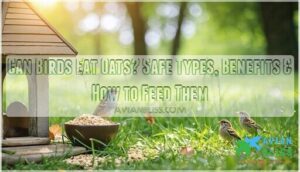 Yes, birds can eat oats safely and enjoy them as a nutritious food source.
You’ll find that oats provide excellent slow-release energy through complex carbohydrates, plus higher protein and fat content than many other grains.
They’re packed with B vitamins, zinc, and magnesium that support bird health.
Most backyard species like finches, sparrows, blackbirds, and doves readily consume rolled oats, steel-cut oats, or jumbo varieties.
You can offer them raw and uncooked year-round, though they’re especially valuable during winter when birds need extra calories.
The key is serving fresh oats daily and avoiding instant porridge varieties that contain additives, to provide a healthy and slow-release energy source.
Table Of Contents
- Key Takeaways
- Can Birds Eat Oats?
- Types of Oats Safe for Birds
- Benefits of Oats for Birds
- Birds That Eat Oats
- When to Offer Oats to Birds
- Preparing Oats for Birds
- Feeding Ground-Feeding Birds
- Soaking Oats
- Frequently Asked Questions (FAQs)
- How do I prepare oats for birds?
- What are you not supposed to feed birds?
- Can birds eat uncooked oats?
- Can squirrels eat oats?
- What foods can birds not eat?
- How to make bird food with oats?
- Can you feed oats to birds?
- Do birds like oats?
- Do birds eat porridge oats?
- Can birds eat flavored or sweetened oatmeal?
- Conclusion
Key Takeaways
- You can safely feed birds plain rolled oats, steel-cut oats, or jumbo oats year-round, but you’ll want to avoid instant varieties with harmful additives like sugar and salt.
- You’ll provide excellent nutrition when offering raw, uncooked oats since they contain slow-release carbohydrates, higher protein than most grains, and essential B vitamins that support bird health.
- You’ll attract common backyard species like finches, sparrows, blackbirds, and doves by scattering fresh oats daily on feeding platforms or directly on the ground where they naturally forage.
- You’ll find oats especially valuable during winter months when birds need extra calories for warmth, and you can enhance their appeal by mixing them with seeds, nuts, or soaking them for easier digestion.
Can Birds Eat Oats?
Birds eat oats safely and benefit from their excellent oat nutrition. These grains provide slow-release carbohydrates, protein, and essential B vitamins that support avian health year-round.
Are oats safe birds can consume? Absolutely. Oats for birds offer valuable nutrients including fiber, magnesium, and zinc. Many species actively seek out this nutritious grain in nature.
Safe preparation involves offering raw, uncooked oats only. Avoid instant varieties with additives or sugar. Bird preferences vary, but most granivorous species readily accept plain rolled oats.
Winter feeding becomes especially important when natural food sources dwindle. Bird feeding oats provides vital energy during cold months when birds need extra calories for warmth. Like black oil sunflower seeds, unsalted peanuts support birds’ energy needs.
Feeding locations matter too. Scatter oats on platforms, ground surfaces, or mix with other seeds for ideal accessibility and appeal.
Types of Oats Safe for Birds
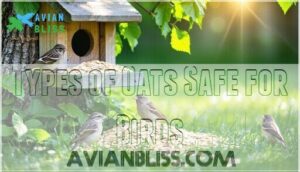
Not all oats are created equal in the context of feeding birds, so you’ll want to choose the right type for your feathered visitors.
Plain rolled oats, steel-cut oats, jumbo oats, and pinhead oats are all safe options that provide excellent nutrition without harmful additives.
Rolled Oats
Rolled oats serve as premium oats for birds, offering exceptional nutritional value.
Rolled oats deliver premium nutrition that keeps your backyard birds thriving year-round.
These flattened grains provide easily digestible energy that birds can quickly access:
- High protein content (11%) supports feather health and muscle repair
- Essential fatty acids from natural oils promote overall wellness
- B vitamins and minerals boost immune system and metabolism
- Slow-release carbohydrates sustain energy levels throughout cold weather
Perfect for feeding platforms and ground scattering.
These oats are especially beneficial for ground-feeding birds like robins and blackbirds.
Steel-cut Oats
Steel-cut oats offer exceptional nutrition for birds through minimal processing that preserves essential nutrients.
These chopped groats provide sustained energy via slow-release carbohydrates, making them ideal oats for birds during winter months.
| Aspect | Steel-Cut Oats | Rolled Oats |
|---|---|---|
| Texture Differences | Coarse, granular pieces | Flat, smooth flakes |
| Bird Size Suitability | Better for larger birds | Suitable for all sizes |
| Nutritional Comparison | Higher fiber, more nutrients | Softer, easier digestion |
Preparation Methods involve serving raw steel-cut oats directly or mixing with seeds.
Their harder texture suits pigeons and doves perfectly, while smaller finches may struggle initially.
Availability Issues can arise since specialty stores often stock these oats bird food options.
The question "can birds digest oats" applies here – yes, though feeding birds oats requires patience as birds adapt to the firmer consistency compared to softer alternatives.
Understanding the benefits of beta glucan fiber is vital for determining the best oat type for birds.
Jumbo Oats
Among the heartiest oats for birds, jumbo oats deliver exceptional oat nutrition through their large, unprocessed flakes.
These birdsafe oats work perfectly for ground-feeding wild birds like blackbirds and thrushes who can birds digest oats easily when served raw.
Mix jumbo varieties into your oats bird food blends or scatter directly on feeding tables for ideal bird feeding success during any season.
Pinhead Oats
Pinhead oats offer your backyard visitors bite-sized nutrition that’s perfect for smaller beaks.
These chopped oat groats provide concentrated oat nutrition without overwhelming tiny mouths:
- Ideal size for finches and sparrows who struggle with larger grains
- Higher oil content than rolled varieties, boosting energy for wild birds
- Easy preparation – scatter directly on feeding platforms without processing
When preparing oats for granivorous birds, pinhead benefits include better portion control and reduced waste, making them excellent oats as bird food.
Benefits of Oats for Birds
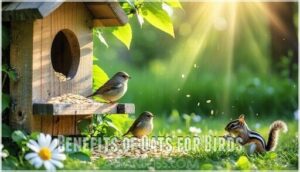
When you offer oats to birds, you’re providing them with a nutritional powerhouse that delivers sustained energy through slow-release carbohydrates.
These grains pack more protein and fat than many other cereals, plus essential vitamins and minerals that support overall bird health.
Rich in Slow-release Carbohydrates for Energy
Oats pack a powerful energy boost through their slow-release carbohydrates, perfect for sustaining birds throughout busy foraging days.
Unlike quick-burning sugars, these complex carbs provide steady fuel that keeps sparrows, finches, and doves energized for hours.
This makes oats an excellent energy source during demanding seasons like breeding or migration when consistent nutrition matters most.
High in Protein and Fat Compared to Other Grains
Comparing oats to other grains reveals remarkable nutrient superiority for bird nutrition.
Oats contain 16.9g protein per 100g—nearly double wheat’s 9.6g and six times rice’s measly 2.7g.
Their fat content reaches 6.9g, triple wheat’s levels, providing dense energy birds crave.
Here’s why oats as granivorous bird food excel:
- Protein powerhouse – Essential amino acids support feather growth and muscle repair
- Energy-rich fats – Sustain birds through harsh winter months and migration
- Superior nutrition – One serving delivers what multiple portions of other grains provide
- Metabolic boost – Higher calorie density means less foraging, more survival energy
- Complete nutrition – Balanced nutrients support breeding, molting, and daily activities
Provide Vitamins and Minerals Like B Vitamins, Zinc, Magnesium
Beyond protein and fat, oats deliver remarkable vitamin benefits and mineral richness for bird nutrition.
These grains contain B vitamins supporting energy metabolism, zinc boosting immune function, and magnesium strengthening bones.
Here’s what makes oats exceptional oat supplements for avian health:
| Nutrient | Amount per 100g | Bird Benefit |
|---|---|---|
| B Vitamins | 0.76mg (B1) | Energy metabolism |
| Zinc | 3.97mg | Immune support |
| Magnesium | 177mg | Bone health |
This mineral richness makes oats benefits for birds particularly valuable during breeding season when granivorous bird nutrition demands peak.
The oats in bird diet provide essential micronutrients that seeds alone can’t match.
Birds That Eat Oats
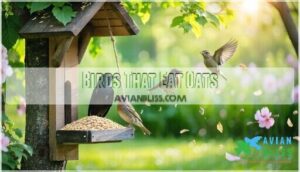
You’ll find that many common garden birds readily eat oats, making them an excellent addition to your feeding routine.
Popular oat-eating species include blackbirds, finches, sparrows, doves, pigeons, and various game birds like grouse and partridge.
Blackbirds
Blackbirds rank among the most enthusiastic oats consumers in your backyard. These ground-feeding specialists show distinct Feeding Patterns when offered oats for birds, particularly during Bird Migration periods when energy demands peak.
You’ll notice these behaviors:
- Scattered ground feeding – They prefer oats spread on lawns rather than elevated feeders
- Seasonal intensity – Winter consumption increases dramatically as natural food sources decline
- Flock dynamics – Groups coordinate feeding sessions, especially during harsh weather
Their strong beaks easily crack oats as birdseed, making this grain ideal for Blackbird Diet supplementation. Oats benefits for birds become most apparent when blackbirds visit consistently throughout colder months.
Finches
These small songbirds readily consume oats as part of their natural finch diet. American goldfinches and house finches use their strong beaks to crack oats, especially during finch migration periods when energy demands increase.
| Finch Species | Oat Preference | Feeding Location |
|---|---|---|
| American Goldfinch | Rolled oats | Platform feeders |
| House Finch | Mixed with seeds | Ground scatter |
| Purple Finch | Soaked oats | Tube feeders |
Oats support finch nesting activities by providing essential carbohydrates. During winter, these birdfriendly oats help finches maintain body heat in their finch habitat. The oats benefits for birds include B vitamins and protein that support finch behavior patterns like territorial displays and courtship rituals.
Sparrows
House sparrows and tree sparrows rank among the most reliable oats for sparrows consumers at backyard feeders.
These granivorous birds demonstrate strong seed preferences for raw rolled oats scattered on ground-level platforms.
During bird migration and winter months, flock dynamics shift as sparrows congregate around consistent oat sources.
Their nesting behavior benefits from this protein-rich supplement, while their preferred sparrow habitat near hedges makes birdfriendly oats an ideal oats as birdseed alternative.
Doves and Pigeons
Doves and pigeons enthusiastically consume oats for birds, making them reliable visitors to your feeding stations.
These ground-feeding species prefer birdseed mix oats scattered on low platforms or directly on grass, supporting their natural flock behavior during bird migration seasons.
- Dove nutrition: Oats provide essential carbohydrates that fuel their daily foraging activities
- Pigeon habitat: Urban pigeons adapt well to oat supplementation in city environments
- Feather care: The protein content in oats supports healthy plumage maintenance for oats for granivorous birds
Grouse, Partridge, and Other Game Birds
When you’re thinking about oats for bird feeding, don’t overlook game birds like grouse and partridge.
These granivorous birds thrive in classic Game Bird Habitat settings:
- Open grasslands where Grouse Nutrition needs are met.
- Woodland edges supporting Partridge Behavior.
- Agricultural fields aiding Wildfowl Conservation.
Mix oats into your birdseed mix oats for upland management and better oats for bird nutrition.
When to Offer Oats to Birds
You can offer oats to birds throughout the year, making them a reliable food source for backyard feeding.
Winter feeding provides the greatest benefit since oats deliver essential energy and warmth when birds need extra calories to maintain body temperature during cold weather, and this is particularly important as it provides extra calories.
Any Time of Year
You can offer oats to birds throughout all seasons, making them a reliable Year Round Nutrition choice.
Seasonal Feeding doesn’t require special timing – oats provide consistent energy whether it’s spring nesting or fall migration.
Store oats in dry containers for maximum freshness.
Consider Feeder Placement near natural cover for shy species who appreciate this steady food source.
Especially Beneficial in Winter for Energy and Warmth
Winter brings unique challenges for birds as cold weather increases their energy demands.
Oats become particularly valuable during these months because their slow-release carbohydrates provide sustained warmth and energy production. The high-calorie content supports feather health and helps maintain body temperature during freezing nights.
Winter nutrition becomes critical for flock dynamics, as well-fed birds can better survive harsh conditions. Including oats in your birdseed mix creates an ideal granivorous bird diet that supports winter survival.
Birds also benefit from consuming high energy foods to meet their increased metabolic needs during winter, which is essential for their overall winter survival with the help of high-calorie foods.
Preparing Oats for Birds
When preparing oats for birds, you’ll want to offer them raw and uncooked rather than instant porridge varieties that contain additives.
You can mix plain rolled oats with other bird-friendly ingredients like seeds or nuts, but remember to put out fresh portions daily to prevent spoilage, using plain rolled oats.
Offer Raw, Uncooked Oats
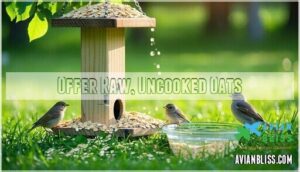
Raw oats deliver superior bird nutrition when served uncooked.
You’ll preserve essential nutrients like B vitamins and minerals that cooking destroys.
Scatter these uncooked oats sparingly across feeding areas—they’re easier for wild birds to digest and provide sustained energy.
Raw oats for birds maintain their natural texture, making them perfect birdseed additions for diverse species seeking quality oat nutrition.
The nutritional benefits of raw oats are due to their high content of raw oat products, which offers raw oat products with essential nutrients.
Avoid Instant Porridge Pots or Sachets
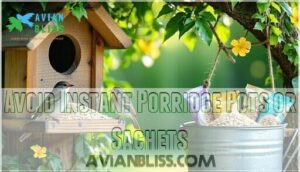
While raw oats work perfectly, skip instant porridge pots and sachets entirely.
These processed products contain additives, preservatives, and excess salt that harm bird health.
Instant oats often include sugar, artificial flavors, and sodium – ingredients that spell trouble for your feathered visitors.
Choose plain rolled oats instead for ideal bird nutrition and safety, as they are free from harmful additives.
Can Be Mixed With Other Ingredients for a Pudding
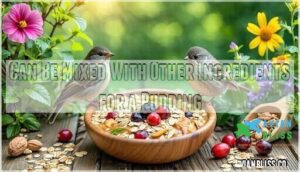
You can easily transform ordinary oats into nutritious bird treats by mixing them with complementary ingredients.
Creating homemade oat pudding provides birds with essential nutrients while offering variety in their diet:
- Combine rolled oats with sunflower seeds for protein and healthy fats
- Add dried cranberries or raisins for natural sweetness and vitamins
- Mix in chopped nuts like peanuts or almonds for extra energy
- Blend with natural peanut butter to bind ingredients together
The quality of rolled oats products substantially impacts the nutritional value of the bird treats.
Put Out Fresh Daily
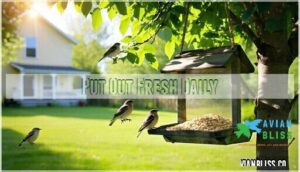
Fresh oats for birds require daily feeding to maintain prime bird health.
Replace soggy or wet oats immediately, as moisture creates harmful bacteria that endangers visiting species.
Oat storage should prioritize dryness and freshness.
This simple feeding tip guarantees your oats for birds remain nutritious.
Daily feeding with fresh food prevents spoilage in your birdseed mix, keeping oats in bird feeding routines safe and effective.
Feeding Ground-Feeding Birds
You’ll attract more ground-feeding birds by creating a nutritious mix of rolled oats, sultanas, muesli, sunflower hearts, and hazelnuts that appeals to their natural foraging habits.
Place this blend under hedges and borders to provide cover for shy species, or sprinkle it directly on your lawn where thrushes and chaffinches can easily spot and access it, following their natural instinct to ground-feeding.
Mix of Rolled Oats, Sultanas, Muesli, Sunflower Hearts, Hazelnuts

Creating this bird seed mix transforms your garden into a winter feeding haven. Combine rolled oats with sultanas, muesli, sunflower hearts, and hazelnuts for ideal nutrient balance and food variety.
- Mix equal parts rolled oats and muesli for carbohydrate foundation
- Add 25% sultanas for natural sugars and energy
- Include sunflower hearts and hazelnuts for essential fats
- Scatter fresh portions daily to prevent spoilage and attract garden birds
Using proper bird feeding techniques is vital for maintaining a healthy bird population.
Put Under Hedges and Borders for Shy Species
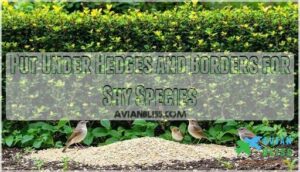
Position your oat blend under hedges and borders to create safe Wildlife Habitat for shy bird species.
These natural Ground Cover areas provide protection from predators while birds forage.
Border Placement of oats for backyard birds attracts timid species like wrens and robins who prefer Hedge Feeding locations over open spaces for their Shy Bird Diet.
Sprinkle on Lawn for Thrushes and Chaffinches
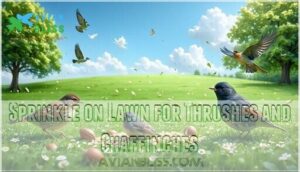
When you want to attract thrushes and chaffinches through lawn feeding, simply scatter rolled oats across your grass for these ground-feeding garden birds.
This bird attraction method works particularly well for granivorous bird species that prefer foraging at ground level.
- Song thrushes hopping methodically across your lawn, turning leaves to find oats mixed with nuts and seeds
- Chaffinches displaying their colorful plumage while pecking at scattered oats for backyard birds
- Redwings joining the feast during winter months when oats for birdseed become essential
- Fieldfare arriving in small flocks to sample your oats for birds offering
- Blackbirds cautiously approaching the lawn feeding area, contributing to thrush diet diversity and chaffinch care routines
Soaking Oats
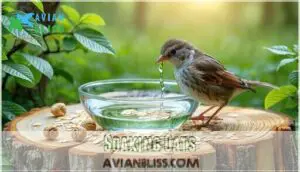
You can soften oats by soaking them in water, which makes them easier for birds to digest and particularly helpful for feeding young birds.
This method works especially well during dry weather when birds need extra moisture, and naked rolled oats from specialty suppliers contain more natural oils than standard porridge oats, which is a key factor in their digestibility, making them a good choice for birds, especially with the added benefit of extra moisture.
Naked Rolled Oats Are Less Refined Than Porridge Oats
Beyond traditional porridge oats, naked rolled oats undergo minimal processing, preserving their natural oat nutrition and grain benefits.
These less refined rolled oats retain essential oils and nutrients that standard oats lose during processing.
When preparing oats for birds, naked varieties offer superior bird diet value.
Their enhanced oil content makes them ideal oats as birdseed mix, providing concentrated energy for ground-feeding species seeking quality bird food.
Birds can thrive on a diet that includes oatmeal safety guidelines to guarantee their well-being.
Contain More Oil
Naked rolled oats contain higher oil content than regular porridge oats, delivering superior energy value for birds.
This enhanced fat content makes them ideal seed oils for granivorous bird feeding.
- Energy Value: Higher oil content provides concentrated calories for active birds
- Fat Sources: Natural seed oils support feather health and winter survival
- Nutrient Balance: Enhanced oils improve oats for bird nutrition intake overall
- Granivorous Benefits: Oil-rich oats excel in granivorous bird diet requirements
- Birdseed Quality: Superior oatmeal for bird nutrition compared to processed alternatives
Soaked Oats Can Feed Young Birds
You’ll often find that soaking oats creates perfect young bird care nutrition.
This oat preparation method softens grains, making them digestible for fledglings who can’t process hard foods.
Bird nutrition experts recommend soaked oats for bird nutrition intake because they’re easier to swallow and provide essential nutrients during critical growth periods for avian diet development.
Useful in Dry Weather
During dry spells, soaked oats become a hydration lifeline for birds.
When natural water sources dwindle, moisture-rich oats help prevent dehydration while delivering essential nutrients.
Here’s how soaked oats support Bird Hydration during challenging conditions:
- Dry Weather Benefits – Provides vital moisture when water sources are scarce
- Weather Resistance – Softened oats won’t blow away like dry seeds
- Oat Storage – Keep soaked portions refrigerated for up to three days
- Seed Mixing – Combine with sunflower hearts for enhanced nutrition
- Bird feeding in winter – Prevents freezing better than plain water dishes
Available From Suppliers Like Vine House Farm
You’ll find top-quality naked rolled oats from specialized suppliers like Vine House Farm.
These farm fresh oats offer superior nutrition for your feathered friends:
- Higher oil content than standard porridge oats
- Perfect oats for birds needing extra energy
- Excellent birdseed alternatives for granivorous species
- Ideal oats as birdseed type for mixing recipes
- Superior oats for granivorous bird diet needs
The nutritional benefits of naked rolled oats are well-documented, making them a great choice for birds, and their quality can be verified through naked rolled oats sources.
Frequently Asked Questions (FAQs)
How do I prepare oats for birds?
Like feeding seeds to a hungry flock, you’ll scatter plain rolled oats directly on feeding platforms or ground.
Don’t cook them—raw oats stay digestible.
Mix with suet for fat balls or combine with seeds for variety.
What are you not supposed to feed birds?
Don’t feed birds chocolate, avocado, caffeine, salt, onions, garlic, fruit pits, moldy food, bread, or anything with artificial sweeteners. These foods can poison birds or cause serious health problems.
Can birds eat uncooked oats?
You’ve struck gold asking about uncooked oats.
Yes, birds can safely eat uncooked rolled oats – they’re actually preferable to cooked ones.
Raw oats retain nutrients and won’t harden like cooked oatmeal, making them easier to digest.
Can squirrels eat oats?
Yes, squirrels can safely eat oats. You’ll find they enjoy plain rolled oats as a nutritious snack that provides protein, fiber, and essential vitamins for their active lifestyle.
What foods can birds not eat?
You’ll poison birds faster than a hawk strikes if you offer chocolate, avocado, caffeine, salt, garlic, onions, or alcohol.
These toxic foods cause organ failure, seizures, and death in our feathered friends.
How to make bird food with oats?
Mix plain rolled oats with suet or peanut butter to create fat balls.
Combine oats with seeds and nuts for variety.
Spread mixture on feeding platforms or form into balls for hanging feeders.
Can you feed oats to birds?
You can safely feed plain rolled oats to birds as they’re nutritious and easily digestible. Avoid cooked oatmeal since it hardens and becomes difficult for birds to eat.
Do birds like oats?
Many birds enjoy oats as a nutritious food source.
You’ll find that granivorous species like finches, sparrows, cardinals, and doves readily consume plain rolled oats at feeders and on the ground.
Do birds eat porridge oats?
Birds can eat porridge oats, but you’ll want to serve them uncooked.
Raw rolled oats are perfect since they’re easy to digest and nutritious.
Cooked porridge becomes hard when it dries, making it difficult for birds to eat properly.
Can birds eat flavored or sweetened oatmeal?
No, you shouldn’t feed flavored or sweetened oatmeal to birds. These products contain harmful additives like sugar, salt, and artificial flavors that can damage their health and digestive systems.
Conclusion
Like a reliable feeder that never empties, offering oats creates a dependable food source for backyard birds throughout the year.
You’ve learned that can birds eat oats has a definitive yes – from rolled to steel-cut varieties, these grains provide essential slow-release energy, protein, and essential nutrients.
Whether you’re feeding finches at feeders or scattering oats under hedges for ground-feeders, you’re supporting bird health with fresh, uncooked oats that deliver lasting nutritional benefits.