This site is supported by our readers. We may earn a commission, at no cost to you, if you purchase through links.
Cedar bird houses for sale flood online marketplaces, but most crack within two seasons. You’ll spot warped panels by spring and gaps where predators slip through. That $15 bargain? It’s usually thin-cut cedar that won’t survive summer humidity.
Real quality means kiln-dried lumber with proper ventilation holes and metal predator guards—features that separate functional designs from yard decorations. Bluebirds won’t nest in houses with poor airflow, and wrens abandon boxes without drainage.
The sweet spot sits between $25 and $60, where craftsmanship meets durability. Smart buyers focus on entrance hole size, mounting height, and seasonal maintenance schedules that keep birds coming back year after year.
Table Of Contents
- Key Takeaways
- Top 9 Cedar Bird Houses for Sale
- Key Features of Cedar Bird Houses
- Pricing, Discounts, and Availability
- Bird Species and House Compatibility
- Installation and Maintenance Tips
- Frequently Asked Questions (FAQs)
- What is a Cedar Bluebird Birdhouse?
- What kind of birdhouse is best for bluebirds?
- What are the different types of birdhouses?
- What is a Pennington Cedar Bluebird House made of?
- Who is cedar products company?
- How long does a cedar birdhouse last?
- What kind of bird house do birds like the best?
- Do I need to seal a cedar birdhouse?
- Does Etsy offer free shipping?
- How do I personalize items on Etsy?
- Conclusion
Key Takeaways
- Most cheap cedar birdhouses ($15 range) crack within two seasons due to thin wood and poor construction, while the $25-$60 range delivers actual durability with kiln-dried lumber and proper predator guards.
- Entrance hole size determines which birds you’ll attract—bluebirds need 1.5 inches, wrens and chickadees need 1-1.25 inches, and getting it wrong means empty boxes or unwanted species.
- Essential features that separate functional birdhouses from yard decorations include drainage holes to prevent mold, ventilation slots for temperature control, and easy-access cleaning panels for seasonal maintenance.
- Untreated cedar naturally resists rot for 5-10 years without toxic sealants, but you’ll need to mount houses at species-specific heights (5-6 feet for bluebirds, 6-10 feet for wrens) and clean them annually between nesting seasons.
Top 9 Cedar Bird Houses for Sale
You want a cedar bird house that’ll last. We’ve tested these nine options for durability, ease of cleaning, and bird appeal. Here’s what actually works.
1. Sisterbird Cedar Bird House
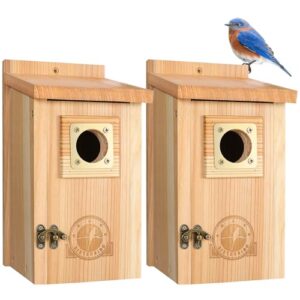
This cedar bird house ships in a pack of two. You’ll get log-colored wooden birdhouses with copper guards. Price sits around $17 to $20.
The 1-1/2″ entrance hole attracts bluebirds, wrens, and finches. Assembly takes minutes with pre-drilled holes and an included screwdriver. The front door swings open for cleaning.
Made from untreated cedar, it ensures eco-friendliness and durability. The copper guard keeps predators out. Dimensions measure 5.75″D x 5.5″W x 10.63″H.
It’s a great starter option for bird attraction without complicated wood treatment.
| Best For | Beginners who want an affordable, easy-to-assemble birdhouse that attracts smaller species like bluebirds and wrens without needing any woodworking skills. |
|---|---|
| Material | Cedar wood |
| Entrance Hole Size | 1-1/2 inches |
| Ventilation | Yes |
| Cleaning Access | Front door opens |
| Predator Protection | Copper guard |
| Assembly | Required with tools |
| Additional Features |
|
- Ships as a two-pack for under $20, making it budget-friendly for multiple placements around your yard
- Assembly takes just minutes with pre-drilled holes and an included screwdriver—no extra tools needed
- Front door opens easily for seasonal cleaning, and the untreated cedar naturally resists rot
- Manufactured in China, which may matter if you prefer domestically made products
- The 1-1/2″ entrance hole won’t accommodate larger bird species
- Requires regular cleaning to keep it safe and functional for returning birds
2. Nature’s Way Cedar Bluebird House

Nature’s Way Cedar Bluebird House offers premium western red cedar construction with rust-free stainless steel hardware. Price ranges $25 to $35. Dimensions are 8.13″L x 5.5″W x 12″H, weighing 2.6 pounds.
The 1.5″ entrance hole fits bluebird habitat specs perfectly. You’ll find air vents for ventilation, a clean-out door, and an elevated mesh floor for blowfly management. Fledgling kerfs give baby birds grip while climbing out.
Installation requires a pole or mounting plate (sold separately). Some users report sticky wire mesh issues. Annual cleaning maintains bird safety and nesting success.
| Best For | Backyard bird enthusiasts who want a durable, well-ventilated bluebird house with proper dimensions and features designed specifically for bluebird nesting and health. |
|---|---|
| Material | Premium cedar |
| Entrance Hole Size | Standard bluebird |
| Ventilation | Air vents |
| Cleaning Access | Clean-out door |
| Predator Protection | Predator guard |
| Assembly | Pre-assembled |
| Additional Features |
|
- Premium rot-resistant cedar construction with rust-free stainless steel hardware ensures long-lasting durability in outdoor conditions
- Thoughtful design includes ventilation, drainage, elevated mesh floor for blowfly control, and predator guard for bird safety
- Easy maintenance with clean-out door and removable panel for annual spring cleaning
- Some users reported quality control issues including sticky or gummy wire mesh that could potentially harm birds
- No mounting hardware included—requires separate purchase of pole or mounting plate for installation
- A few customers received damaged units or found the metal floor rack posed a safety risk for birds
3. Wild Wings Cedar Blue Bird House
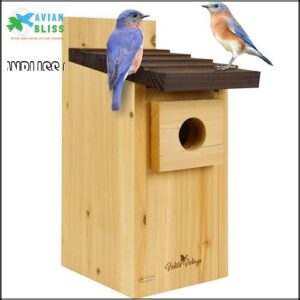
The Wild Wings Cedar Blue Bird House features natural cedar wood construction, with dimensions of 5.5″D x 8.13″W x 12″H. It attracts bluebirds with a 1.5″ entrance hole, while air vents ensure proper ventilation. A clean-out door is included for easy maintenance.
This birdhouse incorporates several bird safety features to support nesting success. A predator guard protects nests, and interior grooves assist fledglings in climbing. Fledgling skerfs provide additional grip for young birds.
The birdhouse is designed for pole mount or flush mount installation, though mounting hardware is not included. Its cedar durability and weather-resistant materials ensure it can withstand multiple seasons. However, annual maintenance is recommended for longevity. Some users have reported receiving different models than expected.
| Best For | Bird enthusiasts who want a durable, easy-to-maintain nesting box for bluebirds and tree swallows in open yard settings. |
|---|---|
| Material | Cedar wood |
| Entrance Hole Size | Standard bluebird |
| Ventilation | Air vents |
| Cleaning Access | Clean-out door |
| Predator Protection | Predator guard |
| Assembly | Pre-assembled |
| Additional Features |
|
- Natural cedar construction resists decay and provides long-lasting durability through multiple seasons
- Thoughtful safety features like predator guards, interior grooves, and fledgling skerfs help protect and support young birds
- Clean-out door and proper ventilation make seasonal maintenance straightforward
- Mounting hardware not included, requiring separate purchase for installation
- Some customers report receiving different models than what was ordered
- May need additional modifications like metal entry hole guards for full predator protection
4. Gtongoko Cedar Bird House

You’ll find the Gtongoko Cedar Bird House built with natural cedar durability and marketed for bluebirds and wrens. The entrance hole size targets cavity-nesting birds, while tool-free access panels make cleaning simple.
Cedar birdhouses like this one feature predator guards and ventilation slots to boost nesting success. Drainage holes prevent water buildup inside.
You can mount it on a pole or tree, usually 6 to 12 feet high for ideal bird attraction. Garden placement matters—aim for sheltered sun-shade balance.
Prices reflect cedar wood treatment quality, with seasonal discounts available through online bird house sales.
| Best For | Backyard birders who want a natural, low-maintenance nesting spot for wrens, bluebirds, or chickadees with easy seasonal cleaning. |
|---|---|
| Material | Cedar wood |
| Entrance Hole Size | 1-1/8 inches |
| Ventilation | Air vents |
| Cleaning Access | Easy to clean |
| Predator Protection | Weather-proof |
| Assembly | Hanging design |
| Additional Features |
|
- Cedar wood resists rot naturally and holds up well in different weather without much upkeep
- Tool-free cleaning panels and drainage holes make maintenance quick and prevent water issues
- Predator guards and ventilation features help protect nesting birds and keep the interior comfortable
- Entrance hole might be too small for some birds and could need adjusting depending on the species you’re targeting
- Durability can be hit-or-miss over time based on how well the wood was treated
- Limited mounting flexibility since you’re working with standard pole or tree setups at specific heights
5. Bluebird Houses For Outside Use
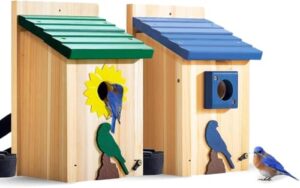
You’re looking for something rugged that won’t buckle under rain or summer sun. Bluebird cedar birdhouses, built from Western Red Cedar, resist rot and insects naturally.
A 1.5-inch entrance hole suits Eastern Bluebird nesting needs, while a 4×4-inch floor area gives chicks room to grow. Outdoor placement at 5 to 6 feet deters raccoons and snakes. Predator control skirts add extra protection.
Ventilation and drainage holes keep the nesting box dry and cool, supporting a healthy Bluebird habitat throughout the breeding season.
Bird house sales peak in spring.
| Best For | Backyard bird enthusiasts who want a durable, weather-resistant home that attracts Eastern Bluebirds and stands up to the elements season after season. |
|---|---|
| Material | Western Red Cedar |
| Entrance Hole Size | 1.5 inches |
| Ventilation | Vent holes |
| Cleaning Access | Recessed floor design |
| Predator Protection | Metal guard hole |
| Assembly | Required |
| Additional Features |
|
- Heavy-duty Western Red Cedar naturally resists rot and insects, so it lasts for years without constant upkeep
- The 1.5-inch metal guard hole keeps predators like raccoons out while letting bluebirds in safely
- Ventilation holes and a recessed floor prevent moisture buildup and overheating, giving nesting birds a healthier space
- Assembly required, and some users say the instructions aren’t always clear or easy to follow
- You might need to buy extra screws or hardware since not everything comes included in the box
- No built-in perch or tree-mounting attachment, so you’ll have to add those separately if you want them
6. Cedar Wooden Bird House
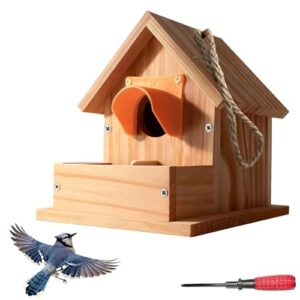
Cedar birdhouses offer natural rot resistance and insect protection. Western Red Cedar stands up to weather. No chemical wood treatment needed.
Untreated cedar lasts several seasons. Eco-friendliness matters. Proper ventilation and drainage boost nesting success.
A 1 to 1.5-inch entrance attracts small songbirds. Bird attraction depends on hole size and placement. Cedar durability means less frequent replacement.
Annual cleaning keeps the box safe. Birdhouse design includes predator guards and removable panels. Cedar insulates in heat and cold, supporting healthier nesting conditions year-round.
| Best For | Bird enthusiasts looking for a natural, durable nesting solution that requires minimal maintenance and works well for small songbirds like finches, bluebirds, and chickadees. |
|---|---|
| Material | Cedar wood |
| Entrance Hole Size | 1-1/2 inches |
| Ventilation | Yes |
| Cleaning Access | Front door opens |
| Predator Protection | Metal guard |
| Assembly | Required with tools |
| Additional Features |
|
- Cedar wood naturally resists rot and insects without chemical treatments, lasting multiple seasons outdoors with proper drainage and ventilation.
- Designed with bird safety in mind—includes predator guards, appropriate entrance hole sizes (1-1.5 inches), and insulation that maintains stable interior temperatures.
- Easy to maintain with annual cleaning thanks to removable panels, and the complete DIY kit comes with all components needed for quick assembly and installation.
- Some users report the wood can crack with rough handling and screws may remain visible, affecting the finished appearance.
- The product size is smaller than expected according to customer feedback, which may limit suitable bird species.
- Assembly might require assistance for younger builders, and the unfinished wood may need extra care during initial setup.
7. Cedar Bird House For Outside
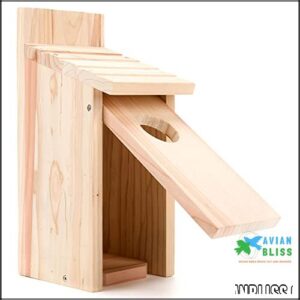
You need weather resistance and eco-friendliness when setting up outdoor living spaces for birds. Cedar wood stands up to rain and sun without toxic sealers. A cedar birdhouse becomes garden decoration that actually functions.
Weather resistance means your investment lasts 5 to 10 years with basic care. Outdoor placement works best with ventilation slots and drainage holes built in.
Bird watching gets easier with removable cleaning panels. Bird attraction depends on proper entrance sizing and predator guards.
| Best For | Bird lovers who want a low-maintenance, eco-friendly nesting solution that weathers years of outdoor exposure without harmful chemicals. |
|---|---|
| Material | Cedar wood |
| Entrance Hole Size | Standard size |
| Ventilation | Circular windows |
| Cleaning Access | Easy access |
| Predator Protection | Circular windows |
| Assembly | DIY kit |
| Additional Features |
|
- Cedar’s natural decay resistance lasts 5–10 years outdoors with minimal upkeep, plus it won’t leach toxins into your garden.
- Built-in ventilation slots and drainage holes keep nests dry and comfortable without you lifting a finger.
- Removable cleaning panels make annual maintenance quick—no wrestling with screws or taking the whole thing apart.
- You’ll need to place it in partial shade since untreated cedar can dry out and crack under constant direct sun.
- The entrance hole size matters—get it wrong and you’ll attract the wrong species or none at all.
- Even with cedar’s durability, exterior-grade finish adds years of life, so you might need to treat it yourself.
8. Sisterbird Cedar Wren Birdhouse
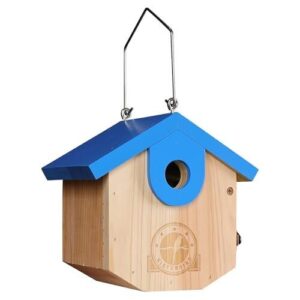
Small wrens need 1-1/8 inch entrance holes, and the Sisterbird Cedar Wren Birdhouse delivers that spec exactly. Your wren habitat stays dry with drainage holes and air vents. Cedar durability outlasts composite materials by seasons.
Birdhouse mounting uses a stainless steel hook. Wildlife conservation starts when you hang this at 6-10 feet. The swing-door design makes cleaning simple. Nesting success improves with predator guards protecting the entrance. Dimensions run 5.51″D x 7.09″W x 6.97″H. Price point sits mid-range for solid cedar bird houses.
| Best For | Homeowners who want to attract small wrens and chickadees to their yard with a durable, easy-to-maintain cedar birdhouse that includes predator protection. |
|---|---|
| Material | Natural wood |
| Entrance Hole Size | Standard size |
| Ventilation | Round window |
| Cleaning Access | Assembled design |
| Predator Protection | Round window |
| Assembly | Assembled |
| Additional Features |
|
- Precise 1-1/8 inch entrance hole keeps out larger birds and specifically suits wrens and chickadees
- Built from rot-resistant cedar with drainage holes and ventilation for long-lasting outdoor use
- Swing-door design with metal latch makes seasonal cleaning quick and straightforward
- Squirrels may figure out how to open the metal latch without additional reinforcement
- Small entrance hole limits use to tiny bird species only
- Regular cleaning required between nesting seasons to keep birds healthy
9. Wild Wings Bluebird House
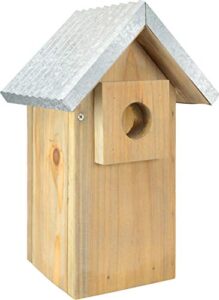
Premium cedar construction meets bluebird-specific design in the Wild Wings Bluebird House. Your 1.5-inch entrance hole targets eastern bluebirds while keeping larger species out. Cedar durability resists rot naturally without toxic treatments, making this an eco-friendly choice for wildlife conservation.
Ventilation slits and drainage channels create a healthy habitat. The predator guard protects nesting birds. Clean-out access simplifies seasonal maintenance. Birdhouse design includes corrosion-resistant fasteners for years of outdoor use. Mount it on posts or siding. Mid-range pricing delivers solid wildlife-friendly products for bluebird attraction.
| Best For | Homeowners wanting a low-maintenance cedar birdhouse designed specifically for eastern bluebirds with proper ventilation and predator protection. |
|---|---|
| Material | Cedar wood |
| Entrance Hole Size | 1-1/8 inches |
| Ventilation | Multiple air vents |
| Cleaning Access | Metal door latch |
| Predator Protection | Predator guard |
| Assembly | Pre-assembled |
| Additional Features |
|
- Cedar construction naturally resists rot and pests without chemical treatments
- Ventilation slits and drainage channels keep the nesting area dry and healthy
- Easy seasonal cleaning with clean-out door access and predator guard included
- No hanging hardware included, requires separate mounting setup
- “Welcome to Our Farmhouse” text may not suit every aesthetic preference
- No guarantee bluebirds will actually nest, as some users report no activity
Key Features of Cedar Bird Houses
Not all cedar bird houses are built the same. The best ones share a handful of features that keep birds safe, comfortable, and coming back year after year. Here’s what you should look for when you’re shopping around.
Predator Guards and Ventilation
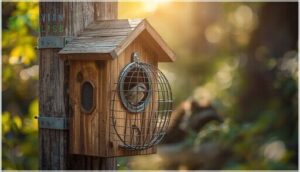
Guards with metal mesh or raised baffles keep raccoons and cats away from your cedar birdhouse without blocking airflow. You’ll want screened openings on opposite sides for cross-ventilation—this prevents moisture buildup that invites mold. Secure everything with screws or cable ties so wind won’t knock guards loose.
Whether you’re setting up a wren cedar birdhouse or chickadee cedar birdhouse, proper ventilation systems and predator control designs protect your feathered visitors while maintaining bird safety through smart airflow management. Ensuring the structural integrity of these houses is essential, much like addressing methodological flaws in scientific research.
Species-Specific Entrance Holes
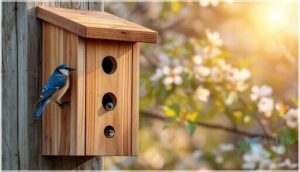
Once your predator guards are in place, you’ll want to match entrance hole size to the bird species you’re hoping to attract. Bluebirds thrive with 1.5-inch openings, while wren cedar birdhouse and chickadee cedar birdhouse models need smaller 1-inch holes.
This species compatibility matters—wrong sizing invites larger predators or keeps your target birds out, undermining your entire nesting box design.
Easy-Clean Access Panels
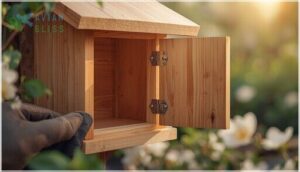
Your cleaning routine gets easier with removable front or side-opening panels. These access designs use stainless steel panel hardware that won’t rust, giving you full cavity reach without dismounting the entire birdhouse. For backyard birding success, you’ll want panel materials that maintain ventilation while letting you swap out debris quickly—most cedar bird houses recommend maintenance schedules every six to twelve months depending on nesting activity.
- Front-opening panels enable full cavity access without removing the box
- Side-loading designs allow cleaning while mounted on posts
- Magnetic closures provide quick removal without cleaning tools
- Swappable interior panels simplify sanitation between seasons
Durable Natural Cedar Construction

Cedar birdhouse construction offers natural resistance to decay and insects through tannins and resins in the wood. You’ll get better dimensional stability with select-grade lumber that’s kiln-dried. Skip synthetic coatings—they block cedar’s breathability.
Your birdhouse lasts several seasons with basic care, though annual inspection prevents moisture buildup.
Eco-friendly woodworking means choosing sustainably sourced cedar for outdoor furniture that birds trust.
Drainage and Interior Ladders
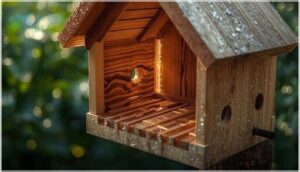
Beyond material durability, moisture control separates good cedar birdhouse designs from great ones. You’ll want sloped floors or channels directing water toward drainage holes—they prevent pooling after rain.
Some woodworking plans include interior ladders for cleaning access, though these mustn’t block ventilation paths or discourage nesting. Check that drainage openings won’t clog with debris, keeping your bird houses healthy season after season.
Pricing, Discounts, and Availability

Cedar bird houses won’t break the bank. Prices usually run $25 to $75, though you’ll find options from $17 all the way up to $214 depending on size and craftsmanship.
Let’s break down what you can expect to pay and where you’ll save money.
Typical Price Ranges and Factors
Most cedar birdhouses for sale online run $20 to $40. Cedar quality drives cost factors—thicker planks cost more. Market analysis shows predator guards and ventilation bump prices $5 to $10. Buy It Now listings at $25 to $35 offer solid value. Handmade models hit $50 to $60. Price trends dip 10–20% in spring.
Buying strategies: check bulk discounts for multi-packs.
Free Delivery, Returns, and Local Pickup
Most Buy It Now listings offer free shipping within the United States, with delivery times of two to seven business days. Free delivery cuts shipping costs on orders over twenty-five dollars. Some sellers provide local pickup options.
For Sale pages show return policies, usually thirty to sixty days. Online shopping sites list return policies clearly before checkout.
Bulk Purchase Discounts
Many online shopping sites offer tiered pricing when you buy multiple cedar bird houses at once. Discount levels usually start at five percent for smaller quantities and climb to twenty percent or more for larger orders.
Some Buy It Now listings release bulk savings once you hit a minimum order threshold. Wholesale rates help schools and community groups stock multiple birdhouse units affordably.
Bird Species and House Compatibility
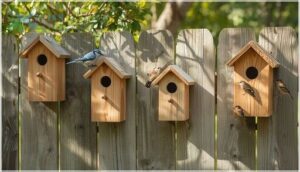
Not every bird wants the same front door. Different species need different entrance hole sizes and interior space to feel safe and raise their young.
Here’s what bluebirds, wrens, chickadees, and other common backyard visitors look for in a cedar house.
Bluebird House Designs and Preferences
Bluebirds thrive when their birdhouse mirrors their natural nesting box preferences. You’ll want an entrance size around 1.5 inches—perfect for eastern bluebirds—mounted 4 to 6 feet high in open bluebird habitat. Cedar durability helps, but design matters more:
- Floor area between 16 and 25 square inches
- Drainage holes in corners
- Ventilation gaps under roof
- No front perches for bird species safety
Wren and Chickadee House Features
Smaller bird species need different features than bluebirds. Your wren or chickadee birdhouse thrives with a 1 to 1.25-inch entrance hole that keeps larger invaders out. Cedar construction remains ideal, but ventilation systems and predator guards make all the difference.
| Feature | Why It Matters |
|---|---|
| Entrance hole 1–1.25″ | Fits wrens and chickadees perfectly |
| Drainage channels | Prevents standing water after rain |
| Predator guards | Blocks snakes and small mammals |
| Ventilation near top | Reduces heat in warm climates |
Mount your nesting box 5 to 8 feet high in sheltered spots.
Choosing The Right Entrance Size
Your entrance hole diameter determines which bird species will move in. Bluebirds prefer 1.5-inch openings. Wrens and chickadees need 1.125-inch holes for predator control and species safety. Smaller openings protect vulnerable nesting box occupants from starlings and sparrows.
Match your cedar birdhouse design and construction to your backyard visitors. Choosing the right bird house means pairing entrance size with interior depth for ideal nesting conditions.
Attracting Birds to Your Garden
Once you’ve chosen entrance size and nesting box dimensions, focus on making your yard irresistible. Bird Friendly Plants and strategic Garden Layout work together with your cedar Birdhouse. Habitat Diversity matters most. Add:
- Native shrubs for natural shelter and insect food sources
- Shallow water features to encourage bathing and drinking
- Bird Feeders stocked with seasonal high-energy foods
- Dense ground cover attracting ground-foraging species
- Year-round water access during dry spells
Wildlife Friendly Gardens support Bird Conservation through thoughtful design. Understanding Bird Behavior and Seasonal Migration patterns helps you time installations perfectly. Attracting Wildlife to Your Garden means creating a complete ecosystem, not just hanging boxes.
Installation and Maintenance Tips

You’ve picked out your cedar bird house. Now it’s time to get it up and running.
The right installation and upkeep will keep your feathered visitors coming back year after year.
Best Time to Install Bird Houses
For peak success, install your bird houses by mid-to-late winter. Early seasonal timing beats the spring rush—nesting cycles start before you’d think. Bird migration patterns mean cavity-nesters scout locations weeks ahead.
Smart installation strategies matter: sunny spots, predator-proof heights, open sightlines. Your backyard transforms into wildlife-friendly gardens when habitat preparation aligns with bird conservation needs. Timing’s everything.
Install bird houses in sunny, predator-proof spots with open sightlines to create a thriving, conservation-focused backyard habitat
Cleaning and Seasonal Care
Once the birdhouse is up, Bird House Maintenance and Care becomes part of your routine. Seasonal Inspection means checking for cracks, loose hardware, and blocked drainage. Ventilation Maintenance helps avoid mold. Predator Control starts with secure guards and tight mounting.
Nest Removal after fledging keeps Bird Safety high. Backyard Birding and Wildlife thrive when your Bird Habitat and Conservation steps keep birdhouses clean and inviting.
Longevity of Untreated Cedar
Untreated Cedar lasts five to ten years outdoors. Cedar Durability drops faster in humid zones. Wood Decay slows in dry shade. Climate Impact matters. Rot Resistance comes from natural oils. Freeze-thaw cycles crack wood.
Surface weathering happens. Longevity depends on sun, wind, rain. Maintenance Tips include cleaning debris. Replace when structure weakens.
Cedar Bird Houses need inspection, not guesswork. Check your Birdhouse annually.
Ensuring a Healthy Bird Habitat
Habitat Quality depends on native plants and clean water. Bird Nutrition improves with insect-rich gardens. Nest Safety requires Predator Control through guards and baffles. Eco Friendly Practices mean skipping pesticides.
Wildlife Friendly Products like cedar birdhouses fit Sustainable Gardening plans. Annual cleaning cuts parasites. Drainage holes prevent mold.
Bird Habitat Creation works when you match entrance holes to species. Your birdhouse fosters healthier birds year-round.
Frequently Asked Questions (FAQs)
What is a Cedar Bluebird Birdhouse?
You’ll notice bluebirds scouting yards early. A cedar bluebird birdhouse is a weather-resistant shelter with a 5-inch entrance hole, sloped roof, drainage, and predator guards—perfect for attracting these vibrant nesting birds.
What kind of birdhouse is best for bluebirds?
A 5-inch entrance hole, 5×5-inch floor, and ventilation best suit bluebird nesting. Cedar durability extends the nesting box life.
Heartwood birdhouses and Woodys birdhouses serve multiple bird species.
Avoid perches—they invite predators near bird houses.
What are the different types of birdhouses?
Birdhouse designs include nesting boxes for bluebirds, roosting houses for winter shelter, wall-mounted garden shelters, and freestanding avian habitats.
Woodys birdhouses and Heartwood birdhouses offer specialized designs customized to different backyard species.
What is a Pennington Cedar Bluebird House made of?
Cedar wood forms the main structure of your Pennington Cedar Bluebird House. You’ll find corrosion-resistant hardware holding it together, plus natural cedar oils providing weather durability without chemical treatments needed.
Who is cedar products company?
This producer specializes in outdoor cedar items, including durable bird houses for bluebirds and wrens.
They focus on sustainability, offer mid-range pricing with seasonal promotions, and distribute through online platforms and retail partners.
How long does a cedar birdhouse last?
You’ve got wood luck! Your cedar birdhouse usually lasts three to five years untreated.
Apply sealant every two years and you’ll extend its lifespan by several seasons, keeping backyard bird feeders thriving longer.
What kind of bird house do birds like the best?
Most cavity-nesting species prefer birdhouses with entrance holes matching their size—1½ inches for bluebirds, smaller for wrens.
They favor clean interiors, drainage holes, proper ventilation, and predator guards that keep nests safe.
Do I need to seal a cedar birdhouse?
You don’t need to seal your birdhouse—cedar’s natural oils resist decay. However, a breathable, non-toxic sealant on exterior surfaces can extend durability in harsh climates without compromising bird safety or moisture control.
Does Etsy offer free shipping?
Yes, Etsy offers free delivery on eligible items. Sellers set their own shipping policies, so you’ll find free delivery options when browsing birdhouse listings.
Filter by “Free shipping” to see qualifying products in the United States.
How do I personalize items on Etsy?
Think of personalization as putting your fingerprint on a birdhouse. You can request custom text, color choices, gift wrap, or special packaging through Etsy’s order customization field when communicating directly with sellers.
Conclusion
Your backyard stays quiet until the right house goes up. Cedar bird houses for sale work when entrance holes match species needs. Drainage holes prevent mold. Ventilation keeps chicks cool. Clean-out panels let you prep between seasons.
Mount at correct heights. Check predator guards. Skip thin cedar that warps. Invest once in solid construction.
Birds return when conditions stay safe. Your $40 decision shapes years of nesting success. Quality beats price every time.