This site is supported by our readers. We may earn a commission, at no cost to you, if you purchase through links.

Every spring, the same quiet drama plays out in backyards across the country — a pair of bluebirds circles a fence post, sizing up potential homes while homeowners scroll through dozens of options, unsure which birdhouse will actually hold up season after season.
Here’s what most listings won’t tell you: cedar heartwood naturally resists rot and repels insects without chemical treatment, making it far more than just a pretty material choice. A well-built cedar birdhouse can last 10 to 20 years, outlasting painted pine alternatives by a decade or more.
The right house also has to match your target species down to the quarter-inch — entrance holes, mounting height, even which direction it faces all determine whether birds move in or move on. These ten picks cover the full range of needs, budgets, and backyard setups.
Table Of Contents
- Key Takeaways
- Top 10 Cedar Bird Houses for Sale
- 1. Cedar Birdhouse With Copper Guard
- 2. Cedar Bluebird Birdhouse Kit
- 3. Cedar Bluebird Birdhouse with Guard
- 4. Cedar Bluebird Nesting Box
- 5. Cedar Bluebird Nesting House
- 6. Cedar Birdhouse for Small Birds
- 7. Cedar Wren Birdhouse Standard
- 8. Cedar Wooden Birdhouse Outdoor
- 9. Natural Cedar Bluebird Birdhouse
- 10. Cedar Outdoor Multiroom Birdhouse
- Best Cedar Birdhouse Features
- Choose by Bird Species
- Prices, Shipping, and Availability
- Mounting and Care Tips
- Frequently Asked Questions (FAQs)
- What is a cedar Bluebird Birdhouse?
- What are the best birdhouses?
- Where can I buy a birdhouse?
- What kind of Birdhouse do you need for a Bluebird house?
- How long will a cedar birdhouse last?
- What is a Cedar Bluebird Birdhouse?
- What kind of birdhouse is best for bluebirds?
- What are the different types of birdhouses?
- What is a Pennington Cedar Bluebird House made of?
- Who is cedar products company?
- Conclusion
Key Takeaways
- Cedar heartwood naturally resists rot and insects without chemicals, giving a well-built birdhouse a lifespan of 10–20 years — far outlasting painted pine alternatives.
- Matching the entrance hole size to your target species is the single most critical factor: even a quarter-inch difference determines whether bluebirds move in or starlings take over.
- Features like metal predator guards, built-in ventilation, drainage holes, and easy-clean access panels aren’t extras — they’re what separate a house that birds actually use from one they ignore.
- Mounting height, entrance direction, and spacing between houses all shape whether birds settle in, so face the opening east, aim for 5–8 feet high, and keep boxes at least 100 yards apart.
Top 10 Cedar Bird Houses for Sale
Whether you’re hoping to attract bluebirds to your backyard or give wrens a cozy place to raise their young, the right cedar birdhouse makes all the difference. There’s genuinely something for every bird and every budget in this lineup — from simple starter kits to multi-room cedar homes built to last decades.
If bluebirds are your priority, the rustic cedar bluebird house is a standout pick that pairs classic charm with a practical, bird-friendly design.
Here are ten options worth a close look.
1. Cedar Birdhouse With Copper Guard
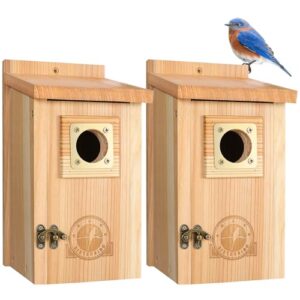
What sets this house apart the moment you hang it is that matte copper predator guard — a corrosion-resistant ring that keeps squirrels and starlings from reaching the nest inside. The 1.5-inch entrance hole welcomes bluebirds, wrens, and chickadees while quietly turning away larger, unwanted visitors.
Built from solid, untreated cedar, it resists rot without chemicals. Interior grooves help fledglings climb out when they’re ready to fly. The front door opens for cleaning, so your investment helps birds season after season.
| Best For | Bird enthusiasts who want to attract small cavity-nesting species like bluebirds, wrens, and chickadees while keeping squirrels and invasive starlings out. |
|---|---|
| Material | Solid cedar, copper guard |
| Dimensions | 5.6 × 5.8 × 11.7 in |
| Entrance Hole | 1.5 inches |
| Target Birds | Bluebirds, wrens, swallows, chickadees |
| Clean-Out Access | Front door opens upward |
| Pack Size | 1 unit |
| Additional Features |
|
- Matte copper predator guard deters squirrels and starlings without traps or chemicals
- Untreated cedar naturally resists rot, and interior grooves help fledglings climb out safely
- Front door opens for easy seasonal cleaning, making it a long-term habitat investment
- Requires assembly, and wood knots may reduce durability over time if left unsealed
- The upward-opening door can feel awkward if you need frequent access
- The 1.5-inch entrance only works for smaller bird species — larger birds won’t fit
2. Cedar Bluebird Birdhouse Kit
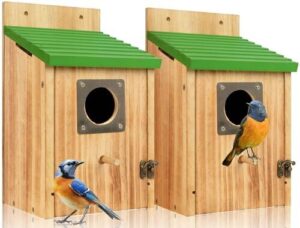
If you enjoy a hands-on afternoon in the garden, this kit is genuinely satisfying to put together. Pre-drilled pilot holes make assembly straightforward — no specialized tools, just a screwdriver and a bit of patience.
Made from untreated western red cedar, it won’t leach anything harmful near a nest. The flip-open cleanout panel means you’re ready for next season in minutes. At 5–8 feet high with the entrance facing away from afternoon sun, bluebirds will find it hard to resist.
| Best For | Backyard birding enthusiasts who enjoy a simple DIY project and want to attract small cavity-nesting birds like bluebirds, wrens, and swallows to their garden. |
|---|---|
| Material | Carbonized cedar, metal guard |
| Dimensions | 5.7 × 5.7 × 10.2 in |
| Entrance Hole | 1.5 inches |
| Target Birds | Bluebirds, wrens, swallows |
| Clean-Out Access | Front-opening door |
| Pack Size | 2 units |
| Additional Features |
|
- Durable cedar construction with a carbonized surface holds up to the elements without needing chemical treatments
- Metal predator guard around the entrance keeps nestlings safer from squirrels and other wildlife
- Front-opening cleanout panel makes it quick and easy to refresh between nesting seasons
- Screws can be on the small side and may need upgrading to ensure a solid, lasting build
- Cedar is soft enough to strip if you overtighten, so you’ll need a careful hand during assembly
- The green color and straightforward design won’t be everyone’s first choice for a decorative garden piece
3. Cedar Bluebird Birdhouse with Guard

That DIY satisfaction is hard to beat — but sometimes you want something ready to hang straight away. This house delivers exactly that, built from solid carbonized cedar with a metal predator guard around the 1½-inch entrance hole to keep squirrels and raccoons at a safe distance from nestlings.
At nearly 9 inches tall with side ventilation slots and drain holes, the interior stays dry and comfortable. A secure latch and rustproof mounting screw mean setup takes minutes, not an afternoon.
| Best For | Bird lovers and backyard gardeners who want a low-effort, ready-to-hang nesting box that actively protects cavity-nesting species like bluebirds, wrens, and swallows. |
|---|---|
| Material | Carbonized cedar, metal guard |
| Dimensions | 5.9 × 5.9 × 8.66 in |
| Entrance Hole | 1.5 inches |
| Target Birds | Bluebirds, wrens, swallows |
| Clean-Out Access | Front access with latch |
| Pack Size | 1 unit |
| Additional Features |
|
- Carbonized solid cedar holds up to rain, heat, and humidity without warping or rotting
- Metal predator guard around the entrance keeps squirrels and raccoons from raiding nests
- Quick setup with a rustproof screw and secure latch — no tools or extra hardware needed
- The metal mesh shelf inside can let nesting material slip through, which may put birds off
- Picky species might not take to the design or prefer a different mounting spot
- The latch and wood finish need occasional checks to stay weatherproof and functional over time
4. Cedar Bluebird Nesting Box
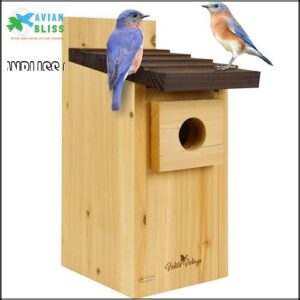
Think of this box as the no-fuss option for first-time hosts. The 1½-inch entrance hole keeps larger birds out while welcoming bluebirds and tree swallows — the species most likely to reward your yard with repeated broods.
Pre-drilled drainage and ventilation holes handle the weather, and the rough interior finish gives nestlings something to grip when they’re ready to fledge. When the season ends, the removable front panel swings open for a quick clean-out — no tools, no hassle.
| Best For | First-time birdhouse hosts who want a low-maintenance nesting box that naturally attracts bluebirds and tree swallows. |
|---|---|
| Material | Cedar wood |
| Dimensions | 3.2 × 2.17 × 4.72 in |
| Entrance Hole | Not specified |
| Target Birds | Bluebirds, tree swallows |
| Clean-Out Access | Removable clean-out door |
| Pack Size | 1 unit |
| Additional Features |
|
- The 1½-inch entrance hole keeps out larger birds while welcoming the species most likely to nest repeatedly in your yard
- Pre-drilled drainage and ventilation holes plus cedar construction handle rain, heat, and cold without extra effort
- The removable front panel makes end-of-season clean-out quick and tool-free
- The latch can be flimsy, so you may need to reinforce it to keep the door secure against wind or predators
- No mounting hardware included — you’ll need to source a separate hanging or post solution
- Designed only for small cavity-nesting birds, so it won’t work if you’re hoping to attract larger species
5. Cedar Bluebird Nesting House
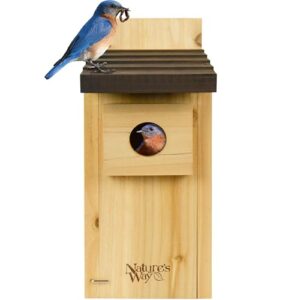
Where the previous box keeps things simple, this one goes a step further. The Cedar Bluebird Nesting House features built-in fledgling kerfs — grip surfaces carved into the interior so young birds can actually climb their way out when the big moment arrives.
The 1.5" entry hole is intentionally sized to welcome bluebirds while turning away larger, unwanted visitors — a detail covered thoroughly in these bluebird house entrance hole size guidelines.
The elongated entrance shield adds real peace of mind, pushing predators just far enough back to protect eggs and nestlings below. Cleaning is straightforward too, thanks to a hinged side panel that swings open without a fight.
| Best For | Backyard wildlife enthusiasts who want to actively support cavity-nesting birds like bluebirds with a safe, easy-to-maintain nesting box. |
|---|---|
| Material | Cedar wood |
| Dimensions | 7.88 × 5.19 × 12 in |
| Entrance Hole | Not specified |
| Target Birds | Bluebirds, cavity nesters |
| Clean-Out Access | Hinged side access panel |
| Pack Size | 1 unit |
| Additional Features |
|
- Built-in fledgling kerfs give young birds a real grip on their way out, making the transition to flight safer and more natural
- The elongated entrance shield keeps predators at bay, giving eggs and nestlings a much better chance of survival
- A hinged side panel makes seasonal cleaning quick and hassle-free, encouraging birds to return year after year
- The hinged panel latch can feel flimsy and may need extra reinforcement to stay secure
- No pre-drilled mounting holes means you’ll need to take care drilling them yourself to avoid splitting the wood
- Weather exposure can wear down the finish over time, so some upkeep may be needed to keep it looking its best
6. Cedar Birdhouse for Small Birds
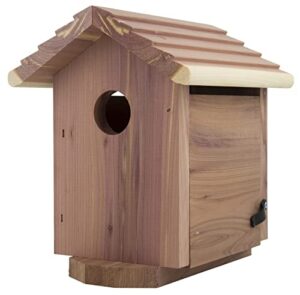
Small birds don’t need much — just the right fit. This cedar house delivers exactly that, with a 1.25-inch entrance hole sized perfectly for chickadees and wrens. The interior chamber keeps nesting cozy without wasted space.
What makes it genuinely easy to love is the side-opening panel. Come spring cleaning time, you’ll be grateful for it. Cedar withstands the elements naturally, so you won’t need to repaint or reseal it every season — it just quietly does its job.
| Best For | Backyard birders who want a low-maintenance, natural home for small cavity-nesting birds like chickadees and wrens. |
|---|---|
| Material | Eastern Red Cedar |
| Dimensions | 6.75 × 6.44 × 7.5 in |
| Entrance Hole | 1.25 inches |
| Target Birds | Chickadees, wrens |
| Clean-Out Access | Side-opening door with clip |
| Pack Size | 1 unit |
| Additional Features |
|
- Made from Eastern Red Cedar, which naturally resists weathering and insects without any need for repainting or sealing
- Side-opening panel makes seasonal cleaning quick and hassle-free
- Comes with mounting hardware so you can get it up on a tree or post right away
- Only suitable for small bird species — larger cavity nesters won’t fit through the 1.25-inch entrance hole
- Needs to be cleaned out before each breeding season to stay effective
- Some customers have reported occasional packaging damage during shipping
7. Cedar Wren Birdhouse Standard
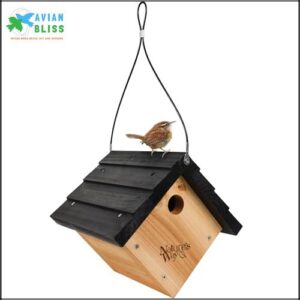
Wrens are tiny birds with big personality — and this house is built just for them. The 1⅛-inch entrance hole keeps larger, more aggressive birds out while giving wrens exactly the opening they need.
Solid cedar means you’re getting natural rot resistance without chemical treatments, keeping it safe season after season. The ventilation slots prevent heat buildup, and when nesting season ends, the removable clean-out panel makes tidying up surprisingly easy.
Hang it at 5 to 7 feet, and your wrens will find it fast.
| Best For | Backyard birdwatchers who want to attract wrens and chickadees while keeping larger, more aggressive birds out. |
|---|---|
| Material | Cedar wood, stainless hardware |
| Dimensions | 8.13 × 8.88 × 8 in |
| Entrance Hole | 1.125 inches |
| Target Birds | Wrens, chickadees |
| Clean-Out Access | Clean-out door |
| Pack Size | 1 unit |
| Additional Features |
|
- Natural cedar construction resists rot without chemicals, making it safe and durable across multiple seasons
- The 1⅛-inch entrance hole is perfectly sized for wrens and chickadees while blocking sparrows and bigger birds
- Easy clean-out door makes end-of-season maintenance quick and helps prevent the spread of disease
- Rough, unfinished edges may need sanding before use or gifting
- The latch can be loose and might need tightening or replacing to keep the clean-out door securely closed
- The hanging cable allows the house to swing, so a predator guard or sturdier mounting setup is worth considering
8. Cedar Wooden Birdhouse Outdoor
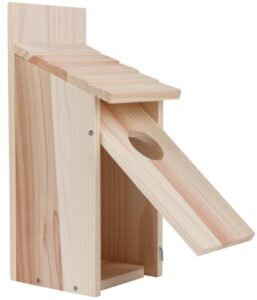
If you want something that fits naturally into your garden without drawing attention to itself, this one delivers. The unfinished solid cedar construction weighs just 1.1 pounds, making it easy to mount almost anywhere — trees, fence posts, you name it.
That slant roof design sheds rain efficiently, and the front door opens fully for cleaning. One thing worth knowing: pre-drill before you fasten, because soft cedar can split under pressure without a pilot hole.
| Best For | Families, hobbyists, and nature lovers looking for an easy DIY project that attracts small backyard birds like wrens, bluebirds, and chickadees. |
|---|---|
| Material | Natural cedar, unfinished |
| Dimensions | 4.9 × 4.9 × 11.81 in |
| Entrance Hole | Not specified |
| Target Birds | Wrens, bluebirds, chickadees |
| Clean-Out Access | Front door opens fully |
| Pack Size | 1 unit |
| Additional Features |
|
- Natural cedar construction blends beautifully into any outdoor setting and holds up well against the elements
- Front door opens fully, making seasonal cleaning quick and hassle-free
- Lightweight at just 1.1 pounds, so mounting it on a tree or fence post takes minimal effort
- Soft cedar can split easily if you skip pre-drilling, so you’ll need extra care during assembly
- The unfinished surface will weather and degrade over time without a sealant or protective coating
- The latch feels flimsy and there’s no metal predator guard, leaving the nest potentially vulnerable to squirrels
9. Natural Cedar Bluebird Birdhouse
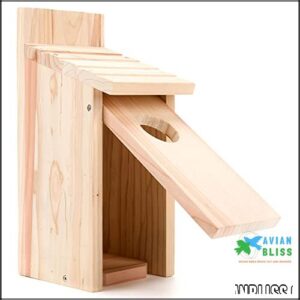
Bluebirds are picky about their homes — and this one checks every box. At 4.9 x 4.9 x 11.81 inches, it’s sized just right, with a 1.5-inch entrance hole that welcomes bluebirds while keeping larger birds out.
The slant roof overhangs the body generously, channeling rain away before it becomes a problem. Ventilation and drainage come built in, so nestlings stay dry and comfortable. Fully assembled and ready to hang, it’s a genuinely easy win for your backyard.
| Best For | Backyard bird enthusiasts, families with kids, and anyone looking for a low-effort, ready-to-hang home that bluebirds, wrens, and finches will actually use. |
|---|---|
| Material | Natural cedar, polished finish |
| Dimensions | 4.9 × 4.9 × 11.81 in |
| Entrance Hole | Not specified |
| Target Birds | Bluebirds, wrens, finches |
| Clean-Out Access | Front door access |
| Pack Size | 1 unit |
| Additional Features |
|
- Made from natural cedar with a polished finish that holds up outdoors season after season
- Slant roof overhangs the body to shed rain, with built-in ventilation to keep nestlings comfortable
- Comes fully assembled with a hanging hole — no setup headaches
- Soft cedar can split easily, so pre-drilling pilot holes before screwing anything in is a must
- The front latch feels flimsy and likely won’t stop a determined squirrel
- No metal predator guard included, so you may need to buy additional hardware for real protection
10. Cedar Outdoor Multiroom Birdhouse
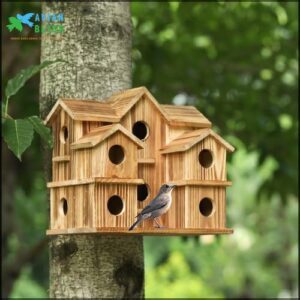
Ten separate nesting chambers in one compact unit — that’s the kind of neighborly setup that turns your garden into a genuine bird community. At 11 x 7 x 9 inches, it’s surprisingly spacious without being overwhelming. Each 1-inch entrance hole suits small songbirds perfectly, while removable side panels make seasonal cleaning far less of a chore than you’d expect.
Cedar’s natural rot resistance withstands the weather. You just enjoy the view.
| Best For | Bird enthusiasts and garden hobbyists who want to attract multiple small songbird species like finches, bluebirds, and cardinals to a single decorative outdoor display. |
|---|---|
| Material | Cedar wood, waterproof coat |
| Dimensions | 11 × 7 × 9 in |
| Entrance Hole | 1 inch |
| Target Birds | Finches, bluebirds, cardinals, hummingbirds |
| Clean-Out Access | Not specified |
| Pack Size | 1 unit |
| Additional Features |
|
- Ten separate nesting chambers give multiple bird families room to settle in, turning your backyard into a lively little bird community
- Handmade cedar construction with a waterproof coating holds up year-round without much upkeep
- Natural wood finish and metal hanging hooks make it easy to display and a genuine visual addition to any garden or courtyard
- The 1-inch entrance holes are sized for small birds only, so larger species won’t be able to use it
- Some buyers find the interior compartments too compact for species that need a bit more nesting space
- In wetter climates, a few users have had to enlarge the holes or add extra roof protection to keep things dry inside
Best Cedar Birdhouse Features
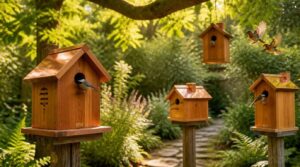
Not all birdhouses are built the same, and the right features can make a real difference for the birds you’re hoping to attract. Cedar birdhouses stand out for a handful of reasons that go beyond just good looks. Here’s what to look for as you explore your options.
Natural Cedar Durability
Cedar’s natural oils do quiet, powerful work — shielding your nesting boxes from rot and insects without chemical preservatives. Responsibly harvested, it’s sustainably sourced wood that earns its place in wildlife housing.
- Heartwood extractives block decay-causing fungi
- Low shrinkage keeps joints tight through every season
- A weathered silver patina develops naturally over time
That’s why cedar birdhouse durability stretches 10–20 years. The use of cedar in birdhouses also benefits from natural insect repellent properties.
Predator Guard Protection
Cedar does the heavy lifting against weather — but birdhouse predator guards handle the trickier threat: raccoons, squirrels, and cats.
Metal ring entrance hole collars resist chewing and stop predators from widening the opening. Cone baffle designs block pole-climbers cold with anti-climb textures that offer no grip. After fledging season, seasonal guard removal keeps cleaning simple without disturbing next year’s potential tenants.
Ventilation and Drainage
Guards keep threats out — but inside your nesting box, ventilation and drainage do the quiet work. Small vent holes near the roofline create airflow paths that push warm, stale air out before condensation builds.
Drainage holes at the floor channel rainwater away fast. Keep vent screens clear each spring, and your cedar birdhouse stays dry, breathable, and ready for residents.
Easy-clean Access Panels
Ventilation controls the air — but when it’s time to clean out old nesting material, hinged panel designs make the job easy. No tools, no frustration.
- Tool-free latch systems pop open with a light press
- Magnetic catch benefits keep panels flush when closed
- Smooth edge maintenance means quick wipe-downs
- Anti-microbial coating resists buildup between seasons
Your cedar nesting boxes stay fresh and ready every spring.
Weather-resistant Construction
What keeps a birdhouse standing strong through years of rain, frost, and summer heat? Cedar’s natural oils do a lot of the heavy lifting — they resist decay and repel insects without any chemical help.
Pair that with galvanized or stainless hardware, sealed joints, and copper flashing at the roofline, and your birdhouse won’t just survive the seasons — it’ll outlast them.
Choose by Bird Species
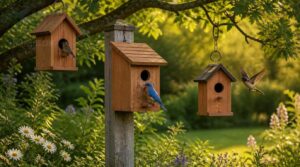
Not every bird is looking for the same front door — and that’s exactly what makes choosing the right birdhouse so much fun. The size of the entrance hole, the floor space, and even the mounting height all depend on who you’re hoping to welcome into your yard.
Here’s a breakdown of what each species actually needs so you can match the house to the bird.
Bluebird Entrance Sizes
Getting the entrance hole size right is the single most important decision for bluebird conservation. Too large, and starlings move in uninvited.
For your Cedar Bluebird Birdhouse, match the opening to your region:
- Eastern bluebirds: 1½-inch round hole
- Western and mountain bluebirds: 1 9/16-inch round hole
- Mixed-species areas: a 2¼" × 1 3/8" oval entrance
Oval openings also improve airflow inside the box.
Wren House Openings
Wrens are tiny birds with surprisingly strong preferences. The ideal entrance diameter for a Wren Cedar Bird House sits between 1 and 1.25 inches — just enough for a wren to slip through, but tight enough to turn away larger, pushy species.
That precision matters. Pair the snug entrance hole with a metal predator guard, and your cedar wood box stays wren-exclusive all season long.
Chickadee and Titmouse Needs
Chickadees and titmice share a lot in common — including their taste in real estate. Both species favor snug cavity openings around 1.25 inches, which filter out larger competitors without a second thought.
They’re year-round neighbors, forming winter foraging flocks that return to familiar spots. A cedar birdhouse mounted 5–15 feet high near woodland edges gives them exactly the sheltered, insect-rich home they’re after.
Woodpecker Nesting Boxes
Woodpeckers don’t just move in — they redecorate. That’s why a Woodpecker Bird House needs a wider 2.625-inch entrance hole and an 8×8-inch floor with wood chips inside, giving them something to excavate and settle into.
A metal predator guard around the hole keeps curious climbers out. After nesting season, open the hinged panel and clear the debris — cedar endures the years; you handle the upkeep.
Purple Martin Compartments
Purple martins are true community birds — they nest in colonies, which means a multi-room cedar birdhouse isn’t optional; it’s essential. Look for designs with up to 12 compartments, a 2⅛-inch entrance hole, and a 6×6-inch floor per room.
Landing porches let adults perch before entering. Individual access doors make nest checks easy without unsettling the whole colony.
Prices, Shipping, and Availability
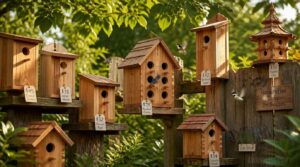
Cedar birdhouses come in a surprisingly wide range of prices, so there’s genuinely something for every budget. A few popular options even ship for free, though some are running low on stock — so it’s worth knowing what’s out there before you decide. Here’s a closer look at what you can expect across pricing, shipping, and availability.
Typical Cedar Birdhouse Prices
Most cedar birdhouses for sale fall between $20 and $70. Simple single-chamber designs start around $20, while mid-range options with better birdhouse materials climb toward $40–$70.
- $20–$40: Basic wren or bluebird houses
- $40–$70: Larger designs with improved finishes
- $70+: Models with premium feature costs
Budgeting for birdhouses is easier knowing cedar durability — 10–20 years — justifies the price across most birdhouse brands.
Budget Versus Premium Options
Knowing the price range is only half the picture. A budget cedar birdhouse ($15–$25) gets the job done but often uses thinner panels and basic steel hardware that can rust or warp after a wet season or two.
Premium cedar construction costs more upfront yet pays back over time — better insulation, rust-resistant hardware, and 10–20 years of material longevity mean fewer replacements overall.
Free Shipping Offers
Many cedar birdhouse for sale listings include free shipping, which cuts the real cost meaningfully. That saved delivery fee can close the gap between a budget pick and a mid-range Cedar Bluebird Birdhouse.
Watch for minimum order thresholds — spending a few dollars more on a second birdhouse design often unlocks the offer automatically.
Limited-stock Listings
Some bird houses vanish fast. Listings showing "Only 1 left!" aren’t just labels — they’re real signals that popular designs like the Cedar Bluebird Birdhouse sell out quickly.
That kind of low stock alert shifts your timing. A birdhouse for sale today may be gone by tomorrow, so if the price feels right, waiting rarely pays off.
Customer Ratings and Reviews
What do real buyers think? Cedar birdhouses pull an average 4.6 out of 5 from 1,250 reviews, with 72% giving five stars.
Here’s what reviewers highlight most:
- Durable natural cedar finish that holds up outdoors
- Easy mounting and sturdiness in windy conditions
- Good ventilation and drainage reducing moisture
- Natural finish models rated slightly higher than stained
- Occasional shipping damage worth checking on arrival
Top-rated best sellers with clear specs earn the strongest trust.
Mounting and Care Tips
Getting your cedar birdhouse set up the right way makes all the difference between a house that sits empty and one that fills up fast. A few smart choices — where you mount it, which direction it faces, and how you care for it each season — can turn a good birdhouse into a great home. Here’s what you need to know to get it right.
Best Mounting Height
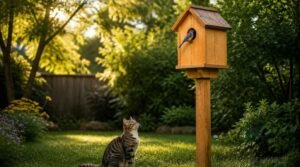
Where you hang your birdhouse matters more than most people realize. For small songbirds like bluebirds and wrens, 5 to 6 feet above ground hits the sweet spot — easy for birds to find, harder for cats to reach.
In urban yards, push it to 6 to 8 feet for real predator deterrence. Higher mounts also reduce ground moisture and improve airflow around the entrance.
Ideal Entrance Direction
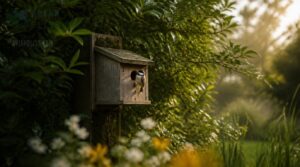
Face your entrance east or southeast — morning sun dries out moisture after rain and gently warms the cavity without cooking it by afternoon.
Keep the opening angled away from prevailing west and northwest winds, which can funnel cold air straight inside. In shrubby yards, orient toward the habitat interior so the entrance stays concealed from aerial predators overhead.
Safe Spacing Between Houses
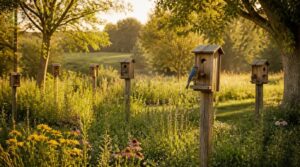
Territorial birds need room to breathe. Space houses at least 100 yards apart to prevent conflict and let airflow move freely between structures.
- Bluebirds: 100-yard minimum between boxes
- Wrens: separate tree or post mounts
- Woodpeckers: isolated, quieter sites preferred
- Purple martins: colony-style grouping works
- Chickadees: woodland edge with clearance
Tight clusters disrupt natural airflow and create microclimates that discourage nesting pairs from settling in.
Seasonal Cleaning Routine

Think of your cedar birdhouse like a guest room — it needs a fresh reset each season.
A cedar birdhouse, like a guest room, earns its welcome with a fresh reset each season
Come spring, clear out old nesting material and wipe surfaces with mild detergent and warm water. Summer calls for humidity checks; keep indoor storage between 40–50%. Fall means inspecting for pests and debris. Winter, check seals and drainage holes.
A rotating seasonal checklist keeps it manageable and ensures nothing gets overlooked.
Extending Cedar Lifespan
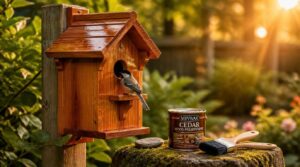
Cedar’s natural oils resist decay on their own, but a little help goes a long way. Applying a clear penetrating sealer every two to four years blocks moisture and buys you an extra two to five years of life.
UV-blocking finishes cut color fade by up to 50%. Use galvanized or stainless hardware — rust stains weaken joints faster than weather ever will.
Frequently Asked Questions (FAQs)
What is a cedar Bluebird Birdhouse?
A cedar bluebird birdhouse is nature’s little safe haven — a compact wooden nesting box with a 5-inch entrance hole, crafted from natural cedar wood to welcome and shelter bluebirds through every nesting season.
What are the best birdhouses?
The best birdhouses match your local birds’ needs — right entrance size, solid cedar construction, and smart placement. Species-specific sizing and predator guard protection make all the difference between a house birds love and one they ignore.
Where can I buy a birdhouse?
You’ll find cedar birdhouses at local garden centers, hardware chains, and specialty bird shops. Online retailers offer the widest selection with customer reviews. Craft markets are worth a look for handmade options.
What kind of Birdhouse do you need for a Bluebird house?
Bluebirds aren’t picky — until they are. You’ll need a 5-inch entrance hole, a 4×4-inch interior floor, and 8–12 inches of depth to give their nest the stability and predator protection it deserves.
How long will a cedar birdhouse last?
A well-built cedar birdhouse can last 10 to 20 years outdoors. Cedar’s natural oils resist rot and insects, and with a light oil treatment every few years, you’ll easily push past that.
What is a Cedar Bluebird Birdhouse?
A cedar bluebird birdhouse is a natural cedar nesting box built with a 5-inch entrance hole, untreated wood, and an 8–10 inch interior depth — giving bluebirds a snug, rot-resistant home season after season.
What kind of birdhouse is best for bluebirds?
The best bluebird house features a 5-inch entrance hole, cedar wood, and mounts 4–6 feet high facing open meadows. A predator guard keeps raccoons and squirrels out for good.
What are the different types of birdhouses?
Not all birdhouses are created equal — and birds know it. From single chamber designs for wrens to multi-compartment colony houses for purple martins, predator guard styles, platform nesting shelves, and open back ventilation options, there’s a perfect fit for every species.
What is a Pennington Cedar Bluebird House made of?
The Pennington Cedar Bluebird House is built from eastern red cedar — a naturally rot-resistant wood with built-in oils that protect without chemicals, responsibly sourced and crafted with Amish craftsmanship quality for lasting outdoor use.
Who is cedar products company?
Small in footprint, yet deeply rooted — Cedar Products Company has supplied Pacific Northwest cedar from Bremerton, Washington since 1978, earning trust across decades as a regional lumber specialist serving contractors, builders, and backyard birdhouse dreamers alike.
Conclusion
Think of choosing a birdhouse the way a bird does — instinct refined by detail. The right entrance hole, the right wood, the right height. Nothing wasted. When you invest in cedar bird houses for sale that match your yard and your target species, you’re not just buying a product. You’re setting a table.
Season after season, cedar holds its ground while painted pine fades, and the birds — if you’ve chosen well — keep coming back.
- https://nestwatch.org/learn/all-about-birdhouses
- https://sawmillcreek.org/threads/wood-choice-for-birdhouse.3244
- https://fountainful.com/collections/cedar-birdhouses-feeders
- https://www.scribd.com/document/509756190/Build-a-Cedar-Birdhouse-for-2-Ana-White
- https://green-backyard.com/blogs/choose-the-right-material-for-your-birdhouse