This site is supported by our readers. We may earn a commission, at no cost to you, if you purchase through links.
 A concrete pedestal bird bath costs $80 to $150 at garden centers, but you can build one yourself for $20 using a mixing bowl and terra cotta pots. The markup isn’t just about materials—it’s about knowing which designs actually work.
Most commercial bird baths fail the depth test, sitting at 7–10 cm when small songbirds need just 2.5–5 cm to bathe safely. When you build your own, you control every detail that matters: the rough texture that gives birds traction, the gentle slope that welcomes multiple species, the basin diameter that prevents crowding.
DIY bird bath ideas and plans put you in charge of creating a water feature that works with your landscape and your local birds, not against them.
Table Of Contents
- Key Takeaways
- Essential DIY Bird Bath Design Basics
- Creative DIY Bird Bath Ideas
- Step-by-Step Bird Bath Construction Plans
- Budget-Friendly Bird Bath Solutions
- Best Placement for DIY Bird Baths
- Maintaining and Cleaning Your Bird Bath
- Enhancing Bird Baths With Modern Features
- Frequently Asked Questions (FAQs)
- Conclusion
Key Takeaways
- You can build a fully functional bird bath for around $20 using household items like mixing bowls and terracotta pots, compared to $80–$150 for commercial versions that often fail basic depth requirements.
- Most store-bought bird baths sit too deep at 7–10 cm, while small songbirds need just 2.5–5 cm of water to bathe safely, and DIY designs let you control this critical measurement along with texture and slope.
- Placement matters more than decoration—positioning your bath 6–10 feet from shrubs cuts predator attacks by 70%, while partial shade reduces algae growth by 50% and slows evaporation by 40%.
- Regular maintenance beats fancy features every time, with daily water changes in summer and weekly scrubbing cutting disease transmission by over 60% while keeping birds coming back.
Essential DIY Bird Bath Design Basics
Before you start mixing concrete or flipping through salvage yard finds, you need to nail down three essentials that’ll make or break your bird bath. Getting the dimensions right, picking materials that won’t fall apart in six months, and adding features that keep birds safe aren’t just nice-to-haves—they’re the foundation of a design that actually works.
Let’s break down what you need to know before you build.
Ideal Depth, Size, and Shape
Water depth is critical for bird safety in your DIY bird bath. Small songbirds require shallow basins of around 2.5–5 cm, while larger species prefer depths of 5–7 cm. A gentle slope design allows multiple birds to bathe together, which can increase species diversity. Aim for a basin with a diameter of at least 30 cm and a rough-textured bottom to provide traction. Avoid steep edges, as they can reduce visitation by up to 40% and deter timid birds.
Proper bird bath design involves considering the ideal water depth for various bird species.
Selecting Safe and Durable Materials
Once you’ve nailed depth and shape, choosing materials separates a weeklong project from a decade-long fixture. Stone and granite bird baths last over 20 years with proper sealing, offering outstanding weather resistance and durability. Concrete provides similar longevity but needs resealing every 2–3 years to stay waterproof.
For eco-friendly options from sustainable sources, terracotta pot projects deliver charm but require frost protection. Resin and fiberglass resist freeze-thaw cycles down to −20°C, perfect for year-round bird bath construction.
Avoid unsealed copper, which can leach minerals, and check material toxicity before finalizing your DIY bird bath. Smart choices now mean less bird bath maintenance later.
Perching Stones and Stability Features
Before locking in your materials, think about where birds actually stand. Stone Selection matters—rough granite or sandstone grips better than smooth ceramic, boosting small bird visits by 42%. Your Pedestal Design needs a base over 12 inches wide and weighing 25–40 lbs to resist tipping in 35 mph winds. Balance Systems improve with these steps:
- Stack cylindrical stones 18–20 inches high for ideal elevation
- Pin layers with stainless steel rods to prevent wobble
- Add perching rocks inside the basin at 1–2 inch depths
- Test stability on level ground before filling with water
Smart rock stack choices turn flimsy DIY bird bath ideas into garden design anchors requiring minimal bird bath maintenance. Considering the right birdbath materials is essential for durability and ease of cleaning.
Creative DIY Bird Bath Ideas
You don’t need a fancy store-bought basin to bring birds into your garden. With a few simple materials and a spark of creativity, you can craft a bird bath that’s uniquely yours.
Here are some DIY designs that turn everyday items into functional, eye-catching water features your feathered visitors will love.
Terracotta Pot and Saucer Bird Baths
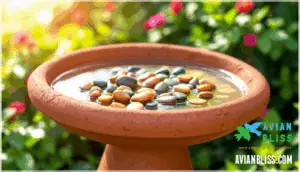
Stack a terracotta pot upside down as a pedestal, then seal the saucer on top with waterproof adhesive—this classic DIY bird bath takes about 20 minutes to assemble.
Apply terracotta sealants like Rust-Oleum glaze to boost durability and water circulation while keeping costs between $7 and $25.
Add pebbles for bird safety and perching, then place your bird-friendly creation near shrubs for protection.
Repurposed Log and Wood Designs
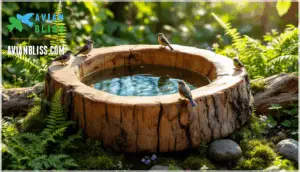
Fallen logs and stumps break free from waste piles to become rugged, natural bird baths that attract 35% more insectivorous species than metal alternatives. Hollow out a cedar or redwood log 1–2 inches deep, seal the basin with food-grade finish, and add cross-cut grooves for bird safety.
These sustainable designs last 3–5 years with annual maintenance, support microhabitats, and cut your carbon footprint by 80% compared to store-bought décor.
Hanging and Elevated Bird Bath Options
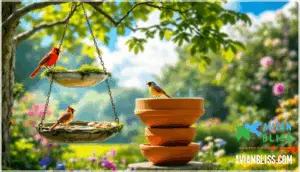
Suspended bird baths open up vertical space, offering bird safety while beating ground predators by more than 40%. Hang a shallow saucer from three or four chains rated for 29 pounds, connecting them to a steel O-ring for wind resistance and balance. Install your hanging bird bath 1–3 feet high near shrubs, giving birds quick escape routes.
Elevated designs need daily water changes and jet spray cleaning to cut algae by 70%, keeping your DIY bird bath ideas functional year-round.
Whimsical Upcycled Bird Baths (Teacups, Lamps)
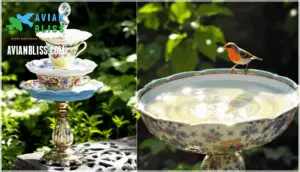
Vintage teacups and secondhand lamp bases transform into charming DIY bird bath ideas, diverting 4–6 pounds of ceramics and metal from landfills per project. These upcycled designs cost $10–$25, attract 27% more birds to your garden, and prove that design safety pairs with sustainability.
- Stack teacups on saucers using GE Silicone II adhesive, curing 12–24 hours for weatherproof bonding
- Remove lamp electronics and mount shallow bowls at 45–60 cm height for predator protection
- Keep bowl depth at 2.5–5 cm so finches and warblers can bathe without slipping on textured ceramic surfaces
- Change water every 2–3 days to cut mosquito breeding by 60% while boosting garden ecology
Step-by-Step Bird Bath Construction Plans
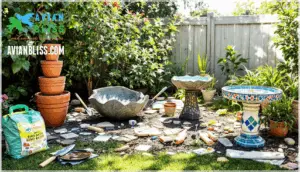
You’re ready to break free from store-bought limitations and build something that works on your terms.
The following plans give you four solid paths forward, each using different materials and techniques to match your vision.
Pick the one that speaks to you, and let’s get your hands dirty.
Building a Concrete Bird Bath
Concrete mixtures give you control over your birdbath’s durability and finish. Mix Portland cement with sand at a 2:1 ratio, adding water slowly until you reach a thick, workable consistency. Pour into molds, tap gently to release air bubbles, then cover with plastic for 48–72 hours while curing.
After drying, sand the surface lightly and apply two coats of bird-safe sealant to prevent cracking and water seepage.
For winter protection, store your concrete bird bath indoors or use air-entrained cement to resist freeze-thaw damage.
Making a Mosaic Tile Bird Bath
Mosaic tile bird baths transform old tiles into durable outdoor art. Glass tiles work best—they resist freeze-thaw cycles and won’t crack like porous stone or unsealed ceramics.
- Seal your terracotta base with waterproof membrane before starting your DIY project
- Apply thinset mortar to both tile and saucer, working quickly within 10–15 minutes
- Start your design layout from the center outward to maintain symmetry
- Use waterproof outdoor grout with joints under 5 mm for easy cleaning
After 48 hours of curing, apply outdoor-rated sealant for complete weatherproofing. This DIY bird bath can last 5–10 years with proper cement preparation and annual protective coatings.
Assembling a Vintage Lamp Bird Bath
Turning a vintage lamp into a birdbath lets you blend nostalgia with function—old brass or ceramic lamps outlast new materials when properly sealed. Start by stripping all electrical components, then reinforce with washers to cut wobble by nearly half. Paint with outdoor enamel, fill the base with sand for wind resistance, and bond an 18–24 inch glass dish using silicone adhesive. Cure for 24 hours, then seal joints with weatherproof caulk.
| Step | Material/Technique | Key Benefit |
|---|---|---|
| Lamp base prep | Metal, brass, or ceramic vintage lamp | 10-year outdoor durability when sealed |
| Adhesive selection | GE Silicone II or Gorilla Glue | Withstands 95°F heat, 200+ psi strength |
| Basin material | Frost-resistant glass, 1–1.5" deep | 60% fewer winter cracks, safe for small birds |
| Weatherproofing methods | Polyurethane sealant, dual-coat painting | 2–3 year finish life, 50% less fading |
| Structural integrity | Sand/gravel fill, metal-rubber washers | Resists 25 mph winds, reduces tip risk 30% |
This upcycled bird bath chair alternative brings vintage garden ideas to life while keeping structural integrity rock-solid.
Using Old Sinks or Metal Pans
Old sinks and metal pans from thrift stores turn material sourcing into treasure hunting. Pedestal sink bowls average $8, and galvanized oil pans span 36 by 25 inches, perfect for flocks.
Seal the drain with silicone caulk, cure 24 hours, then fill with cobbles for stability and bird safety.
These upcycled bird bath chair alternatives resist wind gusts up to 50 mph and outlast plastic by decades, making your DIY bird bath projects both rugged and budget-smart.
Budget-Friendly Bird Bath Solutions
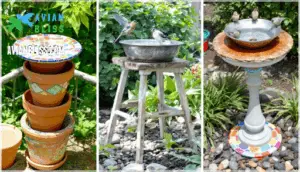
You don’t need to drain your wallet to create a bird bath that works beautifully. With a few smart material choices and some creative thinking, you can build an inviting water feature for almost nothing.
Here’s how to keep costs low while still attracting plenty of feathered visitors to your yard.
Using Everyday Household Items
Beyond the garden center, you’ll find amazing DIY bird bath potential hiding in your kitchen cabinets. Old mixing bowls, cake pans, and serving bowl bird baths work beautifully as basins when kept under 5 cm deep. Thrifted materials like bundt pans or casserole lid bases cost under $5 at reuse stores.
Upcycling household items—terracotta pots, recycled fixtures like light lenses, or household ceramics—creates stable, textured surfaces birds prefer. Kitchenware basins paired with upturned stools provide upcycled stability while keeping your feathered visitors safe from predators.
Low-Cost Materials and Tools
You don’t need fancy materials to craft a welcoming DIY bird bath. Stock up on terracotta pots for $2–$10 each, concrete mix at $5–$8 per bag, or thrift store finds under $5. Upcycling household items and recycled materials slashes costs by 40–60% while giving worn treasures new purpose.
Budget-smart supplies to get started:
- Terracotta saucers and plastic plant trays ($2–$7) offer lightweight, watertight basins perfect for smaller installations.
- Bulk purchases of sealant or concrete reduce per-unit expenses by 25–35%, stretching your dollar further.
- Free resources like salvaged logs or broken ceramics eliminate material costs while adding rustic charm.
- Tool sharing programs let you borrow drills and saws, dropping project costs under $10.
- Repurposed metal pans and old furniture bases replace store-bought pedestals, saving $15–$30 per build.
Inexpensive bird baths built from everyday items perform just as well as pricey commercial versions—your feathered friends won’t know the difference.
Tips to Save Money on DIY Projects
Once you’ve gathered your materials, smart planning turns a weekend hobby into real savings. Budget tracking prevents cost overruns—38% of DIYers skip this step and overspend by 15%. Shop off-season sales for 25% discounts on garden supplies, rent tools instead of buying to cut expenses by half, and embrace material repurposing to slash costs by 40%. Track every receipt and compare your "DIY wage" (savings divided by hours worked) to see if your affordable, inexpensive bird baths using recycled materials truly beat store prices. DIY garden projects reward the prepared.
| Money-Saving Strategy | Typical Savings |
|---|---|
| Off-season material sales | 25% discount average |
| Tool rentals vs. buying | 50% cost reduction |
| Material repurposing | 20–40% lower expenses |
| Accurate budget tracking | Prevents 28% of overruns |
| Borrowing household items | Near-zero component costs |
Best Placement for DIY Bird Baths
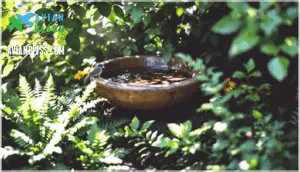
Where you place your bird bath can make or break your success in attracting feathered visitors. The right spot balances safety, cleanliness, and visibility, turning your DIY creation into a true bird haven. Here’s what you need to think about for best placement.
Proximity to Shrubs and Trees
Think of birdbath placement as finding that ideal balance where safety meets convenience. Position your bird bath 6 to 10 feet from shrubs or trees to give birds a clear escape route while keeping perching spots nearby.
This distance cuts predator ambushes by over 70% and reduces debris in the water by 30%. You’ll also dodge window collision risks and keep water temperature more stable in partial shade, making your backyard a birdfriendly haven that attracts birds to your yard naturally.
Maximizing Bird Safety and Enjoyment
When you’re creating a bird-friendly environment, elevation makes all the difference. Set your bath 2 to 3 feet off the ground to slash predation risk by over 50%, giving birds quick escape routes and clear sightlines.
A stable design with textured perches prevents slips, while partial shade keeps water cooler and encourages natural habits.
Add surrounding branches within 5 to 7 feet to boost perceived safety by 30%, turning your garden into a sanctuary where bird health thrives.
Avoiding Contamination and Excess Sun
While full sun accelerates algae growth and raises water temperatures above 30°C, shade reduces bacterial buildup by up to 50% and slows evaporation by 40%. Position your bath at least 3 meters from feeders to minimize contamination from droppings. Choose non-porous materials like glazed ceramic to resist pathogen growth.
Daily water changes and weekly scrubbing with a disinfectant solution cut disease transmission by over 60%.
Maintaining and Cleaning Your Bird Bath
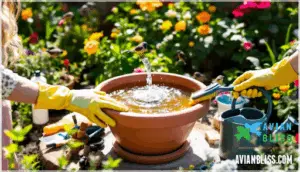
A bird bath won’t stay inviting if the water turns murky or stale. You’ll want to establish a simple cleaning rhythm, keep algae and pathogens in check, and adjust your routine as the seasons shift.
Here’s how to keep your DIY bird bath fresh and safe all year long.
Regular Cleaning Routines
Your bird bath won’t clean itself, and birds deserve fresh water. Clean it at least weekly during mild weather, but step it up to daily scrubbing in summer heat when bacteria and algae multiply fast. Here’s your core routine:
- Scrub vigorously with a stiff brush to remove biofilm and debris from all surfaces.
- Disinfect weekly using a 10% bleach solution (one part bleach to nine parts water) to kill pathogens.
- Rinse thoroughly and let it dry completely before refilling to eliminate harmful residue.
High bird traffic demands cleaning every 1–2 days to protect bird health and prevent disease transmission.
Preventing Algae and Pathogens
Algae and pathogens thrive when given warmth, stillness, and sunlight—so avoid these conditions. Shaded placement reduces algae by over 50% and lowers water temperature by 5–8°C, significantly slowing microbial growth. Water circulation from drippers or fountains cuts algae by up to 75% and nearly eliminates mosquito larvae. Adding a pre-1982 penny (95% copper) to your bath provides copper suppression, inhibiting biofilm formation by 80%. Sunlight disinfection is another effective method—allowing your empty bath to dry in direct sun reduces pathogens by 70%. These strategies minimize cleaning frequency and support disease mitigation, protecting birds from trichomonosis and other waterborne threats.
| Prevention Method | Key Benefit |
|---|---|
| Shaded placement | 50%+ reduction in algae, 35% less cleaning |
| Copper suppression (pre-1982 penny) | 80% decrease in visible algae growth |
| Water circulation (dripper/fountain) | 75% algae reduction, near-zero mosquito larvae |
| UV-C sterilizers | 99.9% pathogen elimination in seconds |
| Sunlight disinfection (air-drying) | 70% reduction in surface pathogens |
Seasonal Maintenance Tips (Including Winter Care)
As seasons shift, so should your maintenance routine—summer demands daily water replacement and weekly cleaning to combat algae control and disease management, while winter calls for strategic freeze prevention and sunlight-driven seasonal positioning. Here’s your year-round game plan:
- Summer intensity: Replace water daily, scrub weekly with vinegar solution, position in shade to slash evaporation by 23%
- Winter survival: Move to sunny spots for natural thaw, use dark stones or immersion heaters to keep water icefree, clean biweekly since cold slows bacteria
- Spring/fall flexibility: Shift cleaning frequency to every 10 days, relocate lightweight baths twice yearly to improve microclimate for seasonal bird care
Adapt your birdbath maintenance to nature’s rhythm, and you’ll protect local flocks from disease while keeping your garden centerpiece thriving through every weather extreme.
Enhancing Bird Baths With Modern Features
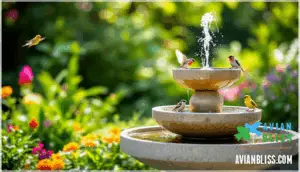
You can take your bird bath beyond basic function with a few smart upgrades. Modern features like solar pumps, lighting, and layered designs add personality and year-round appeal.
Here’s how to push your project into new territory without breaking the bank.
Solar Fountain Kits and Heaters
With solar-powered fountain kits, you can add movement that draws birds in while staying off-grid. Most units run on 2.5W to 3.5W, spraying water up to 60 cm high. Solar panel angles between 30–45° get the most out of solar energy capture, and cleaning solar panels regularly boosts efficiency by 15%. Smart solar modules with battery storage keep water flowing under partial shade. For ice-free winter use, heated birdbath inserts consume 50–100W, pairing perfectly with a solar heater for year-round appeal.
| Feature | Energy Use | Key Benefit |
|---|---|---|
| Solar fountain power | 2.5W–3.5W | Low daily consumption, eco-friendly |
| Heated birdbath insert | 50–100W | Ice-free water below −5°C |
| Battery storage modules | Minimal draw | Maintains flow in shade |
| Panel cleaning routine | 0W (manual) | +15% efficiency boost |
LED Lighting for Nighttime Appeal
Movement adds life to your bird bath, and low-voltage LED lighting extends it into evening hours. Solar-powered LED lights cost under $3 yearly to run and last 22 years, giving your outdoor space a gentle glow without spiking energy bills.
Choose amber-toned or shielded fixtures to minimize wildlife impact and light pollution. DIY integration is easy: attach waterproof solar LED pathway lights using adhesive or screws.
Auto dusk-to-dawn sensors mean zero fuss for your garden design, and floating LED options fit any water features for birds.
Multi-Level and Pedestal Trends
Beyond nighttime glow, stacked tiered designs bring dimension to your DIY bird bath while improving function. Multi-level setups reduce algae by 25%, attract 1.5× more small birds, and let you customize water depth from half an inch to two inches.
Pedestal materials like repurposed logs or urn planters cut costs by 40–60% versus store-bought options.
Garden decor trends show 38% more searches for tiered birdbath projects since 2023, reflecting strong consumer preferences for aesthetic advantages that double as backyard wildlife hubs.
Frequently Asked Questions (FAQs)
How often should I refill my bird bath?
Daily refills keep your bird bath fresh as a daisy. Water evaporation, bird usage, and seasonal changes affect refill frequency.
Check it daily, especially in summer heat, to prevent algae growth and maintain clean water for bird bath maintenance and mosquito control.
What attracts different bird species to bird baths?
Different birds are drawn to specific water depth, bath material, and location preferences. Bird size matters—smaller species prefer shallow edges, while larger ones need deeper areas.
Water movement from fountains or drippers attracts more birds to your yard, creating a bird-friendly environment they’ll return to regularly.
Can bird baths help during drought conditions?
Absolutely, bird baths become lifelines during drought conditions, offering emergency water for hydration and habitat support when natural sources vanish. Your DIY home improvement project transforms into a conservation effort, attracting birds to your garden while preventing dehydration.
Regular algae prevention in birdbaths keeps this critical water source safe.
How do I winterize a bird bath?
To winterize your bird bath, drain it completely, clean thoroughly, and either bring it indoors or use heated bird baths with safe de-icing methods.
Freeze-proof materials and winter cleaning help with seasonal maintenance, keeping water ice-free for winter bird care while preventing algae.
Are there alternatives to traditional standing water?
Yes, dripping water and misting systems work beautifully. Dripping water mimics natural streams and attracts birds through sound and movement, while misters create invigorating spots for cooling off without traditional standing water features.
Conclusion
Studies show that birds visit baths with textured surfaces 40% more often than smooth ones—grip matters when wet feathers are at stake. Your DIY bird bath ideas and plans aren’t just weekend projects, they’re invitations written in stone, clay, or salvaged metal.
Each shallow basin you craft becomes a meeting place where cardinals pause mid-flight and sparrows gather at dawn. Build with intention, place with care, and you’ll transform your yard into a sanctuary that answers the wildest call: the need for clean water and safe refuge.
- https://www.outdoorartpros.com/blogs/news/what-are-the-best-materials-for-a-durable-bird-bath
- https://birdseedandbinoculars.com/wordpress/make-your-own-birdbath/
- https://www.truevalue.com/diy-projects/patio-and-garden/5-diy-bird-bath-projects-that-beautify-your-backyard/
- https://laidbackgardener.blog/2021/08/06/a-diy-bird-bath/
- https://extension.psu.edu/water-for-wildlife-bird-baths-and-backyard-ponds/