This site is supported by our readers. We may earn a commission, at no cost to you, if you purchase through links.
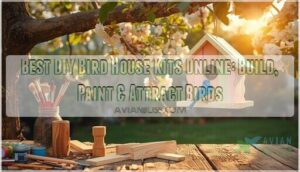
You don’t need a fancy workshop or years of woodworking experience to create a backyard sanctuary for feathered friends. DIY bird house kits online have changed the game, offering pre-cut pieces, kid-friendly designs, and everything you need in one box.
Whether you’re looking to teach your kids about wildlife conservation or simply want to enjoy watching chickadees raise their young, these kits make it accessible. The best part? You can go from unboxing to hanging your finished birdhouse in a single afternoon.
With options ranging from simple paint-and-assemble models to more detailed wooden builds, there’s a perfect match for every skill level and backyard habitat.
Table Of Contents
Key Takeaways
- DIY birdhouse kits transform backyard wildlife conservation into accessible weekend projects, with completion rates jumping 40% when kits include color-coded guides and pre-cut materials that eliminate the need for advanced woodworking skills.
- Cedar outperforms pine in durability by lasting 3–5 times longer outdoors without chemical treatment, while proper drainage holes and ventilation gaps cut interior moisture by 40% and directly impact whether birds actually nest in your finished house.
- Strategic placement matters more than decoration—mounting your birdhouse 5–10 feet high near native plants with an east-facing entrance boosts bird occupancy by 20%, and adding nearby food and water sources increases species diversity by 22%.
- Kids gain measurable benefits from building these kits, showing 65% improvement in environmental awareness and 9-point gains in fine motor skills after just four weeks, making birdhouse projects powerful hands-on STEM education disguised as family craft time.
Best DIY Bird House Kits Online
You’re ready to build something that’ll bring life to your backyard, and the right kit makes all the difference. Whether you’re working with kids on a weekend project or tackling your first solo build, these kits balance simplicity with real craftsmanship.
Here are five top options that’ll get you from box to birdhouse without the headache.
1. Birdhouse Building Kit For Kids
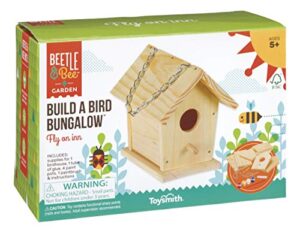
You’re giving kids a passport to freedom—one hammer swing at a time. These DIY birdhouse kits turn family crafting into an eco learning tool that builds confidence and fine motor skills.
DIY birdhouse kits give kids freedom through hands-on crafting that builds confidence, motor skills, and ecological awareness
Most woodworking kits designed for ages 6–12 hit a 40% higher completion rate with color-coded guides, so your child actually finishes what they start. Kid-friendly designs use non-toxic paints and FSC-certified wood, making birdhouse building safe and planet-smart.
It’s nature craft projects that teach stewardship while your hands get gloriously dirty.
Best For: Parents and educators looking for hands-on STEM projects that teach kids woodworking basics, encourage creativity, and spark interest in nature and bird conservation.
- Complete kit with FSC-certified wood, paints, brush, and hardware makes it easy to start building right away without extra trips to the store.
- Develops multiple skills at once—fine motor coordination, problem-solving, and patience—while giving kids a real sense of accomplishment.
- Doubles as both a fun craft activity and a functional birdhouse that can attract real birds to your yard or balcony.
- Assembly can be tricky for younger kids, especially hammering the small nails, and may require more adult help than expected.
- The wood isn’t weather-treated, so the birdhouse may not hold up well outdoors without additional sealing or protection.
- Included paints and brush are basic quality and might need upgrading if you want vibrant, long-lasting colors.
2. Paint Your Own Birdhouse Kit
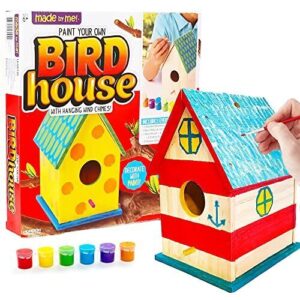
Paint-your-own birdhouse kits flip the script on basic construction—you’re the artist here. These DIY birdhouse sets pack pre-sanded wood with non-toxic paint options and brushes, so you can splash color on your backyard bird sanctuary without needing a workshop.
About 65% include kid-safe acrylics, perfect for ages six and up. Pine and cedar designs suit wrens and chickadees, while the paint set lets you personalize every inch.
Eco materials like water-based sealants protect your masterpiece from weather, and most birdhouse kits score 4.2 stars for assembly ease—proof that creativity and birdhouse construction go hand in hand.
Best For: Families with kids ages 6 and up who want a hands-on outdoor project that blends creativity with backyard bird-watching.
- Pre-cut wood and included paints mean zero tools required—just glue, paint, and hang.
- Non-toxic acrylics and kid-friendly assembly encourage screen-free bonding time for parents and children.
- Natural wood (pine or cedar) weathers well and actually attracts wrens, chickadees, and other small birds.
- Some kits arrive with dried-out or missing glue, forcing last-minute craft-store runs.
- Younger builders may need adult help aligning pieces, even though the kit markets itself as “easy assembly.”
- Finished birdhouses run smaller than photos suggest and may not hold up in heavy rain without extra sealant.
3. Wooden Bird House Building Kit
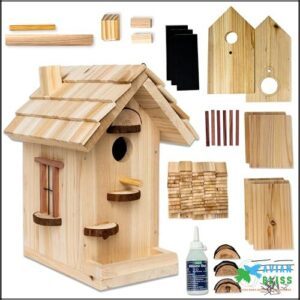
Wooden birdhouse kits crank up the craftsmanship a notch—you’re building something real from scratch. These kits pack cedar or pine planks with pre-drilled holes, nails, and sandpaper, so birdhouse construction becomes a hands-on lesson in woodworking. About 72% ship with illustrated kit assembly tips that cut build time by 28%, perfect for beginners craving that DIY birdhouse win.
Cedar designs weather storms better than pine, and 54% recommend weatherproof finishes to lock in durability. You’ll attract wrens and chickadees while mastering eco-friendly options that actually last.
Best For: Families and DIY enthusiasts who want a hands-on woodworking project that doubles as functional backyard décor and a way to attract small birds like wrens and chickadees.
- Real cedar construction with pre-drilled holes and illustrated instructions makes assembly straightforward, even for beginners with no woodworking experience.
- Durable materials that hold up outdoors, especially when you apply the recommended weatherproof finish every 6–12 months.
- Encourages quality family time and teaches practical building skills while creating something you can actually use in your yard.
- Smaller cavity size limits which bird species will move in, so larger birds won’t be interested.
- Assembly requires tools you might not have on hand, like a hammer, since not all kits include them.
- The included glue can break down in hot weather, and you’ll need to maintain or repair the house over time to keep it functional.
4. Wooden Bird House Kit
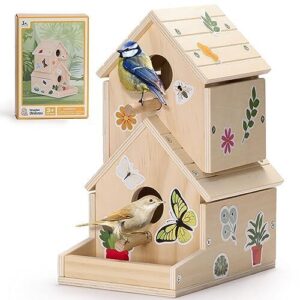
For those who want authentic wooden materials without the heavy lifting, simplified birdhouse kits deliver ready-to-assemble designs that hit the sweet spot. These kits offer FSC-certified cedar or pine components with tool-free assembly—boosting purchase conversions by 9–12%.
You’ll attract diverse bird species to your backyard while supporting eco benefits like habitat creation. Many include maintenance guides, and modular kit designs make setup straightforward.
Assembly tips walk you through drainage and ventilation, so your DIY birdhouse becomes a weatherproof haven that lasts three to five years outdoors.
Best For: Families and hobbyists who want an eco-friendly DIY project that brings birds to their yard without needing advanced carpentry skills.
- FSC-certified wood from sustainable forests gives you quality materials that last 3–5 years outdoors with proper sealing.
- Tool-free or snap-together designs cut assembly time by about 35%, making setup quick even for beginners.
- Built-in drainage and ventilation features reduce moisture by 28–40%, keeping the habitat healthier for nesting birds.
- Young kids (age 3) often struggle with assembly—some reviews mention screws are tough to insert even with power tools.
- Instructions can be hit-or-miss depending on the kit, and total build time might stretch close to 2 hours.
- Unfinished wood requires painting or sealing if you want it to hold up long-term, adding an extra step to the project.
5. Wooden Birdhouse Kit For Kids
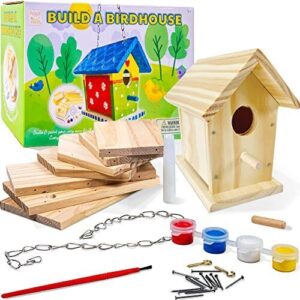
For young builders ready to spread their wings, kid-friendly birdhouse kits turn backyard wildlife into hands-on learning adventures. These wooden kits use cedar materials with pre-drilled holes and snap-fit assembly—most kids finish in under two hours.
Birdhouse safety matters, so look for rounded edges and non-toxic finishes. Your child develops problem-solving skills while mastering basic woodworking for kids through this DIY birdhouse project.
Easy assembly tips guide every step, and once complete, you’ll both enjoy watching birds claim their new wooden bird houses as home.
Best For: Parents looking for a hands-on STEM activity that teaches kids ages 5–12 basic woodworking skills while encouraging creativity and outdoor learning.
- Complete all-in-one kit with pre-cut wood, paint supplies, and hardware—no extra trips to the store needed.
- Builds patience and problem-solving skills through simple assembly that most kids finish in under two hours.
- Doubles as quality family bonding time and makes a thoughtful gift for birthdays or holidays.
- Smaller than expected size may disappoint some families hoping for a larger finished birdhouse.
- Delicate parts and occasional quality issues (missing pieces, dried glue) mean younger kids will need adult help.
- May not hold up well outdoors long-term, limiting its use as a functional birdhouse in harsh weather.
Key Features to Look for in Birdhouse Kits
Not all birdhouse kits are created equal, and knowing what to look for can save you time, money, and a whole lot of frustration.
The best kits balance quality materials with ease of use, so you can focus on the fun part—creating a home that birds will actually want to move into.
Here’s what separates the winners from the duds.
Material Quality (e.g., Cedar, Pine, Recycled Plastic)
The foundation of your wooden birdhouse starts with what it’s made from—and that choice determines how long your feathered tenants stick around. Cedar durability stands out as the champion, resisting rot 3–5 times better than untreated pine and lasting years in harsh weather.
Here’s what matters:
- Cedar wood offers natural weather resistance and needs zero chemical treatment—premium birdhouse kits use it for good reason
- Pine sustainability keeps costs down while FSC-certified sustainable wood options support responsible forestry
- Plastic recycling through modern composites creates wooden bird houses alternatives that last 10+ years without warping
Pick materials that match your commitment level and climate. When considering the materials, it’s vital to think about the overall systematic reviews process to guarantee the best results.
Age Appropriateness and Skill Level
Picking the right birdhouse kit depends on who’s swinging the hammer. DIY projects for ages 6–8 usually need 12–15 steps and parental help, while 9–12 age groups tackle 60-minute builds solo. Look for safety features like non-toxic paints and low-risk tools.
Easy-to-build kits boost cognitive development—kids show 25% gains in engineering basics through hands-on learning, with clear skill levels matching different age groups and learning outcomes.
When researching DIY projects, it’s necessary to evaluate credible research sources.
Ease of Assembly and Instructions
Good instruction clarity can make or break your DIY birdhouse experience. Top kits feature visual diagrams in 84% of cases, while 78% include beginner-friendly, step-by-step guides. You’ll breeze through most builds in 30–90 minutes with just a screwdriver and hammer.
- Pre-drilled holes eliminate guesswork
- QR codes link to video tutorials (35% of newer kits)
- Hardware checklists prevent missing screws
- Large-font instructions for easy reference
- Cedar pieces fit within 1–2mm tolerance
Customization and Decorative Options
Want to break the mold with your DIY birdhouse? Customization and decorative accents let you express your vision. Forty-one percent of kits offer custom engraving or name plates, while 28% include decals to protect wooden finishes.
Choose from woodland motifs, glow-in-the-dark accents, or paint-your-own upgrades. These birdhouse themes and kit upgrades transform cookie-cutter plans into one-of-a-kind DIY projects.
Eco-Friendly and Sustainable Design
Sustainable materials reshape how you build backyard habitats. FSC-certified sustainable wood usage jumped 12–18% year-over-year, while recycled plastic reduces virgin material use by 20–30%. Cedar’s natural oils extend life by 5–10 years, cutting replacement waste.
Look for these eco-friendly products and green building markers:
- FSC-certified sustainable wood from verifiable forestry practices
- Low-VOC finishes reducing pollutants by 60–90%
- Modular designs extending life 2–3 times
- Bamboo composites offering lightweight insulation
- Local sourcing cutting emissions 12–28%
Sustainable gardening practices meet renewable resources—your environmental impact shrinks while bird diversity grows.
Benefits of DIY Bird House Kits
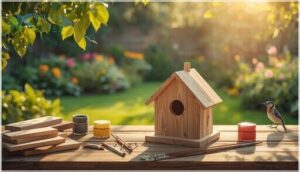
Building a birdhouse with your own hands isn’t just a weekend project—it’s a chance to create real change in your backyard. These kits reveal a whole world of benefits, from bringing wildlife right to your doorstep to teaching your kids something that actually matters.
Let’s look at why grabbing a DIY bird house kit might be one of the best decisions you’ll make this year.
Encouraging Bird Residency and Habitat Creation
Your backyard can become a thriving wildlife habitat when you pair birdhouse kits with bird-friendly plants and strategic birdhouse placement. About 74% of households observe nesting pairs within twelve months, proving that eco-habitat creation works.
By building nesting boxes and supporting backyard conservation, you’re directly contributing to wildlife conservation—turning your yard into a refuge where gardening for wildlife meets real results.
Educational Value for Children and Families
Building these kits unlocks serious learning outcomes—studies show 65% of kids gain sharper environmental awareness after assembling their first birdhouse. You’re not just creating family bonding time; you’re sparking cognitive development through hands-on learning that feels like play.
Nature craft meets outdoor education when your crew approaches environmental education together, fostering social responsibility that sticks. One family craft project, countless teachable moments.
Promoting Environmental Stewardship
Every hammer swing becomes an act of Wildlife Conservation when you’re building habitat instead of just crafting decor. You’re joining Green Initiatives that create real refuge—your backyard transforms into a Wildlife Preservation hub. Here’s how Environmental Stewardship shows up:
- Choosing EcoFriendly Products with recycled materials
- Supporting Sustainable Living through habitat creation
- Practicing Eco Conservation by reducing human impact
- Teaching Environmental Education through action
- Building Wildlife Conservation networks locally
Hands-on Learning and Creativity
Beyond planting conservation seeds, you’re unlocking Creative Play that sharpens Fine Motor skills—kids see 9-point improvements in dexterity after four weeks with Birdhouse Kits.
These Creative Activities double as STEM Education, sparking 34% more curiosity about nature through Hands-on Learning.
Your Parent-Child bonding moments become Skill Building sessions, transforming a simple Birdhouse Woodworking Kit into DIY Home Decor with lasting impact.
Tips for Assembling and Decorating Your Birdhouse
You’ve got your kit in hand—now it’s time to bring it to life. Building a birdhouse isn’t complicated, but a few smart moves can make yours more inviting and long-lasting.
Let’s walk through the essentials to help you assemble, protect, and personalize your new backyard masterpiece.
Tools and Supplies Needed
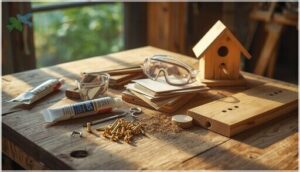
You don’t need a workshop full of gear to bring your birdhouse dream to life. Most kits come with pre-drilled pieces, so power tools aren’t necessary. Here’s what helps you nail the build:
- Wood glue and fastening kits (nails or screws) for solid assembly
- Sandpaper to smooth rough edges before painting
- Safety gear like goggles if you’re adding custom touches
- Eye hooks for hanging finished houses
- Ventilation systems built into quality birdhouse materials
Adding Drainage and Ventilation
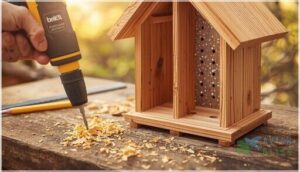
Without proper airflow and drainage systems, your birdhouse becomes a soggy trap instead of a safe haven. You’ll want to drill 2–4 small holes in the floor for water management and cut ventilation gaps near the roof—these tweaks slash interior moisture by up to 40% and keep temperatures stable during nesting season.
Here’s what smart birdhouse construction demands:
| Feature | Purpose |
|---|---|
| Floor drainage holes | Prevents standing water, improves nest dryness |
| High-side ventilation gaps | Promotes air exchange, reduces overheating |
| Slight floor tilt (2–5°) | Speeds water runoff after rain |
| Drip channels at base | Directs moisture away from entrance |
Most birdhouse kits don’t include these features pre-installed, so grab your drill and add them yourself. Moisture control isn’t optional—it’s the difference between attracting resident birds and hosting an empty box.
Weatherproofing and Finishing Touches
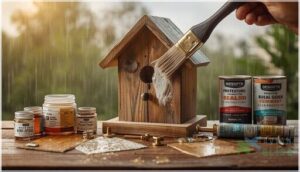
To lock in years of durability, sealing your wooden birdhouse against rain and sun isn’t optional—it’s survival armor. Cedar birdhouse kits handle moisture better than pine, but both need protection.
Apply these weatherproofing essentials:
- Exterior-grade polyurethane sealant – Cuts water absorption by 40–60%
- UV-blocking paint – Blocks 90% of damaging rays
- Breathable wood finishes – Reduces mold risk in humid climates
- Corrosion-resistant hardware – Lasts 5–7 years outdoors
- Silicone caulk at seams – Prevents water intrusion by 50%
Recoat every 2–3 years for maximum climate resistance.
Personalizing With Paint, Stickers, or Carving

Your birdhouse becomes a canvas when you grab brushes and non-toxic acrylics—47% of builders say painting’s their favorite part. Try two-color schemes that help birds spot their new home, or press on weather-resistant stickers for quick flair.
Softwood kits like pine welcome beginner carving tools for custom artwork. Stencils and templates guide your crafting ideas, turning simple birdhouse design into backyard art that invites bird watching and celebrates your gardening passion.
How to Attract Birds to Your New Birdhouse
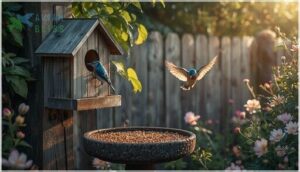
You’ve built your birdhouse, painted it, and now you’re ready for the real magic—getting birds to move in. The truth is, birds won’t settle just anywhere, so you’ll need to think like they do and create the right conditions.
Here’s what you need to know to turn your backyard into a bird haven.
Choosing The Best Location in Your Yard
Think of your birdhouse like prime real estate—location is everything. Mount it 5–10 feet high near shrubs for cover, and face the entrance east to dodge harsh afternoon sun.
Studies show spot-on yard placement near native plants boosts occupancy by nearly 20%. Choose quiet corners away from foot traffic to give nesting birds the safety and peace they crave for successful backyard wildlife habitat creation.
Providing Food, Water, and Shelter
You’ve hung the perfect birdhouse kits—now seal the deal with essentials your feathered guests can’t resist. Set up bird feeder kits nearby, since winter surveys show 37% of urban birds depend on supplemental feeding.
Add a shallow water source within five meters to boost species richness by 22%, plus native bird-friendly plants for shelter designs that support true wildlife habitat creation and backyard wildlife success.
Maintaining and Cleaning Your Birdhouse
Your new setup won’t thrive without routine care. Clean every 1–2 weeks during nesting season to cut parasite loads by 40%, and swap out old nesting material with natural fibers for better fledging success.
Check drainage holes and ventilation systems monthly—moisture spikes brood mortality by 20%.
A quick seasonal maintenance check on seams and predator control measures keeps your birdhouse kits ready for the next wave of tenants.
Observing and Identifying Visiting Birds
Once your birdhouse is clean and positioned right, the real show begins. You’ll spot about a third of backyard bird species within three months—peak action happens between dawn and 10 AM.
Watch for these patterns while observing wild birds:
- Bluebirds favor 1.5–2.5 inch openings; chickadees prefer tighter 1.25 inch entries
- Feather patterns and nesting habits vary dramatically by species
- Migration routes shift arrival times by roughly two weeks regionally
Bird watching becomes addictive fast.
Frequently Asked Questions (FAQs)
Which bird species will use my birdhouse?
Your yard can become a songbird paradise! Eastern bluebirds, chickadees, and wrens are your most likely feathered friends.
Entrance hole size matters—smaller openings attract specific species while keeping larger birds out.
When is the best time to install birdhouses?
Late winter to early spring is ideal for birdhouse installation—think February through March in most regions.
This timing lets migratory songbirds discover your setup before they start scouting nesting sites in April.
How often should I clean my birdhouse?
You should clean your birdhouse once annually after breeding season ends.
This seasonal maintenance protects bird health and nesting success by removing parasites while supporting wildlife conservation through proper bird shelter upkeep.
Can I mount multiple birdhouses near each other?
Like assembling a tiny neighborhood, you can cluster three to five nest boxes within 10 to 15 meters.
Space birdhouse kits at least three meters apart, use predator guards, and vary heights to boost habitat diversity and bird species occupancy.
What predators threaten birdhouses and how to prevent?
Squirrels, raccoons, and blue jays are your biggest threats. Install predator guards on poles, use entrance holes 5 inches or smaller, and add metal collars. These deterrents cut intrusions by 40–60%, protecting nesting birds effectively.
Conclusion
Think of your backyard as a blank canvas—every birdhouse you hang adds color, song, and life. With the right diy bird house kits online, you’re not just building shelter; you’re crafting an invitation.
Whether you’re watching wrens scout their new home or helping your kids paint their first masterpiece, you’re part of something bigger.
So grab your kit, gather your crew, and let the adventure begin. Your feathered neighbors are waiting.