This site is supported by our readers. We may earn a commission, at no cost to you, if you purchase through links.
You fill your bird bath each morning, yet local cardinals ignore it while house sparrows arrive in noisy flocks. This isn’t random chance. Research shows birds evaluate bath designs with striking precision, weighing factors from water depth to substrate texture before they commit to a landing.
A Carolina chickadee won’t approach the same setup that attracts an American robin, and understanding these preferences transforms your yard from an empty basin into a bustling avian oasis.
The distinction between a bird bath that sits dry and one that becomes a neighborhood gathering spot often comes down to a handful of design elements birds instinctively seek.
Table Of Contents
Key Takeaways
- Birds consistently favor baths with 1-2 inch water depth, gradual slopes, and textured surfaces like gravel that prevent slipping while mimicking natural water sources they instinctively trust.
- Moving water attracts significantly more songbirds than still basins because the sound and visual movement signal freshness and safety, reducing algae growth while drawing diverse species.
- Strategic placement 10-15 feet from feeders with nearby vegetation for quick escapes and partial shade creates the visibility-cover balance birds require to bathe confidently without predator exposure.
- Weekly cleaning with mild soap and replacing water every 2-3 days prevents algae and bacterial growth that threatens bird health, while heated baths maintain access during freezing temperatures.
Do Birds Prefer Certain Bird Bath Designs?
You might wonder if your bird bath design actually matters to the birds visiting your yard. Scientific research and careful observation reveal that birds do show clear preferences regarding bath features, placement, and water conditions.
Let’s examine what the evidence tells us about bird bath preferences and the specific elements that consistently attract more avian visitors.
Research on Bird Bath Preferences
Studies reveal what draws avian visitors to your yard. Research shows bird-friendly bath designs align with natural water sources, impacting bird diversity and bathing habits markedly:
- Multiple depths accommodate species variation in size and preference
- Shallow edges with gradual slopes reduce perceived danger
- Water clarity influences landing decisions and repeat visits
- Moving water attracts more small songbirds than still sources
- Natural substrates nearby increase ground-forager usage
The use of scientific study summaries can help inform the design of bird-friendly baths.
Bird Behavior and Bath Usage Patterns
Your bird-friendly setup becomes busiest during early morning and late afternoon, when avian visitors arrive for feather maintenance and avian hydration. Bathing frequency peaks after rain, especially in hot weather above 25°C, as water temperature and availability drive bird behavior.
Bird socialization increases near feeders, where mixed species gather. Proximity to perches reduces predator vigilance, encouraging more confident bird behavior and habitat use by your avian visitors.
Common Features Birds Seek in Baths
What draws your visitors in? Water depth of 1 to 2 inches lets them bathe without risk. Shallow basins with sloped edges offer safe entry, while surface texture—like gravel—prevents slipping. Moving water stimulates their senses, and naturalistic designs with rocks create familiarity. These bird-friendly features transform bath safety from concern into comfort.
Birds seek shallow water, textured footing, and naturalistic features that transform safety concerns into confident bathing comfort
- Gentle slopes welcome even the smallest songbirds to approach with confidence
- Textured footing means no panic mid-splash, just pure bathing joy
- Clear edges let your visitors see predators before danger arrives
- Fresh water signals safety—stagnant pools trigger their instinct to flee
Key Design Elements Birds Favor
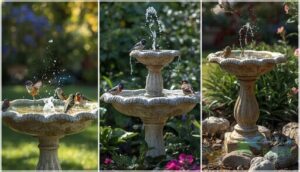
If you want birds to actually use your bath, you’ll need to understand what catches their attention and keeps them coming back. Certain design features consistently outperform others regarding attracting a diverse range of species.
Let’s look at three elements that make the biggest difference in turning your bird bath into a backyard hotspot.
Importance of Naturalistic Features
When birds scout for a place to bathe, they’re looking for something that feels wild and familiar—not a factory-made fixture. Naturalistic designs with irregular edges, rough textures, and varied substrates mimic the shallow streams and pools they’d find in nature. This visual realism signals safety and comfort, making your bath irresistible. Think rocks, gravel, and uneven rims that invite different species to hop in.
| Feature | Why Birds Love It | Garden Design Tip |
|---|---|---|
| Natural textures (stone, gravel) | Provides grip and authentic feel | Mix smooth and rough surfaces around rim |
| Edge variability (uneven heights) | Accommodates species of all sizes | Create multiple entry points with rocks |
| Substrate mix (sand, pebbles) | Mimics wild water sources | Layer fine materials at shallow edges |
Naturalistic designs aren’t just pretty—they transform your yard into a bird-friendly garden that fulfills real wildlife gardening goals. When you integrate nature-inspired decor with intentional garden design for wildlife, you’re building a sanctuary birds trust.
Optimal Water Depth and Slope
You want water that’s 1 to 2 inches deep—shallow enough for warblers to dip safely but varied enough to let jays wade. A gentle slope from rim to center gives birds control, while textured edges prevent slips. Depth beyond 2 inches scares smaller species, so aim for:
- Gradual transitions between shallow zones and slightly deeper drinking areas
- Non-slip surfaces on rims and entry points
- Uniform slope to avoid drowning risks in tight basins
Benefits of Moving Water
Splashing water features transform your bird bath design into a magnet—moving water drives higher visitation than still bowls, creating splash zones and aeration benefits that reduce algae. Flow rates matter: gentle drips and water circulation beat erratic jets, mimicking natural streams birds trust.
Evaporation effects keep surfaces fresh, while outdoor water features with audible movement signal safety, drawing warblers and finches to bird-friendly setups season after season.
Best Bird Bath Types and Materials
Choosing the right bird bath means weighing materials, styles, and features that match both your yard and the birds you want to attract. Each option comes with its own set of advantages and drawbacks, from durability to ease of cleaning.
Let’s break down the most popular types so you can find what works best for your feathered visitors.
Pros and Cons of Common Materials

Material matters when you’re setting up a DIY birdbath or choosing a ready-made option. Concrete and metal offer outstanding weather resistance and material durability, though metal heats up quickly in direct sun. Plastic provides cost-effectiveness but degrades under UV exposure, while ceramic adds aesthetic appeal yet cracks in freezing temperatures.
Stone retains cool water and resists weathering, making it an eco-friendliness champion—just remember it’s heavy to relocate.
Ground-Level Vs. Pedestal Baths
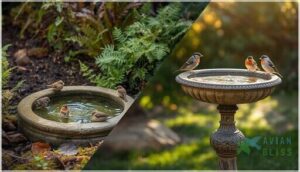
You’ll find ground-level bird baths mirror natural puddles, drawing in cautious sparrows and juncos who prefer shallow basins at 4–6 inches deep. Pedestal bird baths raise water 1–3 inches high, improving bird safety by boosting visibility against predators.
Ground cover around low designs enhances bath accessibility, while pedestal heights suit perched species—both designs work if you match water depth to your feathered visitors’ needs.
Heated Bird Baths for Winter Use
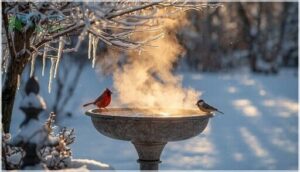
When temperatures drop below freezing, heated bird baths become essential bird hydration systems—their submersible elements maintain water around 40–60°F to prevent ice formation. Proper winter bird care includes insulating the base to minimize heat loss, ensuring your cold climate adaptations keep bird-friendly, accessible water flowing through harsh winter considerations.
You’ll need an outdoor GFCI outlet for heated bath safety, while moving water from low-watt circulars offers frozen water solutions.
Placement and Safety for Maximum Bird Attraction
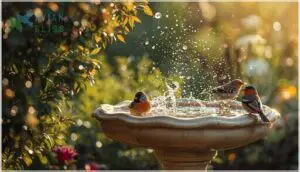
You’ve picked the perfect bird bath, but where you put it matters just as much as the design itself. Birds won’t visit a bath that feels exposed or dangerous, no matter how beautiful the basin.
Let’s look at the key placement decisions that keep your feathered visitors safe while encouraging regular use.
Ideal Bath Location in The Yard
Your backyard layout directly impacts how birds will discover and trust your bath. Position it where morning sun warms the water early, but afternoon shade prevents overheating—usually 10 to 15 feet from feeders to reduce disease transmission.
Level terrain slope ensures stable water depth, while strategic placement near vegetation creates a bird-friendly garden that fosters wildlife habitat creation without compromising visibility for quick escapes.
Providing Cover and Visibility
Birds need a balance—vegetation cover near your bird bath lets them stage quick retreats, but visible edges keep them aware of threats. Here’s how to create that safety zone:
- Position shrubs or branches 3–5 feet away for predator avoidance
- Maintain open sightlines around the basin’s perimeter
- Use naturalistic designs with partial overhead shading techniques
- Install movable retreat options like potted plants
- Verify avian visitors can scan for danger while bathing
This setup bolsters wildlife conservation by making your bath genuinely bird friendly.
Predator Avoidance and Shade Considerations
Shade strategies do more than cool water—they let birds drink without feeling exposed. Your bath works best when concealment options blend with escape routes, so predator deterrents become second nature. Naturalistic designs with low-visibility perches encourage avian visitors to linger safely, turning shallow basins into trusted havens.
| Feature | Function | Impact on Bird Safety |
|---|---|---|
| Overhead cover | Reduces heat exposure | Deters overheating risks |
| Nearby shrubbery | Facilitates rapid evasion | Lowers predator success |
| Open sightlines | Permits threat scanning | Boosts confidence while bathing |
| Vertical structures | Offers quick launch points | Aids immediate flight response |
| Moderate tree proximity | Balances access and shelter | Encourages diverse species use |
Proper bird bath maintenance keeps these elements functional year-round, creating genuinely bird-friendly spaces.
Maintenance Tips for Bird-Friendly Baths
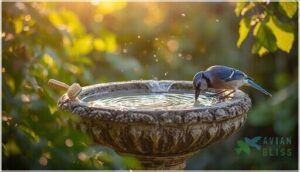
Your bird bath won’t stay inviting without regular upkeep, and dirty water can actually harm the birds you’re trying to help. Keeping your bath clean and fresh doesn’t require much effort, but it does need consistency throughout the year.
Here’s what you need to know about maintaining a bird-friendly water source that’s safe and appealing.
Cleaning Frequency and Safe Practices
Consistently scrub your bird bath at least once a week to prevent algae control issues and pathogen prevention concerns that threaten bird health. Regular cleaning with mild, unscented soap safety practices protects visiting species—just rinse thoroughly to remove residues.
If water turns murky within 24 to 48 hours, replace it immediately. These birdbath maintenance habits support bird conservation by keeping hydration sources safe and inviting.
Water Quality and Freshness
Once you’ve scrubbed your bird bath, focus on keeping the water itself in top shape. Fresh water discourages algae control problems and bacterial growth—replace it every 2–3 days to maintain healthy freshness levels. Watch for:
- Cloudiness signaling contamination
- Odd odors indicating decay
- Faster evaporation rates in sun exposure
Shade helps stabilize water depth and temperature, making your water source safer for thirsty visitors. Moving water systems also keep conditions cleaner between refills.
Seasonal Care for Year-Round Use
Year-round maintenance demands strategic seasonal adjustments to keep your bird bath functional through temperature extremes. During winter, watering challenges arise, and heated bird baths are essential to prevent frozen baths and ensure continuous access. It’s crucial to replace the water daily and clear snow from entry zones to maintain bird safety. In summer, hydration needs shift, requiring frequent refills and shade placement. Additionally, increased cleaning is necessary to combat algae growth during the warmer months.
| Winter Needs | Summer Needs |
|---|---|
| Heated water sources | Shade positioning |
| Daily ice checks | Frequent algae cleaning |
| Snow-free access | Evaporative cooling |
| Shallow sloped edges | Multiple entry points |
| Non-toxic additives only | Increased water changes |
Proper bird bath maintenance across seasons is vital for supporting year-round bird populations. By addressing the unique challenges of each season, you can create a reliable and safe water source for birds, contributing to their overall well-being.
Frequently Asked Questions (FAQs)
Should I add salt to prevent winter freezing?
You shouldn’t add salt—it corrodes metal components, contaminates soil, and risks bird health. Instead, use thermostat-controlled heaters or insulated covers for safer winter safety and effective freezing prevention without compromising backyard birding ethics.
How many birds can safely share one bath?
Your bird bath should comfortably accommodate 2 to 4 birds at once, depending on bath size and water depth. Safe occupancy prevents stress, maintains water quality, and reduces conflict—especially when multiple species share the same location.
Do migratory birds have different bath design preferences?
Migratory birds favor shallow water features with gentle movement and textured perches, creating essential hydration corridors during stopovers.
These species-specific habitat design choices support bird conservation and boost species diversity in bird-friendly gardening spaces.
Conclusion
The difference between an empty basin and a thriving avian hub often hinges on subtle choices you make today. Birds prefer certain types of bath designs with measurable consistency—shallow slopes, textured surfaces, moving water, and strategic placement aren’t mere suggestions but requirements written into their survival instincts.
Adjust these elements in your yard, and you won’t just attract more visitors. You’ll create the kind of refuge birds actively seek, transforming your space into their daily sanctuary.