This site is supported by our readers. We may earn a commission, at no cost to you, if you purchase through links.
Watch a robin at a puddle versus a babbling stream, and you’ll see the difference instantly. The bird at the stream dips confidently, drinks deeply, and lingers. The puddle visitor? Quick sips, constant vigilance, then gone. This isn’t random behavior—it’s hardwired survival instinct.
Moving water signals safety to birds because stagnant pools harbor parasites, bacteria, and algae that threaten their health. Studies show birds visit moving water sources up to three times more frequently than still basins, and for good reason: circulation cuts microbial loads by half while delivering the visual and auditory cues that scream “fresh” in avian language.
Understanding this preference transforms how you design and maintain bird baths, turning your backyard into a destination rather than an afterthought.
Table Of Contents
Key Takeaways
- Birds visit moving water sources up to three times more frequently than still water because circulation cuts microbial loads by half and triggers survival instincts honed to seek fresh, flowing streams over stagnant pools that harbor parasites and bacteria.
- Moving water creates visual ripples and audio cues that birds detect from impressive distances, acting as a powerful beacon that mimics the natural streams and springs they evolved to trust for safe hydration.
- Adding simple devices like drippers, fountains, or water wigglers to your bird bath increases species diversity, deters mosquito breeding through constant agitation, and provides year-round benefits including summer cooling and winter anti-freezing.
- Optimal bird bath design combines 1-2 inch water depth with gradual slope, strategic placement 10 feet from shrubs at 2-3 feet height, and routine maintenance every 1-3 days to maintain the water quality that keeps your feathered visitors healthy and coming back.
Do Birds Prefer Moving or Still Water?
You’ve probably noticed some birdbaths buzzing with activity while others sit empty, and there’s solid science behind why that happens. Birds aren’t just being picky—their water preferences connect directly to survival instincts honed over millions of years. The secret often comes down to movement—adding a dripper to your birdbath creates the ripples and sounds that trigger their instinct to seek out fresh, flowing water sources.
Let’s look at what research reveals about how birds actually respond to moving versus still water. Studies show that birds are drawn to the ripple effect and gentle sounds produced by bird baths equipped with water wigglers, which mimic natural streams and springs.
Scientific Evidence on Bird Water Preferences
Why does moving water turn a garden into a bird magnet? Wildlife studies confirm birds visit moving water sources more frequently than still basins. Research documents four key findings:
- Higher visitation rates at fountains and drippers versus static bird baths
- Longer drinking duration when water movement refreshes the surface
- Improved bird health through better water quality and avian hydration
- Increased species diversity in gardens with water movement features
Ecological research shows surface motion triggers instinctive foraging and drinking responses across diverse bird behavior patterns. The study’s methodological rigor is ensured through scientific auditing tools that verify the findings.
Instinctive Attraction to Moving Water
Bird behavior, hardwired over millennia, explains this preference. Avian instincts evolved in natural habitats where water movement signals freshness and safety. Your feathered visitors instinctively trust water circulation because stagnant pools harbor parasites in the wild.
Birds instinctively trust moving water because millions of years of evolution taught them that stagnant pools breed parasites
Field observations confirm that species with riverine origins show synchronized activity near streams rather than ponds. Water features that mimic flowing creeks trigger these survival-driven responses, turning your bird bath into a wildlife attraction magnet.
Comparative Behavior at Moving Vs. Still Water Sources
When you compare side-by-side observations, the numbers tell the story. Gardens with moving water features log three to four times more visits than still basins during peak summer hours. Watching which species arrive first can help you refine your setup, and a bird identification guide for wetlands makes it easier to track patterns by flight style and feeding habits.
Sparrows and finches dominate morning activity at fountains, while stagnant pools sit empty.
Species behavior shifts dramatically—even cautious warblers approach water circulation setups faster, treating them as reliable hydration stations worth the risk.
Why Moving Water Attracts More Birds
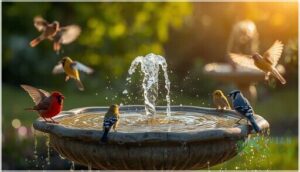
Moving water doesn’t just look prettier in your backyard—it’s actually a powerful beacon that birds can detect from surprising distances. The combination of sound, sparkle, and ripple effect triggers something primal in birds, mimicking the streams and springs they’d seek out in the wild.
Let’s break down exactly what makes moving water so irresistible to our feathered friends and which species you’re most likely to attract.
Visual and Audio Cues for Birds
Think of water ripples as a billboard for birds. Through motion parallax, your avian visitors detect surface disturbances from impressive distances, while splashing or dripping creates audio signals in frequency ranges their ears can’t miss. A bird bath water circulator amplifies those ripples and splash sounds that draw birds in while keeping the water fresh and inviting.
Visual contrast between agitated water and its surroundings acts like a beacon. A fountain or water feature in your bird bath exploits these exact cues, turning birdwatching into an everyday adventure.
Mimicking Natural Water Sources
Natural streams and ponds show you exactly what birds seek: varied depth, textured edges, and submerged plants. Replicate those microhabitats in your bird bath with a water wiggler or fountain that creates irregular ripples, not uniform spray.
Add edge banks for smaller species and perching platforms near fresh water. This design mirrors the wild water sources birds evolved to trust, turning your setup into an irresistible oasis.
Species Most Drawn to Moving Water
Mallards, warblers, and kingfishers show a clear preference for flowing water features during migration and foraging. Swallows exploit insect concentrations over moving water, while shorebirds hunt where currents reveal prey.
This avian behavior reflects survival instincts—flowing water signals freshness and food availability.
Design your bird bath with a simple water feature to boost species diversity and improve wildlife attraction through targeted habitat design.
Benefits of Moving Water in Bird Baths
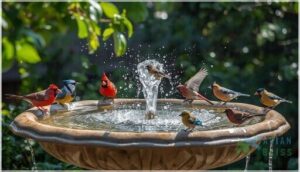
Moving water transforms your bird bath from a simple basin into a thriving hub that keeps your feathered visitors healthier and happier. Beyond the attraction factor, circulation offers practical advantages that protect both the birds and your backyard ecosystem.
Let’s break down three key benefits that make moving water worth the small investment.
Health and Hygiene Advantages
Moving water in your bird bath slashes microbial load by up to 50% compared to still water. Circulation disrupts bacterial biofilms on surfaces, while aeration boosts dissolved oxygen levels that support a healthier microbial balance.
You’ll see faster turnover flushing out fecal matter and algae, giving birds cleaner drinking water. This constant agitation prevents the stagnant pockets where pathogens thrive, protecting bird health naturally.
Deterrence of Mosquitoes and Pests
Agitated water acts as your first line of defense against container-breeding mosquitoes. Water wigglers and other mechanical agitators create turbulence that disrupts egg-laying, cutting larval emergence dramatically compared to stagnant water.
This constant movement increases dissolved oxygen while making surfaces less hospitable to pests—a natural insect repellent that keeps your bird bath cleaner.
Pair water agitation with routine bird bath maintenance for maximum pest control.
Seasonal Benefits (Summer Cooling & Winter Anti-Freezing)
Moving water works year-round, giving you thermal regulation in both extremes. Summer cooling drops bath temperatures 5–10°C through enhanced evaporation and convection—critical for heat-stressed species. Winter anti-freezing maintains open water channels when still sources ice over.
Consider these seasonal adaptations:
- Use water wigglers during moderate freezes
- Add a bird bath heater or deicer for extended cold
- Increase agitation in peak summer heat
- Monitor dissolved oxygen for metabolic support
- Adjust device settings based on climate control needs
Seasonal considerations transform your setup into a reliable habitat.
Best Devices for Creating Moving Water
You don’t need elaborate setups to add motion to your birdbath—simple devices can transform still water into a magnet for birds. The right tool depends on your garden’s layout, power access, and the species you want to attract.
Let’s break down the most effective options, from basic drippers to solar fountains, so you can choose what works best for your space.
Fountains and Water Wigglers
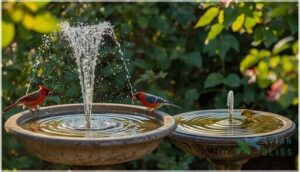
You’ve got two smart choices for creating moving water in your bird bath: fountains and water wigglers. Fountain designs use submerged pumps with adjustable spray height and water flow rates to circulate continuous jets—ideal for deeper basins. Water wigglers generate gentle ripples with low noise levels and better pump efficiency for shallow setups.
Both water feature types increase oxygenation, reducing algae while attracting more species through surface movement.
Drippers, Agitators, and Misters
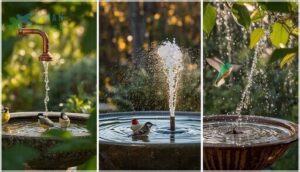
Beyond fountains and water wigglers, drippers, agitators, and misters offer unique bird attraction tips with varying water flow rates and noise reduction methods. Here’s what sets each apart:
- Drippers deliver slow, continuous droplets that chickadees and finches follow to drink—minimal maintenance schedules required.
- Agitators create constant ripples, blocking mosquito breeding with excellent device durability.
- Misters produce fine spray that hummingbirds dart through, adding humidity your moving water bird bath needs.
Birds are attracted to fresh water sources, which is essential for their survival.
Choosing The Right Device for Your Garden
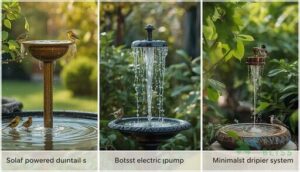
With three device selection options, match water flow to your garden layout and the bird diversity you’re chasing.
A solar-powered pump suits sunny spots where wrens and warblers gather, while an electric pump drives stronger currents for larger baths.
Choose drippers for tight spaces—they’re low-maintenance and whisper-quiet, letting moving water work without the fuss.
Tips for Designing Bird Baths Birds Love
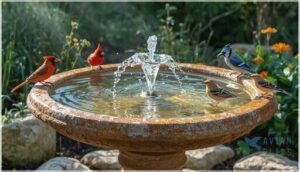
You’ve got the right water movement—now let’s talk about the basin itself. A well-designed bird bath goes beyond just adding a wiggler or fountain; it needs the right dimensions, proper upkeep, and a few strategic touches around the edges.
Here’s how to create a setup that birds won’t just visit—they’ll claim as their own.
Ideal Depth, Slope, and Placement
You’ll attract the widest variety of species when your basin geometry mimics natural puddles—shallow, accessible, safe. Depth matters far more than most realize, and placement strategies can make or break bird safety at your water feature design.
- Keep water depth between 1 and 2 inches in the center, with a gradual slope from a dry rim to accommodate both tiny warblers and larger thrushes
- Add flat stones or textured surfaces inside deeper bird baths to create stable footing and adjustable micro-depths
- Position your outdoor water features 2 to 3 feet high and roughly 10 feet from shrubs, balancing predator protection with quick escape routes
Maintenance for Safe, Fresh Water
Once you’ve nailed depth and placement, water quality becomes your daily responsibility. Replace bath water every 1 to 3 days to prevent pathogen buildup and maintain bird health and hygiene.
Scrub the basin monthly with mild soap, rinse thoroughly, and check for algae. Install a simple fountain or aerator—these filtration systems keep water fresh between cleaning schedules while discouraging mosquito larvae.
Enhancing Attraction With Landscaping and Accessories
Strategic garden design transforms an ordinary bird bath into a living habitat. Position native plantings within 10 to 20 meters—they offer bird perches, insect forage, and natural cover.
Install textured water edging for secure landings, and place dense shrubbery nearby to create garden microclimates that shelter visitors.
Thoughtful landscaping around your water features makes your birdfriendly setup irresistible year-round.
Frequently Asked Questions (FAQs)
Can birdbaths attract predators to my yard?
Yes, birdbaths can draw predators like cats and hawks to your yard. Place your bird bath in open areas with clear sightlines, away from dense vegetation where predators hide.
How often should I replace birdbath water?
You’ll want to refresh your bird bath every one to two days during hot weather.
In cooler months, every three to four days works fine—just watch for debris or algae buildup between changes.
Are ceramic birdbaths better than plastic ones?
Picture your neighbor’s glossy ceramic birdbath cracking mid-winter—then swapping it for lightweight plastic. Neither material wins outright; ceramic offers elegant durability and easier cleaning, while plastic resists shattering and costs less.
Do hummingbirds use traditional birdbaths for bathing?
Hummingbirds rarely use traditional bird baths. Instead, they prefer micro water features like misters or leaf-caught dew.
Their bathing involves quick beak-scooping and wing-flapping rather than conventional soaking, reflecting unique hummingbird hygiene and water source preferences.
What water temperature do birds prefer year-round?
Like Goldilocks testing porridge, birds seek water that’s just right—neither icy nor scalding.
Your feathered visitors prefer temperatures between 50–75°F year-round, favoring thermal stability over extremes to support ideal bird hydration and health.
Conclusion
Think of your bird bath like a river bend versus a roadside ditch—one invites life, the other breeds caution. The evidence is clear: do birds prefer moving or still water? Movement wins every time.
Install a simple dripper or fountain, maintain two-inch depth with weekly cleaning, and position it near cover but not underneath. You’re not just offering hydration—you’re creating a beacon that converts nervous visitors into daily regulars who trust your space completely.
- https://www.sciencedirect.com/science/article/pii/S0749208123000268
- https://www.reddit.com/r/PromptEngineering/comments/1jsy9vh/id_like_some_feedback_on_this_prompt_aimed_at/
- https://www.scribd.com/document/683678057/Academic-Research-Manual-V1-1-April-2016
- https://github.com/tugcekonuklar/msc-computer-science-notes/blob/main/research-methods/Home.md
- https://dl.allaboutbirds.org/water-notes-2024