This site is supported by our readers. We may earn a commission, at no cost to you, if you purchase through links.
North America has lost three billion birds since 1970—nearly one in three birds has vanished from the skies, fields, and forests. The yellow-crested cockatoo’s wild population barely reaches 2,000 individuals, while the Imperial Amazon clings to survival with just 50 mature birds remaining.
These aren’t isolated cases. Across every continent, bird populations face mounting pressures from habitat destruction, climate disruption, and illegal trade networks that generate up to $2 trillion annually.
Understanding which species teeter closest to extinction, what drives their decline, and how conservation efforts can reverse these trends gives you the knowledge to make meaningful contributions to their survival.
Table Of Contents
Key Takeaways
- Bird populations worldwide have collapsed dramatically since 1970, with North America losing three billion birds (nearly one in three) and global monitored populations declining by 69%, driven primarily by habitat destruction, climate change, and an illegal wildlife trade worth up to $2 trillion annually.
- The IUCN categorizes species as endangered when populations drop below 2,500 mature individuals or ranges shrink under 5,000 square kilometers, while critically endangered status applies to species with fewer than 250 individuals or a 50% extinction probability within ten years.
- Successful conservation interventions demonstrate that recovery is achievable—the Mauritius kestrel rebounded from just four birds to over 400, and the Northern bald ibis population more than doubled from under 250 to over 700 through targeted habitat protection and reintroduction programs.
- You can directly support endangered bird species through concrete actions including backing conservation organizations that channel 85% or more of funds into field efforts, reducing personal environmental impact by using native plants and keeping cats indoors, and participating in citizen science projects that provide crucial population monitoring data.
What Defines an Endangered Bird Species?
You might wonder what pushes a bird species from “at risk” to officially endangered. The answer lies in specific population thresholds and decline rates that scientists track carefully.
Let’s look at how conservation experts determine which birds need urgent protection.
IUCN Red List Criteria for Birds
When IUCN evaluates endangered bird species, they rely on five quantitative criteria—A through E—that measure everything from population decline to extinction probability. These standards help conservation efforts worldwide by identifying which bird species face the greatest threats to survival. The IUCN Red List uses these criteria to assess extinction risks.
- Criterion A thresholds track percentage population decline over ten years or three generations
- Range fragmentation measures how habitat loss splits bird populations into isolated patches
- Population decline data comes from bird reassessments conducted by expert networks globally
- Extinction probability models predict survival chances using quantitative analyses
Population Estimates and Trends
Understanding extinction risk requires looking beyond categories to actual numbers. Since 1970, global bird populations show troubling patterns—you’re witnessing roughly 49% of bird species declining worldwide. North America alone lost 3 billion birds by 2019, while Australia’s threatened birds dropped 60% between 1985 and 2020. Habitat loss is a significant factor in these declines.
| Region | Population Trend |
|---|---|
| North America | 3 billion birds lost since 1970 |
| Australia | 60% decline in threatened species (1985–2020) |
| Tropical Forests | 50% abundance reduction since 1970s |
| Global Average | 69% decline in monitored populations (1970–2018) |
These long-term trends reveal how conservation efforts struggle against habitat loss and climate change affecting bird populations everywhere.
Difference Between Endangered and Critically Endangered
When you see a bird labeled “endangered,” it faces a very high extinction risk—think populations below 2,500 mature individuals or ranges under 5,000 square kilometers. “Critically endangered” signals even graver danger: fewer than 250 individuals, ranges shrinking below 100 square kilometers, or 50% extinction probability within a decade.
These IUCN criteria distinguish conservation urgency, guiding which threatened species need immediate action.
Notable Endangered Bird Species Worldwide
Across every continent, birds face extinction pressures that have pushed numerous species to the edge of survival. Some of the most vulnerable belong to familiar families like parrots and ibises, while others represent unique lineages found nowhere else on Earth.
Let’s look at some of the species most at risk and where you’ll find them struggling to hold on.
Critically Endangered Parrots (e.g., Yellow-crested Cockatoo, Imperial Amazon)

Parrots face some of the steepest declines you’ll encounter in the bird world, with nearly 30% of all parrot species now threatened. The yellow-crested cockatoo, driven to critically endangered status by illegal parrot trade impacts and habitat loss, numbers only 1,800–3,140 individuals.
The Imperial Amazon on Dominica fares even worse—just 50 mature birds survive, battered by hurricane impacts yet sustained by conservation efforts including captive breeding programs.
Threatened Ibises and Finches (e.g., Northern Bald Ibis, Mangrove Finch)
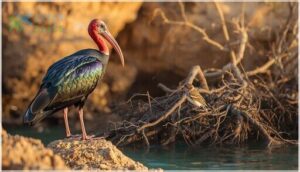
You’ll find the Northern bald ibis climbing back from the brink—fewer than 250 wild birds in 2002, now over 700 thanks to Moroccan habitat protection and European ibis reintroduction programs, though hunting impact still claims 31% of casualties.
The Mangrove finch remains critically endangered with roughly 100 individuals, battling finch parasitism from invasive flies that kill nestlings despite intensive population monitoring and rat control efforts.
Endangered Species by Region (Americas, Africa, Asia, Pacific)

Across global hotspots, you’ll witness staggering regional declines—North America alone lost 2.9 billion breeding birds since 1970, while 182 threatened Asian populations face hunting pressure and conversion. African endemics like the White-winged Flufftail teeter toward extinction, and Pacific islands harbor 35 conservation-concern taxa battling invasive predators.
American avifauna includes 112 “Tipping Point” species that’ve lost half their numbers, underscoring how habitat loss and climate change reshape endangered bird species worldwide.
Major Threats Facing Bird Populations

Understanding what puts bird species at risk is the first step toward protecting them. From disappearing forests to invasive predators, multiple forces are working against avian populations around the world.
Let’s look at the five major threats that continue to push birds toward extinction.
Habitat Loss and Fragmentation
When forests shrink and splinter, bird populations suffer dramatic declines. North America alone lost 3 billion birds between 1970 and 2018, with habitat loss being the primary driver.
Habitat loss drove North America’s staggering decline of 3 billion birds between 1970 and 2018
Agricultural expansion, deforestation, and urbanization impacts fragment critical breeding grounds, leaving endangered bird species isolated in patches too small to sustain them.
Conservation efforts focusing on protecting connected landscapes offer hope for reversing these troubling trends.
Illegal Wildlife and Pet Trade
Illegal wildlife trade generates up to $2 trillion annually, and birds pay a steep price. From 2000 to 2022, over 2.85 billion wild animals entered international trade routes, with parrots and songbirds heavily targeted.
Market demand fuels species laundering through fraudulent captive-breeding claims, while weak trade enforcement allows traffickers to exploit legal frameworks.
The illegal pet trade and exotic pet trade directly threaten conservation efforts for already-vulnerable populations worldwide.
Invasive Species and Predation
Invasive species function like silent assassins in bird conservation, particularly on islands where native populations evolved without ground predators. Cats, rats, and snakes now threaten 400 bird species globally, driving population dynamics toward extinction.
- Predator eradication on islands has reversed reproductive success rates by 1.40 times
- Island vulnerability stems from birds’ lack of anti-predator behaviors
- Management outcomes show decades-long recovery even after invasive species removal
- Conservation efforts prioritize threatened species on archipelagos worldwide
Climate Change and Environmental Pollution
Climate change impacts bird populations through multiple pathways you mightn’t expect. Warming temperatures have driven 61% of assessed species into decline, while toxic deposition from air pollution reduces reproductive success in 82% of studied birds.
Plastics ingestion affects roughly 90% of seabirds, and drought survival rates plummet under extreme heat. These synergistic impacts intensify habitat loss, pushing conservation efforts into increasingly urgent territory.
Hunting and Human Disturbance
Beyond pollution and climate pressures, human interference through hunting and recreational disturbance poses severe threats to bird populations. Overhunting has driven some species to functional extinction, while illegal trade continues to decimate parrot numbers worldwide.
Hunting impacts on birds include:
- Bird abundance drops to 42% of original levels in hunted tropical areas
- Illegal hunting affects 38 countries failing to meet 2030 reduction commitments
- Recreational disturbance reduces nestling growth and breeding success
- Spatial patterns show depletion extends 7 kilometers from access points
- Evolutionary consequences include trait shifts and population collapse
You’ll find these pressures especially concentrated along migration corridors where enforcement remains weak.
How You Can Support Bird Conservation

You don’t need to be a conservation biologist to make a real difference for endangered birds. Simple actions in your daily life can help protect vulnerable species and their habitats.
Here are four practical ways you can contribute to bird conservation efforts today.
Supporting Conservation Organizations
When you back reputable conservation organizations like BirdLife International or local NGOs, your donations directly fund bird conservation strategies that work. Many groups offer volunteer opportunities and forge corporate partnerships to expand their reach.
Look for organizations with proven NGO effectiveness—those channeling 85% or more of funds into conservation efforts for endangered species. Even small contributions support essential conservation initiatives and local projects protecting threatened populations.
Reducing Personal Environmental Impact
Your daily choices matter for birds. Low-carbon transport like walking or cycling cuts emissions that alter habitats. Home energy savings—turning down heat, choosing efficient appliances—lighten your footprint.
Habitat management in your yard with native plants provides food and shelter. Reduce hazards by keeping cats indoors and turning off unnecessary lights during migration.
Diet choices favoring plant-based meals and less waste also support environmental conservation through sustainable practices for birds.
Advocating for Policy and Awareness
Your voice can shape policy change. When you support regulatory protections for threatened birds—contacting lawmakers, signing petitions—you join the 170,000 advocates mobilizing for stronger safeguards. Raising awareness through public campaigns and stakeholder engagement amplifies conservation needs.
Consider these ways to act:
- Contact decision-makers about habitat protections
- Support funding mobilization for bird programs
- Share stories that build community awareness
- Oppose rules weakening endangered species laws
- Encourage public awareness and action locally
Policy advocacy outcomes save species.
Participating in Citizen Science and Local Projects
How can you directly contribute to conservation efforts? Join citizen science projects that strengthen data quality through standardized monitoring technologies. When you log bird sightings or participate in habitat restoration efforts, you’re building community awareness while generating conservation outcomes scientists use to protect species.
Project accessibility ensures everyone—from beginners to experienced birders—can meaningfully support community engagement initiatives that save endangered birds.
Frequently Asked Questions (FAQs)
How do endangered birds reproduce in captivity?
Captive breeding programs use assisted technologies like artificial incubation and insemination, genetic management through studbooks, and behavioral management strategies.
These reintroduction programs improve breeding habitat conditions, supporting successful reproduction in endangered species.
What role do birds play in ecosystems?
Birds sustain ecosystems through seed dispersal, pollination services, pest control, and nutrient cycling. They’re ecosystem indicators, maintaining biodiversity and ecosystem health while preventing food chain disruption through their ecological role.
Can endangered bird species recover to stable populations?
Yes, recovery isn’t a pipe dream. With targeted conservation efforts like habitat restoration and captive breeding, many endangered species show population growth—though sustained intervention remains essential to prevent post-recovery decline.
How are bird migration patterns affected by endangerment?
Endangered species often face route changes and timing mismatches as habitat loss forces altered migration paths. Climate change disrupts traditional schedules, while population decline weakens flocks. These behavior shifts threaten survival without immediate conservation efforts.
Conclusion
When researchers reintroduced Mauritius kestrels from a population of just four birds, targeted conservation expanded their numbers to over 400 today.
Your actions—whether supporting habitat protection, choosing sustainable products, or sharing endangered bird species info—create similar ripples of change.
Each decision you make connects directly to whether species like the yellow-crested cockatoo survives or vanishes. The difference between extinction and recovery often starts with someone who decided their choices mattered.
- https://www.theearthandi.org/post/state-of-the-world-s-birds-2024-update
- https://tokyo.birdlife.org/sites/wp-content/uploads/2025/01/2024-Red-List-update-summary-for-Japan-Gala-Dinner-Oct-2024-1.pdf
- https://www.nature.com/articles/s41559-022-01737-8
- https://www.waderstudygroup.org/article/14833/
- https://www.ifaw.org/journal/most-endangered-birds