This site is supported by our readers. We may earn a commission, at no cost to you, if you purchase through links.
 You’ll find exceptional guided birdwatching trips east coast adventures along the Atlantic Flyway, where expert guides grant access to over 400 species during peak migration seasons.
Professional tours position you perfectly for Cape May’s legendary hawk flights, Maine’s puffin colonies, and Florida’s subtropical treasures.
These experiences combine thrilling discoveries with educational insights about migration patterns and identification techniques that’ll transform your birding skills.
From Virginia’s salt marshes to New England’s boreal forests, guided tours offer everything from half-day local excursions to week-long species-specific adventures.
The timing and location expertise these guides provide often means the difference between a good day and an unforgettable birding experience, with their knowledge of the best locations and times to spot various species being crucial for a successful trip, and helping you understand identification techniques and the importance of the Atlantic Flyway.
Table Of Contents
- Key Takeaways
- East Coast Birding Tours
- Guided Tour Benefits
- Eastern US Birding Hotspots
- Birding Tour Features
- Tour Planning Essentials
- Frequently Asked Questions (FAQs)
- Are there any guided birdwatching tours available in the United States?
- What can I do with a small group US birding tour?
- Who leads a New England bird tour?
- Where can I go on a nature & birding tour?
- Does naturalist journeys offer birding & wildlife tours?
- Is there a birding tour in Colorado?
- What is the typical cost range for tours?
- How far in advance should I book?
- What happens during bad weather conditions?
- Are binoculars and equipment provided or rented?
- Conclusion
Key Takeaways
- Expert guides maximize your sightings – You’ll spot species before you even know they’re there, thanks to guides with exceptional hearing abilities and identification skills, plus they provide specialized equipment, like laser pointers, for precise spotting.
- Atlantic Flyway offers unmatched diversity – You’ll encounter over 400 species during peak migration seasons, including 37+ warbler varieties, with strategic positioning at hotspots like Cape May and Maine’s coastal areas.
- Tours combine education with conservation – You’ll learn migration patterns, identification techniques, and participate in citizen science projects, while supporting habitat preservation through sustainable ecotourism practices.
- Personalized experiences suit all skill levels – You’ll enjoy customized itineraries with small group sizes, ensuring individual attention, whether you’re joining pelagic trips for ocean species or woodland excursions for migrants.
East Coast Birding Tours
The East Coast offers unparalleled access to the Atlantic Flyway, where you’ll encounter 37 warbler species during peak spring and fall migrations.
Expert-guided tours combine coastal pelagic trips targeting petrels and shearwaters with inland excursions, maximizing your chances of spotting both ocean-dwelling rarities and woodland gems.
Atlantic Flyway Migration
During spring and fall, you’ll witness one of nature’s greatest spectacles along the Atlantic Flyway.
This 3,000-mile corridor guides approximately 500 bird species through their epic migrations, with millions of individuals traveling from Greenland to South America.
East coast birding tours capitalize on these migration patterns, offering unparalleled opportunities to observe diverse species at strategic stopover sites where habitat preservation supports vital flyway conservation efforts.
The flyway’s importance is due to its lack of mountain barriers, providing easy access to resources.
Warbler Species Sightings
You’ll encounter over 30 warbler species during peak east coast birding tours, with "20+ warbler days" common at hotspots like Cape May and Magee Marsh.
Peak seasons run from early May through mid-May for spring migration, and August through October for fall.
Expert birding guides east coast help with ID tips, recognizing habitat preferences from coastal thickets to woodland edges, and understanding migration patterns that create spectacular fallouts.
Magee Marsh in northern Ohio is a premier birding destination during spring migration.
Pelagic Birding Trips
Pelagic birding trips venture into offshore habitats where deepwater species thrive beyond coastal waters.
These seabird watching tours, led by experienced birding guides east coast, require specialized pelagic gear and thorough trip preparation.
Coastal birding tours can’t match the unique seabird identification opportunities found on pelagic boat trips, where you’ll spot species rarely seen from shore.
Many enthusiasts purchase essential pelagic supplies before their trip to ensure a successful pelagic birding experience.
Targeted Ocean Species
You’ll spot incredible oceandwelling species during pelagic boat trips, including petrels, shearwaters, tropicbirds, and puffins.
These seabird watching tours target rare seabird sightings that you can’t observe from shore.
Pelagic birding trips focus on ocean habitat needs and seabird conservation status while maintaining offshore birding ethics.
Professional guides help with pelagic bird ID challenges.
Guided Tour Benefits

Guided birding tours transform your birdwatching experience from guesswork into guaranteed sightings through expert knowledge and professional equipment.
You’ll benefit from guides like Jacob who can spot and identify birds before they’re visible to most participants, ensuring you don’t miss rare species or subtle behaviors.
Expert Birding Guides
Expert birding guides possess remarkable hearing abilities and species identification skills that’ll transform your east coast birdwatching experience.
These professionals excel at locating species before you even know they’re there, using advanced techniques like laser pointers for precise spotting.
Their guide expertise covers bird behaviors, habitats, and calls, ensuring you won’t miss rare sightings during your guided birdwatching trips along the Atlantic coastline.
They also understand plumage variations for accurate species identification, which is crucial for a successful birdwatching trip, and their knowledge of the east coast Atlantic coastline is unparalleled.
Personalized Tour Experiences
While skilled guides provide the foundation, your East Coast birdwatching experience becomes truly special through customized itineraries that match your interests and abilities.
Small group sizes guarantee individualized attention, whether you’re joining skill-based tours for beginners or advanced birders.
These personalized trips offer customized learning experiences, adapting pace and focus to your preferences.
From guided birdwatching trips targeting specific species to extensive East Coast birding tours, operators craft birdwatching experiences that feel uniquely yours.
Ecotourism Focus
Modern birdwatching tours east coast prioritize sustainable birding practices that protect fragile ecosystems.
You’ll support habitat preservation while enjoying guided bird walks that directly fund conservation efforts.
These ethical tourism experiences create positive community impact, ensuring East Coast birding hotspots remain pristine for future generations.
Your participation helps local economies thrive through responsible birdwatching tours, promoting a positive impact on the environment and community, which is a key aspect of conservation efforts.
Eastern US Birding Hotspots
You’ll find the East Coast’s most productive birding locations along the Atlantic Flyway, where 37 warbler species and countless other migrants create spectacular viewing opportunities during spring and fall.
These hotspots offer reliable sightings thanks to their strategic positions on major migration routes and diverse habitats that attract both resident and visiting species, making them ideal for spotting a variety of bird species, including warbler species.
Cape May Bird Observatory
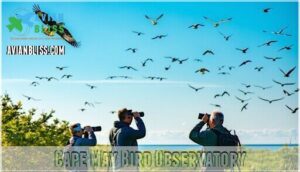
You’ll discover Cape May stands as North America’s premier birdwatching destination, where the Atlantic Flyway funnels over 400 species through this critical habitat each fall.
The Observatory’s guided programs help you master raptor identification during the incredible migration spectacle, with expert naturalists leading you through stopover ecology lessons at this legendary birding hotspot.
Many birders also purchase Cape May birding products to enhance their experience.
Maine Coastal Birding

Maine’s rugged coastline offers unparalleled coastal birdwatching opportunities along Downeast species territories.
Acadia birding provides access to diverse coastal habitats where you’ll spot puffins colonies on offshore islands.
Island exploration reveals Bicknell’s Thrush and Red-billed Tropicbirds.
East coast bird sanctuaries like Three Pines protect critical wetland ecosystems, making Maine’s birding destinations east coast favorites.
Birders consider Parker River one of the best birding spots to explore diverse coastal habitats and experience the best of Maine’s birding.
Florida Birding Locations

Florida’s incredible diversity spans from Everglades Birding adventures targeting Wood Storks to coastal habitats hosting Roseate Spoonbills.
Central Florida offers scrub-jay encounters, while Florida Keys deliver tropical species like White-crowned Pigeons.
These east coast bird sanctuaries showcase over 500 species, making Florida unmatched among birding destinations east, with a unique experience like coastal habitats.
New England Birding Destinations
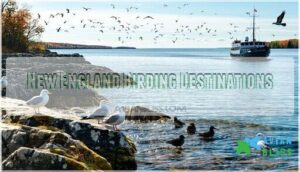
New England’s rugged coastline offers some of the most rewarding birdwatching east coast experiences you’ll find anywhere.
From Maine’s rocky shores to New Hampshire’s marshlands, these birding destinations deliver spectacular fall migration viewing and winter birding opportunities that’ll keep your binoculars busy.
- Coastal habitats support diverse species including seabirds, shorebirds, and migrating warblers along protected coves
- Island birding locations like Mount Desert Island provide unique pelagic species access during boat tours
- Rare sightings occur frequently at established birding hotspots east during peak migration seasons
Birding Tour Features
When you join a guided birdwatching trip along the East Coast, you’ll experience tours designed around native species like Bald Eagles, Osprey, and Peregrine Falcons, plus seasonal migrants including 37 warbler species that travel the Atlantic Flyway.
These expert-led adventures combine bird identification with wetland ecology education and conservation awareness, turning your morning walk into a crash course in environmental science, which includes learning about wetland ecology.
Native Bird Species

Expert guides help you spot diverse bird species that call Eastern hotspots home year-round.
Resident birds like Bald Eagles, Osprey, and Peregrine Falcons thrive in these local ecosystems thanks to ongoing conservation efforts and habitat preservation initiatives.
Proper bird identification skills enhance your birdwatching east coast adventures across birding hotspots east throughout the Eastern United States, which is a result of successful conservation efforts and habitat preservation.
Migratory Bird Sightings
Throughout the seasons, you’ll witness spectacular bird migration that transforms the Eastern United States into a living highway of wings.
Spring migration brings explosive activity as 37 warbler species journey northward, while fall migration offers equally thrilling opportunities.
Expert guides can help you explore stopover sites along the Atlantic Flyway.
- Peak Seasons: Spring migration peaks in May, fall migration in September-October
- Migration Patterns: Atlantic Flyway funnels millions of birds along coastal routes
- Species Identification: Expert guides help spot rare warblers, raptors, and shorebirds
- Seasonal Abundance: Different species appear throughout extended migration windows
Wetland Ecology Education

Many guided east coast birdwatching tours include hands-on wetland ecology education that transforms your birding experience.
You’ll learn about wetland biodiversity while observing species in their natural habitats, gaining deeper understanding through environmental education programs that connect birdwatching tours to ecosystem health and ecological monitoring practices.
| Wetland Type | Key Bird Species | Educational Focus |
|---|---|---|
| Salt Marshes | Saltmarsh Sparrow, Clapper Rail | Tidal ecosystem dynamics |
| Freshwater Wetlands | Great Blue Heron, Red-winged Blackbird | Water filtration processes |
| Coastal Ponds | Wood Duck, Green-winged Teal | Habitat connectivity |
| Forested Swamps | Wood Thrush, Canada Warbler |
Neotropical migration patterns.
The table highlights the variety of ecosystem health and educational focuses across different wetland types, from tidal ecosystem dynamics to habitat connectivity and neotropical migration patterns.
Conservation Awareness
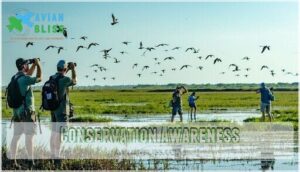
Birdwatching tours east coast emphasize bird conservation through hands-on learning about habitat preservation and ecosystem health.
You’ll participate in citizen science projects, recording species data that helps researchers track population trends.
Guides demonstrate bird-friendly practices and sustainable tourism methods that protect nesting sites.
These experiences transform casual observers into wildlife advocates who understand their role in preserving critical migration corridors for future generations.
Tour Planning Essentials

Planning a successful east coast birding tour requires careful consideration of operators, destinations, timing, and equipment.
You’ll want to research guide expertise, group sizes, and seasonal migration patterns to maximize your birding experience while ensuring you’re properly equipped for coastal conditions.
Choosing Tour Operators
When choosing among birdwatching tours, your selection of the right operator shapes your entire experience.
Operator reputation matters most—companies like WINGS Birding Tours and Naturalist Journeys with 50+ years of experience consistently exceed expectations through proven track records.
Check guide expertise by reviewing leader credentials and client testimonials.
Compare group size limits, as tours maintaining 1:8 guide ratios provide better personal attention.
Examine tour inclusions carefully—transparent pricing covering meals, transportation, and permits prevents surprise costs.
Cost comparison across operators reveals significant value differences for similar birding travel east coast experiences.
Many operators also offer customizable tour itineraries to cater to specific interests.
Selecting Tour Destinations
Consider your local birdwatching destinations first—familiar terrain helps you appreciate guided expertise.
Habitat Diversity matters most: coastal areas offer different Target Species than inland forests.
Seasonal Timing affects availability, so research peak migration windows for your chosen East Coast birdwatching locations.
Factor in Accessibility Factors like walking distances and Budget Considerations including travel costs for birding hotspots beyond your region, considering Habitat Diversity.
Pre-Tour Planning Tips
Before booking your East Coast birdwatching tours, research Accommodation Options near birding destinations and check your Skill Level requirements.
Consider Fitness Preparation for walking trails, secure Travel Insurance for peace of mind, and communicate Dietary Needs to guides.
Most birdwatching trips USA welcome beginners, but experienced birdwatching guides appreciate advance notice about special requirements for ideal birding destinations experiences.
Essential Birding Gear
Quality birdwatching gear transforms good trips into unforgettable experiences.
Your equipment choices directly impact what you’ll spot and photograph during guided tours.
- Binocular Types: 8×42 models offer superior magnification and light gathering for dawn birding sessions
- Field Guides: Regional identification books help distinguish similar warbler species during peak migration
- Weather Protection: Waterproof jackets and lens covers keep you comfortable in coastal conditions
- Optics Cleaning: Microfiber cloths and lens pens maintain crystal-clear views throughout long days
- Backpack Essentials: Lightweight daypacks with padded straps carry birding scopes and photography equipment comfortably
Consider purchasing some 8×42 binoculars options for enhanced viewing.
Frequently Asked Questions (FAQs)
Are there any guided birdwatching tours available in the United States?
Yes, you’ll find excellent guided birdwatching tours throughout America.
The Eastern U.S. offers fantastic warbler migrations along the Atlantic Flyway, while destinations like Arizona, Texas, and California provide diverse species opportunities year-round.
What can I do with a small group US birding tour?
Ever wonder what birds you’re missing?
You’ll explore diverse habitats, spot 37+ warbler species during migrations, join pelagic trips for ocean birds like puffins.
You’ll learn from expert guides who’ll help identify species by sight and sound.
Who leads a New England bird tour?
Experienced ornithologists and naturalists typically lead New England bird tours.
You’ll find guides with advanced degrees in biology or decades of field experience directing these educational adventures through forests, wetlands, and coastal habitats, which are often led by individuals with decades of experience.
Where can I go on a nature & birding tour?
You can explore nature and birding tours across 24 U.S. states, from Maine’s coastal wonders to Arizona’s desert rarities, plus specialized Atlantic Flyway migration tours.
Does naturalist journeys offer birding & wildlife tours?
I don’t have specific information about Naturalist Journeys as a company.
However, you’ll find numerous birding tour operators along the East Coast offering guided wildlife experiences, from Maine’s coastal species to Florida’s diverse habitats and migration routes.
Is there a birding tour in Colorado?
Yes, Colorado birding tours are available! You’ll spot chickens, grouse, and other native species at leks throughout the state’s diverse habitats and elevations.
What is the typical cost range for tours?
Birdwatching tourism generates $108 billion annually in the U.S.
Guided tour costs typically range from $150-500 per day depending on duration, location, and group size.
You’ll find better deals with longer trips.
How far in advance should I book?
Book your tour 2-3 months ahead for peak migration seasons like spring and fall. Popular destinations fill quickly, especially during warbler migration periods when demand’s highest.
What happens during bad weather conditions?
Most tours continue with modified plans during light rain, focusing on covered areas and bird identification by sound. Heavy storms typically result in rescheduling or indoor alternatives.
Are binoculars and equipment provided or rented?
Like a well-prepared scout, you’ll find many tour operators provide quality binoculars and spotting scopes for participants. Some companies rent equipment, while others include it free with your tour package.
Conclusion
Don’t put all your eggs in one basket—diversify your birding adventures with guided birdwatching trips east coast offerings that span multiple seasons and habitats.
These expert-led tours reveal prime locations during peak timing, dramatically increasing your species count and identification skills.
You’ll discover hidden gems from Cape May’s raptor migrations to Maine’s seabird colonies.
Professional guides provide specialized equipment, local knowledge, and conservation insights that transform casual observers into skilled birders who can navigate the Atlantic Flyway’s diverse ecosystems with confidence.
- https://www.newenglandbirdtours.com
- https://www.roadscholar.org/collections/birding/
- https://www.birdsandblooms.com/travel/birding-hotspots/fall-birding-locations-east-coast/
- https://www.dcr.virginia.gov/state-parks/blog/bird-watching-along-the-east-coast
- https://www.nature.org/en-us/about-us/where-we-work/united-states/pennsylvania/stories-in-pennsylvania/pa-de-bird-guide/