This site is supported by our readers. We may earn a commission, at no cost to you, if you purchase through links.

The resplendent quetzal doesn’t care that you flew 3,000 miles to see it. It’ll perch in a Costa Rican cloud forest like it owns the place—iridescent green tail feathers catching the mist—and vanish before your binoculars even focus. That’s the thing about exotic bird watching tours: the birds humble you, and somehow that makes it better.
Over 10,000 bird species share this planet, yet most of us have seen maybe a hundred. The right tour changes that fast. Whether you’re chasing endemic finches across the Galápagos or tracking hornbills through Bhutan’s rhododendron forests, knowing where to go—and who to go with—makes all the difference.
Table Of Contents
- Key Takeaways
- Best Exotic Bird Watching Tours
- Top Birding Tour Operators
- Exotic Birding Tour Styles
- Conservation-Focused Bird Travel
- Planning Your Birding Tour
- Frequently Asked Questions (FAQs)
- What is the best place in the world for bird watching?
- What are the 5 S’s of bird watching?
- Can a birding tour be conducted as a photo tour?
- Who is birding ecotours?
- Are birding ecotours guaranteed departures?
- Who is the best birding tour company?
- Why should you choose nature travel birding tours?
- Should I book a bird watching tour?
- What is the best month for bird watching?
- Where is the best place in the world to go bird watching?
- Conclusion
Key Takeaways
- The world’s best birding destinations — Costa Rica, Peru, Bhutan, Madagascar, and the Galápagos — each offers rare, endemic species you simply can’t find anywhere else.
- Choosing the right tour operator matters as much as the destination, with top companies like Birding Ecotours and Victor Emanuel Nature Tours offering decades of expertise, small groups, and built-in conservation impact.
- Your tour style shapes the whole experience — whether you’re a family after gentle trails, a photographer chasing perfect light, or a hardcore lister pushing into restricted habitats before dawn.
- Responsible birding means keeping your distance, timing your visit around peak season, and picking operators who actively put money back into local communities and habitat protection.
Best Exotic Bird Watching Tours
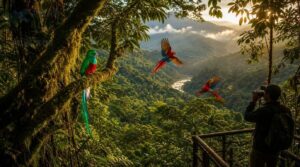
Some places just stop you in your tracks — a flash of color through the canopy, a strange call echoing across a misty ridge. The world is full of spots like that, and a handful of them stand out as truly unmissable for birders.
Few birds earn a double-take like the magpie — a striking flash of black and white you can read all about in this complete guide to black birds with white spots.
Here are the best exotic birding destinations worth putting on your radar.
Costa Rica Cloud Forests
Tucked between mist-soaked ridges, Costa Rica’s cloud forests feel like another world entirely. Microclimate water capture keeps the air thick and alive—ideal for canopy bird communities packed with trogons, quetzals, and hummingbirds. Epiphyte diversity creates endless perches and feeding spots, while endemic amphibians hide in bromeliad pockets below.
Any guided bird tour here delivers highland birding magic you genuinely won’t forget. They function as a natural water regulator, storing moisture to sustain downstream streams.
Peru Amazon Expeditions
From misty ridges to steaming jungle floors — Peru’s Amazon is a whole different kind of wild. Tours like the Manu Road Tour and Manu Lowlands Tour push deep into the upper basin, where over 1,000 bird species await around every bend.
Here’s what makes these tropical rainforest tours special:
- River Canoe Trek — glide through flooded forests as macaws cross overhead
- Canopy Walk Experiences — eye-level with toucans and harpy eagles
- Butterfly Spotting — 500+ species along riverside clearings
- Indigenous Cultural Exchange — local Ese Eja guides share authentic forest knowledge
The Sandoval-Tambopata Tour adds nighttime wildlife walks, where caimans glow in your headlamp beam. These birding tours don’t just show you the Amazon — they let you feel it.
Bhutan Himalayan Birding
Switch from Amazonian heat to crisp mountain air — Bhutan hits differently. Over 600 species thrive across rhododendron habitats, high-altitude passes, and glacial valleys.
Imagine witnessing Tragopan displays at dawn or tracking Monal migration through the Dochula Pass. The Phobjikha Valley serves as a prime wintering ground for cranes in late autumn.
The Bhutan Standard Tour, led by an expert birding guide, seamlessly covers these breathtaking experiences.
Madagascar Endemic Species
From crisp Himalayan peaks, let’s land somewhere truly wild — Madagascar. This island is one of Earth’s great endemic bird hotspots, packed with avian biodiversity found nowhere else. Over 110 endemic bird species share the forest with 105 lemur species, dazzling chameleon spectacles, and iconic Baobab Landscapes stretching across the west.
Top highlights on birding tours here:
- Lemur Diversity sharing habitat with rare vangas and fish eagles
- Madagascar fish eagle soaring over freshwater systems
- Aye-aye and indri adding unforgettable nocturnal magic
- Spiny desert birds thriving among Didiereaceae plants
- Bird conservation efforts tackling real conservation challenges daily
The Madagascar Extended Tour covers it beautifully.
Galápagos Birding Cruises
Few places on Earth hit like the Galápagos. Small-ship expedition cruises take you island-hopping — from highland finch habitats on Santa Cruz to exploring raw lava fields around Isabela.
Every stop reveals species found nowhere else, making it worth reading up on ethical bird-watching travel practices before you go.
You’ll receive ranger briefings before every landing, observe seabird colonies at Genovesa, and have endemic finches identified on deck. These guided tours create genuinely unforgettable wildlife viewing experiences.
Adding snorkel-ship integration for sea lion encounters elevates the adventure, blending marine exploration with the archipelago’s iconic biodiversity.
Top Birding Tour Operators
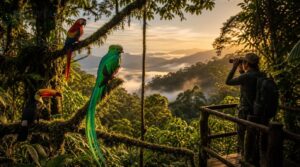
Picking the right operator can make or break your birding trip. The good news? There are a handful of companies that have spent decades getting this exactly right.
Here are five of the best birding tour operators worth your attention in 2026.
Birding Ecotours
Birding Ecotours stands out as a purpose-driven operator that has connected birders with global destinations since 2004. Their guided Specialist Habitat Walks feature Real-Time Identification support and audio tools, followed by a detailed Post-Trip Species Report. These elements ensure an immersive, educational experience.
Customizable Itineraries allow every tour to feel uniquely personal, tailored to individual birding preferences.
The company’s Conservation Donation Model directs at least 10% of net profits to local communities and tropical birding conservation projects, reinforcing their commitment to sustainability and ecological impact.
Victor Emanuel Nature Tours
Victor Emanuel Nature Tours has been running guided bird tours since 1976 — nearly 50 years of serious expertise. Their Veteran Naturalists aren’t just guides; they’re authors, researchers, and storytellers who bring Field Leader Storytelling to life in the field. Whether you want Long-Form Expeditions or Signature Short Tours, VENT covers global birding destinations across every continent:
- Tropical birding in rainforests and cloud forests
- Eco-Lodge Immersion in wildlife-rich habitats
- Custom birding tour options built around seasonal peaks
- Antarctica, Amazon, and Galápagos cruise itineraries
Rockjumper Birding Tours
Rockjumper Birding Tours runs over 200 trips yearly across 100 countries — that’s a Global Itinerary Catalogue worth bookmarking. Based in South Africa with offices worldwide, they specialize in small-group birding tours with expert guides offering Real-Time Identification Tools and Seasonal Species Forecasts.
Their Private Tour Design department builds your dream custom birding tour from scratch, backed by strong Local Community Partnerships at every global birding destination.
Eagle-Eye Tours
Eagle-Eye Tours quietly earns some of the best tour operator reviews in the game. Headquartered in Windermere, British Columbia, this operator pairs Custom Itineraries with Digital Field Guides so every birdwatching trip feels personal.
Their Wildlife Cruise Options open up coastal and island ecosystems you’d struggle to reach otherwise. Expert Ornithology Lectures add real depth to every outing, while their Conservation Revenue Model sustains local habitats long after you’ve headed home.
Naturalist Journeys
Naturalist Journeys treats every birding tour like a front-row seat to the living world.
With over 20 years guiding travelers across seven continents, they’ve mastered Personalized Itineraries and Continental Exploration at small group sizes that keep sightings personal.
- Biodiversity Stewardship woven into every destination
- Local Economy Support through community-partnered eco-lodges
- Scientific Monitoring on species behavior and migration
- Custom tours to top birding hotspots worldwide
Exotic Birding Tour Styles
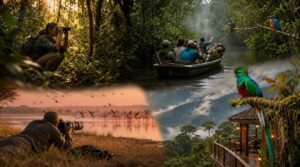
Not all birding tours are built the same — and that’s actually a good thing. Depending on your pace, your goals, and who you’re traveling with, there’s a style out there that’ll feel like it was made just for you.
Here are the main types worth knowing about.
Small-Group Birding Trips
Small groups change everything on a birding tour. With just 6–8 people, you get tailored itineraries, real group cohesion, and no elbowing for scope time.
Expert guides coordinate rotating spotting duties — one person on binoculars, another logging notes — so nothing gets missed.
Low-impact logistics and local permit access mean your small group birding trips reach places bigger tours simply can’t.
Bird Photography Tours
Bird photography tours build on the foundation of small groups, creating an even more exceptional experience. By slowing down the pace, guides utilize feeders, hides, and strategic placements to bring participants closer to their subjects. Early mornings in Costa Rica’s cloud forests provide soft, gorgeous light, enhancing the visual appeal of every shot.
These tours prioritize lighting techniques, gear essentials, and ethical shooting practices, ensuring photographers capture stunning images responsibly. Post-processing tips further refine the results, making the entire journey a photographer’s dream.
Family-Friendly Birding Vacations
Not every birder travels solo. Family-friendly birding vacations are built around shorter Kid-Friendly Hikes, Stroller-Accessible Trails, and Child-Sized Binoculars that actually fit small hands.
Guided tours weave in Interactive Scavenger Hunts and Family Birding Workshops, so kids stay genuinely engaged.
These Educational wildlife tours and Custom Birding Tours make family adventure travel feel natural — even for parents sneaking in a little bird photography along the way.
Hardcore Species Quests
Hardcore birders live for this — chasing elusive species into remote cloud forests and high-altitude walks before dawn. WINGS Birding Tours designs these enigmatic species quests around strict Permit Navigation, Ethical Observation, and real Data Documentation.
- Target Species Tracking through dense rainforest
- Mega Birding Tour access to restricted endemic zones
- Bird Photo Tours integrated with scientific recording
- GPS-logged sightings feeding live conservation databases
Birding Cruise Expeditions
Sailing into open ocean is a whole different kind of birding adventure. Small-ship expedition cruises put you face-to-face with albatrosses, petrels, and tropicbirds you’d never spot from shore. Onboard Citizen Science programs let you log real sightings, while Seabird Identification Workshops sharpen your eye between landings.
With Island Landing Protocols, Pelagic Night Birding sessions, and Vessel-Based Conservation Partnerships built into these guided wildlife tours, the experience blends exploration with purpose. These birding cruise options feel like science and wonder rolled into one.
Conservation-Focused Bird Travel
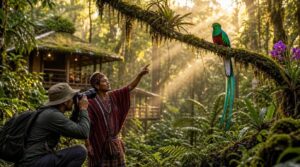
Birding trips can do more than fill your life list — they can actually help protect the birds you came to see.
The best operators weave conservation into every part of the experience, from where you sleep to who leads you into the field. Here’s what that looks like in practice.
Community-Run Eco Lodges
Staying at a community-run eco lodge isn’t just a place to rest after your birding tour — it’s where sustainable tourism actually takes root.
Local governance means residents make the decisions, and profit sharing puts money back into habitat conservation.
Renewable energy powers the cabins, while cultural immersion is built into every meal.
Community training ensures these places thrive long after you leave.
Local Guide Support
Your local guide is the heartbeat of any great birding tour. Through Ongoing Language Training and Multilingual Cultural Interpretation, high-quality guides bridge the gap between you and the wild.
They handle Habitat Disturbance Mitigation, weave real-time species identification into every sighting, and fold Guest Feedback Integration into custom itineraries.
Local guide expertise and top-tier birding guide services make all the difference.
Habitat Restoration Funding
Your tour dollars do more than fund a trip — they support vital conservation efforts. Habitat restoration is backed by multiple funding streams, including:
- Government Grants covering up to $100M for habitat preservation
- Grant Matching through private foundations, doubling community impact
- Community Seed Funding of $50K–$250K for on-the-ground nature conservation
- Corporate Sponsorships and International Aid driving ecotourism-linked conservation funding
Ethical Wildlife Viewing
Seeing a rare bird in the wild is electric — but how you watch matters just as much as what you see.
Good birding tour operators follow strict distance guidelines, keeping observers at least 50 meters back to ensure birds behave naturally. Low-impact photography enforces no flash and no bait, while noise management and habitat respect minimize disruption. These practices, alongside citizen science ethics, aren’t merely rules — they’re foundational to responsible wildlife observation.
Responsible birding means keeping your distance, silencing your flash, and letting wild birds simply be wild
Ultimately, such measures ensure eco-friendly travel, conservation efforts, and nature’s resilience thrive together.
Youth Birding Education
The future birders are already out there — they just need a spark. Programs like eBird Explorers give kids ages 8–15 hands-on bird identification skills through 11 engaging lessons built around real citizen science. Here’s what makes youth programs worth supporting:
- Mentor Pairing connects kids with naturalist guides for field observations
- Classroom Fieldwork reinforces science standards through outdoor discovery
- Inclusive Programs offer multilingual resources and scholarships for underserved communities
Planning Your Birding Tour
Getting the details right before you go makes all the difference between a good trip and a great one. Timing your visit and choosing the right operator are smart upfront decisions that shape your whole experience.
A few key considerations—like timing your visit and selecting an operator—can significantly influence your journey. Here’s what to think about as you start planning.
Best Seasons by Destination

Timing is everything in birding. Costa Rica’s dry season peaks (December–April) delivers crisp Quetzal sightings, while rainy season migration floods the cloud forests with colorful arrivals.
Peru’s early morning windows from 6–9 am are pure magic for Amazon species.
Shoulder season value is real — fewer crowds, lower costs.
Pack smart for seasonal weather prep, and you’ll discover stunning regional biodiversity wherever you go.
Tour Prices and Duration

Prices vary more than you’d think. A 9-day Costa Rica trip ranges from $3,475–$3,675 per person, while Bhutan’s 16-day Himalayan experience climbs to $6,900.
Seasonal rate fluctuations can shift costs by 10–35%.
Most operators offer group discounts and early bird savings for full upfront payment. Deposit policies usually require a 20–30% deposit to lock your spot on set-departure tours.
Guide Expertise and Safety
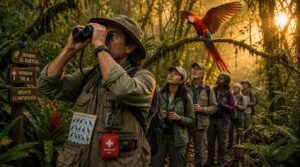
Your guide makes or breaks the trip. High-quality guides bring certified expertise, expert planning, and real peace of mind. Here’s what great onboard expert staff deliver:
- Certification Standards — verified qualifications in birding and natural history
- Risk Assessment — hazard checks before every outing
- First Aid Training — kits and protocols ready in remote areas
- Emergency Protocols — buddy systems, ranger coordination, clear evacuation plans
- Multilingual Briefings — safety instructions everyone actually understands
Worry-free travel starts with the right person leading the way.
Packing Birding Essentials
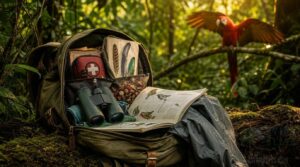
Once your guide’s got the route locked in, what’s in your pack matters just as much. Start with optics maintenance — clean your 8×42 binoculars with a microfiber cloth and tuck in a rain shield for humid forests.
Layered clothing adjusts to shifting elevations beautifully.
Grab field guides, a first aid kit, and energy snacks.
Good birding equipment makes every sighting count.
Beginner Versus Expert Trips
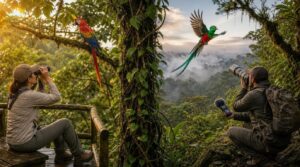
Whether you’re brand new to birdwatching or chasing your 500th lifer, there’s a birding tour built for you.
- Skill Development — Beginners focus on bird identification basics; experts tackle flight-call analysis
- Gear Basics — New birders learn binocular setup; pros bring audio recorders
- Pace Differences — Relaxed itineraries vs. dawn-to-dusk customizable itineraries
- Group Dynamics — Larger social groups vs. small, rapid-decision teams
- Navigation Challenges — Guided checkpoints vs. restricted-habitat permits and rugged terrain
Frequently Asked Questions (FAQs)
What is the best place in the world for bird watching?
No single place reigns unsurpassed — but Peru’s Manu National Park comes closest, offering staggering species richness, dramatic altitudinal gradients, and microhabitat diversity that leaves even seasoned birders speechless.
What are the 5 S’s of bird watching?
The 5 S’s are Size clues, Shape silhouettes, Sound cues, Space context, and Behavioral marks.
Together, they help you read bird behavior, spot migration patterns, and confidently build your species list anywhere you go.
Can a birding tour be conducted as a photo tour?
Absolutely — birding photo tours are a real thing, and they’re built differently. Slower pacing, prime light windows, and Guide-Led Photo Coaching help you nail every shot with purpose and patience.
Who is birding ecotours?
Birding Ecotours, founded by Founder Chris in 2004, runs certified small-group travel experiences with Multilingual Field Staff and Certified Ornithology Guides.
Their Conservation Funding Model and Bespoke Species Checklists make every eco-friendly birding itinerary genuinely count.
Are birding ecotours guaranteed departures?
Here’s the irony — most birding ecotours don’t guarantee departures.
Departure Guarantee Terms hinge on Minimum Participant Numbers being met.
Check Cancellation Windows early, understand Deposit Refunds, and ask about Rescheduling Flexibility before booking any birding tour.
Who is the best birding tour company?
No single ‘best’ exists — it depends on what you value.
Victor Emanuel Nature Tours excels in longevity track record, while Naturalist Journeys leads in expert guide ratios and client satisfaction scores.
Why should you choose nature travel birding tours?
Tell me and I forget; show me and I remember."
Nature travel birding tours offer immersive learning, personal wellness, and authentic cultural exchange.
By turning eco-friendly travel into genuine planetary stewardship, one small-group birding tour at a time.
Should I book a bird watching tour?
Yes — if you’re curious about wildlife, small-group travel fits perfectly. Guided tours handle travel logistics, manage budget considerations, and match experience expectations.
A birding tour is honestly one of the smartest ways to explore the natural world.
What is the best month for bird watching?
Early May is your sweet spot. Migration peak stacks up fast — songbirds flood eastern forests, shorebirds line the coasts, and breeding displays kick into full gear.
Timing your birding tour around these weather windows changes everything.
Where is the best place in the world to go bird watching?
Colombia tops most lists — Species Richness Peaks there with over 1,900 recorded birds. Endemic Bird Havens, Migration Hotspots, and Undisturbed Refuges make it the world’s premier birding destination.
Conclusion
You’ve barely scratched the surface — or should we say, ruffled a few feathers. The world’s most breathtaking birds aren’t waiting in documentaries; they’re perched in cloud forests, river bends, and mountain ridges that reward the curious traveler who actually shows up.
The best exotic bird watching tours don’t just add species to your life list — they add perspective to your life. These experiences unfold in wild, untamed landscapes where nature dictates the rhythm.
Pick your destination, trust a skilled guide, and let the birds do the rest. Their vibrant plumage, intricate dances, and haunting calls will transform your journey into a story worth retelling.
- https://www.birdquest-tours.com/birding-tours/costa-rica-ultimate/
- https://birdsbybijs.com/2024/02/trip-report-costa-rica-central-sur-2024-birding-tour/
- https://wingsbirds.com/
- https://www.cntraveler.com/story/best-places-for-bird-watching-in-the-world
- https://www.eagle-eye.com/birding-and-wildlife-tours/usa-birding-tours/