This site is supported by our readers. We may earn a commission, at no cost to you, if you purchase through links.
A bird with a broken wing faces a survival crisis—unable to escape predators, find food, or maintain its place in the flock. Yet bones aren’t static structures; they’re living tissue with impressive regenerative capacity. When fractured, a bird’s skeletal system triggers an intricate cascade of cellular repair, laying down new bone matrix within days.
But natural healing alone rarely restores full flight capability. The delicate architecture of wing bones, combined with the biomechanical demands of powered flight, means even minor misalignments can ground a bird permanently.
Understanding how healing broken wings progresses—from the initial inflammatory response through callus formation to final remodeling—reveals why professional intervention makes the difference between a bird that merely survives and one that soars again.
Table Of Contents
Key Takeaways
- A bird’s broken wing triggers natural bone regeneration within days, but without professional stabilization through splinting or surgery, only 40–60% of fractures heal properly—and fewer than half of survivors regain full flight capability.
- Avian veterinarians achieve 70–85% recovery rates when combining surgical intervention with structured rehabilitation that includes physical therapy, controlled exercise, and monitoring over 4–12 weeks depending on injury severity.
- Time-sensitive emergency care within 2–4 hours of injury dramatically improves outcomes, as delayed treatment increases mortality risk by 25% and allows complications like infection and malunion to set in.
- Creating bird-safe environments through window collision prevention, native habitat corridors, and community involvement in wildlife rehabilitation directly reduces wing injuries and supports long-term conservation efforts.
Anatomy of Bird Wings and Common Injuries
Understanding how a bird’s wing is built—and what can go wrong—makes all the difference in healing. Each bone and muscle plays a role in flight, survival, and recovery.
Here’s what you need to know before choosing the right enclosure.
Key Wing Bones and Their Functions
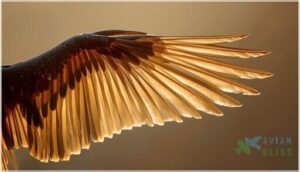
Picture the wing as a living blueprint—each bone and joint plays a distinct role. The humerus, ulna, and radius create the sturdy frame for flight mechanics, while the carpometacarpus and phalanges anchor feathers, shaping aerodynamic functions. Shoulder and wrist joints allow fluid motion, and the alula fine-tunes airflow.
Understanding avian anatomy helps you appreciate how wing injuries impact survival. Studying complex subjects like AP study guides can deepen our understanding of detailed structures.
Types and Causes of Wing Fractures
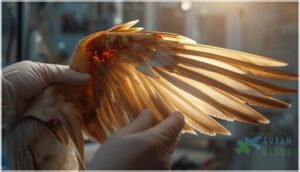
From the sturdy humerus to the delicate phalanges, every bone faces its own risks. Collision Risks—like window strikes and vehicle impacts—top the list of Avian Trauma causes. Fracture Patterns vary: radial and ulnar breaks are most common, while greenstick fractures often plague songbirds. Injury Mechanisms also include falls, predation, and entanglement—each demanding thoughtful orthopedic care and fracture treatment.
Researchers must conduct thorough literature reviews to understand the intricacies of avian trauma and develop effective treatment strategies.
How Wing Injuries Affect Flight and Survival

When a bird’s wing fracture disrupts flight patterns, survival rates drop sharply. Wing stress from even a minor avian fracture can limit foraging and escape, leaving birds vulnerable. You’ll notice how injury impact ripples through daily routines—flight capabilities dwindle, avian adaptation is tested, and resilience becomes the only lifeline.
- Reduced mobility affects food access
- Predation risk increases
- Social dynamics shift
Natural Healing Process of Broken Wings
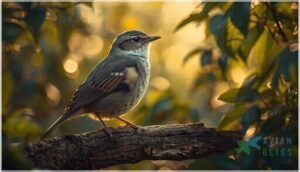
When a bird’s wing breaks, its body starts an extraordinary process to repair the damage. How well this healing unfolds depends on several key factors.
Let’s look at what shapes a bird’s chances of recovery.
Body’s Response to Fractures
Ever noticed how fracture healing in birds starts without fanfare, but under the surface, it’s a storm of repair? Within 1–2 weeks, bone remodeling begins, fueled by a rapid vascular response and new callus formation.
Radiographic evidence becomes apparent as the wing fracture stabilizes, setting the stage for real orthopedic rehabilitation and meaningful fracture recovery.
Factors Affecting Healing Potential
Recovery rates don’t follow a simple formula—they depend on your bird’s unique circumstances. Nutrient impact matters deeply, as calcium and vitamin D3 intake can shift healing times by 20–40%. Bone density varies by species, affecting wing alignment and fracture recovery speed.
Consider these essentials:
- Age and species: Passerines heal faster than waterfowl
- Temperature: Cooler climates slow bone repair by 12%
- Nutritional status: Poor diet delays avian physiology’s natural response
Limitations of Natural Recovery
Natural recovery carries real risks you need to understand. Without immobilization, fracture union rates hover around 40–60% in raptors—meaning nearly half don’t heal properly.
Mortality factors stack up fast: predation, infection, and exposure claim over 20% of untreated birds. Even when bone remodeling occurs, healing timeframes stretch 4–8 weeks minimum, and only 30–50% regain true flight capability afterward.
Without treatment, over 20% of birds with broken wings die, and even survivors often never fly again
When and How to Seek Veterinary Care

Not every broken wing can mend on its own—some injuries demand professional intervention to give a bird any real shot at recovery. Knowing when to act quickly and what to expect from veterinary care can mean the difference between life and a slow, painful decline.
Here’s what you need to recognize, from emergency signs to treatment paths that restore flight.
Recognizing Emergency Situations
When you spot an injured bird, time becomes your most powerful ally. Recognizing emergency signs can mean the difference between recovery and tragedy. Watch for these critical warning signals that demand urgent care:
- Inability to hold the wing aloft – the limb hangs limp or drags along the ground
- Obvious deformity or exposed bone – visible breaks require veterinary care within 2–4 hours
- Severe distress – labored breathing, weakness, or unresponsiveness in the first 60 minutes
- Limb swelling within 24 hours – this increases fatality risk by 25%
Emergency response guidelines are clear: handle gently, minimize movement, and contact a licensed rehabilitator or veterinarian within 24 hours. Your quick injury assessment and action can set the stage for successful bird rescue and healing.
Role of Avian Veterinarians
You’ll need a specialist when a bird’s wing is broken—avian veterinarians bring expertise in avian medicine that general practitioners often lack. These professionals use veterinary diagnostic tools and bird surgery techniques to assess fractures, stabilize bones, and manage pain effectively.
Their avian medical expertise extends beyond immediate veterinary care, incorporating wildlife rehabilitation strategies that address the unique anatomy and needs of bird health throughout recovery.
Diagnosis Methods and Imaging
Your avian veterinarian relies on radiography techniques as the first-line imaging modality when evaluating wing injury—plain X-rays detect 60-90% of fractures across species.
If those images don’t reveal the break but clinical signs persist, CT scans offer over 90% sensitivity for subtle fracture patterns.
This diagnostic workflow in avian radiology ensures accurate fracture assessment, guiding appropriate fracture management and veterinary surgery decisions for successful avian medicine outcomes.
Treatment Options: Splinting, Surgery, Medication
Once fracture management confirms the diagnosis, your vet maps the treatment path. Fracture stabilization depends on severity:
- Splinting succeeds in 60–70% of small birds, worn 4–6 weeks with monitoring every 2–3 weeks.
- Surgical risks include implant failure (5–15%), yet orthopedic rehabilitation yields 80–90% union rates.
- Pain management uses anti-inflammatories cautiously—medication side effects demand species-specific dosing.
- Recovery outcomes improve with controlled postoperative rest spanning 6–12 weeks.
- Wing healing accelerates when veterinary surgery, avian medicine expertise, and rehabilitation converge.
Rehabilitation and Recovery Techniques

Once a bird’s wing is properly stabilized by a veterinarian, the real work of recovery begins. Rehabilitation isn’t just about waiting for bones to mend—it’s an active process that requires careful guidance, patience, and specialized techniques to restore flight capability.
Here’s what effective rehabilitation looks like and what you can expect during the journey back to the sky.
Physical Therapy for Wing Healing
Physical Rehabilitation is the backbone of bird recovery—think of it as a gentle wind beneath broken wings. Structured Wing Exercise and Avian Therapy, like passive range-of-motion and resistance training, boost Flight Restoration. These targeted techniques in bird rehabilitation cut joint stiffness by 20% and increase strength, making Fracture Management far more effective.
| Technique | Benefit |
|---|---|
| Passive Range-of-Motion | Reduces stiffness |
| Resistance Training | Builds strength |
| Electrical Stimulation | Accelerates healing |
| Daily PT Sessions | Faster flight return |
| Compliance-Assisted PT | Improves outcomes |
Controlled Exercise and Thermal Therapy
Building on daily physical therapy, you’ll find that Thermal Healing and careful Exercise Protocols work like sunlight on new growth—warming tissues, easing pain, and priming muscles for Wing Rehabilitation.
In bird rehabilitation, alternating warm compresses and short, controlled flapping sessions are cornerstones of Avian Physiotherapy. These rehabilitation techniques speed Fracture Recovery while protecting fragile bones and restoring flight readiness.
Monitoring Progress and Preventing Complications
Like sunlight reveals new growth, careful Fracture Monitoring shines a light on healing. You track progress using regular Injury Assessment and adjust Rehabilitation Protocols to prevent setbacks. For best Recovery Outcomes, focus on:
- Pain management
- Infection control
- Serial imaging
- Physical therapy
These rehabilitation techniques work together, keeping complications at bay and guiding each bird safely along its rehabilitation process.
Recovery Timelines and Success Rates
As you track Rehabilitation Outcomes, Recovery Metrics reveal a hopeful pattern: uncomplicated Bird Wing Injuries often heal in 4–8 weeks, while severe fractures stretch beyond 12.
Success Factors hinge on Injury Severity and prompt care—splinting alone yields 40–60% recovery, surgical intervention lifts rates to 70–85%.
Avian Fracture Recovery thrives when healing and rehabilitation align, restoring flight and freedom.
Preventing Wing Injuries and Supporting Conservation

Creating a safe world for birds starts with the spaces we share. The right environment can make all the difference in preventing injuries and supporting their recovery.
Here are some practical ways you can help protect and conserve these extraordinary creatures.
Bird-Friendly Environments and Safe Habitats
Imagine a city woven with green corridors—each patch of native grassland and riparian zone a lifeline for bird conservation. Thoughtful habitat design and urban planning, from eco-friendly spaces to open foraging grounds, directly support wildlife rehabilitation.
You help shape animal welfare every time you choose bird-friendly environments, reducing collision risks and nurturing resilient bird behavior in thriving communities.
Public Health and Community Involvement
Through Community Outreach and bold Avian Education, you have the power to transform Injury Reporting and Volunteer Training into a real force for wildlife conservation.
Whether installing bird-safe barriers or supporting animal control programs, your involvement in animal welfare and wildlife rehabilitation strengthens public health and shapes safer, more resilient bird behavior—one connection at a time.
Post-Rehabilitation Release and Monitoring
Release strategies aren’t just the finish line—think of them as the bird’s launching pad back into the wild. Through monitoring techniques like tracking flight patterns and post-release survival rates, you help each bird master habitat reintegration.
These careful follow-ups drive real success in wildlife rehabilitation and conservation, knitting bird health and wellness into the fabric of animal welfare and conservation efforts.
Frequently Asked Questions (FAQs)
Can wild birds survive with permanently damaged wings?
Survival with permanent wing damage depends on injury severity and species. Wildlife rehabilitation data show 50–70% of treated birds with wing injuries survive to release, though flight limitations reduce long-term survival by 20–40%.
How much does avian veterinary treatment typically cost?
Getting your bird back in the air isn’t cheap—expect to spend anywhere from $200 to over $4,000, depending on whether your feathered friend needs simple splinting or complex surgical repair with rehabilitation.
Should I attempt to splint a birds wing myself?
Don’t attempt DIY wing stabilization—97% of wildlife rescue centers report improper splinting causes harm.
Contact licensed avian rehabilitators immediately; they’re trained in orthopedic rehabilitation techniques that prevent vascular compromise and guarantee your feathered friend’s safe recovery.
Do different bird species heal at different rates?
Yes, healing timelines vary considerably by species. Songbirds often recover in 4–8 weeks, while raptors need 6–12 weeks for bone union.
Factors like metabolic rate, wing anatomy, and rehabilitation quality shape recovery outcomes.
What signs indicate a wing is healing incorrectly?
Watch for persistent swelling signs beyond six weeks, unusual wing malunion with asymmetry, continuous pain responses during handling, delayed bone bridging on imaging, or audible crepitus detection—all signaling fracture management and treatment complications requiring immediate orthopedic care for birds.
Conclusion
A mended wing represents more than repaired bone—it’s proof that fragility needn’t mean finality. You’ve seen how healing broken wings demands precision, patience, and partnership between nature’s resilience and human expertise.
When you spot that grounded bird, remember: intervention matters. Whether you’re creating safer habitats or connecting injured wildlife with rehabilitation specialists, you’re part of the recovery arc.
Every bird that reclaims the sky carries forward a story you helped write.
- https://www.reddit.com/r/parrots/comments/w6icgw/how_can_you_tell_if_wing_is_broken_or_sprained/
- https://www.ncbi.nlm.nih.gov/books/NBK481583/
- https://writers.com/common-themes-in-literature
- https://spines.com/themes-in-literature/
- https://michaelbjorkwrites.com/2019/09/26/story-themes-list-ideas-for-your-novel/