This site is supported by our readers. We may earn a commission, at no cost to you, if you purchase through links.
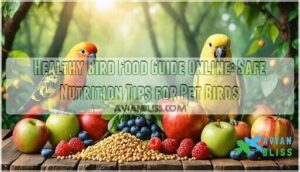 You’ll find the best healthy bird food guide online by focusing on your feathered friend’s specific needs.
Fresh fruits like apples and berries provide essential vitamins, while leafy greens offer vital nutrients. High-quality pellets should make up 70-80% of your bird’s diet, not just seeds.
Always avoid chocolate, avocado, and caffeine – these foods can be deadly. Different species need different nutrition plans.
Cockatiels thrive on varied diets, while canaries need more seeds. Clean, fresh water is just as important as food.
The key is balance and variety. Understanding which foods boost immunity and promote vibrant feathers makes all the difference.
Table Of Contents
- Key Takeaways
- Bird Dietary Basics
- Safe Bird Food Options
- Choosing Bird Food
- Species Specific Diets
- Healthy Bird Feeding Tips
- Frequently Asked Questions (FAQs)
- How do I choose the best bird food?
- What is a good diet for birds?
- What should a bird eat a day?
- Do birds need a balanced diet?
- What should be the base diet for a bird?
- What are some healthy options for pet birds?
- How often should I change bird food?
- Can birds eat cooked rice or pasta?
- What temperature should bird food be served?
- How do I store bird food properly?
- Conclusion
Key Takeaways
- You’ll need to make high-quality pellets 70-80% of your bird’s diet instead of relying solely on seeds, which prevents selective eating and ensures complete nutrition with every bite.
- Your bird’s species determines its specific dietary needs – cockatiels require 2-3 teaspoons of pellets daily while finches need just half a teaspoon, so you can’t use a one-size-fits-all approach.
- You must avoid chocolate, avocado, and caffeine completely as these foods can be deadly to birds, while fresh fruits like apples and berries provide essential vitamins when prepared safely.
- You’ll want to provide fresh, clean water daily and replace uneaten food within 2-4 hours to prevent bacterial growth that could harm your feathered friend’s health.
Bird Dietary Basics
Your pet bird needs six key nutrients to stay healthy: proteins, carbohydrates, fats, vitamins, minerals, and water.
You’ll need to provide a balanced mix of these nutrients through pellets, fresh fruits, vegetables, and protein sources to support your bird’s energy and overall well-being.
Nutritional Requirements
Your bird’s nutritional foundation requires six essential nutrients working together like a well-oiled machine.
Understanding these requirements helps prevent dietary deficiencies while supporting proper energy expenditure throughout different growth stages.
- Protein builds muscle and supports breeding nutrition during reproductive periods
- Vitamins and minerals boost immune function and aid molting support
- Carbohydrates provide steady energy for daily activities and flight
- Water maintains hydration and helps nutrient absorption throughout the body.
A balanced diet matched to your bird’s species guarantees maximal health and longevity.
Improper feeding is the chief cause of disease, so balanced nutrition is extremely important.
Essential Amino Acids
Your bird’s body can’t make essential amino acids on its own, making lysine importance critical for proper growth.
Methionine sources like cooked eggs provide necessary protein building blocks, while arginine benefits include stronger immune function.
Watch for deficiency symptoms such as poor feather quality or weakness.
Supplementing diets with these essential nutrients guarantees your feathered friend gets complete avian nutrition for healthy health.
Importance of Water
Water stands as the foundation of avian health, playing multiple roles beyond simple hydration.
Water fuels every aspect of your bird’s life – from vibrant feathers to strong flight muscles.
Your feathered friend depends on fresh water for survival, making it a non-negotiable part of healthy bird food routines.
- Hydration Importance: Birds need constant access to clean water for proper organ function
- Bathing Benefits: Regular water exposure helps maintain feather condition and temperature regulation
- Water Sources: Provide multiple clean containers to encourage drinking and bathing
- Dehydration Risks: Without adequate hydration, birds face serious health complications quickly
For feather maintenance, fresh water matters substantially.
Balancing Macronutrients
Like a well-orchestrated meal, your bird’s balanced diet requires careful attention to macronutrients.
Protein sources should make up 15-20% of their intake, supporting muscle development.
Fat intake needs moderation at 5-15% to prevent obesity.
Carbohydrate types from whole grains provide steady energy.
Don’t forget vitamin balance and mineral needs – these essential nutrients work together creating the perfect nutritional harmony.
Safe Bird Food Options
You’ll discover which foods keep your pet bird healthy and which ones can cause serious harm.
This section covers safe fruits and vegetables, toxic foods to avoid completely, and proper food preparation methods that protect your bird’s health.
Fruits and Berries for Birds
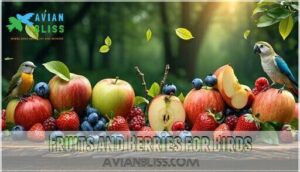
Fresh fruits and berries offer excellent safe bird food options packed with berry antioxidants and natural fruit sugars.
Apples, blueberries, and strawberries make perfect bird treats when prepared properly. Safe preparation involves removing seeds and washing thoroughly.
Different species preferences vary – some birds love sweet berries while others prefer tart fruits. Seasonal availability affects choices, so rotate vegetables and fruits regularly for ideal nutrition.
Some fruits, like avocado can be toxic to parrots, should be avoided to ensure the birds’ well-being and safety with proper care.
Toxic Foods to Avoid
Several common household foods pose serious threats to your feathered friend’s health.
Your kitchen might harbor hidden dangers that could seriously harm your beloved bird.
Chocolate contains theobromine toxicity that can kill birds, while avocados carry persin dangers causing heart failure. Onions create anemia risks through sulfur compounds, and processed snacks bring additive harm.
Coffee and tea deliver dangerous caffeine effects. These toxic foods require complete elimination from safe bird food plans.
Birds are also susceptible to poisoning from heavy metals, so be mindful of zinc and lead.
Organic and Fresh Produce
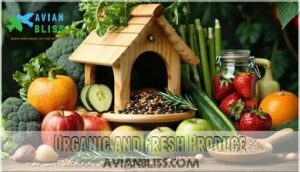
Choosing organic bird food reduces pesticide risks that can harm your feathered friend.
Fresh fruits and vegetables from local sourcing provide better nutrition than processed alternatives.
Washing produce thoroughly removes chemical residues even from organic options.
Seasonal choices offer peak nutrition and flavor.
Organic benefits include fewer harmful chemicals and higher nutrient content, making safe bird food options healthier for your pet.
You can also find quality birdseed options online.
Preparing Fruits and Vegetables
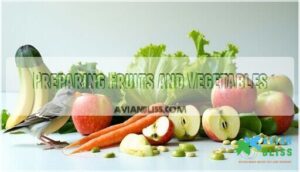
Proper preparation turns fresh fruits and vegetables into safe bird food options that’ll keep your feathered friend healthy.
Washing produce removes harmful pesticides, while removing toxins like seeds and pits prevents serious health issues.
Follow these bird food preparation steps:
- Wash all produce thoroughly under running water
- Remove seeds, pits, and toxic parts completely
- Chop into bite-size pieces for easy handling
- Serve immediately to maintain freshness and bird food hygiene, ensuring your bird stays healthy.
Choosing Bird Food
When you’re selecting food for your pet bird, you’ll need to take into account your bird’s species, size, and specific nutritional needs.
The right combination of pellets, seeds, fruits, and vegetables will keep your feathered friend healthy and happy throughout their life.
Popular Bird Food Types
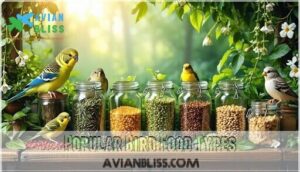
When selecting nutrition for your feathered friend, you’ll find several bird food types available.
Each option serves different purposes in your bird’s diet.
| Food Type | Best For |
|---|---|
| Seed Mixes | Wild birds, variety-loving species |
| Pellets vs Seeds | Complete nutrition, preventing selective eating |
| Live Food | Protein needs, breeding birds |
| Sprouted Seeds | Enhanced nutrients, digestibility |
| Homemade Diets | Custom nutrition, ingredient control |
Understanding these bird food ingredients helps you choose the best bird seed for your specific bird feeding guide needs.
Many owners like to buy assorted bird seed for their pets.
Dietary Needs of Species
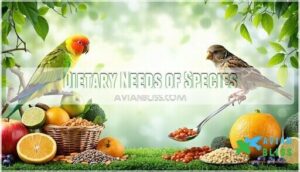
Different bird species have unique nutritional requirements that you can’t ignore.
Your canary’s seed-based diet won’t work for your parrot, who needs 25% fresh produce.
Cockatiels require 2-3 teaspoons of pellets daily, while finches need just half a teaspoon.
Consider supplementing their diet with high-quality pellets for healthy well-being.
Understanding these species-specific diets prevents nutritional deficiency risks and helps your feathered friend thrive throughout different life stages, ensuring a long and happy life.
Pelleted Bird Food Benefits
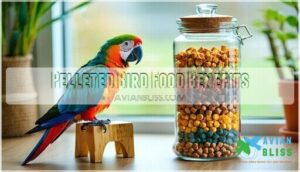
Unlike seed mixes that tempt picky eaters, high-quality pellets deliver complete nutrition in every bite.
You’ll save money while ensuring your bird gets essential nutrients without the waste of selective eating.
Here’s why pelleted diets work better:
- Complete Nutrition – Each pellet contains balanced vitamins and minerals
- Prevents Sorting – Birds can’t pick favorites, ensuring uniform diet
- Cost Efficiency – Less waste means better value
- Waste Reduction – No empty hulls cluttering cages
- Consistent Quality – Every meal provides superior nutrition
Supplementing With Treats
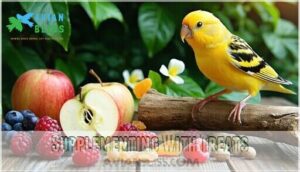
While pelleted food forms your bird’s foundation, bird treats add excitement to their routine.
Think of treats as the cherry on top – they shouldn’t replace meals but enhance them.
Healthy treats offer nutritional value while creating bonding moments through positive reinforcement and treat-training rewards.
| Safe Treat Options | Portion Guidelines |
|---|---|
| Fresh berries and apple slices | 1-2 small pieces daily |
| Homemade bird treats (seed balls) | Once weekly portions |
| Dried fruits (unsweetened) | Tiny pinches only |
| Cooked quinoa or brown rice | Tablespoon servings |
Smart treat portion control prevents obesity while bird food supplements support overall health.
Species Specific Diets
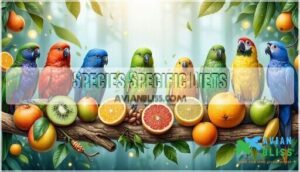
Your bird’s health depends on getting the right food for its specific species.
Different types of birds need different nutrients, so you can’t feed all birds the same diet and expect them to stay healthy.
Insectivorous Bird Diets
Your insectivorous birds need specialized diets that mirror their natural feeding habits.
These protein-loving species require 25-35% protein from insects, worms, and larvae to maintain peak health.
Mealworms and crickets make excellent insect protein sources for captive birds.
Gut-load live insects with nutrients before feeding to boost nutritional value.
Attracting bluebirds involves planting native trees.
Support their natural foraging behavior while avoiding insecticide effects on prey to ensure peak health.
Nectar Based Diets
Hummingbirds and similar nectar-feeding birds possess specialized tongues that work like tiny pumps to extract liquid gold from flowers.
Wild nectar sources provide essential nutrients beyond simple sugar water.
When preparing artificial nectar, you’ll need proper nectar composition—one part sugar to four parts water.
Maintain consistent feeding frequency, replacing hummingbird food every few days for ideal hydration and pollen supplementation.
Seed and Grain Diets
Seeds and grains form the backbone of many birds’ diets, from finches to sparrows.
You’ll want to offer seed variety including sunflower seeds, millet, and nyjer. Sprouting seeds boost nutrition substantially.
Choose high grain quality and fortified seeds when possible. Wild birdseed mixes work well, but avoid cheap blends with fillers.
A balanced diet means rotating different natural bird food options regularly, ensuring a mix of nutrients and avoiding fillers, which is crucial for balanced diet.
Customized Nutrition Plans
Every bird’s Individual Bird Needs differ based on age, health conditions, and activity levels.
Your feathered friend deserves Customized Food Plans that consider these factors. A young, active cockatiel requires different nutrition than a senior budgie with Health Condition Impact concerns.
Age-Related Nutrition and Activity Level Matters when planning meals. Professional bird nutrition consultation guarantees superior avian health and proper pet bird care through personalized bird diet guide recommendations, ensuring the best possible outcome for your bird’s Individual Bird Needs.
Healthy Bird Feeding Tips
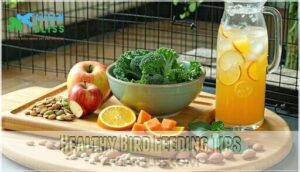
Proper feeding practices can make the difference between a healthy, thriving bird and one that struggles with health problems.
You’ll learn how to choose the right feeders, avoid overfeeding, provide fresh water, and adjust your bird’s diet throughout the year to ensure a healthy environment.
Feeder Types and Placement
After selecting the right diet for your birds, you’ll need proper bird feeders to deliver that nutrition effectively.
Choose feeder materials like stainless steel or BPA-free plastic that resist weather and bacteria.
Position feeders five feet from shrubs where predators hide, but close enough for quick escapes.
Install squirrelproof feeders with weight-activated mechanisms to protect your seed varieties and bird food options from unwanted visitors.
Avoiding Overfeeding and Obesity
Portion control prevents bird obesity by matching food amounts to your bird’s activity levels.
Monitor your pet’s weight weekly and adjust portions based on their energy needs.
High-calorie foods require smaller servings, while dietary fiber helps birds feel full longer.
Avoid common bird food mistakes like unlimited seed access, which leads to selective eating and weight gain.
Providing Fresh Water
Fresh water serves as your bird’s lifeline for both drinking and bathing.
Clean water bowls daily to maintain Water Source Hygiene and prevent harmful bacteria growth. Bathing Water Benefits include healthier feathers and skin condition.
During winter months, make certain Winter Water Access by preventing freezing. Monitor for Dehydration Prevention signs like lethargy.
Avoid Water Additives Safety concerns by using plain, fresh water only. Providing safe feeding areas can also help prevent contamination of water sources.
Seasonal Dietary Adjustments
Just like you’d pack different snacks for camping trips, your feathered friends need different foods throughout the year.
Winter bird food should focus on high-fat options to build winter fat reserves.
During molting season needs, increase protein-rich nutritional bird food.
Breeding season diets require extra calcium and nutrients.
Summer bird food can include fresh fruits, while autumn foraging changes call for energy-dense seeds.
Frequently Asked Questions (FAQs)
How do I choose the best bird food?
Wild birds thrive on variety while captive birds need consistency.
You’ll want to match food to your bird’s species, size, and age.
Choose pellets over seeds, add fresh fruits and vegetables, and avoid chocolate or avocado completely.
What is a good diet for birds?
A balanced bird diet includes high-quality pellets, fresh fruits, vegetables, and occasional protein sources.
You’ll want to avoid chocolate, avocado, and processed foods.
Tailor nutrition to your bird’s specific species needs.
What should a bird eat a day?
Your feathered friend’s appetite is absolutely enormous for such a tiny creature.
You’ll want to offer fresh pellets, chopped vegetables, and fruits daily.
Adjust portions based on your bird’s size and species needs.
Do birds need a balanced diet?
Yes, birds absolutely need a balanced diet to thrive.
You’ll want to provide proteins, carbohydrates, fats, vitamins, minerals, and water.
This combination supports their energy, muscle development, and overall health throughout their lives.
What should be the base diet for a bird?
Some think one food type suffices, but your bird’s base diet should include high-quality pellets, fresh vegetables, and limited seeds.
This foundation provides essential nutrients while preventing selective eating habits that compromise health, forming a complete and balanced diet.
What are some healthy options for pet birds?
Fresh fruits like apples and berries provide essential vitamins, while leafy greens offer vital nutrients.
High-quality pellets guarantee balanced nutrition, and cooked eggs supply protein.
Always avoid chocolate, avocado, and processed foods—they’re toxic to your feathered friend.
How often should I change bird food?
Like clockwork, you’ll want to replace your bird’s food daily to keep it fresh and nutritious.
Remove uneaten portions within 2-4 hours to prevent spoilage and bacterial growth that could harm your feathered friend’s health.
Can birds eat cooked rice or pasta?
Birds can safely eat plain cooked rice and pasta without seasonings, salt, or butter.
These carbohydrates provide energy and make nutritious treats.
Cool completely before serving, and offer small portions alongside their regular balanced diet.
What temperature should bird food be served?
Room temperature is ideal for serving bird food.
You shouldn’t heat or chill their meals since extreme temperatures can harm their sensitive digestive systems and potentially burn their tongues or cause discomfort.
How do I store bird food properly?
Think of your pantry as a fortress protecting precious treasures.
Store bird food in airtight containers away from moisture and pests.
Keep it cool, dry, and sealed tight.
Fresh food means healthy, happy birds visiting your yard, with healthy being a key factor.
Conclusion
Like a compass guiding you through uncharted territory, this healthy bird food guide online provides the essential knowledge you need for your pet’s wellbeing.
You’ve learned about balanced nutrition, safe food choices, and species-specific requirements.
Remember that fresh water, quality pellets, and varied fruits and vegetables form the foundation of good bird health.
Your feathered companion depends on you for proper nutrition.
Apply these guidelines consistently, and you’ll see your bird thrive with vibrant feathers and energetic behavior.
- https://www.dvm360.com/view/practical-avian-nutrition-proceedings
- https://www.kaytee.com/learn-care/pet-birds/what-do-pet-parrots-eat
- https://todaysveterinarynurse.com/nutrition/avian-nutrition/
- https://vcahospitals.com/know-your-pet/fruits-and-vegetables-in-bird-diets
- https://avianenrichment.com/index.php/learn-mobile/the-physical-needs-of-parrots/diet-nutrition